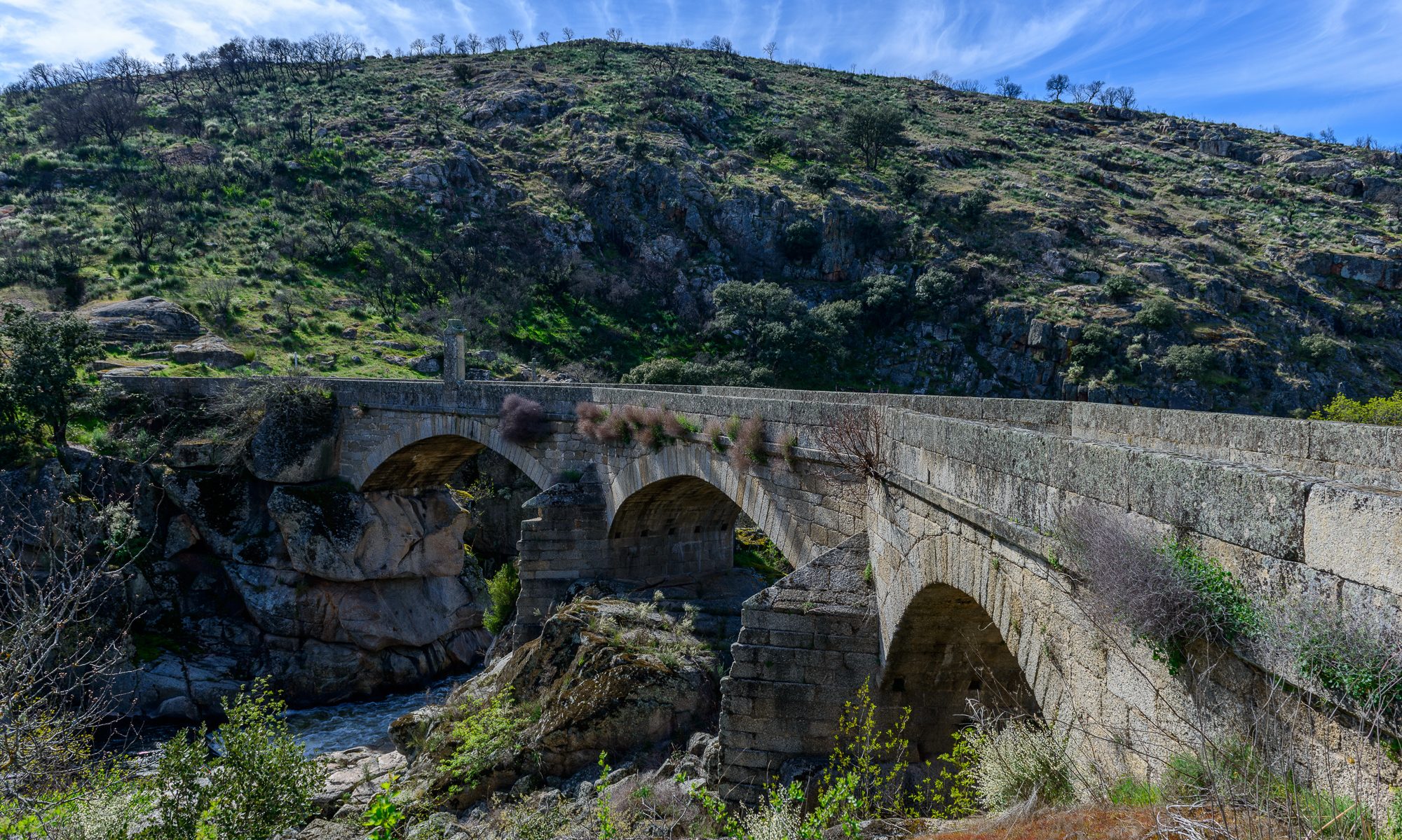
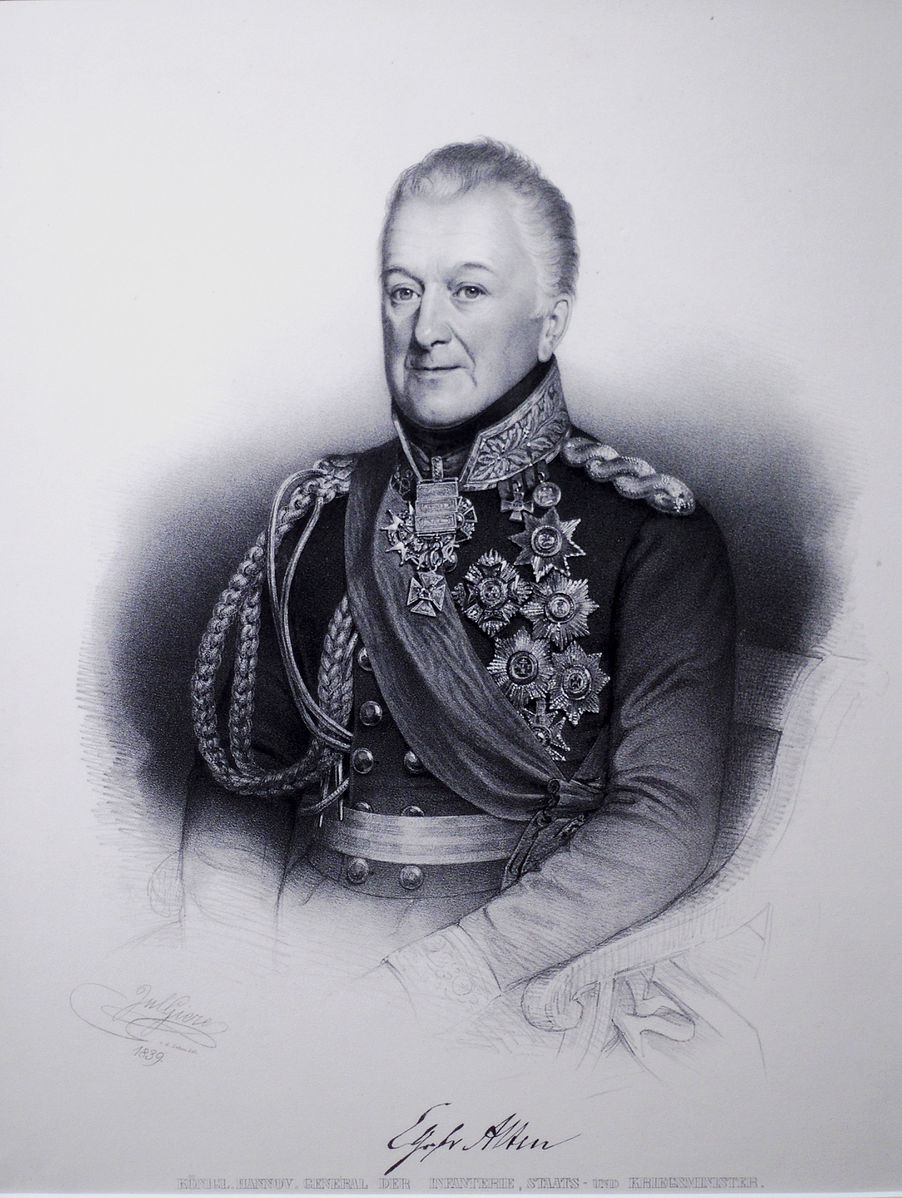
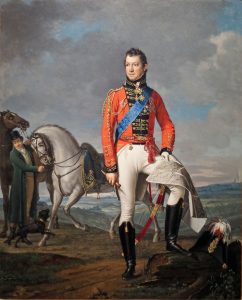
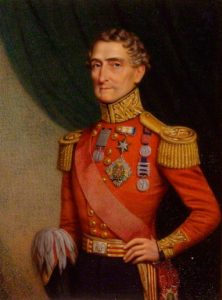
 One of my new favourite characters in the Peninsular War Saga, is Lieutenant-General Charles Alten, who took over command of the light division in May 1812, after General Robert Craufurd was killed at the storming of Ciudad Rodrigo.
Carl August von Alten, to give him his German name, was from an old Hanoverian family, the second son of Baron Alten, and was first commissioned in the Hanoverian guards in 1781 at the age of sixteen, having previously served the Elector of Hanover as a page when he was twelve. He rose to the rank of captain and fought in the campaigns in the Low Countries in 1793-95, proving particularly effective as a commander of light infantry.
In 1803 after the French invasion, the Hanoverian army was disbanded at the convention of Lauenburg and Alten was one of many Hanoverians to leave his country and enrol in the force collecting at Lymington, which became part of the British army as the King’s German Legion. Alten was a lieutenant-colonel by now and as such, took command of the light infantry of the KGL.
 Alten took part in the Hanoverian expedition of 1805 under Lord Cathcart, and fought under him again in the brief Copenhagen campaign in 1807. This may have been his first meeting with Sir Arthur Wellesley, who commanded the reserves; certainly Alten fought under him at the only significant battle of the campaign, the battle of Koge, which is also known as the battle of the clogs, and which forms an essential part of the plot of An Unwilling Alliance.
Alten next fought under Sir John Moore in Sweden and then Spain, and commanded the second flank brigade during the retreat; the first flank brigade was commanded by Robert Craufurd. Neither fought at Corunna, having taken a different route out of Spain, although both shared in the privations and horrors of the winter retreat.
Alten’s next campaign was the disastrous Walcheren expedition in the summer of 1809, after which he returned to the Peninsula and commanded an independent KGL brigade at the bloody battle of Albuera. His conduct and career must have impressed his commander-in-chief, who referred to him as ‘the best of the Hanoverians’ and in May 1812 he was given command of the light division. Alten led Wellington’s elite troops during the battles of Salamanca, Vitoria, the Pyrenees, the Nivelle, the Nive, Orthez and Toulouse.
Historian Charles Oman has been harsh in his judgement of Alten’s role in the light division, comparing him unfavourably with Craufurd, as ‘a general of much more pedestrian quality, who might never fail to make an attempt to obey Wellington’s orders to the best of his ability, but could never supplement them by any improvisation of his own, of which he was incapable’. It is probably true that Alten did not share Craufurd’s flashes of sheer brilliance, but neither did he share his reputation for rudeness, belligerence and inability to get on with his officers. Wellington placed his faith firmly in Alten’s ability to command, and the light division retained their reputation as Wellington’s elite troops under his steady leadership. The officers of the light division presented him with a sword of honour as a token of their esteem, something they would probably not have done for Craufurd.
In 1815 Alten led Wellington’s third division during the Hundred Days. Part of the division was heavily engaged at the Battle of Quatre Bras, and at Waterloo, Alten’s men held the front line throughout the day and suffered appalling losses. Alten was badly wounded and his courage and conduct won him the rank of Count von Alten.
The King’s German Legion was disbanded at the end of the war, and Alten took command of the Hanoverian troops in France as part of the Army of Occupation until 1818 when the occupation ended. He returned to Hanover where he became minister of war and foreign affairs and rose to the rank of field marshal. He remained on the British army list as Major-General Sir Charles Alten, GCB. He died in 1840 and is buried in the Neustadter Kirche in Hanover.
Writing Alten as a fictional character is an interesting challenge. He arrives to command the light division after the siege of Badajoz and I have a strong suspicion that Lord Wellington greeted his arrival with a massive sigh of relief. After the ups and downs of life with the irascible genius of Robert Craufurd, I think it is is no coincidence that Wellington chose a man who appears to have been noted for his steadiness, amiability and readiness to obey orders to place in charge of his most useful division. Wellington never denied Craufurd’s talent, but I think he was probably permanently on edge, wondering what Craufurd would do next.
It was tempting to write Alten as Oman portrays him, a pedestrian general and a safe pair of hands, but as I was trying to find out more about Paul van Daan’s new commander as a person, I discovered a couple of lines in the third volume of Rifle Green in the Peninsula, one of my favourite sources for the actual day to day happenings in the light division, which made me rethink.
“The 1st brigade of the light division was ordered by General Erskine, whom they knew all too well from his short time in command of the division when Craufurd was in England, to cover the withdrawal of his cavalry. General Alten was most indignant at having his brigade ordered to such a precarious position. After forming up and halting them in columns ready to form square, he then remonstrated with Erskine in no uncertain terms.”
This little passage gave me a different perspective; mild-mannered Clark Kent was having none of it from General Erskine and wasn’t afraid to say so. It occurred to me that unlike Craufurd, there are not dozens of accounts describing him, but if actions speak louder than words, Alten’s officers liked and respected him enough to present him with a gift and Wellington thought highly enough of him to entrust him with the light division and then to give him a significant command during the Waterloo campaign. The best of the Hanoverians, it seemed to me, might well have been a very good commander and a likeable man.
That is how I have chosen to portray Alten, and I’m looking forward to getting to know him better through the rest of the books. I’d love to find out more about him and I wonder if there is a fabulous German source out there that I know nothing about yet. My Alten is courageous, intelligent and well-mannered, with a willingness to listen to advice and to discuss his plans with his officers. He misses his wife, and enjoys sharing a good bottle of wine with Colonel Barnard and playing chess with Colonel van Daan. What he is not, is boring, pedestrian and weak. I hope my readers enjoy him.
 An Untrustworthy Army, Book 5 in the Peninsular War Saga, is due out on 30th November and is available for pre-order on Amazon.
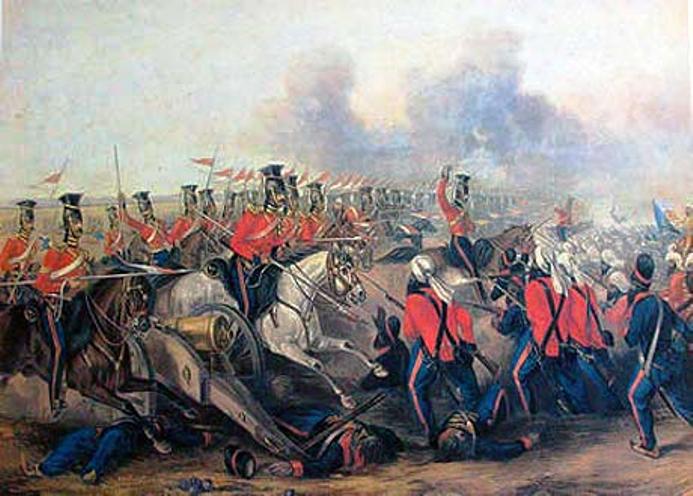
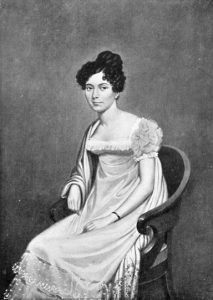 In April, Wellington’s army successfully stormed Badajoz and the army sacked the city, turning into a drunken mob whom even their own officers could not control for several days. Looting, murder and rape were committed openly and many citizens, especially women, fled from the town to take refuge at the British lines, hoping that the officers would protect them. One such lady, whose home had been destroyed, brought her younger sister with her, a girl of fourteen newly returned from a convent education. Juana Maria de Los Dolores de Leon appears to have shaken off the restrictions of her upbringing very quickly. Within a few days she was the wife of Captain Harry Smith and remained by his side for the rest of the war.
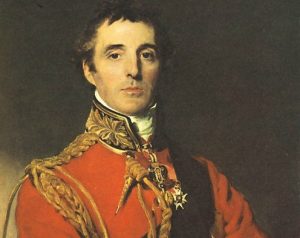 “I have read the account of many a battle, but I never read the account of one in which more ability, energy, and experience have been manifested than in this. I know of no one, in which an officer ever showed himself more capable than this officer has, in commanding troops in the field. He brought every description of troops to bear with all arms, in the position in which they were most capable of rendering service; the nicest manoeuvres were performed under the fire of the enemy with the utmost precision, and at the same time, with an energy and gallantry on the part of the troops never surpassed on any occasion whatever in any part of the world. I must say of this officer, that I never have seen any account which manifests more plainly than his does, that he is an officer capable of rendering the most important services and of ultimately being an honour to this country.”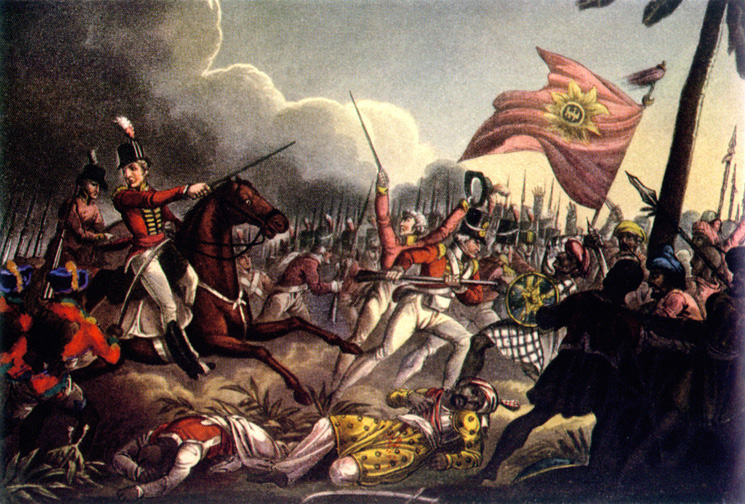
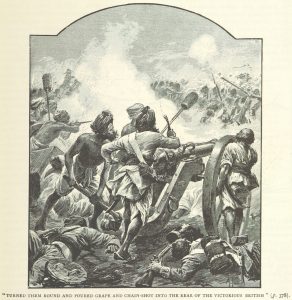 “Make sure every one of the bastards is dead,” the Irishman instructed. “They’re the devil for playing dead, and before you know it they’re shooting you in the arse. If in doubt, cut their throats. Hard to get up from that one. Watch for them hiding under the bodies. Now here we go. One, two three…”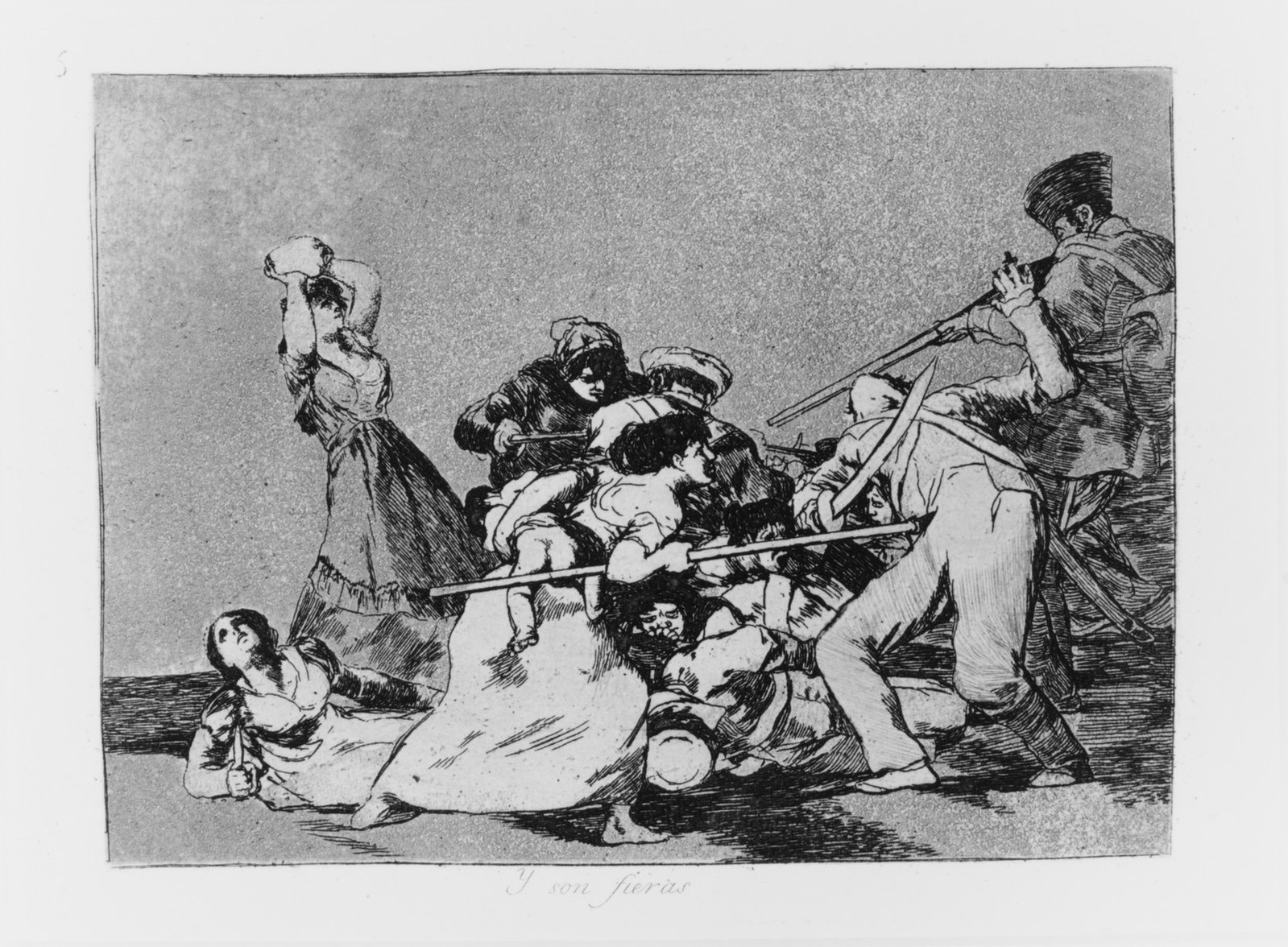
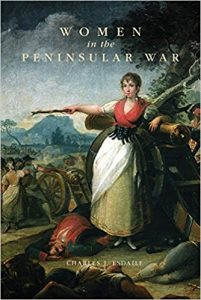 Women in the Peninsular War are a central theme of the novels I write and I have just finished reading an excellent book with that title by Professor Charles Esdaile. I have just finished reading this book properly for the first time, although I’ve dipped in and out of it for research for my novels for a while. Charles Esdaile has written an excellent account of the experiences of women of all nationalities and classes who found themselves caught up in the horror of the conflict in Portugal and Spain in the early nineteenth century.
 I have tried to give the women of this time a voice in the novels. As a novelist rather than a historian, there is a delicate balance between telling a story which will engage modern readers and writing an unrealistic view of women in the early nineteenth century. Next month I am taking part in a panel at the Malvern Festival of Military History with other historical novelists, the title of which is “A Fine Line – turning historical fact into fiction” and the treatment of women in novels set during this period is an excellent example of this. As a modern woman writing about a different era, it is my job to portray conditions as they were, not as we would like them to have been. At the same time, Anne van Daan, the leading female character of the books, is a woman who was thrown, quite accidentally, into a situation which gave her opportunities to broaden her horizons and to discover talents and abilities that she would never have had the chance to use at home.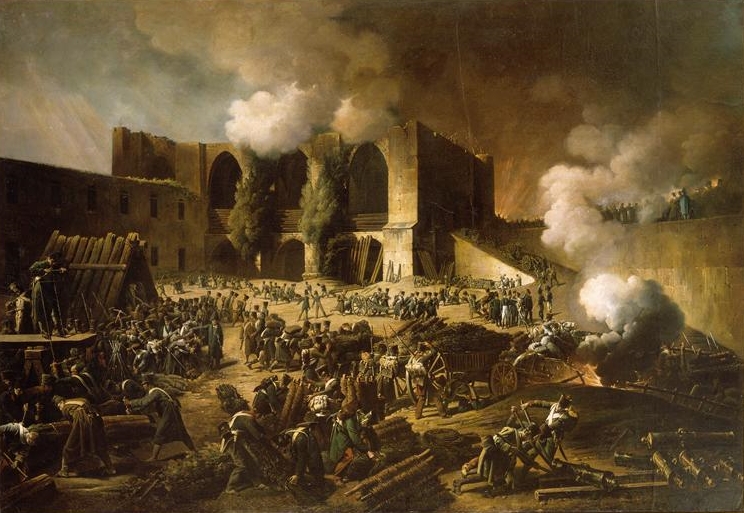
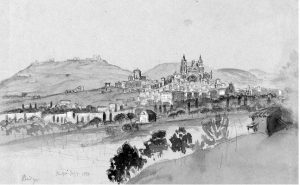
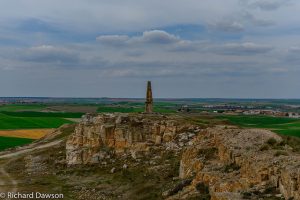
 Rory Muir, in his
 Welcome to the very first guest blog post from yours truly, Joey the Labrador, senior officer here at Writing with Labradors.
 It’s been more than six weeks since we lost Toby and we’re all getting more used to it, though we’ll never stop missing him. At first I used to forget he was gone and wander around looking for him but I’m over that now. Having Oscar has been the best thing ever, I’m never lonely. He’s always close by, sometimes a bit closer than I need him to be, to be honest. I know I loved old Toby, he was my best mate all my life, but I’m pretty sure I never used to sit on him. Still, although I tell him off from time to time, I secretly quite like Oscar wanting to be that close to me.
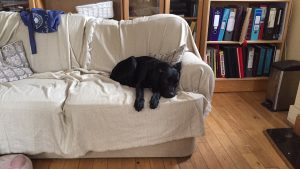 Life goes on and there are always changes. Jon-human has started work now and isn’t around studying all the time so there have been some changes in the study. The big table has gone and we’ve got a very comfy sofa and armchair instead which makes it much more homely. Personally I still like my bed best, just behind her chair, so she has to ask me to move if she wants to get up for a cup of tea, but Oscar loves the sofa and we’re very settled in there all day when she’s writing.
  This is great news as she spoils us rotten and even lets us sleep in her bedroom which is normally off-limits. I particularly like it when she sends photos of this to her mother who can do nothing about it because she’s stuck in a castle in some remote part of Spain gibbering about battlefields. Next month she away at the
 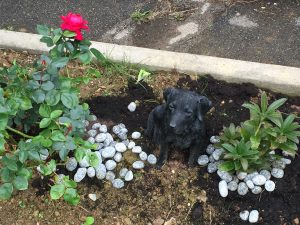 Writing with Labradors is back on track and I think our senior officer would be proud of us. Sitting out on the porch on sunny days, I look at his statue and I’m very glad to have known him. One day Oscar will sit here thinking of me like this, but it’s great to know the tradition is going to carry on through him.



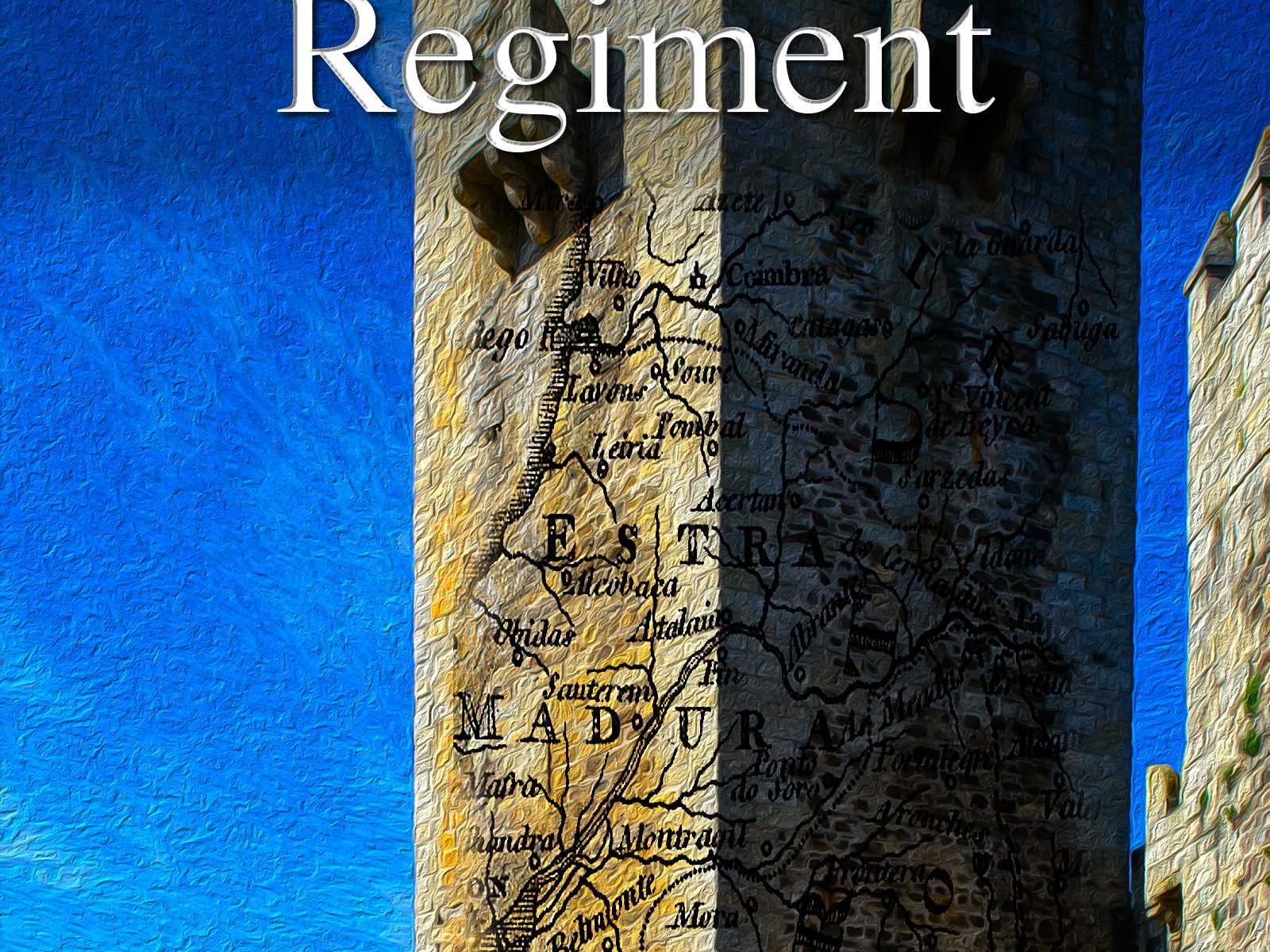
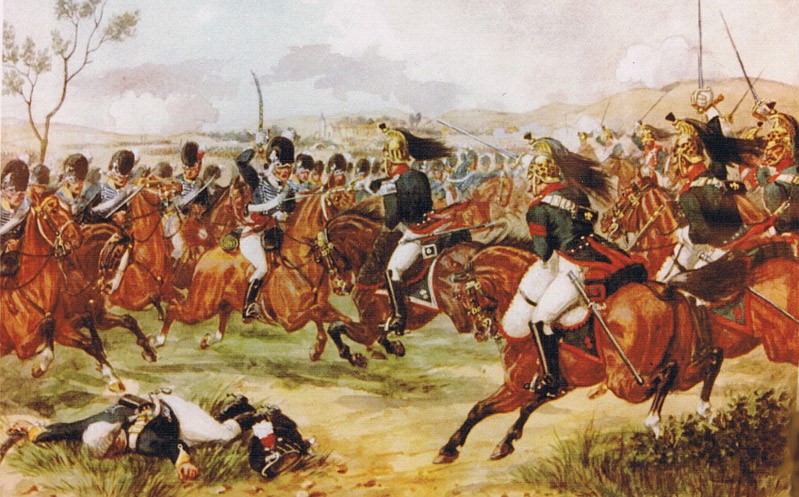
 The Battle of Vimeiro took place on this day in 1808 when the British under General Sir Arthur Wellesley defeated the French under Major-General Junot near the village of Vimeiro in Portugal.
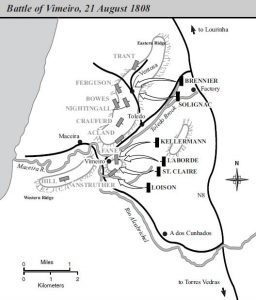 Junot’s first move was to attempt to outflank the British by taking an unoccupied ridge to the north-east of the village. Wellesley’s men held Vimeiro and the western ridge, but he moved quickly to take the ridge ahead of Junot. Junot sent reinforcements to join the battle on the flank but made the decision to launch an attack on the village without waiting to see the outcome of his outflanking manoeuvre.