The Danish Woman

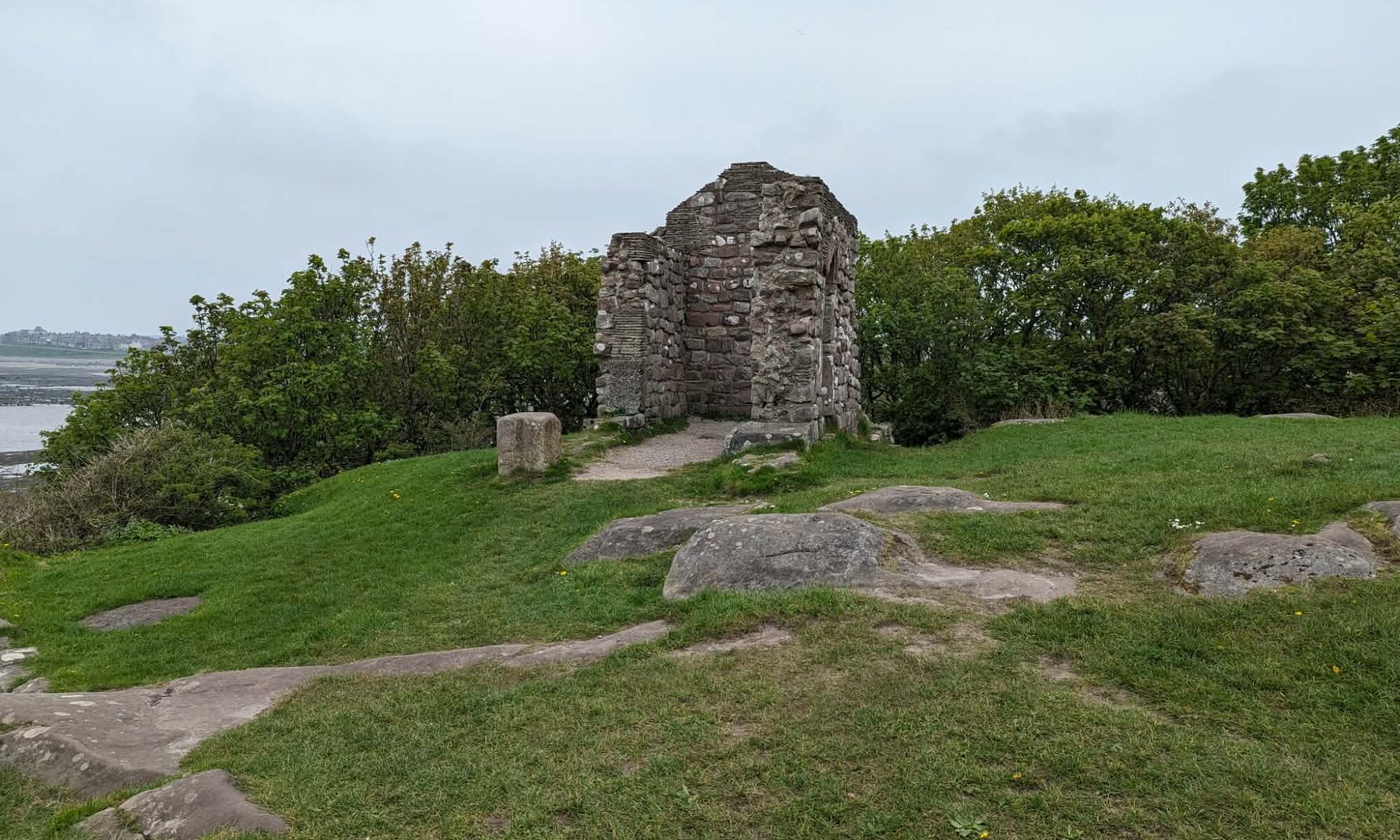
St Peter’s Church, Heysham Village

The Danish Woman is my rather belated Valentine’s Day story for 2026. As always it’s free so please share as much as you like.

Regular readers will know that I never forget a character, even if they only appeared briefly in the books or short stories. The hero and heroine of my 2026 love story (as Valentine’s Day has gone) have both been mentioned before. I think most people will remember the lady. The gentleman never actually made an appearance, but he was discussed. I’ve enjoyed finding out what happened to these two when I took my eye off them and I hope you enjoy it too.


The Hogback, St Peter’s Church, Heysham

Living on the Isle of Man I regularly travel through the Port of Heysham but a few years ago I decided to take the time to explore the area properly. I was very glad I did. Heysham Village is gorgeous and well worth a visit and like the hero of this story I was fascinated by the ancient hogback stone which now resides inside the church of St Peter.


The Golden Ball at Snatchems

The inn mentioned at Snatchems is the Golden Ball. It still stands on the banks of the river and serves excellent food. These days customers don’t need to worry about being picked up by the press gang. At least, I hope they don’t.

The Danish Woman

Morecambe Bay in winter was a desperately miserable place to be. Captain Charles Stewart RN did not know the area well and had no desire to improve his acquaintance. His one wish was to conclude his business and return to the comfort of his home in London, to await further news of the refit of his ship which was currently undergoing extensive repairs at the naval dockyards in Portsmouth.

It had been three months since Charles had been given command of HMS Bridget, a fast frigate which had been taken from the French off Martinique the previous year. As First Lieutenant of the Wren Charles had led the boarding party during the attack and taken command of the prize crew which sailed her home. The Bridget would be his first post-command and, at the age of twenty-eight, he knew he was fortunate. It took most officers a lot longer.

Charles liked to think that talent and hard work had contributed towards his early promotion but he was not naïve and he knew that family connections had played a significant part. Ties of both blood and marriage to the Earl of Jersey, Lord Castlereagh and the Marquess of Londonderry gave him an advantage over less well-connected officers. Unlike the army there was no promotion by purchase in the Royal Navy but applications to the Admiralty were definitely influenced by family connections. Charles did his best to hide the fact that he was slightly sensitive about it.

His sojourn in the north was the unfortunate result of having too much time on his hands. On the voyage home from Martinique he had contracted a bad bout of fever which had laid him up for more than a month. For a while Charles had worried that illness would prevent him taking up his new command. It had been a relief when the need for refitting and repairs gave him another few months’ recovery time.

He was back on his feet and able to take gentle exercise when he received a summons to the Admiralty. His audience was with Rear-Admiral Vane, his maternal uncle, but the meeting had nothing to do with family matters. After making polite enquiries about Charles’ health and the progress of the Bridget, the Admiral gave his bad news with an apologetic air.

“We need a man to go to Lancashire for a few weeks. There have been some problems with the press gang around the Heysham and Poulton-le-Sands area on the west coast. Generally speaking these things blow over of their own accord but I’m afraid this one has taken a more serious turn. A man died in a scuffle outside a local inn and we need to hold an inquiry. I want you to chair it.”

Charles tried not to show how appalled he was. “Isn’t that rather unusual, sir? I thought these things were generally held here in London, at Greenwich.”

“They usually are. Unfortunately the man who died should never have been pressed in the first place. The lieutenant commanding the impress frigate seems to have exceeded his orders by several leagues and took up a group of obvious landsmen without making careful enquiries. Mr Samuel Beeston was eighteen-years-old and the son of a local landowner. Old Beeston isn’t really much more than a yeoman farmer mind, but his lands are substantial enough for him to be considered a gentleman.”

“Oh Lord,” Charles said with feeling.

“Precisely. Beeston is well-liked in the area and our press gangs are not. After a great deal of discussion it has been decided that the inquiry should be held locally to show that we are being open and frank in our handling of the matter.”

“Are we, sir?”

“Good God, no. The inquiry will hear all the evidence and find that the death of young Beeston was an unfortunate accident which the Navy greatly regrets. Which is true as far as it goes. Lieutenant Crosby will receive a gentle warning about his over-zealous performance of his duty and as soon as the inquiry is over he’ll be quietly shifted onto half-pay where he can do no more damage. Personally I would like to court-martial the imbecile but we can’t do that without stirring up a hornet’s nest about the activities of the press gang all over the country. We’ll move our operations away from Lancashire and over to the east coast for a while and give the inhabitants of Heysham time to forget.”

Charles made a last-ditch attempt. “I don’t have any experience of chairing such an inquiry, sir.”

“All to the good. I’ll make sure that the scope of the thing is set out in tedious detail so there is no room for anything to go wrong. All you’ll need to do is sit and listen to evidence. We’ll send a man from the Judge-Advocate’s department with you and he’ll manage all the procedures. Just nod wisely and read out the verdict and by the time you get back the Bridget will be ready to sail. Where is it they’re sending you?”

“America I believe, sir.”

“Excellent. Good chance of prizes. Not that you’re in need of it, but it looks good on your service record. Right, that’s settled then. Are you free to dine with us later? Your aunt would like to see you before you leave.”

Charles had never been to the Lancashire coast before. He found it an eerie place. Five different rivers drained into Morecambe Bay and much of the surrounding land had been reclaimed for agricultural purposes over the centuries. In addition to farming, the locals lived mainly by fishing and there were rich cockle beds along the shore. There was a scattering of islands out to the west of the bay, some of which were accessible on foot during low tide. Charles was warned by his host not to venture out without a local guide as fast-moving tides and quicksand claimed several lives each year. Charles was able to reassure Sir Lionel Faulkner that he had no intention of taking the risk.

He had not met Sir Lionel before but his uncle had known him for many years and had suggested the arrangement.

“I’ve arranged for a small escort of marines to be placed at your disposal while you’re in the area. You and Dunbar, the advocate, can stay with Faulkner while you’re there. The inquiry will be held in Lancaster but you won’t want to be staying at an inn for weeks. Faulkner’s a good fellow. He’s a bachelor and a scholar – collects old books and whatnot. He won’t trouble you and he keeps a comfortable house.”

The arrangement suited Charles very well. Sir Lionel occupied a big square house built high on the cliffs at the edge of the village of Heysham, overlooking the bay. It dated from the beginning of the previous century and had long windows with glorious views out to sea. Sir Lionel was an excellent host although rather absent, which suited Charles. The cook provided good plain food and Charles dined with Sir Lionel most days but other than that saw little of him. Sir Lionel spent his time in his library working on a history of the county and seemed happy for his guests to come and go as they pleased.

There was little for Charles to do during the initial stages of the inquiry. Mr Dunbar from the judge-advocate’s department spent his time riding about the district interviewing witnesses and writing extensive case notes, but Charles was not needed during this part of the inquiry. It occurred to him, confined to the house during a week of driving rain and high winds, that he could very well have stayed in London for another couple of weeks.

During the second week the weather improved and Charles took the opportunity to explore the area mounted on a placid grey gelding belonging to his host. The winter days were short and it was very cold but it remained dry and the exercise was good for him. He was beginning to shake off the effects of his illness and, despite the grey skies and broad flat countryside, he was starting to enjoy himself. It was true that he was missing the London Season but after weeks of fever and wretched sickness Charles thought that winter rides, sea air, good food and early nights might be better for him than trying to attend three parties in one evening.

There was also the advantage that he could avoid the attempts of his aunts to find him a wife. Charles had lost both his parents to a smallpox epidemic five years earlier. He still missed them but he had four aunts – two on each side of the family – who took an active interest in his marriage prospects. Although he was sorry not to be seeing those of his friends who happened to be in Town this January, he did not miss the endless parade of eligible girls produced by his Aunts Augusta, Selina, Mary and Juliana every time he was in London.

He had been in Lancashire for eight days before he really saw the sun. Going down to breakfast he found his host and Mr Dunbar already at the table. The sky was a brilliant blue and winter sunlight bathed the dining room. Charles sat down and accepted coffee and rolls.

“A beautiful day,” he said enthusiastically.

“It’s freezing out there,” Dunbar said. “I have to ride over to Bolton-le-Sands this morning to speak to a fisherman who claims three of his crew were illegally pressed last year. It’s going to be a cold ride out on the coast road.”

“Is it possible to illegally press fishermen?” Charles said doubtfully.

“At the moment every seaman who has ever joined the navy along this coast is going to claim illegal impressment, even if they volunteered,” Dunbar said gloomily. “They’re hoping for some kind of compensation.”

“They’ll be lucky,” Charles said, reaching for a slice of ham. “I don’t think I’ve ever known a case of illegal impressment to be upheld.”

“It happens quite often up to the point where the men are sworn in,” Dunbar said. “If they can prove their case they’re simply released. Once they’re aboard and away it’s very unusual. I’ve only ever heard of one case where an officer was prosecuted for it mind, and that was years ago. Long before my time. Can’t remember the name of the captain but I read about the case when I was in training. He’d repeatedly ignored evidence that he’d picked up a gentleman’s son and the boy was underage as well. There was quite a scandal at the time, I think.”

“But you’re not expecting anything of the kind from a fishing crew from Bolton-le-Sands I take it?”

“God, no. Still, I have to show willing. That’s rather the point of this whole exercise; the Navy wants to show the good people of Lancashire that its impress service isn’t allowed to do whatever it likes. Although of course it often does.”

“Do you want me to come with you?”

“Better not, Captain. It’s your job to look impartial at the inquiry next month. Thanks for offering though.”

After breakfast, encouraged by the sunlight, Charles decided to walk down through the village and then up to the ruins of St Patrick’s Chapel on the clifftops. Dunbar had been right about how cold it was but Charles was well wrapped up in his heavy winter cloak and he found the walk exhilarating.

He paused at the gates of St Peter’s, the ancient sandstone church in the village. So far, he had not accompanied his host to a service and he thought a little guiltily that he should do so. The gate was not fully closed and Charles pushed it open and went into the churchyard.

He was surprised to hear children’s voices floating on the still air. He saw them at once, a boy and a girl, both very young, playing by the stone wall which overlooked the sea.

They seemed to be unaccompanied which worried Charles. He had no experience of children but he thought these two could not be much more than four or five. They had found a collection of round pebbles, perhaps from one of the beaches, and were setting them out along the rough pathway. Charles hesitated then went forward.

The boy saw him first and jumped to his feet. His sister remained fixated on the stones until her brother grasped her arm and pulled her up. Charles stopped a safe distance away.

“Good morning,” he said.

To his amusement, the boy executed a little bow. “Good morning, sir.”

His voice was high and clear and he spoke in accents which did not suggest he was one of the village children. Charles looked around in search of a nursemaid or governess.

“Surely you’re not alone up here?” he asked.

“Mama is inside the church,” the girl said. “Who are you?”

Charles supposed that she had the right to ask given that he had approached them. He bowed in turn.

“Captain Charles Stewart at your service, miss. I’m staying with Sir Lionel Faulkner. Forgive me, I was wondering how you came to be out alone. But if your mother is close by…”

“We are not to leave the churchyard,” the boy said. “She said we could play here.”

“It’s because she doesn’t like us to see her cry,” the girl said.

Charles froze and looked over towards the little church. He had intended to go inside to look around but the children’s remarks made him hesitate. He guessed that whoever the woman was, she had been visiting a grave and he did not like to intrude.

“I see,” he said politely. “Well I am sure she won’t want a stranger to see her cry either so I’ll make my visit another time. Thank you for telling me, children.”

“I’m Annalise,” the girl said. “I’m four. My brother is five and his name is Paul. He remembers my father better than I do.”

Charles felt a little shock even though he was not surprised. He wondered what illness had robbed this little family of its father. Given the ages of the children he had probably been a young man.

“I am sorry to hear that, Miss Annalise,” he said gravely. “Is he buried in the churchyard here?”

“We don’t know where he’s buried,” the boy said. “But there’s a stone in the church. You should come and see it: it’s splendid. It has two flags carved on it and a sword as well. This way. Mama won’t mind; she’ll have finished crying by now.”

He took Charles by the hand and towed him towards the church door. Charles was so surprised that he went along, although he suspected that the grieving widow would be wishing him to the devil. The wooden door creaked a little as the boy pushed it open and Charles stepped inside.

“Mama, this is a captain and he wants to see Papa’s stone,” Paul said in ringing tones. “I told him about it.”

Charles stopped inside the door, forgetting his embarrassment at the unexpected beauty of the little church. The walls were of mellow local stone with exposed wooden beams above. There was a lower chancel and a small side chapel. Several stained glass windows made dappled, colourful patterns on the paved floor. There was also an octagonal sandstone font which looked very old to Charles’ untrained eye. A number of ancient grave slabs and memorials adorned the walls, probably commemorating previous rectors.

It took a moment before he saw the woman, as she was standing in one of the dimmest corners of the church. She was not dressed in full mourning but wore a soft, mauve gown under a dove-grey cloak with matching bonnet. Charles could not see her face clearly but he gained the impression that she was quite young.

“Mama, show him Papa’s stone,” the boy said again.

She moved forward and Charles went to meet her, gently disentangling himself from the child. They met in the centre of the nave and he bowed awkwardly.

“My apologies for disturbing you, ma’am. I’m a visitor to the area and was coming to see the church when I met your children outside. Your son was keen for me to see his father’s memorial and wouldn’t take no for an answer. I’ll leave you in peace.”

“Captain, if you do not view the memorial stone there will be no peace, trust me.” She looked past him at the waiting children. “I will show the gentleman, Paul. Wait outside for me. I will not be long and then we shall walk up to the old chapel.”

The boy gave a sunny smile, grabbed his sister’s hand and disappeared outside, closing the door with exaggerated care. Charles surveyed the woman and bowed again.

“Captain Charles Stewart, ma’am, of the Royal Navy. I’m staying with Sir Lionel Faulkner.”

“Ah, the inquiry into the press gang. How interesting.”

She appeared younger than he had expected, hardly old enough to have two children, and she was very attractive. Charles was intrigued by her accent. She was clearly not English although she spoke it perfectly. He wondered if she might be German.

“I don’t seem to have much to do at the moment, ma’am, which is why I’m here making a nuisance of myself in a country church.”

She gave a broad smile. “You are not a nuisance, though I suspect my children may have been. They do not meet many new people here and they are very sociable. Also you are an officer which will always interest Paul.”

Charles was beginning to wonder. “I see. Was your husband a navy man, ma’am?”

“Army,” she said and turned, gesturing for him to follow her. “He is not buried here of course. He died at Salamanca the year before last and was buried somewhere out there. My father-in-law was still alive then and had this splendid memorial placed here.”

Charles studied the white marble stone. It was very fine, with crossed flags draped over a cannon. Lying beside the gun, as though dropped there, was a sword. The symbolism was clear and Charles, who had seen friends and crewmen die in battle, felt a little shiver run through him. He read the wording underneath. It was the usual flowery tribute of courage, duty and devotion to family. The dates told him that Captain John Kent had been twenty-six when he died. The girl standing beside him had been a widow for around eighteen months. He turned to look at her.

“I’m so sorry Mrs Kent.”

“Thank you. I miss him greatly, although it gets a little easier with time.”

“Was this church… I mean, I presume you live locally?”

“Yes, I currently reside up at Stokely Hall.”

“Is that the rather beautiful house with the exposed beams? I’ve ridden past it.”

She smiled. “Yes, it has been in the family for two hundred years.”

“But you’re not local, I collect. I’m trying to guess your accent.”

“I am from Denmark. A little village on the coast to the north of Copenhagen.”

Charles found himself wondering about that. As a younger officer he had served during the brief campaign in Denmark during 1807 and, given the age of the children, the timing would be right. He managed not to ask and he was certainly not going to mention that he had taken part in the bombardment of Copenhagen which had flattened half the city.

She had turned and was walking towards the door. “How long are you staying in the area, Captain Stewart?”

“Until after the inquiry: about another three weeks. After that I return to my ship, sailing for American waters.”

He opened the door and held it for her. Outside in the winter sunlight he could see her more clearly and had to remind himself not to stare. She was lovely, with dark-brown hair, blue eyes and fair skin. He found that he could not blame Captain John Kent for finding himself a Danish bride during that short, miserable campaign, though he wondered again how old she must have been. She did not look as though she could be much more than twenty-three or four now.

“Have you seen St Patrick’s Chapel, sir?”

Charles realised that he must have been standing like a fool. “Oh… the ruins on the cliff? Not close up, though I’ve ridden past.”

“Are you on foot today? We are going to walk up there. The children love it. You could accompany us if you wish for a guide.”

He felt his heart give a little skip. Mocking himself silently he bowed.

“If it would not be an imposition, ma’am, I would like that very much.”

***

It had been a long time since Christa Kent had walked in the company of a young officer, or any gentleman at all. The way was fairly steep, though the children raced ahead making light work of it. The naval officer paced steadily beside her. Once or twice he reached out a hand to steady her when the rough path became slippery.

Christa allowed him to do so, though she did not really need his help. She wore stout boots and had walked this path many times before. Still it was pleasant and reminded her of all the times she had walked beside her husband. Jack had always treated her as though she was a delicate creature in need of constant care and protection. Christa knew she was not, but she had enjoyed it anyway.

St Patrick’s Chapel stood on the headland above St Peter’s Church and was built from the same sandstone. Most of the structure had long gone but the south wall, the east gable wall and the eastern section of the north wall still stood and there were low ruins of several other walls which contrived to give a good idea of the original building.

The children raced ahead and Christa allowed them to go. They had lived all their lives on this wild shore and knew what they should and should not do. She watched as Captain Stewart explored the ruins then made his way over to a curious set of holes cut into the rock nearby.

“What on earth are these?”

“It is believed that they are tombs. There are six here and another two over there. You should talk to Sir Lionel as he is an expert on such things. He once told me that these are probably from the eleventh century and that those holes at the top would have held the base of a wooden cross.”

“They’re fascinating. I’ve never seen anything like them before.”

“Nor have I. We have many ancient sites in Denmark but when I was a girl I had no interest in such things. All I wanted was to marry and leave. Sometimes now I wish I had listened to my father more and not brought him such sadness, but I was young and very silly.”

He turned to study her. He was a tall, dark man with a rather serious face. Christa wondered suddenly if his sallow complexion spoke of recent illness.

“How old were you… no, I’m sorry. That was impertinent.”

She smiled. “I gave you the opportunity to ask. I do not mind. I was sixteen when I married Jack and I have never been back to Denmark. War makes such things difficult.”

“I’m sorry. Did you meet him during the campaign of 1807? I was there, though aboard a frigate.”

“Yes. I thought he was wonderful. I wanted adventure. He wanted… me, I suppose. His Commanding Officer was furious about our marriage but he forgave me later. He was always good to me. He is Paul’s Godfather.”

“Do you have any other family here?” Stewart asked, falling into step beside her as she followed the children over the springy grass along the cliff-top. “It’s very beautiful, but a lonely spot for a young widow with two children.”

“It was my home with Jack. I am happy to remain here for as long as I am able.”

Steward shot her a curious glance. “Surely this is your home now?”

Christa hesitated, realising that she had said more than she intended. She had so little social interaction these days that sometimes she forgot the rules. Glancing at Stewart she saw nothing but respectful interest and decided that she did not care. This man would drift out of her life after today. It hardly mattered what she said to him.

“When Jack was killed his father was still alive. He had not always approved of me but we grew closer with time. Mr Kent believed that I had persuaded Jack to marry me because I wanted to get away from home.” She gave a little smile. “Looking back, he was probably right. But we were very happy together and I grew to love him so much. It is cruel sometimes that one barely realises how fortunate one is until everything changes.”

“When did your father-in-law die?”

“Six months after Jack. He was already unwell but I think it hastened his end. I nursed him. He spoke very affectionately to me during those days and mentioned changing his will. He died before doing so.”

She saw the Captain’s eyes darken a little. “What did that mean for you? And your children?”

“For the children, nothing. The house and estate will go to Paul when he is of age. There will be a dowry for Annalise. But I am not their guardian. That passed to Mr Frederick Kent, my husband’s cousin. He is a solicitor who lives in London and has always disapproved of me. I think he would have liked to take the children from me, only he is unmarried and would not have the least idea what to do with them. But he has control of the estate and the money.”

“Did your husband leave you nothing?” Stewart said. He sounded appalled.

“It was not at that time his to leave. But he made a will which requested that the allowance his father paid to him be continued to me. It is not a great deal but I am allowed to continue living in the house.”

“What of the children? Are you expected to support them?”

“Essential household expenses are paid from the estate but I have to apply to Mr Kent for anything else. New clothing for the children, a pony for Paul… I feel like a beggar. I’m sorry, I am sharing far too much with a complete stranger. I do not talk to many people you see.”

“Do you have anyone living with you? A female companion?”

“No. I have no friends here and I could not afford a paid companion. One day Mr Kent wishes Paul to be sent away to school and I shall then ask for a governess for Annalise. I don’t want him to go but I have no say in the matter.”

Stewart shook his head sombrely. “I’m sorry; that’s shocking. Did you not make friends here while your husband was alive?”

Christa shrugged. She was surprised at herself but she realised that she was tired of being brave. The opportunity to confide was irresistible.

“Not really. I had many friends in the regiment but since I came back here… It is an isolated place and they don’t take well to strangers. Locally, they simply call me the Danish woman.”

At the end of their walk she watched him go, his long-legged stride making easy work of the path back to the village. They had talked of other things after her uncomfortable revelations: of his naval service and Jack’s army career, of London and Copenhagen and the progress of the long war. He was easy to talk to – too easy perhaps – but as Christa followed the children back up the track towards the house she decided she did not regret her indiscretions. Just for once it had been good to speak the truth.

Stokely Hall was an old manor house dating to the seventeenth century, which had been updated several times over the years. It was too big for a young widow with two children who did not entertain. Sometimes, sitting with her sewing during the long winter evenings, Christa daydreamed about what she would do if she had guardianship of her children and the estate. She thought that she would have found a tenant for the house and rented somewhere smaller and more manageable for herself and the children, perhaps in a small town where they might make friends. She had enjoyed living in Melton Mowbray when the regiment had been in barracks there.

Christa had suggested something of the kind to Mr Frederick Kent once the terms of her father in law’s will became clear. Kent regarded her as though she had attempted some kind of fraud.

“Utterly unsuitable,” he snapped. “My cousin’s children should be raised in his ancestral home. In time the boy will go away to school of course and we must give some thought to a proper English education for the girl. The terms of my uncle’s will were very generous to you. You will continue to receive an allowance until the boy reaches his majority when it will be up to him whether it may continue. You may also continue to reside at Stokely Hall. Most females in your position would consider that enough.”

Christa had noticed that Kent never referred to the children by name. They were always the Boy and the Girl. She was suddenly furious about it. She was also furious at being referred to as ‘a female’, as though six years of marriage counted for nothing.

“You mean most widows. That is my position, Mr Kent. A widow. I was married to your cousin for almost six years. I ask only what is best for my children. And for some respect.”

Kent’s face looked pinched and angry. “Just so, madam. Presumably that is why my uncle was so generous. Of course, should you remarry the terms of that will would no longer apply.”

Christa thought it was clear that he hoped she would do so, probably to a wholly unsuitable man. She said nothing more, being unwilling to argue with a man she so cordially disliked. She could not really imagine being married again. She had grown to love Jack very much during the years of their marriage.

At the same time, she resented the isolation of her life. At not quite twenty-three she was too young to be shut away in this big, old house in the country. She missed the liveliness of regimental life. She missed music and dancing and flirting. She missed conversation with an ache of loneliness.

When the children were asleep, she settled herself in the parlour to write to her father. Most of the reception rooms were kept under holland covers. Mr Kent was strict about the number of servants employed at the hall. Christa did not really mind. She was not in a position to entertain and she had no wish to sit in solitary splendour in the enormous drawing room or dining room.

All the same, it was a little depressing to pass through rooms shrouded in linen covers. Christa thought that the house was like herself: closed down and silent with none of the colour or gaiety that it deserved. It was no life for such a lovely old place and no life for her or her children. Christa remembered Jack, who had been so sociable and so lively, and blinked back tears. He would have been furious to see her brought to this.

***

She had not expected to see the young naval officer again but she encountered him only three days later in the village of Poulton-le-Sands. She had just emerged victorious from an argument with the butcher over the quality of the meat in his last delivery when she saw Captain Stewart coming out of the hardware shop opposite.

He saw her immediately and crossed the street, stopping before her with a bow.

“Mrs Kent, what a pleasant surprise. How are you?”

“Very well, as you see.” Christa realised she was smiling broadly. It was such a refreshing change to see a welcoming face in the village where the best she generally encountered was civility. “Are you doing your shopping, Captain?”

“I’m doing Sir Lionel’s shopping. I offered to make myself useful since I really don’t have anything to do until next week when, thank goodness, they have finally set a date for the inquiry. Sir Lionel was very put out this morning with a delivery of ink which resembled nothing so much as a pot of sludge. He will return it of course but, in the meantime, he was about to run out. The housekeeper informed me that you can buy anything in Felton’s, though it would be more expensive. She was right as well.”

The Captain shot a fond look at the shop and Christa could not help laughing aloud. His expression reminded her so much of Jack.

“Now that you have discovered Felton’s, I predict that you will be a frequent visitor,” she said. “All the men love this shop. I do not understand it. There are so many things on the shelves or hanging from the ceilings that I do not know how anybody ever finds anything in there. But Jack went inside every time he came to Poulton when he was at home. Always he came out with things he did not need and had not intended to buy.”

A guilty expression flashed across the serious face and then unexpectedly, Stewart began to laugh.

“Did he? He has all my sympathy. That place is like a cave full of treasures. In addition to the ink I am now in possession of a new snuff box for my first officer, some blotting paper, and a bolt for Sir Lionel’s tool shed which I intend to fit this afternoon to stop it from blowing open every windy night and keeping half the household awake.”

Christa threw up her hands. “You see? It is like a magic spell. But it only works on men.”

“Are the children not with you today?”

“No, they have their lessons. We do not have a governess at present so I teach them myself. But they also have some lessons from Mr Archibald the parson. He is preparing Paul to go to school when he is a little older but he is kind enough to teach Annalise as well. She is very young but she works hard because she wishes to do everything her brother does.”

“It’s going to be hard for her when he goes to school.”

“It will be hard for me also. But it will not be for three years. They will not take them any younger.”

“That’s still too young in my opinion.”

Without intending it, they had fallen into step together, strolling along the High Street. Christa shot him a sideways glance.

“Do you think the same about the very young boys they accept into the Navy?” she asked, greatly daring.

He looked surprised. Then he grinned.

“I am bound to say yes, ma’am, given that I was once one of them. I was Navy mad but it was still too young. I realise that now.”

“Why did you… no, I am sorry. I am too curious.”

“Don’t you rather feel as though we’ve already moved beyond mere politeness?” he asked, surprising her again. “I was the younger son. We’re expected to earn our living. I chose the Royal Navy over the army because I loved the sea. My older brother died when I’d been at sea for two years. It was a stupid accident: a cut that became infected. My parents wanted me to come home but by then… home seemed very small and very confining. I wanted adventure.”

“Oh I understand that so much,” Christa said fervently.

“Do you? I never really thought of girls looking for adventure.”

“That is because you have no idea how dull it can be as a clergyman’s daughter in a tiny Danish fishing village. When the British army came everybody was horrified. I was happy. There were handsome young officers in red coats and all I could think about was a way out.”

She wondered if she would shock him. Instead he smiled.

“That’s very honest.”

“I was very fortunate. Some of those handsome officers might have taken advantage of my naivety then abandoned me. Jack asked me to marry him. We barely knew one another but I was so grateful. He introduced me into a whole new world. He was an honourable man and so good. No wonder I fell in love with him.”

There was a long silence. Eventually he said:

“I think that’s possibly the most genuinely romantic story I’ve ever heard.”

She stared at him in amazement. “Even though I admitted that I did not feel that way at the start?”

“That’s why it’s so lovely. To start off on such rocky ground and then to find what you two had… I’m envious.”

“You are not married then? Oh no, I am sorry. That was so tactless.”

To her relief he was laughing. “I’m not. I am avoiding it because… oh for many reasons. My aunts are furious. Have I mentioned my aunts? I have an entire pack of them and they spend their lives hounding me about matrimony. Every time I show my face in London I am paraded as a good catch. I suppose I am. I’m not wealthy but I’m very comfortably off and I could easily support a wife and family. But I just… I don’t want to marry a girl I hardly know then sail off not knowing when I’ll see her again. Mrs Kent, why on earth am I telling you all this?”

They had reached the edge of the village with nowhere else to go apart from the open road and it was in the wrong direction for Christa. She laughed and towed him around so that they faced the village again.

“Unless we are walking to Scotland sir, we must go back. It is probably my fault. I confessed all kinds of unsuitable things to you when we last met. And also today. You are a man I find easy to talk to. When does this inquiry begin?”

“On Tuesday.”

“And how long will it take?”

He pulled a face. “I’ve honestly no idea. A week, perhaps. The Navy is keen to hear local opinion, given what happened. At the very least I think the inhabitants of this part of the coast may get a break from the activities of the press gang.”

“Knowing how much misery they cause I think that alone will be worth it,” Christa said soberly.

***

With an eye to local opinion, the inquiry had been opened to the public. It was held in Lancaster Castle and, settling himself at the head of the court, Charles observed that seating had been arranged for the upper members of local society with an interest in the case, while benches and standing room allowed the lower classes access providing they behaved. Bailiffs stood ready to evict anybody who spoke out of turn.

On the first day the room was crowded. Witnesses were sworn in, procedures explained and the scope of the inquiry was read aloud in such excruciatingly tedious detail that by the third day, when the real work of the inquiry began, most of the casual onlookers had grown bored and departed.

Charles had no interest in the spectators until he noticed a serene figure in dark-blue seated beside a woman who was probably her maid. He could not imagine why Christa Kent had any interest in a Royal Navy inquiry into possible misbehaviour by a press gang but the fact that she was there immediately distracted him from the proceedings. It was so bad on the first day that he seriously considered sending her a note asking her to stay away. He already knew what the Admiralty expected of him but he still felt obliged to listen to the evidence properly and for reasons he did not care to explore, the presence of Captain Kent’s attractive young widow made it difficult for him to concentrate.

He looked for her afterwards as the spectators were leaving but must have missed her. At the end of the second day however, he found her in the castle grounds in conversation with the parson and his curate, both of whom had attended the proceedings. Charles joined them and Christa made the introductions. The Reverend Archibald was a round-faced gentleman with thinning hair and a pleasant manner.

The curate was probably in his twenties and had little to say. Watching him, Charles decided that Mr Cresswell had a decided interest in Mrs Kent. He did not think it was reciprocated, or even noticed. It amused Charles. He also realised, with a little start of surprise, that he was pleased by her indifference. The thought gave him pause. In due course, the little group broke up to go their separate ways. Charles promised Mr Archibald that he would attend service on Sunday and the Vicar offered a tour of the church and churchyard in return.

“You will probably not have seen our hogback,” he said genially. “It is quite unusual. We are very proud of it. My wife hopes you will join us for tea at the vicarage afterwards. You also Mrs Kent, if you are free. Mary will be happy to entertain the children.”

Charles accepted with pleasure. The two clerical gentlemen disappeared in search of their carriage and Charles realised he had no idea how Christa Kent had got here.

“May I escort you to your… horse?” he guessed. “I know you’re an intrepid walker but you cannot have walked all the way from Heysham to Lancaster.”

She laughed. “Nonsense, it is no more than five miles. I didn’t though. My poor maid loathes walking, which is why I usually leave her at home. I came in the gig. I no longer keep a riding horse, though Mr Kent has agreed that he will provide a pony next year so that Paul may learn to ride. But there is one elderly horse who can pull the gig.”

Charles was beginning to recognise that deliberately neutral tone of voice.

“Do you miss riding?” he asked as they passed through an ancient stone archway and turned left towards the Bell Inn.

“So much. My mare had to be sold. I couldn’t afford to keep her. I’ve been able to keep the small gig though, for shopping. Old Bertie, who pulls it, should really be put out to pasture now but I don’t use it any more than I have to. I wanted to come to the inquiry, though I won’t make him do the journey every day.”

Charles heard a little catch in her voice as she spoke of her horse. He was shocked at how viciously he wanted to punch Mr Frederick Kent. He kept his voice deliberately light.

“I should think you would die of boredom. I may do so myself. Look, I’m not sure how you would feel about this. And I’d need to ask Sir Lionel. But he keeps several riding horses in his stables, mainly for the use of his nephew and niece when they come to stay. Those animals have nothing to do but eat themselves silly at this time of year. Sir Lionel rarely rides in the winter: he admits it. If he would allow me to borrow the mare, would you ride with me?”

“Oh I could not. Such an imposition.”

“It wouldn’t be. You’ve proved an excellent guide on foot but there are one or two places I’d like to see which are further away. Particularly the inn where the press gang tried to snatch young Beeston and his friends. Where he died. It’s on the river somewhere.”

“At Snatchems,” Christa said. She seemed to notice his expression and smiled. “I know. When I first came here my English was not so good. I did not understand at all.”

“Is it really called that?”

“Not on any map but it is what the local people call that stretch of the River Lune. The inn is called the Golden Ball and they tell stories of smuggling as well as the press gang.”

“Will you be my guide ma’am?”

She hesitated for a long time. “If Sir Lionel does not object,” she said finally.

***

The tea party at the vicarage was a great success. Christa thought that it was a measure of how isolated she had become that even such limited social contact made her happy. She thought nostalgically of the early days of her marriage. She had loved regimental life. The 110th had been stationed in barracks for a while with a brief stint in Ireland. There had been dinners and dances and Lieutenant Kent had been keen to show off his pretty young wife. She had never been happier.

When Jack had gone to Portugal, Christa could not go with him as she had the children but she had remained in Melton Mowbray in their rented house. There were many other regimental wives living locally, some of whom had children. She was never lonely.

After Jack’s death she had given up the house and come here to his childhood home where his father was already very ill. Broken with grief, she had nursed her father-in-law in his final weeks and grieved all over again at his death. It had never really occurred to her that her life and that of her children would go on to be controlled by a man she hardly knew, who clearly disliked and disapproved of her.

If it had not been for Paul and Annalise, Christa thought she would probably have told Cousin Frederick exactly what he could do with his allowance and tried to find a way to return to Denmark, to her father, though the war would have made that difficult. As it was the children must come first. She tried to make the best of her changed life for their sake but the arrival of Charles Stewart had made her realise how lonely she really was. She dreaded his departure.

Mrs Archibald, the vicar’s plump cheerful wife was very kind and seemed a little embarrassed.

“I feel rather guilty at how I’ve neglected you, my dear,” she said as they followed the gentlemen out into the churchyard to inspect the hogback. “I know I called once or twice when you were first here but since then… I think we all believed that you would go back home. Or perhaps take up residence in London. But it seems as if you intend to remain here.”

Christa wanted badly to tell her that she had no choice, but she did not. Her surprising confidences to Captain Stewart had probably been brought about by the knowledge that he had no relationship to any of these people and would soon be gone. She could not bare her soul to the vicar’s wife.

“Until the war ends it would be difficult to visit Denmark, ma’am. Though one day I would like my children to see where their mother was born. Until then, this is my home.”

“Well, we must see what we can do to make you known to more of your neighbours,” Mrs Archibald said. “We generally invite a few people to dinner once a month or so and now that your mourning period is fully over there can be no reason why you should not join us. If you would not object that is?”

“Thank you, I would like that,” Christa said.

They had reached the hogback which was set at the back of the churchyard. Captain Stewart stood looking at it in apparent bewilderment.

“What on earth is that? It looks very old.”

“It is ancient,” the vicar said rather proudly. “I do not know exactly when it was discovered; it was here when I took over the living. The locals say it was found up at the site of the ruined chapel and moved down here. Feel free to study it closely, Captain. The carvings are fascinating.”

Stewart seemed to agree. The hogback was a curved piece of sandstone around six feet in length, carved on all sides with a variety of figures. The Captain crouched down to examine them. There were both animal and human figures, some of them looking like creatures from mythology while others seemed to depict real animals.

Christa had seen the stone many times but Stewart’s fascination caught her interest and she moved forward to study it again. Her companion was running his fingers over the stone.

“This looks like a snake. And is this meant to be a dog?”

“If it is, it’s not like any dog I ever saw,” Christa said. “Look at this group here. This animal has antlers.”

“I think it’s a stag. I think this is meant to be a group of hunters. This is extraordinary. I’ve never seen anything like it. I wonder how old it is.”

“Around this side is what looks like two birds. Possibly this is a tree.”

“Is it a gravestone of some kind?” Stewart wondered.

“If it is he must have been a man of some importance,” the vicar said.

The Captain lingered for several minutes after the rest of the party had returned to the house. Christa waited inside the church door for him, amused by his absorption in the old stone. He caught up with her with a quick smile.

“I’m sorry. You must be cold. I can’t get over that thing but I’ll come back on my own another time.”

“Are you interested in history?”

He gave a slightly sheepish grin. “According to my late mother I bored the whole family on the subject from early boyhood. It’s one of the reasons I’ve enjoyed my stay with Sir Lionel so much. It’s rare to meet a fellow enthusiast. He’s been lending me some of his books.”

He stopped and Christa had the impression that he was reining himself in with an effort. She wanted to tell him that she did not mind. She had never really given much thought to matters historic before but she had discovered that she was happy to listen to Charles Stewart talk on any topic he chose. It was slightly embarrassing.

***

The dry weather continued for the following week. The inquiry ground to an inconclusive standstill on Wednesday and Captain Stewart called an adjournment until the following week when he might choose to recall several witnesses after considering their testimony. After that, he would be ready to write his final report for the Admiralty.

 It gave him time to arrange his proposed expedition to the curiously-named Snatchems on the banks of the River Lune. To Christa’s surprised delight Sir Lionel seemed perfectly happy to lend his mare, so Captain Stewart and Christa rode out on a crisp winter morning. They talked for a while of the inquiry.

“What will happen once you have submitted your report?” Christa asked.

“I have no idea. Presumably they’ll present the findings to some Parliamentary committee or other and it will sink without trace. They’ll have to make a report to the local authorities up here – at least I hope they do. I’m going to be honest to you since I can’t be honest to anybody else. I think the impress service in this region has been poorly run, ineffectual and lazy about whom it took up. I hope they heave that Lieutenant out on his ear. Sadly that won’t be my decision. Poor Samuel Beeston’s death will be put down to an unfortunate accident. I think it was an unlawful killing. If one of my crew did what that press agent did aboard my ship I’d have him up for murder.”

Christa gave a little shiver. He seemed to notice it because he reached over and touched her hand, bringing his horse close in.

“I’m sorry. I’m going to stop talking about it. I’m not spoiling our first ride with horror stories. What do you make of Rose Red?”

“She’s beautiful,” Christa said, running her hand down the smooth neck of the pretty russet coloured mare. “It’s such a joy to be on horseback again, even if it is only for today. Thank you for arranging it, Captain.”

“It’s for my benefit as well. Sir Lionel is delighted to have found somebody other than his groom to exercise her. If you get on well today I suspect you may find he’ll ask you to do it again. You made a good impression on him earlier, I could tell. He may take pride in his image as a crusty old bachelor but I noticed it doesn’t stop him appreciating a pretty woman. Shall we try a canter? This country is perfect for it.”

They rode through the frosty morning, turning along the river bank until they reached the white painted inn which overlooked the broad flat waters of the Lune. Christa remained on horseback as he dismounted, tied up his horse and went to examine the rough area of scrub and stunted trees where Samuel Beeston and three friends had tried to evade the men of the press gang who waylaid them as they left the inn.

To Christa’s surprise he asked her to accompany him inside. Seated at a wooden table she drank local cider and listened as he talked to the landlord and his wife. He had already taken their evidence in the courtroom but here they spoke more freely.

Christa took no part in the conversation but listened to him skilfully drawing them out. She realised that he would not be able to use everything he learned today in any report to the Admiralty and wondered why it was so important to him to find out what really happened that evening.

On their return ride she asked him. He seemed to consider for a while.

“I think it’s my Navy training. Accuracy is important. Sometimes it isn’t possible to deliver a perfect result, whether it’s a court martial, a skirmish with the French or a botched raid by an incompetent press gang. I know my duty here. But I owe it to Samuel Beeston and his family to at least recognise the truth.”

“I think that is very admirable, Captain.”

“If not much help to the family. Thank you for acting as guide today. Look, I’m going to reconvene the inquiry on Thursday and wind up proceedings on Friday. After that I’ll need to go back to London. I realise I’m going to miss this. Do you think you could find time to ride with me again tomorrow? Not as my guide. Just for your companionship.”

“Yes,” Christa said without hesitation. She wondered if she should qualify it in some way then decided that if he did not need to, neither did she. “I am going to miss this as well.”

The weather was kind and they rode together for three bright sunny days, exploring the surrounding countryside. They ate bread and cheese in a wayside inn where they were not known and on the second afternoon Christa invited him into the house to take nursery tea with the children. Paul and Annalise were delighted with their visitor and Christa thought that she had never seen them so well-mannered at the table.

On the third day he rode into the stable yard with her, having agreed to lead the mare back to Sir Lionel’s stable. It had begun to rain over the last half-hour and they were both wet and a little subdued.

The Captain dismounted and lifted her down from her horse. Christa hesitated. She wanted to invite him into the house but she suspected that he would decline, wanting to get the horses back into their own stable so that they could be rubbed down and fed.

“I hope I’m going to see you again before I have to leave.”

“I was intending to go to the final day of the inquiry. If you do not mind.”

“I’m delighted, though it promises to be a singularly unsatisfying conclusion. I had originally intended to set off the following day, but I think I’m going to delay it until Monday. Mrs Archbald has invited me to dine on Sunday and they’ve been so kind. I’d like to go.”

“She has invited me as well.”

“I was hoping you’d say that. All the same it may be difficult to find the opportunity to speak to you alone so I…”

“So it is true,” a voice boomed. “I could not believe what I had been told, yet here I find you. Brazenly and publicly disgracing my cousin’s memory without a thought for the effect your conduct might have on my wards. How dare you, madam.”

Christa spun around, shocked. A stocky gentleman of around forty had emerged from the front door of the hall. He stood at the top of the steps, keeping out of the rain.

“Mr Kent,” she said, and was horrified to realise that her voice was shaking. “What… how do you come to be here? You gave me no warning.”

“That was my intention, madam. Once I was informed of your appalling conduct I felt it my duty to find out the truth for myself. Little did I imagine that on the very day of my arrival I would catch you in the act of…”

“Of riding a horse in a public place,” Captain Stewart finished in crisp tones. “Now that is shocking, ma’am. I’m surprised he’s not brought a Bow Street Runner up from Town to effect an arrest. Why don’t we go inside out of the rain? There’s nothing worse than brangling in a downpour, although you often can’t avoid it aboard a frigate. There’s not much space below decks.”

He took Christa’s arm gently. She knew he must be able to feel how badly she was shaking and hoped he would put it down to cold rather than fear. She was afraid, not for herself, but for her children, should this austere, judgemental man take them away from her.

Kent looked momentarily shocked but rallied quickly. “I agree that my cousin’s widow, if that is what I must call her, should come inside to answer for her conduct if she may. You, sir, will not set foot inside this house.”

“Well I’m going to. If my company is that unpleasant to you I suggest you remove yourself. And if you make any more remarks of that nature to this lady I’ll be happy to help you on your way with a swift kick to the seat of your trousers.”

Christa turned to stare at Stewart in astonishment. He gave her a reassuring smile.

“I need to see to the horses,” he said quietly, ignoring Kent’s splutter of fury. “Go inside, go to your room and get changed. You’ll catch your death like that. I’ll join you in your parlour. Don’t look so worried. To be honest I’m glad he’s here. I was intending to pay him a visit when I was back in London. This will save me some time.”

Christa had no idea what he meant, but his calm manner was reassuring. She arrived in the parlour to find both men present. Kent was standing before a newly lit fire in the traditional stance of the man of the house. Captain Stewart was seated in an armchair with one booted foot crossed over the other. He had acquired a glass of wine. As she entered he rose, led her to the sofa then went to the sideboard to pour a glass for her.

“Are you sure you won’t have one, Kent? It’s a cold day out.”

“I have no wish to drink in such company.”

“Good. Here you are, Mrs Kent. It will warm you up. Are the children all right?”

“Yes. Nurse is giving them their tea. Paul is rather upset though. He tells me that Cousin Frederick has told him that he is taking him to London tomorrow and he has no wish to go.”

“He isn’t going anywhere. I’ve only had time to make the most cursory enquiries by letter so far but I can tell you that, without authorisation from a court, he has no right to take your children. As a matter of interest, did you ever see your father-in-law’s will personally, Mrs Kent?”

Christa was so shocked that she could not speak immediately. Kent made a noise like an enraged pig.

“Do you dare to insinuate that I am not the legal guardian? Do you know who I am?”

“I’ve only the vaguest notion of who you are, Kent, although I know what you are. On the other hand, it’s clear to me that you don’t have the least idea who I am. Since I can’t stay for long I will give you a brief summary. It may help you to make an informed decision. Sit down.”

“I will not sit down.”

“Well go and stand somewhere else then. You’re blocking the heat from the fire and your cousin is shivering.”

Christa watched in something like awe as the Captain advanced towards the fireplace. To her horror he stooped to pick up the poker. Kent skipped quickly out of reach. Stewart smiled slightly, knelt and stirred the fire, adding more wood. He rose, turned and looked at Kent.

“Allow me to introduce myself formally. Captain Charles Stewart, RN, recently appointed to command the frigate HMS Bridget. On my father’s side I’m second cousin to Lord Castlereagh, the foreign secretary. He is my Godfather. On my mother’s side I’m equally closely related to the Childs’ banking family. In fact I’m a very minor shareholder. You’ll probably be aware that the majority shareholder is the Countess of Jersey. I learned a while ago that my family connections are not necessarily the way to get what I want but I’m fairly sure that you’ll understand that I am going to have no trouble finding my way through the intricacies of the Court of Chancery. Or the money to pay the barrister.”

Kent found his voice. It came out as a squeak.

“My cousin’s children are not Wards in Chancery.”

“They soon will be if I manage to find any evidence of shady legal dealings on your part. And I think I might.”

“Why?” Christa said, finally able to speak. “Charles, what makes you think there might be something wrong?”

“I don’t know much about the army, Christa. But quite by accident I happen to know that the Colonel-in-Chief of the 110th, who also happens to be a major-general serving under Wellington, takes a very unusual attitude to his duties. He personally employs a very reputable firm of London solicitors to act as advisors to his officers about their legal affairs and he insists that they all make proper wills. He must be completely eccentric, but that’s his business. My cousin Claude mentioned it to me when I made my own will after my father died. He approved my farsightedness and told me a few tales of disaster about fellows who had not made proper provision for their families. He also told me about the 110th. Apparently it’s an army joke that no officer of the 110th dies intestate unless it’s because his commanding officer has beaten him to death for being a feckless idiot. Since that didn’t happen to Captain Kent I’m assuming he followed orders. Did you see either of those wills, Christa?”

“No. I was told about them by an attorney. I think he must have been from the same law practice as…”

She tailed off and looked at Kent. He looked very pale.

“Well, we’ll see. With your permission I’d like to instruct my cousin Claude on your behalf. He’s well respected and will represent your interests. May I have your permission to tell him to write to you?”

“Yes,” Christa said. She could feel tears in her eyes and realised that she had not felt this well-protected since Jack had died. “Oh yes.”

Kent gathered himself. “Regardless of your family connections, sir, what possible right do you have to speak on behalf of this lady?” he ground out.

Charles Stewart did not look at him. He was smiling at Christa.

“That’s a conversation which is probably going to have to wait a while,” he said. “I have to get this damned inquiry off my hands first and I need to get back to London. I’ll get Claude to write to you. And I’ll write to you myself. Will you reply?”

“Yes,” Christa said. It seemed to be the only thing she could say at present but it seemed to be enough.

Stewart finished his wine and turned to Kent.

“I need to go, which means you need to leave as well. You’re not staying the night here, partly because Mrs Kent lives alone and you’re unmarried so it would be improper. Mostly because you’ll try to bully her and then I’ll end up punching you. Out. I’ll point you in the direction of the nearest inn. Or perhaps you can find accommodation at the vicarage. I expect the Curate will be happy to help, given that he was your informant.”

“How can you possibly know that?” Kent demanded.

“Because I’m not an idiot and who else would care? Christa, I will see you before I leave, I promise.”

“You will see me tomorrow at the inquiry,” Christa said. Suddenly her courage had returned. “Also on the following day and at dinner at the Rectory on Sunday. Ride safely. It’s raining very heavily.”

He smiled, took her hand and kissed it. “I’ll see you tomorrow then. Good afternoon. Kent, let’s see what they’ve done with your hat and coat shall we?”

***

London was damp, cold and infernally crowded. To his amusement, Charles found himself regretting the windy open spaces of the Lancashire coast, although he was not convinced that it was the sea air and bird life that he was missing.

After weeks of being mostly free to manage his own time and activities he was suddenly caught up in a series of meetings and social events. The Admiralty demanded notes, annotations and explanations with regard to his report of the inquiry. His uncle demanded a detailed account of what had really happened in the sad case of Mr Samuel Beeston and the Snatchems press gang on the banks of the River Lune. His aunts, all four of them, appeared from all directions demanding his attendance at balls, receptions and the wedding of a distant cousin that Charles could barely remember. Relations, in the number he had, were the very devil when a man was in a hurry.

He was in more of a hurry than he had intended, given the unexpected result of his visit to Lancashire. Between business and social activities and several frantic visits to Portsmouth to deal with last minute decisions about the refit of his ship, Charles found time to meet with his cousin Claude Fane. He would have liked to have been more involved with Claude’s subsequent enquiries but he did not have time.

He returned from a third journey to Portsmouth in the early evening, arriving at his London house on Upper Wimpole Street cold, tired and hungry. His butler had barely taken his cloak and hat when there was a knock at the door. The butler apologised and went to open it, his face ready to express disapproval at anybody making an unscheduled call at such an unsuitable hour. Charles went through to the study where there was a fire and a decanter of wine set out.

The butler reappeared. “A letter, Captain. I would not have troubled you until tomorrow but the messenger said it was urgent. From Mr Fane, I believe.”

“My cousin Claude?”

“Yes, sir.”

Charles took the note and read it quickly. He stood up, his exhaustion forgotten.

“I’m going out, Morrison.”

“You have barely come in, Captain.”

“I know, I’m sorry. I’m going round to Mr Fane’s rooms in Palmer Street. He has some news for me. Give my apologies to Mrs Clarke; I won’t need supper. Mr Fane has offered to feed me. Will you send the boy for a hackney?”

“Very good, Captain.”

Morrison’s tone informed Charles that he did not consider it good at all. He had inherited the butler from his parents, along with the house and most of the staff. The older servants had a tendency to treat him as though he was still a midshipman but Charles was old enough now not to resent it. He appreciated their loyalty.

Mr Claude Fane, a cheerful man in his mid-thirties, was unmarried and lived in rooms above his thriving law practice in Palmer Street. He greeted his cousin affectionately, informed him that he looked half-dead and should stop racing around all over England, then provided a chair by the fireside and an excellent claret.

“I’ve sent out for supper from Hogan’s. They do an excellent pork chop and my cook only comes in daily so can’t provide supper at short notice. I’m glad to see you, Charles. You’re a difficult man to catch for more than five minutes these days.”

Charles gave a rather weary smile. “To be honest I’m looking forward to being at sea. It will give me a rest.”

“When do you expect to depart?”

“Another four weeks, I think. My orders are to join the squadron in Long Island Sound.”

“Think you’ll see much action?”

Charles shrugged. “A lot will depend on these next few months in Europe. If the war really is going to end, and they’re taking bets at the Admiralty, there’ll be pressure on the Americans to seek peace.”

“It was a bloody stupid war to start with.”

“It was. I suspect national pride was involved on both sides but if the Royal Navy is no longer having to deal with the French we’ll have more time to spare for our American brothers. I’d sue for peace quickly if I were them. But you didn’t haul me from my fireside when I’d barely stepped into the house to talk international politics, Claude. Do you have news for me? Do you act for Mrs Kent?”

“I do. She replied charmingly and very decisively, engaging my services. As requested by you, there has been no mention of my fee. I’m rather presuming…”

“You’ll be paid one way or another, Claude. Get on with it.”

“How did you know that Kent was up to something?”

Charles froze. He set down his glass. “I didn’t. Was he up to something?”

“In a manner of speaking. If you didn’t know…”

“It didn’t feel right. His behaviour towards his cousin’s widow was too harsh. At first I just assumed he’d disapproved of the marriage and was a miserable bastard. But then it occurred to me that what he was effectively doing was isolating her. I wondered why.”

“Very clever. You should have been a solicitor, Charles.”

“I should expire from boredom. Also… I didn’t realise to start with that she nursed the old man in his final illness. She was under the impression that he made no changes to his will because there wasn’t time. But there was plenty of time. I got to know the vicar in Heysham while I was there. He and his wife were regular visitors to old Mr Kent and they made it clear that he remained mentally sharp to the end. Mr Archibald gave it as his opinion that the loss of Kent’s only son probably hastened his death, but he didn’t suffer memory loss. So what have you found? A codicil of some kind?”

“Better than that,” Claude said smugly. “I have found another will.”

Charles choked on his wine. “What?”

“Surprised Charles?”

“I’m astonished. But I don’t understand. Why does nobody else know about this will? What does it say?”

“Somebody definitely knew about the will. I’ve seen copies of several letters which confirm that Frederick Kent was present at the reading of the will. It took place in… look, never mind. Stop choking and drink some water. That sounds like the arrival of supper. I’ll pick up the story while we’re eating. Food may stop you interrupting me so much.”

Claude had been right about the food. Hogan’s Chop House, which was situated at the corner of Palmer Street and Caxton Street provided an excellent supper. They ate pork chops and steak and kidney pudding washed down with more claret and Claude told his story with relish.

“It’s not surprising that nobody knew old Kent had changed his will because he didn’t use his usual solicitor. In fact he didn’t use anybody local at all. About three months before he died, Mrs Kent and the children went to stay with some friends in Whitby. Army friends I believe. No idea why, although the chap I spoke to thought the old man might have suggested it to give her a break from the nursing. He was pretty much bedridden by then and she seems to have taken on the burden of caring for him herself.”

“So who nursed him during that time? The housekeeper?”

“Another relative came to stay: a female called Thorpe, from Manchester. Some kind of cousin. Mrs Thorpe was escorted by her son: a Mr Gilbert Thorpe who was the new junior partner of a respected firm of Manchester solicitors: Grey, Harbottle and Thorpe. The Thorpes stayed for the week, until Mrs Kent returned from her holiday, then they packed their bags and went home. Apart from possibly attending the funeral and sending a letter of condolence, I don’t suppose they thought of it again. It was just a matter of family duty to the old man. They barely knew the young widow.”

“What happened to the will?”

“Several copies were properly witnessed and signed. At the request of the old man, young Thorpe sent one to Frederick Kent in London as he was a named executor. He kept another in his office in Manchester in case it should be required.”

“Why didn’t he come forward when the old man died?”

“He did. He wrote to Kent very properly. Kent assured him that he had the will and would make all necessary arrangements for the administration of the estate.”

“Did Kent destroy the new will then? And if not, why not?”

“He didn’t destroy it because he was a potential future beneficiary under that will. He simply failed to make its provisions known to the widow. Or, which is more serious, to the other gentleman who was appointed joint executor and guardian of the two children.” Claude reached for the bottle and refilled both their glasses. “That’s really the only thing Thorpe did wrong. He should have made a point of informing that gentleman of his new responsibilities under Kent’s will but he left it to Frederick Kent to do so, probably at that worm’s suggestion. I don’t have any proof yet but I doubt he even knows he has two wards.”

“Who is it? Oh wait – the boy’s Godfather? Christa told me he’s named after his Godfather.”

“A gentleman by the name of Major-General Sir Paul van Daan, currently making a name for himself serving under Wellington in France. I don’t know the man but I do know his reputation. I have just written to him.”

“What does the new will say?”

“It’s not that different to the original but changes were made after Jack Kent’s death. In the first will everything was left to Jack as his only son. After that the boy would inherit when he reached the age of twenty-one. Provision was made for an allowance for the widow and a dowry for the girl when she was ready to marry.”

“That’s what Christa told me.”

“There are some things she doesn’t know. The allowance was far more generous than the one Kent is paying and, in addition, all household expenses including those for the children should be paid out of the estate. She shouldn’t need to write begging letters for children’s clothing and the price of keeping a respectable riding horse and carriage horses.”

“So what changed with the second will?”

“With his son gone, the child became heir. There’s a trust set up until he’s of age and its provisions are very sensible and extremely detailed. The children have two guardians but their day-to-day care is placed firmly in the hands of their mother. There’s no suggestion that Frederick Kent has any right to remove them. In fact he can’t do anything without the agreement of the other trustee and joint guardian.”

“Van Daan.”

“Yes. More importantly, if Mrs Kent remarries her allowance stops, but there is a generous bequest by way of a dowry.”

“Good God.”

“Just so. But the reason Kent didn’t destroy the second will entirely was because if anything happened to the two children he was to inherit everything apart from the bequest to Mrs Kent.”

“Wasn’t that the case in the original will?”

“No. If the children died, and sadly so many children do, the estate would have been divided between several cousins with equally valid claims.”

“Bloody hell. He really found himself in a fix. But why in God’s name didn’t he just produce the new will? It’s not as if there was any benefit to him in the short-term. He didn’t want to look after those children.”

“I don’t know, Charles. He clearly loathed your Danish lady. Perhaps he had a secret thing about her when young Jack first brought her home and she rebuffed him. Or failed to notice him at all, which can be rather worse. Whatever the reason, he’s landed himself in the soup now. The legal profession rather frowns on one of their own trying to swindle the widow and orphans, even in such a roundabout way. It gives all of us a bad name.”

Charles was considering. “Claude, you’ve done extraordinary work. Thank you. But I still don’t understand how you managed to discover the existence of a new will made out by a solicitor you’d never heard of in a town you never go to. What was it, magic?”

“Oh, I had help. When Mrs Kent first wrote to engage me formally, I’d asked about the will. She’d never actually seen it so my first intention was to write to the cousin and demand to see a copy. But she mentioned that there were boxes and boxes of papers in the old man’s study. Most of the house was simply closed down because she couldn’t afford the servants to keep it up. The study was one of those rooms. Because she had no idea if any of the paperwork was important she just locked the door. She wrote that she rather expected that one day Mr Frederick Kent would decide to go through it.”

“He probably didn’t even realise it was there,” Charles said softly.

“I can only assume not.”

Charles understood. “You found the will.”

“My clerk did. He was there for three days, covered in dust. He found the will as well as copies of letters to Kent asking him to write to Van Daan. I think the old man was fading fast by then but he tried to do the right thing.”

“What happens now?”

“I’m going to write to Kent formally, setting out everything I know. Under the circumstances there might well be charges of some kind, if it’s proven that he’s played fast and loose with the estate finances. Myself, I doubt he has. I think he’s playing the long game. But either way he can’t stay on as trustee.”

“Thank God for that.”

“I’ll also write to Van Daan. He is not going to be able to take leave and come home to sort out this mess just now, though from what his solicitor has recently told me about him, I’d quite like to be in the audience when he does. The solicitor, a man called Solomons, is going to suggest that Van Daan authorises him act on his behalf. He can make sure the widow receives her full allowance and that the estate is properly financed. He can also set enquiries in train to see if Kent has had his fingers in the strong box. That’s probably all we can do for now.”

“That’s probably all Christa requires. I presume Kent will resign as a trustee.”

“I’ll make sure of that. Solomons seems like a good man; I can work with him. I need to write to the widow to explain it all.”

“Entrust the letter to me, would you? I don’t have much time before I sail but I’d like to deliver it in person. Let me have a note of your fee, Claude. Presumably ongoing expenses will be met out of the estate but until that’s authorised, I’ll settle your account. I’m so grateful.”

Claude helped himself to the last beefsteak from the serving dish. “Thank you old man but there’s no need. I don’t charge family members. Or potential family members. Give her my best wishes. I’m looking forward to meeting her in person.”

***

Christa was stunned into silence by Charles’ account of Mr Frederick Kent’s duplicity. She took the package of letters from the solicitor and stared at them.

“Should I read them now?”

“No. Take your time over them; they’re important. You should hear from the estate bankers within a few weeks about your allowance and how the expenses of the house will be more suitably managed.”

“I am truly shocked. And so grateful to both you and your cousin. You’ve done so much.” She managed a little smile. “I’ve no idea how much this has cost but I hope Mr Fane does not mind waiting a little for me to settle.”

To her immense surprise, Charles Stewart flushed. “I’ve spoken to him about it. Any longer-term legal expenses will be settled by the estate. There is no hurry.”

“What about my cousin-in-law? What will happen to him?”

“I don’t know,” Charles said honestly. “I know very little about the law. If it is discovered that he has stolen from the estate, I imagine Sir Paul van Daan will want him to be prosecuted. I don’t know the man but…”

Christa laughed aloud. Charles stopped speaking and stared at her.

“I’m sorry,” she said, blushing a little. “It’s not a laughing matter I know. It is just that I do know the man and if he discovers that his fellow trustee has stolen from his Godson I think he is more likely to punch him than prosecute him. I hope he has not.”

“So do I.”

“If he has not, I hope no prosecution will be necessary. All I wish is for him to go away and leave us alone. The important thing for me is that I no longer have to scrimp and save to clothe myself and my children. And I need no longer fear that one day they will be taken from me. Captain, you have done all of this. I can never express my gratitude enough. Thank you.”

“My cousin Claude did all the work. I just pointed him in the right direction. I appreciate your thanks, ma’am, but I think a great wrong has been put right. Or will be soon.”

“That is of course very important, Captain.”

“I think so, ma’am.”

Christa met the steady dark eyes. “We have become very formal since you were last here.”

“That’s because I’m terrified.”

It made her giggle. “You? What nonsense. I saw you deal with Cousin Frederick. Now I understand how you fight the French. You have no fear.”

“I do right now. I can only stay for a few days, Christa. I’m needed in Portsmouth. Before I leave, I have a request. I’m here in time for the Lancaster horse fair. It’s on for three days: they sell horses and livestock and there’s also a hiring fair and a market. They hold it twice a year at the beginning of spring and of autumn. Would you be willing to accept my escort? I’ll hire a carriage and we can take the children and make a day out of it.”

Christa stared at him in surprise. “A horse fair?”

“There’s a lot more to it than that. There are games and sports and food stalls. I think Paul and Annalise would love it. We can bring your maid.”

“That sounds very proper,” Christa said gravely. “We would be happy to accept. Tell me, are you in need of a new horse, Charles?”

He grinned and shook his head. “Not really. My stable at home is well stocked and I don’t have much need of a horse when I’m at sea. I would like to buy a horse for you and I thought we could see if we can find suitable ponies for the children. We should also hire a proper groom and perhaps a stable lad to take care of them and to help teach the children to ride.”

Christa was so surprised she could not speak for a moment. Eventually she said:

“Until the estate is more settled Charles I cannot afford…”

“You don’t need to. It will be a betrothal gift. If you think you might… that is if you would consider…”

She realised with a little lift of happiness that this was the request she had been hoping to hear. He looked as if he had been nerving himself to say this all the way from London to Lancashire. It was painful to watch.

Christa had never been shy, which was how she had managed to marry a young British officer within two weeks of meeting him. She had grown up a lot since then but she realised that Captain Charles Stewart RN was currently just as tongue-tied as Lieutenant Jack Kent had been all those years ago. She gave a little laugh and walked forward into his arms.

“You made those two requests the wrong way round, Captain.”

“I know,” he said ruefully. “Christa… will you?”

“I will tell you for certain once you have kissed me.”

He laughed with her and bent to obey her order. When he finally lifted his head, the tension had left his body. She felt warm and safe and very much at home in his arms.

“I have never really been properly betrothed before,” she said, smiling at the memory. “We were young idiots and we did not have time.”

“Well I’m afraid it will have to be a betrothal this time sweetheart. But not for that long, I hope. As soon as this tour of duty is over we’ll be married. In the meantime, I intend to write to my aunts. I cannot wait to introduce you to them. You will be a considerable relief to all of them.”

The Reluctant Debutante and other stories

The Reluctant Debutante and other stories are taking a break over Christmas but will return much refreshed in 2026…

This is a general update for my readers on the state of play with some of my early books and some news that change is afoot. Don’t panic it’s nothing bad.

In addition to reading the Peninsular War Saga and the Manxman series, a number of you have also read my earlier books, in particular my two Regency romances. Both these are linked to the main series of books and to the short stories.

In between researching and writing new books, I’ve taken time out to re-edit some of those early books. Back then I didn’t have a ‘proper’ editor and I’ve known for a while that even some of the earlier books in the series would benefit from Heather’s eagle eye on them. That work is ongoing.

Having recently taken a long look at the two Regencies, I’ve made the decision to temporarily take them down from Amazon while we bring them up to the same editorial standard as my more recent books. I’m particularly keen to do this with The Reluctant Debutante as the romantic hero in that one is none other than Giles Fenwick, who has become an increasingly central character in the Peninsular War Saga.

There’s nothing wrong with Giles’ love story but having re-read it with a critical eye, I think I can make it a lot better. Nothing about the plot will change, but I believe that the new edition will be better edited, better written and that the Earl of Rockcliffe will sound a lot more like Giles. When I wrote that book back in around 2016, I didn’t really know Giles at all. I’d like to do him justice.

The rewrites shouldn’t take too long and once I’m ready for the relaunch I’ll let everybody know. There’ll be a free promotion followed by a period at a lower price for anybody who originally bought the book but would like to read the new version. For anybody who wouldn’t, it won’t make any difference to your understanding of the timeline. The story won’t change at all.

This is quite a useful thing to do over the Christmas period when there’s a lot going on and I’m deep in researching Manxman four. I’m also hoping to get the second volume of collected short stories out into the world before Christmas so I won’t be idle.

The books I’ll be taking down in addition to the Reluctant Debutante are my other Regency A Regrettable Reputation, which features Nicholas Witham and my two early standalone novels. I’ve always intended to replace the covers on A Respectable Woman and A Marcher Lord to bring them into line with my other covers and this will be a great opportunity to do so.

I’m looking forward to reissuing the books once they’ve been properly edited and I know I can be proud of them. Major Fenwick and the others deserve nothing less.

Thanks as always for your support and for reading and loving the books. The reviews so far for An Inexorable Invasion have been amazing. I’m so grateful.

An Inexorable Invasion: Book Ten of the Peninsular War Saga

An Inexorable Invasion: Book Ten of the Peninsular War Saga is up for pre-order at last. Publication date will be November 10th, the anniversary of the Battle of the Nivelle in 1813.

It is December 1813.

The great powers of Europe are meeting to decide whether to seek a negotiated peace or a decisive victory over the Emperor Napoleon. Major-General Paul van Daan and his brigade are beginning to look forward to the end of the long war but the fighting is not over yet.

Now fully established on French soil, Wellington’s army faces Marshal Soult’s defeated troops once again in three days of fierce combat on the banks of the River Nive.

For the first time in his career Paul is faced with not one but two colonels fleeing the field with their battalions, leaving General Hill’s corps in desperate peril. Ensign Laurence Fox is still adjusting to his new post as Paul’s ADC when he is called upon to make a vital decision.

Major Giles Fenwick receives news from home which threatens to distract him from his assignment working with the Royal Navy to build a bridge over the River Adour.

Lord Wellington is beset by unwanted visitors to headquarters and is infuriated by a determined attempt by a party of Royalists to force him to declare for their cause. Anne van Daan has to leave the surgeons’ tents for a while and use her diplomatic skills to diffuse the situation.

With winter quarters over, Wellington’s army marches further into France towards the town of Orthez and another encounter with Soult’s battered army.

Memorial to the Battle of Orthez

The Book

I’m always excited to release a new volume in the Peninsular War Saga but this one is also rather poignant. I was halfway through writing this when I realised just how close to the end of the war we are. For the first time my characters are beginning to look ahead. They’re probably afraid to hope too much at the beginning of this book but by the end it’s becoming clear that things are about to change.

It’s easy to throw a 21st Century mantle over the whole period at this point and imagine everybody being really excited that the war may well be ending and for some of my characters that is undoubtedly true. Paul and Anne are longing to go home to their children and extended families and there are men returning to wives and fiancées. Looking at biographical details of various officers in 1814 it’s clear there was a spate of weddings. Not every officer went home of course.  Men like Harry Smith and Edward Pakenham were almost immediately sent to America where the war of 1812 was still dragging on. 

For some of the enlisted men the end of the war brought new problems and difficult decisions. After years marching through Portugal and Spain, many had formed relationships with local women, and had children. Some would probably have had no hesitation in leaving these families behind but others were devastated. Some decided not to do so at all.

We have all that to come in book eleven, before marching with Wellington again on the field at Waterloo in book twelve. In the meantime I hope you enjoy this account of the adventures of the third brigade of the Light Division at the Nive and at Orthez. Once again I’ve taken a few liberties with history and geography and I’ve listed these in my author’s note at the end. Otherwise I’ve tried to keep to the facts as far as they’re known while still keeping Paul and his men busy. 

Many of you are also fans of the legendary Bernard Cornwell and his Sharpe series. You’ll probably have already read his version of some of the events in this book in Sharpe’s Storm. It’s the first time I’ve accidentally collided in time with Sharpe and once I got over the sheer panic of people reading my book back to back with his I’ve quite enjoyed the process. At one point Sharpe and Paul were very close on the same battlefield but they didn’t run into each other which is a shame.

I’m now returning to finish my Age of Sail book for Sapere and will then move on to Manxman four. I’ve been putting that one off because of the sheer volume of research but I’ve now decided that I’ll be bringing the two series together for book eleven and I can’t do that without first writing about Hugh and Durrell’s adventures in Northern Spain in 1812.

In the meantime there will be the second collection of short stories coming out in December. It’s called Winter Quarters and will once again bring together some of my previously published free short stories along with one brand new story just for this collection.

Thanks to all my readers for your loyalty, enthusiasm and really dodgy sense of humour which causes you to laugh at all my jokes. I hope you enjoy the book.

The Weaver’s Son

Styal Mill

Welcome to the Weaver’s Son, my somewhat belated Valentine’s Day story for 2025. Many apologies that it’s taken me so long to get this story out. As many of you know, I’m recovering from a hip replacement. There has also been a lot going on at home and I just didn’t get my act together in time this year. Still, a love story is a love story and I’ve been looking forward to writing this one. As always it’s free, so share as much as you like. There’s also a pdf below.

As the Peninsular War Saga approaches the end of the war, I’m increasingly conscious of the dangers of spoilers in my short stories, so once again I’ve gone back in time. The Weaver’s Son is a straightforward romance. It’s also a story about family. It’s dedicated to my army of readers who are unfailingly supportive through all the ups and downs of bringing my favourite characters to life. Thank you all.

I’ve spent a lot of time reading letters and memoirs of men who lived around the time of the Napoleonic Wars. Sadly I’ve not been able to find much from the women. As we can presume that wives and sweethearts replied to their menfolk it seems that the issue is not with the writing of these letters but with their preservation. Still, from this admittedly one-sided perspective, it is very clear that in an age where arranged marriages were common, many couples still found love. From Captain Edward Codrington’s affectionate letters too his wife Jane, to General Robert Craufurd’s obvious adoration of his beloved Mary, such love stories are an inspiration to a novelist who loves a bit of romance.

Sometimes, romance occurs between unlikely people, in unexpected places. Welcome to The Weaver’s Son…

A Weaver’s Son pdf

The Weaver’s Son

An early January gale had taken off part of the roof of the west barn and, as the weather settled into steady rainfall, Mrs Harriet Faversham summoned her farm hands to move the hay into the smaller, but much drier east barn then sat down with her account books to work out if she could afford to call the roofer from Newark.

“We can probably patch it until the spring,” her estate manager had said, surveying the damage from the shelter of a partly ruined cow shed. “Wouldn’t do to put the hay back in there, mind. We might not be done with the worst of the weather yet.”

“We’ve patched it up twice already,” Harriet said gloomily. “We can manage for now, but we’ll need to get it done. Send the boy over with a note to Barrett from Newark, Tom. I’m not using Harrison again. His prices are ridiculous and when his work on Sir Henry Chisholm’s stables was unsatisfactory it took them almost a year to get him to come back and put it right. I won’t reward bad workmanship with my custom.”

“Right you are, ma’am. Oh, the groom picked up the post on the way back from the blacksmith’s. I told him to put it on your desk.”

There was a small pile of letters on the old mahogany desk which had belonged to Harriet’s father. It was tempting to open them immediately, but Harriet set them aside and concentrated on her estate ledgers and the contents of her bank box to see if she could manage the necessary repairs.

It would have to be done. The small estate she had inherited from her late husband provided a rather hand-to-mouth income but during the five years of her widowhood, Harriet had become an expert at juggling her accounts. She had a small income from government bonds left to her by her father, which enabled her to live very modestly. Any income from the home farm and three tenancies was ploughed back into the estate.

The house, which had originally been a Benedictine abbey, was damp and cold and in need of repair but Harriet was used to the inconvenience and, as she never entertained, she had no need to worry about anybody else. The land and her horses were what mattered to her and she continued to ignore the advice of various friends and relatives to sell up and buy herself a nice villa on the coast. Harriet refused, mostly politely. Westhorpe Abbey was her home and the only good thing to have come out of her short, miserable marriage.

“You should marry again,” Aunt Amabel told her every time Harriet arrived for a visit. “It’s ridiculous for a girl of your age to be struggling with debt and bills and holes in your stockings when you could have a perfectly nice life. How old are you now – twenty-seven? You could even have children.”

“I am twenty-nine, Aunt Amabel, and I’m perfectly happy. There are no debts. When Charles was killed I sold some land to pay them all off. I manage well enough; I have everything I need and…”

“You have no life,” her Aunt said in exasperation. “You spend your time mouldering away in that dreadful old place. You are still young and attractive but if you don’t do something about it soon, you really will grow old and then you’ll regret it.”

“I don’t want to be married again, Aunt. I wasn’t very good at it.”

“Utter nonsense. There was nothing wrong with you apart from the fact that you fell in love with a wastrel who spent your dowry, ruined his inheritance then broke his neck on the hunting field leaving you to clear up the debts and chaos he left behind him. I admire how well you manage, Harriet, but it is enough.”

“I’m happy, Aunt. Leave well alone.”

After reviewing her finances, Harriet decided that by postponing repairs to some of the home farm fencing and not replacing the broken shutters on several of the upper windows, she could manage the repairs to the barn. It would eat into her precious reserves a little but it would be worth it at harvest time. She wrote the necessary instructions to Tom Langham, who ran the home farm and acted as her informal estate manager and then set the depressing account book aside and reached for the post.

There were several matters of business and a bill from the coal merchant. The final letter was from Aunt Amabel. Harriet studied it dubiously before opening it. Her Aunt was not a frequent correspondent. She led a busy social life and seldom troubled Harriet, apart from her insistence on twice yearly visits. These took place at Christmas and during the summer. Harriet wondered what had happened and hoped it was not bad news.

She read the letter through quickly to reassure herself and then read it again to make sure she had not misunderstood. Eventually she put it down and sat back, staring out of the window at the rain.

Aunt Amabel had begun with her usual stream of news about family members. Uncle Edward was well, though more than usually irritating because of the poor weather. Both her sons were thriving, though Aunt Amabel gave it as her opinion that Bertie’s wife was spoiling her children horribly while Ned’s wife would never carry a child to term if she did not eat properly and rest during the first weeks. There was nothing to worry Harriet in any of this. Having disposed of immediate family gossip however, her Aunt moved on to the real purpose of the letter.

“I am writing to request a favour, my dear. You will remember your cousin Clara. At least she is not your first cousin, she is mine. We have not seen her for some time. She went into retirement several years ago after that unfortunate affair with the military gentleman who turned out to be a dreadful fortune hunter and dropped her when he realised she had no fortune to hunt. We all thought her a confirmed spinster, but it appears that some family friends have come up with a possible match for her.

“It is not a marriage I would wish for my own daughter as the man is decidedly not a gentleman, even though he received a knighthood last year. Rumour has it that he comes from very humble beginnings – the son of a common weaver, if you can believe it. He has made his fortune from some of those dreadful textile mills that are ruining the countryside in Yorkshire. He’s widowed with children, and I suppose he is looking for a wife of good breeding to teach them how to go on in polite society.

“Anyway, if Clara wants to spend the rest of her life teaching this man and his children not to eat with their hands it is her own business, but the matter is not settled yet. The Broughtons, who have that huge place outside York, have invited her to a house party where he will be a guest, and she will need a chaperone. It is ridiculous to ask you, because you are younger than she is, but of course you are a widow which makes it respectable. I cannot go myself, with Susan’s children running wild and Anthea likely to bring on another miscarriage if I don’t supervise her personally. I need you to be my deputy and help Clara bring this thing off.

“I realise you don’t generally go into society and may have nothing suitable to wear. I’m sure I can help you out. Both my daughters-in-law have trunks of clothing they can never hope to wear again. If you come to me a week or more before the visit, I can make sure you are respectably dressed and you can travel to Yorkshire with Clara in our carriage.

“You cannot have anything to arrange at Westhorpe, as I am sure you can leave everything for a few weeks in the hands of that capable man of yours. I will arrange for you to travel by post-chaise on the twentieth of January and then you can travel on from here a week later. Please write to confirm that you have understood the arrangements.”

Harriet put down the letter and walked across the room to the window. It looked out onto the garden but there was little to see at this time of year except sodden lawns, dripping branches and rain drops running in little rivulets down the mullioned glass. For a long moment Harriet thought about smashing the window. It would be a ridiculous thing to do and she could not afford the repair bill, but she was so furious she longed to break something.

It was not the first time that family members, usually led by Aunt Amabel, had casually demanded her time and effort without bothering to ask if it was convenient for her. As a woman living alone without husband or children, it was assumed that her time had no value and that she would make herself available at a moment’s notice if she was needed. Harriet was fond of her family and did not mind helping out occasionally when she was needed to help with a measles outbreak or the preparations for a wedding for instance, but being asked to make an extended visit to a house party with people she did not know, to further the matrimonial hopes of her second cousin Clara, was not reasonable. Harriet’s first instinct was to pick up her pen and paper and write a curt refusal. Age and experience had taught her that it was seldom a good idea to follow a first angry instinct however.

Instead she sent a message to the stables and went to change into her shabby riding habit. Horses were her love and riding was always her solace in difficult times. She did not mind the rain or the cold when she was mounted on Silver, her favourite grey gelding. The horse had been a wedding gift from Charles and her happiest memories of her marriage were from those early days when they had ridden and hunted and laughed together, before his drinking and gambling and infidelities had gradually chipped away at her patience, her respect and finally her love.

She still loved to ride Silver, cantering through muddy lanes, careless of how wet she was getting. Riding cleared her head and enabled her to think more clearly. It also soothed her anger. By the time she was back at the house, stripping off her wet clothing and allowing her maid to scold her as she rubbed Harriet’s long dark brown hair with a towel, she was calm again. She was even beginning to see the funny side.

Aunt Amabel was outrageous in her demands but she was also Harriet’s favourite relative. She had been an unwavering support during the appalling months after Charles was killed, as Harriet tried to find her way through the maze of his debts and obligations. She had been trying hard to take care of Harriet ever since and it was not her fault that Harriet had discovered a streak of obstinate independence within herself that she had never known she possessed.

There was such a thing as gratitude, however. When she was dry and warm, Harriet went back and read the letter again. This time, underneath Amabel’s acerbic commentary she read genuine concern for her sons, her daughters-in-law and for poor Cousin Clara who had almost left it too late to decide that she might after all wish to be married. Whether this self-made textile manufacturer from Yorkshire could bring her the status and security she craved, Harriet had no idea. Still, for Amabel’s sake she could take time away from her very mundane life to accompany Clara to a house party where the worst thing that could happen would be that she would get very bored.

She wrote an affectionate letter to her Aunt agreeing to her arrangements then went to study her wardrobe, wondering which of the elegant gowns she had not worn for five years could be altered to make them respectable enough for a chaperone at a provincial, winter house party.

***

Sir Matthew Howard had been to Broughton Hall before, but never for an occasion like this. He had met Lord Broughton at the York Races more than a year ago and had struck up a casual masculine friendship with him. They dined together from time to time when Howard had business in York and his Lordship had been grateful for occasional snippets of business advice that Howard had been able to give him. In return he had introduced him to several of his friends.

Howard appreciated the attempt to widen his social circle and did not tell Broughton that he was not really looking to ingratiate himself into the upper echelons of society. He was a businessman; a textile manufacturer who had inherited the bones of a business from his ambitious father and turned it into gold. These days he was known throughout Yorkshire as a man of substance. His knighthood had been the result of some very successful navy contracts. He had recently purchased a third mill from a cotton spinner who had recently gone bankrupt. The sheds were run down and the equipment hopelessly outdated but Howard was more than capable of bringing them up to scratch. He was a man on his way up, but his aspirations did not include presentations at court or aristocratic friends. He was a wealthy man and wanted to be more so.

Still, he liked Broughton and his cheerful, welcoming wife and had stayed with them at Broughton Hall several times. He had talked freely about the loss of his wife six years earlier in childbirth and the difficulties of raising four children through a series of nannies and governesses. He supposed that at some point he had mentioned that he thought he should probably marry again.

He had been somewhat startled when Broughton had come back with a possible solution. Miss Clara Danbury was a little over thirty, well-connected and of a quiet disposition. She had never married, due to a romantic disappointment in her youth, but her elder brother who was a friend of Broughton’s had intimated that she was beginning to reconsider the matter. She was pleasant and capable and had expressed an interest in meeting Sir Matthew Howard.

Howard rolled his eyes at his friends’ blatant matchmaking but found it hard to resent it. He had allowed them to arrange the meeting, in a deliberately informal setting and had found Miss Danbury all that they said. She was not unattractive; her manner was rather prim and if Howard had been looking for a new governess he would have employed her at once. He was not, however, so he remained cautious but agreed to further meetings.

They met at a reception held by one of the York guilds and then again at a late summer garden party. She allowed him to be her escort to a Christmas concert in the Minster. He dined at Broughton Hall and was introduced to her brother and his wife who were in Yorkshire for the New Year.

Howard was careful to keep a pleasant distance until he was more certain. He could see the advantages of the match. She came from good family and she apparently liked children. She seemed to have no interest in making a socially advantageous marriage, but he thought she might make a good housekeeper and a good stepmother. She had good manners and was quiet but not painfully shy in company. He thought she would probably be a good hostess and a sensible wife. It would be the kind of second marriage he had always intended to make at some point and if he was going to do it, he might as well do it now.

“What are you waiting for, man?” Broughton demanded, over a steak pie and some good red wine at the Star Inn in York. “She’s perfect for you. Speak to her.”

“I’ve not yet decided,” Howard said. “She’s a nice young woman but I don’t really know her that well. I’ve met her maybe a dozen times and we’ve talked about nothing more personal than the weather. I’ve no idea if we should suit.”

“Who ever knows that before they’re married?” Broughton said with a grimace. “I was bloody lucky with Mary, but I swear we’d spent most of our acquaintance on the dance floor before I proposed to her. She could have been a half-wit and I wouldn’t have known it. Look, we’re having some people to stay in January. A couple of relatives of Mary’s that we couldn’t manage to see over Christmas. Why don’t you join us for a week or two and I’ll invite Miss Danbury. She can get that dragon of an aunt to chaperone her. It will give you an opportunity to spend a little more time around her. By the end of it, you’ll either be ready to propose or you’ll have decided against it. You can’t keep going like this or you’ll be accused of raising expectations.”

“I don’t raise expectations without a carefully drawn up contract, Broughton,” Howard said. They both laughed, and Broughton summoned the waiter to bring a second bottle.

Howard thought his friend was probably right. If he continued in this half-hearted courtship, he was in danger of being pushed into a proposal by her anxious relatives. He knew that Broughton thought he was being unnecessarily cautious and he was probably right. His problem was that although Miss Clara Danbury seemed to tick every item on his list of requirements, he could not easily imagine himself married to her. Perhaps two weeks of proximity would either make the prospect more real, or show him that it was impossible.

Broughton Hall was an elegant mansion about six miles to the north of York. It was built in the time of Queen Anne and stood in beautifully landscaped gardens. Howard never visited it without being painfully aware of the difference between this graceful house which had been in the Broughton family for years, and the house his father had begun to build on a hillside overlooking the little market town of Thorndale.

John Howard had died before his Palladian mansion was completed and Matthew had moved in with his young wife and taken over the project. The house was finished at just about the time that Kitty died bearing their fourth child. She had disliked the house, finding it too austere and too grand. Kitty had been a doctor’s daughter and had never really become comfortable with their rapidly increasing wealth or the social expectations it placed upon her. Matthew, who had married very young, and for love, had tried hard to be patient with her but worried that he might not always have succeeded.

The house had felt empty without her and no amount of expensive furniture or elegant curtains had ever managed to turn it into a home. The children occupied an elaborate nursery suite with a selection of well-paid nurses and governesses to take care of them. Matthew rather liked his children but he saw far too little of them, being busy with work. He tried to imagine Clara Danbury stepping into that gap and failed.

She had already arrived when he joined the party in the drawing room before dinner. She was very correctly dressed in a modest gown of striped satin. He allowed Lady Broughton to make the introductions to the other guests then went to join Clara, raising her hand to his lips.

“Miss Danbury, it’s good to see you. How was your journey? I gather you’ve been staying with your Aunt in Nottingham.”

He realised as he said it that none of the strangers appeared to be Mrs Crookall. He glanced around, wondering if he had somehow missed the introduction.

“Yes, I was. She was unable to accompany me unfortunately. Mrs Susan Crookall is in a delicate condition and is a little unwell. I have been joined by my cousin, Mrs Faversham, though I do not know where she can be…”

She broke off as the door opened and a woman stepped into the room. She was dressed in a dark green robe which was slightly outdated but not really out of place for a country house party. She looked as though she was close in age to Miss Danbury, but her manner was very different. From the top of her charming arrangement of dark brown curls, to her neat satin slippers, she radiated confidence and vitality. Her skin was slightly tanned as though she spent a lot of time outdoors. Her eyes were an attractive colour somewhere between brown and green, with what looked like gold flecks. Her smile was broad and friendly.

“Sir Matthew this is my cousin, Mrs Faversham.”

Mrs Faversham offered him a gloved hand. “Sir Matthew, it is good to meet you. My Aunt has told me about you.”

Howard had never exchanged more than a dozen words with Clara’s formidable Aunt Amabel and he had a fairly good idea what she thought of him. He studied Mrs Faversham and decided that she knew as well.

“That was very kind of her, ma’am. I hope she gave me as good a character as I would undoubtedly give her.”

To his complete astonishment, the woman gave a peal of delighted laughter. “I will ask you for more details about that character at some point, Sir Matthew. I don’t think you’ve spent enough time around my aunt. I think you would get on. Clara, I’m so sorry I’m late down. I encountered a crisis on the nursery stairs and had to apply my medical expertise but all is well now.”

“Oh my goodness,” Lady Broughton said anxiously. “Is one of the children hurt?”

“Oh no, please don’t worry. I was joking. Little Cecilia apparently left her doll within reach of the new spaniel puppy and there was an accident to poor Molly’s leg. Fortunately I was able to apply a bandage to stop the sawdust escaping and have promised I’ll perform proper surgery tomorrow. I might have to borrow some linen to patch it. The wretched dog had almost torn it off, but I can mend it. All tears are dried and Cecilia is quite excited at the prospect of being my assistant. Mrs Arbuthnot, how nice to see you again. I had no idea you were to be a fellow guest. How is Sir Anthony; is he not with you?”

She moved away to talk to one of the other guests and Howard managed to close his mouth.

“Your cousin seems very at home here,” he said to Clara, rather faintly.

“Oh Harriet is at home everywhere,” Clara said with a little laugh. “I am sorry if you find her a little too much. She means very well.”

“Could her husband not accompany her this week?” Howard asked. “What does he do?”

He caught her frown and remembered that in polite circles it was not customary to ask what a man did. His ancestry was more important.

“Harriet is a widow. Some five years, I believe. She married one of the Favershams of Southwell, but he was sadly unsteady and died in a hunting accident leaving her with a half-ruined house, an impoverished estate and a pile of debts. She lives there on her own without even a female companion. I expect she was delighted at this opportunity for a few weeks in a civilised household. Tell me about your delightful children, Sir Matthew. I am wild to meet them.”

Howard thought about his children. George was fourteen and Arthur twelve. Both were studying mathematics and accounting at the local grammar school and manufacturing under his general manager at the woollen mill. Katherine was eight and practising to be a lady under the tuition of her strict governess, Miss Price. Then there was Anne. Anne was six and had never known her mother, who died giving birth to her. Howard did not know what Anne was doing or what she was learning and thought it best not to ask. He smiled pleasantly at Clara Danbury and tried to imagine introducing her to his youngest daughter.

He listened with half an ear as Miss Danbury told him about their journey, the difficulty of the coaching inns and the rudeness of one of the post boys. His eyes, he realised were constantly straying to the slender dark woman across the room who was carrying on an animated conversation with the Rector about his recently foaled mare. Briefly he tried to imagine introducing Mrs Faversham to his youngest daughter and realised to his horror that he would like to do so.

She was a widow. She understood children. She had a laugh that could charm birds from the trees.

Howard nodded and smiled at Miss Danbury. Inside, his brain was screaming.

No. Oh no. Oh for God’s sake no.

***

Sir Matthew Howard was not at all what Harriet had been expecting. She supposed she should have remembered Aunt Amabel’s tendency to exaggerate, particularly when she thought a member of her family was making a mistake. All the same, Harriet did not think she could ever have had a proper conversation with Sir Matthew, because she was sure that her aunt would have liked him.

Harriet liked him herself. He was a big, broad-shouldered man of around forty, with a Yorkshire accent and a dry sense of humour. His manner was direct and uncompromising and Harriet suspected that some of his blunt remarks would make him unpopular in rarefied circles, but in the Broughtons’ friendly, informal household nobody seemed to care. He had a ready smile and his manners were perfectly good, though Harriet had a sense that he might possibly be very rude indeed if he was angry.

He was very different to the men of her own family. She thought about Charles and his hunting friends, with their lordly manners and the cut-glass accents of privilege. They would have despised Matthew Howard and spent their time picking fault with him in loud whispers. Harriet wondered if he could be awkward in such company. There was certainly no sign of it here.

The one person he did appear somewhat awkward around was her cousin, Clara. Harriet watched the couple through the first two days of their visit and wondered if she was imagining things. Sir Matthew was suitably attentive to Clara. When the party went out, he rode or walked beside her. He was often her partner at dinner and listened attentively to whatever she had to say, but Harriet thought that he did not talk much in return. She wondered if beneath that assertive exterior, he was a little shy.

She had the opportunity to find out more about him when Lord Broughton proposed a walk to the nearby village of Selbury, which had a fine Norman church. It was a bright day, but very cold. Harriet had already agreed to join the party when she realised that her cousin had declined.

“I do not wish to put a damper on your outing, dear Lady Broughton, but I do not think I should make the attempt,” Clara said when her hostess expressed concern. “It is so cold, which often gives me the headache. I will remain here and be perfectly content.”

“I’ll stay with you, Clara,” Harriet said.

“There is no need.”

“Nonsense. I’d be a poor companion if I left you behind when you aren’t feeling quite the thing.”

Before Clara could respond, Mr Robinson, the Rector cleared his throat noisily. Harriet had noticed him doing it before. It seemed to be his way of announcing that he was about to speak. She wondered why he did not simply speak.

“Do not be concerned, dear Mrs Faversham. I myself do not intend to venture out in such weather. It is not good for my rheumatism. I will happily engage to bear your cousin company until you return.”

Harriet looked at him in surprise and hastily bit back what she had been about to say. Mr Robinson had been her companion at dinner the previous evening. He was a stocky gentleman, new to his parish, surely not more than thirty and did not look at all like a man who suffered from rheumatism or any other kind of illness. Harriet regarded him critically and decided that it was exercise rather than cold weather that Mr Robinson disliked. Since she wanted to go for a walk, she smiled brightly at him.

“Thank you, Mr Robinson. I’m certain my cousin could not be in better hands. Are you sure, Clara?”

Clara expressed herself perfectly satisfied with the arrangements and Harriet went to change her shoes with a faint sense of relief. She did not dislike her cousin but they had very little in common. She found Clara fussy and easily upset with very little conversation that did not revolve around domestic matters. She suspected that Clara found her too forward, with too much interest in matters not usually considered the province of females. Harriet was doing her best but it would be nice to spend a couple of hours in the fresh air talking about something other than fashion and the problems of finding reliable servants.

She was surprised to find that Sir Matthew Howard attached himself firmly to her side as soon as they set off along the path to the village. Since she had already decided she wanted to know more about her cousin’s prospective suitor, she was not displeased. He was wearing a well-cut dark greatcoat, good boots and a sensible hat. Harriet had strong views on the extremes of fashion and approved of the hat.

The path was muddy in places and one or two of the ladies had to be assisted over the worst parts. Sir Matthew offered his hand politely and Harriet took it, but did not flinch as mud splashed the hem of her shabby walking dress. As they resumed their walk, he said:

“I see you’re not bothered by a spot of mud, ma’am.”

Harriet laughed. “I run a country estate, sir. You should see the state of me during the lambing season. It isn’t pretty.”

He grinned. “I suspect it’s more attractive than you think actually. A lady in a ballgown is a pretty sight, but there’s something appealing about a woman who isn’t afraid of  a muddy hem. I don’t know, perhaps it’s just me. My late wife was a country girl and thought nothing of climbing stiles and splashing through puddles.”

Harriet thought about her cousin. She had never seen Clara appear anything other than immaculate and a spot on her lace collar was enough to send her to change her entire outfit. She wondered if Sir Matthew realised that.

“My husband was an enthusiastic member of the hunt. He used to come back covered in mud from head to foot.”

“I’ve never really seen the point of hunting, but that’s probably my upbringing. I like to ride, though I came late to it. I’m too heavy for a hunter anyway.”

Harriet shot him a glance. “You didn’t learn as a boy?”

“My father never rode in his life. It’s an upper-class pastime and I definitely wasn’t that.”

Harriet remembered her aunt’s remarks. She desperately wanted to ask more but she did not want to be rude. They negotiated a stile and pushed through an overgrown section of the path. She could hear Lord Broughton grumbling about speaking to the parish clerk to arrange to get the bushes cut back.

“You can ask me what you like,” Sir Matthew said abruptly.

Harriet looked at him in surprise. “Oh. I was…that is, I am curious. But I don’t want to be rude.”

“I’m sure you won’t be, ma’am. You have excellent address. Forgive me if I seem impertinent, but I’m in favour of plain speaking and I’ve a notion that you’re the same. It’s no secret that the Broughtons have been trying to make a match between your cousin and I. I’m sure your aunt is aware of it. It occurred to me that it might be your job to assess my suitability.”

Harriet froze. She realised that she had been very naïve. There were probably several other hapless family members who might have been sent to chaperone Clara. She was not the obvious choice.

“Of course it is,” she said bitterly. “Though I had not realised it. If my aunt had been born two hundred years earlier, they would have burned her as a witch. I’m sorry, Sir Matthew. I admit I’m interested. You come from a very different world to me. But I had no intention of acting as the family intelligence gatherer.”

He shot her a surprising grin. “I appreciate your honesty. Family must be difficult. I don’t have much left myself. My mother died when I was young and my father a few years ago. There are probably cousins out there somewhere, but I don’t know them. When he took the audacious step of setting himself up as a gentleman, my father left them behind. Ruthless but very much like him.”

Harriet had so many questions that she could not decide which to ask first. She wondered if he was serious in his invitation to ask whatever she liked. His expression was encouraging though, so she said:

“Were you close to him?”

“Is that another way of asking if I liked him?” Howard gave a crooked smile. “No, I didn’t. He didn’t require affection from his son, or even liking. Just respect and obedience.”

“That sounds hard.”

“It was simple. I didn’t know any different until I met Kitty. She was the local doctor’s daughter and a fair bit above me socially, but she was lovely. Very sweet and very kind. We’d begun to make money by then. I thought I’d done very well in getting her to marry me. My father was furious. He thought I should have waited until I could have asked a girl of better birth.”

“I’m so sorry. That must have been difficult.”

“He was barely civil to her, but she managed surprisingly well. It was after he died, when we moved to Helton Ridge…it was his house. He built it. I’ve added to it since. I wanted it to be a palace for her, but she was lost in it. She’d have been happier in that square, solid town house we first lived in. After she died, I wished we’d stayed in it. Sorry. I’m sounding maudlin.”

“No, I understand. I’ve had all kinds of regrets since I was widowed.”

“Do you want to tell me about them?”

Harriet looked up at him and decided to tell the truth. “Mostly that I married Charles in the first place. He was…I had a brother. Martin. He and Charles were schoolfriends and did everything together. I suspect everybody expected me to marry Charles since I was a child. And I wanted to. He was my hero.”

“What went wrong?”

“We were married in spring. Those early days were perfect. Summer, then autumn. The hunting season started. I grew up in Leicestershire. I knew what that meant. I didn’t see him for weeks at a time. It didn’t bother me. My father and brother were the same. It’s all I knew.”

“What happened to your brother?”

“Oh, exactly what one might have expected. He took a tumble jumping a fence and broke his neck. It was devastating. We buried him and we mourned. I thought it would bring Charles and I together but I was wrong. He was never the same again. He became distant. Drank too much, gambled too much…I don’t know. Perhaps it was because of Martin. Or perhaps he was just being the man he was always meant to become. Eventually he died in a very similar way. By then it was a relief. I’m sorry, I am sharing confidences that you cannot possibly want to hear.”

“I asked,” Howard said briefly. “I’m sorry, it sounds appalling. You’ve not remarried. I was wondering why, but it’s very clear. Does your cousin know any of this?”

“I don’t know. She must know a little, but we have not seen much of each other these past years. I’ve been struggling to run my estate and she has…she has lived retired.”

“She’s been living down an unfortunate disappointment with a fortune hunter,” Howard said briefly. Harriet glared at him and he held up his hands in a gesture of surrender, smiling. “Don’t eat me. You must have known I’d make enquiries. It doesn’t sound as though she was guilty of anything worse than poor judgement of a bad character. To be honest I don’t understand why she hid herself away.”

“Nor do I,” Harriet said frankly. “I’ve always thought it was odd. I’m very glad she is moving out into society again. And that…I mean that she may be considering…or you may be considering…”

She stopped, not knowing how to continue. To her surprise and relief, the brown eyes were dancing with amusement.

“Let’s assume that we’re all considering but that nobody has made up their mind. What else do you think your aunt wants to know?”

Harriet took a deep breath. “You spoke about your father’s origins, but he must have made a good deal of money. Do you mind me asking…?”

“Not at all, I’m proud of it. My father was a humble weaver’s son, born in a two-roomed cottage and taught to weave as soon as he was old enough. It was the family industry. By the time he was ten he’d decided he wanted more. He saved to buy a pack mule and started going further afield. Selling his family’s cloth but also buying cheaply from other cottages and selling for a profit. He worked hard, saved his brass and at twenty-five he bought a rundown water mill and set up his first factory. So yes, ma’am. In answer to your Aunt’s question, I am indeed a weaver’s brat.”

Harriet was shaken but rallied determinedly. “No wonder you’re so proud of it. I would be myself.”

He gave a chuckle and shook his head. “You have no idea, Mrs Faversham.”

Unexpectedly, Harriet was angry. “Neither have you, Sir Matthew. I’m sorry about any hardship you might have experienced in your youth, but I think if we compared our current circumstances, you’d find them very different. I spend my life juggling money to keep a roof over my head and to run my estate. My house is damp and cold and the kitchen range smokes so badly that I can’t keep a cook more than one winter. Every year we lose at least one sheep to the cold or the snow and that’s a man’s wages or my new winter cloak. There’s a reason this one is so badly patched. I can tell you the cost of a section of new roof tiles to the inch and I groom all my horses myself to save the cost of an extra man. I also light my own fires and my ladies maid is also my housemaid and my unofficial housekeeper. I don’t pay her enough. Every year I wonder if I’m going to make it through the next one. I admire how well you have pulled yourself out of your humble beginnings. I would ask you to show me the same respect.”

There was a long silence. Harriet stalked through the next puddle without pretending to need assistance and blinked back angry tears. She realised they had walked a long way ahead of the rest of the party but she did not slow down. She needed some time to compose herself.

“I’m sorry,” Sir Matthew said abruptly. “I’ve behaved like a boor. I don’t usually. I know all the rules and I’m good at following them but you…Christ, woman, you’ve ploughed through all my defences without raising your head. That was unforgiveable. I’m so sorry. Can we go back to where I’d not insulted you yet?”

Harriet was so surprised that she could not speak for a moment. She looked up at him cautiously. He looked very upset.

“Sir Matthew, I’m sorry too. I should never have said that.”

“Yes, you should. If we’re sharing confidences it should go both ways. Your husband was an arsehole. I’m sorry he left you in such difficult circumstances. I might be a weaver’s brat, but I’d no right to assume anything about you. You’re remarkable. It’s a privilege to have met you.”

Harriet was so surprised that she could think of nothing to say. They walked in silence for a while. His next remark was about the weather, and completely unexceptionable and she answered it in kind. Slowing their pace, they allowed the others to catch up with them. The conversation became general and on the return walk, Lady Broughton walked beside them and asked Sir Matthew about his children. Harriet found it very soothing.

***

Matthew did not often accept invitations to this kind of leisurely country house party. Largely it was because he was too busy. The mills consumed most of his time and he liked to spend what was left with his children. He firmly believed that success was achieved by hard work and did not understand those of his contemporaries who chose to leave the day to day running of their mills to their managers and overlookers. He kept an office at the largest of his premises and made a point of arriving at his desk every morning before his workforce began filing through the gates. He employed clerks and men of business as well as engineers, but he made sure that he understood enough about every aspect of his business to know if a man was stealing, shirking or trying to fob him off with excuses.

He was respected as a good businessman. In Thorndale that meant that he was shrewd, hard-headed and ruthless in matters of trade. He paid his bills on time, expected others to do the same and had no patience with a supplier or a tradesman who failed to do their job properly. He considered himself a fair employer, who paid good wages for a day’s work but was quick to dismiss the lazy and the feckless.

Sir Matthew Howard was proud of what he had built and had every intention of improving on it. A second marriage was the next logical step. He had four growing children, and although he had no concerns for the boys, his girls should have a mother. He had welcomed Broughton’s offer to introduce him to Clara Danbury and he had thought she might answer the purpose.

Meeting her cousin had thrown him into confusion. Harriet’s frank disclosures about her unhappy marriage and her current state of genteel poverty had surprised, but not shocked him. He admired her independence and her determination not to be a charge on any of her family. He also liked her courage. There was steel in Harriet Faversham’s character which touched an answering chord in him.

She was also attractive. Her cousin had a pale prettiness which he had found charming. Matthew was not looking for a wife to dazzle local society and he had told himself that at thirty-nine, he wanted companionship rather than excitement. He wondered now why it had never occurred to him to consider how he felt about going to bed with Clara. He was trying hard not to think about going to bed with Harriet. Nothing could be more unsuitable.

In this bewildered state of mind, he would have welcomed the distraction of work. Instead he was faced with long days of relative idleness. The Broughtons were easy-going hosts, who provided their guests with a choice of activities but did not mind at all if any of them elected not to join in. Breakfast was a casual meal, where dishes were set out on the sideboard and guests wandered in when they chose. Mrs Arbuthnot and Lady Stanhope, the two oldest ladies in the party preferred to take tea and toast in their rooms before dressing to face the day.

During the day, depending on the weather, the gentlemen could join the hunt or go shooting with their host. Matthew had not been born to such pursuits and had no interest in either. He liked to ride and had brought his own horse, so found himself much in demand as an escort to those ladies who wished to ride out but did not choose the rigours of the hunting field. Miss Danbury joined the riding party once but generally remained in the house, writing letters or reading. Mrs Faversham rode every day. Her riding habit was disgracefully shabby and very out of date. There was an excellent dressmaker in Thorndale and Matthew found himself wishing he could take her there and tell her to choose whatever she liked. It was a ridiculous idea and did not help his present predicament.

It was not the weather for such games as croquet or shuttlecock, but on wet afternoons Lady Broughton valiantly organised charades and word games. Dinner was a lengthy, formal affair and afterwards there were more cards, music or games. Matthew slipped away as often as he could to write long lists of instructions to his managers and overlookers. He also penned an affectionate note to his children, in which he recommended that his sons continue to attend to their studies, his elder daughter work hard at her needlework and watercolours and his youngest daughter refrain from bringing an injured fox into the schoolroom. The letter of complaint from the governess had been lengthy and detailed and Matthew sensed the threat of resignation behind every line.

He was concerned enough to mention it to his hostess at dinner. Lady Broughton listened with an expression of growing bewilderment which made Matthew think he had made a mistake. When he finished his story, there was a brief painful silence.

“We have trouble keeping a governess for long,” he said, somewhat feebly. “It isn’t so important for the boys. They had a tutor and now they go to school. But for the girls…”

“My goodness, how awkward for you, Sir Matthew,” her ladyship said warmly. “Those girls need a mother, of course.”

Matthew made a determined effort not to look over at Miss Danbury. He could not help himself however. He was relieved to find that she was definitely not looking at him.”

“In time, I hope so, ma’am. But at present…”

“At present they need a better governess,” Harriet Faversham said cheerfully. “What a fuss about an injured fox cub. I presume it was a cub? How old is your daughter?”

“She’s six,” Matthew said gratefully. “Though she often seems much older. I suppose she learns from the others. Though they never seemed to do the things she does.”

“I hope the poor animal was not thrown out into the cold?”

“No. Apparently Anne persuaded one of the grooms to find it a bed in the stables until its leg healed. Miss Price is very upset though. She is convinced it had fleas and…and I don’t think many governesses know what to do with an injured fox cub.”

“Your daughter requires discipline, sir,” the Rector said sternly. “A child of that age to be causing such disruption in the household! And a girl, at that!”

“A girl?” Harriet said dangerously. Matthew looked at her and realised miserably that this conversation was now completely out of his control. The servants arrived to remove the first course and there was a bustle of dishes being set down and wine being replenished. He hoped it would distract the company from his family difficulties but Mr Robinson clearly had a good memory.

“My dear Mrs Faversham, I understand your feelings,” he said indulgently, as the butler poured the final glass and set the bottle down within reach. “You have no children of your own, so it must be difficult for you to imagine…”

“Do you have children?” Harriet interrupted ruthlessly.

Robinson looked astonished. “I…no of course not. You must know I am unmarried.”

“I was just checking,” Harriet said inexcusably. There was a collective gasp around the table and young Mr Stansfield, who had drunk his wine rather too quickly, giggled.

The Rector chose to overlook Harriet’s rudeness. “I have no family of my own, although I would hope to one day. However, with my experience of ministering to many families, I believe that poor Sir Matthew has fallen into error. It is not his fault. He has no wife to help him and the youngest child never knew her mother. Naturally she has been indulged and become spoiled. A little discipline will soon set the problem right.”

“What kind of discipline do you recommend for a child who cares enough about an injured animal to risk the anger of her governess?” Harriet asked with apparent interest.

The butler cleared his throat noisily. “Will that be all, my lady?”

“Yes, thank you, Dransfield,” Lady Broughton said with alarming cheerfulness. “Well, I hope you manage to placate your governess, Sir Matthew. Try the duck. It is my cook’s own recipe and I think it is excellent.”

Matthew ate the duck gratefully, while his hostess skilfully steered the conversation into safer waters. He wondered if he was going to survive another few days of this or if he could invent a fox-related crisis and go home early. He had never felt less inclined to propose to anybody in his life.

The following day was Sunday. It was bright and sunny, although cold, and Lady Broughton proposed a carriage expedition into York to attend service at the Minster. Matthew was not a regular churchgoer but as both Miss Danbury and Mrs Faversham chose to go, he decided that it would be good for his soul. With only a few more days of this interminable house party, he realised he was going to have to make up his mind. Either he would have to propose to Miss Danbury, or he should withdraw decidedly and make no attempt to see her again.

He did not think he would break her heart. This past week he had spent enough time around her to convince him that, whatever her view of his suit, her affections were not engaged. Like him, she had made up her mind to marry, and he was wealthy, available and not so far beneath her socially that she would be cut off from family and friends. In her younger days, she might have done better, but her unfortunate romance had closed many doors. Matthew did not think she pined after high society and thought they might do well enough together.

The sticking point was his children. One of the main reasons for marrying again was to provide a stepmother, particularly to his girls. He thought Katie might do well enough with Clara Danbury’s placid good nature but he could not imagine what might happen with Anne. He was not sure, having no real experience with small girls, but he suspected that Anne was difficult.

He was still mulling over the problem during the lengthy, but rather lovely, service at the Minster. Afterwards they went for sherry with one of the Deacons who was a friend of the Broughtons and then walked through the narrow streets of the city to the Star Inn where Lord Danbury had reserved a private parlour for a late breakfast or possibly early luncheon.

Matthew did not usually eat at this hour, but the food was good and the wine excellent. He ate and drank and listened to the Rector holding forth on church politics. It was not particularly interesting but it kept the company busy through the meal and Matthew was grateful.

Afterwards they strolled through the cobbled streets, went up to admire Clifford’s Tower and then strolled along the river. Matthew walked between Clara and Harriet and thought again, with a sinking heart, that he was running out of time. His hosts had invited him with the specific purpose of helping him decide whether he wanted to propose to Clara Danbury. If he did not, he needed to withdraw gracefully and swiftly, and leave the woman to search for a new husband. He was worried that he had already raised expectations and that he would leave her disappointed and floundering if he did not propose after all.

He wished he could have an honest conversation with Clara, to ask what she wanted. The fact that he could not, told him what he should already have known. It would be a marriage of convenience. Sometimes that worked very well but Matthew was not convinced that it would on this occasion.

Back at the house he went to his room and wrote letters. He wrote to his shed manager and his man of business and his estate manager. He wrote to three of his suppliers and a man in London who had promised to put him in touch with a gentleman with contacts in the army. He wrote to his children again.

Eventually he ran out of letters to write. It was close to the dinner hour so he summoned his valet, washed and changed, then went down to the drawing room. He was early and nobody else was present, so he went outside into the glowing red of a winter sunset and found Harriet Faversham on the terrace admiring the view.

“Sir Matthew. Isn’t it beautiful?”

“Yes. I love a good sunset at this time of year. Summer is lovely of course, but you have to wait so long for it. On a fine winter’s day, you can have all the glory much earlier.”

She gave a delighted laugh. “That’s so true. Winter sunrise is the best. One has had enough sleep and suddenly there it is. Have you heard anything more from your grumpy governess? I have been thinking about your little girl. She sounds interesting.”

Matthew laughed. “Anne? Oh God. Anne is…yes, she’s interesting. I don’t know how to manage Anne. She’s so clever and so determined and I feel as though I need to make her my job, all of the time. But I can’t. I love her. But she drives me mad.”

“She needs a stepmother,” Harriet said gently.

“I know. It’s why I’ve considered marrying your cousin.”

“Clara is very kind.”

Unexpectedly, Matthew felt his reserve drain away. “I know she is. But she’s not…she has no idea. She’s so sure how things ought to be. But I’m not sure she has much idea about how things really are. I think she might be miserable as my wife. And I think I might be miserable as her husband.”

There was a long silence. Then Harriet said:

“Then you should not marry her.”

Matthew was silent for a while. Eventually he said:

“Do you think you’ll ever marry again?”

“No. I wasn’t happy as a wife.”

“Don’t you think that might have had something to do with your husband?”

“Perhaps. But a man needs a woman he can rely upon.”

“A woman needs a man she can rely upon. I’m considered fairly reliable.”

He could not believe he had said it. The silence grew. Finally Harriet looked up.

“We couldn’t,” she said simply.

Matthew felt his heart leap at her immediate understanding. He had been telling himself that this was all his imagination and that his fierce attraction and strong bond with this woman was entirely one-sided. She had swept aside that notion with a sentence. She had still said no.

“Oh Christ, Harriet. How can I marry her now that I’ve met you?”

“Matthew, I’ve not agreed to marry you. Or anybody. I’m serious about that. Marriage was a burden to me. I’d rather be alone.”

“No you wouldn’t. I can show you how good it can be. I wasn’t that bad at it myself, though I think I let my poor wife down at times. Still, I’ve learned. I could make you happy.”

“Stop it,” Harriet said fiercely. “We can’t. You’ve spent months courting my cousin, and she has every right to expect a proposal from you. I don’t think you should do it if you’re not sure. But you cannot marry me. She would feel awful. It would be wrong.”

“It would be the most sensible thing I’d ever done. Just tell me that you feel it, Harriet. Tell me it’s not just me.”

She looked up at him and he saw the truth in her eyes. “It’s not just you.”

Matthew took her hand and raised it to his lips. He wanted to take her into his arms but at any moment somebody might come into the room and out onto the terrace and he could not do that to her or to her cousin. He must come to a decision but he realised that he needed to make it without reference to Harriet.

“I think I may have fallen in love with you, Harriet Faversham.”

She looked up at him, squeezing his hand. “I think I might have fallen in love with you too, Matthew Howard. But we were too late and this would not be right. I wish I could have met your children though. They sound remarkable.”

They went back into the house and he endured another dinner and another round of port and another game of cards. He was aware of every word she spoke and every movement she made. His heart was broken and he did not think it would ever be mended.

He awoke early and went out into the crisp darkness, watching the sun come up over the hills. Somehow he was not surprised when she joined him in the garden, long before their hosts or any of the other guests were awake.

“Matthew, I’m leaving today. I’ve invented an excuse about a crisis on the estate. Nobody will be surprised. I’m known for being unsociable. I’m sorry. I can’t stay here and be around you now that I know… Look, you need to speak to Clara. You can’t keep putting this off. Everybody is waiting for the announcement.”

“I’m not sure I can marry her, Harriet. Not now.”

“You should think about it. She will be kind to your children and she’ll be a good wife.”

“I think living with Anne might kill her.”

Harriet laughed aloud. “Don’t be silly. I’m sure Anne is very sweet.”

“She is, to those who can see it. I don’t want you to go.”

“I have to. This is all wrong. I’m going home to get the barn roof fixed. You will marry Clara and be perfectly happy. You and I don’t even know each other that well.”

“I know more about you now than I’ll ever know about her.”

“She’ll be a good wife.”

“I don’t know, Harriet. I’ll think about it.”

“You’ll think more clearly if I’m not here. Thank you for everything. I’m so glad to have met you. It’s taught me what I might have had.”

He felt his heart break all over again, but she had stated her wishes, so he endured through the endless breakfast and the agonising farewells. He stood waving on the drive with the others until the carriage was out of sight then went inside to play charades with his fellow guests. When the rain eased off, Lord Broughton suggested a ride and the gentlemen cantered through country lanes and discussed a shooting party for the following day. Matthew felt hollowed out, as though sadness had left him empty. He was painfully aware that now that Harriet had gone, he needed a frank conversation with her cousin.

There was no opportunity the following day. The weather was fine and Lord Broughton had organised a full day of sporting activities. In the evening, there were guests for dinner and afterwards the drawing room was cleared for dancing. Matthew trod his way through endless country dances and wished every one of his partners to the devil.

There was one more day, and the party was developing the listless sense of guests who were more than ready to depart. Matthew knew that his time was running out. For better or worse he needed to talk to Clara. He knew that Harriet had been right. He could not have jilted her cousin to marry her, even if she would have accepted him. Whether that meant he could choose the marriage of convenience he had always intended, he was still not sure.

To his surprise, Clara made the first move. They had finished breakfast and there was some desultory talk of a carriage ride out to a local beauty spot. The ladies of the party were already instructing their maids about packing, and there was a good deal of conversation about travel arrangements for the following day. Matthew took a walk down to the ornamental lake to stretch his legs. As he came back into the house he was surprised to find Miss Danbury hovering in the hallway.

“Sir Matthew. Did you enjoy your walk?”

“Yes, thank you. It’s cold, but I like the fresh air. Will you be joining us this afternoon to visit Leveret Hall, Miss Danbury? I’m told the grounds are very fine.”

“I do not believe I will. It’s too cold for me, and I have a good deal to do before we leave tomorrow. Sir Matthew, I was wondering if you could spare me a few moments? The breakfast room is free.”

Matthew was astonished, but he recognised a perfect opportunity even if he still had no idea what he wanted to do with it. Practicality and romance warred together in his heart as he followed her into the room. She closed the door. It felt very final. Matthew took a deep breath and spoke.

“I’m glad of the opportunity to speak to you, Miss Danbury. I’ve enjoyed this week but I feel we’ve not had the chance to talk as much as I’d hoped. I know you’re aware…that is, we’ve been getting to know each other, and I…”

“Please, Sir Matthew. Allow me to speak first. This is difficult and somewhat embarrassing.”

Matthew pulled up short, bewildered. He studied her and realised for the first time that she was rather pale and looked upset. He wondered what had happened and for a panicked moment, thought of Harriet and the long journey to her home. He wondered if her cousin had received bad news.

“What is it, Miss Danbury?”

“As you have said, I am aware that we have spent some time together and that certain expectations have been raised. I feel the weight of those now, but I must be honest with you. This past week, I have begun to wonder if we should suit as well as I first thought. Also, I have been made aware of the feelings of…of another gentleman. Yesterday, he spoke to me and made his intentions clear. I cannot, in good faith, do anything other than be truthful.”

Matthew stared at her. He became aware that his mouth was hanging open and closed it quickly. She sounded breathless and terrified, as though she expected him to shout at her, but there was something very resolute about her which drew both his respect and his sympathy.

“Miss Danbury, are you telling me you’ve received a proposal of marriage?”

“Yes. Yes, I have.”

“And you wish to accept it?”

“I do. I am so sorry. I believed that we might..”

“It’s all right,” Matthew said quickly. His heart was singing so loudly that he was surprised she could not hear it. “Is it…I’m guessing it is from Mr Robinson?”

“Yes. I’m sorry, Sir Matthew. It is just that he seems to understand me so well and I feel that…”

Matthew stepped forward, took her hand and kissed it. “Please don’t feel you must explain. I’m very happy for you, ma’am. You owe me nothing; we had no formal agreement. I wish you all the best for your future. He is a lucky man.”

Her face, which had been so pale, flushed with surprised happiness. “Thank you, that is so good of you. He wanted to be with me to tell you, but I thought I owed it to you to do it myself. I have never wanted wealth or position. Just a good man and a quiet life. I think I will have that with him.”

Matthew’s heart was full, not just for his own suddenly revived hopes, but also for her. He thought about how close they had come to a match which would have made neither of them happy.

“I think you will, ma’am. I hope you’ll both be staying for dinner this evening.”

“If it will not be awkward for you?”

“It won’t. If you both agree, I’d like to make the announcement and propose a toast. That will silence any possibility of gossip about it.”

Her face glowed. “I’ll talk to Edward but I’m sure he will say yes. Thank you, sir. You are the best of gentlemen.”

***

The roofer sucked in his breath, shook his head and named an inflated price after his first inspection of the barn. Harriet, who was not in the mood, told him what she thought of his quotation and of the reported standard of his workmanship. She also threw in some comments about his ability to add up a column of figures. The roofer capitulated and they agreed a date to start work.

It rained all week. Harriet rode over her lands, inspecting cattle and flocks. There were several early lambs, flood damage to a footbridge over the brook and a complaint from one of her tenants about a blocked well. She dealt with them calmly and competently, went home to her solitary supper and cried herself to sleep. It was painful but it would pass.

On Sunday she lay late in bed, trying to persuade herself to get up and go to church. She did not always go but liked to make regular appearances. She found the services comforting and thought that it cemented her position as lady of the manor, even with those local gentlemen who thought a woman could not possibly run an estate.

Eventually she dragged herself out of bed and went to wash and dress, deciding that she would miss breakfast until after the service. She was halfway down the stairs when the footman, whose job it was to answer the door, approached her looking bewildered.

“There’s a gentleman to see you, ma’am.”

“If it’s Mr Barratt the roofer, tell him to go away. If he has another problem, I’ll take my business elsewhere. I’m tired of him.”

“No, ma’am. It’s an actual gentleman. He gave me his card.”

The footman sounded impressed. Harriet was not surprised. Visitors were so rare that most of her small staff had never seen a visiting card. She took it and stared at it. Her heart momentarily stopped.

“Is he…I mean has he left?”

“No, ma’am. He’s in the parlour. He wouldn’t go away and I didn’t know where else to put him.”

Harriet wondered if she should teach her servants a little about how to treat visitors.

“That’s all right, Scott. I’m sure he won’t mind.”

Her heart was beating faster as she walked through to the small parlour which she used as her sitting room and study. He was standing with his back to the room, looking out onto the garden. It was not raining for once. Harriet thought that he seemed to fill the room just by entering it and it had nothing to do with his size.

“Sir Matthew. This is a surprise.”

He turned and came forward quickly to take her hand. “Mrs Faversham. I’m sorry to just turn up on your doorstep like this. I sat down to write a letter. In fact, I wrote about eight of them, but none of them would have answered the purpose. It seemed easier just to come in person.”

Harriet returned the pressure of his hand then gently withdrew hers. “I thought we agreed that it was best to leave things as they were,” she said.

“We did and I obeyed your instructions to the letter, ma’am. But you need to be adaptable in matters of business. Things can change very suddenly and it’s important to be ready to take advantage or you’ll miss your chance.”

“Did something change?”

“I really hope that your feelings haven’t, lass, or I’m here making a fool of myself. Have they?”

“It doesn’t matter. We agreed that my cousin…”

“Your cousin doesn’t want me. Turned me down flat in favour of the vicar. They’re to be married quietly and will spend their lives happily nursing their imaginary ailments and quailing at the sight of a speck of dust on the furniture.”

Harriet stared at him in astonishment. “She turned you down?”

He grinned at her tone. “Well that surprise is very flattering and more than a little hopeful. It’s an interesting place you’ve got here.”

Harriet had no idea what to say. Making an effort to gather her scattered wits, she latched onto his last, although least important, remark with relief.

“Would you like me to show you around?”

The warmth of his smile threw her into confusion again. “I would, ma’am.”

Harriet accepted his arm with a growing feeling of happiness. As they wandered through the rooms of the abbey. Harriet could not help thinking back to the first time she had come here with Charles. One of the things she still remembered fondly about him was his love for his ancestral home. He had been a fount of fascinating history and scandalous stories about the Faversham family, who had occupied Westhorpe since the sixteenth century when Henry VIII had evicted the monks and sold off the lands.

“Charles used to say that the original Sir Henry Faversham was granted the abbey as a reward for looking the other way when the King seduced his wife. It might have been true; it was a generous grant.”

“It’s one way of doing it,” Matthew said. “Myself I’d rather earn my fortune through hard graft and tell his Grace where to go if he looked the wrong way at my wife, but I’m guessing that wasn’t the Faversham way.”

Harriet laughed. “It was with some of them. Sir George Faversham was Charles’ great-grandfather. They found coal on his land and he made an impressive fortune out of it and improved the family lands through the study of modern agricultural methods. Come through to the great hall and look at his portrait. It’s the largest one there.”

They stopped at the foot of the stairs, studying the serious looking gentleman who had been painted against a background of farmland, with a hunting dog beside him.

“Very nice. I notice there’s no sign of the coal mines in that painting though. I bet they kept the source of his fortune as quiet as they could.”

She gave a gurgle of laughter. “They certainly didn’t make much of it when I joined the family. The mine was closed down some years ago. There are rumours that there’s still a fortune in coal down there but it was too expensive to get it out, and the family felt it was not worth it.”

He gave a flicker of a smile. “I wouldn’t mind a look round the old works some time. If the lady of the manor would agree to take me.”

“I’ll gladly come with you, but we’d need to take old Jack Taylor from the village with us. He knows the site well and can point out the dangerous spots. Do you know much about coal mining?”

“Not as much as I’d like to. I’m always willing to learn.”

Harriet studied him with her head on one side. She realised he was speaking the simple truth. “I believe you. Come and see the cloisters then, and I’ll teach you all about the Benedictines who once lived here. There’s supposed to be a ghostly brother.”

“I’m not sure there’s much profit to be found in spectral monks, but I’m still happy to learn. Lead the way.”

They went out into the cool stone cloisters. For Harriet they held memories of both her brother and Charles and it seemed strange to be walking there with this solid, down-to-earth man who could not have been more different. She was very conscious of the state of the house: the patches of damp and faded old furnishings, though he said nothing about them until they arrived back in the parlour. She offered refreshment then had to go to the door to call to the maid for tea because the bell pull had not worked for years.

He followed this with some amusement, accepted the seat she offered and watched as she sat in her favourite armchair, which badly needed recovering.

“It’s a beautiful old house, Mrs Faversham, but it’ll take a tidy sum to make it comfortable again.”

For a moment she was shocked and then angry. “It’s my home, Sir Matthew. I’ve no intention of selling it.”

He looked startled. “Lass, that’s not what I meant. I wouldn’t dream of asking you to sell it. Why would I? I was just saying…actually, I haven’t really said it at all, have I?”

“No,” Harriet said.

“I suppose I thought…when we spoke before you left me to my fate at the Broughtons, I had the impression that if things had been different…” He broke off, studying her, his expression suddenly worried. “Why do you think I came, Harriet?”

His use of her name caused her heart to skip a beat. “I suppose to tell me that you were not betrothed to my cousin. I still cannot believe she chose that skinny churchman over you. She never had the least sense.”

He grinned. “That’s more like it. I don’t agree with you, but keep thinking that way. I came to ask you to marry me, Harriet. Please don’t ask me to go down on one knee or make a big declaration. You know I love you. I think we could be very happy together. It’s a lot to ask. I’ve four children as you know, as well as a big house and a lot of responsibility. I hope you like Helton Ridge. It’s nothing like this place. It’s a house, but I’ve never really made it into a home. I’m hoping…look, I’m grateful to Clara. But for her, I’d have made a stupid mistake. I was wiser when I was young and married for love. It wasn’t perfect but we were happy. I like to think I can do even better now. Could you?”

Harriet rose and walked towards him. “I had no intention of marrying again, Matthew.”

He stood up and took her hands in his, bending to kiss her. “Given your first marriage, I don’t blame you. Will you give it a try? With me?”

She was smiling as she reached up to kiss him. The kiss was very satisfying. He seemed content to take it as his answer. They finally moved apart as the maid arrived with the tea tray. Harriet poured, thinking how odd it was to be concentrating on such a mundane task when her heart was overflowing with joy.

“I’ll drink this and be off for a bit, because I’ll need to find a bed for the night. I didn’t really plan this very well, but your man said there’s a decent inn in Southwell. It gets dark so early still, but I’ll be back tomorrow morning and…”

“Stay here,” Harriet said. She saw his eyes widen in surprise then he smiled.

“I’d love to, Harriet, but I don’t want to put you or your servants out, making up rooms and cooking meals. And you know how people gossip.”

“My servants are as capable of getting dinner for two as for one, and I don’t care at all about gossip. We’re both adults and we’re going to be married. My staff have been with me for years, they’ll be delighted for me. As for the bed, you can sleep in the guest room if you wish, but you’ll have to make it up yourself and the sheets won’t have been aired.” Harriet gave a warm smile. “Or you can stay with me, Matthew. Where you belong.”

***

They chose to be married in the parish church in Thorndale at the beginning of May. Matthew would happily have given her an elaborate ceremony and a lengthy wedding journey, but Harriet sensed that he was relieved at her refusal.

“If we have a big wedding, I will have to invite all my most irritating relations. And poor Aunt Amabel needs time to recover from the shock of this. We’ll invite her to Yorkshire later in the year and she will be very happy when she sees how well I have done for myself. I know that you don’t really want to be away from the mills for that long and I have so many plans for the house. Also I want to get to know the children.”

He was visibly nervous on her first visit to Helton Ridge. Harriet tried hard to hide her own nerves. She was looking forward to meeting the children, but she had never been a stepmother before and she experienced a sudden panic in case she turned out not to be good at it.

The children met her in the hall under the stern eye of Miss Price, the governess. The boys were tall, dark and very like Matthew, particularly Arthur. They were on their best behaviour but could not hide their lively curiosity about her. When encouraged, they opened up freely, asking her so many questions about herself, her family and her home that Harriet had to beg them to slow down so that she could keep up with the answers. Katherine, at eight, was fairer in colouring, like her mother according to Matthew. She was a little shy but stayed close to Harriet, drinking in every detail of her appearance and hanging on every word. Harriet decided that she was very much in need of an affectionate and sympathetic stepmother. Matthew remained on the edge of the group, to give the children time to get to know her. He looked pleased.

Harriet wondered why everybody was pretending not to notice that the youngest member of the family was missing.

She had suggested to Matthew that for this first day, they dine early and with the children. He looked surprised, which told her that he took the traditional view that children should eat separately in the nursery. On the whole Harriet agreed with him, but she wanted today to be about them.

The weather was so fine, that it was agreed that dinner should be a picnic on the back lawn. Harriet approved this neat solution and Matthew went away to speak to the kitchen staff, while the boys and Katherine raced off in search of rugs and tablecloths, and garden chairs for the adults. Left alone, Harriet slipped quietly upstairs in search of the nursery wing. She found it easily but there was no sign of Matthew’s youngest daughter.

She was just considering her next move when she heard running footsteps along the corridor outside the day nursery. She went to the door and looked out and the child stopped so abruptly that she almost rocked back on her heels.

There was a surprised silence. Then the girl said:

“Oh. You’re here.”

Harriet surveyed the truant. The child was dark, more so even than the boys. Her hair was straight and she wore it in a long plait, which had probably started the day neatly tied with ribbons but was now straggling loose. Her dress matched Katherine’s, pale blue over a white petticoat except that Anne’s was splashed with mud around the hem and had a tear in the sleeve. The child’s hands were dirty.

Despite all this, she was extraordinarily pretty. Harriet thought she seemed tall for her age. Her eyes were very dark, fringed with long lashes. She was studying Harriet thoughtfully.

“Yes, I’m here. Weren’t you expecting me?”

“Oh yes, but I thought you’d be later. Or maybe it is later. I was skimming stones at the brook with Peter and I forgot the time.”

Harriet could not resist smiling. “That’s very easy to do. I think you must be Anne.”

“And you must be my new stepmother. Or I suppose you’re not yet, but you soon will be. You’re very pretty. Where’s my father? Is he very angry?”

Harriet noted that the child did not seem particularly worried, which told her something about Matthew’s relationship with his children.

“I don’t know. He didn’t mention it. I think he was hoping I wouldn’t notice you were missing.”

“Well that was silly,” Anne said. “I mean you seem clever and you can count. You were bound to notice. I hope I haven’t missed dinner.”

“You haven’t. Your father has agreed we are to have a picnic on the back lawn and has gone to make the arrangements.”

“A picnic? Well if I’d known that, I’d have come home sooner.” Anne surveyed Harriet. “I am sorry. I really didn’t mean to be so late and I didn’t mean to be rude. I just forget the time. I hope Papa doesn’t say I must miss the picnic.”

“I think at your age I forgot the time a lot as well. Don’t worry about it, he won’t be angry with you. Though I think it might help if you arrive looking less like a gypsy. Let’s get you washed and tidied up and I’ll do your hair for you again, then we’ll go down.”

Wide dark eyes surveyed her seriously then Anne held out her grubby hand and smiled. It was dazzling. For a moment, all Harriet could think about was the effect that smile was going to have on the local young gentlemen in a few years time. She managed not to say anything and took the child’s hand.

“Thank you,” Anne said. “I am glad you’ve come. You seem very nice and I think I’m going to like having a stepmother. What should we call you? Papa didn’t tell us. I think I’d like to call you Mama, because I never knew mine so you’re my first one really. But George and Arthur remember our mother so they might not agree. What do you think?”

Harriet meekly allowed herself to be towed to the girls’ bedroom. “We’ll talk about it later, Anne. I think you’ll all have to agree; it will be confusing if you call me different names.”

“I suppose that’s true. Don’t worry, I’ll talk the boys round. I always do.”

Harriet reached for a hairbrush. “I believe you,” she said faintly.

Anne flashed another smile. “Well you should call me Nan. All the family do. And don’t worry about it. You’ll get used to me very quickly. Even Papa doesn’t get cross that often, though he did once say that the man I marry is going to need nerves of steel and a constitution of iron. I’ve lost my ribbon. Never mind, a white one will have to do. Oh, I just remembered. I should have said welcome to Helton Ridge, Mrs Faversham.”

***

Matthew watched them approach, walking hand in hand across the smooth grass. The boys and Katherine were setting out the picnic, already squabbling over the lemonade. He could hear Anne chattering happily to his fiancée. Briefly he considered reprimanding her for her late appearance, but the day was so perfect he did not want to spoil it.

Anne raced to help set out the food and Matthew went to kiss Harriet. She was smiling and looked relaxed and happy.

“I see you found our truant. I’m glad you’ve met her and haven’t run away yet. If you can manage Nan, you can manage anything.”

“Even you, Matthew?”

He looked down at her, a smile curving his lips. “Especially me,” he said, feeling very content. “Come and join the party before they eat all the beef patties. They’re like a flock of vultures and I’m hungry. And have some champagne.”

She allowed him to seat her in a garden chair, accepted a glass of champagne then watched as he joined his children, unpacking the food baskets. Glancing back at her, Matthew thought he had never been happier in his life.

The French Lieutanant

Welcome to the French Lieutenant, my Christmas story for 2024. As always it’s freely available on my website, so please share as much as you like.

This is not the first short story I’ve written about a French prisoner of war. In an Impossible Attachment back in 2018, Lieutenant Damien Cavel managed to escape before he is marched onto the transport to England. Raoul Delon is not as lucky in this story. Or perhaps he is.

I read a lot about the arrangements for captured French officers in the various parole towns around England and Scotland. The rules were the same in every town but the application of them seems to have varied widely. The parole agents were often open to bribery and some officers broke their parole and escaped back to France. Curfew and boundaries were strictly enforced in many places and very lax in others. I suspect that in towns where the prisoners gave no trouble and got on with the locals, they were give a lot more latitude than in towns where there were drunken brawls and resentment. Some officers brought their wives with them. Others found wives among the local girls. Some chose not to go back to France at the end of the war.

It only recently occurred to me that my fictional industrial town of Thorndale was exactly the kind of place designated as a parole town. It gave me the opportunity to revisit a storyline which began in the very first book in the Peninsular War Saga as well as to introduce some new characters. There are also one or two links to a Formidable Frontier, my most recent book and to the Kittiwake, my Halloween story.

In the winter of 1813-14 there is still no peace in Europe, but in a small Yorkshire town there’s a sense of reconciliation and looking towards the future which feels right for Christmas.

I’m looking forward to moving on with my new Age of Sail series and with book four of the Manxman series in 2025. In the meantime I wish all my readers, old and new, a very Merry Christmas and Happy New Year. As always, your enjoyment of these books and stories makes it all worthwhile. I hope you enjoy the French Lieutenant. Thank you so much.

The French Lieutenant

Yorkshire, November 1813

Heads turned as he left the narrow house at the end of the street and made his cautious way over the slippery cobblestones towards the baker’s shop. The stones would have been hard enough to manage in worn boots which let in water, but a marked limp and the need to use a cane for support added to the probability that he would slip over. Lieutenant Raoul Delon had been making this journey every morning for the past three weeks, apart from Sundays when the baker’s was closed. He wondered if the curious townspeople were disappointed that so far they had not seen him sprawled in a puddle unable to get up.

He was not the only Frenchman currently billeted in this little English town but he was the most recent and therefore the most interesting. Raoul had arrived on a transport after long appalling weeks in an army hospital which he was still surprised to have survived. His leg, broken by a shot while leading his men on the heights of the pass at Maya, would probably have been amputated if there had been enough surgeons available. As it was he had been left in an isolated farmhouse with a resentful Basque couple and a promise that help would come.

Help had eventually arrived, not from his compatriots but from a contingent of English troops on their way to make a new assault on the pass. By then Raoul was weak from blood loss, shivering with fever and starving, because his unwilling hosts refused to feed him more than scraps. The English had carried him down the mountain and into an army hospital. Raoul felt as though he had been transported into a dimension of hell.

Neglect had probably saved his leg and a naturally tough constitution had saved his life. When eventually he was marched aboard a prison transport to England, Raoul was no longer sure how much he cared, but he learned to take each day as it came. At least here he had shelter and rations and, for the first time in years, felt safe from either being blown to pieces on a battlefield or slaughtered in an ambush by Spanish partisans. Even fever, which killed more men in Bonaparte’s army than battle wounds, was less likely here.

Mr Farnham the baker greeted him with his usual surly nod and waited for his order. Raoul stated his requirements, keeping it brief. During his first week in Thorndale, he had attempted to make polite conversation with the townspeople. His English was quite good but he quickly realised that the thick dialect spoken in this town was nothing like the language he had been taught at school and practiced among his fellow officers. He knew they understood him perfectly well, but it seemed to amuse them to pretend they could not and he often could not understand them. He had given up now and kept his conversation as simple as his shopping requirements. Farnham wrapped the bread and hot pasty and watched him leave.

Around the corner was a butcher and a row of market stalls selling fresh goods. There was a full market once a week, but these local stalls were out every day. Several of them were run by women and Raoul found them more friendly than their menfolk, though no easier to understand. His cooking facilities were limited so he subsisted mostly off cooked meat and preserved fish, bread and cheese. Once a week he squandered some of his allowance on a hearty stew at the Red Lion with the dozen other French officers allocated to this particular parole town and enjoyed several glasses of wine over cards or chess. Otherwise he drank ale, ate herring and remembered wistfully the fresh food grown on his family farm in the Loire Valley.

Raoul distributed his various packages between the big pockets of his old greatcoat and limped back up the hill towards his billet, which was a chilly room above a stationer’s shop. Mr Thorpe, the proprietor, was unmarried and managed with a maid and a manservant who also worked in the shop. The kitchen was old and the big range never lit, so cooking took place over the fire. Thorpe was perfectly happy for his guest to use it but Raoul always felt uncomfortable under the scrutiny of the two servants, so managed as far as he could over the smaller fire in his room. Coal was expensive but there were extensive forested areas within ten minutes walk of the edge of town and years in the army had made him an expert forager.

It was growing colder, with a sharp wind which cut easily through his shabby coat. The paroled officers received a weekly allowance which was paid by the town parole agent. Being new, Raoul had only just begun to receive his and had so far received no money from home, though he was hoping that his brother, who ran the family’s small estate, would be able to arrange it soon. He was saving for new clothing but in the meantime he would manage. This Yorkshire market town might feel inhospitable at times but it was nothing compared to bleak, freezing nights in the Pyrenees.

The cold made him quicken his pace which proved his downfall. Setting down his cane he felt it slide away from him and as he tried not to follow it, his bad leg went the other way. He fell heavily on his side and lay winded, feeling pain shooting down his leg. It panicked him. The break had healed but he had no idea if the bone was permanently damaged and whether it might break again from a simple fall. For a while he made no attempt to get up, but he knew he was going to have to. Unless he was lucky enough to be spotted by one of his fellow prisoners he did not think any of the locals would come to his aid.

He had barely begun to move however when a shadow fell over him and a man’s voice said:

“Stay still, now. If you get up too quickly you’ll be over again, lame as you are. Catch your breath. Here, you boy! Get yourself over and take his other arm. And your friend can take his cane. Bring him into Mr Arnold’s office.

Raoul opened his mouth to protest but then closed it again. Until he had rested his leg for a while he did not think there was any way he would make it back to his billet, let alone up the stairs to the second floor. He allowed his rescuer to help him up three steps and across a wide, tiled hallway into what looked like a waiting room. There was an old-fashioned sofa against one wall and Raoul sank onto it gratefully.

“My thanks, sir, and your pardon for being so troublesome,” he said, careful to speak slowly and clearly. “I will be better soon.”

The other man studied him for a moment then turned to take Raoul’s cane from one of the two boys. He handed a coin to each of them and waved dismissal, just as a second man bustled into the room.

“Now then, Mr Carlyon, what’s this? Is the poor gentleman hurt? A nasty fall and if I’d not been standing at the window, I’d never have seen it. Mrs Cobb? Where are you? Make some tea would you? And get Smith to bring the burgundy and glasses down here. I’d invite you up sir, but you shouldn’t try the stairs yet. Leg paining you is it? I’ve seen you struggle past a few times and wondered. Glad to have finally met you. Arnold’s the name. Henry Arnold, lawyer and man of business. And this gentleman who was ahead of me down the stairs to help you up is Mr Benjamin Carlyon, our former MP who lives nearby.”

Raoul’s head was spinning a little but he was relieved that he was easily able to understand Mr Arnold’s accent. He shook the older man’s proffered hand and that of Mr Carlyon with real gratitude.

“Thank you both, sirs. I am sorry to have been so much trouble. My name is Delon – Lieutenant Raoul Delon of the 28th Ligne. I was wounded at Maya and captured soon afterwards. My leg has been recovering slowly but I am not yet steady on my feet.”

“Of course you’re not. Damned stupid of Johnson to shove you right at the top of old Thorpe’s building in my opinion. What’s your room like? Do they feed you? Can’t help noticing you’ve been doing your own marketing most days. Here, Smith. Take Lieutenant Delon’s coat and be careful with it. He’s got his supper in the pockets.”

Raoul felt himself blush. “I am well enough there, sir,” he said quickly. “Some of the officers stay next to the Red Lion and have a mess arrangement there but I would rather not feel obliged.”

Mr Carlyon looked surprisingly sympathetic. The servant had set down the madeira and he went to pour a glass for Raoul.

“Don’t get on with your fellow officers, eh?”

“I do, sir. We meet regularly. Only I have only recently arrived and do not know them that well yet. Also they are…” He paused, searching for the right word. “They are thankful for nothing. Me, I remember what I have just come from and am thankful for what I now have.”

Arnold fixed him with a look then accepted a wine glass from Carlyon and drank appreciatively.

“By God, you’ve got it there, lad. Whiny lot, aren’t they? My wife makes a point of inviting them to dinner every few weeks. Trying to make them feel welcome. They sit round our table moaning in French to each other like they think we’re too stupid to understand them. My wife speaks it well and I can get by.”

Raoul went even more red. “I am sorry for their manners, sir. I am surprised you invite them back.”

“We feel sorry for them. I’ve a nephew in the navy. Midshipman aboard the Venerable. And Carlyon here has a son out with Wellington. We’ve said before that we’d like to think some French family would be good to them if they were taken prisoner.”

“I imagine you would also like to think that your son and your nephew would show good manners,” Raoul said. His ability to converse with these two men was beginning to restore his confidence in his English. Carlyon grinned.

“Well there’s nothing wrong with your manners, lad, that’s for sure. I think some of the officers here regret not being sent to a livelier town for parole. There’s not many of you: only fourteen now you’ve arrived. There are hundreds in some of the bigger towns and cities. They’ve built their own communities. It’s boring here for your countrymen and none of them have brought wives with them. Are you married, sir?”

Raoul shook his head. “No. I am glad of it. It is enough that my mother worries.”

“Poor lady. Drink up. Are you feeling any better?”

Raoul shifted his leg and winced. “A little. I think I can make it back to my billet…”

“Until you take a tumble down those bloody stairs and break your neck,” Arnold said scathingly. “It won’t do. What do you think, Carlyon?”

“I’d be happy to take him but it wouldn’t be suitable just now. I hadn’t got around to telling you, but we have a guest staying with us – a young lady.”

“I see.” Arnold sounded doubtful. Raoul was beginning to feel like a stray dog being passed around until a sympathetic owner could be found. He did not like the feeling, but he sensed genuine kindness in these men and having received nothing of the sort for a long time he appreciated their intentions. “I suppose that might be awkward. Relation of some kind? Your wife’s perhaps?”

“Not at all. If it were my niece she’d enjoy the company,” Carlyon said with grim amusement. “We didn’t know the girl personally but her brother served with Simon.”

“Served?”

“Yes,” Carlyon said. Raoul understood what the man was trying to say and felt a little shiver of sadness for the unknown woman. He had been tactful so far but he could not let this pass.

“You mean that her brother was killed in battle by one of my countrymen, sir?”

Carlyon looked flustered. “Well yes, sir. Though there’s no need for you to take it to heart. I can see you’re the kind who would. He was doing his duty same as you were. The thing is, it’s very recent and she’s been left completely alone. There was some relative living with her; they’ve a house in Hay-on-Wye. A Welsh family, very respectable.”

“I feel much sadness for her,” Raoul said. “Too many men have died on both sides.”

“How did she come to be staying with you?” Arnold asked with interest. “What age is she? When she’s feeling more the thing I’ll get my wife to call. Introduce her to my daughter. Louisa’s a kind soul.”

“It would be the very thing for her,” Carlyon said warmly. “Give her a week or two to settle in. My wife is delighted. She misses Simon, it’s good for her to have a young person to fuss over again. Miss Lloyd is twenty and a very nice girl. The aunt she’s been living with died. Left her on her own in their big old house with a few servants. Lloyd served in the 110th and was a good friend of my Simon’s. It seems he’d only just heard of his aunt’s death  before he was killed in this latest action. He chose Simon to take care of his affairs if anything happened. Nothing formal of course: there’s a lawyer. But he left a letter for the girl and Simon sold his horses and the like and sent his personal effects home to her. Simon was worried about her; she’s young to be left alone in the world. He’s a responsible lad, is Simon. Not like…anyway, he wrote to us about it and nothing would do for my wife but to write to the girl to invite her to stay with us for a time.”

“I hope it’s a success.”

“I think it will be. She makes no demands. She has her own money and will inherit what was her brother’s. She just needed some company and we’re happy to have her. But that’s why I can’t offer Lieutenant Delon here my hospitality just now.”

“Of course,” Raoul said quickly. “She cannot possibly wish to see a man in this uniform. Please do not trouble yourself any more, gentlemen. I am very well at Mr Thorpe’s and…”

“Nay, Arnold here is right. You shouldn’t be climbing up those stairs every day and you shouldn’t be living off cold food because Thorpe is such an old clutch-fist that he won’t light his kitchen stove.”

Raoul looked startled. Carlyon smiled. “Servants meet at the market, lad. They talk. You can’t come to me and Arnold’s house has worse stairs than Thorpe’s. They’d need a hoist to get you to bed at night. I’ll need to think about it.”

“Don’t be an idiot, Benjamin. There’s an obvious solution. We need to speak to Howard.”

There was a long uncomfortable silence. Raoul had no idea what it was about but he felt it. Finally Carlyon said:

“No point. Helton Ridge is even further out of the parole area than my house. Mr Johnson wouldn’t allow it.”

“Rubbish. Johnson is flexible enough with the rules when someone bribes him enough,” Arnold said cynically. “And we all know whose pocket he lives in. Look, the Lieutenant can stay with us for one night. At least he’ll get a decent meal and Louisa can practice her French on him. I’ll take him over now and then I’ll ride out to Helton Ridge. If Howard can get permission for them to attend his receptions and Christmas ball well out of curfew hours, he can damned well intervene to make sure this lad has a safe billet.”

Raoul was horrified. “Sir, I cannot impose on you this way. It is illegal. It could end with you getting into terrible trouble and I might be accused of breaking my parole and be sent to a prison hulk. And I do not think I would survive that.”

The two Englishmen exchanged amused glances. They must both have been at least sixty and Raoul sensed a benevolent conspiracy between two very old friends.

“I’d go if I could,” Carlyon said apologetically.

“I know. Though I wish you would. It’s long past time.”

“I can’t, Arnold. Not after what happened.”

“Aye, I understand. I just think you underestimate Howard. He’s a good man. Let’s get those documents signed before I forget that’s what we were doing, and then I’ll take Lieutenant Delon over to my lady.”

Raoul made an attempt to rise and Arnold moved forward and put his hand firmly on his shoulder.

“Stay there. Mrs Cobb will bring you some tea, if you can stomach it after a good madeira. You’re not well, lad. You’re as skinny as a rake, as pale as a ghost and about as mobile as a fish washed up on Whitby Beach. Sit you there for a while and rest. I’ve been looking for an excuse to meet you ever since I’ve watched you struggle up that damned hill every day. Don’t worry about anything. Whatever we do will be perfectly legal and signed off by the parole agent. Sir Matthew Howard will see to that.”

***

There was a thick frost on the ground and the household was barely stirring when Gwynneth Lloyd fastened her cloak and slipped quietly out of the side door into the gardens of Glebe House. She had arrived in Thorndale in a downpour a week earlier; so cold and tired that she had noticed nothing about her destination other than that the house was comfortable with all modern conveniences. Her hostess was motherly and kind, and there was a fire lit in her room.

Since then, the weather had been unpredictable with fierce stormy days succeeded by brilliant blue skies and crisp cold air. Gwen sensed that this would be one of those days. She was an enthusiastic walker and was used to a good deal of independence but she had quickly discovered that her hostess tended to fuss. Mrs Carlyon had never had a daughter and Gwen suspected she felt the lack keenly. It made her an attentive but over-protective hostess so Gwen was learning to slip out when the house was quiet.

She had cried with relief when Mrs Carlyon’s invitation arrived. The news of Davy’s death, coming only months after the death of her elderly Aunt Cerys, had left her grieving and bewildered. She realised that she had spent the past few years in a constant state of waiting, believing his cheerful promises that once the war was over and he was home, they would make some plans.

“No need to rush into marriage with some local sheep farmer, Gwen love. You’re still young and Da left enough for a respectable dowry for you. Bless them both, they never saw further than the end of the valley but it’s different for me, and it should be different for you as well. It’s a fine regiment, the 110th. You’ll do well enough with Aunt Cerys for a year or two and then I’ll be home and we’ll rent the house out; you can come up to Leicestershire and I’ll introduce you to my friends. You’ll be settled in no time, I promise you. Just look at you. You’re growing into something of a beauty.”

She had trusted him implicitly and been grateful for his determination that she should not be left behind as he stepped out into a wider world. Some brothers would have accepted the first offer he received just to get her off his hands and there had been several as soon as she reached seventeen. They were from men she had known as boys, and still thought of as such, and she had refused them kindly but with relief. She had been given the gift of time and choice and it never occurred to her that he would not be there to honour his promise.

Gwen had been angry and grieving during those first weeks but also paralysed with indecision. She had no idea what to do now. Her brother’s lawyer, who had also served her father, had given her a very encouraging report of her financial affairs and suggested that she allow him to advertise for a hired companion to lend her respectability and to support her through her mourning period. Gwen did not want a stranger in the house but was already aware of a stirring of interest, a rise in the number of morning calls and invitations to tea from those local families whose sons she had already rejected. She was beginning to wonder if such a marriage was the only choice left to her but the surprising invitation from Mr and Mrs Carlyon had offered, if not a solution, certainly a reprieve.

She had studied the letter with caution, but before she had the chance to decide, a courier arrived from Spain bringing Davy’s personal possessions, the money from the sale of his horses and campaign goods and a letter he had written to Gwen in case of his death. There was also a letter from the wife of Davy’s commanding officer who had employed the courier. Both made Gwen cry all over again, but it confirmed that the Carlyons were respectable people who wanted only to help. Travel arrangements were made and Gwen set off for Yorkshire. After only a week, she knew she had found the refuge she needed and was immensely grateful to those who had worked to bring her here.

The Carlyons lived in a compact house built during the reign of Queen Anne. It was not particularly large but was elegant and well-maintained, and several generations of the family had been raised there. There was a small estate with a home farm and a number of long term tenancies and the place had an air of comfortable prosperity. Mr Carlyon had served for many years as the MP for the Thorndale constituency but had given up his seat several years earlier. He and his wife had raised two sons to manhood, both of whom chose careers in the army. The elder had died during the early years of the war in Portugal and Mrs Carlyon seemed to find it hard to speak of her loss. The younger, who had been Davy’s friend, was still with Wellington’s army which had just crossed the border into France for the first time.

Walking always helped Gwen think. She struck out across the frosty lawns, skirted the orchard and joined a narrow track which took her up a steep slope known locally as Gallows Hill. She had not troubled to ask the origin of the story. It was not hard to guess. The hill had a spectacular view of the town of Thorndale and the surrounding moors and dales, sparkling in the winter sunlight.

Yorkshire was lovely, even in this bleak weather, and it gave Gwen a curious sense of hope. She loved the soaring mountains and deep valleys of her Welsh homeland but she had always yearned to see other places while at the same time dreading that she would be disappointed. She was not. Beauty existed beyond the confines of her girlhood home and she realised, even in the depths of her grief for Davy and her Aunt Cerys, that she had not lost her curiosity about the world beyond her limited experience.

She stood at the top of the hill, breathing in the cold air and enjoying the glittering fields below her. The frost would be gone soon, and sheep and cattle would be out enjoying their winter grazing in the lower pastures. She found herself trying to imagine the steep mountain slope where her brother had fought and died. When he wrote to her, telling her stories of the places he had visited and the battles he had fought, she remembered feeling a fierce envy along with her anxiety for his safety. He had travelled so far from their rural upbringing. It had never really occurred to her that he might never come home.

Back down at the house the servants were busy about their work and there was the smell of bacon and new baked bread. Gwen went upstairs to change, then made her way down to the cosy parlour where breakfast was served. She found Mr Carlyon present, though his wife had not yet appeared.

“Out early this morning, Miss Lloyd. Nice bright morning, but cold.”

Gwen smiled and made a cheerful response. She liked both the Carlyons and was deeply grateful for their generosity to a young woman they did not know. She had heard Davy talk warmly about the bonds of friendship created during army service. She had not expected it to extend to his family and was touched at the care taken on her behalf.

They chatted about the weather until Mrs Carlyon joined them. Gwen saw that she had several letters in her hand but she did not open them, merely set them beside her plate. Gwen made a guess. Buttering her bread, she said lightly:

“Do you have a letter from Captain Carlyon, ma’am?”

The older woman coloured a little. “Well yes, my dear. But I can wait until…”

“Please don’t. After all your kindness – and his to my brother – I should like to know that he is well.”

Mrs Carlyon’s hand hovered over the letter. “I don’t wish to upset you.”

“It won’t, ma’am. The war is still going on and I cannot avoid all mention of it. Davy would have something to say to me if I tried.”

Her hostess beamed at her and broke the seal of the letter, opening a sheet which was covered with writing so small that Gwen deduced that her son was trying to make the most of the space. Mrs Carlyon gave a little groan and peered closely while sipping her tea.

“Oh my!” she exclaimed in surprise. “He writes from France, Benjamin. They are properly established upon French soil. How strange after so long. They have very comfortable billets and are hoping for a peaceful Christmas.”

Gwen ate her breakfast and let the conversation drift past her. She found it curiously soothing. It brought back the excitement of getting letters from Davy, who had never been a particularly regular correspondent. When he did write however he made her laugh with stories from the regiment, descriptions of the places he had seen and a running commentary about the misadventures of his commanding officer’s dog which frequently made her laugh out loud. It was bitter-sweet to think of the regiment carrying on without him but at the same time Gwen was glad of the news. It made her feel closer to him.

She realised Mrs Carlyon had stopped reading aloud and was casting a doubtful glance at her husband. Firmly she said:

“Thank you, ma’am. I enjoyed hearing that. It brings back happy memories of my brother. Is there any further news?”

“Well…only a mention of the matter of the French prisoners. I believe we mentioned to you that Thorndale is a parole town, though only designated one last year as they were running out of space in one or two of the other towns. We have but a dozen or so junior officers and they give us no trouble. It seems that arrangements are being made for the parole boundary to be extended so that Helton Ridge can be included. Mrs van Daan’s family live there, you know, my dear. Lady Howard has been hospitable to the officers. I wonder if she is thinking of offering accommodation to some of them. It might be suitable, especially if any of the officers have wives joining them. They have a lot of space. Do you know the Van Daans?”

“Not personally,” Gwen said. “General van Daan wrote to me to tell me about Davy’s death of course and then his wife wrote me such a kind letter afterwards. I did not know the prisoners were permitted to bring their wives with them.”

“The officers are, certainly,” Carlyon said. “Not that any of them have in Thorndale. They’re mostly juniors and unmarried. I’m glad that they’re moving the parole boundary. It should make it easier for Arnold to talk Sir Matthew into taking that young Frenchman who had such a bad fall. I told you about him, my dear.”

“Of course. I am sure it will all work out for the best. Sir Matthew is always so helpful,” Mrs Carlyon said brightly. “Now for today. I need to go to the drapers and then I have the intention of calling on Mrs Noah Battersley to discuss the Christmas boxes for the poor. If you would like to accompany me Miss Lloyd, you would be very welcome.”

Gwen did not hesitate. She was being invited to what would undoubtedly be a rather boring social event but it would be better than seclusion. Now that the worst shock of her grief had eased a little, she realised she had become very isolated and she was a naturally social person.

“I would be happy to accompany you, ma’am, and to help however I can. You mentioned a young French officer who was injured. What happened?”

“Nothing to speak of, Miss Lloyd,” Carlyon said briskly. “The young man arrived recently, wounded and very lame. He had a bad fall in town yesterday and his billet is unsuitable for his recovery. Mr Arnold though that Sir Matthew Howard might be able to help out. Now, would you like some more eggs?”

***

Raoul was overawed upon his arrival at Helton Ridge. He had visited, and even been billeted, in chateaux and palaces during his army service but most of them were old and in poor repair. This house had been built during the previous century and still retained the elegant classical lines of its Georgian origins but inside it had been brought fully up to date. It was not a museum but a busy family home.

He was relieved when the housekeeper showed him to a room in a ground floor annexe overlooking the rose garden. A fire had been lit against the cold November afternoon and the room looked cosy and inviting.

“It’s not that you’re not welcome in the house, sir, it’s just that her Ladyship thought this would be easier for you, without the stairs.”

“Of course,” Raoul said gratefully.

“We use this wing for one or two elderly guests who need to be on the ground floor,” Mrs Hibbert said chattily. “And my lady used to put Mr George and Mr Arthur’s friends in here when they came to visit sometimes, because there was no telling the hour they’d come in and she wouldn’t have the young ladies woken up.”

“Young ladies?” Raoul said, faintly alarmed.

“Yes, sir. Miss Anne isn’t here; she’s out with her husband in Spain or France or wherever they are now. He’s a major-general. Miss Katherine – Mrs Gisbourne I should say – has been living in London but she was sadly widowed earlier this year so she’ll be home for the Christmas season. And I hope it’s not all too much for her, because we’ll be having those children this year, with Mrs Patience van Daan needing peace and quiet with the new baby. So it will be very lively.”

Raoul was completely bewildered by this stream of information about people he had never heard of. He tried to guess what this nice woman wanted to hear.

“I will stay out of your way and be no trouble. Please assure them of that, madame.”

The housekeeper gave a sniff. “I wouldn’t blame you for trying, sir, it’s like a menagerie when they all get together and Mr George will be up from London as well, once Parliament is adjourned for the holidays. But they won’t let you sit over here on your own and mope. My lady always says a soldier is a soldier, no matter who he’s fought for and that the French gentlemen had no choice about it half the time. That’s why she has those parties for the paroled officers every few weeks. You’ll be able to attend now that you’re close by. For today, Lady Howard asks that you join the family for dinner. Five o’clock, since we keep country hours when there’s no guests. She asked me to tell you there’s no need to change; they’re very informal. She’ll talk about the other arrangements then. I’ll send the boy over to collect you and show you the way.”

He was relieved to discover that Lady Howard was as good as her word. He was shown into a pleasant salon which was set up as a family dining room. His hostess, an attractive woman in her fifties came forward to greet him and introduced him to Sir Matthew, who was probably ten years older than her, and to her stepson Mr Arthur Howard.

“Have some wine, Lieutenant Delon,” Sir Matthew said cheerfully. “Cold afternoon, isn’t it? Gets dark so early now. Are you settled in? Have everything you need?”

“I am very comfortable, sir. This is so kind of you, madame. Is it…forgive me, but does Mr Johnson know of this change? The parole agent. I have to register with him once a week to receive my allowance. On Wednesday. I do not wish him to think I am breaking my parole.”

“I’ve spoken to Johnson,” Sir Matthew said briefly. “And I’d already written to the Transport Board. I made a formal request that the parole boundaries be extended to the far side of my estate. It makes perfect sense since it’s bounded by the River Thorne on that side and I doubt any of you are going to try and swim that in full flood on a cold November day.”

“I am certainly not,” Raoul said. Arthur Howard gave a splutter of laughter.

“Wise man. Don’t worry about it, Delon. We’ll be included in the parole boundaries. My father has managed it.”

“With the help of my daughter’s very well-connected father-in-law,” Sir Matthew said somewhat drily. “There will be no difficulty, Delon. How are you feeling? Arnold tells me you had a bad fall.”

Dinner was informal, with dishes left for them to serve themselves. Raoul had expected to feel horribly out of place, but he decided that although the Howards were obviously wealthier than his family, they were probably not far removed in social terms. Howard was a textile manufacturer with several profitable factories around the town and a lucrative contract providing woollen goods to the army. Raoul wondered how much his daughter’s marriage to a major-general had helped with that, but he knew that was how things were done, in France as well as England.

It was the best meal Raoul had eaten since arriving in Thorndale and he hoped he had not seemed greedy. Fortunately Lady Howard appeared delighted with his enjoyment of her hospitality. He had the impression that the Howards liked entertaining guests and loved having a house full of people and he wondered if that had worked in his favour.

At the end of the meal, his hostess left the gentlemen to their port and Howard passed him a glass and gave a contented sigh.

“I am becoming old and fat,” he said, with the air of a man trying to sound regretful and failing. “It is a shame that I’m enjoying it too much to stop. I’m glad you were able to join us, Delon. Has my wife spoken to you about meals?”

“Not yet, sir.”

“We serve breakfast in this room. It’s informal; dishes laid out on the sideboard. We also dine in here unless we’ve other dinner guests and I hope you’ll join us. When it’s more than family, it will depend on who they are. Most will welcome you; a few won’t. I know which is which and my wife will let you know. On those days you can have a tray in your room.”

“Sir, this is more kindness than I deserve.”

“The French are our enemy. You’re our guest, Delon. As long as you keep to your parole and don’t do anything stupid, we’re happy to have you.  Don’t be an idiot and spoil it.”

“I am not an idiot, sir. I will not abuse your hospitality.”

Howard smiled. “Good man. Tell me about the Pyrenees. My daughter is out there, you know, doing God knows what in an army hospital. Terrifying the locals probably. I feel sorry for them. Where were you when you were wounded?”

After the meal Raoul rose to return to his room but found himself waylaid by Arthur Howard who towed him off to an impressive library to drink more port.

“I’m glad you’re here. With my brother in London and the girls off and married, I’ve been the youngest person in the house for a few years. Apart from when my sister’s brats turn up, in which case I’d rather be somewhere else.”

Raoul grinned. “I have two nephews. I remember the noise they make.”

“Good, I’ll have an ally.” Howard laughed and relented. “They’re all right really. She’s got two of her own, but they’re just babies. The little girl from his first wife is very sweet. It’s the oldest two that are a handful. My stepmother loves having them though. The rest of us have let her down badly in the matter of grandchildren so far. George and I aren’t married yet and poor Kate never had any. I noticed by the way that you were careful what you said about campaigning in front of my stepmother. Appreciate it. She worries about my sister constantly.”

“I will continue to be so, though I do not suppose your sister’s husband allows her anywhere near the battlefield.”

To his surprise, Howard laughed aloud. “You don’t know my sister, Delon. I doubt the poor man stands a chance. Drink up and get yourself to bed. You look exhausted. Bloody stupid to put a lame man in old Thorpe’s place.”

“It was not ideal,” Raoul admitted. “But I remind myself that I am here as a prisoner, not a guest.”

“You’re a paroled officer not a criminal. Surely the point is to stop you fighting against us, not to punish you?”

Raoul smiled. “That is a good way to look at it. Thank you, sir. I am grateful to your family and also to Mr Arnold and Mr Carlyon. I hope I will see them to thank them properly.”

“You’ll see Arnold in and out all the time. He’s our lawyer. You won’t see the Carlyons here I’m afraid. Their choice, not ours.”

Raoul remembered suddenly the odd conversation between Arnold and Carlyon. “There is a quarrel?”

“Not on our part. It’s old history but it’s not really mine to share.”

Raoul took the hint and took himself off to bed gratefully. He understood the other man’s reticence but he decided he would call on Carlyon as soon as he could manage it to thank him personally for his help. It was the least he could do given this extraordinary improvement in his living arrangements.

***

The visit to Mrs Battersley gave Gwen a new interest. She discovered that the ladies of Thorndale were enthusiastic at collecting donations for poor families to help them through the winter but less willing to visit their dwellings to distribute the clothing and bedding. Gwen, who had been accustomed to help her aunt in the village, had no such qualms and brushed aside Mrs Carlyon’s anxiety. Driven by one of Mr Carlyon’s grooms she sallied forth each morning with neatly organised boxes accompanied by woven bags of bread.

“We’ve given up sending them potatoes and vegetables my dear, though we always grow too many. A lot of those cottages don’t have good cooking facilities and even those who do don’t know how to use them.”

Gwen doubted the truth of that but knew better than to argue. She had found good housewives in the grim rows of miners cottages in her Welsh valley, whose only problem was having no food to cook if their man was injured or laid off and she suspected it would be the same in this manufacturing town.

The workers cottages varied considerably. Several of the mill owners had begun to build housing for their workers. Thorndale was a small market town being rapidly overtaken by the expanding textile mills which were being built to make use of the abundance of rivers and streams to power them. The local workers were accustomed to spinning and weaving on a small scale in their cottages and were often reluctant to take work in the factories where they were expected to work long hours behind locked gates.

Instead, the mill owners were beginning to bring in workers from elsewhere. Some were from the land, unemployed hands driven to seek other work in hard times. Others were from Ireland, fleeing from desperate poverty. There were also children brought in from orphanages and workhouses. These were housed in hastily constructed accommodation close to the mills. Gwen had seen the conditions some of the young mine workers lived in back in Wales and was beginning to feel a strong urge to have a look at these improvised dormitories but she was new here and must feel her way carefully.

To house their imported workforce the mill owners built rows of terraced housing. These varied a good deal in quality. Some were reasonably well-built although small and dark. Others looked as though they had been thrown together from left-over building materials. They were over-crowded, with many families taking in single men as lodgers to earn extra income. In one of them, belonging to the Battersley cotton mills, Gwen found a family of six living in their single ground floor room with four Irishman living upstairs. The filth was appalling and Mrs Swinford tried hard to prevent her visitor from entering the house.

Gwen went in anyway. She accepted the offer of a cup of weak black tea and sat on a hard chair, lifting the youngest child, who was about two, onto her lap without flinching at the state of her. Mrs Swinford was visibly pregnant and looked exhausted and defeated. She knew very well that the house was a mess and the lodgers were not ideal but she had been laid off from her job at the mill as her pregnancy advanced and they were struggling to manage on her husband’s pay.

“Our oldest girl is ten now and is working up at Battersley’s piecening – that’s where they repair broken threads under the looms. Children are good for that, ma’am. They’re small, like.”

Gwen tried not to flinch at how dangerous that probably was. She was not easily shocked, knowing what children endured in the mines. She asked questions about the various children and their ages and when she was back outside she found her pencil and note tablets to jot down the information. At her next meeting with Mrs Battersley’s charity committee, she would make a point of requesting donations of warm children’s clothing and try hard not to point out that if Battersley paid his workers a proper wage they would not be needed. Her aunt, a notable campaigner, had taught her to choose her battles wisely.

The gig had just arrived at the end of the lane which led up to Glebe House when a man came into view, walking in the same direction. He was tall and slim, dressed in a shabby greatcoat and battered shako. He was limping badly and walked with the help of a sturdy cane but he moved surprisingly quickly. Dobson slowed the horse and the man turned at the sound. He took in the groom with a lady seated on the box beside him and stepped aside to let them pass, removing his hat and bowing politely. Gwen felt a little shock as she realised that the uniform jacket under the coat was blue and that this must be one of the French prisoners.

Dobson gave a nod of acknowledgement and flicked the reins. Gwen felt unexpectedly confused. The man was clearly making his way up to the house; there was nothing else on this road apart from a few farms some miles on, and her instinct was to offer a lame visitor a lift. At the same time she was painfully aware that he was French. He was an enemy.

As the gig passed him, he bowed again then looked up directly at her. Gwen was surprised at how young he was; probably no more than a few years older than her. Dark, curly hair framed a distinctive face with pronounced cheekbones and dark-blue eyes. He looked nothing like a soldier and certainly nothing like the marauding monsters which had haunted her dreams these past weeks, cutting down her brother over and over. He looked like a rather weary schoolboy.

“Dobson, wait.”

The groom hauled on the reins with a muttered complaint. His attitude suggested that a female who had dragged him round all the worst slums in Thorndale was exactly the kind of female to pick up a French prisoner. Gwen decided to her surprise that he was right. She tried a tentative smile and it came out quite well.

“Are you going up to visit Mr Carlyon, sir?” she asked.

“I am, mademoiselle. Do you know if he is at home?”

“I don’t, I’m afraid. I’ve been out all morning. It’s at least another mile though and the track is uneven. Why don’t you climb up and we’ll give you a lift?”

He hesitated. Gwen could not decide if it was because he thought he should refuse or because he was unable to scramble up. Before she could decide, Dobson made a snorting noise and reached out a hand. The Frenchman made it up onto the box without mishap and replaced his hat.

“Thank you, mademoiselle. It is very kind. I should introduce myself. Lieutenant Raoul Delon of the 28th Ligne.”

“I am Miss Lloyd. I am staying as a guest of the Carlyons at present.”

She saw immediately that her words meant something to him. He looked a little startled and then dropped his gaze. She considered the matter and suddenly understood.

“I collect you have heard about me, sir.”

He looked up quickly. “Only that Mr Carlyon had a guest, mademoiselle. And that you were recently bereaved.”

She indicated her dark cloak. “My aunt and then my brother. It has been difficult. I was grateful for this invitation.”

“Are the Carlyons related to you?”

“No. My brother served with their son, Captain Simon Carlyon.”

She could see that he was genuinely upset and was surprised at her desire to reassure him but she could not think of what to say. He was silent for a moment, looking down at his hands. She realised he wore no gloves and thought he must be freezing. He looked up.

“I am so sorry about your brother, mademoiselle. There is nothing more that I can say. So many brave men have died.”

She felt a little rush of sympathy. “On both sides, sir. If you had not been lucky, your family might have endured the same. Please don’t upset yourself. I should not blame every Frenchman I meet for what happened. The fault lies with those whose policies created this war.”

His lips twisted into an attempt at a wry smile. “And for those who will not end it. There is certainly a Frenchman – or a Corsican – at fault for that.”

“It isn’t you though.”

The smile widened and she blinked a little at how much it changed his serious face. “Thank you for that.”

They had turned through the gates of Glebe House and as they drew up on the carriage drive, one of the footmen emerged to help Gwen down from the gig. He performed the same office for the Frenchman, looking rather surprised.

“Jackson, this is Lieutenant Delon who has come to call on Mr Carlyon. Is he at home?”

“He’s over at Glebe Farm, ma’am, but if the gentleman would care to wait I don’t think he’ll be more than twenty minutes.”

Gwen shot a glance at the Frenchman. He gave a little smile. “I will wait if it is permitted. It is a long walk back. I do not wish to be troublesome though. Perhaps I could walk in the gardens a little.”

She smiled. “There isn’t much to see at this time of year, sir, but I’ll walk with you. Not before we find you some gloves though. Your hands are turning blue. Jackson, could you ask Mr Carlyon’s man if…”

“I will see what I can do, ma’am,” the footman said rigidly.

They walked through the half-bare shrubbery and between neatly weeded beds, bare for winter. Tree branches soared starkly against a blue winter sky and Gwen threw back her head to watch some magpies swooping overhead before diving down in search of food in the hedgerows. They walked down to the coppice and she asked him questions about his home and his family. He asked more tentatively about Wales and about Davy. Talking about him to a man who had been an officer and understood something about the life her brother must have led was surprisingly comforting.

Very brief enquiries told her that by the time Davy died, this man had already been a prisoner in an army hospital, unsure if he would keep his leg or even survive. She was glad to know that it could not have been him giving the order for the musket volley which had killed her brother. She liked this diffident young man and rather wished that the Carlyons had not been so careful of her grief and had asked him to stay with them.

She asked rather shyly if he would mind if she practiced her French. He appeared delighted and they talked awkwardly for a while. At her request he gently corrected her pronunciation and they shared laughter at some of her efforts. He told her of his problems understanding the Yorkshire accent and laughed again when she admitted that at times she had the same problem.

They saw Carlyon in the distance, riding back towards the house and turned to stroll back. He glanced at her.

“I have a rather strange question, Miss Lloyd. May I?”

“I’ll help if I can,” she said cautiously.

“It is about Mr Carlyon and Sir Matthew Howard. I have met them both now and they seem like good men. Both have connections to the army. Sir Matthew’s son-in-law and Mr Carlyon’s son. I think they know each other.”

“They do. Mrs van Daan, who is Sir Matthew’s daughter, wrote to me, suggesting that I accept this invitation. She was so kind.”

“And yet two such men are not friends. More than that; they do not meet at all. When it was suggested that my billet be changed, Mr Arnold approached Sir Matthew. It was clear that for some reason, Mr Carlyon could not. And Mr Arthur Howard said the same thing. It makes me a little sad. Have you any idea why?”

“No,” Gwen said. “I’ve only been here for two weeks, sir, but it seems very strange. It’s clear that Major-General van Daan and his wife are on very good terms with Captain Carlyon. I cannot imagine what could have come between their seniors.”

“Forgive me. It is not my business, I know. I am just here to thank Mr Carlyon for his intervention and his kindness.”

Gwen hesitated. “I’m glad you came,” she said abruptly. “I realise I’ve been worried about running into any of the French gentlemen on parole here. It was silly. I won’t care about it now. I’m glad we met.”

“So am I, Miss Lloyd.”

“I’m not sure if it will help. But if you really want to know, I can probably find out.”

He looked surprised. “But how?”

She grinned. “I have become acquainted with several ladies who busy themselves on charitable matters. One of them has a daughter, Miss Lucy Battersley who has invited me to take tea with her on Tuesday. She is unmarried and loves to gossip.”

He stared at her, arrested. “Truly? How will I know…?”

“I’ll send you a note and we will arrange to meet. Up at the coppice perhaps.”

He gave her his startling smile and she basked in it unashamedly for a moment.

“The exercise is good for my leg,” he assured her. “But is this acceptable?”

“Well my brother was my legal guardian, though I am almost of age. Wait, I shall ask him.” Gwen put her head on one side and considered for a moment, than nodded firmly. “He says it is perfectly acceptable for us to meet in the good cause of helping his friend’s family, sir.”

She saw unexpected mischief dance in his eyes. “I am happy to accept this from a fellow officer and your former guardian, Miss Lloyd. I will wait for your letter with pleasure.”

***

They met on a grey morning, with dark clouds threatening rain. The Carlyons had become used to her eccentric habit of walking in all weathers and apart from recommending that she wear her warmest cloak and not go too far, they made no objection.

Raoul had been surprised two days earlier by the arrival of a box from home. It had contained both money and replacement clothing, including his dress jacket and an undamaged hat. His mother had also supplied new boots and a warm coat which was a considerable improvement on his old greatcoat. He had visited the barber in town and thought he saw a look of surprise and possibly even approval on Miss Lloyd’s face as she approached. He bowed, reached into his pocket and withdrew a pair of gloves.

“Please return them to Mr Carlyon, ma’am. With my grateful thanks.”

He saw her smile a little at his use of the word ‘ma’am’ which she had taught him during their previous meeting. She took the gloves and slipped them into her cloak pocket.

“I see you are rather better equipped, Lieutenant.”

“My family finally sent my possessions from home along with some money. I have been able to repay several small debts to my fellow officers. And when I went for my weekly report to Mr Johnson, the parole agent, he positively fawned over me in his approval of my new accommodation. Apparently Lady Howard has written to ask if it would be acceptable to invite his daughter to her Christmas ball this season. I am given to understand that this is a considerable social honour.”

Gwen chuckled. “I believe so. Do you…will you be attending, sir? It is several weeks away, I know.”

“I will, ma’am. I had not expected it, but Lady Howard tells me that all the French officers will be invited.” He studied her, not sure how to ask. She gave a little shrug.

“I will certainly not be able to dance in full mourning, sir. As to the invitation, I don’t know. I imagine it will be issued. It is issued every year but not accepted.”

“I think you have discovered why.”

“Yes. It is a very sad story. Miss Lucy Battersley was only too happy to share the gossip, as I thought she would be. A little too happy to be honest. I was rather uncomfortable. Shall we walk as we talk? It will be warmer.”

Raoul fell into step beside her. He was walking more easily with so much practice and she was good at keeping pace with him.

“You know that Sir Matthew has two daughters? They are not Lady Howard’s; she is his second wife, though I believe she raised them as her own.”

“Yes. Mr Arthur Howard has spoken of them. The elder is returning home soon; she was recently widowed. The younger is in France with her husband.”

“Yes. Anne. She is the same age as Miss Battersley and she tells me they were apparently friends. I’m not so sure about that. It seems that her brother, Mr Samson Battersley had hopes of marrying Anne. She was the local beauty and very much courted.”

“I have seen her portrait,” Raoul said quietly. “She was apparently only fourteen but she was already very lovely.”

“I think Miss Battersley may have been a little jealous. Or perhaps disappointed on her brother’s behalf. Anyway, it was expected that Anne Howard would make a splendid marriage. Instead she created a scandal of some kind with an officer of the 115th foot. His name was Robert Carlyon.”

Raoul felt a little lurch of his stomach. He turned to stare at her. “Their eldest son?”

“Yes. I don’t know exactly what happened. Miss Battersley was far too delicate to explain properly. She may not even know. Whatever it was, it led to a very hasty marriage and the young couple were posted down to the south coast somewhere and then on to Portugal with Sir Arthur Wellesley. Lord Wellington as he is now.”

“I see. You think the two families quarrelled because the Howards did not approve of the match?”

She shook her head. “It was rather worse than that. Much of this did not emerge until much later of course because they were abroad and Anne never told them in her letters. It appears that Robert Carlyon treated his wife very badly. Beat her in fact. Eventually some of his fellow officers intervened and Carlyon deserted. He returned later on and tried to kill her. He was shot dead by another officer, in defence of her.”

“I thought he was killed in battle,” Raoul said, appalled.

“I think for the sake of his family it is seldom talked of. They are well respected locally. I think it broke their hearts.”

“Of course it did. How dreadful. So that is why the Howards do not…”

“It isn’t the Howards,” Gwen said. “Apparently they have tried several times to mend matters. It seems that when Simon Carlyon arrived in Spain he was welcomed as her brother-in-law and is very close to the Van Daans. Which I know to be true from Davy’s letters. I think the Carlyons are too ashamed.”

“That is terrible,” Raoul said. He was surprised at how upset he was. He had only known both families for a few weeks but his sense that they should have been friends and allies had not been misplaced. “All because of the dreadful behaviour of one man. How could a brute like that come from such good people?”

“That’s what makes it so much the worse,” Gwen said soberly. “I’m sorry. I can see this has upset you. It upset me too.”

“I wish there was something we could do to help.”

“Perhaps there is.”

Raoul paused, staring. He had a sudden sense that this girl had been in search of more than just gossip.

“I do not understand.”

She smiled, took a deep breath and summoned her French. “I would like to help them.”

“How?” he replied in the same language.

“I am not sure. But all they really need is to talk.”

Raoul stared at her with a faint feeling of terror, as though he was about to get drawn into a situation that he might regret in a strange country and an unfamiliar language. She looked back at him seriously. She was a very pretty girl with a fine boned face and intelligent dark eyes, fringed with ridiculously long lashes. She could easily have been French; a Celtic look, from Brittany perhaps. He thought suddenly that he would be proud to take her home to his mother and introduce her to his brother and sister-in-law. The thought made his face warm a little but he did not think she had noticed.

“Do you have a plan?” he asked.

She shook her head. “Not yet. One should never make a plan too quickly. I have an idea about the Christmas ball, but I need to think about it. It is very cold out here. Why don’t we walk up to the house? You shall present Mr Carlyon with his gloves and we will have a hot drink and get warm. You might want to mention how happily you are settled with the Howards and how grateful you are.”

“Will that help?”

“It definitely won’t hurt. And we will be warm. May I take your arm?”

He held it out with mute delight and escorted her up to the house. Part of him wondered what he had walked into. The other part had never been so happy in his life.

***

Christmas in Yorkshire brought a sudden flood of invitations which rather bewildered Raoul. He found it hard to shake the feeling that, as a prisoner, he should be held under more difficult conditions. Instead he was living in a comfortable home, on perfectly friendly terms with his hosts and their neighbours and being included in a round of receptions, dinners and dances along with his fellow officers. It made him feel immensely guilty about his men, presumably still living in miserable winter quarters on the Spanish border, awaiting Lord Wellington’s next attack.

He was delighted to meet Gwen Lloyd at a concert in Thorndale’s brand new Assembly Rooms. He had attended with several other French officers all of whom seemed to be on good terms with the local gentry. Some of them had been in Thorndale for almost a year and had been cautiously accepted into the community.

Miss Lloyd was with Mrs Carlyon and Raoul was immediately aware of the presence of Lady Howard in the front row with several of her friends. She rose and came towards him immediately.

“If I had known you would be here, Lieutenant, I would have offered you a lift in my carriage.”

“I thank you but there was no need, ma’am. I dined first with my fellow officers at the Red Lion.”

“Well you shall certainly come back with me. I understand Mr Johnson has given special leave to be out beyond curfew for this evening but I would rather you weren’t walking that far once it’s over. Thorndale is generally very safe but it is always possible that one or two of our less salubrious locals might decide to take exception to a Frenchman out alone.”

“Thank you, ma’am. I would be grateful.”

Raoul was aware of a hovering presence behind him. He turned to find Miss Lloyd smiling at him in a friendly manner. She had put off her black mourning for the occasion and was dressed in a soft lavender gown with black lace at the cuffs and hem. The lighter colour suited her and she looked very pretty. She held out her hand and he took it and bowed over it.

“It is good to see you Miss Lloyd. I did not know you would be here.”

“I persuaded Mrs Carlyon to accompany me. I love music; I always sang in the chapel choir and I have not attended a concert for so long. I think she was a little anxious about the propriety of it but I do not think anybody will mind.”

“Very right,” Lady Howard said approvingly. “I always like to see a young lady taking a sensible view of the mourning period. Would you introduce us, Lieutenant?”

Raoul did so and Lady Howard bestowed a warm smile on Gwen.

“I was so sorry to hear about your brother, Miss Lloyd. My daughter wrote to me about him. She and the General were very upset. I know how highly they valued him.”

“She wrote to me too, ma’am. She was very kind.”

“I have been intending to call, so I’m very glad to have run into you like this. I’ve been hearing very good things of you from Mrs Battersley. She tells me you’ve been wonderfully helpful with her relief committee and have taken on all kinds of tasks that it is often hard to get people to do.”

Miss Lloyd blushed a little. “I like to be busy, ma’am. My aunt was very active within the mining community before she died. I’m not particularly squeamish.”

 “I admire that, Miss Lloyd. I realise this is going to be a difficult time of year for you. You must miss your brother and your aunt dreadfully and you can hardly throw yourself into the enjoyment of the season while you are in mourning. All the same, I hope I may persuade you to have tea with me one day. And as you have expressed interest in some of our working practices, I would like to give you a tour of what we are doing up at our mill. Sir Matthew and I spent some time visiting Mr Arkwright down at Cromford and Mr Greg near Manchester to see how they have set up their workers’ accommodation. They have given us some very good ideas.”

Miss Lloyd looked surprised but Raoul could see the quickening of interest in her dark eyes.

“If it is not too much trouble ma’am, I would be delighted.”

“Excellent. I don’t want to steal you away from Mrs Carlyon if she has need of you so I’ll speak to her to find out when it would be convenient. I just hope it doesn’t snow. It comes down so abruptly here.”

“Are you from Yorkshire, ma’am?”

“No. My family were from Northamptonshire originally, but I’ve lived here for many years. You’re from Wales of course. I don’t know it well, though I spent some time in Shrewsbury just across the border.”

The conversation ranged happily over places visited and enjoyed until a bell summoned the audience to their seats. Gwen returned to her seat beside Mrs Carlyon, shooting a mischievous glance over her shoulder at Raoul. He took his seat wondering if this meeting had been purely by chance or if Gwen had somehow engineered the whole thing, though he could not see how.

The music was charming: a visiting quartet from York and a very good soprano. Raoul enjoyed it but found himself glancing over towards the Carlyon party. Once or twice the girl looked back, flashing him a quick smile.

“I see you have set up a flirtation, Delon,” his neighbour whispered in French. “She is very attractive, but in mourning? A young widow?”

Raoul flushed. “It is not a flirtation, Gerard. Just an acquaintance. And she lost her brother in a recent action at La Rhune.”

“Ah, I see. Not the right time for a romance with a Frenchman then.”

Raoul thought regretfully that he was right. It was rather a pity because he had taken a great liking to the oddly outspoken girl. He said nothing more. The paroled officers had little to do but drink and gossip and he knew that if he attempted to deny his interest it would pique their curiosity. Better to ignore their speculation and let it die a natural death.

At the end of the concert, wine and sweet biscuits were served in the adjoining reception room. Raoul slipped away from his friends while they were distracted by the champagne and went to find Gwen. Her approving smile told him he had done the right thing. She was talking to a tall, shy young woman who was introduced as Lady Carew, recently married to Sir Julian, the new squire. Raoul watched her draw the other girl into conversation and thought, with a sudden rush of feeling, how much Gwen Lloyd seemed to care about other people. He was not sure he had come across anybody quite like her before and he found himself hoping desperately that she would choose to extend her visit to the Carlyons beyond the new year.

Beside her, Mrs Carlyon seemed uncomfortable although she was trying hard to conceal it. Raoul suspected he knew why. Lady Howard had been standing on the other side of the room talking to some friends but as he watched, she turned and began to make her way towards them. He felt Mrs Carlyon stiffen.

“It is growing late,” she said, almost under her breath. “I wonder if we should leave, dear Miss Lloyd. Perhaps I can find a servant to go for the carriage.”

“Of course, ma’am,” Gwen said brightly. “Would you like me to find somebody?”

“No no, I will go…”

“I’ll be right back,” Gwen said firmly. She smiled an apology at Lady Carew and disappeared into the crowd just as Lady Howard appeared. She looked a little surprised. Raoul bowed.

“Miss Lloyd has just gone to send a servant for the carriage, ma’am. She will return shortly.”

Lady Howard’s face cleared. “Of course. Lady Carew, how are you? Mrs Carlyon, I’m glad to have caught you. I have a favour to ask you about your young guest. What a lovely girl she is.”

Mrs Carlyon was caught and she knew it. Raoul wondered how many social occasions she had missed in her effort to avoid just such a meeting. She was a polite woman though, and pulled herself together.

“She is a delight,” she said warmly. “I did not realise you had met, ma’am.”

“Lieutenant Delon introduced us, but I have been hearing about her efforts with the relief committee from Mrs Battersley all week. I wanted to speak to you about that. Miss Lloyd has expressed interest in visiting the mill. Not the weaving sheds, though I suppose she might also want to see those, but the workers housing and the apprentice house. The school might be of interest as well.”

“Oh…of course. It sounds very interesting.”

“I wanted to make sure she has no engagements with you before I arrange a day.”

Mrs Carlyon shook her head with a faint smile. “No. We do not go out much. I am glad to see her getting out a little. Her bereavement means that she cannot attend parties of course…”

“Is that what she wants?” Lady Howard asked. “Forgive me but although I realise she cannot dance, there seems no reason why she cannot attend. I had hoped to invite her to our Christmas ball, and perhaps to dinner one evening.”

Mrs Carlyon stiffened. “I…I do not know, ma’am. She is not under our guardianship in any way, she is just our guest.”

“A brother is not the same as a husband, though I have no doubt she mourns him sincerely,” Lady Howard said persuasively. “But for such a young woman, I cannot think it right for her to shut herself away.”

“I do not wish it either, ma’am. It is just that we do not go out much ourselves.”

Raoul could hear the desperation in Mrs Carlyon’s voice and he felt sorry for her. He was trying to think of something to say that would help, but Lady Howard was first.

“I know this is difficult for you,” she said very gently. “There is no need for a chaperone to visit the mill or to dine with us informally. Lieutenant Delon has agreed to be our escort at the mill and will be present at dinner with several other young people. Miss Lucy Battersley will be there and my daughter Katherine will be home by then and I think will be delighted to make Miss Lloyd’s acquaintance.”

Raoul was startled out of his sympathy. He managed to cover up his surprise and look as though he had known of these plans for his entertainment all along. It occurred to him suddenly that Miss Lloyd might not be the only one making plans. He shot her ladyship a quick glance and saw a gleam of amusement in her eyes.

“Of course,” Mrs Carlyon said. “Nothing could be more suitable.”

“But she cannot attend a full ball without a chaperone, ma’am, even if she is not to dance.”

“I am not sure…”

“Please come.”

There was something stark about the words that seemed to silence Mrs Carlyon. Raoul was uneasily aware that people around them had begun to stare as though recognising the significance of this meeting and this conversation.

Mrs Carlyon took a deep breath and made a final protest. “Lady Howard, I do not think my husband will be comfortable…”

“Of course he will not, the silly man,” Lady Howard said crisply. “Neither will Sir Matthew. This has gone on for too long and they are men. Their pride will not allow them to make the first move. We had better do it now, ma’am, because I have it on excellent authority that this war is drawing to a close. If my younger daughter arrives home and finds that I am not on visiting terms with Simon’s mother, I will not answer for the consequences.”

Raoul realised with horror that there were tears standing in the other woman’s eyes.

“I remember her as such a lovely girl,” she whispered. “I feel so ashamed.”

Words came to Raoul unexpectedly. He reached out and took her hand. “I understand, ma’am. When I see the sadness in Miss Lloyd’s eyes for her brother, I am ashamed to be French. But she tells me that is foolish. I did not kill him and I could not have stopped his death. And two months later, his army did their best to kill me. I am not responsible for what my compatriots did that day.”

“And you are not responsible for your son, ma’am,” Lady Howard said gently. “Thank you, Lieutenant. What a wise young man you are. Take Mrs Carlyon’s arm if you will and we shall go in search of Miss Lloyd. By now she will have been waylaid by some enterprising gentleman who is gazing into her eyes and calculating how long her mourning must last. We cannot have that.”

***

Gwen drifted through the Christmas season in a confusing mixture of sadness and happiness. It had been several years since she had spent Christmas with Davy but she was assailed by memories of their younger days, with the valley under deep snow drifts; walking to chapel with their parents or going out with the shepherds to search for lost sheep. It had been a happy childhood and she realised that she had looked forward to his return to restore a sense of belonging.

That hope had gone and she mourned it. On the other hand she was unexpectedly content where she was. Her days became suddenly busy. She toured the model village at Helton Mill, admiring the sturdy well-built cottages and the brand new schoolhouse. She admitted that Sir Matthew Howard seemed to take better care of his workforce than most of the other mill owners she had encountered, though she wondered how much he was motivated by profit rather than philanthropy. Healthy workers could put in more hours and were less likely to leave for other work.

Lady Howard clearly invested a great deal of her time in the various projects, including education for both workers and children. Gwen spent several Sunday afternoons listening to children reading in the schoolhouse and tried not to notice broad hints about further assistance which implied a far longer stay in Thorndale than she had intended.

She went to dinner several times at Helton Ridge and was introduced to a number of other young ladies whom she liked rather more than Lucy Battersley, including Sir Matthew’s elder daughter Katherine, still in deep mourning for her husband. She met most of the other French officers and was grateful that her bereaved state prevented them from flirting with her as outrageously as they did with the other girls. She sat beside Raoul Delon at dinner and enjoyed his quiet conversation. At other times she enjoyed simply being silent with him. She tried hard to remind herself that after Christmas she must consider returning home and picking up the threads of her old life.

Gwen was a little anxious that Mrs Carlyon would be upset at the amount of time she was spending with the Howards but her hostess appeared perfectly content. Two days after the concert, Sir Matthew Howard rode up the drive to Glebe House to make a morning call and the following day Mr Carlyon returned the courtesy. Gwen had no idea what they spoke about but there was no more talk of not attending the Howard Christmas ball.

Gwen gave in to vanity and ordered a new gown for the ball. She could not dance but she was delighted with the modest silvery-grey silk with a short train, which was simple enough to be considered half-mourning yet made the most of her dark colouring. She was pleasantly conscious of male eyes following her through the ballroom but she was aware that she was searching for one gentleman. There were a number of dark-blue uniforms present but Lieutenant Delon’s tall slender figure was easy to spot.

He seemed to sense her approach and turned. She saw his eyes widen a little and then he came forward, took her hand and bowed over it with more formality than she was used to from him. It made her blush a little and when he straightened and looked at her, the smile in his eyes made her face even warmer.

“Miss Lloyd. You look very lovely.”

The direct compliment confused her for a moment but she managed to rally.

“It is clear you have been practicing your English on the ladies of Thorndale, sir. You are looking extremely smart yourself.”

“Thank you. I made a visit to the tailor. I thought it was time I stopped looking like a prisoner.”

She laughed, shaking her head. “You have never looked that way to me, sir.”

“I have felt it. It seems to have been decided though that such matters as curfew and parole boundaries are to be forgotten until after the Christmas season.”

Gwen looked across the room. The dancers were forming up for the first set and she could see Miss Anthea Johnson, the parole agent’s daughter, partnered with Captain Gerard, her eyes shining and her face flushed with happiness.

“I think the arrangement has been very satisfactory for both sides, sir.”

“I hope that is nothing more than a flirtation,” Raoul said consideringly, following her gaze. “Her father does not really like the French. He will be furious if it becomes more serious.”

“Goodness, do you think it might? Is Captain Gerard not married?”

“No, he is unattached. I believe he is quite taken with Miss Battersley but her Papa does not like the idea.”

Gwen could not help laughing. “I do not intend to act as matchmaker to your friends, Lieutenant. I think we have done quite well enough patching up an old quarrel between neighbours.”

“I think that was your doing rather than mine,” Raoul said quietly. He stopped a passing waiter and handed her a glass of champagne.

Gwen looked up at him. She could not decide if a good haircut and new clothing made him look older or more like a charming boy. Either way it suited him.

“According to Lady Howard it was you who found the words to break through Mrs Carlyon’s reserve, Lieutenant. She told me what you said. It was exactly the right thing.”

It was his turn to blush. “I did not make any clever speeches, ma’am. I just said what I believed.”

“You spoke from the heart and she listened. I know you don’t want to be thanked, but please let me do so just once. I went to her dressing room as she was getting ready for this evening. She was so happy. It seems this is a very important social event in Thorndale and not feeling able to attend has made her feel rather like an outcast. She is back now, where she belongs.”

“Thanks mainly to you.”

“I think we made a very good team.”

He smiled and touched his glass to hers. “My one regret tonight is that I wish I could ask you to dance.”

Gwen blushed again. She put her hand to her warm cheek and he smiled.

“We are taking it in turns, it seems. That is a phrase I did not know until you taught me. My English is so much improved.”

“Yes it is. I think you have cheated. We speak so much in English while my French languishes untouched.”

“I am so sorry.”

“There are other ladies without a partner, Lieutenant.”

“I am afraid I do not dance this evening either, ma’am. My leg is still too painful and I would be too clumsy.”

Stricken, she realised she had completely forgotten about his limp. It seemed to have got so much better that it had not occurred to her that dancing would be impossible for him.

“Oh, I’m so sorry. How stupid of me.”

“Do not trouble yourself, Miss Lloyd. I have no wish to dance. I have promised a French lesson to a very lovely young lady. Come, let us sit and we will begin.”

She was aware of curious looks as he led her to a brocade sofa in a small alcove by the big double doors but quickly forgot about them as he began to speak to her. She replied, listened to his corrections and repeated them. She tried some phrases of her own, interrupting herself to ask for the right word or to check her pronunciation. With music playing, dancers whirling around the floor and the noise level rising, she became completely absorbed in the lesson and in him.

Eventually a noise from outside the room caught her attention. She broke off, listening and saw from his intent face that he had heard it too.

“Whatever is that?”

“I do not know. Come.”

He rose, took her hand and drew her through the doors. They went to the balustrade which overlooked the entrance hall below and were startled by a peal of laughter which had to have come from a child.

“Now give over, Miss Grace.” The voice was that of Mrs Hibbert, the housekeeper. “You’ll have to come through into the book room while I fetch Lady Howard. We had no idea you’d be arriving today and this late. We’re in the middle of the Christmas ball and I’ve barely got the nursery ready.”

“Oh that’s all right, Mrs Hibbert. We’ll camp out in the book room until tomorrow,” a small boy said cheerfully. “We got used to camping in Portugal and Spain when we visited Mama and Papa and…”

“That’s enough Francis,” a man’s voice said firmly. “Mrs Hibbert, I’ll take Grace and Francis through but the little ones need to be taken to bed immediately. Miss Webster can carry Rowena if…”

Gwen could not resist. The children’s voices and laughter reminded her of her own small cousins back in Wales. She was already on her way to the stairs when Raoul said:

“They remind me of my nephews.”

She looked round at him in surprised delight. He was smiling. Gwen put out her hand and towed him down into the tiled hallway where an exhausted looking tutor and governess carried a small child each. A fair-haired boy of about ten or eleven was standing inspecting a family portrait above the fireplace, while a dainty girl of about the same age in a fur-lined pelisse had caught the sound of the music from the ballroom and was dancing gracefully across the tiles in a world of her own.

“Good evening,” Gwen said cheerfully. “You seem to have some surprise arrivals, Mrs Hibbert. Is there anything we can do to help? Neither of us can join the dancing this evening and we heard them come in.”

Mrs Hibbert looked at her in surprise. “Well, Miss Lloyd, I don’t rightly know. I’ll need to find Lady Howard without disturbing the party too much and I’ll have to supervise them taking the luggage up, since Bentley is busy with the wine for the party. As Mr Harcourt says, the little ones should go straight up, but as for this pair…”

She surveyed the two older children with a grim expression which imperfectly concealed her affection. The boy turned to give her a broad grin.

“We’ll be all right, Mrs Hibbert.”

“May we go up and watch the dancing?” the girl begged.

“You may do nothing, miss, until your Grandmamma says so.”

“Why don’t you see to the nursery, Mrs Hibbert. Lieutenant Delon can find Lady Howard and I’ll stay here with Grace…and is it Francis?”

“Yes,” the girl said instantly. She had stopped dancing and came forward, bobbing a little curtsey. “I am Grace and this is Francis van Daan. Who are you, ma’am? Are you a guest at the ball or staying in the house?”

“I’m just a guest. I’m currently staying with Mr and Mrs Carlyon.”

“Oh, Uncle Simon’s parents,” the boy said casually. “That’s nice.” Deep blue eyes were fixed on Raoul and Gwen suddenly wondered if her French companion was about to be insulted by the son of a major-general.

“Are you French, sir?”

“I am,” Raoul said gravely. He gave a little bow. “Lieutenant Raoul Delon of the 28th ligne. I am a prisoner-of-war but this evening I too am a guest. I have been billeted here while I recover from a wound.”

“Really?” Francis sounded delighted. “Will you be here all over Christmas?”

“I will.”

“That’s excellent. Do you mind if I ask you some questions? I’ve never met a French officer properly before, though I’ve met loads of English ones of course. Your English is very good. Where have you served? How were you wounded? Have you ever seen Bonaparte? Did you…”

Raoul was laughing. He held up a hand. “Enough, Master Francis. You may ask me anything you wish, but not all tonight. I must go to find Lady Howard. You shall stay with Miss Lloyd. She is my very good friend so do not talk her to death.”

“Do you speak French, Miss Lloyd?” Grace asked. She was surveying Gwen thoughtfully.

“Not very well. I learned it at school but Lieutenant Delon has been helping me to improve.”

“Well I wish you would help Francis,” Grace said grimly. “Papa says he speaks French like a drunken Irishman.”

Francis started to laugh. “Yes, he did. He didn’t realise Mama was listening. You should have seen the look she gave him. Could you help us though? Miss Webster and Mr Harcourt are good sorts but I don’t think their accent is any better than mine and I’ll need to speak it properly for when I’m in the army.”

“Is that what you want to do?” Gwen said, thankful that the weary tutor and governess had disappeared off with the younger children.

“Yes. I want to be a major-general, like my father. Or even a field marshal, like Lord Wellington. And I’ll fight the French and…”

He froze abruptly, realising what he had just said. For a moment he looked apprehensive. Gwen shot a glance at Raoul but he was smiling.

“I hope you will not have to, Francis. I hope by then, our two countries will be friends.”

“So do I, sir,” the child said, sounding relieved. Raoul looked at Gwen.

“I will be back very soon with Lady Howard,” he said in French. “Courage, ma belle.”

He had taken three steps towards the stairs when Grace said clearly:

“Are you married to each other?”

Raoul turned in surprise. He looked at Gwen. She was carefully not looking at him.

“No, Grace.”

“Are you engaged?”

“No, Miss Grace. We are not engaged. Just friends.” Raoul’s voice sounded a little strained, as though he was barely containing laughter.

“Oh.” Grace sounded a little disappointed. The Lieutenant turned away. He was halfway up the first flight of stairs when she spoke again.

“Are you going to get engaged?” she asked. “I think it would be a good idea. If you’re not married to somebody else, I think you’d suit awfully well.”

***

It took more than an hour to get the children fed with bread and butter and warm milk. Raoul was not quite sure how he and Gwen became incorporated into the arrangements. At the last moment, Grace insisted that he go up to the nursery to sing them a French song before they went to sleep. Lady Howard protested loudly but Raoul was absurdly flattered and assured her that he did not mind. He sang them three and they were almost asleep as he tiptoed out of the nursery accompanied by Nurse’s whispered thanks.

He found Gwen in the book room, drinking a glass of brandy. She handed one to him and he sipped it gratefully.

“Lady Howard had to go back to the ball. Supper will be starting soon. She has reserved seats at the family table for us, since she says we seem to have been adopted into it.

He laughed. “I enjoyed it.”

“So did I. I’m almost glad we couldn’t dance this evening. We’d have missed all that. You had better eat plenty at supper. I think you are going to be much in demand tomorrow to describe your entire army career to Master Francis van Daan.”

“As well as teaching him French,” Raoul said gravely. “May I take you to supper, Miss Lloyd?”

“I would like that, Lieutenant Delon.”

“Je m’appelle Raoul.”

She shot him a surprised glance and took his arm.

“Raoul. Je m’appelle Gwen.”

“Gwen. I do not know if this would be possible, or even legal while I am still a prisoner. I certainly know that I cannot follow you back to Wales without breaking my parole. But I cannot help agreeing that we should suit awfully well.”

He saw her smile light up that attractive face that could have been French and remembered that he had once thought he could easily take her home to meet his mother. Not yet, but one day, God willing.”

“Raoul, I would never allow you to risk breaking your parole. I think until this war is over I will have to find a way to stay here.”

He turned to her quickly, his heart full, catching her by the shoulders. “Truly?”

“Truly, my love.”

He bent to kiss her and was aware of nothing but his joy in her, so it was a shock when he finally looked up to see two children, both in nightclothes, standing on the stairs watching with benign interest.

“Francis, Grace, what are you doing out of bed?” Gwen asked. She sounded a little breathless and her face was pink.

“I just remembered there was one more thing,” Francis said. “Can I practice fencing with you? My father started teaching me and gave me a practice foil but Aunt Patience said she would rather face a herd of charging elephants than let me loose with a weapon.”

“I thought it was rhinoceros,” Grace objected.

“Was it? Maybe it was, I wasn’t really listening. Anyway, could you, sir? I don’t think Uncle George or Uncle Arthur can fence and…”

“Francis, I will fence with you,” Raoul said. Her hand was warm in his and his heart was full of happiness. “But if you do not go to bed immediately I will give you your first lesson right now and I promise you will not enjoy it.”

The boy’s face lit up. “Really? That’s capital. Thank you, sir. On our way. Sorry to interrupt.”

Grace was smiling broadly. “So sorry. And congratulations, Miss Lloyd. He’s very handsome.”

When they had vanished up the stairs, Gwen took his arm and squeezed it gently.

“Shall we go, before they come back?”

“That is a very good idea. Next time it may be pistol shooting. I think I should have brought the brandy with me.”

She was laughing, her face alight with happiness. “We can send a footman to bring it,” she said. “Come to supper, Lieutenant Delon. It is almost Christmas and I believe we have something to celebrate.”

An Ungentlemanly Officer

Welcome to An Ungentlemanly Officer which is a bonus short story for 2024. As always, it’s freely available on my website  and as a PDF so please share it as much as you like.

This story was written in the middle of a difficult time when I was really struggling to write at all. Since writing is what I love and often what keeps me sane, not being able to do so is never good for me. I was becoming a little desperate.

Eventually I decided to just sit down and write something.  The story came out of a conversation with some readers on Twitter about everybody’s favourite ongoing bad guy, Cecil Welby. Welby has featured in several short stories and has now made it into the main series of books. There have been several mentions about his history of poor behaviour and An Ungentlemanly Officer expands on one of these tales.

For those of you reading the books who like to know where every short story fits into the chronology, this would slot into the first half of An Unconventional Officer (Book One). Paul van Daan spent the winter months in Yorkshire on secondment to the 115th Foot and has already met Anne Howard, the redoubtable daughter of a Yorkshire textile baron. As far as he knows in this story, he’s unlikely to see her again but all that is about to change.

This story is not released to celebrate any particular event apart from, hopefully, the return of my ability to write again. It is however a gift to those many, many readers who have posted and messaged me with their support and good wishes. You’re all wonderful and you make everything I do worthwhile. Thank you with all my heart.


An Ungentlemanly Officer

Lisbon 1808

The invitation to the ball was lying on the table, as it had been for three days. He had opened it and set it aside, not troubling to reply. No response was required anyway; in Lisbon society in the aftermath of the French withdrawal, both Portuguese and British officers were welcome guests at any entertainment. Lieutenant Jaime Ataíde had spent the past weeks avoiding as many as he could.

The room was small, situated above a barber’s shop and inclined to be damp. There was a leak in the ceiling which required a bucket beneath it when it rained heavily. It had a rusty iron bedstead, a rickety washstand with a cracked mirror, and a battered table and chair. Ataíde, late of the Portuguese Legion, did not care about any of this. It was a room of his own where he could bolt the badly-fitting door and shut out the world and he was passionately grateful for it.

Jaime had arrived back in Lisbon after long exhausting weeks on the road from Northern Spain. Much of it had been spent travelling at night, dodging French patrols. He lived on what little he could steal or scavenge because he did not dare to approach villages or farmhouses openly to ask for help.

 Spain had, until recently, been allied with Bonaparte’s France and although it had now officially changed sides, Jaime knew that there might be some French supporters among the locals. Even more likely was that the villagers would betray him out of fear of French reprisals. He had no wish to put anybody at risk so he went hungry until he reached the safety of his own country which was currently, if somewhat precariously, under the protection of the British.

There was, Jaime found, little for him to do. He arrived to discover the remains of the disbanded Portuguese army in chaos while the British, having recently won two stunning victories against the French at Rolica and Vimeiro, had then made a disgraceful peace allowing the enemy to return home with full honours and chests full of Portuguese looted treasures. Jaime was furious. Seething with frustration he reported to the authorities and was allocated a billet, rations and the chance to rummage through piles of discarded kit and uniforms to replace his threadbare garments. Other than that he could only wait, rest and try to recover from his long ordeal.

By the time Sir John Moore led a British army into Spain to meet the French in early November, Jaime would have been ready to march with them but it was not possible. No Portuguese troops accompanied the army. What little organisation there was centred around garrison duty and the officers were bored and restless. They gambled away their pay, grumbled about the lack of orders and accepted every possible invitation from the British garrison while awaiting news.

Jaime was not sure that he was ready to socialise again. The long weeks of isolation and hardship seemed to have robbed him of his pleasure in drinking, dancing and gossip. For a while he hid in his billet and read, but his fellow officers refused to leave him alone. They persecuted him until he began, reluctantly, to accompany them to the endless balls and parties given by local dignitaries to entertain Sir John Cradock and the British officers.

He had almost dug in his heels this evening, purely because of the weather. It was raining; an autumn downpour which would mean he would arrive in the ballroom wet and grumpy. There was no wheeled transport to be had and Jaime sent a civil refusal to his friends. He was not entirely surprised when they arrived anyway, fresh from a tavern, laughing and shaking raindrops from their hair.

“Stop being such a misery, Ataíde,” Captain Peso said. “Everybody there will be wet, including some of the ladies. We’ll soon dry out. Old Barroso always lays on a good supper, all the prettiest girls will be there and…”

“And they will all be dancing with the English officers,” Jaime said. “I have a good red wine here and an excellent book and I would rather…”

They bundled him out of the door laughing and he went, in the end, willingly enough. Recovery was taking too long and he knew in his heart that it would not be found in his solitary room. For a while he had told himself that he was refusing to re-join society as a protest at being unable to fight for his country, but he was beginning to wonder if it was actually because he was afraid. There would be more fighting in his future and he could not afford to give in to fear, so he donned his second-hand dress uniform and shared a battered umbrella to the Palácio de Barroso where the cream of Lisbon society mingled with British officers in scarlet coats and Portuguese officers in whatever uniform they had been able to scrounge.

Even in his shabbiness, Jaime did not feel out of place. The orchestra was excellent and the palace boasted a series of elegant reception rooms leading into a mirrored ballroom. It was already crowded when Peso led his small band to greet his host.

Barroso was a genial man in his fifties, married to a rather younger second wife. He came from a minor branch of an aristocratic family who had made a fortune before the war in wine, olives and the spice trade. Jaime knew he was an enthusiastic supporter of the British, probably for business reasons. He had two sons, one of whom served in the army. Jaime knew him slightly and stopped at the end of the receiving line to talk to him.

Vasco Barroso was around the same age as Jaime. His regiment had been disbanded the previous year but, unlike Jaime, he had not been drafted into the Portuguese Legion and marched off to fight for the French. Instead he had joined one of the volunteer units and remained in the vicinity of Lisbon, harrying the French whenever possible and providing valuable intelligence to Sir Arthur Wellesley upon his arrival in Portugal. Jaime was envious of Barroso who had not been required to make a dangerous escape from French service. He was also envious of his immaculate uniform.

“I’m glad you came, Ataíde,” Barroso said warmly, waving for a servant to bring wine. “You’ve been like a hermit these past weeks.”

“I was very tired after my journey.”

“I’m surprised you survived your journey. You make it sound like a walk in the park, but those of us who stayed safely in Lisbon have nothing but admiration for those of you who managed to get back to us. A lot of the men made it too but it must have been more difficult for the officers.”

“It took me a long time to find the opportunity,” Jaime said. The memory of his weeks marching under a French banner was a bitter taste in his mouth. “They raged about the loss of men, but it was impossible for anyone to keep an eye on them all the time. None of the Portuguese officers tried, of course. The French hunted them into the countryside where they could, but there were not enough of them and if they left the column unguarded, more disappeared. It would have been funny if it had not been for those they shot.”

Barroso handed him a glass of wine and took one for himself. “Were there many?” he asked soberly.

“To be honest, no. They were trying to convince us that we were comrades, not prisoners. That we were fighting for the glory of a new, liberated Portugal under the benign rule of the Emperor. It is difficult to do that if you shoot every man who leaves the ranks. They kept executions to a minimum and tried to disguise them as punishments for looting or attacking an officer. Though none of us were fooled. We all understood that it was a warning.”

“How did you get away?”

“Once we were past Salamanca there were fewer desertions. I think the men were becoming resigned. It would be a long, dangerous journey home from there and the food and conditions were good. One or two of the officers were already supporters of Bonaparte and his reforms and they did a good job of telling the men how much better Portugal would be under his rule.”

“Treacherous bastards.”

Jaime flinched internally. One of the officers concerned had been an old and valued friend and the memory was still painful, but he knew that Lieutenant Calisto had genuinely believed what he said. He made no response to Barroso’s contempt but continued his story.

“From Salamanca we marched north towards the border, along the great road towards Bayonne. There is a fortress called Burgos and after that the country becomes more mountainous. The men were less and less likely to desert in such difficult country and the locals do not even speak Spanish as we understand it but some barbarous dialect which sounds rather as though they are choking. No incentive to leave. That is when I left.”

Barroso looked startled. “Mother of God, I had no idea. How far…I mean, how many miles did you have to walk alone to get back here?”

“I did not know, of course, but Colonel da Cunha had a map and he told me later that it was around five hundred miles. I did not actually cross into France. I doubt I could have escaped after that.” Jaime felt his mouth twist into a small, bitter smile. “I got rid of my French jacket as soon as I could. I was afraid that the French would shoot me as a deserter and the Spanish would shoot me as a Frenchman. I stole clothing and food when I was able to do so. Ate nuts and berries and fruit from orchards. Sometimes I managed to catch rabbits or fish in streams. It was a long way. At times I wished I had not done it.”

Barroso raised his glass. “You are a true patriot and a brave man, my friend.”

Jaime acknowledged the toast awkwardly. “And now I am virtually unemployed.”

“Not for long. There are all kinds of rumours but the army will be reassembled and it will be different this time. Most of the old fools who were willing to surrender to the French without a fight have fled to Brazil with the Royal Family. Sir John Moore has just marched out to join with the Spanish patriots against Bonaparte’s forces in Spain and rumour has it that our army will be reformed with the help of the British. New officers, new equipment and better discipline. Men like you will be needed.”

“You too, Barroso. Don’t think I’m not aware that you were leading partisan volunteers against those bastards while I was taking the long walk home.”

Barroso laughed, flushing a little. “I did what I could. Let us drink a toast, Ataíde. To the new Portuguese army and death to the French. Come, drink up and then I will introduce you to some of our prettiest girls. My sister has friends here tonight and they have all heard of your heroic escape.”

Jaime drained his glass obediently. “Your sister? Didn’t she marry?”

“She did. Four years ago. He was fifteen years older than her and he drank himself to death, leaving her a very wealthy widow.”

“A widow?” Jaime said, startled. “Then how…I mean I am surprised she is here tonight. When did he die?”

Barroso’s lips tightened into a thin line. “More than a year ago,” he said briefly. “She is her own mistress and goes where she chooses. We had expected that she would live modestly at home, as a widow should, until my father found another husband for her. Instead she parades around as though she cares nothing for her reputation. She’s making a complete fool of herself – and our family. Another man would ban her from the house but you know how soft my father is. And she was always his favourite.” Barroso took another swig of wine and shrugged. “The only benefit of her poor behaviour is that she always has a gaggle of pretty unmarried friends with her. I’ll introduce you.”

He did so, leaving Jaime bewildered in a sea of names. He managed to focus on one he knew; a dainty child of sixteen from the Espada family, whose cousin had served with him several years earlier. She accepted his invitation to dance with shy gratitude.

Afterwards, Jaime found himself incorporated into the party. There were one or two Portuguese militia officers, younger than he and slightly overawed by his reputation. The story of his remarkable journey back to Lisbon had spread throughout the city. It had never occurred to Jaime that it might make him something of a hero. He had no intention of trading on it too much, but once the room began to fill with British officers in red coats it ensured that he was still never without a partner.

He took a short break for some wine and found himself standing beside Barroso’s sister. Jaime remembered meeting her before her marriage, although she had been much younger then. She must be around twenty-one now, several years his junior. He did not remember having been particularly struck by her beauty back then but either her looks or his taste had considerably improved. Ebony hair was partly covered by a wisp of black lace which looked nothing like a mourning veil and her eyes were almost as dark. She had warm olive skin and the relatively modest neckline of her black gown hinted at an excellent figure.

Knowing her widowed status and the obvious disapproval of her family at her appearance at such a public event, Jaime had kept his distance after their initial polite introductions, but he could hardly ignore the girl now. He gave a little bow and summoned his best company manners.

“Allow me to offer my condolences on the death of your husband, Dona Inés. I’m afraid I am rather late with them but they are sincere.”

She acknowledged him with a regal nod. “My thanks, Lieutenant. It has been more than a year but I am well aware that you have been heroically occupied for much of that time so you have no need to apologise. I was not sure if you remembered me.”

He smiled. “A little. You were much younger then and I think I was a very self-important young officer who was going to change the entire Portuguese army from the inside out. I was probably barely civil.”

To his pleased surprise she laughed out loud. “You were actually very kind. Far more so than most of my brothers’ army friends. I’m sorry you didn’t have the time to effect the necessary changes. You would probably have done a better job than those who were actually in charge.”

“At least I would have made different mistakes.”

The orchestra were playing the introductory bars of the next dance. Jaime hesitated. He had not seen her dance yet and was well aware that to do so would be a shocking thing for a young widow but he was not sure that this particular widow would care all that much.

“Do you dance this evening, Dona? If so, I would be very honoured.”

She rewarded him with a warm smile. “Thank you. I have every intention of dancing, sir, even though it will infuriate my family. I am waiting for a particular friend however and have promised him my first dance. If you ask me again later…”

Jaime bowed, conscious of a flicker of disappointment at the news of a favoured suitor. “I will be sure to do so, Dona. In the meantime, I will keep you company until his arrival.”

“There is no need, Lieutenant, because I see him now. Ask Senhorita Guida to dance, she looks lonely.”

Jaime recognised his dismissal and complied. As he obediently made his way onto the dance floor with the young Guida girl he was surprised to observe that Dona Inés’ suitor was not the Portuguese grandee he had been expecting, but a tall dark British officer with a dramatic moustache and a lordly manner. He bowed over the woman’s hand with an arrogance that raised Jaime’s hackles and towed her onto the dance floor.

It was one of the traditional Portuguese dances. In recent years, many hostesses had begun to incorporate more modern French dances into their balls but Jaime liked these slower dances as it was easier to talk to his partner. Senhorita Guida was a graceful dancer and a pleasant conversationalist. After a while, Jaime saw her glance over at Dona Inés and her partner which gave him the opportunity to indulge his curiosity.

“Who is the gentleman dancing with Dona Inés, Senhorita?”

“Oh that is Captain Welby, Lieutenant. He arrived in Lisbon recently with reinforcements to join his regiment. Cavalry, I believe. Unfortunately Sir John Moore had already marched out so he is awaiting orders about where to proceed to join him. In the meantime he is very popular with the ladies of Lisbon.”

“So I see,” Jaime said dryly, watching as the cavalry officer danced with Dona Inés. “Especially that particular lady. I cannot help wondering…but it is none of my business, of course.”

“Her family are furious,” Senhorita Guida said mildly. “They were angry enough that she refused to remain in seclusion but of course they could do nothing about that, because her husband has no other heirs and he left her everything. I believe he intended to write a clause into his will about her father taking control of the money but for some reason or other he did not do so. I suppose he did not expect to die so soon. He was not so very old.”

“But a good deal older than her.”

“That is very usual in such marriages, Lieutenant. We all know it.”

Jaime shot her a curious glance. It had already occurred to him that this girl was rather old to be unmarried in a society in which girls married very young. He thought she must be at least twenty.

“What of you, Senhorita Guida?”

Her lips curled in an understanding smile. “I am sure you are wondering, Lieutenant. My situation is very different to poor Inés. I have neither great wealth nor great beauty. I also have a widowed mother who is happy to have me at home just now so she is not eager to push me into marriage with the first man who applies for my hand. There was a gentleman…an officer of militia. He was killed during the French invasion. We were not formally betrothed, it was merely an understanding, so I do not have to wear black and stay at home. Though I often wish I could.”

Jaime felt his heart twist at the little break in her voice. “Oh no, I’m so sorry. I shouldn’t have pried.”

“You did not. At least, not into my affairs. You were asking me about Inés. In response to all the questions you were too polite to ask, I think her family believe she has fallen in love with Captain Welby and they are very unhappy about it.”

“Do you think she has?”

“I cannot be sure. Inés and I have been friends since we were children but she is hard to read. She seems to like his company and flirts with him at every opportunity. But sometimes I wonder if she is doing that because she knows she should not. She was very angry with her family, you see, for making her marry. She was barely seventeen and he was not a kind husband. She was so unhappy for a few years. Now, quite unexpectedly, she has all the money she wants and all the freedom she lacked. Girls very seldom have that. I can see why it might have gone to her head. But I wish she would not.”

Jaime decided that this surprising girl was very shrewd. “Do you disapprove, Senhorita?”

“Not of her going to parties. It is ridiculous that she should be shut away at twenty-two until her father or brothers find another man for her to marry. At the very least, given what she has been through, she should be allowed to make that choice for herself this time. And there would be no shortage of eligible suitors.”

“But you do not approve of her chosen suitor.”

She looked up at him. He realised that her somewhat mousy hair was offset by glorious amber coloured eyes.

“I do not like her chosen suitor,” she corrected him crisply. “The two things are not at all the same. I’m sorry, Lieutenant, I have spoken far too freely about things that I don’t really understand. It is all your fault. You are so easy to talk to.”

The dance was coming to an end with a flourish. Jaime stepped back and bowed.

“So are you, Senhorita Guida. Thank you for the dance, it was delightful. May I ask if you are free for the supper dance?”

She laughed. “I am always free for the supper dance, Lieutenant, though since I am an unmarried girl, you should probably ask my mother’s permission.”

“Of course. If you will introduce me.”

She was still laughing. “I was teasing you, Lieutenant. She isn’t here, I came with the Cuesta party.”

“Then I will be happy with your permission instead. I’ll come and find you.”

He delivered her back to her party and went in search of his friends. He found them sharing wine with Vasco Barroso. Jaime had the impression that they too were discussing the matter of the lovely Dona Inés and the cavalryman. They greeted Jaime cheerfully and Lieutenant Javan complimented him on having dried out so well. Jaime aimed a mock punch at his friend, wondering if his improved mood was that obvious. Barroso did not seem to be sharing the jovial atmosphere. He was staring glumly at his sister who was dancing for a second time with Captain Welby.

“I’d like to kick him down the stairs,” he said. “He must know the damage he’s doing to her reputation. How is she going to make a good second marriage after this? He treats her like…”

He stopped as though suddenly realising he had been about to say something highly inappropriate about his sister. Jaime was glad he had restrained himself but he felt a painful sympathy. Watching the couple on the dance floor, he knew exactly what Barroso meant. It was not just Welby’s arrogant possessiveness, although that was irritating enough. There was something disrespectful about the way he detached Inés da Sousa from her companions and he very obviously did not care at all that he was making her conspicuous. At one point, Jaime was fairly sure he saw Welby’s arm about the girl’s waist as he led her to find more wine.

Jaime badly wanted to punch the man. He wondered if any of the British officers present had noticed but decided that even if they had, they probably would not care. If Inés had been an unmarried daughter, Barroso could have prohibited her from attending parties while Welby was still in Lisbon, or even complained to a senior officer about his behaviour. Given Dona Inés’ unusual position in society there was little anybody could do even if they cared enough.

Jaime danced several more times with friends of the Barroso family. The supper dance was approaching and he glanced at his pocket watch then looked around the room for Senhorita Guida.

“Have you managed to get a partner for supper, Ataíde?” Peso demanded. “You lucky dog. We’ve all been cut out by the blasted English. That’s what comes of being a hero of Portugal. I wish I’d been marched off with the elite of the Portuguese Legion.”

“You wouldn’t say that if you’d spent a week hiding in caves in the Pyrenees, sir,” Jaime said with a laugh. “I’m escorting Senhorita Guida.”

“Joana?” Barroso said. “Very good choice, Ataíde, she’s a lovely girl. I’ve known her since she was small. Not much of a dowry of course, and she can’t hold a candle to my sister for looks but she has a lot more sense. In fact I suspect she is more clever than I am.”

Jaime grinned. “I thought she seemed very intelligent. She didn’t seem all that impressed with Captain Welby either.”

“Good God, no. I believe she told my sister to her face that she thought he was making a fool of her but there’s no talking to Inés when she’s in this mood. He’ll take her into supper and I’ll have to sit watching while he drools over her like a mangy cur with a juicy bone. I can’t stand it.”

Jaime was impressed with the other man’s eloquence. He realised Barroso had been drinking a lot and hoped it would not push him into some social faux pas with his sister’s suitor. He continued to search the room for his chosen partner and saw her finally in a group around General Sir John Cradock who was currently the military governor of Lisbon.

There was a new arrival; a tall, fair officer in a red coat who was talking to Cradock and several other senior officers. He had his back to the room but as Jaime smiled at Joana Guida, the officer turned and surveyed the assembled company with an expression of amused interest.

He was clean-shaven and had a memorable face with striking blue eyes and a ready smile. Jaime thought that he was probably close to his own age, though he wore the insignia of a major which placed him several ranks higher. His height and build were not dissimilar to Captain Welby but Jaime, who found faces interesting, thought that this man gave a very different impression. He was used to the hierarchy of army life but he thought that he had never seen quite this air of unconscious authority from such a young officer in such a glittering setting. He found himself wondering if this man could carry it onto a battlefield as well. If so, it must make him a formidable leader.

“Who’s that?” he asked.

Barroso turned to look. “The one with the fair hair? Oh, that’s Major van Daan of the 110th. Have you not met him before? Probably not; he’s not been out much recently. He got left behind when Moore marched out, poor bastard. Half the battalion came down with camp fever and Van Daan’s young wife along with them, so they left the Major in charge here.”

“Did she survive?” Jaime asked. He knew how quickly camp fever could devastate an army.

“Yes; I’m told she’s finally on the mend. He lost a few of the men, mind. Must have been bloody frustrating for him as well. He’s a favourite of Sir Arthur Wellesley and played a big part at Rolica and Vimeiro but of course they’ve packed off Wellesley to London along with Burrard and Dalrymple, to answer for that appalling peace treaty at Cintra. Then he didn’t even get to march with Moore. He must feel like the man they left behind. Come on, I’ll introduce you. Though he doesn’t speak much Portuguese.”

Van Daan was engaged in conversation with two senior officers but he broke off as Barroso approached and came forward with a smile and a salute.

“Lieutenant Barroso. It is good to see you.”

He spoke in halting Portuguese, with a dreadful accent. Barroso made the introductions very slowly and Jaime bowed. He wished he spoke more than a few words of basic English, because he realised that he very much wanted to have a conversation with this man although he had no idea why. Barroso smiled, bowed and moved on, leaving Jaime to extricate himself from a somewhat awkward situation with no common language. Van Daan studied him with considerable interest.

“Lieutenant Jaime Ataíde,” he said thoughtfully. Unexpectedly he switched to fluent, idiomatic French. “I do beg your pardon for speaking the language of the enemy at a social occasion, as well as for my assumption that you’ll understand it. But I’ve heard of you and I’m very glad to meet you. Am I right?”

Jaime had never been so pleased to hear French in his life. “You are right, sir,” he said, in the same language. “I was taught it as a boy in school but my fluency improved considerably earlier this year.”

Van Daan laughed aloud. “I’ll just bet it did,” he said. “Look, let me make my excuses to Colonel Barry here and we will find a drink and somewhere peaceful to talk.”

“I would love to, Major, but I may not until after supper. I have promised to escort a young lady.”

“Of course you have. Forgive me. I’ve left my own lady at home; she’s still recovering from an illness. I’ll have a bachelor supper with my fellow officers and find you afterwards. Unless…”

Jaime realised that Van Daan was looking across the room. He turned to follow the other man’s gaze and saw that he appeared to be watching Captain Welby. The cavalry officer was raising a glass to Inés da Sousa, who was laughing up at him. Jaime thought uncomfortably that she might be a little tipsy and felt for her family’s helpless rage.

“Isn’t that Barroso’s sister?” Van Daan asked in sudden interest. “We met a few months ago, I believe.”

“Yes,” Jaime said glumly. “The gentleman with her is a Captain Welby, I am told. Of the…”

“Of the 9th Dragoon Guards,” Van Daan finished for him. As they watched, Welby reached out a hand and ran a finger very delicately over the pale skin at the base of the girl’s throat, then down towards the modest bodice of her gown. Inés seemed to sway towards him. Jaime felt himself go rigid with anger.

Behind them a voice said:

“Paul, don’t you bloody dare.”

Van Daan spun around. His good-looking face was alight with laughter. His friend had spoken in English but Van Daan replied in French, obviously for Jaime’s benefit.

“Don’t be such a spoilsport, Swanson. What possible harm can I do? I’m on very good terms with her family; they’ve been keeping my wife supplied with luxury food to tempt her appetite. And I’m a respectable married man. Everybody here knows that.”

The Lieutenant said a word under his breath that even Jaime was able to translate from English. Van Daan lifted his eyebrows and waited. After a moment the other man rolled his eyes, stood to attention and saluted smartly. Van Daan grinned.

“Thank you, Lieutenant. Go and find yourself a partner and join us. Mr Ataíde here will help.”

“You’re going to get cashiered. Again.”

“I was not cashiered. Your memory is going, it must be the fever. Excuse me, Mr Ataíde. Save me space at your table, I’m bringing a guest.”

Jaime watched as he crossed the room to join Inés and Welby. He clapped the cavalry officer on the shoulder so heartily that it must have hurt, stepped neatly between him and the woman, took Inés’ hand and bowed over it with surprising grace. Jaime saw her look of surprise, followed by recognition. Then she was smiling, blushing a little. Jaime supposed she understood some French. Most girls learned it in the schoolroom. Certainly she understood whatever elegant compliment Major van Daan had just paid her.

The Major kept hold of her hand with a casual possessiveness which managed, unlike Welby, to appear completely respectful. He turned to Welby and spoke. Welby did not move. Van Daan spoke again. Welby snapped to attention and saluted.

Van Daan kissed the girl’s hand again and relinquished it. He put his hand on Welby’s shoulder again and steered him firmly away, speaking very quietly. Jaime had no idea what he was saying and would have paid to find out, but when he released Welby and returned to Inés, the man did not follow. Van Daan smiled at the girl, placed her hand on his arm and looked around for Jaime.

Jaime remembered his instructions and collected his partner along with an unattached girl for Lieutenant Swanson. He discovered that Van Daan had already found a spacious table.

“Come and join us, Mr Ataíde. Senhorita Guida, it’s good to see you again. I believe we danced together at Sir Arthur Wellesley’s ball. Mr Ataíde, we have a confusion of languages here. I’m going to have to rely on you to translate where necessary. After supper, we’ll talk.”

Jaime handed Joana into her chair. He felt very disoriented but thought at this moment that he would probably have obeyed an order from this man to charge the enemy cannon without the slightest hesitation.

***

It was the early hours of the morning by the time Major Paul van Daan left the Palácio de Barroso and made his way through the darkened streets to the villa he had rented on his arrival in Lisbon earlier in the year. It had been a sudden decision to bring his wife with him and her recent illness had caused him bitter regrets at times. They had agreed that she would follow him out as soon as she received word that Lisbon was secure and she had been delighted with this elegant villa which Paul had managed to hire from the agent of a Portuguese grandee who had fled to Brazil with the Royal Family.

Rowena was shy in company but she had tried her best in the weeks after Wellesley’s victories, as Lisbon celebrated with parades and parties, lauding the British as liberators and heroes. Paul was happy that she was with him. Their marriage had not always been easy and he was bitterly aware of his infidelities and failings as a husband but he was genuinely resolved to do better.

The outbreak of camp fever had prevented him from joining Sir John Moore’s march into Spain. The rest of the 110th had marched out under Colonel Johnstone while Paul was left in command of around two hundred men too sick to march. Most of them came from his light company and it was not long before several of the officers came down with the illness. When Rowena sickened, Paul had been utterly terrified. He remained by her bedside, blaming himself and longing for the chance to tell her how much she meant to him.

Her recovery had been slow, but seemed assured now. Most of his men were also on the mend although too many had died. Paul hated losing men to sickness, though it was the most common cause of death in the army. He felt restless and shut out, waiting both for news from the rest of his battalion in Spain and from Wellesley in London about the result of the Cintra inquiry. For weeks he had not felt much like socialising, but Senhor Barroso had personally asked him to attend the ball and Rowena had told him to go.

“You cannot sit by my bedside constantly Paul, and I am so much better. I’m looking forward to the day I can attend a ball with you.”

Paul reached out and placed a hand on her forehead. “You’re having a relapse,” he said gravely. “I’ve never before heard you say you were looking forward to a party.”

“I always look forward to dancing with you.”

“I’ve missed dancing with you too, my angel. I will go. Barroso is a good old stick and has been so generous to us while you’ve been ill. I think he’s a bit in love with you to be honest. I’d like to catch up on the gossip. I miss Wellesley. Anything could be happening and I wouldn’t know about it. It’s so frustrating.”

She gave a little laugh and reached out her hand. He took it, noticing how thin she had become. “Poor Paul. Don’t worry about it. I predict that Sir Arthur will be gloriously exonerated and sent back to save Portugal.”

“I admire your optimism, love, but he’s just as likely to be sent to South America. Never mind. Get plenty of rest and I’ll tell you all the gossip in the morning. It’s a sign that I don’t have enough to do that I’m genuinely curious about this story that poor Barroso’s widowed daughter is disgracing herself with a British officer. I wonder who it is? Nobody I know, that’s for sure.”

“As long as it isn’t you, Paul.”

Paul felt a little frisson of surprised guilt. Rowena never taxed him with his occasional lapses and although her tone was joking, even the fact that she had mentioned it bothered him. He leaned over and kissed her fully on the lips.

“I promise, angel. Go to sleep and get well. I need you. You know that.”

Walking back to the villa much later, Paul reviewed the evening. He had a slightly guilty feeling that he had behaved badly but he decided he did not care. He did not really have much interest in the beautiful but wayward Widow da Sousa apart from a sense of gratitude to her father and stepmother, who had proved an unexpected source of support during Rowena’s illness. The opportunity to annoy Captain Cecil Welby of the 9th Dragoon Guards, however, was always irresistible.

Welby was four years older than Paul. They had met at Eton and for two years the older boy had done his best to make the lives of Paul and his friends miserable. He had not really succeeded. Paul had received a few beatings but had quickly learned how to defend himself and became an expert at getting some of the more amiable older boys on his side. A practical joke gone wrong had led to the expulsion of both Paul and Welby and their paths had not crossed again until an unexpected meeting at a reception in London. At that point they had been of equal rank; both captains although Welby’s was of longer standing.

Paul had often found that past antagonisms faded with time. That had not been the case with Welby. By that time, Paul was on his way up, high in the favour of Sir Arthur Wellesley. Welby’s career in the cavalry seemed to have stalled, with one or two unsavoury rumours about his conduct following him from one posting to another. Paul loathed army gossip, having been on the receiving end of it himself on a number of occasions, but he was prepared to make an exception in Welby’s case. The man had no redeeming qualities that he could find.

They had met a few times after that, in the shifting world of army life. Paul had not even thought of Welby when he received his promotion to major, purchased over more experienced men at an exorbitant cost. He had not regretted it though and thought he was doing a good job. The sight of Welby, still bearing the insignia of a captain, was a purely childish pleasure. Still, he would not have bothered to make the most of it had Welby not been behaving so badly with Senhor Barroso’s daughter.

Paul wondered about Lieutenant Ataíde. He had seen the man’s face at Welby’s behaviour and suspected that he had an interest in the girl. Paul thought it a pity. He had talked for a long time after supper with Ataíde and was very impressed. Wellesley had spoken with him about the management of the Portuguese army and Paul thought that Ataíde had just the right blend of courage and intelligence to ensure a brilliant future. He intended to make sure that whoever took over the task of commanding and training the disorganised Portuguese forces knew all about Jaime Ataíde.

Unfortunately, Paul did not think that Dona Inés would be much of an asset to a young officer eager for promotion. Still, that was not his business and he had no intention of making it so. The best he could do for his new acquaintance was to make sure that Welby could do no further damage to her reputation. After that, Ataíde was on his own.

A combination of a late night, weeks of stress and more wine than usual meant that Paul awoke late the following morning. Rowena was curled up in his arms, still deeply asleep. He lay holding her, thinking back over the previous night, and felt an overwhelming sense of content. The emotional storms of the past year had left him brittle and unsettled but lying here holding Rowena, he felt simple happiness and an enormous relief that she had been spared.

Apart from his regular visits to barracks and to the hospital ward where the remaining sick men from his battalion were slowly recovering, Paul spent the next weeks at Rowena’s side. Her recovery seemed to be faster now. She spent more and more time out of bed, dined with him each evening and insisted on going out for gentle walks to regain her strength.

Paul fussed over her in a way that many women would have found irritating but Rowena seemed to enjoy it. He consulted with the cook about dishes to tempt her appetite and hired a gig to take her driving in the fresh air. He continued to ignore the growing pile of invitations until he received a visit from Lieutenant Carl Swanson who was his boyhood friend and one of his most trusted officers.

“Are you going to the headquarters reception tomorrow, sir?”

“I wasn’t planning to. I thought I’d drive along the coast road with Rowena and then have an early dinner at that place on the quay. They serve superb seafood and it will be the first time we’ve eaten out since…why? Should I be there?”

“It depends on whether the situation with Welby bothers you. He’s back with Dona Inés – all over her in fact. I feel sorry for her father and brothers. They’re furious but they’ve no idea what to do. He’s a British officer.”

“Oh for fuck’s sake! How did that arsehole suddenly become my problem?”

“It’s really not, sir. It’s just that there’s nobody to intervene. He has no commanding officer in Lisbon, while he’s waiting for orders. I think Barroso would like to complain but has no idea who to speak to.”

“Given that the woman is her own mistress, her father can’t really complain at all. If I thought the matter was just down to stupidity, I’d be inclined to allow nature to take its course, but it’s more complicated than that.”

“Why is it?” Carl asked. “Because it’s Welby?”

“Carl, I only have to look at Welby to want to punch him. That’s hardly a secret. But he doesn’t serve in my battalion and isn’t really my business. It’s just that…”

“Sir?”

“I took her into supper that evening just to annoy Welby. He can’t punch me, I’m a senior officer. But I very quickly realised that she was very drunk. I think he pours wine into her on every possible occasion and I’m afraid it’s clouding her judgement. I’m all in favour of a woman making her own choices, but to do that successfully she needs to be stone cold sober. I don’t like the look of this. I’ve just been trying to ignore it.”

Carl looked appalled. “Christ, Paul, are you serious? Do her family know?”

“I doubt it. She doesn’t live with them. They think she’s just doing this to defy them and I think there’s something in that. I had a long talk with Ataíde and he seems to think they shovelled her into a marriage with an unpleasant older man. She probably has reason to be furious. But if she thinks she’s going to solve the problem with bloody Cecil Welby, she’s very much mistaken. If he’s planning marriage, she’ll be miserable. If he’s planning seduction, she’ll be ruined. And don’t even bother to ask me why I care.”

His friend was smiling. “I don’t need to, sir.”

“Oh fuck off, Swanson. I want to be with my wife.”

“I can see that, sir. I don’t blame you. Look, I’d try to help, but Welby is senior to me and…”

“No, don’t. You can’t go near it. It has to be me.”

“It doesn’t have to be you. Sergeant O’Reilly and Private Carter are bored to tears. Just find out where he’s billeted and I’m sure they would…”

“Stop!” Paul put his hands over his ears. “I’m not listening, Swanson. And as a parson’s son, you should be bloody ashamed of yourself, putting that idea into my head. All right, I’ll go to the blasted reception but I don’t want to leave Rowena on her own. Do you think you could…?”

“I’ll take her for a drive, sir. As long as Captain Wheeler goes to the reception to make sure you behave yourself. Although he’d probably rather swap.”

“Don’t tell him. He can pull rank on you. Carl…am I over-reacting to this? Because of Welby?”

“I don’t think so. I know how much you dislike him. But I genuinely think he’s trying to take advantage of that poor woman.”

“For some reason I’ve been thinking a lot about Will Cathcart these past weeks. I suppose it’s meeting Welby. Remembering our school days. I can recall the first time I saw Cathcart. His face was in the mud on the west field, with Welby’s foot on the back of his head. I remember running at Welby so hard with my head in his midriff that he couldn’t speak for fifteen minutes. We never really got on after that.”

Carl laughed aloud. “Paul, you’re not thirteen any more. You don’t need to do that.”

“No, I know. At least, the methods are different. I still can’t believe Will is dead. I was in Naples when I got the news. Fucking yellow fever. He was one of the best men I knew. Still, if he was here now, he’d tell me to stop making excuses about the girl and deal with Welby. Whatever her problems, no woman deserves that. I just hope it doesn’t end with her marrying Lieutenant Ataíde. He can do a lot better. All right, Lieutenant. You’re in charge of my wife for the evening. Don’t run off with her.”

“I’ll try to remember that, sir,” Carl said seriously. Paul looked around for something to throw at him but his wife was clearly feeling better and had tidied up.

***

British army headquarters was located in the Palácio de Calhariz on the corner of the Rua do Loreto. The original palace had been mostly destroyed during the earthquake of 1755 and had been rebuilt on elegant lines. The reception rooms were already crowded when Jaime arrived and he paused to speak to several Portuguese officers before making his way into the throng.

During the past weeks, with no formal duties, Jaime had spent time working on his language skills. His English was improving and he spent long hours studying. It seemed clear that however the war progressed, Britain and Portugal were likely to be allies, hopefully fighting together, and he wanted to be able to speak freely to his fellow officers. It gave him something to do and he was delighted to test the results as he moved through the crowd, picking up snatches of conversation.

Major van Daan had been noticeably absent from most social events over the past few weeks but Jaime had been surprised and very flattered to twice receive an invitation to dine with him privately. Mrs van Daan had not been present and the Major received his guest’s concerned enquiries about her health with a grin.

“She’s very much better, thank you. Her absence is not due to ill-health, it’s because I wanted to talk to you properly and her French isn’t up to the job. Also she’s hiding; she hates entertaining. I do want to introduce you at some point though. You’ll like her. How’s your English coming along?”

They conversed in a mixture of both languages and Jaime appreciated the opportunity to practice. The conversation ranged over a wide variety of topics, both military and political. Jaime was somewhat dazzled by his host’s knowledge of current affairs both at home and throughout Europe. He realised that Van Daan’s background of both trade and aristocracy, his friendship with the absent Wellesley, and his circle of acquaintances in and out of the army gave him an understanding of what was happening in Portugal which outstripped most of the local grandees.

Jaime was delighted with his new acquaintance and tried hard to hide how flattered he was. He was not sure what had made Paul van Daan’s attention light upon him but he had a suspicion that it could only be good for his future career and the faintly envious teasing of some of his friends suggested that they thought the same thing.

He had given up expecting to meet Van Daan in public while his wife was not well enough to accompany him but he was pleased to see Lieutenant Barroso at the centre of a group of officers and several of the younger ladies present. As Jaime approached them, he saw that Joana Guida was there and he made his way to her side, bowing over her hand. He had become firm friends with the outspoken Senhorita Guida during the past month.

Joana returned his greeting pleasantly but Jaime was immediately aware of a strained atmosphere. Barroso’s face was thunderous and there was a whisper of gossip among some of the others. Jaime looked at Joana and raised his eyebrows.

“Is something wrong?”

“No. Yes. I am not sure. Lieutenant, would it be possible to take a turn about the room with me? We cannot speak freely here.”

She spoke in an undertone, not much above a whisper. Jaime offered her his arm.

“Of course. Let’s walk through to the terrace. Nobody will be there, it’s too chilly.”

They made their way through the rooms, stopping to speak to others only when obliged to. As Jaime had suspected, the terrace drawing room was deserted. During the summer, when the long glass doors were open, it was a favourite spot for courting couples or men wanting a place for quiet conversation. In December, the windows were firmly closed against a grey cloudy sky and the room was unoccupied apart from two elderly Portuguese generals by the door who seemed to be engaged in reminiscing about better days. They gave Jaime and his companion a disapproving glance but moved to the other side of the door as though they suspected the worst.

“That is General Leandres, my Godfather,” Joana said. “He will probably report back to my mother that I am making assignations with handsome young officers.”

Jaime was startled. “I’m sorry. Should we go back? I don’t want to get you into trouble.”

“Oh don’t worry, she won’t take any notice. She will pretend not to believe him but to be honest, she would probably be pleased to hear that I am taking an interest. I’m sorry to have kidnapped you, Lieutenant Ataíde. I’m worried about Inés.”

Jaime was aware of a flash of irritation; not with his companion but with her flighty friend. It seemed to him that Joana spent far too much of her time worrying about Inés da Sousa and he would have preferred to talk about something more interesting. Still, he had never known Joana to be overly dramatic and it was clear that something was bothering her.

“Has something new happened?” he asked. “I could see that her brother looked as though he wanted to shoot somebody. Honestly, that girl is a nuisance. I’ve never been keen on the custom of young widows being expected to stay at home but in her case it would have been a blessing. Is it Welby again?”

“Yes. And when I am less anxious, Lieutenant, I would like to have a conversation with you about why it is always the woman’s fault when something like this happens. Has it not occurred to you that Captain Welby should bear some responsibility?”

Her voice was frosty and Jaime realised he had blundered badly. “I’m sorry,” he said quickly. “I didn’t mean…at least, I probably did mean it. It’s what I was always taught. But I think you are right. Certainly Major van Daan seems to think that it is Welby’s behaviour that is at fault here.”

“It is a pity we see so little of Major van Daan, since he appears to be the only man able to see what is happening and willing to take appropriate action. She is not at all herself, Lieutenant and I’m very worried about her. But today…”

She broke off, studying him from those beautiful golden eyes. They reminded Jaime of a rather lovely cat. He realised that he was staring into them like an idiot and not responding like a sensible man. It was obvious to him that in the absence of Major van Daan, he was the best Joana had managed to come up with in her choice of an ally and he wanted to impress her so he tore his gaze away and asked:

“What has happened, Senhorita? Are they here? I did not see either of them as I came in.”

“She was with me earlier. I thought she seemed different. More subdued. I was beginning to hope that they had quarrelled. And I think they might have. Only then he arrived and took her away and now I cannot find either of them. She cannot have left with him, I am sure. She always brings a companion to these events, to chaperone her.”

Jaime had never seen any sign of a chaperone and said so. His companion gave him a look.

“She employs an older cousin to live with her. Dona Luisa is usually to be found in a quiet room with her own friends, lamenting the wild behaviour of young girls today. You will note that she makes no attempt to prevent such wild behaviour, she just complains about it. Dona Luisa is still here but I cannot find Inés or Captain Welby. Lieutenant Barroso is beginning to talk very ominously about challenges and shooting the Captain dead. His father is not here today fortunately, he is laid up with the gout. Otherwise I am afraid there would already have been a scene. I need to find them but I don’t know what to do. Lieutenant, I know this is not your problem and you must be very bored with me by now, but…”

Jaime took her hand and kissed it. “I don’t think I could ever be bored by you, Senhorita. I am very bored with Dona Inés and her unpleasant suitor, but I will help in any way that I can. Not for their sakes but for yours. Do you seriously think she has sneaked off with him somewhere?”

Joana did not speak for a moment. Jaime realised her cheeks had gone very pink. She withdrew her hand gently from his.

“I don’t think they will have left the palace, though they might be in the garden I suppose. She has behaved very foolishly a few times recently but I think that has been because she is…because he…at times I believe she has been under the influence of too much wine. That cannot be true today unless he has brought it with him. There is never much to drink at Sir John Cradock’s receptions.”

“For today at least, I think we may be grateful for Sir John’s parsimony,” Jaime said gravely. “Let me take you back to your friends, Senhorita, then I’ll begin to search. I didn’t notice them in the public rooms but then I wasn’t looking for them. I’ll do another walk through and if they’re not to be found I’ll try the garden. It’s not very big, they can hardly hide out there.”

“May I come with you?”

Jaime hesitated. “Senhorita, I would welcome your company but I’m a little concerned about your own situation. Presumably you are here with a chaperone of your own, but…”

She gave a brief smile. “I am here with the Cuestas as usual so Dona Isabela is my nominal chaperone but she will be found with Dona Luisa and the rest of the old cats and will not care at all what I do. If we find them, Lieutenant, it will be far easier for me to intervene and draw her away than for you. The Captain may not like me – indeed he loathes me – but he can hardly challenge me or try to provoke me to challenge him. Please.”

After a moment Jaime nodded and held out his hand. She took it with a look of pure gratitude which unexpectedly made this whole exasperating affair worthwhile.

They went through the reception rooms with military precision, checking every distant corner but there was no sign of the errant couple. From there, Jaime led her down a deserted corridor and through a dusty conservatory into a small but lush garden. It had begun to rain again, a fine misty drizzle. Jaime left Joana in the conservatory  with instructions to remain dry and jogged up and down the maze of paths, peering between shrubs and trees. The place was deserted. Jaime was not surprised. A Lisbon garden on a wet December day was not the place for either romance or seduction.

He re-joined Joana, brushing raindrops from his uniform. “Nothing there. I can’t work out where they’ve gone but if they’ve left, one of the sentries must know. Look, Senhorita, I realise that asking questions might cause gossip but I am beginning to feel genuinely concerned. I thought we would find them holding hands in some dim corner but if he has really persuaded her to leave with him, this is a lot more serious. You’re her friend. I’ll abide by your wishes, but if it was my sister, I’d want somebody to do something at this point.”

She looked very pale but there was a determined set to her jaw. “Yes. Yes, of course. You are right, Lieutenant.”

“Should I involve her brother?”

“Not yet. The sentries are English. I speak very little but I know you have been studying hard. Do you think you will be able…?”

“Yes, I think so. As long as they don’t ask any difficult questions, which they probably won’t given that I wear an officer’s uniform. I wasn’t expecting this to be the first real test of my English lessons, but let’s try. Come on.”

There were four sentries on the outer door of the palace and two more on the inner door, which led to the first reception room. Jaime approached one of these with a thumping heart and recited his carefully rehearsed question about his missing friends. He tried to make it sound light-hearted, as though the whole thing was in the nature of a practical joke.

It seemed to work, as the tall sergeant relaxed a little though he did not exactly smile.

“I think I understand, sir. Wouldn’t want the young lady to get into any trouble. I don’t think I’ve seen them leave, but with your permission, I can ask my lads on the side door. I wouldn’t have seen anyone going through that way. Just one moment.”

Jaime waited, giving Joana a reassuring smile. He did not think she had understood much of the exchange. He was pleased at how well he had managed and silently thanked Major van Daan’s patient willingness to allow him to practice.

The Sergeant’s voice raised in an impressive bellow and after a moment, a younger man appeared from the far side of the broad staircase. He was dressed differently to his Sergeant, in the dark green of the Rifles. Jaime wondered how he came to be under the command of an NCO from another regiment. He looked back at the Sergeant’s red jacket with pale grey facings and realised suddenly that the uniform was familiar and that the Sergeant must be from the 110th. Van Daan had told him that with limited troops in Lisbon at present, all regiments took turns at sentry duty.

“Private Carter, I’ve a question for you. We’ve a missing lady and an officer in a red coat and this gentleman would like them found before there’s a scandal. Seen anything?”

There was a significant pause. The Sergeant put his head on one side and gave a deep sigh.

“Carter, don’t piss me off, it’s been a long day and I’m already bored with it. It’s not your job to play patsy for some randy bastard chasing a bit of Portuguese skirt.”

“Not even if it’s the Major, Sarge?”

“Especially if it’s the Major, you cheeky bastard. What do you know? Spill the beans or I’ll crack your head for you.”

Private Carter seemed entirely unabashed. He grinned. “Nothing to do with me, sir, but I did see an officer slipping what looked like a large tip to one of the servants earlier. Wouldn’t have thought anything of it, but I recognised him.”

“Who was it and what was it for?”

“Captain Welby, sir. I thought at the time that it’s a good thing the Major’s not here. It wasn’t hard to work out what he was after because his Portuguese is almost as bad as mine, and I don’t speak a word. He wanted the boy to unlock the library door for him.”

“The library?” the Sergeant said. All laughter had gone. “Where is this library?”

“On the next floor, Sarge. Up the main staircase and left, but you can get to it from the servant’s stairs, down this way.”

“How do you know all this, Carter?”

“I’m nosy, sir.”

“Good man.” The Sergeant turned towards Jaime, who was already moving, his eyes on Private Carter.

“Can you show me?”

“Yes, sir. What about the lady?”

Jaime looked at Joana. “Senhorita, you should remain with the Sergeant until…”

“Do not be ridiculous. I am coming with you, it is why I came in the first place. Hurry, Lieutenant.”

Jaime froze in agonised uncertainty and looked from the Sergeant to Private Carter. Carter came to attention and executed a perfect salute.

“Didn’t understand what she said, sir, but I can tell you she’s got no intention of staying here. You can just tell, like.”

Jaime nodded and gestured. Carter sped down a dim service corridor and up a wooden staircase, his long legs taking the steps two at a time with Jaime and Joana racing to keep up.

Carter stopped beside a door in the corridor above. “That’s it, sir. I think they’re in there, I can hear voices. I’ll step back now, but I’ll be just at the top of the stairs. Call if you need me.”

He melted away and Jaime put his hand on the doorknob. Before he could open it, Joana pulled his arm away.

“No. I will go first. We agreed.”

“We do not know what is happening.”

“We are about to find out. The door will be open, you can come to my rescue if necessary. I am a woman; he will not attack me. Please, Lieutenant. Step back.”

Jaime obeyed reluctantly. Joana took a deep breath and opened the door wide. Jaime could see nothing but he could hear every word.

Welby spoke first. Jaime did not recognise the word but he knew it was an oath and probably extremely vulgar. Joana probably recognised the fury in his voice but she did not hesitate.

“There you are, Inés. I’ve been looking everywhere for you. I’m sorry to interrupt, but you had better come back downstairs. Your brother is in one of his great fusses and very soon he will start shouting at Dona Luisa which will make her cry. Goodness, whatever have you done to your hair? Did you go out into the garden earlier? It’s very windy out there. I went out for two minutes with Lieutenant Ataíde, but it was far too wet and cold. Here, come and sit down and let me tidy you up before we go down. Oh, Captain Welby. How do you do?”

Jaime was lost in admiration of her artless prattle, since it was something she would never normally have done. He could only imagine the scene she was trying to cover up and silently thanked God that whatever Welby had intended had clearly not gone too far. He also thanked God for Joana’s courage and common sense. If he had burst into the room to find Inés da Sousa in an apparently compromising situation he would have felt obliged to either issue a challenge or at the very least, inform her brother to give him the chance to do so. Joana’s superb social skills looked likely to avert the entire scandal.

Welby swore again. Jaime wondered how much of Joana’s speech he understood. He could hear the murmured voices of both girls now, talking nonsense about hairstyles and bad weather, as though nothing unusual had occurred. All Welby needed to do was leave and the thing was done. Jaime slipped silently back behind the open door where the cavalry officer would be unlikely to notice him as he left. He heard Welby’s boots on wooden boards and saw his tall shadow in the doorway. Then Welby stopped and turned. He spoke in surprisingly fluent French.

“Have it your own way, Inés. There’s a name for a woman who invites a man to a private room with her and then turns coy at the last minute and by the time I’ve finished with your reputation there won’t be a house in Lisbon where you’ll be received. After all, just because this little bitch walked in on us this time, who’s to say there haven’t been others?”

Inés gave a little sob of protest. Jaime felt his entire body go rigid with anger. Before he could respond, Joana spoke.

“You are not a gentleman, Captain Welby. Please leave and be thankful that Dona Inés’ brother was not present. Do not approach my friend again.”

Welby gave a crack of laughter. “I’ve no idea what you’re talking about, you whey-faced little tart and I don’t suppose you understand me any better. Who knows, I might have a try at you next, once the dust is settled. You don’t have her face or her fortune but your figure isn’t bad and you’d do well enough with the lights off. It’s the only chance you’re likely to have to find out what to do with a man, you…”

It had taken Jaime that long to reach him. He swung his fist and the other man reeled backwards, taken completely by surprise. Blood spurted from his nose. He put his hand up to feel it, looking astonished, then he straightened and raised his fists.

“You filthy little Portuguese bastard. I’m going to make you wish you’d stayed with fucking Bonaparte. By the time I’ve finished with you…”

He advanced on Jaime who stood ready to defend himself but the blow never materialised. Instead a tall, wiry form inserted itself between them and a raised arm absorbed Welby’s attempted punch.

“Captain Welby, I think you’re forgetting yourself,” Private Carter said. He spoke at the top of his not inconsiderable voice. “Come on now, sir, you can’t start a brawl at headquarters. You’ll get yourself court martialled; all the senior staff are downstairs.”

“Get out of my way, scum!” Welby roared.

“Step aside, Private,” Jaime said. He was utterly enraged and desperate to hit Welby again.

“I’m not moving, sir and I can hear Sergeant O’Reilly on the stairs now. It’s our duty to keep the peace at headquarters today and we’re going to do it, one way or another. Lieutenant, think about it. It’s your job to get the ladies out of here as quietly as possible. Get on with it, will you? There’s a good gentleman.”

Jaime took a deep painful breath and turned. The two women stood just inside the room. Both looked terrified. Inés da Sousa had been crying and her dishevelled appearance chilled Jaime and brought him abruptly to his senses. He realised with cold shock that he and Joana might possibly have interrupted something rather more serious than a clumsy attempt at seduction.

“Of course,” he said, stepping back. “Senhorita Guida, I know this is unorthodox, but I think perhaps I should take Dona Inés home, if you would accompany us. She cannot go back to the reception like that.”

“Thank you,” Joana said with passionate gratitude. “I will run to find Dona Isabela and tell her Inés is unwell. She will lend us her carriage and I can send it back afterwards.”

“Good girl,” Jaime said, with a poor attempt at a smile. He could see the tall Sergeant coming along the corridor towards him. “Come along, Dona Inés. We’ll find somewhere quiet for you to wait.” 

He glanced at Carter who was waiting patiently and summoned up his English again, reflecting that this was not the practice he had expected today. “Private Carter, is there a room where the ladies can wait while I arrange their carriage?”

“There’s a little anteroom that’s private, sir,” Carter said. He had not taken his eyes off Welby. “My Sergeant can take over here now and I’ll show you.”

“Thank you, Private. You are a credit to your regiment.”

“Thank you, sir. Maybe you’ll mention that to the Major when he bawls me out for getting into trouble again. I’d be grateful.”

Jaime took Inés’ arm and Joana went to her other side. The girl was shivering violently with what Jaime suspected was shock. Joana seemed remarkably calm and he thanked God that she had probably not understood much of Welby’s threats to herself. They took a few steps down the corridor and the Sergeant moved to stand between Jaime and Welby. Private Carter saluted and moved ahead to lead the way.

“Ataíde,” Welby called out. He had reverted to French. “You’re a lily-livered coward and a traitor. I’ll just bet you didn’t leave the French army of your own accord. I’ll bet they kicked you out once they realised how useless you were. As for that little bitch you’re running around with, you’d better keep a close eye on her. I’ve a score to settle.”

Joana spun around. “If you come within an inch of me, Captain Welby, I will stab you myself,” she said in surprisingly clear schoolgirl French. “Good day.”

Jaime was so surprised he let go of Inés’ arm. He stared at Joana. “I did not realise you spoke French. If I’d known…”

“Not very well, Lieutenant. But well enough to know when I am being threatened and insulted by something I would be likely to scrape off  my shoe on a hot day.” Joana shot a scornful look in the direction of Welby. “Let him try it,” she said very clearly, once again in French.

Jaime could not take his eyes from her. He had completely forgotten about Inés da Sousa. “I don’t think he would dare,” he said frankly. “I know I wouldn’t.”

Joana took her friend’s arm again. “Come, Inés. Let’s get you home.”

They were halfway down the corridor when Welby shouted after them.

“Ataíde, you’ll meet me for this. I’m calling you out, you cowardly bastard.”

Jaime glanced back. “At a time and place of your choosing,” he said, surprised at how easily the words came. “Send a message.”

***

Paul arrived at the reception into the middle of a swell of excited rumour which was spreading through the room and had clearly already reached General Sir John Cradock.

Cradock was a civilised man of around fifty who was making the best of his rather tenuous position commanding the Lisbon garrison while Moore advanced into Spain. Paul liked him on a personal level but disagreed with his pessimistic view of the British chances of success in the Iberian peninsula and thought that Cradock was only too aware that he was going to be replaced as soon as possible by a man with more determination. Paul was very much hoping it would be Wellesley, but his chief first had to shake off the threat of the Cintra inquiry.

Cradock must have been on the lookout for Paul. He summoned him with a gesture before Paul had been able to get any sensible account of what had happened earlier. Paul saluted and Cradock led him through into a private parlour, closed the door and stationed a sentry to refuse entry to all.

“Have you any idea what is going on, Van Daan?” he demanded.

“None at all, sir. I only arrived fifteen minutes ago and if I’d known I was walking into this, I’d have stayed at home with my wife,” Paul said promptly. He was faintly indignant at the implication that the current scandal had anything to do with him and decided to conveniently ignore his own very public intervention in Captain Welby’s love life at a previous party. “What happened?”

“I can get no sense out of anybody and I am furious that it should have occurred at my headquarters and involves an officer of this army.”

“Well I understand your point of view, sir, but nothing is ever going to surprise me about Cecil Welby. Do I gather Lieutenant Ataíde was involved?”

“I believe so, although he has already left. I was then faced by the woman’s chaperone who became hysterical and her brother who was threatening to shoot people. I have never experienced such a thing in my long career. Shocking how little self-control these Latin people have over their emotions.”

Paul managed not to point out that the instigator of the trouble was in fact wholly English. He tried to look sympathetic as Cradock continued to rage but cut in abruptly as something caught his attention.

“Sorry, sir, what was that about the sentries? How were they involved? My men are on duty here this week.”

“That is possibly true, Van Daan, but common soldiers are hardly likely to have any understanding of either French or Portuguese so they will not be able to…”

“That depends on who was involved. May I speak to my Sergeant, sir?”

Cradock waved an irritable hand. “Do so. And get hold of young Ataíde and Welby. You know both of them. Make sure they understand that I will have no duelling under my command.”

Paul managed not to give an unhelpful reply, saluted and left in search of his Irish Sergeant.

He found O’Reilly with Private Carter at the end of the service corridor. Both sprang to attention and saluted.

“Where can we speak privately?” Paul demanded.

“Through here, sir. It’s where we’re putting all enraged officers and outraged ladies this week.”

“Don’t try to be funny, Sergeant, I’m not in the mood.” Paul closed the door and surveyed them. “What the hell happened? Do you know?”

“We’ve something of an idea, sir. It was Carter involved at the start. We’ve been talking about it, trying to put it all together. Some of it’s guesswork. Neither of us speak any French. I understand a bit of Portuguese now, sir. On account of Carlota.”

“Is that the brunette or the redhead?”

“The redhead, sir. The brunette was Maria.”

“Don’t tell me. My head hurts.”

“As if you’ve never got confused,” O’Reilly said darkly. Carter gave a small splutter of laughter, hastily suppressed. Paul glared at both of them.

“Tell me.”

“Well sir, from what we can tell, Captain Welby bribed one of the servants to let him use the library upstairs for a romantic tryst with a lady. Somehow the young Portuguese gentleman…Ataíde, is it?”

“Yes.”

“Somehow he found out and was searching the whole of headquarters to find them. Carter here had seen the Captain handing over the bribe in exchange for the key earlier. He told Lieutenant Ataíde and showed him where the room was.”

“Good decision, Carter. I’m curious though – how the hell did you all manage to understand one another?”

“Mr Ataíde managed it in English, sir. He did quite well. Must have been practising. Once the Lieutenant and his friend broke into the room though, it all got a bit confusing. I could hear French, English and Portuguese and I think all of it involved a lot of cursing. I came to find out what was going on. Mr Ataíde had punched the Captain and the Captain was about to start a brawl. I got between them and then the Sergeant came up and we managed to get them separated. Mr Ataíde took the ladies home and the Captain stormed off.”

“How noisy was it?”

“Too noisy,” O’Reilly said briefly. “We were able to tell people honestly that we had no idea what it was all about as we couldn’t understand their language but some of the servants heard enough to realise that a challenge had been given and accepted.”

“Bugger,” Paul said distinctly. He eyed Carter thoughtfully. “Are you all right, Carter? You said you got into the middle of it.”

“Yes, sir. My arm’s a bit numb where Welby…I mean the Captain punched it. But I didn’t hit anybody, I swear it.”

“I don’t much care if you did. Welby can hardly bloody complain, given the rumpus he’s kicked up. Christ, what a mess. The worst of it is that he doesn’t even have a commanding officer here at the moment and blasted Cradock seems determined to land this whole thing on me. He must have been taking lessons from Wellesley. I wonder if they’ve been corresponding? I can just imagine it now. ‘Should any particularly difficult problems arise during my necessary absence in London, feel free to place them in the lap of Major van Daan. He is entirely accustomed to this.’ Stop laughing O’Reilly, this is not bloody funny.”

“He wasn’t laughing at the time, sir,” Carter said soberly. “Nor was I.”

Paul paused, studying the other man. “Was she all right?” he asked, suddenly conscious that he had not enquired.

“No, sir.”

Paul felt a little chill. “When you say she wasn’t all right, exactly what are we talking about here? I thought we were discussing a romantic tryst.”

“I don’t know how far it went, sir, but I’ve come across women who’ve been through that kind of romantic tryst in my time in the army and that’s not the word I’d use. Nor you, if you’d seen her. The other lady made a good job of tidying her up, mind, but she’d been pulled about a fair bit and I don’t think she enjoyed it, poor lass.”

Paul’s temper exploded. “I should have fucking known!” he roared. “Fucking Welby! When I get my hands on him, I am going to rip his fucking head off! Stand down, Sergeant O’Reilly, Private Carter. My thanks for your intelligent assistance in this.”

He threw open the door. As he expected, he heard his Sergeant’s voice raised in protest.

“Sir, calm down. I think Sir John Cradock wants you to solve the problem, not make it worse.”

Paul did not bother to turn back. “I am going to solve the problem, Sergeant,” he snapped, over his shoulder. “And I know just where to start.”

***

Welby was not in his billet. Paul spent a fruitless two hours searching every tavern he could think of and interrogating Welby’s known friends but he found no trace of him. Eventually he went home to Rowena, his mind fretting at the problem. Tomorrow he would visit Lieutenant Ataíde to see if he could shake any information out of the young Portuguese officer. Paul perfectly understood Ataíde’s desire to end Welby’s life, but he was not prepared to see Ataíde ruin his future career in such a pointless cause.

He was also a little concerned about what might happen in such a duel. Welby was an excellent shot and not a bad swordsman. Paul could not work out who had challenged whom but he was very sure that if Welby fought at all he would be willing to kill his opponent. Paul liked Ataíde and was worried about him.

There was nothing more he could do tonight and he tried to set the problem to one side and focus on Rowena who was fretting to return to her normal activities. They drank wine and played cards for fabulous imaginary sums until he saw her eyelids drooping. Then he led her firmly to their room and she fell asleep almost immediately, curled up in his arms. He lay for a while, appreciating the miracle of her recovery and drifted into sleep more easily than he had expected.

It was still dark when he awoke and he lay still for a moment, his heart pounding. The sound came again; a gentle but definite tap on the door. Paul got up and went to investigate. Stepping into the corridor, he found Jenson, his orderly, wrapped up in his old greatcoat against the cold night.

“Sorry to wake you, sir. Mr Swanson is downstairs. He says it’s urgent.”

Visions of a new outbreak of the deadly camp fever in barracks filled Paul’s mind. He swore softly and slipped back into the room to dress. Rowena stirred in her sleep and murmured his name and he went to kiss her.

“I’m needed in barracks, angel. Go back to sleep.”

When he was dressed he went down into the kitchen where Carl Swanson waited with his hands wrapped around a cup of coffee. Jenson brought another cup for Paul. He sipped the bitter liquid, trying to clear his foggy brain.

“What’s happened, Carl? Is somebody ill?”

“No, sir. Everything is fine in barracks. Look, I wasn’t sure if I should wake you or not but I had a feeling you’d want to know. Nick Barry came in from a night on the town with the news that there’s a duel being fought at dawn today, in the parkland beyond the cathedral.”

Paul was suddenly wide awake. He set down the cup and went to the water jug. Pouring cold water into the bowl he splashed his face, scrubbing at it with his hands to try to drive the remnants of sleep away.

“Where’s Jenson?”

“Gone to the stables, I think.”

“Good. Thank you, Mr Swanson. You can stand down now. Go back to bed.”

“I’m coming with you, sir.”

Paul shook his head decidedly. “Not a chance. I’ve no idea what I’m going to find when I get there but this has the potential to be a very messy scandal and I want the rest of my officers a long way away from it. Jenson will come with me in case I get lost in the dark. Back to barracks, Mr Swanson. That’s an order.”

It was quiet in the streets of Lisbon. The rain had stopped and there was a faint pearly light hovering above them which suggested the first hint of dawn. Paul walked his horse over unpaved and cobbled streets. An occasional lantern lighted a doorway but for the most part it was inky black. He could hear the clinking of harness from Jenson’s horse, riding a little behind him. After a while he realised he could hear something else. He reined in.

“Jenson?”

“Yes, sir?”

“How far back is he?”

Jenson twisted his body in the saddle. “I can just about see him, sir.”

“Well I can’t yell from here, I’ll wake up the entire neighbourhood. Ride back and tell him to get up here, will you?”

Jenson obeyed. Within a few minutes, Lieutenant Carl Swanson appeared out of the darkness and walked his horse to where Paul waited. Paul saw his hand move in a salute. He growled.

“Don’t bother, Lieutenant. I can’t fucking see you anyway. Take the lead. Your night vision is better than mine.”

“Yes, sir.”

“And Swanson? When we get there I want you to stay back out of sight. This might be a false alarm and nothing to do with me, but I want you out of it. Agreed?”

“Yes, sir. Understood.”

“You are such a bloody liar, Swanson. You’re going to ignore everything I say. As usual.”

The parkland lay just beyond the dark outline of the cathedral. It was not a large area and was heavily wooded, with mostly oak and beech trees. A winding path led between the trees and they went in single file with Carl in the lead. Here there were no lights at all but it was becoming easier to see, which suggested that dawn was not far off. There was no sign of anybody else and Paul wondered if this whole thing was a wild goose chase and if the duel was happening somewhere else or not at all. As he drew closer to a copse of tall pine trees however, he heard a noise and reined in. The other two men stopped on either side of him and they listened.

“It sounds as though Barry was right,” Carl said in matter-of-fact tones.

“Yes.” Paul dismounted and handed the reins to his orderly. “Wait here, both of you. I’ll yell if I need you. Otherwise stay out of sight. I mean it, Mr Swanson.”

“Yes, sir.”

Paul walked through the trees, making as little noise as possible. Just before the tree line he stopped and took out his pistol, checking methodically to make sure that it was properly loaded. He was hoping he would not need it but he had no idea what he would find.

As he drew closer he realised that it did not matter how much noise he made. The duel was fully underway. They had chosen swords and the clash of steel on steel was obscenely loud in the still morning air. Paul began to run. They had not waited until full dawn and he wondered how on earth they could see what they were doing in this light.

He broke through the trees and stopped. There was a wide open area, still deeply shadowed. Two men in shirt-sleeves moved swiftly across the damp grass, feet slipping slightly in the dew. He could not see either of them properly but knew them from the height and breadth of the Englishman and the slighter wiry form of the Portuguese. They were both breathing heavily. Neither appeared to notice Paul’s appearance.

Paul did not move. On the far side of the clearing, several horses were tied to the low branches of an oak tree. There were two other men present, both wrapped in heavy cloaks. Paul supposed they must be the seconds, necessary for any affair of honour. There should also have been a surgeon. Paul could see no sign of one, which bothered him, because even in the pre-dawn light he could see blood on one shoulder of Jaime Ataíde’s shirt.

It suggested that there was no agreement that the duel should end at first blood. Paul watched for a moment, trying to work out the best way to intervene. He could fire his pistol into the air, but if one man stopped and the other did not, it could end in murder. He could not shoot at either of the combatants in this poor light or he could end up murdering one of them himself. Exasperated he uncocked his pistol and put it away. He stood poised for a moment, trying desperately to think of a way to end it. Before he could do so however, one of the two spectators looked up and saw him.

Paul made a frantic gesture for silence but he was too late. The man started, opened his mouth and yelled.

“I say, Welby, stand down. Senior officer on the parade ground. You’ll get us all cashiered. It’s over, man.”

Both combatants paused for a moment, but it was Ataíde who looked around. Welby saw his advantage and pressed it without a moment’s hesitation. Paul saw the younger man stagger back and fall as Welby’s blade struck home. There was a spreading stain on the front of his white shirt.

Paul gave a bellow of rage, drew his own sword and leaped forward as if charging a French outpost. Welby was standing over his victim, his sword arm raised as if to strike another blow. He was given no chance. Paul’s blade clanged against his, striking it up. Welby spun around shocked, but he managed to fall into a defensive stance and parry Paul’s second pass. Paul leaped lightly over Ataíde’s body and moved forward, blade extended.

Welby backed up rapidly. It was becoming much lighter now and Paul could see the sheen of sweat on his face and the fear in his eyes. It was not the first time they had fought, though the previous bouts had been many years ago. Theoretically at least, they had been sporting bouts although even in boyhood, Paul had been a far better swordsman. The difference now was greater than ever and Welby knew it.

 He parried once and then twice but had neither the speed nor the skill to manage a third time. Paul’s sword twisted around his and Welby released the hilt with a cry of pain. He fell backwards to the ground, looking up into Paul’s face with an expression of sheer terror. Paul placed the point of his sword at Welby’s throat.

“Check Ataíde,” he said. It was the tone he used on a battlefield and at least one of the two seconds would recognise that it was not to be disobeyed. “Is he alive?”

There was a flurry of movement behind him. Paul remained still. He could hear Welby’s breath coming quick and heavy. He looked as though he was trying to press himself back into the earth to avoid that lethal point.

Nobody spoke for a long moment then Welby croaked:

“Van Daan. It was a fair fight…”

“If you make one more sound, Welby, I’m going to cut your windpipe.”

Welby did not make another sound. After what seemed forever to Paul, a calm voice behind him said:

“He’s alive, sir. Could do with a surgeon, mind, but Mr Swanson is stemming the bleeding. Best come and have a look at him yourself.”

“Presently, Jenson.” Paul lowered the point very gently until it pricked Welby’s throat. A tiny red spot appeared. Welby whimpered.

“I hope you’re praying, Welby, though right now you need to do it silently. In a minute I’m going to let you up. You’re going to get on your horse, ride back to town and arrange your passage home. No need to speak to Sir John Cradock, I’ll let him know and he can decide what to pass on to your commanding officer.

“Of course all of this depends on Lieutenant Ataíde staying alive. His future career has some value to me, which means that you might possibly get to salvage yours. I’ve no wish for him to lose his commission because you’re a spiteful bastard who doesn’t know how to behave. If you’re unlucky and he dies, I’m coming after you. Now get to your feet.”

He watched as Welby staggered up. His friend came forward nervously to help him on with his jacket and coat. Paul said nothing until Welby turned towards the horses. Then he raised his voice again.

“One more thing, Welby. As far as I’m aware, you frightened the life out of that poor woman. Thanks to Ataíde, it wasn’t worse. You owe him for that. But if I find out at any point that I’m wrong and that you did more to her than I think you did, I’m coming to find you and you won’t need a court martial because I am going to cut off your balls and feed them to you for breakfast. And you really need to believe that I will. Now fuck off and don’t let me see your face again.”

The sun was making an appearance now, with streaks of pink, orange and gold streaming across the sky. Paul went to where Carl was holding a wadded handkerchief to Ataíde’s chest. It was stained red but Paul thought that the bleeding seemed to be slowing. He hoped no internal damage had been done. Ataíde was conscious and breathing slowly as if he was trying to minimise the pain.

“Where’s the bloody surgeon?” Paul muttered.

“There isn’t one,” Carl said grimly. “Welby was supposed to arrange it, or rather his second was. Either they didn’t do it or the man didn’t show up. That poor lad is one of Ataíde’s friends in the militia. He’s terrified and speaks no English or French but Ataíde has just asked him to ride for help. I can’t see how we can get him out of here discreetly though.”

“I’d settle for alive,” Paul said. “Jenson, in case the boy runs like a rabbit, would you…”

“There’s a carriage coming, sir.”

Paul turned and watched as the vehicle made its way slowly up the track and stopped at the edge of the clearing. A groom went to let down the steps and opened the door and a woman in a dark cloak erupted from the carriage and raced across the grass. She dropped to her knees beside Ataíde and took his hand in hers, speaking to him soothingly in Portuguese.

Paul observed for a moment but realised that his caution was wholly unnecessary. There were no hysterics. After what sounded like a brief practical interrogation, the young woman got up and began calling instructions to her servants to carry the young officer to the carriage.

It was only then that Paul recognised her. “Senhorita Guida?”

She turned to him with astonishing calm and to his surprise addressed him in simple but understandable French.

“Major van Daan. Thank you for taking care of him for me. I am so angry that he did this. Fortunately I had paid his servant to inform me if he did anything so foolish. When he is well enough I shall give him my opinion of a man who fights a duel without a doctor present.”

Paul studied her and realised that he had been wrong on a number of counts. All of them delighted him.

“I wish I could be there to hear you,” he said wistfully. “Will you send a message when he is well enough to receive visitors? And please assure him that no word of this will spread through my agency. You might want to think about what kind of illness keeps him to his bed for a week or two.”

“I expect it is the winter fever. It is rife at Christmas time and he lives in a damp room with no heat. My mother insists that he is our guest until he recovers.”

She had thought it through and did not need his advice. Paul felt a growing appreciation for this girl. He bowed.

“An excellent idea. I’ll visit when he’s no longer infectious. My congratulations, ma’am. I’m so glad my friend turned out to be as intelligent as I thought he was. He’s made an excellent choice of wife. Does he know it yet?”

Amber eyes flashed with amusement. “Not precisely,” she said. “But I think he soon will. Good morning, Major. Thank you for everything.”

***

London, 1809

They dined in the quiet elegance of Sir Arthur Wellesley’s London club. The news of the successful outcome of the Cintra inquiry had spread rapidly and various gentlemen, both military and civilian, stopped to murmur their congratulations both on his exoneration and the news of his appointment to command the British forces in Portugal. Some of them also took the time to commiserate with him on the loss of Sir John Moore, who had died on the field at Corunna after a disastrous winter retreat had wreaked havoc on his army.

Wellesley had summoned Paul from his family home in Leicestershire, where he had been busy re-equipping the survivors of Moore’s campaign and recruiting men to replace the dead. There were too many dead.

They talked for a while of the coming year; of plans and logistics and the political situation in Europe. Despite the misery of the past months Paul was excited by the prospect of a new campaign. Listening to Wellesley describing some of his meetings at Horse Guards, he was reminded of something.

“What about the Portuguese troops, sir? You said that you’ve turned down the command of their army.”

“I have. I cannot possibly do everything, it would be ridiculous.”

“I agree although I’m astonished to hear you say so.”

Wellesley gave him a look. “I have recommended Beresford for the job. He’s been in Madeira but I believe he’s on his way to Lisbon now. He’ll do well on the diplomatic side, he’s a damned good soldier and I can work with him.”

“He’s an excellent choice, sir.” Paul paused, giving Wellesley a thoughtful look. “I presume he’ll have his own men in mind for his staff. All the same, I was wondering…”

Wellesley looked surprised and then gave what looked suspiciously like a smirk. “Major van Daan, are you about to ask a favour for a friend? That is very unlike you.”

“It is, isn’t it? Generally I can manage my own nepotism, I don’t need to ask for your help. On this occasion though, the gentleman is a Portuguese officer. He’s a lieutenant at present, about my age and he should have a captaincy at the very least. I’d say he would be a very good combat officer and he can’t wait to get back to his company, but there’s a lot more to him than that. He’s formidably intelligent, a good diplomat and speaks fluent French, some Spanish and has been learning English very successfully. He’s also courageous and resourceful. He was carted off by Bonaparte with the elite troops of the Portuguese Legion last year but managed to get away in the Pyrenees and got himself back to Lisbon.”

Wellesley’s interest had sharpened. “Why have I not met this man?”

“Because by the time he was back and fit enough for company, you’d been packed off to England.”

“What is his family background?”

Paul managed not to roll his eyes. Lineage would always matter to Wellesley although he was gradually learning to occasionally respect talent in men of more humble birth.

“Minor aristocracy. As is his wife. She’s even more formidable than he is; personally I’d employ both of them.”

“Don’t be ridiculous, Major. What possible use could a well-born female be in an army camp? What is his name?”

“Ataíde. Lieutenant Jaime Ataíde.”

Wellesley reached into his pocket for his note tablets and pencil and scrawled the name. “I have to write to Beresford tomorrow; I have a list of questions and instructions. I will tell him about this paragon and that your judgement is to be trusted in such matters as this. Now. Tell me about your recruitment. How many companies can you pull together for me?”

 

A Provincial Nobody

Welcome to A Provincial Nobody, my Valentine’s Day story for 2024. As always, it’s freely available on my website and as a pdf so please share as much as you like.

I’m particularly pleased to have managed a Valentine’s story this year. As my regular readers will know, I’ve not been particularly well and work has been a struggle. Writing a light-hearted and thoroughly romantic tale has been the perfect way to ease myself back in to writing and I’m hoping that book nine of the Peninsular War Saga will move along at a good pace now.

My readers love my short stories to have links to the books and so far I’ve done very well with that. As we move into the final phase of the Peninsular War however, it’s becoming more complicated. There are a number of characters with interesting stories to tell, but I can’t tell them without giving away huge spoilers.

Instead, I’m trying to go back in time. My Christmas story, the Yule Log, told the story of Paul van Daan’s parents and proved very popular. In this one I’ve explored the back story of two recurring and well-liked characters from the Manxman series. The story takes place in 1808-09 between the events of An Unwilling Alliance and This Blighted Expedition.

Happy Valentine’s Day to all my readers. In difficult times, I’m especially grateful for your support and enthusiasm for my books and my characters.

Thank you also to my editor, Heather Paisley from Dieudonne Editorial Services who reminded me in her edits for this story that I’d forgotten to mention how fabulous she is. Readers, she’s fabulous.

A Provincial Nobody pdf:    A Provincial Nobody

A Provincial Nobody

On the evening after Mr Benjamin Thurlow’s maiden speech in Parliament, he was invited to a ball. The gentleman who had enabled him to become MP for the town of Allingford advised him to go along and enjoy himself.

“If it goes well, you’ll have something to celebrate,” Sir Anthony Edwards said in matter-of-fact tones. “If it’s a disaster, don’t worry about it; go out and enjoy yourself. Far better to get the thing over with early. Then it don’t matter if you sit like a mute for a couple of years. At least you know you can do it at need.”

Benjamin was trying not to resent his patron’s insistence that he speak on the subject of the trade blockades currently being imposed by Bonaparte. It was a matter on which he was well informed, having recently taken over as chairman of the Thurlow Trading Company on the death of his father. He had also inherited his father’s seat in Parliament, thanks to the support of Sir Anthony, who held the controlling interest in the little market town of Allingford. Benjamin had never really given much thought to a political career but when Edwards made the offer he did not hesitate. He knew his father would have wanted him to say yes, and his personal political views naturally leaned towards the Whig interests supported by Sir Anthony.

Sir Anthony had promised him considerable freedom in his opinions and voting behaviour but his one, rather eccentric, demand was that Benjamin make his maiden speech as early as possible. He had found a credible topic and coached the younger man well. Benjamin complied reluctantly. He had so much to be grateful for and he suspected his late and much missed father would have approved of the decision. He was also terrified that he would make a fool of himself.

It went better than he had expected and he was gratified when a number of fellow MPs paused to  offer congratulations as he left the House. On his patron’s advice he had kept the speech simple and spoken only of what he knew. It was well received and as he settled to sleep in the early hours, Benjamin acknowledged that his wily old sponsor had been right. The next time he wanted to speak, possibly on a matter of more significance, it would not be as terrifying.

The ball was one of the earliest of the Season, hosted by the Earl of Rockcliffe, and the rooms were already crowded by the time Benjamin arrived. He greeted his host, an austere gentleman in his sixties and his hostess who was the Earl’s sister. His duty done, he went in search of his particular friends with a sense of relief. It had been a long week preparing for the speech and he was thankful to be free of it. Tonight he had nothing to do but enjoy himself and tomorrow he would go back to his desk and his business affairs.

His friends teased him a little about his successful debut and Benjamin smiled, drank champagne and let their raillery wash over him. At thirty-two he was very much at home in London society, though he was better known in Parliamentary and trade circles than in the privileged ranks of the aristocracy. All the same, his name appeared on the invitation list of every hostess during the London Season, not because of his pedigree but because he was a wealthy man and was neither married nor betrothed.

Benjamin knew that his unmarried status was the subject of much curiosity. It was generally accepted that a gentleman should not marry until his position in the world was financially secure, but Benjamin had inherited a prosperous merchant company, trading mainly in spices, silk and luxury goods and he could have married years ago if he chose. The loss of both parents within three years had provided a very good excuse but he was out of mourning now and he suspected that this Season he was likely find himself very popular.

His closest friends did not hesitate to inform him that the matchmaking ladies of the Ton had come up with a variety of imaginary reasons for his failure to take a wife. These ranged from a carefully hidden broken heart from a youthful love affair to the refusal of his stern father to allow him to set up his own household. Both of these reasons seemed utterly ridiculous to Benjamin. He had never come across a lady who had tempted him into a declaration and his father had been the most easy-going of parents and would have been delighted to welcome a daughter-in-law. It was one of Benjamin’s only regrets that he had delayed too long to present his parents with grandchildren, but William, his clergyman brother, had already obliged with two, so he did not feel as guilty as he might have.

William was not present tonight, but his youngest brother arrived after dining at his club. Benjamin watched his approach across the ballroom with a faint smile. As always, Edwin was at the centre of a noisy group of gentlemen in red coats. He was half a head taller than Benjamin and had inherited his mother’s gregarious nature along with her startling good looks. Female heads turned to follow Edwin’s progress across the room. Benjamin was used to it and had long stopped resenting it. He greeted his brother cheerfully and Edwin slapped him on the back enthusiastically.

“I’ve been hearing how splendidly you did yesterday, brother. Congratulations. The old man would have exploded with pride. Wish he could have seen it.”

“So do I,” Benjamin admitted. “Though of course if he’d been here I wouldn’t have been doing it in the first place. How are you, Ed? I wasn’t expecting to see you tonight. Didn’t you say you were on duty?”

“I was but I swapped with Spencer. He’s got some sort of dreary family dinner next week that he can’t get out of. We dined at the Shorncliffe before we came on here. It was Spence who told me how your speech went. His father was there of course.”

“Yes, he spoke to me afterwards. How is Spence doing these days?”

“Furious that he’s missed joining the show in Spain. He did his best to convince the surgeon that his arm was as good as new but you can’t bamboozle old Fletcher. He reckons another six weeks at least.”

Benjamin regarded his brother with a tolerant eye. “And what did old Fletcher say about you, little brother?”

Edwin attempted a glare and then laughed aloud. “You know me too well. He said the same. He tells me when I can dance all night without my ankle giving out, I’ll probably be fit to run across a battlefield again. I warn you I intend to do my best to prove him wrong tonight.”

“You’re an idiot, Ed. There’ll be plenty of opportunity for glory; this war isn’t going to end any time soon. Give yourself time.”

“I feel as though I have nothing but time,” Edwin said gloomily. “It seemed such an insignificant wound when it happened. I walked off the field for God’s sake.”

“According to Captain Mayhew you limped off the field and couldn’t mount your horse when it was brought up. You were lucky they didn’t have to amputate.”

“They probably would have if they hadn’t had so many worse injuries to deal with,” Edwin said. “Thank God for the eternal lack of surgeons on a battlefield. Anyway, it’s mended very well and I’m hoping I’ll be able to join Moore in the New Year. In the meantime, I intend to find myself a partner. Are you not dancing, Ben?”

“I will when I’m ready,” Benjamin said with a smile. His brother grinned broadly.

“Playing it close are you, brother? I don’t blame you at all. Nobody is going to expect a declaration from the feckless youngest son in a red coat. You, on the other hand are now the Chairman of the Board. I can see the matchmaking Mamas licking their lips. You take care.”

“If you don’t go away, you’ll get worse from me than the French gave you at Vimeiro. Who is your intended victim this evening? Don’t break her heart will you?”

“I am promised to Miss Middleton for the cotillion and one of the country dances. Have you met her? Seventeen and just out. She’s utterly charming and since we both know her father wouldn’t consider a younger son we can flirt as much as we like. I’m also very taken with Lady Clarissa Flood, though I suspect she’s a bit serious for my tastes. Still, the same applies. I’m perfectly safe, Ben. What about you?”

“I am also perfectly safe, Ed, providing I don’t absent-mindedly propose to somebody. Which I’m not likely to do, by the way.”

Edwin regarded him thoughtfully for a moment. “Why don’t you, Ben? I mean I know why I don’t. But you? Father never really understood what was stopping you, you know.”

Benjamin felt a little pain around his heart. “I know. But Mother did. It’s not complicated, Ed. I just haven’t yet met a woman I want to marry and I’m very happy in my bachelor state. If it happens, all well and good. If not, I trust you and Will to provide me with plenty of heirs. Go on, get out of here and enjoy yourself.”

Edwin threw an impudent salute and retreated in search of his dance partner and Benjamin returned to his own party, smiling. The evening proceeded as he had expected. He danced with several of  his friends’ wives then stood up with a selection of younger girls, mostly daughters of his father’s friends. He had known most of them for years and had no fear that an invitation to dance would be misinterpreted. He suspected that he was being closely observed by a number of interested parents but he had become an expert in light, social chit chat without the slightest hint of flirtation.

He did not speak to his brother again until just before the supper dance; although he saw him frequently, dancing with a series of pretty girls. Benjamin stopped to watch him affectionately. Edwin seemed to be moving very easily with no sign of the limp which had dogged him since an unlucky shot from a spent ball had sent him home from Portugal two months ago.

Benjamin was discussing the composition of his supper table with several of his friends when his brother made him jump with a friendly slap on the shoulder. Benjamin rubbed the afflicted spot and turned to give him a look.

“Try to remember I’m a civilian, Ed. That might be the usual greeting in army circles but you nearly broke my shoulder.”

“Rubbish; you’re not that delicate. Look Ben, I need a favour. It’s an emergency. Will you join my party for supper? We’ve grabbed a table.”

Benjamin raised his eyebrows. “What’s the emergency? Are you dodging an enraged parent or trying to seduce somebody’s daughter?”

“Neither, you blighted puritan. At least, not exactly. I have met a girl.”

“Just one?”

To his surprise, Edwin flushed a little. “There’s no need for that. Her name is Miss Harcourt. We were introduced by Sir Joseph Garrow earlier. Her mother has given me permission to take her in to supper providing her cousin can accompany her. The cousin is staying with them for the Season. Her second Season.”

“Do I know this cousin?”

“No, I’m about to introduce you. Perhaps you could invite her to stand up for the supper dance if you’re not already engaged.”

“Who is she?”

“Her name is Miss Quayle and she is an absolute provincial nobody from some outlandish island off Scotland or somewhere. I don’t know anything more about her apart from the fact that she’s a dashed nuisance right now. I was hoping Barney Caldicott would help me out but he turned me down flat. Apparently he remembers the Quayle girl from last year and he says she’s terrifying. Come on, Ben, please. This girl…Miss Harcourt…she’s very nice.”

Benjamin thought of a number of things he would have liked to say about his brother’s earlier assertion that he was in no danger of developing a serious interest in any girl but he stopped himself. This sudden enthusiasm was unusual for Edwin and he was curious to see the girl who had caught his eye. He sighed.

“Wait there. I’ll have to give my apologies to the Wainwrights and then you may introduce me to this Gorgon. If she turns me to stone, you’ll be entirely responsible and I’ll haunt you.”

“I don’t know if you can haunt people if you’re a piece of sculpture.”

“Trust me, I’ll manage it. You owe me for this, little brother.”

“I’ll find a way to pay you back, I promise you. You’re a thoroughly good sort, Ben. After this I will find you a very nice partner for the next two dances who will not turn you to stone at all. Get on with it before she thinks I’ve changed my mind.”

Miss Felicity Harcourt proved to be a dainty girl of eighteen with rich brown curls and a shy smile. Benjamin inspected her as they approached. She was certainly pretty enough in flowing white muslin trimmed with tiny pink rosebuds, but there was nothing in her appearance to explain why his brother had formed such a sudden liking for her. Still, he bowed politely at Edwin’s introduction and turned to the lady beside her.

“Mr Thurlow, this is my cousin Miss Quayle. She is spending the Season with us but her home is on the Isle of Mann.”

With an effort, Benjamin refrained from a scathing comment on his brother’s appalling ignorance of geography. He wondered if it was ever a problem on campaign but supposed that Lieutenant Thurlow only had to follow the march and probably did not care what the next town was called as long as it had a dry billet. He took the woman’s outstretched hand and bowed.

“It’s a pleasure to meet you, Miss Quayle. You’ve travelled a long way. Have you been in London long?”

“For a few weeks. My aunt insisted that I arrive in plenty of time for dress fittings. She doesn’t trust any dressmaker north of Harrow. Every time I visit she seems surprised that I don’t appear in rags.”

Miss Harcourt blushed. “Maria,” she said, in gentle reproof. Her cousin shot her a look of amused exasperation.

“I’m sorry, Felicity. You should remember that it can take weeks before I manage to adjust my manners to London standards. I’ll try not to embarrass you.”

Benjamin was struggling not to laugh aloud. “Please don’t guard your tongue on my account, Miss Quayle. I come from a family of plain speakers. I was wondering if you were engaged for the supper dance?”

Intelligent blue eyes surveyed him, then the young woman smiled.

“That is kind of you, Mr Thurlow. I should be delighted. Though possibly not as delighted as my cousin and your brother.”

Benjamin took her hand firmly and led her into the set before she could make Miss Harcourt blush any further. When they were in position and waiting for the music to start, he risked another look. She was watching him with detached amusement as though waiting for him to reprimand her. Benjamin decided that he would not have dared to do so. There was something about this girl which suggested that she would be quite capable of telling him exactly what she thought of him.

Maria Quayle was not at all what he had been expecting from Edwin’s naïve description. She was probably not much above twenty but she had the poise of a girl accustomed to moving freely in society even if it was not in London society. She was very attractive with a good complexion and well-shaped blue eyes. Her hair was the colour of ripe gold wheat and she wore it in a smooth braided arrangement instead of the usual fashionable curls. Benjamin thought it was lovely and made the girl stand out. The blue gown was more suited to a young married woman rather than a girl in her first or second Season, but she looked beautiful in it. He wondered if it had been her aunt’s choice and thought probably not. Miss Quayle did not give the impression of being a girl who would allow her relative to dictate her choice of clothing.

The orchestra played the opening bars of an energetic country dance involving frequent changes of partner.  It allowed brief snatches of conversation but no real chance to talk properly. Benjamin was pleased that Miss Quayle did not try, although she smiled pleasantly at him when the dance brought them together. He could see that Edwin and Miss Harcourt were far more enterprising in their attempts to converse, though from the girl’s frequent blushes, he suspected that most of their exchanges consisted of extravagant compliments. He wondered what Miss Harcourt’s situation was and whether her mother was watching with complaisant approval or making swift plans to separate the couple as soon as supper was over.

The dance ended and Benjamin smiled at his partner and offered his arm. “Thank you, Miss Quayle, I enjoyed that. You’re a very good dancer.”

“Thank you, sir. I own it is a lot easier when one doesn’t have to concentrate on talking, breathing and dancing the right steps all at once.”

He shot her a startled look, wondering if she was twitting him on his lack of conversation. She seemed to realise that she had blundered. The pale skin flushed a little.

“I’m sorry, that sounded rude. I didn’t mean it that way at all. It really is easier. I love to dance.”

Benjamin was unexpectedly charmed. He gave a broad smile. “It showed. I thought I was accustomed to plain speaking, ma’am, but I’m beginning to think I am a mere amateur. Do you always say just what you mean?”

She laughed. “Far more often than I should. I used to pride myself on my social graces but I realised when I came to London last year that I had a lot to learn. At home, I am constantly in company with people I’ve known since childhood. There isn’t the same need to guard my tongue. I forget sometimes.”

Benjamin ran his eyes around the room and spotted Edwin and Miss Harcourt at a small table near a long window. He guided his companion across the room, seated her on a blue velvet chair and joined his brother in search of food and champagne. As they surveyed the buffet table, Edwin said:

“What do you think of her?”

Benjamin selected cold chicken and some thinly sliced ham. “Which one?”

“Miss Harcourt of course.”

“She’s very pretty, Ed and she seems very sweet. A bit shy, but I’d expect that in a girl barely out of the schoolroom.” Benjamin looked around and located a waiter. He summoned him and requested champagne. After a moment’s thought he asked for lemonade as well. When he looked back, his brother was watching him, a full plate in each hand.

“Are you making a point about how young she is, Ben?”

“No, you ass. I’m giving you the opportunity to impress her mama with how well you’re taking care of her ewe lamb. Plying a girl with champagne in her first Season is a terrible idea.”

“I hadn’t thought of that. Well done, brother. Is the lemonade for Miss Quayle as well?”

“That will be entirely up to Miss Quayle. I shouldn’t have the nerve to tell her what to eat or drink. Come on or we’ll find our seats and our partners stolen by a couple of Hussars dripping gold braid. I shall take my life in my hands and converse with your Gorgon while you flirt with the pretty cousin.”

“She didn’t seem as much of a Gorgon when she was dancing with you,” Edwin said meditatively. “She actually looked as though she was enjoying herself.”

“I think she was,” Benjamin said. “Actually, so was I.”

Miss Quayle accepted champagne, with charming thanks. She ate a good selection of the delicacies on her plate, sipped the wine at a sensible pace and kept a discreet eye on her younger cousin with a tact that Benjamin thoroughly approved of. He decided that Miss Quayle had been much maligned. She was very direct but not rude and she appeared to have a ready sense of humour. Benjamin asked her about her home and she made him laugh with several stories about the parochial nature of island life.

In return, she asked him about his newly established Parliamentary career, which she had clearly heard about from Edwin. It led Benjamin to talk about his father’s death at the beginning of the year and his patron’s suggestion that he should step into the vacant seat. She listened and asked several intelligent questions. Benjamin realised he could not remember the exact political status of the distant Isle of Mann. Fortunately he was not obliged to expose his ignorance, but he made a mental note to inform himself before his next meeting with the likeable Miss Maria Quayle.

They danced together again after supper and she introduced Benjamin to her aunt. Mrs Harcourt was a stately widow in her fifties, dressed in half-mourning. She was gracious to both Benjamin and his brother, which suggested that his brother’s interest was cautiously welcomed. Benjamin wondered how serious Edwin was about the girl. It was impossible to be sure after a single meeting but he could not remember his light-hearted brother taking this much trouble over a girl before.

He made a point of finding Miss Quayle before taking his leave of his hostess. She was seated at the side of the room watching her cousin dance. Miss Harcourt had been engaged far more often than her cousin. Benjamin wondered about that but presumed it was simply that Miss Harcourt had more London acquaintances. He found himself regretting the rule which prohibited a debutante from standing up more than twice with the same gentleman.

“Are you leaving, Mr Thurlow? We are going ourselves presently, if we can ever get Felicity off the dance floor. This is only her second full ball and I think she has been a great success, don’t you?”

“Very much so. Yes, I’m making my departure. I have a full day of meetings tomorrow and a Parliamentary sitting tomorrow night. Good night, Miss Quayle. Thank you for two enjoyable dances and for sharing supper with me. Are you in Town for the whole Season?”

“Oh yes. I think my aunt is beginning to despair of me, but she acknowledges that I am a very useful companion for Felicity. This way she can safely disappear into the card room with her cronies and rely on me to scare off any suitors I don’t like the look of.”

Benjamin smiled. “If that’s your job, you were very kind to my brother, ma’am. Thank you for that. His courage in battle is undisputed but he is easily crushed by a harsh word.”

“It isn’t difficult to be kind to your brother, sir. Do not think I am unaware that I have developed something of a fierce reputation, but with Lieutenant Thurlow it would be like kicking a puppy.”

Benjamin gave a splutter of laughter. “How I wish I could tell him you said that. I can’t though; he’d be mortified.”

She was laughing with him. “I wouldn’t have said it if I didn’t think I could trust you. You’re a good brother, sir. Thank you for this evening. I enjoyed it very much.”

“What is your next engagement, do you know?”

“Oh heavens. We are invited to the theatre tomorrow evening and then we are going on to a reception at the Grenvilles’. The following day we make our first appearance at Almack’s. I did not receive vouchers last year because nobody had heard of me, but thanks to Felicity’s debut I have the honour this year.”

“You’re going to hate it.”

“I already hate it and I haven’t been yet but Felicity should be seen there. Then on the following day there is some kind of military review and we are invited to dinner afterwards. It is hosted by one of the gentleman’s clubs though of course it is not taking place on those hallowed premises.”

“Of course not. Ladies are not permitted across the threshold of the Shorncliffe Club. Colonel Sir George Cavendish and his lady are hosting it. I’m not sure about my plans for the next few days but I’m invited to that on account of Edwin. I’ll look forward to seeing you there.”

He was absurdly flattered when her face brightened. “Oh yes – I’ll look forward to it as well. Good night, Mr Thurlow.”

“Good night, Miss Quayle.”

***

Breakfast in Wimpole Street was eaten late and Mrs Harcourt seldom made it to the table, preferring to take her first meal in her room. It was an informal meal and the two young ladies served themselves from covered dishes on the sideboard while a parlour maid served a choice of tea or chocolate.

The first part of the meal was entirely taken up by Miss Harcourt rhapsodising over her new acquaintance. Maria listened abstractedly while filling her plate with ham and eggs. She cut bread for herself and her cousin, having seen Felicity’s attempts with a bread knife before.

“Do you think he likes me, Maria?”

“Who, darling?” Maria settled down opposite her cousin, saw her face and relented. “The handsome Lieutenant Thurlow? I am sure he does, Felicity. And I don’t need to ask if you liked him.”

“Mama thinks he is very charming. And from a very respectable family. Mr Benjamin Thurlow controls the company of course but both the younger brothers inherited a share, so he has independent means. Other than his army pay of course, which is next to nothing. Mama says she would not disapprove of the match at some point in the future but that she will not allow an engagement when I am so young. I have told her that it is not at all unusual for a lady to be betrothed at eighteen or even younger. I can think of at least half a dozen cases in the very best families. Perhaps she will change her mind if she realises how very suitable he is.”

Maria accepted tea and dismissed the goggling parlour maid firmly. “Has Lieutenant Thurlow proposed, Felicity?”

Her cousin gave her a look. After a moment, she giggled. “Of course he hasn’t. We’ve only just met. I collect you are trying to tell me that I am getting ahead of myself.”

“Just a little, my sweet. Don’t think I disapprove. He’s a very charming young man, he has excellent manners and he’s very handsome. But you can’t be sure of his intentions or your own feelings after one evening’s acquaintance. I hate to say it, but your Mama is right to advise caution. Just enjoy your debut and try not to wear your heart on your sleeve. I’ve seen that done before and it can lead to a lot of heartache. Lieutenant Thurlow is only twenty-two and cannot be hanging out for a wife. If he forms an attachment to you, it’s because of who you are, not because he’s been told to get on with it by an overbearing parent. And you’re lucky that my aunt feels the same way. She won’t allow you to rush into anything and she is right.”

Felicity pulled a face. “I cannot imagine how you became so stuffy, Maria. You were not used to be so.”

Maria tried not to show that her cousin’s remark had stung her. “Experience,” she said lightly. “Just be thankful that I’m here. I’m a far more lenient chaperone than my aunt.”

“You aren’t supposed to be chaperoning me at all. You’re supposed to be finding a husband. Do you think you will do so this Season?”

“Goodness, I have no idea.”

“Mama says you will have to live down what happened last Season first.”

Maria felt her face flush a little and she was furious that her feelings showed. “You should not repeat what your Mama says about me, Felicity.”

“Don’t tell me she hasn’t said the same to your face, Maria.”

Maria acknowledged the hit with a faint smile. “Of course she has. I have been a great disappointment to her. My own Mama was quite surprised that she agreed to have me back for a second Season but we both suspect it was because she wanted me here for your debut.”

“I’m sure that you are right. Though I still think she has hopes of a good marriage for you, cousin. If only you would apply yourself to the business.”

It was an excellent impersonation of her aunt and Maria laughed and put her hand on Felicity’s. “She will be far too busy ensuring that you make the right impression this year, Felicity, to be worried about me.”

They ate in silence for a while. Maria thought that her cousin had returned to her own dreams of romance but then Felicity said:

“Do you regret it?”

“Regret what?”

“Refusing Lord Calverton’s offer earlier this year?”

Maria sighed and put down her knife. “Felicity, I’m not sure that I should talk about this. I don’t know that my aunt would like me to.”

“Mama has talked about it freely enough,” Felicity said pointedly. “I don’t see that she can object to my asking for your perspective. She was so excited when he approached her asking for permission to pay his addresses. It didn’t occur to her that you would refuse.”

“It didn’t occur to him either,” Maria said. “Really, I think they had already discussed the date and location of the wedding without any reference to me.”

“Did you not like him?”

“I did not dislike him.”

“Did he…did he say or do something you did not like?”

“No of course not.”

“Was he not wealthy enough? You would have been Lady Calverton.”

“I didn’t want to be Lady Calverton.”

Felicity looked down at her empty plate. “My mother says that some people think that you had higher expectations. That you were aiming for a better title. That you were aiming too high.”

“A Royal Duke or an Earl perhaps?” Maria said dryly. Her cousin looked up guiltily.

“No, of course not. I do not think it myself…only I cannot help but hear the gossip sometimes.”

“It’s not your fault, Felicity.”

“It makes me angry that I am not allowed to tell them what I think of them. I heard Lady Fawcett telling Mama that she was surprised that you had come back this year.”

“I am sure that what she actually said was that she was surprised that I had the audacity to show my face here again this year.”

“Yes.” Felicity met her gaze. Her cousin had very pretty eyes, a warm clear hazel colour. Maria was not at all surprised at how much time Lieutenant Thurlow had spent gazing into them the previous evening. “I told Mama afterwards that I thought you were very brave. Another girl would have stayed at home. Why did you come back, Maria?”

Maria squeezed her hand. “Because I wanted to be here for your debut, love. I knew you were bound to be a success and I wanted to see it.”

“But there’s another reason.”

“Yes. I wanted to prove that I had not run away. I don’t really care that much about the London gossips, Felicity. To be honest, most of them don’t care about me either. I’m not important enough. A few ladies and one or two gentlemen – mostly friends of his Lordship – seem to have decided that I was an ungrateful wretch to have turned down the best offer of marriage that a provincial little Manx girl could possibly have hoped for. I needed to show them – no, to show myself – that I had done nothing wrong and that I had nothing to be ashamed of. Once I’ve done that I’ll go home with my head held high.”

“I wish you wouldn’t,” Felicity said in a small voice. “I wish you would stay. Mann is too far.”

Maria’s heart melted. “Felicity, don’t think about this again. I’m going nowhere until the end of this Season and if you want me back next year and my aunt allows it, I will come, I promise you. Perhaps you will marry your handsome Lieutenant and have very beautiful babies and I will be a doting aunt to them. Or rather cousin.”

“You still haven’t told me why you wouldn’t marry him,” Felicity pointed out.

Maria hesitated then decided that her cousin’s persistence deserved the truth.

“Because I didn’t love him,” she said. “And that is the only thing that matters to me. Please don’t tell your Mama I said that. She thinks I am being very foolish and will only scold me all over again. Have you finished your breakfast? Shall we walk in the park this morning? It’s such a fine day.”

***

It was a bright sunny day for the review. Maria knew nothing of military matters but she had attended a number of similar reviews during her previous Season in London. She had been astonished and vastly amused by the huge difference between the scarlet-coated troops parading outside Horse Guards or in Hyde Park and the rather lackadaisical manoeuvres of the Manx Regiment on the parade ground on the cliffs in the south of the island.

There was an added interest to this particular review because of the presence of Lieutenant Edwin Thurlow at the head of a scratch company of the 43rd. The rest of his battalion was in Spain with Sir John Moore but Thurlow had been given temporary command of eighty men. Some were new recruits and others were men ready to return from sick leave. Maria had heard Lieutenant Thurlow talking of being wounded at the Battle of Vimeiro. It was obvious that he was longing to re-join his regiment.

Maria wondered if her cousin had really considered what it might mean to be married to a soldier during wartime. One of her own friends had married a Royal Navy captain and had spent the early months of her marriage with him in Gibraltar. The birth of a son had obliged her to return home to Mann and Maria knew that she spent her time waiting for letters and praying for his safety. Maria could remember her own girlish yearnings after a red coat but she was not sure that she had the temperament to be an army wife.

Afterwards the carriages conveyed them to the elegant house in Harley Street which was the London residence of General Sir George and Lady Cavendish. The dinner guests gathered in the drawing room to drink sherry and madeira before the meal. It was a warm autumn afternoon and her Ladyship had opened the long windows onto the terrace, which overlooked a well-designed walled garden. Most of the guests were military men and their wives which made the sprinkling of gentlemen in civilian dress stand out. It was easy for Maria to spot Mr Benjamin Thurlow. He was talking to his brother and several other officers at the far end of the terrace as Lady Cavendish escorted Maria, her aunt and her cousin outside and summoned a servant with drinks. Mrs Harcourt took sherry but Maria was thirsty and chose the mild fruit punch that her cousin was drinking.

Lady Cavendish handed them over to General Thorne, who was an old friend of Mrs Harcourt and the reason they had been invited today. The General was an inveterate gossip but Maria did not know half of the people he was talking about and her attention quickly drifted. She was gazing out over the garden admiring the rich autumn colours when she became aware that a nearby group of young gentlemen were becoming very drunk on Lady Cavendish’s excellent madeira.

At their centre was a dark-haired, expensively-dressed young man of about Maria’s own age. His companions were all officers and Maria was becoming uncomfortably aware that she and her cousin were the subject of their conversation. There was a good deal of laughter and whispering and a lot of very open staring.

Maria glanced at her aunt. Mrs Harcourt seemed oblivious, but it was obvious that Felicity had noticed and was embarrassed. Her face was very flushed and she had turned her back on the group.

“Maria, may we not go back inside? I do not like…I am not enjoying it here.”

“Neither am I. Drunken idiots. Wait a moment, Felicity, I’ll speak to your Mama and we’ll go in.”

“Please don’t make a fuss. I know I’m too easily embarrassed.”

“It’s not you. I’m not enjoying it either.”

Maria turned towards her aunt. If she had been at home, in an environment she had felt sure of, she would have dealt with the arrogant young officers herself but she could hardly create a scene in the middle of a London party. She positioned herself where she could catch her aunt’s eye and waited. Her aunt did not seem to notice her at all and Maria was about to interrupt more forcibly when she heard a pleasant voice behind her.

“Miss Quayle. When did you arrive? I only just noticed you. Will you and your cousin join us? There are one or two people I’d like you to meet. Miss Harcourt, your servant. My brother has sent me with very specific instructions to collect you.”

Maria felt a rush of gratitude. She wondered if Thurlow had noticed their discomfort or if his intervention was pure coincidence. As he escorted her past the noisy group, she saw him give a considering glance in their direction and decided he had definitely noticed. She allowed herself to be introduced around his group of friends, watched Felicity shyly talking to Lieutenant Thurlow and two other young officers and turned to  Thurlow with a warm smile.

“Thank you so much. We were feeling a little awkward. Who is…do you happen to know the name of the gentleman in the dark suit?”

“Indeed I do, ma’am. It’s the young Lord Lowther, Lord Lonsdale’s heir. He has a penchant for military society. His younger brother is with the 7th Hussars in Spain at present and appears to have inherited whatever charm and good manners are available in that family. We don’t want a scene at Lady Cavendish’s dinner party which is why I removed you both before my brother lost his temper. He’s such a polite soul in civilian life but if he gets angry I am suddenly reminded that his job is to kill the enemy. He was becoming rapidly enraged at how Lowther was looking at you and your cousin. I’m sorry; the man is a boor.”

Maria was conscious of a warm feeling. “Thank you both so much. I was just about to ask my aunt to take us inside.”

“You’ll forgive me for plain speaking, ma’am, since I know you favour it yourself. It’s a good thing your cousin has you with her this year because your aunt is a poor chaperone. Was she that casual with you last year?”

Maria froze, picking up on his tone rather than his words. “Heavens. Has somebody been gossiping, sir?”

“No. I’ve been asking.”

“About my cousin’s suitability as a friend for your brother?”

“No, that’s entirely his own affair. It’s very early days but it’s clear that she’s charming. And very nice. That’s a compliment by the way. No, I was making enquiries about you.”

Maria was so shocked she could hardly speak. When she recovered her voice, she said in low tones:

“You are impertinent, sir.”

“I’m sorry. I wasn’t intending to be. I really enjoyed meeting you and at first I couldn’t understand how I’d missed you so entirely last Season but I realised it’s because I was in London very little due to my father’s last illness. Will you forgive my frankness, ma’am?”

“I can hardly stop you, Mr Thurlow, given how frank you have already been. I feel quite upstaged.”

He gave a choke of laughter. “That takes some doing, Miss Quayle. You’re awake on every point. You know there’s been gossip about you. When my brother first introduced you to me, he was under the impression that you were some kind of terrifying Amazon. Instead, we both very quickly realised that you were a very charming young woman. I was curious where that story came from.”

Maria could not help smiling. His forthright admission was utterly irresistible.

“I know where it came from.”

“Lord Calverton.”

“Or at least his friends.”

“Did you know he has recently married? A young widow I believe. It was all very fast. The gossips say that you broke his heart.”

“I wounded his pride. I wish he’d asked me first, before he told half of London he’d decided to honour me with his hand. I was sorry that he was so offended but if he had managed the matter more discreetly, nobody else need ever have known.”

Thurlow smiled. “I think you’re absolutely right, ma’am. A man should always be sure of a lady before involving anybody else.”

“Are you speaking from painful experience?”

“I’ve no experience at all. I’ve never been married or even betrothed.”

“Why not?”

He hesitated. Eventually he said:

“Natural caution. And…my parents had an unusually happy marriage, I’ve always thought. It was arranged in the usual manner but somehow they came together very well. I think it has given all three of us a reluctance to settle for anything less. My middle brother found it very easy. He married his childhood sweetheart. It has taken me rather longer, but I’m hopeful. And if I don’t find what I’m looking for, I’m perfectly happy on my own.”

Maria felt as though her heart had stopped in her breast. She looked up at him. He was possibly one of the least romantic figures she had ever met: squarely built in a well-cut but plain suit. His dark hair was tied back with a simple velvet ribbon and his only exceptional feature was a pair of warm brown eyes. She had never before met a man who had so openly declared his requirement for personal happiness in marriage without excuse or apology. It was a revelation.

“I feel the same way,” she said abruptly.

Thurlow said nothing for a moment. Then he said:

“Do you like to ride?”

“Very much. I’m Manx; it’s often the only way of getting around, given the state of our roads. But my aunt has no stabling in London.”

“That’s all right. My father always kept a good stable. I’ll call on your aunt later in the week if I may and we’ll see if we can find something suitable for you and your cousin. I’d like to take you riding in the Row.”

Maria could not help laughing. “That sounds extremely daunting for a provincial nobody from a distant island,” she said.

“I have a notion you will take to it very well,” Thurlow responded with one of his sudden smiles. “I had better take you back to your aunt. They are calling us in to dinner.”

***

It was likely that at any military dinner there would be more gentlemen than ladies, making the table arrangements uneven. Lady Cavendish had done her best and Benjamin suspected that the inclusion of Mrs Harcourt’s two young charges had been intended to even up the numbers a little. General Thorne was charged with escorting Mrs Harcourt into dinner and the rest of the company paired up under the gentle orders of Sir George and Lady Cavendish who circled the room ahead of the dinner gong.

Thurlow was partnered with the wife of Captain Jackson. They were still talking to their hostess when Lady Cavendish unexpectedly froze, staring across the drawing room.

“Oh my goodness, whatever is the General thinking? He has made a mistake. Where is Draper? Draper, come over here. What has happened with Lord Lowther?”

The butler gave a deep bow, with the air of a man disclaiming all responsibility.

“My apologies, my Lady. I apprised Sir George of the change in the table plan when I noticed it earlier. I hope that was correct?”

“What change in the table plan? I didn’t change anything.”

The butler frowned. “Well somebody did, ma’am. I noticed when I made a final check of the table earlier. Mrs Hetherington and Miss Quayle’s places have been swapped. Naturally I told Sir George and he asked Lord Lowther to take Miss Quayle into dinner.”

Benjamin felt his stomach lurch in discomfort. He looked over at Lord Lowther, whose rank placed him ahead of most of the other diners present. He was bowing over Maria Quayle’s hand with a decided smirk.

“Oh dear,” Lady Cavendish said. “There has been a mistake. I cannot think how it happened. Or what to do.”

“I do not see that you can do anything at present, my Lady.”

“I think somebody has played a practical joke, ma’am,” Benjamin said quietly. “Your man is right; there’s not much you can do now without causing embarrassment all round.”

Lady Cavendish lifted worried eyes to his face. “You are right of course. But I would not have chosen to seat his Lordship next to…well it is not…”

She broke off in some confusion. Benjamin decided to be frank.

“I would not have chosen to seat his Lordship beside any young unmarried female, ma’am, particularly when he has clearly been drinking. I’m sitting opposite. I’ll keep an eye on them and do my best to intervene if anything looks likely to become awkward.”

“Mr Thurlow you are such a comfort,” Lady Cavendish breathed. “You are right of course; it will be those young idiots. When my husband finds out who it is – and he will – I will have a good deal to say about it. Thank you, sir. By the way I should have asked you earlier…your brother made a very specific request to be seated next to Miss Harcourt and I could not see any harm. I hope you do not mind?”

“Not at all. I’m rather impressed. He’s a much better planner than I am. If I’d been as quick we wouldn’t be in this rather awkward situation right now.”

He saw by her startled expression that she had understood his meaning and felt a brief satisfaction as he led his dinner partner through into the long dining room in Lord Lowther’s wake. Benjamin was generally tolerant of his fellow man but he was feeling decidedly unsympathetic towards the gossipmongers of his native city this afternoon.

***

It was immediately obvious to Maria from the reactions of those around her that she had been the victim of a practical joke. She took her place beside Lord Lowther in silent protest, aware of a mixture of disapproval, apologetic embarrassment and subdued hilarity from around the table. Further along, beside General Thorne, her aunt looked as though she wanted to cry. Maria realised with miserable understanding, that Thurlow had been right. If Mrs Harcourt had been paying attention, she would have realised that something was wrong and drawn Lady Cavendish’s attention to it before Lord Lowther had time to claim his prize.

It was far too late to do anything about it. Maria decided to adopt an attitude of frozen politeness. His Lordship treated her with exaggerated courtesy under the delighted gaze of his acolytes. He placed her napkin upon her lap with far too much familiarity, directed the footman to pour wine when she asked for cordial and drew her attention to every proffered dish as though it was his personal provision.

“It’s dashed good to have a chance to get to know you better, Miss Quayle. I’ve admired you from a distance for a long time, don’t you know? Didn’t get near you last Season of course. Poor old Calverton and whatnot. But that’s all done and dusted now of course. The dear old fellow is leg shackled to a very pretty widow and we’ve not been able to get him up to Town at all this Season.” Lowther drained his wine glass and signalled for more. “Dash it, he’s probably hardly been out of bed. Got an heir to father after all, and she looks like an enthusiastic female.”

Maria felt herself colour to the roots of her hair and cursed her fair skin. She was not sure how much of Lowther’s appallingly inappropriate conversation could be heard around the table but she was sure that people were watching her reactions with interest. She did not trouble to reply but pretended to be enjoying her soup although she could taste nothing and she wondered if her churning stomach would betray her.

For a time, Lowther talked about hunting. It was boring but very straightforward. Maria spoke when she needed to but did not discourage the topic. If she could get through the various courses with tedious descriptions of every fox his Lordship had ever run to earth, she could escape with the ladies and tell her aunt that she felt unwell and needed to go home. Judging by the miserable expression on Mrs Harcourt’s face she would be only too glad to leave.

Maria shot a glance down the table at her cousin. Felicity was perfectly placed between Lieutenant Thurlow and one of his officer friends. Both were going out of their way to entertain her and Maria wished her cousin could relax and enjoy it but she was clearly concerned about Maria and could not prevent herself from looking along the table every few minutes.

Benjamin Thurlow was seated almost opposite her. Maria deliberately did not look at him. After the brief happiness of their conversation earlier she felt embarrassed and humiliated. She did not know if he realised how she had been manoeuvred into this position but she felt as though every person in the room was waiting for her to show herself up by making a deliberate attempt to attach Lord Lowther. Maria could think of nothing worse. He was an arrogant boy and the expression on his face as he leaned towards her in conversation made her feel rather sick.

The first course was removed and the presence of the servants obliged his Lordship to draw back a little. Maria risked raising her eyes and to her surprise she found Thurlow looking directly at her. She met his gaze defiantly. He did not look away. Instead he gave a little smile and silently mouthed the words:

“Are you all right?”

Maria felt herself flush a little. She managed an answering smile and he gave an approving nod.

“Good girl.”

Beside her, Lowther gave a snort of irritation and she realised he had observed the little byplay although she did not think he would have understood what Thurlow had said unless he was directly opposite as she was. She lowered her eyes to her plate, which Lowther was filling with food she did not want.

“You’re not drinking, Miss Quayle. Here, I insist.”

She took the wine glass because if she had not intercepted it she would have ended up wearing its contents. Lowther toasted her with mocking courtesy and she gave a brief polite nod and took a tiny sip, setting the glass down. There was roast duck on her plate and she managed to eat a small slice. Beside her, Lowther was eating greedily.

“You ain’t eating, Miss Quayle. You need to eat or you’ll get too thin. A man don’t want a skinny waif of a girl. We like something rounded to hang on to.”

Incredibly she felt his hand on her thigh under the table. She shot him a furious glance and he grinned back at her and squeezed, massaging her flesh through the fine silk of her gown. Maria looked around her in agonised embarrassment. As far as she could tell, nobody could see what he was doing but she could not find her voice or think of any way to tell him to stop.

“That’s very nice,” Lowther said in a husky undertone. “Shame there’s so many people about. Keep still, now. No reason to make a scene.”

Maria remained silent. Suddenly she realised that embarrassment had been replaced by sheer fury. It was not the first time she had been subjected to the lecherous behaviour of a drunken man but she had been at home on the previous occasion and known exactly how to deal with it. She realised that she had been drawn into a false sense of panic. She knew exactly how to deal with it here as well.

She speared another slice of duck with her fork, put it into her mouth and chewed, then casually dropped her fork. It fell to the floor in front of Lowther. Maria gave an exclamation of dismay, removed her napkin and pushed back her chair a little. Lowther hastily removed his hand.

“I’m so sorry, my Lord. How clumsy of me.”

She bent swiftly, deliberately giving him an excellent view down the front of her gown. She did not need to look at him to know that he was making the most of it. A man like Lowther would always make the most of it.

His gaze riveted on her breasts, he did not see her pick up the fork. The first he knew of it was when she drove it hard into his leg through his pantaloons and silk stocking. He gave an agonised squawk and jumped to his feet. Maria set the fork back upon the table and looked up at him in astonishment.

“Are you quite well, my Lord?”

“I…you…you…”

The entire table had fallen silent. Everybody was staring at Lowther. Maria did the same, assuming a puzzled expression. After a long silence, General Sir George Cavendish said politely:

“Are you feeling unwell, my Lord?”

“I…yes. Yes. Feeling a trifle unwell, as you say. Please excuse me, sir. Ladies.”

He left the room at speed. Maria drew in her chair properly and looked at her plate, deciding that she had eaten enough. She reached for her wine glass and took a fortifying drink, feeling that it was probably safe to do so now. Returning the glass to the table she took a surreptitious glance at the polished floor. Several spots of blood marked Lord Lowther’s path from the room. Maria suddenly felt much better.

Conversation had gradually resumed around the table, though it was far more subdued. Maria risked a look at Benjamin Thurlow. She found him looking directly back at her. His mouth was grave but his eyes were smiling at her in an expression of pure delight. After a moment, Maria allowed her lips to curve in a proper smile. He responded immediately. She sat in pleasant silence, with no obligation to speak to anybody at all, smiling back at the most interesting man she had ever met.

***

“You stabbed him in the leg?” Benjamin said in disbelief.

They were riding side by side in the row. Ahead of them, Felicity was mounted on a pretty bay mare. Maria’s own horse was a silvery grey gelding. He was a little large for her but very well-mannered and she felt relaxed and at home.

“I had to do something. He was being very objectionable.”

“I’d worked that out. I was trying to decide how to intervene without causing a scene. I was hoping you’d fake a swoon or some such thing.”

“I did consider it but then I realised that wouldn’t have caused him any pain at all. I wondered if I could manage to be sick on him, but that would have been horrible for everybody else and my reputation in Town would have been beyond repair. Really, this was much better. Have I shocked you?”

“You’ve rather impressed me to be honest. Are you in the habit of stabbing any gentleman who offends you? I’m wondering if it’s a Manx custom. I’d like to be on my guard.”

Maria gave a peal of laughter. She had been dreading a backlash after the dreadful dinner party in Harley Street but to her surprise nobody mentioned it at all. Mr Thurlow had called the following day to ask her aunt for permission to take the two young ladies riding and Maria had spent an afternoon getting her cousin’s second riding habit altered to fit her.

They had ridden out several times since then. They had also been to both the theatre and the opera as his guest and had joined a party at Vauxhall. She had danced with him, decorously, for the regulation two dances at more than a dozen balls. She had discovered that he liked music and reading and was utterly uninterested in art and interior decorating. Felicity and Lieutenant Thurlow spent every social occasion floating on a cloud of happiness. Maria felt that her own cloud was wholly invisible. She was not at all sure if it was even real, but she wanted it to be; so badly that it hurt.

Thurlow had not mentioned Lord Lowther at all until today, for which Maria was deeply grateful. She was not sure why he had done so now. Either his curiosity had got the better of him or he felt that their friendship had become comfortable enough for him to raise an awkward subject. She was surprised to realise that he was right. She did not feel embarrassed at all.

“It isn’t generally done in polite society, even on our provincial little island. But I’ll admit it isn’t the first time I’ve had to deal with an over-familiar gentleman. I was once obliged to slap Mr Orry Gelling for trying to kiss me at a Christmas party and I once tipped lemonade over Robert Callister’s brand new yellow pantaloons because he made an offensive remark about the cut of my gown.”

“He insulted your fashion sense?”

“No, he expressed inappropriate enthusiasm for the height of my neckline. It was a valuable lesson for both of us. I realised that there was a reason my mother told me it was too low and he learned to drink less at St Catherine’s Fair. Rob was harmless enough. Just very young and stupid. Gelling was genuinely unpleasant but he never gave me much trouble.”

“That doesn’t surprise me at all. I hope you won’t be offended, ma’am, but I’ve spoken to Lowther about his behaviour that day.”

Maria looked at him in astonishment. “What on earth did you say? Was that appropriate, sir? He’s a lord and…”

“He’s a drunken young idiot. I’m ten years his senior and in no way dependent on his patronage or his goodwill. I don’t give a d… a hoot about his rank. I’ve informed him that the next time I see him annoying a respectable girl I’m going to take the trouble to speak to his father very specifically about it. That’s if he’s lucky. If he’s unlucky my brother will get to him first.”

Maria laughed. She felt warm and secure and very happy. “Your brother has a very good reason for wanting to remain in my good books, sir.”

He grinned. “That’s very true. But he likes you for yourself, ma’am. Look, I’ve something to ask you. I should really speak to your aunt first but a very sensible woman I once knew assured me that a gentleman should never assume anything. Don’t panic, I’m not about to propose. But I wondered what your aunt has planned for Christmas? People are already beginning to leave Town and within a week or so it will be deserted until Parliament resumes in January. Do you have plans?”

Maria shook her head. “No, we’ll spend it quietly at home. My aunt has a small country estate in Wiltshire but she rents it out. She doesn’t usually entertain much. She’ll probably invite one or two old friends for dinner.”

“It sounds very dull.”

“It will be very peaceful. I’m not sure I’ll mind, after the past two months. What of you, sir?”

“That’s why I’m asking. We usually go home to Comerby. It’s our country home in Kent, just north of Dover. My brother Will holds the living at the Parish Church in the village. It’ll be the first Christmas without my father and the last we’ll see of Ed for a while. He’s been told that he’ll be recalled to duty early next year.”

“Surely not with Sir John Moore? I read that his army is in retreat.”

“We don’t really know what’s happening with Moore yet, though the rumour in the House is that it’s nothing good. In the meantime they’re wasting time and energy with this inquiry into the Cintra treaty when we should be…” Thurlow stopped and took a deep breath. “I’m becoming distracted.”

“I’m interested.”

“I know you are, ma’am and I’d love to talk further with you about it. And about so many other things. I was wondering…we’ll probably spend two or three weeks at Comerby. It won’t be a big party though I believe Ed has invited Lieutenant Spencer and the Jacksons will be joining us. My brother is very well aware that he’s running out of time and it would make so much difference if your aunt would consider joining us this Christmas.”

Maria’s heart was beating unevenly. She raised her eyes to meet his. They were smiling hopefully at her.

“You should ask my aunt, Mr Thurlow. It will be her decision.”

“I’m hoping you’ll support it.”

“Of course I will. I have no idea if my aunt will agree to a formal betrothal. Felicity is still very young. But I know how much she likes your brother.”

“I agree with Mrs Harcourt, ma’am and I’ve told Ed so. They’re both far too young for anything formal. I think they’re very well-suited both in position and temperament but he has a career to build and she’s only been out of the schoolroom for five minutes. If Christmas goes well and they’re both of the same mind by the time he’s called back to the front, I’m going to suggest an informal agreement between the two families. That way, they can write to each other and get to know each other better.”

“That’s a very good idea.”

“I thought so,” he said rather smugly. “It’ll give him the chance to decide if he’s really ready to settle down and it’ll give her the chance to understand what it means to marry an army officer without committing to anything publicly. Much easier and kinder this way, if one of them wants to withdraw.”

“If only Lord Calverton had thought of that,” Maria said wistfully and enjoyed the gleam of amusement in his eyes.

“He clearly needed good advice from his friends, ma’am.”

“Or an ounce of common sense,” Maria said scathingly. “I approve of your idea, sir and I think my aunt will agree. I own it will be much nicer to spend Christmas in the country with friends instead of in Town. All the same, the gossips are going to assume this means you approve of your brother paying his addresses to Felicity and that you’ve invited us for that reason.”

Mr Thurlow gave one of his pleasantly neutral smiles but his eyes sparkled with amusement. “Let them assume what they like, ma’am. My motives are none of their business. Unfortunately I think we’re going to have to turn back. The wind is picking up and I suspect it’s going to rain. Also I have a mountain of paperwork awaiting me on my desk. Shall I see you at Almack’s tomorrow?”

“Almack’s?” Maria stared at him in astonishment. “Are you quite well, Mr Thurlow? You never attend Almack’s. You once told me it was the most insipid entertainment you’ve ever experienced in your life.”

“I wasn’t wrong either, was I?”

She gave a gurgle of laughter and shook her head reprovingly. “No. It is dreadful. But so very good for Felicity to be seen there.”

“Which is why my brother insists on going. I’ve told him I disapprove and I intend to go tomorrow to check that he isn’t getting into bad company there.”

“Bad company at Almack’s? I only wish it were possible.”

“It’s definitely possible ma’am, since I believe they’ll even admit Lord Lowther providing he’s wearing the regulation knee breeches.”

“Do you even possess a pair of knee breeches?”

“Just one. I save them for special occasions. Do you think the gossips are going to question my motives for making an appearance at Almack’s as well, ma’am?”

“Dear sir, I think they’re going to assume you have gone mad.”

His smile made her heart lift with simple happiness. “Perhaps I have,” he said. “But I’ve never enjoyed myself this much in my life. Come on, we’ll need to canter if we’re to avoid a soaking. Let me call my idiot brother. Honestly, when he’s with your cousin he wouldn’t notice an earthquake.”

***

They spent Christmas very happily, their pleasure marred only by the dreadful news coming in from Portugal. Sir John Moore’s army had been forced into an ignominious and dangerous retreat to Corunna across the mountains in winter. Benjamin allowed his brother to read the news aloud, including the ladies in the party. Observing Felicity Harcourt’s white face as she watched Edwin’s set, grim expression, he thought that this was the first time she had seriously had to imagine what her future husband might face on campaign. It might also give her an insight into the agony of a woman waiting at home for news.

Benjamin liked Felicity Harcourt very much and loved his brother. He did not want either of them hurt by finding themselves trapped in an unhappy marriage. After considerable discussion over the Christmas season, it had been agreed that the young couple would be permitted to enter into an informal engagement but that no announcement would be made until Felicity was twenty. Both had railed against such a lengthy period of time but Benjamin had privately pointed out to his brother that long engagements could easily be shortened if both parties agreed and proved the constancy of their affection. He understood Mrs Harcourt’s reluctance to agree to anything more binding while her daughter was so young and while Edwin was overseas. He also thought Edwin was too young to be sure of his feelings but he had more tact than to say so.

The party broke up in January and Mrs Harcourt and her charges travelled back to London to sift their way through a pile of invitations for the remainder of the Season. Benjamin caught up with his correspondence and a collection of business matters, dined with several friends and took his place in the House of Commons. Mr Wainwright in particular, made several pointed remarks about how distracted he was. Benjamin knew perfectly well that his old friend was fishing for information. He declined to give any.

Lieutenant Thurlow was shocked into silence at the news of the battle which had taken place on the shores of Corunna, where Sir John Moore gave his life to keep the French at bay. The ragged remains of the British army embarked for home leaving their stores and equipment, their pride and too many of their dead comrades behind. London whispered that the war was lost and that Bonaparte would surely turn his attention to England again once he had time to build up his navy.

Benjamin discounted any such rumours but the mood in both the House and the City was gloomy and newspapers wrote of Corunna as a defeat. Journalists were equally scathing when the inquiry into the Cintra peace treaty returned a favourable verdict for all three generals involved. Edwin ranted over the breakfast table at the corruption of politicians and Benjamin poured more coffee and pushed it towards him.

“Try not to sound like an idiot, Ed, when I know you’re not one. They could never have censured men with the rank and experience of Burrard and Dalrymple. It would be bad for morale, especially at the moment. As for Sir Arthur Wellesley, there are rumours he’s to be given the command in Portugal.”

“I’d heard rumours they were thinking of calling up the Earl of Chatham,” Edwin said glumly.

“Don’t listen to gossip. Chatham wouldn’t want it anyway. Apart from anything else, his wife is still far from well and he doesn’t want to be that far away from her. They’ll give it to Wellesley because everybody knows he was responsible for the victories at Vimeiro and Rolica and the government will want to concentrate public opinion on those and away from the Corunna debacle. Wellesley is perfect for their needs. He’s an experienced general, he’s still fairly young and he has excellent family connections. On the other hand, he’s not so well-connected that they can’t ditch him if it goes wrong. I wonder if he knows that?”

Edwin drained his cup. He looked suddenly more cheerful. “Have you met him, Ben?”

“Not personally, though I’ve seen him around of course. I think I was once introduced to his brother.”

“Well if you had, you’d realise he’s not an idiot either. I hope he gets it. We might be able to do something under Wellesley. Look Ben, I haven’t mentioned it to Felicity yet, but I’ve received my orders. I need to get my kit and uniform organised and report to barracks in four weeks.”

Benjamin felt a hollow sense of sickness. “Do you know where?”

“Not yet. They’re placing bets at the Shorncliffe Club. Odds are favouring a return to Portugal, which fits in with what you’ve been told about Wellesley. There are outside odds on South America, India, Cape Town and some kind of expedition to the Scheldt.”

Benjamin’s attention sharpened. “The Scheldt? Where the hell did you hear that?”

Edwin looked surprised, then his eyes narrowed and he leaned back in his chair. “Not from you, brother. What do you know?”

“I don’t know anything; it’s just an idea that seems to pop up from time to time. According to Sir Anthony it goes back to Pitt’s day. I occasionally hear it rumbling around and I was just curious.”

“Sorry, I know nothing. Do you need me for anything today? I’d like to call on Felicity. I want to speak to her alone about this before she hears it from somebody else.”

“Your time is your own. If you want to catch her alone I’d go this afternoon. I happen to know that Miss Quayle won’t be at home and I’m sure Mrs Harcourt won’t mind giving you a bit of time with your girl.”

As he had expected, his brother eyed him with amused interest. “You’re very well informed about the movements of Miss Quayle, brother. What’s going on?”

“Nothing. At least, there is but it’s of no interest to you. Miss Quayle expressed an interest in seeing the House of Commons so I’ve arranged to take her on a private tour.”

“Private?”

“I’m sure she’ll bring her maid with her.”

“It doesn’t matter if she doesn’t, she’ll be perfectly safe with you, Ben. Depressingly so.”

“What do you mean?” Benjamin said indignantly.

“I was so bloody sure you’d ask her over Christmas. Felicity certainly was. When you didn’t, I thought you’d changed your mind and decided you wouldn’t suit after all. Which would be a pity because I think you would suit very well. But here you are inviting her on tedious tours. What’s going on, Ben?”

“Nothing. Nothing at all. Mind your own bloody business.”

Edwin raised his eyebrows. “Do you want to marry the girl or not?”

“Yes.” Benjamin said.

“Well why the hell didn’t you ask her? You had two weeks of perfect opportunities.”

“I couldn’t find the right moment.”

“What in God’s name do you mean, you couldn’t find the right moment? You had more than fourteen days. Twelve or more waking hours in each day. Sixty minutes in each of those hours. Sixty seconds in each of those minutes. How long do you need? Look, I’ll show you. I’ll time it.”

To Benjamin’s immense irritation he took out his pocket watch and laid it on the table then clasped his hand dramatically to his heart.

“Miss Quayle – dearest Maria. I love you. Will you do me the honour of becoming my wife?” Edwin picked up the watch and waved it at him. “Ten seconds. Without the pause for effect, you could do it in five. Do you love her?”

“Of course I bloody love her.”

“Well why didn’t you ask her then? I thought that was the point of the whole house party and that Felicity and I were just a smoke screen.”

“You were.”

“And?”

“I lost my nerve,” Ben ground out.

His younger brother sat staring at him in complete astonishment. “You lost your nerve? What, for two weeks? How many times during that period did you try to propose to her, Ben?”

“Seventeen.”

“Seventeen?” Edwin’s voice was hushed; almost awed. “You nearly proposed to her seventeen times in fourteen days?”

“Yes.”

“You counted?”

“Yes.”

“Christ, brother! Thank God you never joined the army. You’d have run like a rabbit at the first sight of a Frenchman.”

“I’m not normally this much of a coward. I’m worried that I’ve spoiled my chances, Ed. Since we got back I’ve not had a chance to speak to her alone. That’s why I thought this tour was a good idea. Do you think there’s any chance she realised that I was thinking of asking her over Christmas and then didn’t?”

Edwin looked like a man driven beyond reasonable endurance. “Seventeen times? Ben, I’m surprised she hasn’t hit you with a brick. The poor girl must have convinced herself that you’ve thought better of the whole thing. Either that or she’ll think you’ve got a nervous tic of some kind.”

“I thought if we do this tour first…”

“Stop right there. There will be no tour. She doesn’t want a bloody tour of the Houses of Parliament, Benjamin. Go and get changed. Wear something more interesting than those boring suits of yours. A decent cravat at the very least. Go over to Wimpole Street. Ask to speak to her alone and tell her you want to marry her.”

“What if she says no?”

“Then it will serve you bloody well right. She’s not going to say no, Ben. She watches you as if you’re a combination of Sir Lancelot and St George rolled into one, though God knows why. Ask the girl to marry you and put us all out of our misery.”

“What if I lose my nerve again?”

“You won’t. I know this because I’m coming with you and I’ll be waiting outside. If you walk out that door and you’re not betrothed to Miss Quayle I am going to throw you into the Serpentine.”

“That’s a bit of a walk.”

“I’ll make the bloody effort. Get moving.”

***

Maria was writing letters in the parlour when the housemaid announced Mr Thurlow. She rose and went forward to greet him, wondering if she had mistaken the time. He was two hours early.

“Mr Thurlow, how do you do? I was not expecting you so soon. Have I made a mistake, or are you about to tell me that we must postpone our visit?”

Thurlow looked back at her. He seemed temporarily bereft of speech. Maria waited for a moment and decided that he was trying to frame his excuses. She quashed her disappointment firmly and indicated a chair.

“Do sit down. My aunt is with my cousin at present; she has a dress fitting. I expect she will be down soon.”

Thurlow sat. Maria did the same. She was surprised when he immediately got to his feet again.

“Miss Quayle, do you remember when we first met? I had just given my maiden speech in the House.”

Maria smiled. “Of course I remember,” she said warmly. “I have been told many times how well you did.”

“It was extremely nerve-wracking but once it was done, I can remember telling myself that I would never again be that nervous about making a speech. It was a satisfying thought.”

“I’m sure it was.”

“It was also completely erroneous. I’m trying to make a speech now and I can’t get to the end of a simple sentence. I feel as though I’ve been trying to say this one sentence for weeks. Months. Forever.”

“Mr Thurlow, please sit down and don’t upset yourself. We’re friends. There’s nothing you can’t say to me.”

He paused, staring at her. Maria was becoming a little concerned about the slightly wild expression in the brown eyes. She wondered, not for the first time recently, if he was unwell.

“Yes,” he said finally, in heavy tones. “Yes there is. There is one thing that I absolutely can’t bring myself to say to you, ma’am.”

“Heavens, what on earth is it? Surely it cannot be that bad.”

“It is very bad. For me, at least. I cannot, no matter how hard I try, bring myself to the point of asking you to marry me. It’s been at least a month since my first attempt and I’m becoming exhausted.”

There was a long and painful silence in the room, broken only by the loud ticking of the carriage clock. Maria decided after a while that he was not going to speak again. She did not think he was capable of speech. At this moment neither was she. Her entire world was suddenly flooded with happiness. She looked at her love and understood that he did not yet realise that he had finally managed to say the words.

Maria decided that she was going to have to intervene. She got up, walked over, took his hand and led him to the padded window seat then pushed him down and sat beside him, not letting go of his hand.

“Mr Thurlow – did you really mean to say that?”

“Yes,” he said fervently. “Oh God yes. I really said it, didn’t I?”

Maria thought about it. “Actually, I think you told me that you could not say it.”

“But I did tell you what I’ve been unable to say?”

She was beginning to feel laughter bubbling up. He was studying her hopefully and he reminded her unaccountably of one of her father’s favourite spaniels.

“You did.”

“Now that I’ve said it…Maria, do you think you could?”

Happiness spilled over into laughter. She reached out and cupped his beloved face in one hand.

“Benjamin, let me reassure you that if you ever manage to get up the nerve to ask me to marry you, I am going to say yes. But you were so right to check with me first.”

He was beginning to laugh as well, the tension draining out of him. He covered her hand with his big square one and leaned forward to kiss her. Maria closed her eyes. For all the uncertainty of his words, there was nothing at all uncertain about his kiss. They remained locked together for a long time. When he finally drew back, he was smiling at her.

“Marry me, Maria Quayle. I need you to manage me; I’m utterly hopeless.”

“No you’re not. And I would love to marry you, Benjamin Thurlow. Did I ever tell you that I came to London specifically to fall in love?”

“You didn’t. I wish you’d mentioned it sooner, sweetheart. It would have made this so much easier. We should tell your aunt and your cousin. And I must write to your father for permission. First though, do you mind if I let Edwin in? He’s on the doorstep.”

Maria was bewildered. “Of course. But whatever is he doing out there?”

Benjamin kissed her again and got up. “Guard duty,” he said, and went to admit his brother.

A Family Row 1812

A Family Row 1812 follows on closely from the previous post. In a Redoubtable Citadel,  Paul and Anne have had a wonderful time with the children but relationships among the adults are becoming strained…


Lisbon, March 1812

They met the following day in the dining room with Patience included. Her taut hostility told Anne that Joshua had shared Paul’s conversation with her and she wished he had not. Seated around the long table Paul took his family through the arrangements he had put in place should he be killed. It was hard not to be sombre. He and Anne had talked it through months ago and then set it aside, refusing to let thoughts of potential disaster ruin the pleasure of their days together. They revisited it now.

When he had finished, Paul closed the file of documents. “I’ve sent copies of everything to More and also to Sir Matthew Howard’s lawyers. A third copy will be held by the firm of Blundell and Merchison in London who represent Lord Wellington. They drew up the will and the trusts and they’ll represent Nan if she needs anything.  One of their junior partners is currently attached to Wellington’s staff and knows her well.”

Anne glanced covertly at her brother-in-law who was staring at his father. There was a veiled warning in Paul’s words and she knew Joshua would have understood it. Franz was looking at Anne. “This is a huge amount of responsibility for a girl of your age,” he said.

Anne studied him, weighing up her reply. “Sir, I know it seems that way to you.  And I’d much rather not have to take it on, since that would mean the man I love is dead in some Spanish grave. But I’m capable of it. They send boys of my age out to lead men. Paul was younger than I am now, I believe, when he led his company at Assaye and nobody told him that was too much responsibility.”

“That’s different. He’s a man.”

“Why is it different?”

“Anne, I am aware that you are a very unusual young woman. And believe me, when I tell you that I have nothing but admiration for what you have done for my son. You’ve made him happier than I have ever seen him. But…”

“He’s made me happy too, sir. But that’s not our job. That’s not what we do, that’s just a consequence of two people in love being together. In addition to that we have other lives, other things that we do which matter. I…”

“My dear, while I think you are very noble to help with the nursing you can hardly equate that with what my brother-in-law does,” Patience said with biting sarcasm. “Nor can I see how that is likely to help with managing four children, at least two of whom can be very difficult. Besides which, you are very young. Forgive me, but I would not wish to see Paul’s children – or his fortune – fall into the hands of some ne’er-do-well whom you might decide to take up with after his death.”

Anne shot a glance at her husband. He was keeping his temper surprisingly well, but she wished Patience would temper her remarks. “Well I would not wish to see that either, Patience, so let us not speak of it further,” she said calmly. “I am hoping that none of this will ever be needed. We just want to be sure that if the worst did happen, my position with the children is very clear.”

“My dear Anne, like you I hope it will never come to that,” Patience said smoothly. “But if it did, I suspect in a court of law, the judge would consider everything, including moral character.”

There was a frozen silence around the table. Joshua said mildly:

“Patience, I know you’re upset, but that was uncalled for.”

“Uncalled for?” Paul said, and Anne looked quickly at his expression, seeing that his father was doing the same.

“No!” she said firmly. “Do not say any of the things you want to say just now, Paul, it will not help. And you can’t hit her, she’s a female.”

“I’m rethinking my position on that one, girl of my heart. Patience, did I just hear you suggest that if I am killed in battle, my family would consider attacking my wife’s good name in court in order to take my children from her?”

“I am simply pointing out…”

“We wouldn’t, Paul,” Franz said softly. “Christ, you must know that.”

“I hope I do, sir, but it’s an interesting light on the character of my sister-in-law. I am definitely beginning to think I want her influence on my children kept to a minimum if that’s how her mind works.”

He was visibly furious and Anne put her hand firmly on his arm. “Enough, love. We need to solve this.” She looked at Patience. “For the sake of the children, who are genuinely attached to both of us, I am hoping we can put this to one side,” she said quietly. “But please understand that if you were ever to impugn my virtue or attack my reputation in any way, the first person to stand up in court to defend me would be Lord Wellington. I would probably follow with Marshal Beresford and General Sir Charles Stewart. But I could choose any one of the senior staff. You would lose and you would look like a spiteful, vengeful female jealous of a younger sister-in-law. So let us put that idea away and focus on…”

There were sounds from the hallway and Paul looked around. Mario appeared in the doorway.

“My apologies for disturbing you, Colonel, but there is a messenger for you. It is apparently urgent.”

Paul looked over at Anne and gave a rueful smile. Anne felt her heart sink. “Well you did better than you thought you’d do,” she said gently.

“I know, girl of my heart. Who is it, Mario?”

“It’s me, sir. Sorry.”

Paul got up and Anne did the same. “It’s good to see you, Sergeant, although I wish you’d managed to lose that on the way. Everything all right?”

Hammond came fully into the room and saluted. “Fine, sir. I’ve got letters from Colonel Wheeler and Major Swanson. And one for you, ma’am, from Keren.”

“How is she, Jamie, I’m missing her?”

“She’s missing you too, ma’am, we all are. Place isn’t the same without you.”

Paul observed with some amusement the consternation among his family at the sight of his wife embracing a sergeant. “At ease, Sergeant and hand it over. Is he yelling yet?”

“He’s been pretty good, sir, but he had a letter from General Alten yesterday. It seems his return has been delayed and his Lordship is ready to move out to Badajoz. All of a sudden he’s marching in on Colonel Wheeler demanding to know where you are and why you’re not back, as if he’d no idea how it had happened.”

He handed Paul a letter in Wellington’s familiar scrawl and Paul glanced at his father. “I’m sorry, I need to read this.”

“Of course.”

Paul opened it and skimmed it quickly, his lips quirking into a smile.  “Grumpy,” he said mildly. “He seems to have forgotten he gave me leave at all. He thinks we’ll breach Badajoz before Alten gets here in which case he wants me in temporary command.”

“Of the Light Division?” Franz said, shocked.

“Well, he’s not going to put me in charge of the cavalry, that’s for sure. Barnard and Vandeleur are going to yell at this and quite rightly. I’m going to have to get back there and fast, girl of my heart, before he stamps all over their pride. He’s not noted for his tact when he’s in this mood.”

“I know, love.”

Paul came forward and lifted her hand to his lips. “I’m sorry. Look, why don’t you stay a few days longer? I’ll move faster on my own and you can come up with the supply column as we originally planned. It will give you a chance to say goodbye to the children properly, and you can make sure everything is in order with the column.”

Anne smiled. “And it means you can ride through the night and sleep rough and not have to think about my delicate sensibilities along the way.”

“You have none, bonny lass. It’s up to you…”

“It’s all right, Colonel, I know you need to get going. Stay tonight though and let Jamie get some rest since it’s unlikely he’ll get much for a few days.”

Paul laughed and bent to kiss her very gently. Behind him, his brother said:

“Paul, are you mad? She can’t do that journey without you or any respectable female to chaperone her.”

Sergeant Hammond gave a splutter of laughter which he hastily turned into a cough and Paul grinned. “Bad cough that, Hammond. Josh, she’ll be fine. There’ll be an escort with the supply column, they’ll probably pull together a few men returning from sick leave. And if they get lost, she’ll tell them which way to go.”

Anne glanced at Hammond. “Jamie, go with Mario and get something to eat.  We need to finish here and then go and tell the children. Which I am going to find very hard.”

When he had gone Anne turned back and looked at them. “I’m going to find the children,” she said. “I don’t need to be here. What you all need to do now is mend some bridges. He’s going tomorrow and you don’t need me to tell you…anyway, talk for a bit and then let’s move on. I am sorry that you don’t really approve of me yet. Perhaps you never will. But what is more important just now is that you make your peace, you don’t need me here, I’m the outsider.”

“No you’re not,” Paul said quickly and Anne smiled and went to kiss him.

“Not with you, idiot. But we’re asking too much of them in a short time, Paul. I understand you had to tell them how we’re arranging things, but they don’t have to like it. Just talk to them.”

She left and there was silence. Into it, Franz said:

“It’s gone too quickly.”

“I know.” Paul turned and studied his family. “She’s right,” he said.

“According to you she’s always right, Paul,” Joshua said.

“Josh, she’s my wife and I love her. I also love you. But when it comes to the future of my children, I’m putting them first. I really hope you don’t have to cope with this before you’ve had a chance to get used to the idea. Let’s not fight any more.”

Paul was exhausted by the time he was ready to set off the following morning, worn out by the tears of his children and the restrained unhappiness of his father and brother. Hammond waited impassively with Jenson and the horses and Paul knelt and kissed Grace, Francis and Rowena then took Will from Anne’s arms and kissed his sleeping son very gently. He handed him to the nurse and turned back to his wife.

“Are you all right?”

“Yes. I’ll be seeing you very soon, Colonel, don’t worry.”

“I won’t, bonny lass.” Paul turned to his father. “Father, it’s been good to see you. Thank you for coming – you too, Josh. And for bringing the children. I can’t tell you what it’s meant to me. Will you tell Patience the same?”

His brother nodded and hugged him. Paul had the odd impression that they had never before really thought about the possibility of his death in battle and he supposed that talking through practical arrangements had made it real to them. He turned to embrace Franz and his father hugged him hard.

“Take care, Paul. Not that you will.”

“I will. I always do as far as I can, sir.”

“Listen to me, boy, because I know you’ve no time. You shouldn’t have to go off without being sure. Whatever you want, whatever you’ve set up for her, I’ll see it done. No question.”  Franz glanced over at his daughter-in-law with a slight smile. “You’re wrong to think I don’t approve of her. I do, very much. It’s just not what I’m used to. But I promise it will be done the way you want. And I’ll take care of her.”

“Thank you,” Paul said softly. “It means so much…look I need to get out of here before I embarrass myself. I love you.”

“I love you too, lad. Goodbye.”

A Family Reunion 1812

A family reunion, 1812 is an excerpt from A Redoubtable Citadel, book four of the Peninsular War Saga. I was asked as part of #HistFicXmas 2023 to describe my happiest family scene in the books. There a few lovely scenes between Paul and his family but this one is probably my favourite. It’s the first time Anne has met her older step-children and her in-laws and I think it gives an interesting picture of what kind of relationship they’re all going to have. It is also a lovely moment between Paul and his father.


Lisbon,  February 1812

They arrived at the villa shortly after noon. They had travelled at an easy pace, giving Paul’s wound a chance to heal and were greeted at the door by Mario who ran the household and who emerged shouting orders in Portuguese about luggage and horses.

“Mario, it’s good to see you. It’s been a while.”

“Too long, Colonel. You look well and your lady is as beautiful as ever. And a new little one.”

“This is William, Mario, and be thankful he’s asleep because he is very noisy.”

“He looks like his father, Señora.”

“Is my family here, Mario?” Paul asked.

“They are, Colonel. Señor van Daan is in the courtyard.”

“We’ll go straight through and then Nan can take Will up and get him settled with his nurse.”

“Yes, Colonel. I will make sure they are unpacking.”

Paul walked through into the courtyard with Anne beside him. There was a man sitting at the table reading. He looked up and then rose and Paul stopped very suddenly.

“Father. Oh Christ, I’d no idea you were coming.”

“Paul.”

Anne shot a glance at her husband and saw that there was an unexpected shine to his eyes. She looked across at her father-in-law and realised that he was equally affected. It was not surprising. They must have been angry with each other for so much of their lives, these two towering personalities. But since they had last met, Paul had almost died at Talavera, had lost a wife and married another and had risen to the rank of brigade commander at a very young age. His communication with his father had been limited to writing letters during that time and Anne wondered suddenly how much Franz van Daan worried. She stepped forward. 

“You two need some time alone,” she said quietly. “Let’s do the introductions later. I’m going to take Will up and get him settled with Gwen and I’ll change into something that doesn’t look as though I’ve been on the road for a week.” She looked over at her father-in-law, who tore his eyes away from his son to return her regard. “It is good to meet you, sir, although we’ve not properly met yet. But we’ll do that later.”

She touched Paul’s arm and made to go, but he caught her about the waist and drew her back. “Just a moment, girl of my heart. Father, have a quick look at my latest.”

His father came forward and Anne held out the sleeping child for inspection. “I am going to give you the benefit of the doubt and assume you meant your latest offspring,” she said and Paul gave a choke of laughter and kissed her.

“I did. Go on then, go and get him fed and settled.”

***

When Anne had left Paul looked at his father. Franz stepped forward and embraced him.

“Christ, Paul, I know it’s not possible, but I’d swear you’ve grown. Perhaps I’m shrinking.”

Paul laughed and released him, blinking back the tears. “You’re not, I promise you. It’s the uniform, it makes us all look bigger. I wonder if that’s why they chose it?  Something about scaring off the enemy. I’m sorry about this, you caught me by surprise.”

“I’m sorry, I should have written to tell you. It was a sudden decision. I thought about it and realised it had been too long, and there isn’t much chance you’re coming home any time soon, is there?”

“No. I’m so glad you came. Where are Josh and Patience?”

“Out sightseeing. And that was your wife.”

“Yes. Now that you’ve seen her…”

“Now that I’ve seen her, boy, it’s very clear to me how you came to marry her so damned quickly. You could hardly let her sit and wait; I presume there was a queue?”

Paul laughed, going to pour wine. “There would have been, but I was very fast,” he said, handing a glass to his father. “Sir, thank you for coming, I’m so glad I made it down with Nan, now.”

He held out a chair for Franz and sat down opposite. “So were you hoping to see me and or were you curious to meet Nan?”

Franz laughed. “Both. Brigade commander, Paul – how old are you now?”

“You’re my father, you’re supposed to know that. I’m thirty one.”

“Christ, you really took this seriously, didn’t you?”

“Very. Although I’m well aware you never expected me to.”

Franz gave a wry smile. “No. I thought you were doing it to snap your fingers at me because I suggested the law. I gave it a couple of years and thought you’d be back at home and ready to fall into line.”

“When did you stop thinking that Father?”

“After Assaye. I was privileged to watch you those first weeks at Melton and I spoke to Colonel Dixon. It was obvious you’d found where you wanted to be.” Franz glanced at him and smiled slightly. “And I’m guessing you found something else as well.”

“My lady? Yes. I’m still getting used to it, I suppose. Although I’m not sure I’m ever going to learn to take her for granted.”

“I was sorry about Rowena, Paul.”

“It still hurts,” Paul admitted. “She was so much a part of my life, it was as if there was a hole left that nothing else could fill. I have Nan, and had from the first, and I love her in a way I never did Rowena. But I don’t think I ever knew what Rowena meant to me until she’d gone. She stood by me through so much. It’s been hard at times, so much has happened in the past couple of years.”

“It is difficult to keep up by letter,” his father said dryly.

Paul accepted the implied reproof with a rueful smile. “It’s impossible, and I’m not a very reliable correspondent, I know. Once you’ve got to know Nan properly you’ll do better, she’s very good. And you can read her handwriting which is more than you can say for mine.”

“I’m looking forward to getting to know her. How long can you stay?”

“Probably not long. Wellington treats requests for leave like being bled by an over-enthusiastic junior surgeon. And he’s especially bad with me, God knows why.  Bloody Craufurd got three months in England last year and I couldn’t manage a week to get married. I’m here and I’m hoping for a couple of weeks but if one of my ensigns walks through that door in a week’s time telling me that Wellington is screaming for me, I won’t be a bit surprised. If that does happen, I may leave Nan for a bit longer if you’re happy with that. There are always supply columns coming north, she can get an escort back when she’s ready. And the way the commissariat feel about her, they’ll move a lot faster with our rations if she’s with them.”

“What on earth does the commissariat have to do with your wife, Paul?”

“More than they’d like, she’s my unofficial quartermaster. As well as my unofficial regimental surgeon. You ought to hear the medical board on the subject.”

Franz was laughing. “I am more and more glad I came. She’s got you somewhere I never thought you’d be, Paul, you can’t keep the smile off your face when you talk about her, can you? How long have you been married?”

“About a year and a half. It doesn’t seem that long, and yet it’s hard to remember life without her.”

“How old is she?”

“She’s twenty-two. She married for the first time very young, he was killed just before Bussaco and we married soon after that.”

“And how long had you known her, Paul?”

Paul could hear the suspicion in his father’s voice. He considered for a moment then decided to tell the truth. “I met her in ’08 in Yorkshire.”

“I see. You’ve been surprisingly constant then.”

Paul looked down at the wrought iron table for a moment, then up into his father’s eyes. “You mean given that I was unfaithful to Rowena? Yes, sir. If I could go back, I’d change what I did back then, but I can’t. I intend to keep my marriage vows this time around.”

Franz gave a faint smile. “This wife of yours seems to have thoroughly tamed you, my boy.”

“I don’t see that as an insult, sir.”

“It was not intended as one. Is there anything she can’t do?”

“Well I’ve yet to see her cook a meal, and if you hand her a shirt that needs mending she’s likely to tear it up for bandages. She isn’t much like other women, sir.  Although she has proved surprisingly adept at motherhood which is a bit of a surprise to both of us. I missed the birth completely but she seemed to sail through it without a hitch, and she’s proved astonishingly competent with Will. It’s going to be hard for her, he’s very young.”

“Is he weaned?”

“We’ve brought a wet nurse. She’s an Englishwoman who lost her man at Fuentes de Oñoro and she has a young daughter. She’s from London and wants to go home. Once Will is properly weaned, which won’t be long, it’s up to you if she stays on as his nurse or goes home – just make sure she gets there if that’s what she wants. Her name’s Gwen and she’s a good girl, you’ll have no trouble with her.”

“We still have Mary who came home with Rowena,” Franz said with a smile.  “She’s proved herself very useful and she married a few months ago, one of our grooms.  Paul, there’s something I’ve not told you yet.”

“Go on.”

“When we decided to come out to collect William and meet your wife, we…”

There were sounds of arrival in the hallway and Paul heard his sister-in-law’s gentle tones admonishing. The door to the courtyard burst open and a child entered.  He was wearing a white shirt and breeches with a loose jacket, open and with two buttons missing. He looked at least nine or ten from his height and manner, but Paul knew it was deceptive, knew he was not quite eight.

“Papa!”

“Francis.” Paul moved forward uncertainly and then the child ran. Paul caught him up into his arms and held him tight, the boy’s arms wrapped around his neck in a stranglehold. Paul buried his face in his son’s hair, fairer than his, almost white like Rowena’s and inhaled the scent of him. Beyond him he saw his brother coming forward, smiling, and then his sister-in-law holding the hand of a girl of around ten, dainty and fair in a pink dress with a white pinafore over it. Paul dropped to his knees, still holding his son with one arm and held out his other arm to his daughter.

“Grace. Oh lass, come here. You’re as pretty as your mother.”

Grace ran forward and joined the embrace and Paul knelt holding them and kissing them. Finally he looked up at Patience.

“Thank you,” he said softly. “You’ve no idea. I’m revising my plans, if Wellington wants me out of here before two weeks, he can either come and get me himself or cashier me. I can take the loss.”

“Oh, Good Heavens.”

Paul looked up. His wife was coming into the courtyard from the inner door, laughing. She had changed out of her travelling clothes into a sprigged muslin gown trimmed with blue and she looked very young and very beautiful. “You kept this very quiet, Paul.”

“Love, I didn’t know.”

Anne smiled at her sister-in-law and Joshua, both of whom were staring at her in considerable astonishment. “But there’s one missing, and she’s the only one I’ve met before.”

“She’s here, but she’s a little shy,” Patience said, lifting the smallest child from her skirts. She was not yet two, as fair as the others. Anne came forward.

“My poor Will is going to look like a changeling in this family if he keeps that dark hair. Although he’s got the eyes and the attitude already.”

“And what makes you think that attitude comes from me?” her husband said, laughing up at her. Anne thought, her heart unexpectedly full, that she had never seen him look quite so carefree. Reaching out she took Rowena from Patience and settled her on one hip.

“You were very tiny the last time I held you,” she said, studying the child. Blue Van Daan eyes looked back at her.  Anne kissed the soft cheek. “When he’s stopped feeding, which might be a while, you shall all come up and meet your new brother.”

“Half-brother,” Grace said. She was staring at Anne as if she could not tear her eyes away.

“Grace!” Patience said, horrified. Anne laughed. 

“No, she’s completely right. There are a lot of half relationships in this family, aren’t there? I’m going to sit over here with Rowena because she’s heavy, come and sit by me, Grace, you need to help me work all this out. You’re the eldest, aren’t you, which makes you how old?”

“I’m nine. My mother is dead.”

“I know, Grace, and I’m sorry. She died of fever in India, didn’t she? Your father has told me about her.”

Paul was watching the two of them, fascinated at seeing them together for the first time. His daughter went slowly to the chair beside Anne. Rowena was fidgeting, and without hesitation, Anne took the two combs out of her hair and gave them to the toddler, showing her how to lock them together and slide them apart again. Enchanted, Rowena began to play with the combs.

“Anne, let me take her up for you,” Patience said, and Anne looked up with a quick smile.

“Oh not yet, please? I’ve waited so long to meet them all.”

“Father told you about my mother?” Grace said, sounding incredulous, and Paul felt guilt twist like a knife. 

“Of course he did,” Anne said without a moment’s hesitation. “He didn’t need to tell me about Rowena because she was my best friend. I never met Nell but your father told me she was very pretty. And looking at you, Grace, I can believe it.”

Francis was watching Anne as well. Paul set him down and got up, his eyes on the children. Francis went to stand on the other side of Anne.

“My mother was pretty as well. I’ve seen a portrait.”

“I don’t know what my mother looked like, I’ve never seen a portrait of her,” Grace said wistfully.

“No there wasn’t much opportunity going to India,” Paul said lightly. “But if you want a fairly good idea, Grace, find a mirror. Your eyes are my colour but the shape of your face is Nell’s and no mistake.”

“Did you really know my mother?” Francis asked, and the wistful tone of his voice made Paul want to cry. He had not expected to see his children this week and he realised he had given no thought to how he would explain Rowena’s death, his marriage to Anne and their complicated relationship. He realised abruptly that Anne had already thought about this and knew exactly what she wanted to say.

“I knew her very well, Francis,” she said. “She was the best friend I ever had.”

“And was she really pretty?”

“She was lovely.”

“I look like my father,” Francis said, and Anne studied him and laughed. 

“You really do,” she said. “But you have one little thing that reminds me so much of Rowena that I want to cry.”

“What’s that?” Francis said eagerly.

Anne reached out and ran her finger lightly over the bridge of his nose. “You have her freckles,” she said softly. “Each one of them stamps her name all over you, Francis van Daan. And there are other things about her I’m hoping you have too.”

“What?”

“Her goodness. Her kindness. Her sense of right and wrong. If you keep hold of those as well as your father’s stubbornness you could be prime minister one day.”

“I want to be a soldier one day,” Francis said.

“Do you? Wherever did you get that idea from? Anyway, you can be a soldier and a politician, Lord Wellington has done both. Perhaps he’ll be prime minister one day, who knows?”

Grace had reached out and was touching the silky strands of Anne’s hair, which was coming loose without the tortoiseshell combs.

“Your hair is so beautiful.”

“Thank you, Grace. Although I admit I always used to want fair hair like yours.  I was envious of Rowena for that.”

“I think you’re prettier than my mother,” Francis said quietly, and Anne reached out and caressed his face gently.

“No, you’ve just forgotten how lovely she was. You can’t see it in a portrait. In the story books they gave me as a child, the prettiest princesses were always fair haired and blue eyed, like both of your mothers. What your father was thinking when he chose me as number three, we’ll never know.”

“I know,” Francis said firmly. “I think you’re beautiful. I think you’re the most beautiful lady I have ever seen.”

Anne was smiling. “There are an awful lot of beautiful ladies out there, Francis.  But thank you.”

“Number three?” Grace said, and there was an odd tone to her voice as though it had never occurred to her to place her long dead mother on the same footing as her two stepmothers. Paul felt guilt again and opened his mouth to speak then stopped as his wife reached out and put her arm around his daughter.

“Number three,” she said firmly. “Your mother was the first, Grace, then Rowena and now me. I know I can’t replace either of them with you, how could I? But I hope you’ll get used to me. I’ve heard so much about you all. Now who is going to come up and see Will? He can’t still be eating or he’ll explode like a shell.”

“And that one is going to haunt nursery teas for a while,” Paul said, beginning to laugh. Anne smiled up at him. 

“What is the point of nursery teas if you can’t have unsuitable conversations?  You should have heard some of the things my brothers used to say around the table, Nurse used to cover her ears.”

“If your brothers were the most badly behaved at your nursery tea table, I would be very surprised, girl of my heart. Hand over my youngest daughter, you’ve had her long enough.”

“Is that what he calls you?” Grace said, wide-eyed.

“He calls me a lot worse than that. Get those combs off her before she eats one of them, Paul, she can’t be hungry it’s not close to tea time.”

Francis began to laugh. “Combs for tea!”

“Only if you don’t behave, Master van Daan. Patience, I am so sorry, I’ve not even said how-do-you-do yet. And you as well, Joshua. Let me go and introduce Will, and when we’ve all driven him mad and he’s howling through over-excitement I’ll give him back to Gwen and come down for sherry and civilised conversation, I promise you. And I’ll dump this lot off in the nursery on the way to wash themselves, Francis looks as though he’s been through a battle on a wet day his face is so dirty.”

“It is not! I do not!”

“You absolutely do, and don’t argue with me, I’ve seen a lot of battles.”

“Have you? I didn’t know girls went near battles.”

Paul was laughing so hard he could not stop. “They’re not supposed to, Francis, but try telling your stepmother that, she hasn’t the least sense of propriety.”

His wife regarded him severely. “You’re becoming as over-excited as the children, Colonel. Give me Rowena and put those combs on the table before you break them, I’m serving them to Francis for tea later. Don’t come up, stay and be civil to your brother and Patience, I’m not sure you’ve even had a chance to speak to them yet. I’ll see you later.”

She left, and they could hear her progress with Francis and Grace suggesting a collection of bizarre items which could be served for tea.

The Yule Log

Welcome to the Yule Log, my Christmas short story for 2023. I hope you enjoy it. As always it’s free on my website so please share as much as you like.

Most of my short stories are set very firmly within the years of the Peninsular War but his one is slightly different. In terms of the chronology it’s the earliest story I’ve written so far. It’s an unashamed romance. I think in difficult times it’s good for all of us to enjoy a bit of escapism.

Those who aren’t familiar with the ever-changing map of Europe in the eighteenth and nineteenth centuries might be confused by the suggestion that Antwerp is part of the Netherlands. In fact the Kingdom of Belgium only came into being in 1830 and prior to that it would have been usual to refer to the citizens of Antwerp as Dutch.

The featured image is a nineteenth century  painting by Robert Alexander Hillingford (1825-1904)  of the Yule Log being brought in at Hever Castle and is available on Wikimedia Commons.

This story is dedicated to my editor and very good friend Heather Paisley of Dieudonne Editorial Services since she asked me to write it. I’m glad she did because I really enjoyed it. I hope you do too.

The Yule Log is available here as a pdf.

Merry Christmas and Happy New Year to all of you.

The Yule Log

The ladies were in the small parlour working on their stitchery when Lord Tevington arrived home. It was late afternoon and already growing dark. There had been flurries of snow throughout the long day and Lady Tevington had fretted about the condition of the roads and the likelihood of his lordship completing the journey today.

The Honourable Georgiana Henthorne rang for the tea tray while her mother fussed over her husband, who was tired, cold and slightly damp. He had used his personal chaise for the journey which leaked rather badly in inclement weather. Georgiana thought that he might have been more comfortable on the mail coach and it would certainly have been quicker, but she knew that it would not have occurred to her father to use a public coach.

When he was finally seated among his family with a glass of brandy and a cold supper, his Lordship gave a contented sigh. The ladies drank tea and waited to hear the account of his visit to London.

Lord Tevington did not generally return to Town once he had retired to his Leicestershire estate after the Season. He was a man of fixed habits and though he conscientiously performed his Parliamentary duties each year, he much preferred to spend his time in the country. This year he had been summoned back to attend to a legal matter. An elderly female cousin had died, leaving her estate to Georgiana. It was a modest legacy, but worth having to a girl who, despite a very respectable marriage portion, had not yet managed to find herself a husband.

At the age of twenty-two, Georgiana was not especially anxious about her unmarried status. She was the only child of affectionate parents and had not felt pressured into making an early marriage, although she suspected that her mother was beginning to wish she would put a little more effort into it. She had spent three Seasons in London and had received several offers of marriage including one from her cousin Edward who would inherit the title and the entailed estates on her father’s death. Georgiana liked Edward and knew that her mother would have been delighted by such a neat solution but she could not bring herself to marry her cousin. They had been raised too closely for her to consider him as a husband and she suspected that he felt the same way and had only made the offer from a sense of duty.

Lord Tevington was not old and was in good health so there was no urgency about Georgiana’s marriage but she knew her mother would like to see her settled. The Leicestershire property would go to the next Viscount, along with a neat little estate in Suffolk and a sprawling property in Northumberland but the London properties, including her father’s elegant house on Curzon Street, were not entailed and would go to Georgiana along with a respectable income derived mostly from Government bonds and some East India Company shares. She was not a great heiress but she was a good prospect and did not fear being left on the shelf. The problem was that she was content in her position as a daughter at home and had not met any man she liked well enough to persuade her to change it.

Her father gave his account of his meeting with the lawyer and moved on to more general news. London was thin of company this close to Christmas but he had dined with several gentlemen who, like himself, were in Town on business and was thus able to give his wife and daughter an account of two betrothals and one surprisingly hasty marriage which Tevington personally thought might be an elopement.

“Caroline Maitland would never have eloped,” Georgiana said, much entertained. “Only think of the discomfort and inconvenience at this time of year. She will not even walk in the park if it looks likely to rain, and that is in the height of summer. All the same, she has been pining after Bennington this past year and I don’t think her father was enthusiastic. I wonder how she persuaded him.”

“Perhaps she threatened to go into a decline,” Lady Tevington said with interest. “It can be surprisingly effective. One of the girls I knew from my first season managed a shockingly bad marriage by convincing her Papa that she would waste away.”

Tevington snorted. “I doubt that would work with Sir James Maitland, my dear. He’s too busy nursing his own imaginary illnesses to care about his daughter’s. I wonder if…”

He stopped abruptly and Georgiana giggled. “Don’t be so stuffy, Papa. Do you think she managed to get herself into a compromising position?”

“Something of the kind,” her father admitted dryly. “That would certainly speed the wedding plans along nicely. Don’t consider it, Georgiana. Your mother wants her day in church and a new hat.”

“In our daughter’s case I shall be thankful if she can find a man who meets her extremely high standards,” Lady Tevington said, setting down her tea cup. “How was Sir William Marley? Was Lady Marley with him in Town?”

“No, they’re settled in Sussex for Christmas. He was only there to visit his dentist. Poor fellow had a tooth drawn and could only dine on soup and burgundy when we met. Not that it seemed to upset him after the second bottle. He tells me Lord Chatham is unwell again with the gout. The way Marley is drinking, I should think he’ll be the same way within a year or two.”

“At least the Earl will not have to manage the Government in such great pain this year. I hope his family are taking good care of him.”

The conversation moved on to the repercussions of the recent and dramatic resignation of the Earl of Chatham from the Government over the adoption of a more hardline policy towards the American colonies. Georgiana was interested in politics but had heard most of this before and she allowed her mind to drift. She was considering which gown to wear for the evening party being given at Dennington Hall the following Thursday when her father said:

“By the way, my dear, we have a social problem to solve. I ran into old Dixon and he tells me the new owner has taken possession of Southwinds for the Christmas season.”

“Has he?” Lady Tevington said. She sounded appalled. “Oh dear. I was hoping he would not arrive until next year and that you might meet him informally. We know so little about him. It is awkward to have to decide whether to invite him or not.”

“Well we know he’s a Nabob and he’s just left the East India service with a pile of money he’s unlikely to have come by honestly,” Tevington said grimly. “He’s not married, which makes it a little easier. I’ll have to call I suppose, but you don’t need to.”

“Is he a widower?” Georgiana asked idly.

“Very likely. Or maybe he never married at all. They often don’t. The climate isn’t suitable for ladies. He’s not English by the way. Dutch apparently. I believe he started out with the Dutch company as a clerk and took employment with the English one in Calcutta to improve his prospects. He’s done well by all accounts. Bought Southwinds off old Elworth and has hired a London house. Setting himself up as a merchant with a couple of ships and an office in the City. Dixon had dinner with him in Town. He seemed impressed.”

His wife made a noise of contempt. “How old is he? We all know that Sir John is desperate to find a husband for Amabel.”

“Even he cannot intend to marry the poor girl to a red-faced, middle-aged East India merchant with a shady past and a bulbous nose,” Georgiana said dispassionately. “At least, I presume he does not. I shall have to protect her.”

“I don’t think Amabel Dixon is in need of your protection, my love,” Lady Tevington said. “Give her one whiff of his fortune and I suspect she will fail to notice the bulbous nose and advancing years.”

They laughed together and Lord Tevington shook his head in mock reproof. “The poor man. You have annihilated his character and appearance and married him off to Dixon’s desperate daughter without ever setting eyes on him. I’ll call tomorrow and give you my verdict, and if he seems respectable enough perhaps we can invite him to dinner, my dear. It will be good to have Southwinds occupied again. It’s been closed up for far too long.”

“Well if you do wish to invite him, we will do it separately from the Dixons, my lord. Whatever he is like, I am not having that girl make a spectacle of herself trying to attach him around my dinner table. Ring for them to collect the tray please, Georgiana. I think your father will be ready for his bed early tonight.”

“I will. It’s been a long and tiring day but it improved substantially towards the end. Goodnight, Georgiana.”

***

Georgiana spent the following morning accompanying her mother on a series of errands about the estate, followed by a tedious hour addressing invitation cards for the Christmas Eve party. There were a number of well-born families who had returned to the country for the Christmas season and, over the years, they had developed their own customs and traditions which made the wheels of social interaction run smoothly. It was accepted that the Tevingtons hosted a party on Christmas Eve, the Carletons held a ball at New Year and various other families organised dinners, receptions and breakfasts to keep their neighbours entertained through the season. Georgiana enjoyed it, though she sometimes arrived at Twelfth Night feeling that she needed a month to recover from so much socialising and such enormous quantities of food.

She saw nothing of her father until shortly before the dinner hour when he joined his womenfolk in the parlour once again. He was dressed in riding clothes which was his usual daytime attire in the country. His wife gave him a pointed look and he grinned, taking off his tricorn hat.

“I know, I know. Plenty of time to change, my dear. How was your day?”

“Busy, as you can see. We have finished the invitations and I went to see poor Evans who is still laid up with that broken ankle.”

“Ha. Serves him right to be climbing ladders at his age. We have farmhands for that kind of thing. Is he all right? I’ll go over myself tomorrow; I want to talk to him about the west paddock.”

“He is much better although very bored. I think Mrs Evans would be very pleased if you would distract him a little. Have you had a good day, my lord?”

“Yes, very good. Went about the estate a bit, then gave Samuel the chance to stretch his legs out towards Quorndon. Nice bright day, I hope it holds out for the hunt. And I went to call on our new neighbour.”

“The Nabob? That was very diligent of you, my lord,” his wife said approvingly. “For that you shall have a glass of sherry and tell us your verdict. Is he presentable or not?”

Her husband took the sherry and shot her a rather guilty look. “I think so. I hope you’ll think so. The thing is, my dear, I got rather carried away and invited him to dine.”

His wife looked horrified. “Charles, you did not! Without asking me?”

“Oh nonsense, it’s nothing formal. I warned him he’ll be taking pot luck. We’ve no other guests today after all. He’s got old Stillington in from Melton Mowbray, installing a new kitchen range. I couldn’t leave the poor man to subsist off cold meat, bread and cheese in this weather. It wouldn’t be neighbourly. Anyway I rather liked the fellow.”

Georgiana was laughing. “Don’t look so worried, Mama. At least it will be a private dinner and if his table manners are dreadful you’ll be able to warn all the neighbours before Christmas.”

“I suppose so. Do you think we need to dress formally, my lord?”

“Definitely not, because I told him there was no need for him to do so. That way he can come on horseback. Got a neat-looking bay in his stables. Good hunter, I’d say. I told him I’d ride over one morning and introduce him to Meynell, if he has a mind to hunt.”

“And does he?” his wife said doubtfully. “You said he is Dutch but he must have spent much of his time in India. Is his English good?”

“Emily, you are being foolish now. He’s worked for the Company since he was fifteen. He speaks English as well as I do, though with an accent to be sure. He’s not at all what you thought, I give you my word.”

“No bulbous nose and red face?” Georgiana teased.

Her father turned amused grey eyes onto her. “Not that I could see,” he said. “As a matter of fact he’s not even middle-aged. Made his fortune young, he tells me, working for the company and trading for himself.”

“In slaves?”

“No, miss. In diamonds. And if I’m not mistaken, when Amabel Dixon claps eyes on him we’re going to have to set a guard around him.”

There was a stunned silence, then Lady Tevington said in commanding tones:

“My lord – you are not suggesting that a common merchant would make a suitable husband for our daughter are you?”

“Good God, no. When she deigns to make up her mind, I think we can manage something more suitable for Georgiana. But he’s a single man with good manners and a pile of money and if I’m any judge he’s about to make a lot more. Not a match for a Tevington, but some young female is going to do very well for herself.”

***

Franz van Daan rode the short distance to Tevington Hall composing mental lists of jobs still to be done. If Lord Tevington had not issued his impromptu invitation, he would have been perfectly happy sitting at the library table with a plate of bread and cheese and a bottle of wine, writing instructions to his newly employed office staff in London and the captains of his two merchantmen who were currently overseeing the refitting of his ships in Southampton.

It was not the best time to be away from his desk but London was deserted at present. Even the merchants and bankers of the City had retreated to the comfort of their newly-built mansions. Parliament was in recess and Franz reluctantly accepted that there was nothing that he could do from Town that could not be done from his new country estate. He decided that it would be cowardice to hide in London, to avoid the possible awkwardness of a solitary Christmas in the country where he knew nobody. Social acceptance would come in time, hopefully with the right marriage and the right friends.

Money was the key to that, whatever the aristocracy pretended. At thirty-one he had made a small fortune already, but he had not finished yet. The younger son of a respectable merchant from Antwerp, he had firmly rejected the offer to work in the family business with his brother and had taken himself off to India, initially as a clerk with the Dutch East India Company. He had quickly recognised that there was no future in that crumbling organisation and had found an opening in the English company instead. He had worked hard, learned fast and taken every chance he had been given. He had been ruthless and at times even unscrupulous in trade, though never in lives unlike some of his counterparts.

He had reached the limits of what the Company could offer him and had weighed up his options. Remaining in the East and trading outside the company was difficult and likely to make enemies of men he might need as friends in the future. Returning to Europe and setting up for himself was a better option. He chose London instead of Antwerp because he had good contacts in the City. He chose, right from the start, to spend money setting himself up as a gentleman. He did not yet have the lifestyle to go with it, but Southwinds and his London house were a statement of intent.

Franz knew that Tevington’s invitation had been issued on a whim after a friendly discussion about horses, reliable local tradesmen and the political turmoil in London. He wondered if the man had regretted it before he reached home and wondered if the wife and daughter would be tactfully absent for the meal, leaving the two men to enjoy a comfortable masculine dinner together. Franz would be perfectly happy with that. If his acquaintance with Tevington flourished, other invitations would follow.

He was a little surprised to be shown into an elegant drawing room where the ladies were present. None of the family had dressed formally and Franz did not feel particularly out of place in his well-cut dark suit. Tevington came forward to greet him with a slightly forced jollity which told Franz that he had probably been scolded by his wife for inviting a stranger who might not be a suitable acquaintance.

“Welcome, Mr van Daan. Come and be introduced. My dears, this is Mr Franz van Daan of Antwerp and more lately of Calcutta. He is of course the new owner of Southwinds. Sir, this is my wife, Lady Tevington and my daughter, Miss Georgiana Henthorne.”

Lady Tevington offered her hand graciously. “It is good to meet you, Mr van Daan. I understand you are currently without a kitchen at Southwinds.”

“I am, ma’am. What is worse however is that I am without a cook. The man I employed in London is currently on the road with my valet, two footmen and the rest of my luggage. They are evidently taking a circuitous route. I am very grateful for this.”

Lady Tevington laughed. She had a nice laugh and a pleasant manner. Despite the fact that she had clearly been pushed into this by her husband she was friendly and welcoming and by the time they sat down at the dining table, Franz was beginning to enjoy himself.

Lord Tevington asked him questions about his time in India and his wife made tactful enquiries about his family in Antwerp. Neither made it feel like an interrogation, although Franz was sure that the information would be conveyed to their friends and neighbours along with a recommendation about his suitability as a guest. He thought it was going well and felt a sense of gratitude to the Factor in charge of his district in Calcutta who had bullied the boys under his charge mercilessly into learning languages, perfect accounting practices and the manners of a gentleman. Franz had always been a quick learner.

The girl was quiet at first and Franz wondered if she was naturally shy or if she had been instructed not to engage too much with an unmarried gentleman who could not possibly be seen as a suitable husband for the daughter of a Viscount. Franz studied her without being too obvious and decided that a man on the lookout for a wife could find no fault with Georgiana Henthorne. She was of medium height for a woman and was probably in her early twenties. She was dressed in an elegant French-style robe in green and white with flounced sleeves, the skirts worn over modest hoops and she wore her dark brown hair swept up to display an attractive oval face with lovely grey eyes and good skin.

The food was excellent and Franz decided that this was definitely better than a cold supper with only work for company. He could sense his hostess relaxing as the meal progressed.

“What made you decide to settle in England, Mr van Daan, rather than returning to your family?”

“Ambition, ma’am. London is the trading centre of the world. I’ve worked for the East India Company for twelve years. I’ve made friends and good contacts and they’re all based in London. I was a boy when I left Antwerp. I’ve been back home to visit once or twice, but the business I want to build will be based in England.”

“An honest answer,” Tevington said. “What do your family make of it?”

“My mother died five years ago and father followed her two years later. His business is run by my older brother Andries. He trades largely with Africa and travels between Antwerp and Cape Town. He’s recently built a house there.”

“I am sure your parents would be very proud of you,” Lady Tevington said warmly. “Do you stay in Leicestershire for the Christmas season?”

“I do, ma’am. There’s a good deal to do at Southwinds. I’ve taken on Sir Jasper Elworth’s old estate manager and he’ll run the place when I’m away but I’d like to get the house in order.”

Her ladyship gave a little laugh. “In case of a future Mrs van Daan?”

“I hope so one day, ma’am. Not for a while. I see a lot of hard work and some more travelling in my immediate future.”

“You are a very ambitious young man. It is admirable. Still, I hope you will take some time off during this Christmas to meet your neighbours. We always give a party on Christmas Eve. Not a formal ball but there will be dancing and all the young people in the district will attend. I hope we can count on you.”

Unexpectedly, Georgiana Henthorne raised her eyes from her plate. “What my mother is trying to tell you, Mr van Daan, is that there are plenty of respectable unmarried girls in the area and it never hurts to plan ahead a little.”

Lady Tevington gave a splutter of indignant denial. The girl was studying Franz with dancing grey eyes, inviting him to share the joke. Franz was taken aback but her sheer effrontery made him laugh aloud.

“Thank you so much for the warning, Miss Henthorne. Do you have anybody in particular in mind for me, or do you require a longer acquaintance before you select my future wife?”

The girl gave a peal of laughter and Franz decided that there was not a particle of shyness in Lord Tevington’s apparently reserved daughter.

“I have a number of possibilities,” she said. “But if you are not currently hanging out for a wife, you may miss out on some of them. Still, I will introduce you to them all and you must ask for advice when you need it.”

“Georgiana, you will be putting poor Mr van Daan to the blush,” her mother said in mild reproof, though Franz could see that Tevington was laughing.

“Am I? I’m sorry, Mr van Daan, I am just teasing a little. And I do think it right to put you on your guard. We do not have respectable gentlemen of fortune moving into the district by the dozen. You are about to become terrifyingly popular.”

Franz raised his glass in an ironic salute. “I look forward to it, Miss Henthorne,” he said solemnly.

***

After dinner, Lord Tevington took his guest on a tour of the stables. The Dutchman declined an offer to drink tea with them afterwards, citing pressure of work and set off into a dark, frosty night back to Southwinds. His lordship saw him off then returned to the drawing room.

“Very interesting man. Shouldn’t be surprised to see him do very well in the City. He’s clearly intelligent, he’s not afraid of hard work and he has the manners of a gentleman.”

“Clearly he is from a respectable family. If we can save him from the clutches of Amabel Dixon, my lord, I can think of a number of girls who would do very well with him. Elizabeth Jackson comes to mind. She is possibly a little young for him, but he is in no hurry it seems. Or there is Jane Betteridge. A very sweet girl.”

“I knew it,” Georgiana said triumphantly. “Thank goodness I had the wit to put him upon his guard a little. Elizabeth Jackson is a vapid ninny and Jane Betteridge would bore him senseless in a week. If you are going to choose the man a wife, Mama, you had better spread your net a little wider. There are plenty of interesting girls in London.”

“It is unlikely that he will be moving in the same circles as us in London, Georgiana,” her mother said reprovingly.

“Do you think so? Well I have only spent three hours in the man’s company, but I predict he’ll be presented at court within three years. Services to trade. Possibly a knighthood in the future. A seat in Parliament even. I don’t think there are any limits to Mr Franz van Daan’s ambitions, Mama. I’m surprised you can’t see it.”

“I have a feeling your daughter is right, my dear,” Tevington said. He sounded amused. “He’d be a fool to throw himself away on a girl who might hold him back in the future. And I agree, Georgiana. If he attends our dance, he is going to be the object of half the matchmaking Mamas in Leicestershire. Perhaps instead of offering to find him a wife, you should be offering to protect him.”

“My lord, that is not at all suitable,” his wife said repressively. “I would not want to give the young man ideas.”

“Don’t worry about it. I’ll engage to make it clear to him that Georgiana is going to marry a Marquess at the very least.”

“A Duke. I insist upon a Duke.”

“I don’t think there are any Dukes available, my love,” her mother said regretfully.

“Well if there are, they’re all corpulent, related to royalty and engaged in wholly unsuitable relationships with women of a certain kind. Very well, no Dukes. But as long as Mr van Daan is very clear that he cannot possibly marry me, I don’t see why we cannot be friends, do you? He is a very interesting man.”

“Exactly,” her father said warmly. “I’m taking him over to meet Meynell in the morning. I’ll drop a tactful hint on the way, just to be sure, but I don’t think we’ve anything to worry about. That young man’s mind is focussed on increasing his fortune, not matrimony. I’m going to dine with him in London in the new year. He says he can introduce me to a fellow who can put me in the way of picking up some India stock that’s not generally available.”

“Useful and interesting,” Georgiana said with approval. “I see we are of one mind, dearest Papa. Make quite sure he knows that if he makes any attempt to propose, he will receive a severe set down. I am off to bed. All this civility has quite worn me out.”

It was very cold in her bedroom and Georgiana shivered as her maid helped her to undress, unpinned her hair and brushed it out. The girl slid the warming pan between the sheets but when she had gone, Georgiana did not blow out the candle. Instead she got out of bed and pulled on her warm robe then went to the long window which overlooked the south lawn. She opened the casement and leaned out.

It was a cold night with a bright half moon spilling silver across the lawn. The sky was an inky canvas dotted with stars and Georgiana looked up, trying to spot constellations that she recognised. A childhood governess had nurtured her unfeminine interest in astronomy and Georgiana had a book which had been published in France, beautifully illustrated with colourful charts. It had been a great incentive to improve her French.

Franz van Daan spoke French fluently. She had been curious and had dropped a phrase into the conversation and watched him pick it up and return a neat response. His eyes had sparkled with amusement at her surprise and he had informed her gravely that he also spoke and wrote Urdu, Arabic, Sanskrit and Persian. The education of ambitious junior East India Company writers was terrifyingly thorough and Georgiana had absolutely no doubt that Franz van Daan had been close to the top of every class. He was a man on his way up and he would neglect nothing that might help him on his way.

His eyes were a deep blue. He wore his fair hair in a plain style, neatly tied with a black ribbon. She wondered if he wore a wig on formal occasions. Both men and women often did although Lord Tevington restricted its use to his time in London, preferring to be comfortable at home. Georgiana decided that she would hate to see Franz van Daan bewigged and powdered. The candlelight had struck gold off his hair and she had felt an unsuitable longing to run her fingers through it, to see if it felt as clean and natural as it looked.

She was in trouble and she knew it. It was one thing to conceive a childhood passion for her French dancing master when she was fifteen. The man had been ten years older with a value for his job and Georgiana’s infatuation had died an easy and natural death. Since then she had grown up, had danced and talked and flirted with many men of her own social standing and had not felt the remotest interest in kissing any one of them. She had thought about kissing the Dutchman within fifteen minutes of sitting down at the table with him and for a while, the powerful tug of attraction was so strong that she had been too shy to speak to him at all.

He was not, of course, a suitable husband. Georgiana did not need her parents to tell her that. She had been raised within the rarefied limits of the upper ten thousand of English society where the rules of marriage and family were very clear and where there was no possibility of marrying to disoblige her family. It had never occurred to Georgiana to consider it until she had met those laughing blue eyes across the dinner table and wondered if he felt it too.

She was beginning to shiver, even in her warm robe. Reluctantly she drew back into her room and closed the window. The room was even colder than before. The sheets still retained a little of the warmth from the warming pan. Georgiana got into bed with her robe still on and waited until she began to warm up from the piled blankets and heavy quilt.

She had a decision to make. The correct thing to do was to set aside any unsuitable ideas about Franz van Daan as a potential husband and keep a safe distance. That would be easy enough once the busy Christmas period ended. He was not looking for a wife and she could flirt a little and tease him about his prospects and then allow him to go back to London assuming her indifferent. She would recover from this brief, fierce infatuation and one day she would meet him again in some elegant salon to which his wealth, charm and probably an intelligent marriage had gained him entrance. Georgiana had absolutely no doubt he would achieve his aim. She did not think he knew the meaning of self-doubt.

The alternative was to spend these next weeks getting to know the man. There would be ample opportunity. Her father had taken a liking to Franz van Daan and Viscount Tevington was generous with his hospitality and his time when he decided a man was worthy of it. It was possible that further acquaintance with the Dutchman would change her mind. It was possible that he would not like her in return, or that his resolve not to enter into a relationship at this time was fixed and could not be shifted by a reserved young woman he hardly knew.

Sleep eluded her. She fidgeted for a while longer then got up and paced around the room, trying to warm up and also trying to calm her restless mood. It was so unlike her to be this agitated that for a while she did not understand. Eventually, when she was finally tired enough to get back into bed and warm enough not to mind the cold sheets, Georgiana understood.

It was an opportunity for something different. She had accepted the serene, well-arranged course of her life so far without question. Her one small rebellion had been her refusal to contract a marriage of convenience but that had not really disturbed the smooth flow of her parents’ plans for her. There was plenty of time; she was still young. The right man would come along and would offer for her. She would marry and move into the new flow of his life and his family. Children would come. Nothing would change.

Franz van Daan was an aberration; a minor tributary turning unexpectedly into a waterfall, taking her off the edge of her well-ordered life into the unknown. She had spent precisely three hours in his company. No well-bred young woman would ever throw herself at a man in this way. It was unthinkable. She lay quietly on the edge of sleep, a thought drifting through her mind.

“Where do I start?”

***

Franz was not sure whether to be grateful or exasperated at his sudden adoption into local society. He would have been satisfied on this first visit to his new home to receive the odd dinner invitation. Instead he found himself being swept up into a whirlwind of social activities. As an observer, he was fascinated at how it all worked. As a participant, he could have done with an evening off.

While Mr Stillington of Melton Mowbray finished his work in the kitchen and updated the plumbing at Southwinds, Franz was invited to dine each day at Tevington Park. Sometimes the family dined alone and at other times there were guests invited. He was introduced to a bewildering collection of local families and was beginning to wonder if he was about to disgrace himself socially through his inability to remember the names, family connections and social position of his new acquaintances. He quickly realised however that Tevington had deputed his bright-eyed daughter to help the newcomer through this first difficult phase.

Every other day, he rode out with the hunt, accompanied by Mr Meynell and a collection of local gentlemen. No ladies joined the party and Franz was glad. He had ridden out several times with Lord Tevington and his daughter and admired her seat on the horse, her light hands on the reins and her delightful figure in the fitted riding habit. At the same time, he thought that the hard riding of the hunting field must be horrendously difficult for a woman riding side-saddle.

As a man stepping out of his social class, Franz had a finely tuned sense of when he was being tested and he could see the fine young gentlemen watching his performance on horseback. It did not bother him. He had hunted a variety of quarry on the hills and plains of India and had ridden for his life on a few occasions when caught out by enemy cavalry or simply local bandits. He was not a soldier, but he had learned how to defend himself at need and how to get himself out of trouble. He suspected that he could have outridden most of these gentlemen but he made no attempt to demonstrate it. He certainly had no particular need to be in at the kill. Foxes were attractive creatures and he was perfectly happy to remain silent as one slipped away from danger through the undergrowth while the hounds were distracted.

Hunting acquaintances led to other invitations. The newcomer had purchased a fine estate so could be presumed to have money. His manners seemed to be acceptable. His background was less certain, but a merchant in Antwerp and a spell with the Company was nothing to be ashamed of. He was young and unmarried and those gentlemen with daughters or nieces or sisters in need of a husband were quick to try to draw him in. As Miss Henthorne had predicted, Franz was suddenly very popular.

He would have become quickly bored with the experience if she had not been present at most of the receptions, dinners and parties. Franz looked forward to seeing her. She was an endless source of amusing gossip and useful information. She was also, he realised, unfailingly ready to step into any awkward moment. Her ready smile and serene manner were invaluable. She was a natural diplomat and she was going to make some lucky man an excellent wife.

Franz had tactfully questioned her father about the matter. They had quickly reached an understanding about his own position. He was not ready to marry yet and the Tevington heiress was beyond his reach. With that established, Tevington talked freely of his daughter.

“She’s a very good girl. Clever, witty and good company. She has excellent social skills. She has so much to offer a man, it’s hard to understand why she’s not married yet.”

“She’s still very young, surely?”

“Twenty-two. By no means old cattish yet, but it’s time she took the matter seriously. I think my wife worries more than I do. I’m hale and hearty yet, good for a few more years. But I admit I’d like to see her settled. It’s not that she didn’t take. She’s spent several seasons in Town and she was very popular. It’s just that she can’t seem to settle on anyone.”

“She probably needs more time, that’s all.”

“Or the right man,” Tevington said. “He’ll come along, I’ve no doubt.”

Franz had no doubt either. This was not the right time and she was not the right woman, but nevertheless he was aware of an uncomfortable pull of attraction to Viscount Tevington’s charming daughter. It was fortunate that their respective positions had been made so clear from the start. It made for an easy friendship and Franz did not feel any need to be careful about raising false hopes. Treading carefully in this surprisingly complex new world, the one thing he did not need to worry about was Georgiana Henthorne.

In between his social obligations he was frantically busy. Letters came in daily: from the captains of his new ships, from merchants whom he wished to cultivate as customers and colleagues, and from his man of business in London who had endless questions for his client. At home he rode about his new estate, getting to know the land and the people. Franz was city bred and had spent his adult life under the baking sun of India, in offices and warehouses and factories. He knew absolutely nothing about estate management and was not going to be able to learn over one freezing winter. However, he wanted to ensure that Mr Jack Grenville, who had run Southwinds under its former owner, realised that he intended to know as much as he could before returning to London and to learn a lot more in the future.

He was joined, a few days before Christmas, by Miss Henthorne. He saw her from a distance, riding towards Tevington Park from the direction of the village, her groom trotting decorously behind her. Franz had been trying to absorb far too much information about the lambing season from Mr Grenville and one of his shepherds. He lifted a hand in greeting to the girl and she turned her horse off the road and cantered over to join him.

“You’re out early, Miss Henthorne.”

“I had an errand at the haberdashery shop in Ingate. A matter of matching some ribbons for my ballgown. You are out early yourself, sir, as always. Do you never sleep?”

“Very well, when I finally get to my bed. I’m glad to have met you, I’m wondering if you would do me a favour. There’s a book I promised to lend to your father. Do you have time to wait while I fetch it and you can deliver it to him? I’m not expecting to see him now until Christmas Eve.”

“Of course I will. Though I think he would appreciate it if you delivered it yourself. Why don’t you ride over with me and give your horse a run out? He must be bored with trotting sedately around the estate. We could take the cross-country route beyond Widdrington Forest and give them a proper gallop.”

Franz felt a little lift of pleasure at the thought. “If you don’t mind waiting while I fetch the book?”

“I’ll come with you.” She seemed to catch his expression and laughed. “I will wait outside very properly with Collier, I promise you. You won’t be compromised by inviting a young unchaperoned female into your bachelor establishment.”

Franz laughed, turning his horse to walk beside her. “I’d be more worried about your reputation than mine. Although it occurs to me how ridiculous that is. The house is crawling with servants plus a crew of workmen repairing the south chimney. We would be hard put to manage even to hold hands without an audience.”

He was not sure if he had spoken inappropriately but she laughed. “They make up these rules without proper thought,” she said. “It is impossible to remember them all.”

“I’m still learning. You don’t seem to have any difficulty at all from what I can see, though. I don’t think I’ve ever seen you put a foot wrong.”

To his surprise, she looked a little sad. “No, it is true. I’m very boring.”

“Or very clever.”

“Sir?”

“One of the things a varied career has taught me, Miss Henthorne, is how pointless it is to rail against every petty regulation when most of them really don’t matter. Far better to appear agreeable and save your battles for the important ones.”

Her expression lightened. “I’m so glad to hear you say that because it’s what I’ve often thought. Though I’m surprised. You don’t strike me as a particularly compliant person.”

Franz grinned. “I’m not, naturally. I was a boy when I joined the Dutch company and the schoolmaster they assigned me to had a heavy hand with the cane. At school when I was younger, I was always in trouble for fighting or for getting involved in some stupid prank. Old Van Der Molen beat that out of me before I’d reached India. At least he thought he did.”

“He sounds horrible. I hope he had a miserable life.”

“He certainly behaved as though he did. I don’t know what happened to him after I left to take up a post with the English company. I’ve often wondered.”

“How did that come about?” the girl asked curiously. “It isn’t usual, is it?”

“Not at all. Writerships – that’s what they call the junior clerks in the Company – are usually a matter of patronage and are much sought after. I was simply in the right place at the right time. I’d been in India for almost two years by then and was beginning to think I’d made the wrong decision. The Dutch company is in decline, certainly in mainland India. It’s been reduced to a minor player. I was considering trying to arrange a transfer to Batavia where there’d be more opportunities for an ambitious young man. At that point I fell in with an Englishman, a senior factor who’d been sent to negotiate with a minor Indian prince on the borders of Dutch influence. It was a delicate situation and Van Der Molen handled it very badly. He got us kicked out of the trading franchise then and there but I ended up helping Mr Sanderson because his clerk had died of fever during the journey.”

“What did Mr van der Molen think of that?”

“It was his idea. I think he hoped that lending assistance to the English, who were clearly about to win the franchise, might give us a way back in at some later stage. It didn’t of course. The Company had that particular contract sewn up tightly within months. I stayed with Sanderson throughout the process, improved my English and did a lot of the ground work. He was apparently very impressed and asked if I’d stay on.”

“You must have done well.”

“I almost worked myself to death to win that position.”

“I admire your determination, Mr van Daan, but will you forgive me if I say that while it is an admirable trait to achieve a short-term goal, it is not wise or healthy as a long-term way of life. I meant what I said earlier. I’ve no idea when you sleep. You are up and out about your land as soon as it is light; you spend hours working late by lamplight, which will ruin your eyes if you are not careful. The only time you appear to relax is when you are socialising. But I do not think you are socialising at all. You are still working to build useful contacts and to establish your place in English society.”

Franz was so surprised that he could not speak for a while. They rode in silence with the groom at some distance behind them. As they rounded a copse of oak trees, the impressive façade of the manor house appeared before them. Franz shot her a quick glance.

“It feels wrong to leave you standing on the driveway,” he said, feeling unaccustomed awkwardness. “I know where the book is, I’ll be as quick as I can.”

“After my rude interference in your life, Mr van Daan, I shall not be surprised if you close the front door and fail to reappear.”

“No. Oh God, no, I would never do that. You weren’t rude at all. I just…look wait there. I will be ten minutes.”

He sped into the house to find the book, his thoughts a jumbled whirl. She had spoken so serenely but her words had cut through any subterfuge with surgical precision. He was appalled to think that his motives were so obvious.

He re-joined her in considerably less than ten minutes and they walked their horses back up the long drive. Franz knew he needed to say something. He could not remember the last time he had been this tongue-tied around anybody. It was embarrassing.

“I’m so sorry,” she said unexpectedly, with quiet sincerity. “I’ve genuinely upset you, haven’t I?”

“No, of course not. Or at least…not upset exactly. I’m ashamed. It’s as if you’ve held up a mirror before me and I’m not that keen on what I see.”

“That wasn’t my intention at all, Mr van Daan. I wasn’t trying to criticise you. I was trying to express concern for you.”

“Concern?” Franz said, surprised. “There’s nothing to be concerned about, ma’am. But if I’m going about the district looking as though I’m using your father to get me introductions to my neighbours so that I can use them as well, I’m deeply embarrassed.”

“Nobody thinks that, sir.”

“Clearly you do, ma’am. You just said so.”

“Oh dear, I’ve made such a mull of this.” She lifted worried grey eyes to his face. “I’m truly sorry. What I was trying to say is that you don’t need to try so hard at all, sir. Everybody likes you. Your social manners are impeccable and at least three young ladies are devastated at your reluctance to contemplate matrimony at this time. It’s just that to me, you never seem to just relax. And I don’t think that’s because you’re using people. I just think you don’t have any idea how to relax at all.”

She seemed so sincere that Franz felt a little of his discomfort recede. He managed a smile.

“I suppose that’s better than being seen as an unrepentant Machiavelli.”

She frowned a little. “I don’t know what that means.”

“And you probably shouldn’t. I’m not sure his writings would be considered suitable for a young lady. He was an Italian politician and writer a few hundred years ago with some interesting ideas on the pursuit of power. I read him a couple of years back on an interminable sea voyage to Cape Town and I found him interesting, though I really hope I have not accidentally taken on board his ideas. How do the young ladies know about my determination not to be married just yet?”

“I suspect my father dropped a hint to their parents. No girl wants to be seen to throw herself at a gentleman who has no intention of reciprocating.”

“I should find a way to thank him. Although it doesn’t seem to have deterred Miss Dixon.”

“Nothing short of a cavalry charge could deter Miss Dixon.”

“I wish I had a company of the Bengal lancers with me then. Do I seem bored in company at times, Miss Henthorne? Please be honest. This is rather new to me, though I’m doing my best to look as though I know what I’m doing. I thought I was getting it right.”

“You are. I’ve not heard a work of criticism, even from my mother, who is a very high stickler.”

“Apart from you. What is it that I’m doing to make you think I’m calculating in my choice of friendships?”

She seemed to consider the question seriously. “You’re not calculating exactly. It’s just that there are times when I feel you’re forcing yourself to go out, to be social. Because it’s the right thing to do.”

“It is the right thing to do.”

“It’s not a duty, Mr van Daan. It’s supposed to be enjoyable.”

“It is. Most of the time. A lot of the time. It’s just…”

“Go on.”

“I have a list in my head that never ends. A list of tasks. Another list of ideas. Of plans for the future. I tick things off on those lists and all the time I add more to the end of them. I’m thirty-one years old and I’ve done well enough so far…”

“Well enough?” Georgiana threw out her arm in exasperation, indicating the spreading lawns of his property. “I have never in my life met a man who has achieved all this by the age of thirty-one by the work of his own hands. Not inherited – earned! That is extraordinary.”

He felt a flush of pleasure at the compliment and suspected it showed on his face. He decided he did not want to hide it from her.

“Thank you. But I want more.”

“How much more?”

“I don’t know yet. Perhaps I’ll recognise it when I get there.”

She looked at him steadily. “That sounds as though it may take a few years, Mr van Daan. I think what I was trying to say to you earlier is that you might want to think about how you spend your time along the way. There is no point in arriving at a destination alone and weary with no energy to enjoy your achievement.”

Franz smiled at her. “You’re an extraordinary young woman, Miss Henthorne. Thank you. I’m going to give that some serious thought. In the meantime, you promised we could gallop. Hans here is longing to stretch his legs.”

She returned his smile and touched her heel to her mare’s flank. “I think that is an excellent idea, before I manage to upset you all over again, sir.”

***

The cutting of the yule log was an ancient tradition which had died out in many households, but Lord Tevington had made it one of the rituals of Christmas Eve. Just before noon, a dozen estate workers set off to the tree previously selected. As many of the household staff who could find the time accompanied them down to the forest and the estate children ran shrieking ahead.

While her mother was supervising preparations for the evening party, Georgiana walked down to the forest to watch the yule log being cut. It was dry and very cold, with grey leaden skies which made her wonder if it might snow. She was wrapped in an old woollen cloak, too shabby to wear out and about but perfect for a muddy walk in the woods. The men sang as they set about their work and the spectators joined in. Georgiana loved the traditional carols, many of which were so old that their origin was long forgotten.

As the enormous log was being tied with ropes so that it could be dragged up to the house, a voice hailed her and she turned with a little skip of her heart to see Franz van Daan dismounting from his horse at the edge of the trees. She walked to meet him. He was dressed plainly as always in dark-blue riding clothes with good, leather boots and a modest hat. She saw his gaze flicker over her hooded cloak and felt herself flush a little.

“Mr van Daan, you have caught me wholly unprepared. I must look like a scarecrow.”

“You look as lovely as always. I was just thinking how pretty your hair looks like that. Much softer.”

“Not at all fashionable.”

“It should be. Fashion has a lot to answer for. I was on my way over to the house when I heard the singing and I was curious. What is going on?”

“They are cutting the yule log, sir. It’s a very old custom and not much observed any more, but our family still does it.”

“I’ve never heard of it.”

He was watching with amused interest as some of the women and children came forward with ribbons and garlands to decorate the log.

“The log will be dragged up to the house. Helping to bring it home is supposed to ensure good luck for the coming year. We set it up in that enormous fireplace in the hall and pour brandy or wine over it to welcome it to the house. It is lit with a torch made from a piece of wood left over from last year’s Yule Log. It is then kept burning steadily for the twelve days of Christmas.”

“Good heavens. Does it never go out?”

“It never has. Our staff have long experience with banking the fire and keeping it burning slowly and the estate children take it in turns to sleep by the fire and tend it through the night. They love doing it. It’s warm and cosy and they are constantly fed treats. Much better than a cold bed in a cottage loft.”

Franz was laughing. “Well, given the tasks I’ve set myself for this year, I am in need of my share of the luck, Miss Henthorne. Give me a moment; I’ll get Clinton to take my horse up to the stables. Save me a space on the ropes.”

There was laughter and more singing as the huge log was dragged up the driveway to the main door of the house. Franz did not know any of the carols but seemed to be thoroughly enjoying the festive atmosphere. It was hot work and after a short time he took off his riding cloak and gave it to one of the younger children who ran alongside the procession.

Georgiana watched him and found herself silently laughing. She had seldom seen him so joyously unselfconscious. Her own participation in the ritual was purely symbolic and although she held onto the rope she allowed the men to do the work. Her companion, in contrast, threw himself into the task with enthusiasm. She could see the effort in his face and found herself admiring the muscles across his broad shoulders as he hauled on the rope. He had quickly taken charge of the gang, calling out to the children to race ahead and remove small obstacles from the path of the log.

Up at the house, more of the male servants came to help drag the log to the fireplace, where Lord Tevington and his wife stood ready for the welcome ritual. There was laughter and more singing but also a moment of quiet solemnity as the flickering fire caught and took hold. Cider was passed round to the whole party, with wine for the gentlefolk. Franz offered a toast to his host and his family and the estate workers drank with enthusiasm.

Afterwards they drifted away to their various duties. Georgiana sipped her wine.

“You are early, Mr van Daan. I was not expecting to see you until the dance.”

“I’ve invited Mr van Daan to dine before the festivities, my dear. In fact your mother and I have invited him to spend Christmas with us. Just a couple of nights. No reason for him to spend the season alone in that big house. I sent your man up to unpack for you, sir and when you’re ready I’ll show you to your room.”

“I’m very grateful, sir.”

Deep blue eyes, alight with amusement, settled upon Georgiana’s surprised face.

“Do not look so concerned, Miss Henthorne. I have left my note tablets and ledgers at home, I give you my word. I believe it is time to practice taking my leisure time more seriously. I hope you approve.”

Georgiana could not help laughing and was glad that the opportunity for banter concealed her joy at knowing he would be with them over the Christmas-tide.

“I am glad to hear it, Mr van Daan. Are you musical?”

“Not at all, but I can tell that you are. I could hear you singing even over that raucous bellowing from the log bearers.”

“My girl is very talented,” Tevington said warmly. “Tomorrow she shall play and sing for us. Come, sir, finish your wine. We’ll need time to change before dinner.”

***

Franz took his time over dressing. He had ordered a new suit for the occasion: dark-blue silk over a snowy linen shirt, with a sober black silk stock. The only wig he possessed was in his dressing room in London. He wore it when he knew it would be expected or when he wanted to look older and more serious. He loathed the feeling of a wig on his head and wished they had not become so essential in business circles. Tonight he might be stigmatised as a country bumpkin for his fair, unpowdered hair, but there was only one person he wanted to impress and he thought she would prefer him like this.

There were a dozen guests for dinner; friends and family invited to spend Christmas. Franz was introduced to the Honourable Edward Henthorne with considerable interest. The man was around his own age, slender and elegant with good bones and a rather long nose. He bowed elaborately over his cousin’s hand and seemed pleased to see her but showed no sign of flirting with her. Franz decided that the man could be tolerated after all.

Henthorne was the only younger gentleman present during dinner. Franz found himself seated between an elderly spinster cousin and Miss Henthorne. His host’s daughter was dazzling in another version of the robe à la française. This one was made of silver-grey silk which seemed to match her glorious eyes. It had a fitted bodice and wide open skirt over a green underskirt. She wore her hair up, with an arrangement of silk flowers artfully positioned in the centre, matching an identical arrangement on the bodice of the gown. It was the most elaborate outfit he had seen her wear and she carried it well. Franz divided his attention politely between the rather deaf cousin and Miss Henthorne and decided that she looked beautiful and that he was definitely in serious trouble.

His growing attraction to Lord Tevington’s serene daughter had crept up on him so gradually that it had taken him by surprise when she had expressed her frank concern about his working hours. He had been a little embarrassed at how easily she had seen through him but he had also been ridiculously happy that she had clearly spent so much time studying him.

It gave him hope that she was not indifferent to him, but hope was of no use at all, given his situation. His own declared decision not to marry yet was no barrier at all, since a man could change his mind at any time and a man who had spent more than a month getting to know Miss Georgiana Henthorne would be an idiot not to. The problem lay with her parents. Lord Tevington had made it pleasantly clear that his ambitions for his daughter placed her well out of the reach of a self-made Dutchman with a possibly murky past on the Indian sub-continent. Franz realised that it was Lord Tevington’s honesty that had brought about this situation in the first place. If he had thought for one moment that he might have been expected to declare for the girl he would have kept her firmly at arm’s length. Knowing that marriage was not a possibility had opened up the path to friendship for both of them.

He had not intended to fall in love with her, or with anybody else. Marriage and romance were by no means the same thing and Franz had a list of requirements for the woman he intended to make his wife one day. There was no hurry about it and he had quite enjoyed getting to know Georgiana and silently ticking each item off the list as he observed them in this calm, intelligent young woman. Metaphorically he had torn up the list weeks ago. She was perfect and he loved her and all he needed to work out was how to tell her so and persuade her to listen.

They danced together several times. He was a competent dancer; it had been part of his social education in his early days in India. He could remember, with some amusement, being obliged to partner the other young gentlemen during dancing lessons because there were no girls to practice with. Miss Henthorne was a graceful dancer but did not make him feel awkward for his lack of skill. He decided he would work to get better at it, so that she would enjoy dancing with him more.

There was no shortage of girls at this party. Chaperones stood or sat around the edge of the rooms or played cards in the small salon. Servants circulated with champagne, fruit punch and lemonade. Young bucks in dazzling silk evening suits preened themselves like gaudy peacocks. Franz watched them suspiciously as they solicited Georgiana for dances. He was reassured again. She was charming to all of them but clearly treated them as childhood friends rather than suitors. Franz was beginning to realise why her mother was getting concerned. He felt a sudden qualm in case that was exactly how she saw him.

He did not expect to get an opportunity to speak to her alone this evening and felt a little jolt of surprise when he returned from a necessary call of nature to find himself alone in the hall with her. She had paused beside the big fireplace and was looking down at the yule log, a wistful expression on her face. The log was temporarily unattended and he wondered why.

“Miss Henthorne, what are you doing out here alone?”

She looked up in surprise. “Mr van Daan. I am guarding the yule log, as you see. The Gatley twins are on duty for the night but they have been tempted away by honey cakes in the kitchen so I promised to keep watch for them. They will be back soon.”

Franz hoped briefly that the boys made themselves sick on honey cakes and did not return for half an hour. He shot a covert glance around the hall, which was newly draped with greenery cut from the forest and gardens that day.

“Are you enjoying yourself, sir, or have those lists in your head begun to intrude?”

He looked back at her in surprise. “Not at all; they couldn’t be further from my thoughts. I was reconnoitring the area trying to decide if we are about to be interrupted or if we can manage a rational conversation for a few minutes.”

She broke into laughter. “I think you will be safe until the end of this dance. It’s a very intricate measure and after several glasses of wine or punch a lot of people get it wrong. This makes it a popular spectator sport. It is also why I am out here, avoiding damage to my slippers or my gown. I shall return in time for something more dignified.”

“Will you dance that with me, ma’am?”

“If you would like me to, although I have a horrible feeling that I’ve monopolised you rather badly this evening and will be unpopular with the other girls.”

“Do you care?”

“Not very much.”

“Good.” Franz took a deep breath and a step closer. “Miss Henthorne, I’ve something to tell you and I’m not sure how you’re going to take it. I’m also conscious that I’m gabbling like an idiot in case we’re interrupted.”

“Slow down, sir. If we are interrupted there will be plenty of other opportunities to talk over the next few days.”

Her serene manner calmed him as it always did. He smiled at her. “So there will. I’ll be around until after twelfth night but then I have to go up to London and probably on to Southampton. I’ve so much to do there.”

“Those exasperating lists.”

“I’ve decided to start putting them on paper, to keep my head clear.”

“That’s a very good idea, sir. You’ll be missed in the district. I hope you’ll be back next summer, if business allows. Or perhaps we will meet in London. Not at balls and receptions necessarily, but I’m sure my parents will want you to dine with us.”

“I really hope they do.”

She was quick to pick up on his tone. “Why would they not?”

“Because I’m about to do something I’ve been specifically asked not to do. I’m about to ask their daughter to set aside her hopes of a grand alliance and to marry me instead.”

Georgiana stared at him in wide-eyed astonishment. She did not flinch or back away. He waited, trying to remember to breathe. It was a genuine effort.

“Do you mean now? Or in some distant future, when you have made your fortune three times over?”

“Now. As soon as we can manage it. I don’t want to wait. I realise I’ve been thinking of a wife as another item on one of those lists. She’s not. You’re not. I love you and I want to marry you. And I hope I’ve not imagined that you might say yes.”

She looked utterly shocked for a moment. Franz fought the urge to babble some more. Tentatively he held out a hand. After a long, agonising wait, she took it.

“Well, Georgiana?”

“Franz.”

The sound of his name in her gentle tones made him shiver a little. He was abruptly thankful for the likelihood of immediate interruption before he forgot himself and demonstrated all the ways in which he was not, and probably never would be, a gentleman. Instead he raised her gloved hand to his lips.

“Will you?”

“My father is never going to agree, love.”

“I hope he’ll come around. But if he refuses to do so, you don’t need his permission. I’ll arrange a special licence and we can be married very quietly.”

“I suppose you are about to tell me that my dowry and inheritance means nothing to you.”

“Yes. Not that I’d refuse it, mind. Business is business. But I’ll take you however you come to me, geliefde. If you’ll have me.”

“I’ll have you, Franz van Daan. At least…before you decide, there’s something you should know.”

Her expression made him want to laugh. “It cannot be that bad, my love.”

“It is very bad. I planned this.”

He stared at her in considerable surprise. “You planned what?”

“You and I. Falling in love. That first evening when you came to dinner…I’d never met a man like you before. I’d never met anybody I could feel this way about.”

Franz was beginning to understand. “Are you telling me, Miss Henthorne, that all those sedate walks with your maid; all those accidental meetings out riding…”

He stopped and looked around the hall. There was still no sign of the twins. “Did you arrange this?”

“Yes,” Georgiana said baldly. Her expression was so apprehensive that Franz wanted to laugh out loud. “I saw you leave so I bribed the boys to stay away until I called for them. I didn’t know that you’d propose of course. That was a surprise, I must say. I just wanted some time alone with you. I’m so sorry.”

“Sorry?” Finally he allowed himself to laugh properly. He also allowed himself to do what he had been longing to do. Stepping forward, he put his arms about her and bent to kiss her for a long time.

There was no interruption. No footsteps sounded on boards or stairs. The hall clock ticked loudly and steadily and the yule log crackled in the grate. When he raised his head he could see that there were tears in her eyes but she was no longer looking worried.

“You’ve deceived me, Miss Georgiana Henthorne,” he said lovingly. “I thought you a sweet, well-brought up young lady and you’ve turned out to be the most managing female I’ve ever met.”

She did not speak for a moment. Then she said thoughtfully:

“Perhaps I can take charge of one or two of your lists. The social ones at least, Franz dear.”

***

Georgiana had worried that his determination to approach her father would spoil Christmas but Franz was adamant.

“I’m not lying to a man who’s been so generous with his friendship, Georgiana. And getting through the next two days, pretending not to love you would be deceiving him. I know he won’t be pleased. I’ll be as tactful as I can, but if he throws me out, I’ll go ahead and make the arrangements and come back to collect you. I hope it doesn’t come to that. I hope I can make him understand.”

He asked to speak to Lord Tevington after breakfast and they disappeared into the study. The closed door was infuriating. Georgiana could not settle to her embroidery nor to the cosy, gentle gossiping of her female relatives. At the same time she did not dare to go out riding or walking in case she missed Franz before he left.

A maid appeared to summon her to the study before her agitation became too much to bear. Lady Tevington looked up in surprise but made no comment. Georgiana was trembling as she knocked on the door and entered, her stomach in knots.

She was relieved to see that Franz was still there. He stood before one of the long windows, looking out into the rainy garden but he turned as she entered and gave her a reassuring smile. Lord Tevington was sitting behind his big oak desk. Georgiana approached quaking.

“My lord?”

After a painful moment, her father gave a twisted smile. “What did you expect me to do, Georgiana? Challenge him to a duel?”

Relief flooded her body. “No, Papa. But I know you must be angry and disappointed.”

“Perhaps. Not so much angry. Your fine gentleman here assures me there’s been nothing done that’s improper and no thought of elopement or Gretna Green. He’s also pointed out, very politely, that you’ve no need of either. You’re of age. He tells me if necessary he’ll marry you without a penny.”

Georgiana looked over at her love. He looked grave but the smile in his eyes reassured her further.

“I don’t want to be estranged from you, Papa. I love you both too much for that.”

“But you will if I don’t consent.”

“It’s my life. You’ve said that to me many times, when I’ve turned down another suitor. You told me to take my time because it’s my life and I have to be sure. I’m sure, Father.”

“All right then. You can take yourself off, both of you. I’ll find your mother and tell her and get her calmed down. She’ll be all right with it in the end. It’s not as if he’s a stranger that we didn’t like. You’ll take care of her, sir. Your word on it.”

“Always, my lord.”

“Very well. Come back here in an hour. She’ll have had a good cry and be planning your wedding. And you’ll allow her to do so, if you please. Some things need to be done with a good grace.”

Georgiana broke into a broad smile. “She can dress me up like a cream puff if it makes her happy, sir. Thank you so much.”

She spent a joyous hour with her betrothed, walking through the damp tangled shrubbery and returned with a sparkle of moisture on the hood of her cloak and a fine sheen of raindrops on the good dark wool of his coat. She gave their outer clothes to a servant and moved towards the study but Franz caught her hand and drew her to stand before the gently burning yule log in the fireplace. A sleepy urchin was curled up on a cushion, watching the flames.

“Wait just a moment. I’ve something to give you. It’s not new. For a wedding ring, I’ve a very beautiful stone I bought in Madras. We’ll go up to London, there’s a goldsmith who does excellent work and you can choose your own setting. But this is the best I can do for a betrothal gift. I wasn’t expecting to need one.”

She took the small leather covered box in surprise and opened it. It was a delicate gold cross set with pearls on a fine chain. Georgiana lifted it from its velvet setting, enchanted.

“Franz, it’s beautiful. Where did you get it?”

“It was my mother’s. My father gave it to her when I was born. Their initials are engraved on the back. The pearls are real. When she died, he divided up her jewellery between my brother and I. I’m glad I got this. May I put it on you?”

She allowed him to fasten the dainty chain. There was a long mirror on the wall outside the study and she went to study herself.

“Thank you. I’ve never owned a piece of jewellery I love this much.”

He grinned. “It suits you, but I’m hoping you like the diamond as well, since that will be my personal contribution to your jewel case. Come on, let’s see how things are with your mother.

Lady Tevington had been crying. She cried again when Georgiana went to embrace her and then cried even more when her future son-in-law did the same. Georgiana noticed that she hugged him very tightly though and was satisfied. She suspected that for all her disappointment in this marriage for her daughter, Lady Tevington was already dreaming of wedding clothes and then possibly grandchildren.

His lordship was jovial. He poured wine for them all and toasted the happy couple and their future, then went on to make plans for a family announcement over the Christmas dinner and a more formal one to the district at large at a reception to be held in a few days time.

Lady Tevington, still rather dewy-eyed, held her daughter’s hand and talked about wedding plans and a trip to London to shop for bridal clothes and a trousseau. In the background, the gentlemen talked settlements then moved on to trade and politics. There was not the least hint of awkwardness or animosity between them.

Georgiana allowed her mother’s soothing chatter to wash over her and eavesdropped shamelessly. Several times she glanced over at her father. He was listening to Franz talking about his first trading voyages, nodding quickly and asking the occasional intelligent question.

She thought back to other conversations, with Cousin Edward and several other promising suitors. Her father had always remained determinedly detached from her mother’s efforts to find her a husband. He had been kindly and distant, never trying to befriend any one of them. He had never, with the obvious exception of Edward who came anyway, invited any one of them to spend Christmas or any other time at the house. He had always allowed Georgiana to make up her own mind.

Eventually her mother rose, smoothed out her morning gown and made noises about checking that all was well with the Christmas meal. She reminded her husband and future son-in-law of the time appointed for the guests to meet in the drawing room before dinner and departed.

Franz rose as well. “With your leave, sir, I’d like to write one or two letters. I should inform my man of business at least and I’ll write to my brother and his family. I’ll be down in plenty of time for dinner.”

“Of course, of course,” his lordship said cheerfully. “Take whatever time you need, my boy.”

Franz planted a chaste kiss on Georgiana’s cheek and left the room. His lordship gave her a jovial smile.

“Well well, I’m beginning to think this might turn out very well after all, my dear. He’s not quite what we intended, but he’s as shrewd as they come and if he doesn’t make his million before I’m in my grave I’ll be very surprised. Now then…”

Georgiana closed the door with a decided snap and advanced on the desk. “Do not speak to me of what you intended,” she said forcefully. “You are an unprincipled, untrustworthy conniving old rogue. You knew!”

“Knew what? And that is no way to speak to your father, young lady. If your…”

“No, it’s worse than that. It’s not just that you knew. You planned it. I thought I was being clever, but I have just realised that it was you all along. You threw us both off the scent with that very public declaration about his unsuitability as a husband and then you threw us together at every possible opportunity. Including this Christmas. You planned this whole thing. You arranged this marriage.”

Lord Tevington’s round face softened into a singularly sweet smile. “I did no such thing,” he said firmly. “I didn’t need to. You were smelling of April and May within two weeks and with a man like that I couldn’t possibly risk him getting away. What if your mother had managed to persuade you into marriage with some brainless idiot who would have bored you to death in a year and very likely me as well? All I did was give you both the chance to see how very well suited you are. As for the deceit, your mother would never have agreed if I’d told her straight out that I approved the match. This way is much better. She has had the opportunity to attempt to find the husband she thought you should have and I have managed to ensure that you have the husband you deserve. Really, it could not have gone any better. Drink another glass of wine with me, Georgiana, before we change for dinner. It’s Christmas, after all.”

WordPress Appliance - Powered by TurnKey Linux