The Danish Woman

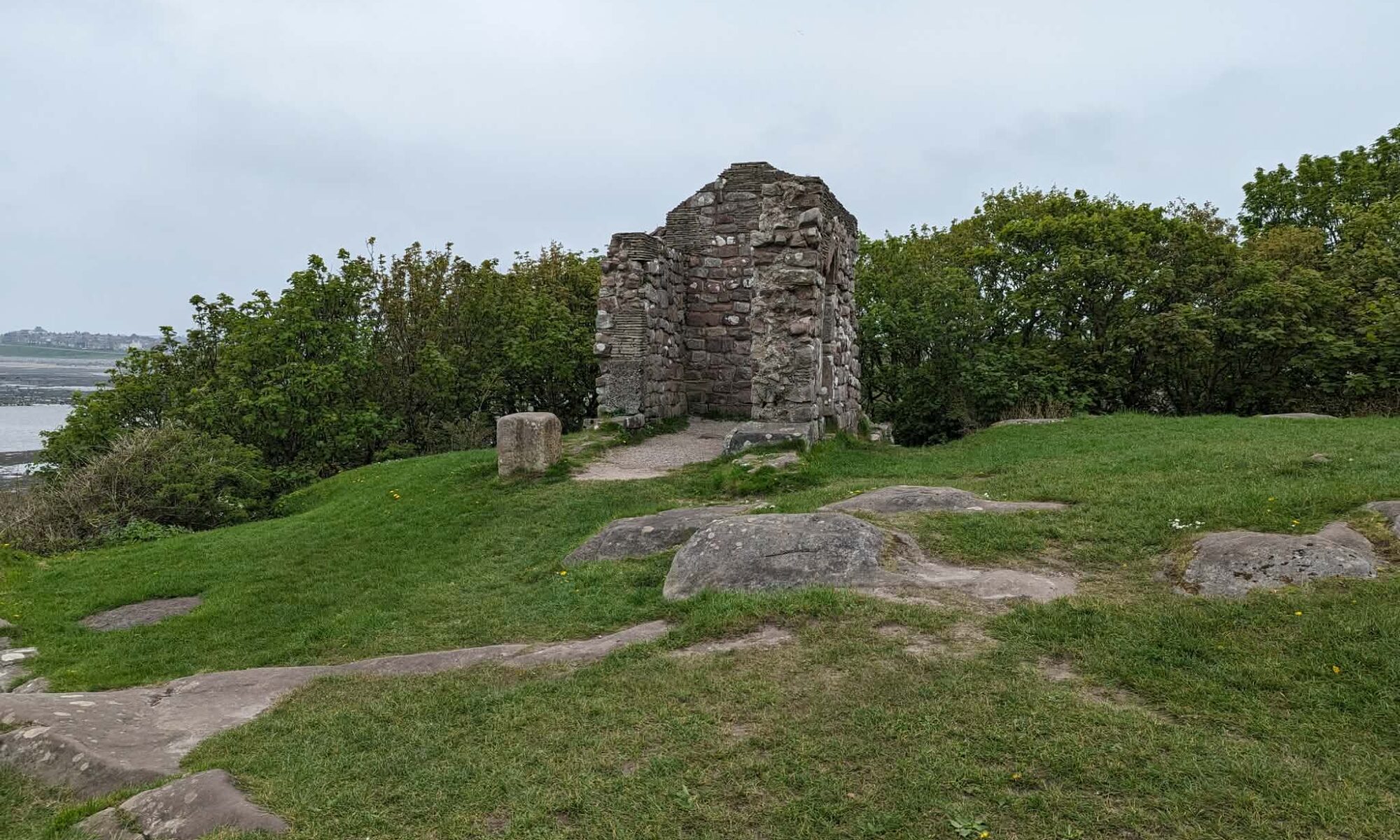
St Peter’s Church, Heysham Village

The Danish Woman is my rather belated Valentine’s Day story for 2026. As always it’s free so please share as much as you like.

Regular readers will know that I never forget a character, even if they only appeared briefly in the books or short stories. The hero and heroine of my 2026 love story (as Valentine’s Day has gone) have both been mentioned before. I think most people will remember the lady. The gentleman never actually made an appearance, but he was discussed. I’ve enjoyed finding out what happened to these two when I took my eye off them and I hope you enjoy it too.


The Hogback, St Peter’s Church, Heysham

Living on the Isle of Man I regularly travel through the Port of Heysham but a few years ago I decided to take the time to explore the area properly. I was very glad I did. Heysham Village is gorgeous and well worth a visit and like the hero of this story I was fascinated by the ancient hogback stone which now resides inside the church of St Peter.


The Golden Ball at Snatchems

The inn mentioned at Snatchems is the Golden Ball. It still stands on the banks of the river and serves excellent food. These days customers don’t need to worry about being picked up by the press gang. At least, I hope they don’t.

The Danish Woman

Morecambe Bay in winter was a desperately miserable place to be. Captain Charles Stewart RN did not know the area well and had no desire to improve his acquaintance. His one wish was to conclude his business and return to the comfort of his home in London, to await further news of the refit of his ship which was currently undergoing extensive repairs at the naval dockyards in Portsmouth.

It had been three months since Charles had been given command of HMS Bridget, a fast frigate which had been taken from the French off Martinique the previous year. As First Lieutenant of the Wren Charles had led the boarding party during the attack and taken command of the prize crew which sailed her home. The Bridget would be his first post-command and, at the age of twenty-eight, he knew he was fortunate. It took most officers a lot longer.

Charles liked to think that talent and hard work had contributed towards his early promotion but he was not naïve and he knew that family connections had played a significant part. Ties of both blood and marriage to the Earl of Jersey, Lord Castlereagh and the Marquess of Londonderry gave him an advantage over less well-connected officers. Unlike the army there was no promotion by purchase in the Royal Navy but applications to the Admiralty were definitely influenced by family connections. Charles did his best to hide the fact that he was slightly sensitive about it.

His sojourn in the north was the unfortunate result of having too much time on his hands. On the voyage home from Martinique he had contracted a bad bout of fever which had laid him up for more than a month. For a while Charles had worried that illness would prevent him taking up his new command. It had been a relief when the need for refitting and repairs gave him another few months’ recovery time.

He was back on his feet and able to take gentle exercise when he received a summons to the Admiralty. His audience was with Rear-Admiral Vane, his maternal uncle, but the meeting had nothing to do with family matters. After making polite enquiries about Charles’ health and the progress of the Bridget, the Admiral gave his bad news with an apologetic air.

“We need a man to go to Lancashire for a few weeks. There have been some problems with the press gang around the Heysham and Poulton-le-Sands area on the west coast. Generally speaking these things blow over of their own accord but I’m afraid this one has taken a more serious turn. A man died in a scuffle outside a local inn and we need to hold an inquiry. I want you to chair it.”

Charles tried not to show how appalled he was. “Isn’t that rather unusual, sir? I thought these things were generally held here in London, at Greenwich.”

“They usually are. Unfortunately the man who died should never have been pressed in the first place. The lieutenant commanding the impress frigate seems to have exceeded his orders by several leagues and took up a group of obvious landsmen without making careful enquiries. Mr Samuel Beeston was eighteen-years-old and the son of a local landowner. Old Beeston isn’t really much more than a yeoman farmer mind, but his lands are substantial enough for him to be considered a gentleman.”

“Oh Lord,” Charles said with feeling.

“Precisely. Beeston is well-liked in the area and our press gangs are not. After a great deal of discussion it has been decided that the inquiry should be held locally to show that we are being open and frank in our handling of the matter.”

“Are we, sir?”

“Good God, no. The inquiry will hear all the evidence and find that the death of young Beeston was an unfortunate accident which the Navy greatly regrets. Which is true as far as it goes. Lieutenant Crosby will receive a gentle warning about his over-zealous performance of his duty and as soon as the inquiry is over he’ll be quietly shifted onto half-pay where he can do no more damage. Personally I would like to court-martial the imbecile but we can’t do that without stirring up a hornet’s nest about the activities of the press gang all over the country. We’ll move our operations away from Lancashire and over to the east coast for a while and give the inhabitants of Heysham time to forget.”

Charles made a last-ditch attempt. “I don’t have any experience of chairing such an inquiry, sir.”

“All to the good. I’ll make sure that the scope of the thing is set out in tedious detail so there is no room for anything to go wrong. All you’ll need to do is sit and listen to evidence. We’ll send a man from the Judge-Advocate’s department with you and he’ll manage all the procedures. Just nod wisely and read out the verdict and by the time you get back the Bridget will be ready to sail. Where is it they’re sending you?”

“America I believe, sir.”

“Excellent. Good chance of prizes. Not that you’re in need of it, but it looks good on your service record. Right, that’s settled then. Are you free to dine with us later? Your aunt would like to see you before you leave.”

Charles had never been to the Lancashire coast before. He found it an eerie place. Five different rivers drained into Morecambe Bay and much of the surrounding land had been reclaimed for agricultural purposes over the centuries. In addition to farming, the locals lived mainly by fishing and there were rich cockle beds along the shore. There was a scattering of islands out to the west of the bay, some of which were accessible on foot during low tide. Charles was warned by his host not to venture out without a local guide as fast-moving tides and quicksand claimed several lives each year. Charles was able to reassure Sir Lionel Faulkner that he had no intention of taking the risk.

He had not met Sir Lionel before but his uncle had known him for many years and had suggested the arrangement.

“I’ve arranged for a small escort of marines to be placed at your disposal while you’re in the area. You and Dunbar, the advocate, can stay with Faulkner while you’re there. The inquiry will be held in Lancaster but you won’t want to be staying at an inn for weeks. Faulkner’s a good fellow. He’s a bachelor and a scholar – collects old books and whatnot. He won’t trouble you and he keeps a comfortable house.”

The arrangement suited Charles very well. Sir Lionel occupied a big square house built high on the cliffs at the edge of the village of Heysham, overlooking the bay. It dated from the beginning of the previous century and had long windows with glorious views out to sea. Sir Lionel was an excellent host although rather absent, which suited Charles. The cook provided good plain food and Charles dined with Sir Lionel most days but other than that saw little of him. Sir Lionel spent his time in his library working on a history of the county and seemed happy for his guests to come and go as they pleased.

There was little for Charles to do during the initial stages of the inquiry. Mr Dunbar from the judge-advocate’s department spent his time riding about the district interviewing witnesses and writing extensive case notes, but Charles was not needed during this part of the inquiry. It occurred to him, confined to the house during a week of driving rain and high winds, that he could very well have stayed in London for another couple of weeks.

During the second week the weather improved and Charles took the opportunity to explore the area mounted on a placid grey gelding belonging to his host. The winter days were short and it was very cold but it remained dry and the exercise was good for him. He was beginning to shake off the effects of his illness and, despite the grey skies and broad flat countryside, he was starting to enjoy himself. It was true that he was missing the London Season but after weeks of fever and wretched sickness Charles thought that winter rides, sea air, good food and early nights might be better for him than trying to attend three parties in one evening.

There was also the advantage that he could avoid the attempts of his aunts to find him a wife. Charles had lost both his parents to a smallpox epidemic five years earlier. He still missed them but he had four aunts – two on each side of the family – who took an active interest in his marriage prospects. Although he was sorry not to be seeing those of his friends who happened to be in Town this January, he did not miss the endless parade of eligible girls produced by his Aunts Augusta, Selina, Mary and Juliana every time he was in London.

He had been in Lancashire for eight days before he really saw the sun. Going down to breakfast he found his host and Mr Dunbar already at the table. The sky was a brilliant blue and winter sunlight bathed the dining room. Charles sat down and accepted coffee and rolls.

“A beautiful day,” he said enthusiastically.

“It’s freezing out there,” Dunbar said. “I have to ride over to Bolton-le-Sands this morning to speak to a fisherman who claims three of his crew were illegally pressed last year. It’s going to be a cold ride out on the coast road.”

“Is it possible to illegally press fishermen?” Charles said doubtfully.

“At the moment every seaman who has ever joined the navy along this coast is going to claim illegal impressment, even if they volunteered,” Dunbar said gloomily. “They’re hoping for some kind of compensation.”

“They’ll be lucky,” Charles said, reaching for a slice of ham. “I don’t think I’ve ever known a case of illegal impressment to be upheld.”

“It happens quite often up to the point where the men are sworn in,” Dunbar said. “If they can prove their case they’re simply released. Once they’re aboard and away it’s very unusual. I’ve only ever heard of one case where an officer was prosecuted for it mind, and that was years ago. Long before my time. Can’t remember the name of the captain but I read about the case when I was in training. He’d repeatedly ignored evidence that he’d picked up a gentleman’s son and the boy was underage as well. There was quite a scandal at the time, I think.”

“But you’re not expecting anything of the kind from a fishing crew from Bolton-le-Sands I take it?”

“God, no. Still, I have to show willing. That’s rather the point of this whole exercise; the Navy wants to show the good people of Lancashire that its impress service isn’t allowed to do whatever it likes. Although of course it often does.”

“Do you want me to come with you?”

“Better not, Captain. It’s your job to look impartial at the inquiry next month. Thanks for offering though.”

After breakfast, encouraged by the sunlight, Charles decided to walk down through the village and then up to the ruins of St Patrick’s Chapel on the clifftops. Dunbar had been right about how cold it was but Charles was well wrapped up in his heavy winter cloak and he found the walk exhilarating.

He paused at the gates of St Peter’s, the ancient sandstone church in the village. So far, he had not accompanied his host to a service and he thought a little guiltily that he should do so. The gate was not fully closed and Charles pushed it open and went into the churchyard.

He was surprised to hear children’s voices floating on the still air. He saw them at once, a boy and a girl, both very young, playing by the stone wall which overlooked the sea.

They seemed to be unaccompanied which worried Charles. He had no experience of children but he thought these two could not be much more than four or five. They had found a collection of round pebbles, perhaps from one of the beaches, and were setting them out along the rough pathway. Charles hesitated then went forward.

The boy saw him first and jumped to his feet. His sister remained fixated on the stones until her brother grasped her arm and pulled her up. Charles stopped a safe distance away.

“Good morning,” he said.

To his amusement, the boy executed a little bow. “Good morning, sir.”

His voice was high and clear and he spoke in accents which did not suggest he was one of the village children. Charles looked around in search of a nursemaid or governess.

“Surely you’re not alone up here?” he asked.

“Mama is inside the church,” the girl said. “Who are you?”

Charles supposed that she had the right to ask given that he had approached them. He bowed in turn.

“Captain Charles Stewart at your service, miss. I’m staying with Sir Lionel Faulkner. Forgive me, I was wondering how you came to be out alone. But if your mother is close by…”

“We are not to leave the churchyard,” the boy said. “She said we could play here.”

“It’s because she doesn’t like us to see her cry,” the girl said.

Charles froze and looked over towards the little church. He had intended to go inside to look around but the children’s remarks made him hesitate. He guessed that whoever the woman was, she had been visiting a grave and he did not like to intrude.

“I see,” he said politely. “Well I am sure she won’t want a stranger to see her cry either so I’ll make my visit another time. Thank you for telling me, children.”

“I’m Annalise,” the girl said. “I’m four. My brother is five and his name is Paul. He remembers my father better than I do.”

Charles felt a little shock even though he was not surprised. He wondered what illness had robbed this little family of its father. Given the ages of the children he had probably been a young man.

“I am sorry to hear that, Miss Annalise,” he said gravely. “Is he buried in the churchyard here?”

“We don’t know where he’s buried,” the boy said. “But there’s a stone in the church. You should come and see it: it’s splendid. It has two flags carved on it and a sword as well. This way. Mama won’t mind; she’ll have finished crying by now.”

He took Charles by the hand and towed him towards the church door. Charles was so surprised that he went along, although he suspected that the grieving widow would be wishing him to the devil. The wooden door creaked a little as the boy pushed it open and Charles stepped inside.

“Mama, this is a captain and he wants to see Papa’s stone,” Paul said in ringing tones. “I told him about it.”

Charles stopped inside the door, forgetting his embarrassment at the unexpected beauty of the little church. The walls were of mellow local stone with exposed wooden beams above. There was a lower chancel and a small side chapel. Several stained glass windows made dappled, colourful patterns on the paved floor. There was also an octagonal sandstone font which looked very old to Charles’ untrained eye. A number of ancient grave slabs and memorials adorned the walls, probably commemorating previous rectors.

It took a moment before he saw the woman, as she was standing in one of the dimmest corners of the church. She was not dressed in full mourning but wore a soft, mauve gown under a dove-grey cloak with matching bonnet. Charles could not see her face clearly but he gained the impression that she was quite young.

“Mama, show him Papa’s stone,” the boy said again.

She moved forward and Charles went to meet her, gently disentangling himself from the child. They met in the centre of the nave and he bowed awkwardly.

“My apologies for disturbing you, ma’am. I’m a visitor to the area and was coming to see the church when I met your children outside. Your son was keen for me to see his father’s memorial and wouldn’t take no for an answer. I’ll leave you in peace.”

“Captain, if you do not view the memorial stone there will be no peace, trust me.” She looked past him at the waiting children. “I will show the gentleman, Paul. Wait outside for me. I will not be long and then we shall walk up to the old chapel.”

The boy gave a sunny smile, grabbed his sister’s hand and disappeared outside, closing the door with exaggerated care. Charles surveyed the woman and bowed again.

“Captain Charles Stewart, ma’am, of the Royal Navy. I’m staying with Sir Lionel Faulkner.”

“Ah, the inquiry into the press gang. How interesting.”

She appeared younger than he had expected, hardly old enough to have two children, and she was very attractive. Charles was intrigued by her accent. She was clearly not English although she spoke it perfectly. He wondered if she might be German.

“I don’t seem to have much to do at the moment, ma’am, which is why I’m here making a nuisance of myself in a country church.”

She gave a broad smile. “You are not a nuisance, though I suspect my children may have been. They do not meet many new people here and they are very sociable. Also you are an officer which will always interest Paul.”

Charles was beginning to wonder. “I see. Was your husband a navy man, ma’am?”

“Army,” she said and turned, gesturing for him to follow her. “He is not buried here of course. He died at Salamanca the year before last and was buried somewhere out there. My father-in-law was still alive then and had this splendid memorial placed here.”

Charles studied the white marble stone. It was very fine, with crossed flags draped over a cannon. Lying beside the gun, as though dropped there, was a sword. The symbolism was clear and Charles, who had seen friends and crewmen die in battle, felt a little shiver run through him. He read the wording underneath. It was the usual flowery tribute of courage, duty and devotion to family. The dates told him that Captain John Kent had been twenty-six when he died. The girl standing beside him had been a widow for around eighteen months. He turned to look at her.

“I’m so sorry Mrs Kent.”

“Thank you. I miss him greatly, although it gets a little easier with time.”

“Was this church… I mean, I presume you live locally?”

“Yes, I currently reside up at Stokely Hall.”

“Is that the rather beautiful house with the exposed beams? I’ve ridden past it.”

She smiled. “Yes, it has been in the family for two hundred years.”

“But you’re not local, I collect. I’m trying to guess your accent.”

“I am from Denmark. A little village on the coast to the north of Copenhagen.”

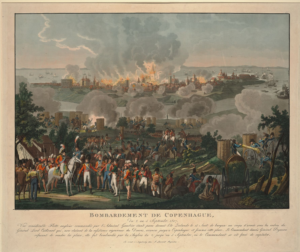
Charles found himself wondering about that. As a younger officer he had served during the brief campaign in Denmark during 1807 and, given the age of the children, the timing would be right. He managed not to ask and he was certainly not going to mention that he had taken part in the bombardment of Copenhagen which had flattened half the city.

She had turned and was walking towards the door. “How long are you staying in the area, Captain Stewart?”

“Until after the inquiry: about another three weeks. After that I return to my ship, sailing for American waters.”

He opened the door and held it for her. Outside in the winter sunlight he could see her more clearly and had to remind himself not to stare. She was lovely, with dark-brown hair, blue eyes and fair skin. He found that he could not blame Captain John Kent for finding himself a Danish bride during that short, miserable campaign, though he wondered again how old she must have been. She did not look as though she could be much more than twenty-three or four now.

“Have you seen St Patrick’s Chapel, sir?”

Charles realised that he must have been standing like a fool. “Oh… the ruins on the cliff? Not close up, though I’ve ridden past.”

“Are you on foot today? We are going to walk up there. The children love it. You could accompany us if you wish for a guide.”

He felt his heart give a little skip. Mocking himself silently he bowed.

“If it would not be an imposition, ma’am, I would like that very much.”

***

It had been a long time since Christa Kent had walked in the company of a young officer, or any gentleman at all. The way was fairly steep, though the children raced ahead making light work of it. The naval officer paced steadily beside her. Once or twice he reached out a hand to steady her when the rough path became slippery.

Christa allowed him to do so, though she did not really need his help. She wore stout boots and had walked this path many times before. Still it was pleasant and reminded her of all the times she had walked beside her husband. Jack had always treated her as though she was a delicate creature in need of constant care and protection. Christa knew she was not, but she had enjoyed it anyway.

St Patrick’s Chapel stood on the headland above St Peter’s Church and was built from the same sandstone. Most of the structure had long gone but the south wall, the east gable wall and the eastern section of the north wall still stood and there were low ruins of several other walls which contrived to give a good idea of the original building.

The children raced ahead and Christa allowed them to go. They had lived all their lives on this wild shore and knew what they should and should not do. She watched as Captain Stewart explored the ruins then made his way over to a curious set of holes cut into the rock nearby.

“What on earth are these?”

“It is believed that they are tombs. There are six here and another two over there. You should talk to Sir Lionel as he is an expert on such things. He once told me that these are probably from the eleventh century and that those holes at the top would have held the base of a wooden cross.”

“They’re fascinating. I’ve never seen anything like them before.”

“Nor have I. We have many ancient sites in Denmark but when I was a girl I had no interest in such things. All I wanted was to marry and leave. Sometimes now I wish I had listened to my father more and not brought him such sadness, but I was young and very silly.”

He turned to study her. He was a tall, dark man with a rather serious face. Christa wondered suddenly if his sallow complexion spoke of recent illness.

“How old were you… no, I’m sorry. That was impertinent.”

She smiled. “I gave you the opportunity to ask. I do not mind. I was sixteen when I married Jack and I have never been back to Denmark. War makes such things difficult.”

“I’m sorry. Did you meet him during the campaign of 1807? I was there, though aboard a frigate.”

“Yes. I thought he was wonderful. I wanted adventure. He wanted… me, I suppose. His Commanding Officer was furious about our marriage but he forgave me later. He was always good to me. He is Paul’s Godfather.”

“Do you have any other family here?” Stewart asked, falling into step beside her as she followed the children over the springy grass along the cliff-top. “It’s very beautiful, but a lonely spot for a young widow with two children.”

“It was my home with Jack. I am happy to remain here for as long as I am able.”

Steward shot her a curious glance. “Surely this is your home now?”

Christa hesitated, realising that she had said more than she intended. She had so little social interaction these days that sometimes she forgot the rules. Glancing at Stewart she saw nothing but respectful interest and decided that she did not care. This man would drift out of her life after today. It hardly mattered what she said to him.

“When Jack was killed his father was still alive. He had not always approved of me but we grew closer with time. Mr Kent believed that I had persuaded Jack to marry me because I wanted to get away from home.” She gave a little smile. “Looking back, he was probably right. But we were very happy together and I grew to love him so much. It is cruel sometimes that one barely realises how fortunate one is until everything changes.”

“When did your father-in-law die?”

“Six months after Jack. He was already unwell but I think it hastened his end. I nursed him. He spoke very affectionately to me during those days and mentioned changing his will. He died before doing so.”

She saw the Captain’s eyes darken a little. “What did that mean for you? And your children?”

“For the children, nothing. The house and estate will go to Paul when he is of age. There will be a dowry for Annalise. But I am not their guardian. That passed to Mr Frederick Kent, my husband’s cousin. He is a solicitor who lives in London and has always disapproved of me. I think he would have liked to take the children from me, only he is unmarried and would not have the least idea what to do with them. But he has control of the estate and the money.”

“Did your husband leave you nothing?” Stewart said. He sounded appalled.

“It was not at that time his to leave. But he made a will which requested that the allowance his father paid to him be continued to me. It is not a great deal but I am allowed to continue living in the house.”

“What of the children? Are you expected to support them?”

“Essential household expenses are paid from the estate but I have to apply to Mr Kent for anything else. New clothing for the children, a pony for Paul… I feel like a beggar. I’m sorry, I am sharing far too much with a complete stranger. I do not talk to many people you see.”

“Do you have anyone living with you? A female companion?”

“No. I have no friends here and I could not afford a paid companion. One day Mr Kent wishes Paul to be sent away to school and I shall then ask for a governess for Annalise. I don’t want him to go but I have no say in the matter.”

Stewart shook his head sombrely. “I’m sorry; that’s shocking. Did you not make friends here while your husband was alive?”

Christa shrugged. She was surprised at herself but she realised that she was tired of being brave. The opportunity to confide was irresistible.

“Not really. I had many friends in the regiment but since I came back here… It is an isolated place and they don’t take well to strangers. Locally, they simply call me the Danish woman.”

At the end of their walk she watched him go, his long-legged stride making easy work of the path back to the village. They had talked of other things after her uncomfortable revelations: of his naval service and Jack’s army career, of London and Copenhagen and the progress of the long war. He was easy to talk to – too easy perhaps – but as Christa followed the children back up the track towards the house she decided she did not regret her indiscretions. Just for once it had been good to speak the truth.

Stokely Hall was an old manor house dating to the seventeenth century, which had been updated several times over the years. It was too big for a young widow with two children who did not entertain. Sometimes, sitting with her sewing during the long winter evenings, Christa daydreamed about what she would do if she had guardianship of her children and the estate. She thought that she would have found a tenant for the house and rented somewhere smaller and more manageable for herself and the children, perhaps in a small town where they might make friends. She had enjoyed living in Melton Mowbray when the regiment had been in barracks there.

Christa had suggested something of the kind to Mr Frederick Kent once the terms of her father in law’s will became clear. Kent regarded her as though she had attempted some kind of fraud.

“Utterly unsuitable,” he snapped. “My cousin’s children should be raised in his ancestral home. In time the boy will go away to school of course and we must give some thought to a proper English education for the girl. The terms of my uncle’s will were very generous to you. You will continue to receive an allowance until the boy reaches his majority when it will be up to him whether it may continue. You may also continue to reside at Stokely Hall. Most females in your position would consider that enough.”

Christa had noticed that Kent never referred to the children by name. They were always the Boy and the Girl. She was suddenly furious about it. She was also furious at being referred to as ‘a female’, as though six years of marriage counted for nothing.

“You mean most widows. That is my position, Mr Kent. A widow. I was married to your cousin for almost six years. I ask only what is best for my children. And for some respect.”

Kent’s face looked pinched and angry. “Just so, madam. Presumably that is why my uncle was so generous. Of course, should you remarry the terms of that will would no longer apply.”

Christa thought it was clear that he hoped she would do so, probably to a wholly unsuitable man. She said nothing more, being unwilling to argue with a man she so cordially disliked. She could not really imagine being married again. She had grown to love Jack very much during the years of their marriage.

At the same time, she resented the isolation of her life. At not quite twenty-three she was too young to be shut away in this big, old house in the country. She missed the liveliness of regimental life. She missed music and dancing and flirting. She missed conversation with an ache of loneliness.

When the children were asleep, she settled herself in the parlour to write to her father. Most of the reception rooms were kept under holland covers. Mr Kent was strict about the number of servants employed at the hall. Christa did not really mind. She was not in a position to entertain and she had no wish to sit in solitary splendour in the enormous drawing room or dining room.

All the same, it was a little depressing to pass through rooms shrouded in linen covers. Christa thought that the house was like herself: closed down and silent with none of the colour or gaiety that it deserved. It was no life for such a lovely old place and no life for her or her children. Christa remembered Jack, who had been so sociable and so lively, and blinked back tears. He would have been furious to see her brought to this.

***

She had not expected to see the young naval officer again but she encountered him only three days later in the village of Poulton-le-Sands. She had just emerged victorious from an argument with the butcher over the quality of the meat in his last delivery when she saw Captain Stewart coming out of the hardware shop opposite.

He saw her immediately and crossed the street, stopping before her with a bow.

“Mrs Kent, what a pleasant surprise. How are you?”

“Very well, as you see.” Christa realised she was smiling broadly. It was such a refreshing change to see a welcoming face in the village where the best she generally encountered was civility. “Are you doing your shopping, Captain?”

“I’m doing Sir Lionel’s shopping. I offered to make myself useful since I really don’t have anything to do until next week when, thank goodness, they have finally set a date for the inquiry. Sir Lionel was very put out this morning with a delivery of ink which resembled nothing so much as a pot of sludge. He will return it of course but, in the meantime, he was about to run out. The housekeeper informed me that you can buy anything in Felton’s, though it would be more expensive. She was right as well.”

The Captain shot a fond look at the shop and Christa could not help laughing aloud. His expression reminded her so much of Jack.

“Now that you have discovered Felton’s, I predict that you will be a frequent visitor,” she said. “All the men love this shop. I do not understand it. There are so many things on the shelves or hanging from the ceilings that I do not know how anybody ever finds anything in there. But Jack went inside every time he came to Poulton when he was at home. Always he came out with things he did not need and had not intended to buy.”

A guilty expression flashed across the serious face and then unexpectedly, Stewart began to laugh.

“Did he? He has all my sympathy. That place is like a cave full of treasures. In addition to the ink I am now in possession of a new snuff box for my first officer, some blotting paper, and a bolt for Sir Lionel’s tool shed which I intend to fit this afternoon to stop it from blowing open every windy night and keeping half the household awake.”

Christa threw up her hands. “You see? It is like a magic spell. But it only works on men.”

“Are the children not with you today?”

“No, they have their lessons. We do not have a governess at present so I teach them myself. But they also have some lessons from Mr Archibald the parson. He is preparing Paul to go to school when he is a little older but he is kind enough to teach Annalise as well. She is very young but she works hard because she wishes to do everything her brother does.”

“It’s going to be hard for her when he goes to school.”

“It will be hard for me also. But it will not be for three years. They will not take them any younger.”

“That’s still too young in my opinion.”

Without intending it, they had fallen into step together, strolling along the High Street. Christa shot him a sideways glance.

“Do you think the same about the very young boys they accept into the Navy?” she asked, greatly daring.

He looked surprised. Then he grinned.

“I am bound to say yes, ma’am, given that I was once one of them. I was Navy mad but it was still too young. I realise that now.”

“Why did you… no, I am sorry. I am too curious.”

“Don’t you rather feel as though we’ve already moved beyond mere politeness?” he asked, surprising her again. “I was the younger son. We’re expected to earn our living. I chose the Royal Navy over the army because I loved the sea. My older brother died when I’d been at sea for two years. It was a stupid accident: a cut that became infected. My parents wanted me to come home but by then… home seemed very small and very confining. I wanted adventure.”

“Oh I understand that so much,” Christa said fervently.

“Do you? I never really thought of girls looking for adventure.”

“That is because you have no idea how dull it can be as a clergyman’s daughter in a tiny Danish fishing village. When the British army came everybody was horrified. I was happy. There were handsome young officers in red coats and all I could think about was a way out.”

She wondered if she would shock him. Instead he smiled.

“That’s very honest.”

“I was very fortunate. Some of those handsome officers might have taken advantage of my naivety then abandoned me. Jack asked me to marry him. We barely knew one another but I was so grateful. He introduced me into a whole new world. He was an honourable man and so good. No wonder I fell in love with him.”

There was a long silence. Eventually he said:

“I think that’s possibly the most genuinely romantic story I’ve ever heard.”

She stared at him in amazement. “Even though I admitted that I did not feel that way at the start?”

“That’s why it’s so lovely. To start off on such rocky ground and then to find what you two had… I’m envious.”

“You are not married then? Oh no, I am sorry. That was so tactless.”

To her relief he was laughing. “I’m not. I am avoiding it because… oh for many reasons. My aunts are furious. Have I mentioned my aunts? I have an entire pack of them and they spend their lives hounding me about matrimony. Every time I show my face in London I am paraded as a good catch. I suppose I am. I’m not wealthy but I’m very comfortably off and I could easily support a wife and family. But I just… I don’t want to marry a girl I hardly know then sail off not knowing when I’ll see her again. Mrs Kent, why on earth am I telling you all this?”

They had reached the edge of the village with nowhere else to go apart from the open road and it was in the wrong direction for Christa. She laughed and towed him around so that they faced the village again.

“Unless we are walking to Scotland sir, we must go back. It is probably my fault. I confessed all kinds of unsuitable things to you when we last met. And also today. You are a man I find easy to talk to. When does this inquiry begin?”

“On Tuesday.”

“And how long will it take?”

He pulled a face. “I’ve honestly no idea. A week, perhaps. The Navy is keen to hear local opinion, given what happened. At the very least I think the inhabitants of this part of the coast may get a break from the activities of the press gang.”

“Knowing how much misery they cause I think that alone will be worth it,” Christa said soberly.

***

With an eye to local opinion, the inquiry had been opened to the public. It was held in Lancaster Castle and, settling himself at the head of the court, Charles observed that seating had been arranged for the upper members of local society with an interest in the case, while benches and standing room allowed the lower classes access providing they behaved. Bailiffs stood ready to evict anybody who spoke out of turn.

On the first day the room was crowded. Witnesses were sworn in, procedures explained and the scope of the inquiry was read aloud in such excruciatingly tedious detail that by the third day, when the real work of the inquiry began, most of the casual onlookers had grown bored and departed.

Charles had no interest in the spectators until he noticed a serene figure in dark-blue seated beside a woman who was probably her maid. He could not imagine why Christa Kent had any interest in a Royal Navy inquiry into possible misbehaviour by a press gang but the fact that she was there immediately distracted him from the proceedings. It was so bad on the first day that he seriously considered sending her a note asking her to stay away. He already knew what the Admiralty expected of him but he still felt obliged to listen to the evidence properly and for reasons he did not care to explore, the presence of Captain Kent’s attractive young widow made it difficult for him to concentrate.

He looked for her afterwards as the spectators were leaving but must have missed her. At the end of the second day however, he found her in the castle grounds in conversation with the parson and his curate, both of whom had attended the proceedings. Charles joined them and Christa made the introductions. The Reverend Archibald was a round-faced gentleman with thinning hair and a pleasant manner.

The curate was probably in his twenties and had little to say. Watching him, Charles decided that Mr Cresswell had a decided interest in Mrs Kent. He did not think it was reciprocated, or even noticed. It amused Charles. He also realised, with a little start of surprise, that he was pleased by her indifference. The thought gave him pause. In due course, the little group broke up to go their separate ways. Charles promised Mr Archibald that he would attend service on Sunday and the Vicar offered a tour of the church and churchyard in return.

“You will probably not have seen our hogback,” he said genially. “It is quite unusual. We are very proud of it. My wife hopes you will join us for tea at the vicarage afterwards. You also Mrs Kent, if you are free. Mary will be happy to entertain the children.”

Charles accepted with pleasure. The two clerical gentlemen disappeared in search of their carriage and Charles realised he had no idea how Christa Kent had got here.

“May I escort you to your… horse?” he guessed. “I know you’re an intrepid walker but you cannot have walked all the way from Heysham to Lancaster.”

She laughed. “Nonsense, it is no more than five miles. I didn’t though. My poor maid loathes walking, which is why I usually leave her at home. I came in the gig. I no longer keep a riding horse, though Mr Kent has agreed that he will provide a pony next year so that Paul may learn to ride. But there is one elderly horse who can pull the gig.”

Charles was beginning to recognise that deliberately neutral tone of voice.

“Do you miss riding?” he asked as they passed through an ancient stone archway and turned left towards the Bell Inn.

“So much. My mare had to be sold. I couldn’t afford to keep her. I’ve been able to keep the small gig though, for shopping. Old Bertie, who pulls it, should really be put out to pasture now but I don’t use it any more than I have to. I wanted to come to the inquiry, though I won’t make him do the journey every day.”

Charles heard a little catch in her voice as she spoke of her horse. He was shocked at how viciously he wanted to punch Mr Frederick Kent. He kept his voice deliberately light.

“I should think you would die of boredom. I may do so myself. Look, I’m not sure how you would feel about this. And I’d need to ask Sir Lionel. But he keeps several riding horses in his stables, mainly for the use of his nephew and niece when they come to stay. Those animals have nothing to do but eat themselves silly at this time of year. Sir Lionel rarely rides in the winter: he admits it. If he would allow me to borrow the mare, would you ride with me?”

“Oh I could not. Such an imposition.”

“It wouldn’t be. You’ve proved an excellent guide on foot but there are one or two places I’d like to see which are further away. Particularly the inn where the press gang tried to snatch young Beeston and his friends. Where he died. It’s on the river somewhere.”

“At Snatchems,” Christa said. She seemed to notice his expression and smiled. “I know. When I first came here my English was not so good. I did not understand at all.”

“Is it really called that?”

“Not on any map but it is what the local people call that stretch of the River Lune. The inn is called the Golden Ball and they tell stories of smuggling as well as the press gang.”

“Will you be my guide ma’am?”

She hesitated for a long time. “If Sir Lionel does not object,” she said finally.

***

The tea party at the vicarage was a great success. Christa thought that it was a measure of how isolated she had become that even such limited social contact made her happy. She thought nostalgically of the early days of her marriage. She had loved regimental life. The 110th had been stationed in barracks for a while with a brief stint in Ireland. There had been dinners and dances and Lieutenant Kent had been keen to show off his pretty young wife. She had never been happier.

When Jack had gone to Portugal, Christa could not go with him as she had the children but she had remained in Melton Mowbray in their rented house. There were many other regimental wives living locally, some of whom had children. She was never lonely.

After Jack’s death she had given up the house and come here to his childhood home where his father was already very ill. Broken with grief, she had nursed her father-in-law in his final weeks and grieved all over again at his death. It had never really occurred to her that her life and that of her children would go on to be controlled by a man she hardly knew, who clearly disliked and disapproved of her.

If it had not been for Paul and Annalise, Christa thought she would probably have told Cousin Frederick exactly what he could do with his allowance and tried to find a way to return to Denmark, to her father, though the war would have made that difficult. As it was the children must come first. She tried to make the best of her changed life for their sake but the arrival of Charles Stewart had made her realise how lonely she really was. She dreaded his departure.

Mrs Archibald, the vicar’s plump cheerful wife was very kind and seemed a little embarrassed.

“I feel rather guilty at how I’ve neglected you, my dear,” she said as they followed the gentlemen out into the churchyard to inspect the hogback. “I know I called once or twice when you were first here but since then… I think we all believed that you would go back home. Or perhaps take up residence in London. But it seems as if you intend to remain here.”

Christa wanted badly to tell her that she had no choice, but she did not. Her surprising confidences to Captain Stewart had probably been brought about by the knowledge that he had no relationship to any of these people and would soon be gone. She could not bare her soul to the vicar’s wife.

“Until the war ends it would be difficult to visit Denmark, ma’am. Though one day I would like my children to see where their mother was born. Until then, this is my home.”

“Well, we must see what we can do to make you known to more of your neighbours,” Mrs Archibald said. “We generally invite a few people to dinner once a month or so and now that your mourning period is fully over there can be no reason why you should not join us. If you would not object that is?”

“Thank you, I would like that,” Christa said.

They had reached the hogback which was set at the back of the churchyard. Captain Stewart stood looking at it in apparent bewilderment.

“What on earth is that? It looks very old.”

“It is ancient,” the vicar said rather proudly. “I do not know exactly when it was discovered; it was here when I took over the living. The locals say it was found up at the site of the ruined chapel and moved down here. Feel free to study it closely, Captain. The carvings are fascinating.”

Stewart seemed to agree. The hogback was a curved piece of sandstone around six feet in length, carved on all sides with a variety of figures. The Captain crouched down to examine them. There were both animal and human figures, some of them looking like creatures from mythology while others seemed to depict real animals.

Christa had seen the stone many times but Stewart’s fascination caught her interest and she moved forward to study it again. Her companion was running his fingers over the stone.

“This looks like a snake. And is this meant to be a dog?”

“If it is, it’s not like any dog I ever saw,” Christa said. “Look at this group here. This animal has antlers.”

“I think it’s a stag. I think this is meant to be a group of hunters. This is extraordinary. I’ve never seen anything like it. I wonder how old it is.”

“Around this side is what looks like two birds. Possibly this is a tree.”

“Is it a gravestone of some kind?” Stewart wondered.

“If it is he must have been a man of some importance,” the vicar said.

The Captain lingered for several minutes after the rest of the party had returned to the house. Christa waited inside the church door for him, amused by his absorption in the old stone. He caught up with her with a quick smile.

“I’m sorry. You must be cold. I can’t get over that thing but I’ll come back on my own another time.”

“Are you interested in history?”

He gave a slightly sheepish grin. “According to my late mother I bored the whole family on the subject from early boyhood. It’s one of the reasons I’ve enjoyed my stay with Sir Lionel so much. It’s rare to meet a fellow enthusiast. He’s been lending me some of his books.”

He stopped and Christa had the impression that he was reining himself in with an effort. She wanted to tell him that she did not mind. She had never really given much thought to matters historic before but she had discovered that she was happy to listen to Charles Stewart talk on any topic he chose. It was slightly embarrassing.

***

The dry weather continued for the following week. The inquiry ground to an inconclusive standstill on Wednesday and Captain Stewart called an adjournment until the following week when he might choose to recall several witnesses after considering their testimony. After that, he would be ready to write his final report for the Admiralty.

 It gave him time to arrange his proposed expedition to the curiously-named Snatchems on the banks of the River Lune. To Christa’s surprised delight Sir Lionel seemed perfectly happy to lend his mare, so Captain Stewart and Christa rode out on a crisp winter morning. They talked for a while of the inquiry.

“What will happen once you have submitted your report?” Christa asked.

“I have no idea. Presumably they’ll present the findings to some Parliamentary committee or other and it will sink without trace. They’ll have to make a report to the local authorities up here – at least I hope they do. I’m going to be honest to you since I can’t be honest to anybody else. I think the impress service in this region has been poorly run, ineffectual and lazy about whom it took up. I hope they heave that Lieutenant out on his ear. Sadly that won’t be my decision. Poor Samuel Beeston’s death will be put down to an unfortunate accident. I think it was an unlawful killing. If one of my crew did what that press agent did aboard my ship I’d have him up for murder.”

Christa gave a little shiver. He seemed to notice it because he reached over and touched her hand, bringing his horse close in.

“I’m sorry. I’m going to stop talking about it. I’m not spoiling our first ride with horror stories. What do you make of Rose Red?”

“She’s beautiful,” Christa said, running her hand down the smooth neck of the pretty russet coloured mare. “It’s such a joy to be on horseback again, even if it is only for today. Thank you for arranging it, Captain.”

“It’s for my benefit as well. Sir Lionel is delighted to have found somebody other than his groom to exercise her. If you get on well today I suspect you may find he’ll ask you to do it again. You made a good impression on him earlier, I could tell. He may take pride in his image as a crusty old bachelor but I noticed it doesn’t stop him appreciating a pretty woman. Shall we try a canter? This country is perfect for it.”

They rode through the frosty morning, turning along the river bank until they reached the white painted inn which overlooked the broad flat waters of the Lune. Christa remained on horseback as he dismounted, tied up his horse and went to examine the rough area of scrub and stunted trees where Samuel Beeston and three friends had tried to evade the men of the press gang who waylaid them as they left the inn.

To Christa’s surprise he asked her to accompany him inside. Seated at a wooden table she drank local cider and listened as he talked to the landlord and his wife. He had already taken their evidence in the courtroom but here they spoke more freely.

Christa took no part in the conversation but listened to him skilfully drawing them out. She realised that he would not be able to use everything he learned today in any report to the Admiralty and wondered why it was so important to him to find out what really happened that evening.

On their return ride she asked him. He seemed to consider for a while.

“I think it’s my Navy training. Accuracy is important. Sometimes it isn’t possible to deliver a perfect result, whether it’s a court martial, a skirmish with the French or a botched raid by an incompetent press gang. I know my duty here. But I owe it to Samuel Beeston and his family to at least recognise the truth.”

“I think that is very admirable, Captain.”

“If not much help to the family. Thank you for acting as guide today. Look, I’m going to reconvene the inquiry on Thursday and wind up proceedings on Friday. After that I’ll need to go back to London. I realise I’m going to miss this. Do you think you could find time to ride with me again tomorrow? Not as my guide. Just for your companionship.”

“Yes,” Christa said without hesitation. She wondered if she should qualify it in some way then decided that if he did not need to, neither did she. “I am going to miss this as well.”

The weather was kind and they rode together for three bright sunny days, exploring the surrounding countryside. They ate bread and cheese in a wayside inn where they were not known and on the second afternoon Christa invited him into the house to take nursery tea with the children. Paul and Annalise were delighted with their visitor and Christa thought that she had never seen them so well-mannered at the table.

On the third day he rode into the stable yard with her, having agreed to lead the mare back to Sir Lionel’s stable. It had begun to rain over the last half-hour and they were both wet and a little subdued.

The Captain dismounted and lifted her down from her horse. Christa hesitated. She wanted to invite him into the house but she suspected that he would decline, wanting to get the horses back into their own stable so that they could be rubbed down and fed.

“I hope I’m going to see you again before I have to leave.”

“I was intending to go to the final day of the inquiry. If you do not mind.”

“I’m delighted, though it promises to be a singularly unsatisfying conclusion. I had originally intended to set off the following day, but I think I’m going to delay it until Monday. Mrs Archbald has invited me to dine on Sunday and they’ve been so kind. I’d like to go.”

“She has invited me as well.”

“I was hoping you’d say that. All the same it may be difficult to find the opportunity to speak to you alone so I…”

“So it is true,” a voice boomed. “I could not believe what I had been told, yet here I find you. Brazenly and publicly disgracing my cousin’s memory without a thought for the effect your conduct might have on my wards. How dare you, madam.”

Christa spun around, shocked. A stocky gentleman of around forty had emerged from the front door of the hall. He stood at the top of the steps, keeping out of the rain.

“Mr Kent,” she said, and was horrified to realise that her voice was shaking. “What… how do you come to be here? You gave me no warning.”

“That was my intention, madam. Once I was informed of your appalling conduct I felt it my duty to find out the truth for myself. Little did I imagine that on the very day of my arrival I would catch you in the act of…”

“Of riding a horse in a public place,” Captain Stewart finished in crisp tones. “Now that is shocking, ma’am. I’m surprised he’s not brought a Bow Street Runner up from Town to effect an arrest. Why don’t we go inside out of the rain? There’s nothing worse than brangling in a downpour, although you often can’t avoid it aboard a frigate. There’s not much space below decks.”

He took Christa’s arm gently. She knew he must be able to feel how badly she was shaking and hoped he would put it down to cold rather than fear. She was afraid, not for herself, but for her children, should this austere, judgemental man take them away from her.

Kent looked momentarily shocked but rallied quickly. “I agree that my cousin’s widow, if that is what I must call her, should come inside to answer for her conduct if she may. You, sir, will not set foot inside this house.”

“Well I’m going to. If my company is that unpleasant to you I suggest you remove yourself. And if you make any more remarks of that nature to this lady I’ll be happy to help you on your way with a swift kick to the seat of your trousers.”

Christa turned to stare at Stewart in astonishment. He gave her a reassuring smile.

“I need to see to the horses,” he said quietly, ignoring Kent’s splutter of fury. “Go inside, go to your room and get changed. You’ll catch your death like that. I’ll join you in your parlour. Don’t look so worried. To be honest I’m glad he’s here. I was intending to pay him a visit when I was back in London. This will save me some time.”

Christa had no idea what he meant, but his calm manner was reassuring. She arrived in the parlour to find both men present. Kent was standing before a newly lit fire in the traditional stance of the man of the house. Captain Stewart was seated in an armchair with one booted foot crossed over the other. He had acquired a glass of wine. As she entered he rose, led her to the sofa then went to the sideboard to pour a glass for her.

“Are you sure you won’t have one, Kent? It’s a cold day out.”

“I have no wish to drink in such company.”

“Good. Here you are, Mrs Kent. It will warm you up. Are the children all right?”

“Yes. Nurse is giving them their tea. Paul is rather upset though. He tells me that Cousin Frederick has told him that he is taking him to London tomorrow and he has no wish to go.”

“He isn’t going anywhere. I’ve only had time to make the most cursory enquiries by letter so far but I can tell you that, without authorisation from a court, he has no right to take your children. As a matter of interest, did you ever see your father-in-law’s will personally, Mrs Kent?”

Christa was so shocked that she could not speak immediately. Kent made a noise like an enraged pig.

“Do you dare to insinuate that I am not the legal guardian? Do you know who I am?”

“I’ve only the vaguest notion of who you are, Kent, although I know what you are. On the other hand, it’s clear to me that you don’t have the least idea who I am. Since I can’t stay for long I will give you a brief summary. It may help you to make an informed decision. Sit down.”

“I will not sit down.”

“Well go and stand somewhere else then. You’re blocking the heat from the fire and your cousin is shivering.”

Christa watched in something like awe as the Captain advanced towards the fireplace. To her horror he stooped to pick up the poker. Kent skipped quickly out of reach. Stewart smiled slightly, knelt and stirred the fire, adding more wood. He rose, turned and looked at Kent.

“Allow me to introduce myself formally. Captain Charles Stewart, RN, recently appointed to command the frigate HMS Bridget. On my father’s side I’m second cousin to Lord Castlereagh, the foreign secretary. He is my Godfather. On my mother’s side I’m equally closely related to the Childs’ banking family. In fact I’m a very minor shareholder. You’ll probably be aware that the majority shareholder is the Countess of Jersey. I learned a while ago that my family connections are not necessarily the way to get what I want but I’m fairly sure that you’ll understand that I am going to have no trouble finding my way through the intricacies of the Court of Chancery. Or the money to pay the barrister.”

Kent found his voice. It came out as a squeak.

“My cousin’s children are not Wards in Chancery.”

“They soon will be if I manage to find any evidence of shady legal dealings on your part. And I think I might.”

“Why?” Christa said, finally able to speak. “Charles, what makes you think there might be something wrong?”

“I don’t know much about the army, Christa. But quite by accident I happen to know that the Colonel-in-Chief of the 110th, who also happens to be a major-general serving under Wellington, takes a very unusual attitude to his duties. He personally employs a very reputable firm of London solicitors to act as advisors to his officers about their legal affairs and he insists that they all make proper wills. He must be completely eccentric, but that’s his business. My cousin Claude mentioned it to me when I made my own will after my father died. He approved my farsightedness and told me a few tales of disaster about fellows who had not made proper provision for their families. He also told me about the 110th. Apparently it’s an army joke that no officer of the 110th dies intestate unless it’s because his commanding officer has beaten him to death for being a feckless idiot. Since that didn’t happen to Captain Kent I’m assuming he followed orders. Did you see either of those wills, Christa?”

“No. I was told about them by an attorney. I think he must have been from the same law practice as…”

She tailed off and looked at Kent. He looked very pale.

“Well, we’ll see. With your permission I’d like to instruct my cousin Claude on your behalf. He’s well respected and will represent your interests. May I have your permission to tell him to write to you?”

“Yes,” Christa said. She could feel tears in her eyes and realised that she had not felt this well-protected since Jack had died. “Oh yes.”

Kent gathered himself. “Regardless of your family connections, sir, what possible right do you have to speak on behalf of this lady?” he ground out.

Charles Stewart did not look at him. He was smiling at Christa.

“That’s a conversation which is probably going to have to wait a while,” he said. “I have to get this damned inquiry off my hands first and I need to get back to London. I’ll get Claude to write to you. And I’ll write to you myself. Will you reply?”

“Yes,” Christa said. It seemed to be the only thing she could say at present but it seemed to be enough.

Stewart finished his wine and turned to Kent.

“I need to go, which means you need to leave as well. You’re not staying the night here, partly because Mrs Kent lives alone and you’re unmarried so it would be improper. Mostly because you’ll try to bully her and then I’ll end up punching you. Out. I’ll point you in the direction of the nearest inn. Or perhaps you can find accommodation at the vicarage. I expect the Curate will be happy to help, given that he was your informant.”

“How can you possibly know that?” Kent demanded.

“Because I’m not an idiot and who else would care? Christa, I will see you before I leave, I promise.”

“You will see me tomorrow at the inquiry,” Christa said. Suddenly her courage had returned. “Also on the following day and at dinner at the Rectory on Sunday. Ride safely. It’s raining very heavily.”

He smiled, took her hand and kissed it. “I’ll see you tomorrow then. Good afternoon. Kent, let’s see what they’ve done with your hat and coat shall we?”

***

London was damp, cold and infernally crowded. To his amusement, Charles found himself regretting the windy open spaces of the Lancashire coast, although he was not convinced that it was the sea air and bird life that he was missing.

After weeks of being mostly free to manage his own time and activities he was suddenly caught up in a series of meetings and social events. The Admiralty demanded notes, annotations and explanations with regard to his report of the inquiry. His uncle demanded a detailed account of what had really happened in the sad case of Mr Samuel Beeston and the Snatchems press gang on the banks of the River Lune. His aunts, all four of them, appeared from all directions demanding his attendance at balls, receptions and the wedding of a distant cousin that Charles could barely remember. Relations, in the number he had, were the very devil when a man was in a hurry.

He was in more of a hurry than he had intended, given the unexpected result of his visit to Lancashire. Between business and social activities and several frantic visits to Portsmouth to deal with last minute decisions about the refit of his ship, Charles found time to meet with his cousin Claude Fane. He would have liked to have been more involved with Claude’s subsequent enquiries but he did not have time.

He returned from a third journey to Portsmouth in the early evening, arriving at his London house on Upper Wimpole Street cold, tired and hungry. His butler had barely taken his cloak and hat when there was a knock at the door. The butler apologised and went to open it, his face ready to express disapproval at anybody making an unscheduled call at such an unsuitable hour. Charles went through to the study where there was a fire and a decanter of wine set out.

The butler reappeared. “A letter, Captain. I would not have troubled you until tomorrow but the messenger said it was urgent. From Mr Fane, I believe.”

“My cousin Claude?”

“Yes, sir.”

Charles took the note and read it quickly. He stood up, his exhaustion forgotten.

“I’m going out, Morrison.”

“You have barely come in, Captain.”

“I know, I’m sorry. I’m going round to Mr Fane’s rooms in Palmer Street. He has some news for me. Give my apologies to Mrs Clarke; I won’t need supper. Mr Fane has offered to feed me. Will you send the boy for a hackney?”

“Very good, Captain.”

Morrison’s tone informed Charles that he did not consider it good at all. He had inherited the butler from his parents, along with the house and most of the staff. The older servants had a tendency to treat him as though he was still a midshipman but Charles was old enough now not to resent it. He appreciated their loyalty.

Mr Claude Fane, a cheerful man in his mid-thirties, was unmarried and lived in rooms above his thriving law practice in Palmer Street. He greeted his cousin affectionately, informed him that he looked half-dead and should stop racing around all over England, then provided a chair by the fireside and an excellent claret.

“I’ve sent out for supper from Hogan’s. They do an excellent pork chop and my cook only comes in daily so can’t provide supper at short notice. I’m glad to see you, Charles. You’re a difficult man to catch for more than five minutes these days.”

Charles gave a rather weary smile. “To be honest I’m looking forward to being at sea. It will give me a rest.”

“When do you expect to depart?”

“Another four weeks, I think. My orders are to join the squadron in Long Island Sound.”

“Think you’ll see much action?”

Charles shrugged. “A lot will depend on these next few months in Europe. If the war really is going to end, and they’re taking bets at the Admiralty, there’ll be pressure on the Americans to seek peace.”

“It was a bloody stupid war to start with.”

“It was. I suspect national pride was involved on both sides but if the Royal Navy is no longer having to deal with the French we’ll have more time to spare for our American brothers. I’d sue for peace quickly if I were them. But you didn’t haul me from my fireside when I’d barely stepped into the house to talk international politics, Claude. Do you have news for me? Do you act for Mrs Kent?”

“I do. She replied charmingly and very decisively, engaging my services. As requested by you, there has been no mention of my fee. I’m rather presuming…”

“You’ll be paid one way or another, Claude. Get on with it.”

“How did you know that Kent was up to something?”

Charles froze. He set down his glass. “I didn’t. Was he up to something?”

“In a manner of speaking. If you didn’t know…”

“It didn’t feel right. His behaviour towards his cousin’s widow was too harsh. At first I just assumed he’d disapproved of the marriage and was a miserable bastard. But then it occurred to me that what he was effectively doing was isolating her. I wondered why.”

“Very clever. You should have been a solicitor, Charles.”

“I should expire from boredom. Also… I didn’t realise to start with that she nursed the old man in his final illness. She was under the impression that he made no changes to his will because there wasn’t time. But there was plenty of time. I got to know the vicar in Heysham while I was there. He and his wife were regular visitors to old Mr Kent and they made it clear that he remained mentally sharp to the end. Mr Archibald gave it as his opinion that the loss of Kent’s only son probably hastened his death, but he didn’t suffer memory loss. So what have you found? A codicil of some kind?”

“Better than that,” Claude said smugly. “I have found another will.”

Charles choked on his wine. “What?”

“Surprised Charles?”

“I’m astonished. But I don’t understand. Why does nobody else know about this will? What does it say?”

“Somebody definitely knew about the will. I’ve seen copies of several letters which confirm that Frederick Kent was present at the reading of the will. It took place in… look, never mind. Stop choking and drink some water. That sounds like the arrival of supper. I’ll pick up the story while we’re eating. Food may stop you interrupting me so much.”

Claude had been right about the food. Hogan’s Chop House, which was situated at the corner of Palmer Street and Caxton Street provided an excellent supper. They ate pork chops and steak and kidney pudding washed down with more claret and Claude told his story with relish.

“It’s not surprising that nobody knew old Kent had changed his will because he didn’t use his usual solicitor. In fact he didn’t use anybody local at all. About three months before he died, Mrs Kent and the children went to stay with some friends in Whitby. Army friends I believe. No idea why, although the chap I spoke to thought the old man might have suggested it to give her a break from the nursing. He was pretty much bedridden by then and she seems to have taken on the burden of caring for him herself.”

“So who nursed him during that time? The housekeeper?”

“Another relative came to stay: a female called Thorpe, from Manchester. Some kind of cousin. Mrs Thorpe was escorted by her son: a Mr Gilbert Thorpe who was the new junior partner of a respected firm of Manchester solicitors: Grey, Harbottle and Thorpe. The Thorpes stayed for the week, until Mrs Kent returned from her holiday, then they packed their bags and went home. Apart from possibly attending the funeral and sending a letter of condolence, I don’t suppose they thought of it again. It was just a matter of family duty to the old man. They barely knew the young widow.”

“What happened to the will?”

“Several copies were properly witnessed and signed. At the request of the old man, young Thorpe sent one to Frederick Kent in London as he was a named executor. He kept another in his office in Manchester in case it should be required.”

“Why didn’t he come forward when the old man died?”

“He did. He wrote to Kent very properly. Kent assured him that he had the will and would make all necessary arrangements for the administration of the estate.”

“Did Kent destroy the new will then? And if not, why not?”

“He didn’t destroy it because he was a potential future beneficiary under that will. He simply failed to make its provisions known to the widow. Or, which is more serious, to the other gentleman who was appointed joint executor and guardian of the two children.” Claude reached for the bottle and refilled both their glasses. “That’s really the only thing Thorpe did wrong. He should have made a point of informing that gentleman of his new responsibilities under Kent’s will but he left it to Frederick Kent to do so, probably at that worm’s suggestion. I don’t have any proof yet but I doubt he even knows he has two wards.”

“Who is it? Oh wait – the boy’s Godfather? Christa told me he’s named after his Godfather.”

“A gentleman by the name of Major-General Sir Paul van Daan, currently making a name for himself serving under Wellington in France. I don’t know the man but I do know his reputation. I have just written to him.”

“What does the new will say?”

“It’s not that different to the original but changes were made after Jack Kent’s death. In the first will everything was left to Jack as his only son. After that the boy would inherit when he reached the age of twenty-one. Provision was made for an allowance for the widow and a dowry for the girl when she was ready to marry.”

“That’s what Christa told me.”

“There are some things she doesn’t know. The allowance was far more generous than the one Kent is paying and, in addition, all household expenses including those for the children should be paid out of the estate. She shouldn’t need to write begging letters for children’s clothing and the price of keeping a respectable riding horse and carriage horses.”

“So what changed with the second will?”

“With his son gone, the child became heir. There’s a trust set up until he’s of age and its provisions are very sensible and extremely detailed. The children have two guardians but their day-to-day care is placed firmly in the hands of their mother. There’s no suggestion that Frederick Kent has any right to remove them. In fact he can’t do anything without the agreement of the other trustee and joint guardian.”

“Van Daan.”

“Yes. More importantly, if Mrs Kent remarries her allowance stops, but there is a generous bequest by way of a dowry.”

“Good God.”

“Just so. But the reason Kent didn’t destroy the second will entirely was because if anything happened to the two children he was to inherit everything apart from the bequest to Mrs Kent.”

“Wasn’t that the case in the original will?”

“No. If the children died, and sadly so many children do, the estate would have been divided between several cousins with equally valid claims.”

“Bloody hell. He really found himself in a fix. But why in God’s name didn’t he just produce the new will? It’s not as if there was any benefit to him in the short-term. He didn’t want to look after those children.”

“I don’t know, Charles. He clearly loathed your Danish lady. Perhaps he had a secret thing about her when young Jack first brought her home and she rebuffed him. Or failed to notice him at all, which can be rather worse. Whatever the reason, he’s landed himself in the soup now. The legal profession rather frowns on one of their own trying to swindle the widow and orphans, even in such a roundabout way. It gives all of us a bad name.”

Charles was considering. “Claude, you’ve done extraordinary work. Thank you. But I still don’t understand how you managed to discover the existence of a new will made out by a solicitor you’d never heard of in a town you never go to. What was it, magic?”

“Oh, I had help. When Mrs Kent first wrote to engage me formally, I’d asked about the will. She’d never actually seen it so my first intention was to write to the cousin and demand to see a copy. But she mentioned that there were boxes and boxes of papers in the old man’s study. Most of the house was simply closed down because she couldn’t afford the servants to keep it up. The study was one of those rooms. Because she had no idea if any of the paperwork was important she just locked the door. She wrote that she rather expected that one day Mr Frederick Kent would decide to go through it.”

“He probably didn’t even realise it was there,” Charles said softly.

“I can only assume not.”

Charles understood. “You found the will.”

“My clerk did. He was there for three days, covered in dust. He found the will as well as copies of letters to Kent asking him to write to Van Daan. I think the old man was fading fast by then but he tried to do the right thing.”

“What happens now?”

“I’m going to write to Kent formally, setting out everything I know. Under the circumstances there might well be charges of some kind, if it’s proven that he’s played fast and loose with the estate finances. Myself, I doubt he has. I think he’s playing the long game. But either way he can’t stay on as trustee.”

“Thank God for that.”

“I’ll also write to Van Daan. He is not going to be able to take leave and come home to sort out this mess just now, though from what his solicitor has recently told me about him, I’d quite like to be in the audience when he does. The solicitor, a man called Solomons, is going to suggest that Van Daan authorises him act on his behalf. He can make sure the widow receives her full allowance and that the estate is properly financed. He can also set enquiries in train to see if Kent has had his fingers in the strong box. That’s probably all we can do for now.”

“That’s probably all Christa requires. I presume Kent will resign as a trustee.”

“I’ll make sure of that. Solomons seems like a good man; I can work with him. I need to write to the widow to explain it all.”

“Entrust the letter to me, would you? I don’t have much time before I sail but I’d like to deliver it in person. Let me have a note of your fee, Claude. Presumably ongoing expenses will be met out of the estate but until that’s authorised, I’ll settle your account. I’m so grateful.”

Claude helped himself to the last beefsteak from the serving dish. “Thank you old man but there’s no need. I don’t charge family members. Or potential family members. Give her my best wishes. I’m looking forward to meeting her in person.”

***

Christa was stunned into silence by Charles’ account of Mr Frederick Kent’s duplicity. She took the package of letters from the solicitor and stared at them.

“Should I read them now?”

“No. Take your time over them; they’re important. You should hear from the estate bankers within a few weeks about your allowance and how the expenses of the house will be more suitably managed.”

“I am truly shocked. And so grateful to both you and your cousin. You’ve done so much.” She managed a little smile. “I’ve no idea how much this has cost but I hope Mr Fane does not mind waiting a little for me to settle.”

To her immense surprise, Charles Stewart flushed. “I’ve spoken to him about it. Any longer-term legal expenses will be settled by the estate. There is no hurry.”

“What about my cousin-in-law? What will happen to him?”

“I don’t know,” Charles said honestly. “I know very little about the law. If it is discovered that he has stolen from the estate, I imagine Sir Paul van Daan will want him to be prosecuted. I don’t know the man but…”

Christa laughed aloud. Charles stopped speaking and stared at her.

“I’m sorry,” she said, blushing a little. “It’s not a laughing matter I know. It is just that I do know the man and if he discovers that his fellow trustee has stolen from his Godson I think he is more likely to punch him than prosecute him. I hope he has not.”

“So do I.”

“If he has not, I hope no prosecution will be necessary. All I wish is for him to go away and leave us alone. The important thing for me is that I no longer have to scrimp and save to clothe myself and my children. And I need no longer fear that one day they will be taken from me. Captain, you have done all of this. I can never express my gratitude enough. Thank you.”

“My cousin Claude did all the work. I just pointed him in the right direction. I appreciate your thanks, ma’am, but I think a great wrong has been put right. Or will be soon.”

“That is of course very important, Captain.”

“I think so, ma’am.”

Christa met the steady dark eyes. “We have become very formal since you were last here.”

“That’s because I’m terrified.”

It made her giggle. “You? What nonsense. I saw you deal with Cousin Frederick. Now I understand how you fight the French. You have no fear.”

“I do right now. I can only stay for a few days, Christa. I’m needed in Portsmouth. Before I leave, I have a request. I’m here in time for the Lancaster horse fair. It’s on for three days: they sell horses and livestock and there’s also a hiring fair and a market. They hold it twice a year at the beginning of spring and of autumn. Would you be willing to accept my escort? I’ll hire a carriage and we can take the children and make a day out of it.”

Christa stared at him in surprise. “A horse fair?”

“There’s a lot more to it than that. There are games and sports and food stalls. I think Paul and Annalise would love it. We can bring your maid.”

“That sounds very proper,” Christa said gravely. “We would be happy to accept. Tell me, are you in need of a new horse, Charles?”

He grinned and shook his head. “Not really. My stable at home is well stocked and I don’t have much need of a horse when I’m at sea. I would like to buy a horse for you and I thought we could see if we can find suitable ponies for the children. We should also hire a proper groom and perhaps a stable lad to take care of them and to help teach the children to ride.”

Christa was so surprised she could not speak for a moment. Eventually she said:

“Until the estate is more settled Charles I cannot afford…”

“You don’t need to. It will be a betrothal gift. If you think you might… that is if you would consider…”

She realised with a little lift of happiness that this was the request she had been hoping to hear. He looked as if he had been nerving himself to say this all the way from London to Lancashire. It was painful to watch.

Christa had never been shy, which was how she had managed to marry a young British officer within two weeks of meeting him. She had grown up a lot since then but she realised that Captain Charles Stewart RN was currently just as tongue-tied as Lieutenant Jack Kent had been all those years ago. She gave a little laugh and walked forward into his arms.

“You made those two requests the wrong way round, Captain.”

“I know,” he said ruefully. “Christa… will you?”

“I will tell you for certain once you have kissed me.”

He laughed with her and bent to obey her order. When he finally lifted his head, the tension had left his body. She felt warm and safe and very much at home in his arms.

“I have never really been properly betrothed before,” she said, smiling at the memory. “We were young idiots and we did not have time.”

“Well I’m afraid it will have to be a betrothal this time sweetheart. But not for that long, I hope. As soon as this tour of duty is over we’ll be married. In the meantime, I intend to write to my aunts. I cannot wait to introduce you to them. You will be a considerable relief to all of them.”
Sir Home Popham and the 1807 Bombardment of Copenhagen

Sir Home Popham and the 1807 Bombardment of Copenhagen

Today I’m delighted to welcome historian Dr Jacqueline Reiter, my good friend, partner-in-crime and fellow Popham fan (?) with an excellent post about Sir Home Popham and the 1807 bombardment of Copenhagen. Jacqueline has recently released a brilliant biography of Popham, Quicksilver Captain, which I really recommend to anybody wanting to know the story of his extraordinary life.
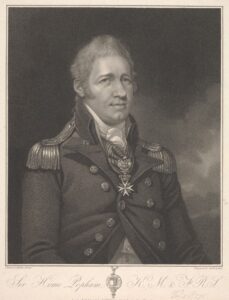
My apologies for the late arrival of this post, which should have appeared in celebration of Popham’s birthday. Presumably through the machinations of those enemies who always persecuted him, the website refused to work until today. Happy Belated Birthday Popham.

Those of you who have already read my Manxman trilogy will know my version of what Popham got up to during that campaign. Here, Jacqueline tells the real story…

Sir Home Popham, by Anthony Cardon after Mather Brown, 1807. (Public domain, Yale Centre for British Art, Paul Mellon Collection)

Sir Home Popham (1762–1820) is a fascinating character of the Napoleonic period whose exploits are almost too incredible even for fiction. This is why I am so impressed with Lynn Bryant’s take on him. Her Popham is very much as I imagine the real article would have been – bombastic, clever, unctuous, and with an overdeveloped sense of self-preservation – and I am curious to see where she takes him next. Today, however, I’d like to tell you a little more about the real Popham around the time we first meet him in the Manxman novels: as Captain of the Fleet at the 1807 bombardment of Copenhagen.

Popham first rose to prominence as an expert in disembarking and re-embarking troops under fire – a very useful skill, as Britain’s involvement in the wars against Revolutionary and Napoleonic France often meant carrying large numbers of troops to places that could easily be reached by water. Over the years Popham expanded his portfolio to include diplomacy, work with experimental weapons, intelligence, and acting as an unofficial government advisor. He managed to worm his way into the confidence of the most important men in the country, largely by telling them what they wanted to hear.

Attack upon Buenos Aires by General Beresford, engraver unknown, 1806. (Public domain, Anne S.K. Brown Military Collection, Brown University Library)

The year 1807, however, didn’t start well for Popham. He returned in disgrace from South America, where he had embroiled Britain in an unauthorised campaign by attacking the Spanish-held city of Buenos Aires. The invasion had initially gone well, but the inhabitants had rebelled and captured nearly every single British soldier involved. Popham was court-martialled for his role in this disastrous expedition and found guilty, but the government wasn’t ready to cashier such a useful officer just yet. Popham got off with a “severe reprimand” (a slap on the wrist) and was immediately re-employed as Captain of the Fleet at Copenhagen, effectively aide-de-camp to the commanding admiral, Sir James Gambier, and equivalent to a rear admiral in rank.

James Gambier, by George Clint after William Beechey, 1808. (Public domain, The Miriam and Ira D. Wallach Division of Art, Prints and Photographs, The New York Public Library)

This appointment did make some sense. Popham had a track record of facilitating amphibious operations, and the assault on Copenhagen involved 25,000 British troops alongside a fleet of 120 ships. The campaign would also require finesse, along with some difficult decision-making. An unexpected alliance between Russia and France in the summer of 1807 threatened British interests in the Baltic, where many essential naval stores came from. France had lost a lot of its naval power at Trafalgar in 1805, but British politicians feared Napoleon might “borrow” the fleet of another country – in this instance, that of Denmark. Denmark was a neutral power, but now Russia had sided with France the British politicians feared it might put pressure on Denmark to join the war against the British. British intelligence suggested Denmark’s fleet consisted of 18 ships of the line and 11 frigates, along with several smaller vessels. [1] The British government therefore decided to capture the Danish fleet before France could seize it – but this would mean a pre-emptive attack on a neutral power. The British commanders, Lieutenant General Lord Cathcart and Admiral James Gambier, were not enamoured at this prospect. Popham, however, had no such qualms.

But Popham’s appointment was a startlingly tone-deaf thing for the government to do, so soon after his well-publicised court-martial. Popham had never been popular in the Navy; he had been promoted to post-captain in 1794 at the request of the Army, and most of his employment had taken him way from the quarterdeck. By 1807, although Popham had been a post-captain for 13 years, he only had about five years’ worth of active experience. Under these circumstances, his appointment as Captain of the Fleet caused a furore. Questions were asked about it in the House of Commons, with one prominent opposition MP claiming Popham’s appointment represented “the encouragement of all insubordination, and the subversion of all discipline”. [2] Three captains serving as commodores on the expedition to Denmark – Sir Samuel Hood, Richard Keats, and Robert Stopford – issued an official protest expressing their “extreme sorrow and concern”:

The principles under which we have been brought up induce us to make any sacrifice that the service of our country may require. We are ready to proceed to any immediate service, but we rely that as early measures will be taken without injury to the service as can be effected to relieve us from the humiliating situation in which the appointment of Sir Home Popham as captain of the fleet we feel ourselves placed. [3]

The Portland ministry had only been in power a handful of months and was not strong. Its members were all too well aware there might be political repercussions from their choice of Captain of the Fleet, particularly if Popham did something stupid – which he had a track record of doing. The First Lord of the Admiralty, therefore, pressed Popham to keep his head down as much as possible. Frustratingly for the historian (but not for the novelist!), Popham is uncharacteristically missing from the records of the Copenhagen expedition, despite his privileged position as Captain of the Fleet.

The bombardment of Copenhagen, by Johan Lorenz Rugendas II, 1820. (Public domain, Anne S.K. Brown Military Collection, Brown University Library)

The four-day bombardment of Copenhagen, a neutral city, in September 1807 left a bitter taste, and Popham’s involvement may not have done him any more favours. At first, however, Popham expected to be well rewarded for participating: “All I ask of the present Administration & of my Country is to give me a patent Place not less than a thousand a Year.” [4] But the timing of the end of the campaign was catastrophic for Popham. In mid-September, news arrived in London of the definitive failure of Popham’s experiment in South America. General Whitelocke had been sent in March with 10,000 men to re-capture Buenos Aires, but this had ended in complete disaster. The outcome of the second Buenos Aires expedition did not make the government keen to reward Popham, and the horrified reaction of the rest of Europe to what had happened at Copenhagen only made things worse for him.

Popham received no reward for Copenhagen. He complained to his patron Melville: “There is a damn’d deal of ingratitude in the World.” [5] Did Popham’s refusal to investigate disease-ridden transports weigh against him with the powers that be? Was he subsequently involved in the court-martial of a member of His Majesty’s Army? We will never know, as the records on his involvement are so thin. But you can read more about such speculation in Lynn’s books.

References

[1] Intelligence report from Captain Francis Beauman, 25 July 1807, TNA ADM 1/5

[2] Speech by Windham, 31 July 1807, in The Times, 1 August 1807

[3] R.V. Hamilton (ed.), Letters and Papers of Admiral of the Fleet Sir Thomas Byam Martin (London: Navy Records Society, 1898), vol. 1, pp. 330–331

[4] Popham to Melville, 11 September 1807, William L. Clements Library, University of Michigan, Melville MSS, Box 23

[5] Popham to Melville, 23 November 1807, British Library Loan MS 57/108, no. 8

About Jacqueline Reiter

Jacqueline Reiter received her PhD from the University of Cambridge in 2006. Her first book, The Late Lord: the Life of John Pitt, 2nd Earl of Chatham (Pen and Sword, 2017), illuminated the career of Pitt the Younger’s elder brother. Her articles have appeared in History Today and the Journal of the Society for Army Historical Research; she has written for the History of Parliament and co-written a chapter with John Bew on British war aims for the Cambridge History of the Napoleonic Wars. Her latest book, Quicksilver Captain: The Improbable Life of Sir Home Popham, is published by Helion.

The Peninsular War Saga

General Robert Craufurd fought the battle of the Coa on this bridge

I began writing the Peninsular War Saga some years ago. At the time, I was attempting to find an agent or a publisher for one of my standalone historical romances, without much success. I had a lot of very positive feedback about my writing, my plots and my characterisation but everybody was saying the same thing; we’re sorry, but there is no market for traditional historical romance any more.

More than one agent urged me to try to write a contemporary romance. I made several attempts and hated all of them. Many people told me that with just a little adjustment, I could write for Mills and Boon historical. Once again, I made the attempt, and the people at Mills and Boon were lovely, gave great feedback, but were just not sure that my characterisation was quite right for them. I was getting nowhere.

To cheer myself up, I decided to scrap all my dreams of writing a marketable historical romance and just write something that I really wanted to do. There was definitely no market for a new series about the Peninsular War, since it had been done to death in the years following the runaway success of the Sharpe books and TV series. Still, it’s what I wanted to write, and since it was clear that nobody was going to read it anyway, I felt very liberated. I decided I could write it just for me, about a collection of people who didn’t always feel heroic or brave or even that patriotic. A lot of them joined because they had no option, or because they needed a job. They fought and they died and a lot of them became heroes. They also got wet, got grumpy when they were hungry, got sore feet and developed a bad head cold from time to time.

I wanted to explore areas of the war that I’d not really seen a lot about. What about the medical services? How did the commissariat work and who was responsible for ordnance and transport and prisoners of war? And what about the women and children who followed the army? What was it like in camp and on the long marches and all the boring hours between battles and skirmishes? What were relationships like between officers and men, away from the parade ground and the tidy regulations which governed army life?

Out of all these questions was born the Peninsular War Saga. Finally tired of trying to persuade an agent or a publisher to read one of the books, I decided to publish independently, without really thinking I’d sell more than a dozen copies, let alone develop an enthusiastic following. With book five doing well and book six in the early planning stages, I consider I’ve been incredibly lucky.

The Peninsular War Saga tells the story of the men and women of the fictional 110th Infantry during the wars against Napoleon; in particular, a young officer called  Paul van Daan who joins the regiment in 1802 as it is about to go to India to fight under General Arthur Wellesley.

An Unconventional Officer - love and war in Wellington’s army
Book 1 in the Peninsular War Saga

An Unconventional Officer: the Peninsular War Saga Book 1 (1802 – 1810) 

From the battle of Assaye, through Italy, Copenhagen and Portugal, we follow the early career of Lieutenant Paul van Daan, the most unusual officer ever to join the 110th as he attempts to find his place in the regiment.  Along the way he makes both friends and enemies, discovers a talent for leadership and shares his life with two very different women.

An Unconventional Officer is slightly different to the other books, as it covers a longer time period, almost eight years. I wanted it to be a full introduction to Paul’s story and to get him to the point where he was well-established in Wellington’s army. While it introduces many of the main characters, the heart of this novel is the love story between Paul and Anne and its theme is Paul’s gradual development from a young officer willing to break all the rules, to a slightly more mature officer who is beginning to learn to fit in a little better.

An Unwilling Alliance: The Manxman, Book 1 and the Peninsular War Saga Book 1.5 (1806-07)

This book is really a spin-off from the Peninsular War Saga, but it fits very securely within the series as well. It takes place halfway through the action of An Unconventional Officer, during the Copenhagen campaign, which is mentioned, but not explored in book one. I adore this book, partly because the navy theme enabled me to set part of it on the island which is my home and which I love, and partly because it is a real coming-of-age book for Major van Daan as well as a key point in his developing friendship with Sir Arthur Wellesley.

It is 1806 and Captain Hugh Kelly RN returns to the Isle of Mann after fifteen years with a few months leave and a small fortune in prize money to find himself a sensible Manx wife. He pays court to Roseen Crellin, who is determined to resist her father’s efforts to find her a husband. Still dreaming of the young English soldier who sailed away and broke her heart, she has no intention of encouraging Captain Kelly’s courtship and certainly no intention of developing feelings for the man.

Major Paul van Daan is newly promoted and just back from Ireland, sailing with his battalion to Copenhagen under the command of Sir Arthur Wellesley.  Paul’s courage and talent are unquestioned but his diplomatic skills need some work and in a joint operation with the navy there are many ways for a man of Paul’s temperament to get things wrong.

As Britain hovers on the brink of war with neutral Denmark and the diplomats and politicians negotiate to keep the Danish fleet out of Bonaparte’s hands, a more personal drama plays out on the decks of the Royal Navy and in the lines of Lord Cathcart’s army which could change the lives of Hugh, Roseen and Paul forever.

An Irregular Regiment

An Irregular Regiment: the Peninsular War Saga Book 2 (September 1810 – April 1811 )

This book covers an area of the war that I knew very little about. The building and manning of the lines of Torres Vedras are absolutely fascinating and worth a lot more time than I was able to give them. It is also the story of a young couple learning to be married, and sets the tone for Paul and Anne’s relationship throughout the series. If you don’t leave your hero and heroine at the church door, you have to work out what their marriage is going to be like, and I loved the challenge of that.

On the heights of Bussaco Ridge, Paul van Daan leads his battalion into action under Lord Wellington in his defeat of the French under Marshal Massena.  The book explores Paul’s developing career, and the happiness of his marriage to the lovely young widow of a fellow officer.  As Wellington prepares to chase Massena out of Portugal, Paul is serving under the worst general in the army and must find a way to keep his regiment safe and protect his reputation.

An Uncommon Campaign, 110th at the Battle of Fuentes d'OnoroAn Uncommon Campaign: the Peninsular War Saga Book 3 (April – June 1811)  

In addition to the battles and the personal stories of my characters, I wanted to introduce something about army politics during this book. I particularly love finding an interesting, funny or even a very sad story from history and trying to work it into the lives of my characters.

Lord Wellington has led his army to the Spanish border where the French occupy their last stronghold in Portugal at Almeida.  As the two armies face each other in the village of Fuentes de Onoro, Colonel Paul van Daan is becoming accustomed to his new responsibilities in command of a brigade and managing the resentment of other officers at his promotion over older and longer serving men.  His young wife is carrying their first child and showing no signs of allowing her delicate situation to get in the way of her normal activities.  And if that was not enough, Paul encounters a French colonel during the days of the battle who seems to have taken their rivalry personally, with potentially lethal consequences for the 110th and the rest of the third brigade of the light division.

A Redoubtable Citadel: the Peninsular War Saga Book 4 (January – June 1812) 

This was definitely the most emotional book for me to write. I wanted to highlight the plight of women in wartime, and I’m proud of this book, but it was extremely painful for me.

In the freezing January of 1812, Lord Wellington pushes his army on to the fortress town of Ciudad Rodrigo and a bloody siege with tragic consequences.  Colonel Paul van Daan and his wife Anne have a baby son and in the aftermath of the storming, take a brief trip to Lisbon to allow Paul’s family to take little William back to England.  With his career flourishing and his marriage happy, Paul has never felt so secure.  But his world is shattered when his young wife is taken prisoner by a French colonel with a personal grudge against Paul.  As Wellington’s army begins the siege of Badajoz, the other great Spanish border fortress, his scouts and agents conduct a frantic search for the colonel’s wife.  Meanwhile Anne van Daan is in the worst danger of her life and needs to call on all her considerable resources to survive, with no idea if help is on the way. 

An Untrustworthy Army: the Peninsular War Saga book 5 (June – December 1812)

This book covers both triumph and miserable retreat and was a wonderful opportunity both to introduce some new characters and to revisit one of the major storylines from the first book. It turned out to be more emotional than I expected and I loved being able to highlight one of my favourite characters whom I felt I’d neglected a little. The story of the retreat from Burgos was impossible to glamorise and highlighted both the best and the worst of Wellington’s army.

It is June 1812 and back with her husband and his brigade, Anne van Daan is beginning to recover from her ordeal at the hands of Colonel Dupres as Lord Wellington marches his army into Spain and up to Salamanca. In a spectacularly successful action, Wellington drives the French back although not without some damage to the Third Brigade of the Light Division.

Still recovering from their losses at Ciudad Rodrigo and Badajoz earlier in the year, the Light Division remains in Madrid while Wellington lays siege to Burgos but some of Paul’s brigade have troubles of their own.

Lieutenant Simon Carlyon is determined not to allow his dead brother’s shameful reputation to blight his career in the army but finds it harder than expected to serve under the man who killed him. Colonel Johnny Wheeler is finding the lie he told to protect others difficult to live with, faced with the unrelenting hostility of a young officer. And Captain Michael O’Reilly’s life becomes complicated through a casual act of kindness.

The end of the campaigning season is not going as well for the Allied army and triumph turns to an undignified and dangerous retreat.  At a time when the discipline of Wellington’s army seems to have broken down, Van Daan’s brigade need to set personal matters aside and concentrate on staying alive long enough to reach safety.

Future Books

That’s as far as I’ve got with the novels. My next book is intended to be the sequel to An Unwilling Alliance, covering the disastrous Walcheren campaign of 1809. I’ve not been able to find a novel covering this campaign before so it feels like uncharted territory. I intend to pick up Hugh Kelly’s story, but as the campaign once again involved both army and navy, I will be joining the men of the 110th second battalion, who, while Major van Daan was leading the first battalion to glory in the Peninsula, were unlucky enough to be sent to Walcheren. The working title is An Inauspicious Expedition.

The other books in the Peninsular War Saga, as planned so far are as follows:

An Unrelenting Enmity: set during winter quarters from December 1812 to April 1813

An Auspicious Action: the story of the battle of Vitoria

An Uncivilised Storming: the Pyrenees and San Sebastian

An Inexorable Invasion: the invasion of France

An Improbable Abdication: Toulouse and the return to England

An Unmerciful Engagement: Waterloo

An Amicable Occupation: the Army of Occupation

Looking at that list, I feel a combination of excitement and sheer terror. At present I seem to be able to manage two books a year, but some of these will take more research than others, so I don’t promise that. There will also be more in the Manxman series, since I hope at some point to be able to reunite Hugh Kelly and Paul van Daan.

Currently, I’m beginning the research for the book about Walcheren, which will be published some time next year; I can’t give a date yet until I have a better idea of how long the research will take. I’m also making notes about book 6 in the main saga, which may be quicker to write, given that it is set outside of the main battles and campaigns, although obviously, given that this is the 110th, there will be some action.

So far, most of the books have been published only as e-books, but I am working at changing that. Early next year I am hoping to have all the books in paperback on Amazon, and then to get them into some bookshops or for sale on my website later in the year.

I’ve come a very long way from believing that nobody wants to read another series about the Peninsular War, and I’m so grateful to all my readers, especially those who follow me on facebook and twitter and visit my website regularly. Some of you have left fabulous reviews as well, and every good review is like a gift, even if it’s only a couple of lines.

It has been a good year in many ways at Writing with Labradors, despite losing our beloved Toby. We’re so grateful we have Oscar to step into his paw prints, and we’re looking forward to an even better 2019. In the meantime, remember to look out for book giveaways on Amazon on Christmas Eve, in honour of the Jolabokaflod or Christmas Book Flood. And for future giveaways and updates, please click on the link to subscribe to the newsletter.

Merry Christmas and a Happy New Year from all of us at Writing with Labradors.


Sir Home Riggs Popham

Portrait of Sir Home Popham in the museum

Sir Home Riggs Popham, who features in my recent book, An Unwilling Alliance, is one of the most fascinating characters I’ve read about during my research and I am completely unable to make up my mind how I feel about him. As a novelist rather than a historian, I need to be able to present a historical figure in a way that is believable and fits in with the perspective of my fictional characters, but in the case of Popham I find my heroes as ambivalent as I am.
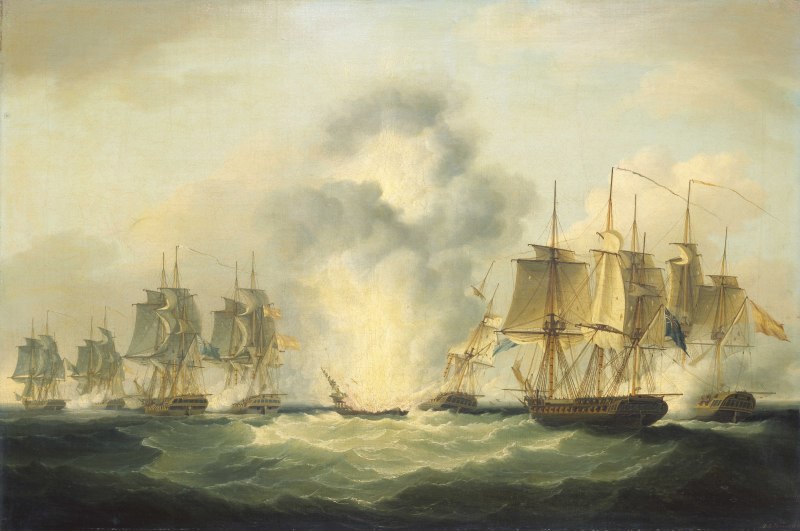
Popham had a wide and varied career and was the subject of much controversy during his lifetime. He was the subject of one court martial and several different investigations, none of which seemed to hold back his career to any great degree. He was a naval officer who seemed more comfortable with the army and was both admired and disliked by contemporaries. The Duke of York applauded his ability while Lord St Vincent seems to have loathed him. He was ambitious, talented and clearly very intelligent but seems to have had the kind of personality that made enemies as easily as friends.

Popham was born in Gibraltar in 1762 to Joseph Popham, consul at Tetuan. His mother died giving birth to him and his father later remarried. Between his two wives, Joseph Popham had a large number of children; sources seem to vary as to the number. Home Riggs Popham was educated at Brentford School and then at Westminster and may have been admitted to Trinity College, Cambridge, although it is not clear how much time he actually spent there. In 1778 at the age of 16 he entered the navy as a captain’s servant on board the Hyaena.

Popham’s early career in the navy was fairly typical. He was involved in a number of skirmishes and spent a few months as a prisoner of the French in 1781. He was promoted to lieutenant in 1783. Aboard the Nautilus in 1786 he was responsible for surveying the coast of south-west Africa, building a reputation as an excellent hydrographer.

Progress in the navy was often slow. There were more officers than good commands and many excellent men were unemployed and on half-pay awaiting a ship, including Popham in 1787. Obtaining leave from the Admiralty, he bought his first ship and sailed for India as a trader. He operated to and from India for several years, marrying the daughter of an East India Company officer, Elizabeth Prince, in 1788. During these years he continued with his surveying work, later publishing A Description of Prince of Wales Island with charts. He also discovered a new channel between the island and the mainland through which, in the spring of 1792, he piloted the company’s fleet to China and he was presented with a gold cup by the governor-general in council, who also strongly commended him both to the directors and the Admiralty.

Popham’s commercial activities, however, were causing some suspicion and in 1791 his ship was seized by an English frigate as a prize of war, brought into the Thames, and condemned as a droit of Admiralty for having traded in contravention of the East India Company’s charter. The case was far from clear and Popham appealed, eventually receiving £25,000 over a period of time, which left him with considerable losses. There were rumours that he had been smuggling. He had also failed to renew his leave and was consequently temporarily struck off the lieutenants’ list although he was reinstated in 1793.

In September of that year, Popham was appointed agent for transports at Ostend for the campaign in Flanders under the Duke of York. It was a job to which he was ideally suited, with his excellent organisational skills and understanding of logistics. He formed a corps of sea fencibles to defend Nieuport and distinguished himself to such a degree that on 27 July 1794 the Duke of York requested of the Admiralty that he be appointed superintendent of inland navigation and promoted to commander, an honour which earned him the nickname of ‘The Duke of York’s admiral’.

When the Allied forces retreated in 1795, Popham was in charge of the evacuation and proved himself so competent that in March of that year the Duke wrote to the First Lord requesting that Popham be promoted to the rank of post captain. It is very likely that this rapid promotion at the request of the army engendered some resentment among Popham’s naval colleagues.

During the invasion threat of 1798, Popham set up and commanded a district of sea fencibles. In May he submitted a plan for destroying the Saas lock at Ostend and was given, command of the expedition. The lock was destroyed, but because of worsening weather, the troops under Major-General Eyre Coote could not be re-embarked, and were obliged to surrender. The following year, Popham was sent to St Petersburg to attempt to persuade Tsar Paul to provide troops for a proposed landing in the Netherlands. He took the tsar and his family sailing which they apparently enjoyed so much that they presented Popham with a gold snuff-box and a diamond ring, and the tsar made him a knight of Malta. Popham secured the force needed and returned to England.

Later that year Popham was once again involved in inland navigation as an allied force under General Sir Ralph Abercromby landed on the Helder peninsula. It was poorly supported by the 10,000 Russian soldiers sent by the tsar and the campaign ended with another evacuation which Popham managed with his usual flair. He was awarded a pension of £500 a year and send back to Russia to try to mollify the tsar although Paul, furious at the failure of the campaign, refused to see him.

Back at sea, Popham began working on another project; the signalling system for which he is perhaps best known. His Telegraphic Signals, or Marine Vocabulary, provided ships with a flag system containing letters, words, and common phrases and enabled captains to communicate effectively. Popham’s code, was used by Nelson and his frigates at Trafalgar. It did not immediately supplant the official Signal Book for the Ships of War but was used to supplement it. Popham continued to improve the code over the next twelve years and it was widely used, finally being officially accepted by the Admiralty in 1812.

At the end of 1800 Popham commanded a troop ship with Abercromby’s army invading Egypt. Once there, he was commissioned by a secret committee of the East India Company to negotiate trade treaties with the sheriff of Mecca and other Arabian states as ambassador directly responsible to the governor-general of Bengal, Lord Wellesley. Popham was successful only with the Sultan of Aden. In addition he continued his surveying work, later publishing an excellent chart of the Red Sea.

On his return to England in1803 Popham found himself at the centre of another controversy, accused of having incurred ‘enormous and extraordinary’ expenses on repairs to his ship, the Romney in Calcutta. A series of investigations followed, during which Popham published A concise statement of facts relative to the treatment experienced by Sir Home Popham since his return from the Red Sea to rebut the charges. It appears that the case may have been fabricated by Lord St Vincent’s secretary, Benjamin Tucker, in the hope of currying favour and trading on the First Lord’s well-known dislike of Popham. The matter finally went to a select committee of the House of Commons which reported that the figures had been grossly exaggerated and Popham was innocent.

Popham had political ambitions and hoped to become a lord of the Admiralty. He served as a Pittite MP in several different constituencies between 1804 and 1812 and some of his naval appointments were undoubtedly the result of political favour. With his wide variety of interests, Popham became interested in the invention of ‘submarine bombs’ which proved unsuccessful in practical use. He also took an interest in the idea of attacking the Spanish colonies in South America, an idea which had been debated for some years, and in 1804 submitted a paper on the subject to William Pitt, after meeting the Venezuelan patriot, Francisco Miranda.

At the end of 1804 Popham was appointed to the Diadem and in August 1805 he sailed as commodore and commander-in-chief of an expedition to the Cape of Good Hope with a force under General Sir David Baird. The operation was a great success, with Popham leading his marine battalion during the attack, and the Dutch surrendered the colony. The squadron remained in Table Bay to guard against a possible French attack.

At this point, Popham conceived the idea of making an attack on the River Plate. Presumably he assumed that with the Tories, led by William Pitt, his patron, in power, he could expect tacit approval, particularly if he were successful. Reluctantly Baird allowed him to take 1200 men; the squadron sailed and at St Helena, Popham ‘borrowed’ a further 180 men. There he heard that Pitt was dead, but not who had replaced him.

 On 25 June 1806 the small force under the command of Brigadier-General William Carr Beresford landed near Buenos Aires. With the addition of the marine battalion it totalled 1635 men. The Spanish were surprised and there was very little immediate resistance. The city surrendered on 2 July and Beresford took possession. Popham sent an enthusiastic open letter to the merchants of England announcing this lucrative new market for their goods. He had spoken too soon, however. By 10 August a force of 2000 Spaniards entered the city, overran Beresford’s men and took them prisoner. Popham and his squadron could do nothing but blockade the river and wait for reinforcements.

On 3 December, with reinforcements arriving, Rear-Admiral Charles Stirling arrived to with orders for Popham to return to England. On his arrival on 20 February 1807 he was put under open arrest to await court martial on two charges: of having withdrawn his squadron from the Cape without orders; and of having launched his Argentine enterprise ‘without direction or authority’.

Typically for Popham, this incident received a mixed reception. In Argentina, Popham is often seen as the catalyst of the independence which followed the invasion. To the Admiralty he was an officer who had acted improperly; to the City of London he had made a bold attempt to open up new markets, and he was presented with a sword of honour. He was tried at Portsmouth in March 1807, was found guilty and severely reprimanded.

Surprisingly, Popham’s career does not seem to have suffered from this. In July he was appointed captain of the fleet with Admiral James Gambier in the expedition against Denmark, and this is where we meet him in An Unwilling Alliance. Several other captains, including Hood, Keats and Stopford apparently protested at this appointment although it was probably Popham’s experience in joint operations which caused Gambier to ask for his appointment. Popham was one of the three officers appointed to negotiate with Denmark at the end of the bombardment, along with Wellesley and Murray.

Popham’s next command was of the 74 gun Venerable during the disastrous Walcheren campaign. Popham’s role in this particular fiasco was interesting, since he seems to have been heavily involved in the planning of the expedition. The blame for the failure of the campaign, which should probably have been shared between the army, the navy, the planners in London and sheer bad luck landed squarely on the shoulders of the army commander Lord Chatham even though the enquiry officially exonerated him, but there may well have been some issues with the planning of the expedition from the start.  Dr Jacqueline Reiter, who has written a biography of Lord Chatham, points out in this post that although there was inevitable recrimination between the army and the navy after the campaign, Lord Chatham seemed to consider the Admiralty planning of the expedition responsible for the disaster, something with which Popham was undoubtedly involved.

Whatever the truth of the Walcheren fiasco, Lord Chatham’s active military career was over while Popham, still in command of the Venerable, was sent to northern Spain to assess possibilities for co-operating with the guerrillas and conducting a kind of naval guerrilla warfare against the French in support of Wellington. He was highly successful at this, keeping an entire French army ‘distracted’, and capturing Santander.

Popham seems to have received very little recognition for this achievement much to his disappointment. There is speculation that his controversial career had finally caught up with him. At the end of the war he was promoted to rear-admiral and made KCB but he was not employed on active service again. He seems to have lost whatever political influence he had once had and had made too many enemies during his colourful career.

From 1817 to 1820 he was commander-in-chief in Jamaica. They were not good years for Popham. He suffered badly from yellow fever and lost one of his daughters to the illness. His son, Home, also died of some kind of pulmonary illness. In 1818 Popham was made KCH but his health was failing. In June 1820 he suffered a series of strokes and wrote to the Admiralty asking to be relieved of his command.

Sir Home Riggs Popham and his wife sailed for England on 15 June. They arrived at the end of July and on 11 September, at Cheltenham, Popham died of a third stroke at the age of only 58. He was buried in the churchyard of St Michael and All Angels at Sunninghill in Berkshire, close to his home, Titness Park. His wife died in Bath, aged ninety-four in 1866. They were considered to be a devoted couple.

The brief sketch I have drawn of Popham in An Unwilling Alliance is not enough to give a full picture of the man and I have a feeling I have a lot more to learn about him. Popham was clearly an intelligent and inventive officer whose achievements are quite remarkable. His work on naval communications was ahead of his time, his work at the Admiralty on the chart committee helped establish the excellent reputation of Admiralty charts. He was a scientific officer with a considerable talent for organisation and often worked better with the army than with the navy. He was a good captain, a loving husband and an affectionate father.

And yet there is always something else about Sir Home Riggs Popham. Suspicion and accusation dogged his entire career. Some of his exploits are extraordinary but I have the sense that he must always have been looking over his shoulder, waiting for his past to catch up with him. He received high praise for many of his achievements, but he does not seem to have been generally liked.

It is difficult to know whether Popham’s reputation as a “damned cunning fellow” is based on his actions or simply on a difficult personality. His achievements are remarkable but in an age when the ideal of a naval officer was Horatio Nelson, a scientist and surveyor who specialised in joint operations with the army was unlikely to become a national hero and it is ironic that some of Popham’s finest moments seem to have involved the evacuation of troops from difficult situations.

Whatever the truth of it, Sir Home Riggs Popham – elusive, enigmatic and controversial – is a gift to any historical novelist and I am looking forward to revisiting him during the Walcheren campaign.

An Unwilling Alliance is a novel of the 1807 Copenhagen campaign, available on kindle and in paperback at Amazon.  My next book, This Blighted Expedition, following the Walcheren campaign, will be published later this year.


Publication of An Unwilling Alliance

Naval Action off Cape Santa Maria, Portugal, 1804

Today heralds the publication of An Unwilling Alliance, my ninth book, set during the Copenhagen campaign of 1807, a joint operation between the army and the navy. It is linked to the Peninsular War Saga and features Major Paul van Daan, the hero of the series but it also introduces a selection of new characters.

In 1806, Captain Hugh Kelly RN returns to the Isle of Mann after fifteen years in the navy. He has a few months leave and a small fortune in prize money and intends to inspect the house he has just bought and to find himself a sensible Manx wife. His investment in a local shipping business introduces him to Josiah Crellin and his daughter, Roseen.

Hugh is quick to see the advantages of a marriage with Roseen Crellin. He also finds her very attractive. Roseen is unconvinced. She is determined to resist her father’s efforts to find her a husband and is still dreaming of the young English soldier who sailed away and broke her heart. However it proves to be difficult to dislike Captain Kelly.

Major Paul van Daan of the 110th infantry is newly promoted and just back from Ireland, sailing with his battalion to Copenhagen under the command of Sir Arthur Wellesley.  Paul’s courage and talent are unquestioned but his diplomatic skills are another matter and in a joint operation with the navy there are many ways for a man of Paul’s temperament to get things wrong.

As Britain hovers on the brink of war with neutral Denmark and the diplomats and politicians negotiate to keep the Danish fleet out of Bonaparte’s hands, a more personal drama plays out on the decks of the Royal Navy and in the lines of Lord Cathcart’s army which could change the lives of Hugh, Roseen and Paul forever.

St Michael’s ChapelI’ve really enjoyed writing this book for a number of reasons. It is the first of my books to be set partly on the Isle of Man where I live, and I loved writing that section. The island is a beautiful place and being able to share a little of that with my readers has been very special.
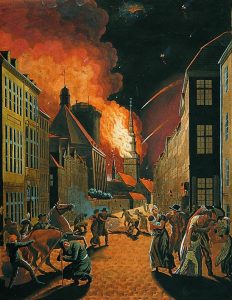
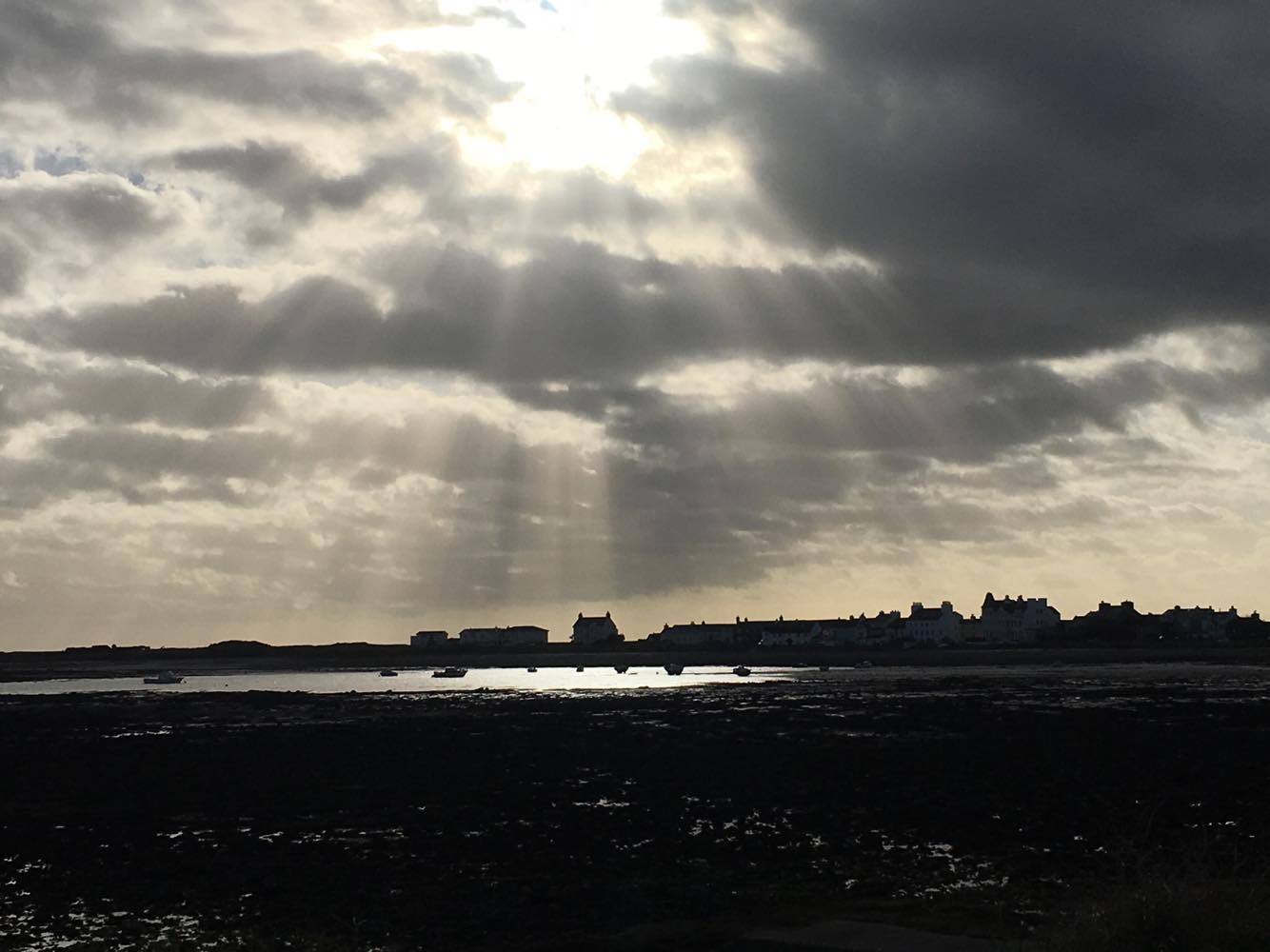
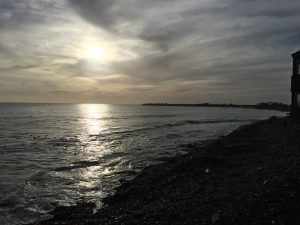
It is also the first book to be based around the navy and I’ve enjoyed the research. I’m thoroughly enthusiastic about it now and am looking forward to future books on the decks of an early nineteenth century warship.

The book has taken me back a little in time to an episode of Paul van Daan’s earlier years. It was strange writing this and has made me realise how much he has grown up during the ten years or more covered by the first four books of the Peninsular War saga. It was fun to revisit the younger Paul before he settled down and learned some self-control.

It was also fun developing the new characters. Hugh Kelly and Roseen Crellin are very different to some of my previous characters. Hugh was the son of a  tenant farmer who drank himself to death.  He went into the navy as a boy and worked his way up, which has given him a far more down-to-earth view of the world than some of my other heroes. Roseen is slightly better born but still an ordinary Manx girl who has only been off the island twice. She is socially very awkward and proving hard to marry off; nothing like the socially adept heroines of some of my other novels. For all that, I love the way this relationship develops, by fits and starts. It feels very real to me and I have a feeling that Hugh and Roseen are going to be one of my favourite couples.

Copenhagen on fire, 1807

I have told the story of the Copenhagen campaign in a separate post. This is not a campaign which includes lots of exciting battles and skirmishes. The battle of Koge was over very quickly and although there was an ongoing naval duels for a couple of weeks between the smaller boats of the two nations, the Danish fleet was completely unprepared for the British invasion and its army was cut off from the capital. The Danes fought bravely with what little they had but it was an uneven contest.

I have tried to show a balance in the novel between the pragmatism of the British invasion and the discomfort felt by a lot of the people involved at an unprovoked attack on a neutral country. War was not always a glorious business and was also sometimes very tedious. Much of the campaign involved both army and navy sitting around waiting for the diplomats to finish their negotiations.

The title is also one of my favourites as it has several meanings. Roseen is determined not to make an unwilling alliance with a suitor she does not know and may not like. There is also an unwilling alliance between the army and the navy who often struggled to work together in joint operations. As for poor Denmark, it was trying desperately to maintain its neutrality while being pushed inexorably into an unwilling alliance with either France or Britain.

An Unwilling Alliance is a story of love, of friendship and of war on both land and sea. I hope readers of the Peninsular War Saga will enjoy this glimpse of a different moment in the life of the 110th infantry and I look forward to further adventures with Captain Hugh Kelly RN.


Peel Town, 1806 – an excerpt from an Unwilling Alliance

Peel Town was ten miles from the Crellins’ Malew home and they set off early with one of Hugh’s grooms riding at a discreet distance behind. The weather was cooler and cloudy but the rain held off and they arrived by mid-morning. Hugh left the groom to stable the horses at the inn which was right on the quay and led Roseen along the busy seafront.
Peel Town was on the west coast of the island, a thriving and busy little town situated on the tidal estuary of the River Neb sheltered to the north by the rocky St. Patrick’s Isle and to the west by Peel Hill. The grey stone of Peel Castle out on the island was less well preserved than Castle Rushen although there were signs of building and activity, with scaffolding erected in places around the walls. The ongoing war with France had given a new incentive to coastal towns around the British Isles to improve their defences, and Roseen remembered the work being done on the little fort down on St Michael’s Isle.
Peel was primarily a port, its main industries fishing and ship building and the quayside was thronged with people in a way that she only saw on market days in the quieter streets of Castletown. Over the centuries the town had grown up on the right bank of the river facing Peel Castle on St Patrick’s Isle. It was a rabbit warren of tiny cobbled streets of sandstone and brick houses running from inland down to the busy heart of the town by the sea. The oldest houses tended to be close to the quay with newer and more elegant buildings further back.
As always, the usual smells of the sea, wood fires and tar from the ship works were overlaid in Peel Town by the smoky odour of herring smokers. Many of the small cottagers smoked their own kippers but there were one or two commercial enterprises now, smoking larger quantities of fish and exporting them to England. Hugh led Roseen along the quay. Several people hailed him and he responded cheerfully, leading Roseen to assume that Captain Kelly had spent some time here during his months back on the island. About halfway along, a white painted Manx cottage with several large sheds attached bore a painted sign announcing Shimmin’s Smokery. Hugh rapped on the door to the house and it was opened after a moment by a very young maid in apron and cap.
“Is Mr Shimmin in?” Hugh asked, and a voice from within hailed him with cheerful vulgarity.
“Bloody hell, is that the Kelly boy again trying to cadge a free breakfast? Every damned time he comes to town he’s on my doorstep…”
“Watch your mouth, you miserly old coot, I’ve a lady with me!” Hugh shouted, and a man emerged from a dark passage. He was probably sixty, fat and red faced, dressed in the fashion of a previous age with pale breeches and a waistcoat and coat straining across his ample stomach.
“Well how could I have expected any sensible female to be seen out in your company?” he demanded cheerfully. “Ma’am, my apologies. James Shimmin, at your service.”
Roseen offered him her hand and he bowed over it gravely with old-fashioned courtesy, then straightened and looked enquiringly at Hugh who grinned.
“I’m guessing you’ve not met Miss Crellin, James, she’s the daughter of my business partner Mr Josiah Crellin of the Top House, Malew. Miss Crellin, this fat old goat is Mr James Shimmin, proprietor of Shimmin Smokeries. He smokes the best kippers on the island, which of course means the best in the world, and he was a friend of my father’s. He’s also completely right, I am indeed here for a free breakfast. How are you, James?”
“All the better for the sight of a pretty girl. Come through into the dining parlour, Miss Crellin. Sally, get some food on. The new bread, mind, we’ve guests. And fry up some of the smoked bacon, I want Captain Kelly’s opinion on it. Where’s my wife?”
“Out back, sir, with the chickens.”
“Call her in, will you?”
They ate in a small, dark parlour which had probably once been the main room of the cottage before it had been extended to display Mr Shimmin’s increasing prosperity. There were two front sash windows and a big open kitchen hearth. A selection of prints adorned the walls and a big dark oak table was quickly set with traditional pottery plates and cups.
Mrs Shimmin was some years younger than her husband, a comfortable motherly Manx woman who made Roseen feel very welcome. They chatted about local concerns; the coming harvest and the unexpectedly fine summer weather and the fishing prospects. Roseen knew many of the local fishing families through her brother.
The food was excellent and plentiful, the rich smoked fish and bacon supplemented with home baked soda bread and fresh milk from the Shimmins’ smallholding. The two men drank mild ale and talked a little of the war and of Hugh’s probable recall to duty soon.
“You not tempted to come out, fella?” Shimmin asked, studying Hugh. “It’s not like you’ve not done your duty. How many years is it?”
“Almost fifteen,” Hugh said. “I was twenty two when I had my first commission. Don’t think I’ve not considered it, James, especially now that I’ve a place of my own to come home to.”
“I heard there’d be no shortage of officers ready to take your place,” Shimmin said.
“That’s true enough, but they’re not all that good at it. Better than the army, mind, half of them have paid for their promotions and they’ve no idea what they’re doing. But still – the navy’s been very good to me. Not the right time to drop them in the brine.”
“You don’t think he’s beat then?”
“I think he’ll take a while to come back from Trafalgar. He lost his navy there, whether he admits it or not.”
“And we lost Lord Nelson,” Shimmin said. “A great pity.”
Hugh grinned. “Nelson was a great commander,” he said. “But between you and me, there are others I’d rather serve under. He was a bit of a twat, to be honest. Sorry, ma’am, forgot there were ladies present.”
Roseen had begun to laugh. “Captain, I cannot believe you just said that about England’s hero! You will be keel-hauled!”
“I’m careful where I say it, but I’m not the only one. I’m friendly with John Quilliam who was his first lieutenant at Trafalgar and although he’d nothing but good to say of the man’s talent and leadership, he didn’t like him much. Bit of a peacock. But the men loved him and it’s sad he’s gone.”
“So can Bonaparte rebuild his navy?” Roseen asked. The grey eyes studied her thoughtfully.
“He can, and he’ll make the attempt. But if he wants to damage British trade through a blockade he’ll need to do so quickly before we rebuild the European coalitions. The powers-that-be are more worried that he’ll steal a fleet from somebody else.”
“Not Spain?”
“No, Trafalgar finished Spain. But both Denmark and Portugal have a fleet. Both are currently neutral – more or less. Portugal, I’d say, would favour an English alliance over a French, if they get the choice. Denmark, I’m not so sure. They’re not fond of our navy.” Hugh set down his napkin and smiled. “And I’m talking war on a day of pleasure. Forgive me, Miss Crellin.”
“It is particularly irritating when you treat me as though I were a child, Captain, unable to understand the least thing about the war, or politics, or trade, or anything else,” Roseen said in measured tones. “Has our brief acquaintance given you the impression that I am intellectually less capable of understanding such matters than your male friends?”
She saw, with satisfaction, that she had genuinely shocked him. James Shimmin gave a snort of laughter.
“That’s told you, Captain Kelly! You should hold on to this one, she’d be good for you!”
“Thank you, I will bear that in mind,” Hugh said faintly. “Miss Crellin, my apologies. It isn’t your intelligence that I question, it is your interest in matters military. It is not generally considered a subject for ladies at the gatherings I’m used to attending.”
“Then they must be very dull. What are the ladies allowed to speak of beyond their needlework and the latest gossip, I wonder? Is there a manual? You must provide me with a copy so that I do not make any further faux pas.”
Hugh started to laugh. “You are the worst termagant I have ever come across! Feel free to continue making me feel bad for the rest of the day if you want. Should I ask if you want to come and look at this yacht with me? I shall try not to offend you again.”
Roseen blushed slightly. “I’m sorry. I should not have…”
“No, please do.” Hugh rose and held out his hand. “It’s a shock, but you’re very good for me. I keep telling you how hopeless I am socially, it’s time I learned.”
“I am not the best person to teach you, Captain, I don’t have the reputation of knowing how to behave properly myself. Mrs Shimmin, thank you for a wonderful meal, it is so good of you. I hope you are not annoyed by our squabbling, we do not seem to be able to help it.”
Outside the clouds had darkened and Hugh studied them thoughtfully. “I’m not so keen on this weather, I should probably have brought the carriage. I hope it holds off.”
“If it doesn’t, I’m not going to drown, Captain. I’m Manx. Rain isn’t new to me.”
He laughed aloud. “And I’m coddling you again, aren’t I? All right, lass, no more of it. Come and tell me what you think of this yacht, then. She’s not new and she’s been badly neglected but she has beautiful lines and I think with some work she’ll be a gem.”
The yacht was moored at the far end of the quay; the boy waiting to show them around was an underfed lad of eighteen or so, presumably not the owner. Roseen climbed the ladder onto the battered wooden deck without difficulty and stood looking around her in some delight.
She could see immediately the appeal of the old boat. Despite her neglected appearance she was a graceful vessel, 25 feet in length, schooner rigged and built some forty years earlier. While Hugh asked a series of intelligent questions of the boy and inspected woodwork and masts, Roseen climbed below into the cabin area and stood looking around thoughtfully. After some time he joined her.
“She’s in poor condition but with time and money spent she’ll be lovely again.”
“Who owns her?”
“The owner is a man called Callow, an advocate in Douglas. She was his father’s but he’s not a sailor himself. Recently inherited and he’s selling off everything he has no use for.” Hugh’s voice was quiet. “She’s priced too low, I don’t think he knows anything about sailing or yachts, I want to snap her up before somebody tells him he’s got this wrong. There’s also a small boatyard with some storage. I’ll take that off him at the same time and Isaac can find me a man who can take on the restoration.”
Roseen turned to look at him thoughtfully. “Has this man had a good look around that boatyard?” she asked.
“No idea. Why?”
“I’d get it checked thoroughly once you’ve signed the contract. Wouldn’t want any surprises if the excisemen come calling.”
Hugh froze, studying her in some surprise. Then he looked around again and caught his breath. “This cabin’s too small.”
“By three or four feet against the outside, I’d say.”
“There’s not that much smuggling done here these days, I’m told.”
“There was forty years ago, before the Duke of Atholl sold out to the English. One of the Manxman’s favourite pastimes, for all they blamed it on the English and the Irish.”
Hugh looked around him again. Now that she had pointed it out, the disproportion was obvious. He glanced again at Roseen and said:
“Is that how your father got his start in trade, Roseen?”
She laughed, obviously unabashed. “If it is, Captain, he’s hardly likely to tell you about it. The reversion to the English crown put a stop to that, and it’s all before your time and mine. Do you object to being in business with a former smuggler?”
“I’d struggle more with a former slaver. I’ve boarded one or two slave ships in my time, the images stay with you.”
The girl shivered with real revulsion. “How horrible. There are men living here who have done very well out of slaving. The Gellings, up Ramsey way for one, and I’m told that old Orry Gelling is hoping to find new ways around the law.”
“Well he’ll find himself in trouble then. The government is serious about this, once the navy isn’t spending all its time chasing the French we’ll be policing it very thoroughly and I don’t know any officers who like slavers. But as for smugglers, it’s in the past. I don’t like the fact that it still goes on; the French wars have been kept afloat at times by gold and information from English and Irish smugglers. But your father is well beyond that point, lass. I’m dying to find out what’s behind that panelling and I will certainly warn Isaac that he’s to rip that storage apart to make sure there’s nothing embarrassing left behind. But I’m going to make an offer on this lady, she’s gorgeous. Have you seen enough?”
She nodded and he helped her up, thanking their guide and promising that his man of business would be in touch over a possible offer. Business over with, they strolled up into town, past the solid tower of St Peter’s Church and through the market square. Roseen paused to look in several shop windows but Hugh was faintly amused to see that her interest was purely practical. She passed the silk merchant and milliner without a glance but paused to look thoughtfully at a carpenter and furniture maker.
“Did you get your new bed frame, Captain?”
“Yes, I ordered it from a carpenter in Douglas, he made it especially. I’m tall.”
Roseen looked round at him with a quick smile. “Is that a problem aboard ship?”
“It won’t be aboard my new ship, I’ve ordered a much longer bunk specially made for me. The joys of being captain.”
“No more squashed toes,” Roseen said, moving on. “Do you mind if we stop at the herbalist – we’re in need of a few things for the kitchen at home, the one here is better than the one in Castletown.”
“I’m at your disposal, Miss Crellin.”
The girl turned her head to look up at him. “I can never work out when I am to be Roseen and when I am Miss Crellin.”
“Nor can I. It’s why I get it wrong so often. Do you mind?”
She shook her head firmly. “No, I like it. Miss Crellin sounds like some dreadfully missish female that I should have very little time for.”
“I need to be formal with you in public, lass. There are rules; even I know that.”
She laughed aloud. “So do I although I cannot always remember what they are.”
“My name is Hugh.”
She looked horrified which made him laugh. “Captain, I must not. People would genuinely be shocked.”
“All right. Just for your information, I will not be shocked and you may call me by my given name any time you wish. I’ll leave you to choose your moment. The herbalist is along here if I remember right.”
They wandered through the square, stopping at one or two stalls. Surprisingly for a town of its size, Peel Town had no regular weekly market although several times a year it held a cattle fair and traders set up their stands to take advantage of the extra custom. But there were usually a few farmers bringing produce in for sale and setting up informal market stalls and the square by St Peter’s had always been known as the market place although Hugh was not sure that it was officially called so.
Their shopping done they wandered back down through the town. A number of people called greetings to Hugh and several of the gentry recognised Roseen and bowed, their eyes alight with curiosity at her escort. Hugh glanced at his companion and wondered if she was aware that island society was rife with gossip about his interest in Josiah Crellin’s daughter.
Hugh had asked Isaac Moore what he knew about Roseen Crellin. Moore had made some discreet enquiries and had reported that she had the reputation of being something of a hoyden and as she had freely admitted to him, had not been seen much in local society until recently when her aunt and her father had clearly decided that it was time to rein her in and get her ready for a suitable marriage. Her reputation meant that she was not as sought after as one might have expected, given both her prospects and her lovely face but there were rumours that one or two local gentlemen were waiting to see if Miss Crellin managed to settle down and behave well enough for them to consider her a respectable bride.
Their hesitation might well give Hugh the advantage he needed. He was not overly modest about his own value in the island marriage market. Mann was not crowded with prosperous unmarried gentlemen with a distinguished naval career and money in the bank and it had been made very clear to Hugh during these past months that Roseen Crellin was not his only option. A few months ago he would have been ready to look around him and weigh up the merits of several girls who had shown themselves very willing but he admitted ruefully that he was no longer even remotely interested in the fair charms of Miss Quayle or the frosty elegance of Miss Amy Corlett. Setting aside her excellent dowry and the advantages of an alliance with her father’s business, Roseen Crellin with her dusky curls and quick smile, was a girl he found immensely attractive in her own right and he was fairly sure it was a shared attraction.
She was probably not the easiest woman he could have chosen for a bride, and a few months ago her outspokenness and unconventional outlook might have given him pause. Now that he was coming to know her, he realised that he liked her better for her refusal to conform. Life with Roseen Crellin might occasionally be difficult but it was never likely to be dull. She would gain social confidence with age and encouragement but Hugh admitted that he found her occasional awkwardness endearing and he liked her hardiness and her lack of pretension.
Arriving back on the quay they wandered along looking at the boats and talking about fishing. She was surprisingly knowledgable, presumably from the times she had gone out with her brother. He felt a strong desire to see her aboard his ship, to give her the tour and answer her questions about what he did and how he lived his life. It occurred to him suddenly that if she agreed to an early marriage, he could take her with him to Yarmouth when he went to overlook the final stages of the refit.
“Are you tired?” he asked.
“No, not at all. Why?”
“I was wondering if you’d be willing to walk up the hill before dinner. I love the view from up there and I’m curious about the building work.”
Roseen laughed. “Thomas Corrin’s folly? Yes, half the island is talking about that one. His wife is buried up there and it’s said he’s building a tower in her memory.”
“She died?”
“Just after Christmas, in childbirth. Very sad, they’re saying he’s gone a little mad with grief. But I like the walk.”
“Good. Let’s leave the parcels at the inn.”
It was a steep climb up the hill on the west side of the Neb, the paths narrow but well worn. By now he was used to her agility and although he glanced at her occasionally to make sure that she was not struggling, he did not offer help although when they finally reached the building site at the top of the further hill he reached for her hand and she gave it to him. They walked forward, studying the piles of stone and the scaffolding. Three or four builders were working steadily and another, possibly the foreman, was standing nearby watching, alongside another man in his thirties dressed in dark clothing and a black beaver hat. The two men turned at the approach of Hugh and Roseen and Roseen bowed.
“Mr Corrin, how are you?”
“Miss Crellin. I’m well enough thank you.” Thomas Corrin turned his sad dark eyes onto Hugh and studied him. Then he smiled. “And if I’m not mistaken, I know this fine gentleman. Although you’ve grown a bit since I last remember you, Hugh.”
“It’s good to see you, Tom. You’re a bit taller yourself since we were at the Clothworkers together.”
“Unlike Moore who’s hardly grown an inch,” Corrin said with a grin. “I’d heard you were back and I understand you’ve taken over the old Cretney estate. I should have called, fella, I’m sorry.”
“Don’t be. I heard about Alice, lad. I’m so sorry, I know how you felt about her.”
Corrin nodded and turned to look back at the partly built tower. “They think I’m mad, the good people of Peel Town. Building this up here. She loved this place. She’s buried up here, you know. Just over there. Didn’t want her in that bloody churchyard; it’s full of people I’ve no time for. Up here…I feel closer to her, somehow. Like me, she was never one for the established church.”
“Tom, I can’t imagine what you’re going through, but if you’ve the money to spare and it gives you comfort you can build a tower in her memory on every bloody hill on this island as far as I’m concerned. She was a lovely lass, I remember her running around with us when we were children, and you must miss her like hell.”
Corrin smiled. “You’ve not changed,” he said. “I’m glad you’ve decided to settle back home, boy, too many of our good men leave and don’t come back. You married?”
“Not yet,” Hugh said briefly and he saw his childhood friend’s bright dark eyes shift to Roseen. Corrin grinned.
“Aye, well you’ve time. You going back to the navy?”
“Yes, until this war is over. They’ve need of experienced captains. I’ve a ship refitting over in Yarmouth but I thought I’d take time to come home and settle my affairs here for a few months. If I make it through the war, I’ll come home for good.”
“No yearning for the high life in England then?”
“I’ve had the high life in England,” Hugh said. “Travelled a fair bit of the world. But this is home, always will be.”
Corrin glanced at Roseen again. “You’ll be in need of a good Manx lass then,” he said cheerfully and Hugh saw the girl colour slightly. He shook his head.
“Don’t be an arse, yessir, you’re putting my lass to the blush. We’ve nothing settled yet, there’s time.”
“Well don’t waste it, boy, she’s too pretty to wait around for the likes of you to make up your mind. You’d best get yourselves down, it’s mizzling already but we’re in for a downpour. It’s been good to see you, Hughie.”
“You too. Now we’ve met, get yourself over to me next week – come Tuesday afternoon and you can dine with me and Ise and we’ll get drunk and toast your lass, who’s much missed and his upcoming wedding.”
“He finally going to marry Voirry? About time, I’m surprised she’s waited. I’ll be there, Hugh, if only to laugh at you as a respectable landowner. Miss Crellin, it’s been a pleasure.”

An Unwilling Alliance is available for pre-order on Amazon now.

An Unwilling Alliance – to be published in April 2018

Naval Action off Cape Santa Maria, Portugal, 1804

An Unwilling Alliance is the new book, due out in April 2018 and tells the story of Captain Hugh Kelly RN who returns to the Isle of Man after fifteen years away with a few months leave and a small fortune in prize money to find himself a sensible Manx wife.
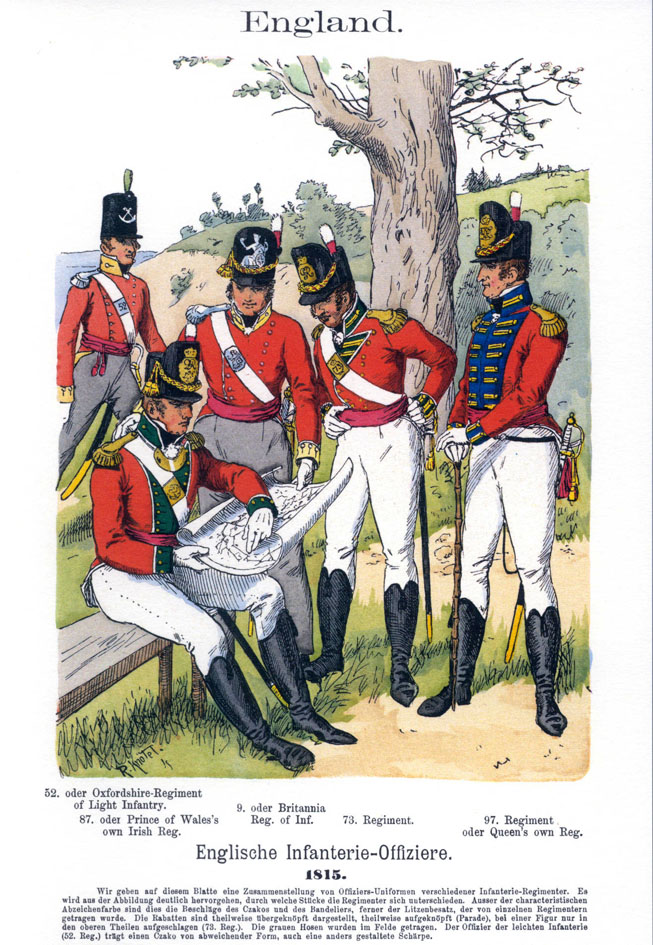
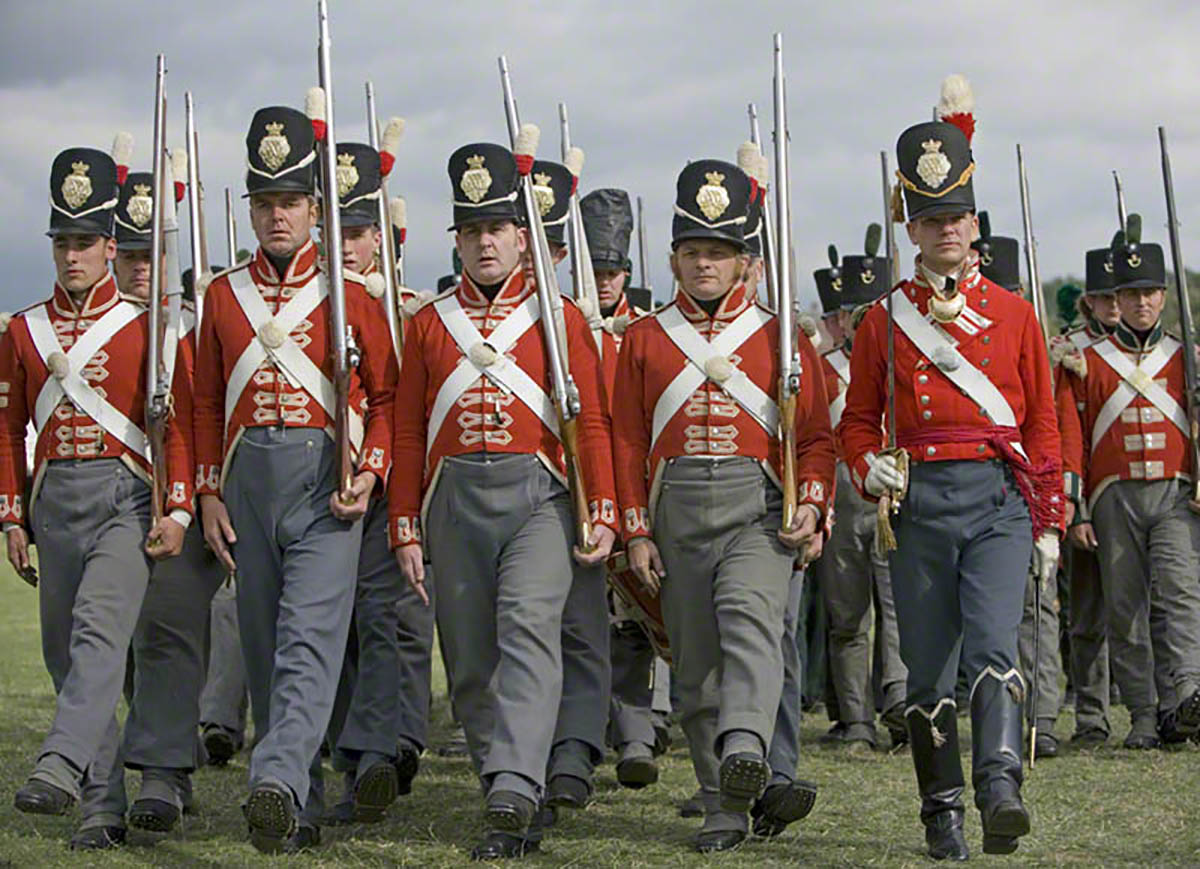
Roseen Crellin is twenty-one and determined to resist her father’s efforts to find her a husband.  Still dreaming of the young English soldier who sailed away and broke her heart, she has no intention of encouraging Captain Kelly’s courtship and certainly no intention of developing a liking for the man.

Major Paul van Daan is newly promoted and just back from Ireland, sailing with his battalion to Copenhagen under the command of Sir Arthur Wellesley.  Paul’s courage and talent are unquestionable but his ability to manage the minefield of army politics has some way to go, and in a joint operation with the navy there are many ways for a man of Paul’s temperament to get things wrong.

Hugh joins Admiral Gambier’s fleet, trying to forget the girl he left behind him while Roseen’s unhappiness leads to a rash escapade that risks both her reputation and her life.  As Britain hovers on the brink of war with neutral Denmark and the diplomats and politicians negotiate to keep the Danish fleet out of Bonaparte’s hands, a more personal drama plays out on the decks of the Royal Navy and in the lines of Lord Cathcart’s army as an impulsive action puts Paul’s future in the army at risk.  Hugh Kelly finds himself torn between his duty to the service and a reluctant admiration for the young army officer willing to gamble his career on an act of charity.

An Unwilling Alliance is set on the Isle of Man and in Denmark in 1806-7.  For readers of the Peninsular War Saga, the action takes place during the first book, An Unconventional Officer and introduces Captain Hugh Kelly RN of HMS Iris who is from the Isle of Man.  In the following excerpt, Hugh’s courtship of Roseen is finally looking hopeful…


St Michael’s ChapelSt Michael’s Isle was the northern most point of the Langness Peninsula. Roseen remembered her father telling her that it used to be detached at high tide, a true island, but the causeway had been built in the middle of the previous century to link it permanently. It was formed of rocky slate, it’s acidic soil limiting the plants that could grow there, and it was inhabited now mainly by sea birds of all kinds, wheeling overhead with their hoarse cries and occasionally swooping down into the choppy sea which crashed onto the rocky shores of the island. It was a place of peace and great beauty but it was not quiet.
Roseen had grown up loving the sound of the sea and had always longed to live close enough to it to hear it through her open bedroom window at night. They dismounted and Hugh led both horses to the old chapel and tethered them to a rusty iron gate which had been put up to prevent people going into the chapel which was disused, roofless and probably dangerous. He turned back to Roseen and held out his hand and she smiled and took it. She was becoming accustomed to Captain Kelly’s assumption that she could not make her own way across rough ground, or indeed, up a flight of stairs, without his assistance. Privately, Roseen suspected his chivalry was an excuse to hold her hand, but she had no intention of asking him. He was likely to tell her the truth. He was also likely to stop doing it if he thought it annoyed her, and Roseen realised with some surprise that she did not want him to.
There were two buildings on the island. The tiny ruined chapel dated back to Celtic and Norse times and had long been abandoned, home now only to nesting birds and rabbits. The second was a circular fort, built originally under Henry VIII as part of a major coastal defensive system. It had a wall walk at the top and supported eight cannons. It had fallen into disuse for many years but was re-fortified in 1640 by James, 7th Earl of Derby, a strong royalist, against the ships of Oliver Cromwell during the English Civil War.
The fort was renamed Derby Fort and the Earl’s initials along with a date of 1645 could still be seen engraved above the fort door. Hugh paused to look at them and Roseen came to stand beside him.
“It’s small but it looks very solid,” she said.
“Aye, it is. Not that it was likely to be stormed by land, but with the other battery on the far side at Ronaldsway I wouldn’t enjoy sailing into Derbyhaven Bay under fire from two sides.”
“That one is more recent, isn’t it?”
Hugh nodded, pointing across the bay to the small battery. “At the end of the seventeenth century, I believe. I don’t know what condition that one’s in, not really looked closely, but I’ll bet they’ve done some work on it recently. They use this one as a lighthouse as well, don’t they?”
Roseen nodded. “Yes, for the herring fleet. When you’re out on the boats you can see it for miles, it’s an excellent location…”
She broke off realising what she had just said. Hugh did not respond immediately. He was looking out to sea at a small fleet of boats outlined against the bright sky in the distance and Roseen wondered if he had heard her and sought frantically for a change of subject. After a moment he looked round and smiled.
“Don’t look so horrified, Miss Crellin, you already told me, don’t you remember? When we were touring the house.”
“I’d forgotten,” Roseen admitted. “I don’t do it now. My father was worried it might cause people to think ill of me.”
“I think it was fine when you were a lass and your brother was with you. But your father is probably right that you had to stop. People will make something of nothing with a girl’s good name.”
“Does it bother you?” Roseen asked, and then could have bitten her tongue. The question implied a far closer relationship than she was willing to admit at this stage. At the same time, she really wanted to know the answer.”
“No, I can’t see any harm in it,” Hugh said simply. “Although if you were my daughter and looking to find a good husband I’d probably feel it was my duty to ensure that the busybodies didn’t find an excuse to gossip. Luckily they’re not here, so it’s none of their business.”
A voice startled both of them, a hail from the ramparts of the fort. A figure in a red coat was visible, musket in hands, looking down at them.
“Who goes there, sir?” he called.
“Captain Hugh Kelly of the Iris. Jesus, fella, you frightened the wits out of me, I’d no idea the place was occupied.”
The sergeant of fencibles grinned in a manner that suggested he was well aware of the effect of his unexpected shout. “Sorry, sir. Just half a dozen of us on guard duty. They’re keeping it manned now as a lookout. I wondered if you wanted to bring the lady in for a look around, since you’re here?”
Hugh looked at Roseen. “Would you like to, Miss Crellin?”
“Yes, thank you. I’ve been here so often, but never inside.”
There was little to see inside. Most of the stone flags had long gone or were broken and grass had taken their place. There were the remains of a free standing building, too damaged to guess it’s original purpose, although the sergeant and six soldiers of the fencibles had turned it into a makeshift camp site with a small fire lit. Roseen imagined this was not a popular duty but the men seemed to have made the best of it. Two of them manned the battlements while the others rose and saluted Hugh with commendable speed as he approached. It was odd to see him accepting and returning the salute as his due. It was not how Roseen saw him and she wondered suddenly how different he was aboard his ship with hundreds of men under his command.
In recesses in the wall to the north and north-west, six cannons covered the entrance to the bay and Roseen listened with some amusement to Hugh’s questions about the guns, their origin, their age and their maintenance. The sergeant answered as best he could but it was very clear that Hugh knew a good deal more than he did about the guns. They inspected the lighthouse placement which was probably the most useful aspect of the fort, and when their visit was ended she saw Hugh speaking quietly to the sergeant, before slipping him what was clearly a vail. The smartness of the sergeant’s salute suggested that it was a generous one.
Riding back towards Castletown and then on to Malew and the Top House for dinner, Hugh was quiet and Roseen thought about that and realised that she was very comfortable with his silence. She studied him as they rode and wondered what he was thinking about.
“Miss Crellin?”
She realised, in some confusion, that she had been staring at him and blushed. “Oh – I’m sorry, that was rude of me.”
“No, it wasn’t. You were probably wondering if I was still alive, I’ve been sitting here like a stuffed owl for a quarter of an hour and there’s no excuse for it. My manners are terrible, it’s my job to entertain you.”
“No, it isn’t. That makes you sound rather like a performing monkey.”
Hugh choked with laughter. “Is that better or worse than a stuffed owl?”
“I am not sure. Probably I would choose the owl. Half the officers in Castletown are definitely more like the monkey and it is tiresome. I was just wondering what you were thinking about but it is none of my business.”
“It is if I choose to make it so, lass. And it is so boring I’m embarrassed. I was thinking about guns, wondering about placement on the Iris and whether I could get my hands on a couple of 68 pounder carronades. They’d be unusual on a ship of her size, but I’ve seen how useful they can be. But this is not the time…”
“What are the usual guns on a ship like the Iris?” Roseen asked, cutting off his apology. She had never really thought much about naval gunnery but she liked hearing Hugh talk about his profession. He did so rarely but it was different to the posturing of the young army officers she had met. There was genuine enthusiasm in his voice when he talked about the Iris which lent interest to the subject.
“She’s a 74 gun third rater, which means two gun decks. Beautifully built and very fast; she was taken from the French and although I hate to say it, they build faster ships than we do, although we’ve got very good at copying their designs. She carries twenty-eight 32 pounders on her gundeck, twenty-eight 18 pounders on her upperdeck, four 12 pounders and ten 32 pounder carronades on her quarterdeck, two 12-pounders and two 32 pounder carronades on her forecastle, and six 18 pounder carronades on her poop deck. The carronades are short-range guns, they smash the enemy ship to bits. Up on the forecastle they can make a big difference in a close fight, Victory had two at Trafalgar. I am trying to work out who owes me a favour or two. And I am astonished that your eyes are not glazing over with boredom. I am actually boring myself.”

Moving up the ranks – purchase and promotion: An Excerpt from An Unwilling Alliance

Officer and private of the 40th foot

In the early nineteenth century, officers of the army acquired their commissions by purchase, a system which lasted until 1871 when it was abolished by the Cardwell reforms.  Attempts were made from time to time to regulate the system and prevent the worst abuses associated with it, but it was impossible to keep control over every promotion and it was often too easy for an officer with money to bypass the system.  Senior officers used the system to improve their retirement funds and wealthy juniors used it to climb the ladder faster…

Paul had been in Dublin with five companies of the 110th when he had received his promotion to major and with it the news that he would take command of the first battalion under Sir Arthur Wellesley in Denmark. The promotion had come at a relatively young age and he had leapfrogged a number of older and longer serving captains in the regiment. The commander of the second battalion, Major Middleton was in his fifties and considering retirement but there were several men who could have claimed Paul’s promotion as their due.
Paul was trying hard not to feel defensive about his good fortune, but he was under no illusions that the main factor in his success had been financial. Under the traditional system, promotion was offered to the next man in line in the regiment. If none were able to come up with the purchase price, the commission could be sold to an officer from another regiment wanting to transfer for promotion. The Duke of York, who had made admirable attempts to reform some of the abuses of the system, had put in place length of service conditions for promotion to captain and major which were effective in peacetime although might be relaxed during campaigns when officers were in short supply. Paul had barely reached the required number of years when the promotion had been offered and in his battalion alone, at least four other captains had served longer; more if the second battalion were taken into account.
Money had made the difference. Paul’s mother had been the daughter of a viscount but his father was from a trade background and had made his fortune in shipping and finance many times over. When the elderly Colonel Dixon had decided to retire, his commission was sold to Major Johnstone who was in command of the first battalion. Paul, puzzled by Wellesley’s conviction that the majority was his if he was willing to pay for it, had quickly realised that the colonel was expecting his retirement to be funded by a premium on the sale of his colonelcy, a premium which Johnstone could only afford if he added the sum onto the sale of his own commission.
The premium was strictly against regulations but Paul was aware that they were an open secret in fashionable regiments, where commissions were sometimes sold for twice the regulation price set by the government. He was both irritated and amused at the approach by the regimental agent, with Dixon and Johnstone remaining at a discreet distance as if the negotiations might sully their hands. Commissions in the 110th did not generally command much of a premium; it was a relatively new regiment with no history and little reputation thus far, but Colonel Dixon was very well aware of both the personal fortune and the ambition of his most unlikely company officer and had taken the gamble.
Grimly aware that he was about to be fleeced, Paul had gone back to his mentor, Sir Arthur Wellesley who was in London on Parliamentary business and invited him to dine at the Van Daans’ London home. Paul’s father and brother were away in Leicestershire and they had dined privately and sat afterwards over a good port.
“Have you received your commission, Major?” Wellesley had said. They had talked, during dinner, of neutral matters; of the current situation in India and the proposed expedition to Denmark. They had also spoken of politics and the latest London scandals. Paul had been waiting to see if his chief would raise the subject.
“Not yet. I am trying to decide if it is worth the extremely over-inflated price I am being asked to pay for it.”
Wellesley gave one of his barking laughs. “Expensive, is it? Yes, I’d heard that Dixon is in need of funds.”
“Colonel Dixon,” Paul said, sipping the port, “is currently still my commanding officer so it would be unthinkable of me to call him an avaricious old goat. At least anywhere he can hear me.”
“What makes you think I won’t report that, Major?”
“You never report any of the other appalling things I say to you in private, sir, so I’m cautiously optimistic.”
“Are you going to pay it?”
Paul pulled a face. “Sir, it’s not the money. It just galls me that he’s making that kind of profit out of a system which shouldn’t allow it. There are at least six or seven other men in the regiment who are eligible for this promotion. We can discount Longford, Cookson and Graham – none of them could raise even the regulation price. Which is a good thing in Longford’s case because he’s an incompetent arsehole who shouldn’t hold the commission he does. But men like Gervase Clevedon and Kit Young and Jerry Flanagan…they’ve every right to be furious if I buy in over their heads. I really want this. But I have to serve with these men.”
Wellesley reached for the decanter. “It is your choice, Major. Would it help if I told you that even if you do not accept it, somebody else will.”
Paul raised his eyebrows. “Into the 110th? Have we suddenly become fashionable without my noticing it?”
“No,” Wellesley said with a laugh. “But sometimes it is more than that. Have you come across Captain Edmund Willoughby?”
Paul frowned, puzzled. “If I have, I don’t remember him. Which regiment?”
“He has served variously in the 4th, the 10th and the 24th. Moved each time for promotion and he has come up very fast indeed. Faster than you have.”
“How?”
“Money. Connections. A considerable enthusiasm on the part of a very high ranking member of the peerage to see his natural son progress.  He will use the 110th as his next stepping stone; the timing is very convenient for him. Would you like me to tell you how many weeks actual combat experience he has?”
Paul met the hooded eyes across the table. “Sir, are you applying emotional blackmail to get me to cough up the money for this piece of highway robbery we are calling a promotion? Is this gentleman likely to get my battalion killed in his first action with them?”
“I imagine it is very possible,” Wellesley said tranquilly. “Either that or you will be on trial for shooting him in the head to prevent it.”

(From An Unwilling Alliance by Lynn Bryant, due to be published in April 2018)


Military Courts Martial – my new displacement activity…

An Irregular Regiment
Quill penI’ve spent some time over the past week or two reading accounts of late eighteenth and early nineteenth century courts martial for my next book, An Unwilling Alliance.   A surprising number of them came to absolutely nothing and the novelist in me desperately wants to know the full story behind how they came about. Were charges brought maliciously? Commanding officer didn’t like the look on your face? Got off because you were really good at hiding the evidence? Or because you were really good at your job and nobody wants to lose you? So many possibilities, I’m going to have to be forcibly restrained from court martialling half my characters now, it sounds like so much fun…
 
Surgeon James Dalzell of the 32nd in 1800 is my favourite so far, though. He got into it in an Assembly Room (probably drunk or fancied the same girl in my opinion) with his commanding officer Major James Wentworth Mansergh and made use of “unwarrantable and most offensive language” by telling him “the said Major Mansergh that he was a damned rascal and a Scoundrel and no Gentleman and threatening to pull him by the nose and afterwards on the same night repeating the same language raising his hand in a threatening manner and again threatening to pull him, the said Major Mansergh, by the nose.”
 
Surgeon Dalzell seems not to have actually been arrested for this until six months later and on that occasion he really kicked off and informed Major Mansergh in the presence of soldiers of the 32nd in the barrack yard that “his command was a damned rascally one to the prejudice of good Order and Military Discipline.”
Clearly something had ticked Surgeon Dalzell off beyond the telling and if there was a man on that court martial with a straight face by that point, he was a better man than I am.  A brief search has revealed that to threaten to “pull a man’s nose” was considered an insult likely to lead to a duel in the ante-bellum South and when I need another distraction I am going to download that article in full as I want to find out the origin of that one.  Certainly it is clear that Surgeon Dalzell and Major Mansergh were not going to be exchanging Christmas gifts.
But the plot thickens even further.  Enter Captain William Davis who was also court-martialled in 1800.  Captain Davis was also charged with using disrespectful and improper language to Major Mansergh in the barrack yard on the same evening that Surgeon Dalzell hit the proverbial roof.  While no nose pulling appears to have been involved here, Captain Davis followed the major, attempted forcibly to stop him and called him “a damned Rascal and a Scoundrel and at the same time raising his hand in a threatening manner to the prejudice of good Order and Military Discipline.”
Now there is clearly a bit of a theme here, and it looks as though the court was able to spot it.  Surgeon Dalzell, interestingly was acquitted of the charges of nose-threatening and general name-calling.  The court made mention of something that Mansergh said about the surgeon in a conversation with Captain Davis that evening in the barrack yard which had caused Dalzell to lose his temper.  Although he was acquitted, he was instructed to make an apology to Major Mansergh for improper language and conduct.  The wording of the apology is very specific – I’m guessing all Dalzell had to do was read it out and the matter was over.  Clearly the court felt that whatever had happened, Dalzell was provoked.
Captain Davis wasn’t quite so lucky and I wonder if that was because of his rank.  Certainly given that he went for his commanding officer in front of the enlisted men on the parade ground, he was very unlikely to get away with it.  Captain Davis was found guilty and suspended without rank or pay for the term of two years.  Even so, the court expressed some sympathy for Davis, pointing out that his treatment by Mansergh, while it can’t justify his actions, certainly mitigated his sentence.  Presumably without it, he might have been cashiered.
The editor has very kindly provided footnotes of what happened to the principals in the various cases and that’s where it becomes interesting.  Captain Davis sold out the following month, presumably unable or unwilling to live without pay or rank for the next two years.  Surgeon Dalzell must have taken his medicine and made his stilted apology to Major Mansergh because he remained in the army and was appointed Surgeon to the Forces in Ireland in 1804.  Clearly he managed to control his temper better in the future.
Major Mansergh was not the subject of the court martial but that did not stop the court from expressing its opinion that his conduct appeared “highly reprehensible, in not having supported his command with more propriety and energy”.  What else was said off the record, or by Mansergh’s own commanding officers is not recorded, but Major Mansergh sold out the following month and did not return to military service.  Somehow I have a feeling there might have been a celebration in the mess at some point…
The book containing these fascinating stories is A Collection of the Charges, Opinions and Sentences of General Courts Martial as published by authority by Charles James (published in 1820).  It’s frustrating not knowing the stories behind some of these trials but what is interesting to me is a novelist is the outcomes of many of them.
Until I started looking in to military discipline in more detail, I think I had assumed that a court martial was seen as a disgrace and the end of an officer’s career but clearly that is not the case.  In both the army and the navy, officers were court-martialled, acquitted or received minor punishments and went on to do very well.  Captain Bligh of the Bounty survived no less than three courts martial during his career.
Court martial seems to have been a valid way of seeking an enquiry into an incident.  An officer censured for some error would often ask for a court martial to clear his name; a good example of this would be Lt-Colonel Charles Bevan after the fiasco at Almeida in 1811 whose request for a court martial was denied, a fact which contributed to his suicide.
The other fact about a court martial which came as a surprise to me was that the King looked at all trial records and had the right to override either the verdict or the punishment.  I was aware through research into the Peninsular War that the commander-in-chief had the right to commute sentences on men convicted of local offences but it appears that it was not uncommon for the King to completely overturn the decision of the General Court Martial, either in deciding to declare a verdict of not guilty, or simply to announce that he no longer required the services of the officers involved.
In matters of military discipline in the 18th and 19th century there must always have been a lot of leeway depending on individual circumstances.  An officer committing an offence needed to be charged by a senior officer and there must have been many occasions where a good officer got away with an informal reprimand simply because he was good at his job and valued.  Equally there would have been senior officers with a bee in their bonnet about particular issues for example Admiral Gambier was known to be an evangelical Christian and used to fine his officers for bad language.  Commanders confident in their relationships with their officers will have used different methods of management, saving court martial for extreme cases in the same way that a good manager rarely uses the formal disciplinary process.  There are always variations from the strict letter of the law.
And that’s probably a good thing for one of the officers of the 110th infantry…

The Bombardment of Copenhagen in 1807: an Unwilling Alliance

Copenhagen on fire, 1807

The bombardment of Copenhagen in 1807 occurred when Britain carried out an attack on a neutral country in order to either destroy or capture its fleet to prevent it falling into the hands of the French.  This little known action of the Napoleonic Wars was seen by many as a stain on the British character although the government remained steadfast in its belief that the attack was an unpleasant necessity.

In 1806 Napoleon launched his Continental System which was designed to paralyse Great Britain through the destruction of British commerce. The decrees of Berlin in 1806 and Milan in 1807 proclaimed a blockade: neutrals and French allies were not to trade with the British.  The Continental System damaged some English industries, but as the British had an overwhelming superiority at sea, enforcing the system proved too difficult for Napoleon. His efforts to police his blockade stretched French forces too thin, and he was never truly able to make it work.

Britain’s first response to the Continental System was to launch a major naval attack on the weakest link in Napoleon’s coalition, Denmark. Although ostensibly neutral, Denmark was under heavy French and Russian pressure to surrender its fleet to Napoleon. Despite the defeat and loss of many ships in the first Battle of Copenhagen in 1801, Denmark-Norway still maintained an impressive navy. Most of the Danish army was at this time defending the southern border against possible attack from the French.

There was concern in Britain that Napoleon might try to force Denmark to close the Baltic Sea to British ships, perhaps by invading Zealand.  The British believed that access to the Baltic was vitally important to Britain for trade, raw materials for building and maintaining warships and Royal Navy access to Britain’s allies Sweden and originally Russia against France.  The British thought that when Prussia was defeated, Denmark’s independence looked increasingly under threat from France and had previously tried unsuccessfully to persuade Denmark into a secret alliance with Britain and Sweden.

On 21 January 1807, Lord Hawkesbury told the House of Lords that he had received information from someone on the Continent “that there were secret engagements in the Treaty of Tilsit to employ the navies of Denmark and Portugal against this country”.  He refused to publish the source because he said it would endanger lives.  The reports of French diplomats and merchants in northern Europe made the British government uneasy, and by mid-July the British were convinced that the French intended to invade Holstein in order to use Denmark against Britain.

After a wealth of diplomatic to-ing and fro-ing, Canning received intelligence from Tilsit that Napoleon had tried to persuade Alexander I of Russia to form a maritime league with Denmark and Portugal against Britain.  Spencer Percival, the Chancellor of the Exchequer wrote a memorandum setting out the case for sending forces to Copenhagen.  With some reluctance, the King agreed.

The British assembled a force of 25,000 troops and Canning offered Denmark a treaty of alliance and mutual defence, with a convention signed for the return of the fleet after the war, the protection of 21 British warships and a subsidy for how many soldiers Denmark kept standing. On 31 July, Napoleon told Denmark to prepare for war against Britain or else France would invade Holstein.  Neither France nor the British persuaded the Danes to end their neutrality, so the British published a proclamation demanding the deposit of the Danish fleet; the Danes responded with what amounted to a declaration of war.

The Danish forces in the city amounted to 5,000 regular troops and a similar number of militia. Most of the civilian inhabitants of Copenhagen were evacuated in the few days before Copenhagen was completely invested.

On 26 August, General Sir Arthur Wellesley was detached with his reserve and two light brigades of British artillery, as well as one battalion, eight squadrons and one troop of horse artillery from the King’s German Legion to disperse a force which had been sent to relieve the beleaguered city. On 29 August, at Koge the British force overpowered the Danish troops, which amounted to only three or four regular battalions and some cavalry. 

The Danes rejected British demands, so Lord Cathcart gave the order for the British army batteries assisted by the fleet under Admiral Gambier to bombard the city from 2 to 5 September 1807. In addition to the military casualties, the British bombardment of Copenhagen killed some 195 civilians and injured 768.  The bombardment included 300 of Congreve’s rockets which caused fires.  Due to the civilian evacuation, the normal firefighting arrangements broke down and over a thousand buildings were burned.

On 5 September, the Danes sued for peace, and the capitulation was signed on 7 September. Denmark agreed to surrender its navy and its naval stores. In return, the British undertook to leave Copenhagen within six weeks.  On 7 September 1807 Peymann surrendered the fleet which was either captured or destroyed to stop it falling into the hands of the French.  On 21 October 1807, the British fleet left Copenhagen for the United Kingdom but Denmark remained at war with them until 1814.  There were attacks in Parliament on the government’s decision to invade and bombard a neutral country but Canning remained convinced that he had made the right decision.

An Unwilling Alliance, published in April 2018 was a new venture for me in several ways.  It is the first book which is partly set on the Isle of Man where I live, and Captain Hugh Kelly and Roseen Crellin are both Manx.  I have been asked fairly frequently if I intend to write a book with a Manx setting.  I wanted to do so but since the Napoleonic wars were a long way from Mann, the obvious setting was the navy since many Manxmen served with great distinction, most notably Captain John Quilliam RN who was first lieutenant aboard the Victory during Trafalgar.  Writing about the army has become second nature to me; the navy took some work but I loved writing it and am currently working on Hugh Kelly’s next adventure which will take him, along with the second battalion of the 110th, on the disastrous expedition to Walcheren in 1809.

The other joy of An Unwilling Alliance was that it gave me an opportunity to combine both the army and the navy.  Joint operations were very common then as now and a lot more difficult given the limited communications of the day.  Officers and men on both sides had a tendency to assume that their branch of the armed forces was the best and jokes were common but there was genuine resentment in some cases.  If a joint operation went wrong each side often blamed the other as a matter of course; poor John Pitt, Earl of Chatham definitely came in for some of this after the disastrous Walcheren campaign in 1809 where blame could probably have been shared between the army, the navy, the planners of the operation and sheer bad luck.  I have given myself the challenge of trying to convey some of this feeling at Copenhagen, where at least one of the army commanders, Sir Arthur Wellesley, would have done things very differently had he been given the choice.  And then there is genuine cooperation and the beginnings of friendship between Captain Hugh Kelly, my down-to-earth, plain-speaking Manxman and the flamboyant, newly-promoted commander of the first battalion of the 110th, Major Paul van Daan.

Finally, an Unwilling Alliance gave me the opportunity to go back in time from Wellington’s Peninsular Wars where the 110th had been fighting for the last four books and take a look at an earlier episode in Paul’s history which was briefly referred to, but not described, in An Unconventional Officer.  It was an odd experience to look back at a younger Paul and remember all the lessons he hadn’t yet learned in 1807 and it also reminded me somewhat painfully why keeping detailed character lists is so important when writing a historical series.

In terms of historical sequence, An Unwilling Alliance fits in at the end of chapter seven of An Unconventional Officer, when Paul has just been promoted to major and given the news that the battalion is being posted to Denmark under Sir Arthur Wellesley.  Paul is twenty-five and still has a lot to learn about how to manage the army, his temper, his love life and his unemotional commander.  Captain Hugh Kelly is thirty and started out life as a farmer’s son on the Isle of Man; he came up the hard way and has a lot of experience that Paul still lacks.  Watching them get to know each other was a genuine pleasure and I hope they have the chance to meet up again in the future.

An Unwilling Alliance was published in April 2018 – you can read an excerpt hereMy next book, which is centred around the Walcheren expedition, is titled This Blighted Expedition and will be published later this year.


WordPress Appliance - Powered by TurnKey Linux