The Danish Woman

St Peter’s Church, Heysham Village

The Danish Woman is my rather belated Valentine’s Day story for 2026. As always it’s free so please share as much as you like.

Regular readers will know that I never forget a character, even if they only appeared briefly in the books or short stories. The hero and heroine of my 2026 love story (as Valentine’s Day has gone) have both been mentioned before. I think most people will remember the lady. The gentleman never actually made an appearance, but he was discussed. I’ve enjoyed finding out what happened to these two when I took my eye off them and I hope you enjoy it too.


The Hogback, St Peter’s Church, Heysham

Living on the Isle of Man I regularly travel through the Port of Heysham but a few years ago I decided to take the time to explore the area properly. I was very glad I did. Heysham Village is gorgeous and well worth a visit and like the hero of this story I was fascinated by the ancient hogback stone which now resides inside the church of St Peter.


The Golden Ball at Snatchems

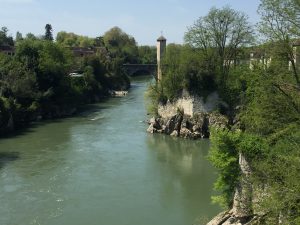
The inn mentioned at Snatchems is the Golden Ball. It still stands on the banks of the river and serves excellent food. These days customers don’t need to worry about being picked up by the press gang. At least, I hope they don’t.

The Danish Woman

Morecambe Bay in winter was a desperately miserable place to be. Captain Charles Stewart RN did not know the area well and had no desire to improve his acquaintance. His one wish was to conclude his business and return to the comfort of his home in London, to await further news of the refit of his ship which was currently undergoing extensive repairs at the naval dockyards in Portsmouth.

It had been three months since Charles had been given command of HMS Bridget, a fast frigate which had been taken from the French off Martinique the previous year. As First Lieutenant of the Wren Charles had led the boarding party during the attack and taken command of the prize crew which sailed her home. The Bridget would be his first post-command and, at the age of twenty-eight, he knew he was fortunate. It took most officers a lot longer.

Charles liked to think that talent and hard work had contributed towards his early promotion but he was not naïve and he knew that family connections had played a significant part. Ties of both blood and marriage to the Earl of Jersey, Lord Castlereagh and the Marquess of Londonderry gave him an advantage over less well-connected officers. Unlike the army there was no promotion by purchase in the Royal Navy but applications to the Admiralty were definitely influenced by family connections. Charles did his best to hide the fact that he was slightly sensitive about it.

His sojourn in the north was the unfortunate result of having too much time on his hands. On the voyage home from Martinique he had contracted a bad bout of fever which had laid him up for more than a month. For a while Charles had worried that illness would prevent him taking up his new command. It had been a relief when the need for refitting and repairs gave him another few months’ recovery time.

He was back on his feet and able to take gentle exercise when he received a summons to the Admiralty. His audience was with Rear-Admiral Vane, his maternal uncle, but the meeting had nothing to do with family matters. After making polite enquiries about Charles’ health and the progress of the Bridget, the Admiral gave his bad news with an apologetic air.

“We need a man to go to Lancashire for a few weeks. There have been some problems with the press gang around the Heysham and Poulton-le-Sands area on the west coast. Generally speaking these things blow over of their own accord but I’m afraid this one has taken a more serious turn. A man died in a scuffle outside a local inn and we need to hold an inquiry. I want you to chair it.”

Charles tried not to show how appalled he was. “Isn’t that rather unusual, sir? I thought these things were generally held here in London, at Greenwich.”

“They usually are. Unfortunately the man who died should never have been pressed in the first place. The lieutenant commanding the impress frigate seems to have exceeded his orders by several leagues and took up a group of obvious landsmen without making careful enquiries. Mr Samuel Beeston was eighteen-years-old and the son of a local landowner. Old Beeston isn’t really much more than a yeoman farmer mind, but his lands are substantial enough for him to be considered a gentleman.”

“Oh Lord,” Charles said with feeling.

“Precisely. Beeston is well-liked in the area and our press gangs are not. After a great deal of discussion it has been decided that the inquiry should be held locally to show that we are being open and frank in our handling of the matter.”

“Are we, sir?”

“Good God, no. The inquiry will hear all the evidence and find that the death of young Beeston was an unfortunate accident which the Navy greatly regrets. Which is true as far as it goes. Lieutenant Crosby will receive a gentle warning about his over-zealous performance of his duty and as soon as the inquiry is over he’ll be quietly shifted onto half-pay where he can do no more damage. Personally I would like to court-martial the imbecile but we can’t do that without stirring up a hornet’s nest about the activities of the press gang all over the country. We’ll move our operations away from Lancashire and over to the east coast for a while and give the inhabitants of Heysham time to forget.”

Charles made a last-ditch attempt. “I don’t have any experience of chairing such an inquiry, sir.”

“All to the good. I’ll make sure that the scope of the thing is set out in tedious detail so there is no room for anything to go wrong. All you’ll need to do is sit and listen to evidence. We’ll send a man from the Judge-Advocate’s department with you and he’ll manage all the procedures. Just nod wisely and read out the verdict and by the time you get back the Bridget will be ready to sail. Where is it they’re sending you?”

“America I believe, sir.”

“Excellent. Good chance of prizes. Not that you’re in need of it, but it looks good on your service record. Right, that’s settled then. Are you free to dine with us later? Your aunt would like to see you before you leave.”

Charles had never been to the Lancashire coast before. He found it an eerie place. Five different rivers drained into Morecambe Bay and much of the surrounding land had been reclaimed for agricultural purposes over the centuries. In addition to farming, the locals lived mainly by fishing and there were rich cockle beds along the shore. There was a scattering of islands out to the west of the bay, some of which were accessible on foot during low tide. Charles was warned by his host not to venture out without a local guide as fast-moving tides and quicksand claimed several lives each year. Charles was able to reassure Sir Lionel Faulkner that he had no intention of taking the risk.

He had not met Sir Lionel before but his uncle had known him for many years and had suggested the arrangement.

“I’ve arranged for a small escort of marines to be placed at your disposal while you’re in the area. You and Dunbar, the advocate, can stay with Faulkner while you’re there. The inquiry will be held in Lancaster but you won’t want to be staying at an inn for weeks. Faulkner’s a good fellow. He’s a bachelor and a scholar – collects old books and whatnot. He won’t trouble you and he keeps a comfortable house.”

The arrangement suited Charles very well. Sir Lionel occupied a big square house built high on the cliffs at the edge of the village of Heysham, overlooking the bay. It dated from the beginning of the previous century and had long windows with glorious views out to sea. Sir Lionel was an excellent host although rather absent, which suited Charles. The cook provided good plain food and Charles dined with Sir Lionel most days but other than that saw little of him. Sir Lionel spent his time in his library working on a history of the county and seemed happy for his guests to come and go as they pleased.

There was little for Charles to do during the initial stages of the inquiry. Mr Dunbar from the judge-advocate’s department spent his time riding about the district interviewing witnesses and writing extensive case notes, but Charles was not needed during this part of the inquiry. It occurred to him, confined to the house during a week of driving rain and high winds, that he could very well have stayed in London for another couple of weeks.

During the second week the weather improved and Charles took the opportunity to explore the area mounted on a placid grey gelding belonging to his host. The winter days were short and it was very cold but it remained dry and the exercise was good for him. He was beginning to shake off the effects of his illness and, despite the grey skies and broad flat countryside, he was starting to enjoy himself. It was true that he was missing the London Season but after weeks of fever and wretched sickness Charles thought that winter rides, sea air, good food and early nights might be better for him than trying to attend three parties in one evening.

There was also the advantage that he could avoid the attempts of his aunts to find him a wife. Charles had lost both his parents to a smallpox epidemic five years earlier. He still missed them but he had four aunts – two on each side of the family – who took an active interest in his marriage prospects. Although he was sorry not to be seeing those of his friends who happened to be in Town this January, he did not miss the endless parade of eligible girls produced by his Aunts Augusta, Selina, Mary and Juliana every time he was in London.

He had been in Lancashire for eight days before he really saw the sun. Going down to breakfast he found his host and Mr Dunbar already at the table. The sky was a brilliant blue and winter sunlight bathed the dining room. Charles sat down and accepted coffee and rolls.

“A beautiful day,” he said enthusiastically.

“It’s freezing out there,” Dunbar said. “I have to ride over to Bolton-le-Sands this morning to speak to a fisherman who claims three of his crew were illegally pressed last year. It’s going to be a cold ride out on the coast road.”

“Is it possible to illegally press fishermen?” Charles said doubtfully.

“At the moment every seaman who has ever joined the navy along this coast is going to claim illegal impressment, even if they volunteered,” Dunbar said gloomily. “They’re hoping for some kind of compensation.”

“They’ll be lucky,” Charles said, reaching for a slice of ham. “I don’t think I’ve ever known a case of illegal impressment to be upheld.”

“It happens quite often up to the point where the men are sworn in,” Dunbar said. “If they can prove their case they’re simply released. Once they’re aboard and away it’s very unusual. I’ve only ever heard of one case where an officer was prosecuted for it mind, and that was years ago. Long before my time. Can’t remember the name of the captain but I read about the case when I was in training. He’d repeatedly ignored evidence that he’d picked up a gentleman’s son and the boy was underage as well. There was quite a scandal at the time, I think.”

“But you’re not expecting anything of the kind from a fishing crew from Bolton-le-Sands I take it?”

“God, no. Still, I have to show willing. That’s rather the point of this whole exercise; the Navy wants to show the good people of Lancashire that its impress service isn’t allowed to do whatever it likes. Although of course it often does.”

“Do you want me to come with you?”

“Better not, Captain. It’s your job to look impartial at the inquiry next month. Thanks for offering though.”

After breakfast, encouraged by the sunlight, Charles decided to walk down through the village and then up to the ruins of St Patrick’s Chapel on the clifftops. Dunbar had been right about how cold it was but Charles was well wrapped up in his heavy winter cloak and he found the walk exhilarating.

He paused at the gates of St Peter’s, the ancient sandstone church in the village. So far, he had not accompanied his host to a service and he thought a little guiltily that he should do so. The gate was not fully closed and Charles pushed it open and went into the churchyard.

He was surprised to hear children’s voices floating on the still air. He saw them at once, a boy and a girl, both very young, playing by the stone wall which overlooked the sea.

They seemed to be unaccompanied which worried Charles. He had no experience of children but he thought these two could not be much more than four or five. They had found a collection of round pebbles, perhaps from one of the beaches, and were setting them out along the rough pathway. Charles hesitated then went forward.

The boy saw him first and jumped to his feet. His sister remained fixated on the stones until her brother grasped her arm and pulled her up. Charles stopped a safe distance away.

“Good morning,” he said.

To his amusement, the boy executed a little bow. “Good morning, sir.”

His voice was high and clear and he spoke in accents which did not suggest he was one of the village children. Charles looked around in search of a nursemaid or governess.

“Surely you’re not alone up here?” he asked.

“Mama is inside the church,” the girl said. “Who are you?”

Charles supposed that she had the right to ask given that he had approached them. He bowed in turn.

“Captain Charles Stewart at your service, miss. I’m staying with Sir Lionel Faulkner. Forgive me, I was wondering how you came to be out alone. But if your mother is close by…”

“We are not to leave the churchyard,” the boy said. “She said we could play here.”

“It’s because she doesn’t like us to see her cry,” the girl said.

Charles froze and looked over towards the little church. He had intended to go inside to look around but the children’s remarks made him hesitate. He guessed that whoever the woman was, she had been visiting a grave and he did not like to intrude.

“I see,” he said politely. “Well I am sure she won’t want a stranger to see her cry either so I’ll make my visit another time. Thank you for telling me, children.”

“I’m Annalise,” the girl said. “I’m four. My brother is five and his name is Paul. He remembers my father better than I do.”

Charles felt a little shock even though he was not surprised. He wondered what illness had robbed this little family of its father. Given the ages of the children he had probably been a young man.

“I am sorry to hear that, Miss Annalise,” he said gravely. “Is he buried in the churchyard here?”

“We don’t know where he’s buried,” the boy said. “But there’s a stone in the church. You should come and see it: it’s splendid. It has two flags carved on it and a sword as well. This way. Mama won’t mind; she’ll have finished crying by now.”

He took Charles by the hand and towed him towards the church door. Charles was so surprised that he went along, although he suspected that the grieving widow would be wishing him to the devil. The wooden door creaked a little as the boy pushed it open and Charles stepped inside.

“Mama, this is a captain and he wants to see Papa’s stone,” Paul said in ringing tones. “I told him about it.”

Charles stopped inside the door, forgetting his embarrassment at the unexpected beauty of the little church. The walls were of mellow local stone with exposed wooden beams above. There was a lower chancel and a small side chapel. Several stained glass windows made dappled, colourful patterns on the paved floor. There was also an octagonal sandstone font which looked very old to Charles’ untrained eye. A number of ancient grave slabs and memorials adorned the walls, probably commemorating previous rectors.

It took a moment before he saw the woman, as she was standing in one of the dimmest corners of the church. She was not dressed in full mourning but wore a soft, mauve gown under a dove-grey cloak with matching bonnet. Charles could not see her face clearly but he gained the impression that she was quite young.

“Mama, show him Papa’s stone,” the boy said again.

She moved forward and Charles went to meet her, gently disentangling himself from the child. They met in the centre of the nave and he bowed awkwardly.

“My apologies for disturbing you, ma’am. I’m a visitor to the area and was coming to see the church when I met your children outside. Your son was keen for me to see his father’s memorial and wouldn’t take no for an answer. I’ll leave you in peace.”

“Captain, if you do not view the memorial stone there will be no peace, trust me.” She looked past him at the waiting children. “I will show the gentleman, Paul. Wait outside for me. I will not be long and then we shall walk up to the old chapel.”

The boy gave a sunny smile, grabbed his sister’s hand and disappeared outside, closing the door with exaggerated care. Charles surveyed the woman and bowed again.

“Captain Charles Stewart, ma’am, of the Royal Navy. I’m staying with Sir Lionel Faulkner.”

“Ah, the inquiry into the press gang. How interesting.”

She appeared younger than he had expected, hardly old enough to have two children, and she was very attractive. Charles was intrigued by her accent. She was clearly not English although she spoke it perfectly. He wondered if she might be German.

“I don’t seem to have much to do at the moment, ma’am, which is why I’m here making a nuisance of myself in a country church.”

She gave a broad smile. “You are not a nuisance, though I suspect my children may have been. They do not meet many new people here and they are very sociable. Also you are an officer which will always interest Paul.”

Charles was beginning to wonder. “I see. Was your husband a navy man, ma’am?”

“Army,” she said and turned, gesturing for him to follow her. “He is not buried here of course. He died at Salamanca the year before last and was buried somewhere out there. My father-in-law was still alive then and had this splendid memorial placed here.”

Charles studied the white marble stone. It was very fine, with crossed flags draped over a cannon. Lying beside the gun, as though dropped there, was a sword. The symbolism was clear and Charles, who had seen friends and crewmen die in battle, felt a little shiver run through him. He read the wording underneath. It was the usual flowery tribute of courage, duty and devotion to family. The dates told him that Captain John Kent had been twenty-six when he died. The girl standing beside him had been a widow for around eighteen months. He turned to look at her.

“I’m so sorry Mrs Kent.”

“Thank you. I miss him greatly, although it gets a little easier with time.”

“Was this church… I mean, I presume you live locally?”

“Yes, I currently reside up at Stokely Hall.”

“Is that the rather beautiful house with the exposed beams? I’ve ridden past it.”

She smiled. “Yes, it has been in the family for two hundred years.”

“But you’re not local, I collect. I’m trying to guess your accent.”

“I am from Denmark. A little village on the coast to the north of Copenhagen.”

Charles found himself wondering about that. As a younger officer he had served during the brief campaign in Denmark during 1807 and, given the age of the children, the timing would be right. He managed not to ask and he was certainly not going to mention that he had taken part in the bombardment of Copenhagen which had flattened half the city.

She had turned and was walking towards the door. “How long are you staying in the area, Captain Stewart?”

“Until after the inquiry: about another three weeks. After that I return to my ship, sailing for American waters.”

He opened the door and held it for her. Outside in the winter sunlight he could see her more clearly and had to remind himself not to stare. She was lovely, with dark-brown hair, blue eyes and fair skin. He found that he could not blame Captain John Kent for finding himself a Danish bride during that short, miserable campaign, though he wondered again how old she must have been. She did not look as though she could be much more than twenty-three or four now.

“Have you seen St Patrick’s Chapel, sir?”

Charles realised that he must have been standing like a fool. “Oh… the ruins on the cliff? Not close up, though I’ve ridden past.”

“Are you on foot today? We are going to walk up there. The children love it. You could accompany us if you wish for a guide.”

He felt his heart give a little skip. Mocking himself silently he bowed.

“If it would not be an imposition, ma’am, I would like that very much.”

***

It had been a long time since Christa Kent had walked in the company of a young officer, or any gentleman at all. The way was fairly steep, though the children raced ahead making light work of it. The naval officer paced steadily beside her. Once or twice he reached out a hand to steady her when the rough path became slippery.

Christa allowed him to do so, though she did not really need his help. She wore stout boots and had walked this path many times before. Still it was pleasant and reminded her of all the times she had walked beside her husband. Jack had always treated her as though she was a delicate creature in need of constant care and protection. Christa knew she was not, but she had enjoyed it anyway.

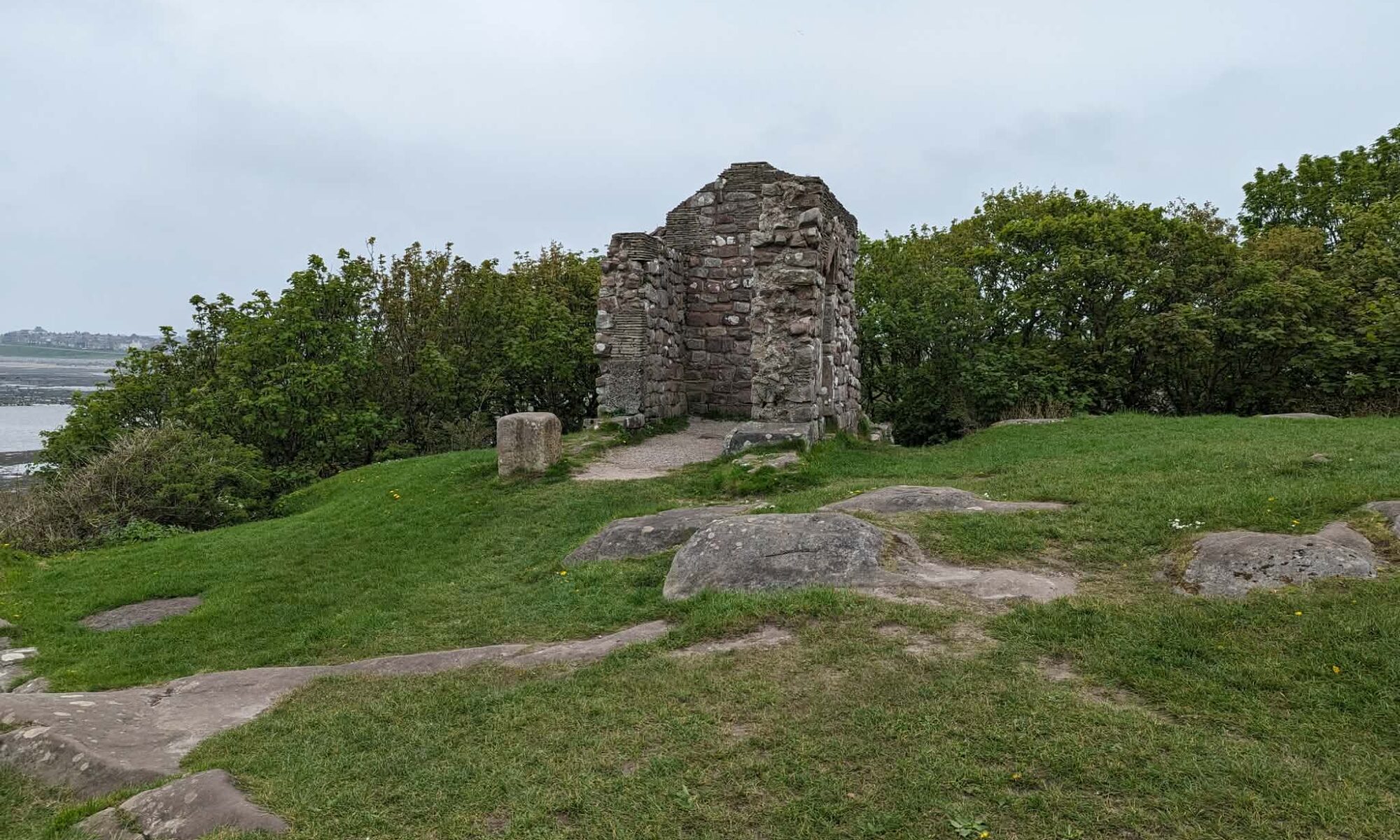
St Patrick’s Chapel stood on the headland above St Peter’s Church and was built from the same sandstone. Most of the structure had long gone but the south wall, the east gable wall and the eastern section of the north wall still stood and there were low ruins of several other walls which contrived to give a good idea of the original building.

The children raced ahead and Christa allowed them to go. They had lived all their lives on this wild shore and knew what they should and should not do. She watched as Captain Stewart explored the ruins then made his way over to a curious set of holes cut into the rock nearby.

“What on earth are these?”

“It is believed that they are tombs. There are six here and another two over there. You should talk to Sir Lionel as he is an expert on such things. He once told me that these are probably from the eleventh century and that those holes at the top would have held the base of a wooden cross.”

“They’re fascinating. I’ve never seen anything like them before.”

“Nor have I. We have many ancient sites in Denmark but when I was a girl I had no interest in such things. All I wanted was to marry and leave. Sometimes now I wish I had listened to my father more and not brought him such sadness, but I was young and very silly.”

He turned to study her. He was a tall, dark man with a rather serious face. Christa wondered suddenly if his sallow complexion spoke of recent illness.

“How old were you… no, I’m sorry. That was impertinent.”

She smiled. “I gave you the opportunity to ask. I do not mind. I was sixteen when I married Jack and I have never been back to Denmark. War makes such things difficult.”

“I’m sorry. Did you meet him during the campaign of 1807? I was there, though aboard a frigate.”

“Yes. I thought he was wonderful. I wanted adventure. He wanted… me, I suppose. His Commanding Officer was furious about our marriage but he forgave me later. He was always good to me. He is Paul’s Godfather.”

“Do you have any other family here?” Stewart asked, falling into step beside her as she followed the children over the springy grass along the cliff-top. “It’s very beautiful, but a lonely spot for a young widow with two children.”

“It was my home with Jack. I am happy to remain here for as long as I am able.”

Steward shot her a curious glance. “Surely this is your home now?”

Christa hesitated, realising that she had said more than she intended. She had so little social interaction these days that sometimes she forgot the rules. Glancing at Stewart she saw nothing but respectful interest and decided that she did not care. This man would drift out of her life after today. It hardly mattered what she said to him.

“When Jack was killed his father was still alive. He had not always approved of me but we grew closer with time. Mr Kent believed that I had persuaded Jack to marry me because I wanted to get away from home.” She gave a little smile. “Looking back, he was probably right. But we were very happy together and I grew to love him so much. It is cruel sometimes that one barely realises how fortunate one is until everything changes.”

“When did your father-in-law die?”

“Six months after Jack. He was already unwell but I think it hastened his end. I nursed him. He spoke very affectionately to me during those days and mentioned changing his will. He died before doing so.”

She saw the Captain’s eyes darken a little. “What did that mean for you? And your children?”

“For the children, nothing. The house and estate will go to Paul when he is of age. There will be a dowry for Annalise. But I am not their guardian. That passed to Mr Frederick Kent, my husband’s cousin. He is a solicitor who lives in London and has always disapproved of me. I think he would have liked to take the children from me, only he is unmarried and would not have the least idea what to do with them. But he has control of the estate and the money.”

“Did your husband leave you nothing?” Stewart said. He sounded appalled.

“It was not at that time his to leave. But he made a will which requested that the allowance his father paid to him be continued to me. It is not a great deal but I am allowed to continue living in the house.”

“What of the children? Are you expected to support them?”

“Essential household expenses are paid from the estate but I have to apply to Mr Kent for anything else. New clothing for the children, a pony for Paul… I feel like a beggar. I’m sorry, I am sharing far too much with a complete stranger. I do not talk to many people you see.”

“Do you have anyone living with you? A female companion?”

“No. I have no friends here and I could not afford a paid companion. One day Mr Kent wishes Paul to be sent away to school and I shall then ask for a governess for Annalise. I don’t want him to go but I have no say in the matter.”

Stewart shook his head sombrely. “I’m sorry; that’s shocking. Did you not make friends here while your husband was alive?”

Christa shrugged. She was surprised at herself but she realised that she was tired of being brave. The opportunity to confide was irresistible.

“Not really. I had many friends in the regiment but since I came back here… It is an isolated place and they don’t take well to strangers. Locally, they simply call me the Danish woman.”

At the end of their walk she watched him go, his long-legged stride making easy work of the path back to the village. They had talked of other things after her uncomfortable revelations: of his naval service and Jack’s army career, of London and Copenhagen and the progress of the long war. He was easy to talk to – too easy perhaps – but as Christa followed the children back up the track towards the house she decided she did not regret her indiscretions. Just for once it had been good to speak the truth.

Stokely Hall was an old manor house dating to the seventeenth century, which had been updated several times over the years. It was too big for a young widow with two children who did not entertain. Sometimes, sitting with her sewing during the long winter evenings, Christa daydreamed about what she would do if she had guardianship of her children and the estate. She thought that she would have found a tenant for the house and rented somewhere smaller and more manageable for herself and the children, perhaps in a small town where they might make friends. She had enjoyed living in Melton Mowbray when the regiment had been in barracks there.

Christa had suggested something of the kind to Mr Frederick Kent once the terms of her father in law’s will became clear. Kent regarded her as though she had attempted some kind of fraud.

“Utterly unsuitable,” he snapped. “My cousin’s children should be raised in his ancestral home. In time the boy will go away to school of course and we must give some thought to a proper English education for the girl. The terms of my uncle’s will were very generous to you. You will continue to receive an allowance until the boy reaches his majority when it will be up to him whether it may continue. You may also continue to reside at Stokely Hall. Most females in your position would consider that enough.”

Christa had noticed that Kent never referred to the children by name. They were always the Boy and the Girl. She was suddenly furious about it. She was also furious at being referred to as ‘a female’, as though six years of marriage counted for nothing.

“You mean most widows. That is my position, Mr Kent. A widow. I was married to your cousin for almost six years. I ask only what is best for my children. And for some respect.”

Kent’s face looked pinched and angry. “Just so, madam. Presumably that is why my uncle was so generous. Of course, should you remarry the terms of that will would no longer apply.”

Christa thought it was clear that he hoped she would do so, probably to a wholly unsuitable man. She said nothing more, being unwilling to argue with a man she so cordially disliked. She could not really imagine being married again. She had grown to love Jack very much during the years of their marriage.

At the same time, she resented the isolation of her life. At not quite twenty-three she was too young to be shut away in this big, old house in the country. She missed the liveliness of regimental life. She missed music and dancing and flirting. She missed conversation with an ache of loneliness.

When the children were asleep, she settled herself in the parlour to write to her father. Most of the reception rooms were kept under holland covers. Mr Kent was strict about the number of servants employed at the hall. Christa did not really mind. She was not in a position to entertain and she had no wish to sit in solitary splendour in the enormous drawing room or dining room.

All the same, it was a little depressing to pass through rooms shrouded in linen covers. Christa thought that the house was like herself: closed down and silent with none of the colour or gaiety that it deserved. It was no life for such a lovely old place and no life for her or her children. Christa remembered Jack, who had been so sociable and so lively, and blinked back tears. He would have been furious to see her brought to this.

***

She had not expected to see the young naval officer again but she encountered him only three days later in the village of Poulton-le-Sands. She had just emerged victorious from an argument with the butcher over the quality of the meat in his last delivery when she saw Captain Stewart coming out of the hardware shop opposite.

He saw her immediately and crossed the street, stopping before her with a bow.

“Mrs Kent, what a pleasant surprise. How are you?”

“Very well, as you see.” Christa realised she was smiling broadly. It was such a refreshing change to see a welcoming face in the village where the best she generally encountered was civility. “Are you doing your shopping, Captain?”

“I’m doing Sir Lionel’s shopping. I offered to make myself useful since I really don’t have anything to do until next week when, thank goodness, they have finally set a date for the inquiry. Sir Lionel was very put out this morning with a delivery of ink which resembled nothing so much as a pot of sludge. He will return it of course but, in the meantime, he was about to run out. The housekeeper informed me that you can buy anything in Felton’s, though it would be more expensive. She was right as well.”

The Captain shot a fond look at the shop and Christa could not help laughing aloud. His expression reminded her so much of Jack.

“Now that you have discovered Felton’s, I predict that you will be a frequent visitor,” she said. “All the men love this shop. I do not understand it. There are so many things on the shelves or hanging from the ceilings that I do not know how anybody ever finds anything in there. But Jack went inside every time he came to Poulton when he was at home. Always he came out with things he did not need and had not intended to buy.”

A guilty expression flashed across the serious face and then unexpectedly, Stewart began to laugh.

“Did he? He has all my sympathy. That place is like a cave full of treasures. In addition to the ink I am now in possession of a new snuff box for my first officer, some blotting paper, and a bolt for Sir Lionel’s tool shed which I intend to fit this afternoon to stop it from blowing open every windy night and keeping half the household awake.”

Christa threw up her hands. “You see? It is like a magic spell. But it only works on men.”

“Are the children not with you today?”

“No, they have their lessons. We do not have a governess at present so I teach them myself. But they also have some lessons from Mr Archibald the parson. He is preparing Paul to go to school when he is a little older but he is kind enough to teach Annalise as well. She is very young but she works hard because she wishes to do everything her brother does.”

“It’s going to be hard for her when he goes to school.”

“It will be hard for me also. But it will not be for three years. They will not take them any younger.”

“That’s still too young in my opinion.”

Without intending it, they had fallen into step together, strolling along the High Street. Christa shot him a sideways glance.

“Do you think the same about the very young boys they accept into the Navy?” she asked, greatly daring.

He looked surprised. Then he grinned.

“I am bound to say yes, ma’am, given that I was once one of them. I was Navy mad but it was still too young. I realise that now.”

“Why did you… no, I am sorry. I am too curious.”

“Don’t you rather feel as though we’ve already moved beyond mere politeness?” he asked, surprising her again. “I was the younger son. We’re expected to earn our living. I chose the Royal Navy over the army because I loved the sea. My older brother died when I’d been at sea for two years. It was a stupid accident: a cut that became infected. My parents wanted me to come home but by then… home seemed very small and very confining. I wanted adventure.”

“Oh I understand that so much,” Christa said fervently.

“Do you? I never really thought of girls looking for adventure.”

“That is because you have no idea how dull it can be as a clergyman’s daughter in a tiny Danish fishing village. When the British army came everybody was horrified. I was happy. There were handsome young officers in red coats and all I could think about was a way out.”

She wondered if she would shock him. Instead he smiled.

“That’s very honest.”

“I was very fortunate. Some of those handsome officers might have taken advantage of my naivety then abandoned me. Jack asked me to marry him. We barely knew one another but I was so grateful. He introduced me into a whole new world. He was an honourable man and so good. No wonder I fell in love with him.”

There was a long silence. Eventually he said:

“I think that’s possibly the most genuinely romantic story I’ve ever heard.”

She stared at him in amazement. “Even though I admitted that I did not feel that way at the start?”

“That’s why it’s so lovely. To start off on such rocky ground and then to find what you two had… I’m envious.”

“You are not married then? Oh no, I am sorry. That was so tactless.”

To her relief he was laughing. “I’m not. I am avoiding it because… oh for many reasons. My aunts are furious. Have I mentioned my aunts? I have an entire pack of them and they spend their lives hounding me about matrimony. Every time I show my face in London I am paraded as a good catch. I suppose I am. I’m not wealthy but I’m very comfortably off and I could easily support a wife and family. But I just… I don’t want to marry a girl I hardly know then sail off not knowing when I’ll see her again. Mrs Kent, why on earth am I telling you all this?”

They had reached the edge of the village with nowhere else to go apart from the open road and it was in the wrong direction for Christa. She laughed and towed him around so that they faced the village again.

“Unless we are walking to Scotland sir, we must go back. It is probably my fault. I confessed all kinds of unsuitable things to you when we last met. And also today. You are a man I find easy to talk to. When does this inquiry begin?”

“On Tuesday.”

“And how long will it take?”

He pulled a face. “I’ve honestly no idea. A week, perhaps. The Navy is keen to hear local opinion, given what happened. At the very least I think the inhabitants of this part of the coast may get a break from the activities of the press gang.”

“Knowing how much misery they cause I think that alone will be worth it,” Christa said soberly.

***

With an eye to local opinion, the inquiry had been opened to the public. It was held in Lancaster Castle and, settling himself at the head of the court, Charles observed that seating had been arranged for the upper members of local society with an interest in the case, while benches and standing room allowed the lower classes access providing they behaved. Bailiffs stood ready to evict anybody who spoke out of turn.

On the first day the room was crowded. Witnesses were sworn in, procedures explained and the scope of the inquiry was read aloud in such excruciatingly tedious detail that by the third day, when the real work of the inquiry began, most of the casual onlookers had grown bored and departed.

Charles had no interest in the spectators until he noticed a serene figure in dark-blue seated beside a woman who was probably her maid. He could not imagine why Christa Kent had any interest in a Royal Navy inquiry into possible misbehaviour by a press gang but the fact that she was there immediately distracted him from the proceedings. It was so bad on the first day that he seriously considered sending her a note asking her to stay away. He already knew what the Admiralty expected of him but he still felt obliged to listen to the evidence properly and for reasons he did not care to explore, the presence of Captain Kent’s attractive young widow made it difficult for him to concentrate.

He looked for her afterwards as the spectators were leaving but must have missed her. At the end of the second day however, he found her in the castle grounds in conversation with the parson and his curate, both of whom had attended the proceedings. Charles joined them and Christa made the introductions. The Reverend Archibald was a round-faced gentleman with thinning hair and a pleasant manner.

The curate was probably in his twenties and had little to say. Watching him, Charles decided that Mr Cresswell had a decided interest in Mrs Kent. He did not think it was reciprocated, or even noticed. It amused Charles. He also realised, with a little start of surprise, that he was pleased by her indifference. The thought gave him pause. In due course, the little group broke up to go their separate ways. Charles promised Mr Archibald that he would attend service on Sunday and the Vicar offered a tour of the church and churchyard in return.

“You will probably not have seen our hogback,” he said genially. “It is quite unusual. We are very proud of it. My wife hopes you will join us for tea at the vicarage afterwards. You also Mrs Kent, if you are free. Mary will be happy to entertain the children.”

Charles accepted with pleasure. The two clerical gentlemen disappeared in search of their carriage and Charles realised he had no idea how Christa Kent had got here.

“May I escort you to your… horse?” he guessed. “I know you’re an intrepid walker but you cannot have walked all the way from Heysham to Lancaster.”

She laughed. “Nonsense, it is no more than five miles. I didn’t though. My poor maid loathes walking, which is why I usually leave her at home. I came in the gig. I no longer keep a riding horse, though Mr Kent has agreed that he will provide a pony next year so that Paul may learn to ride. But there is one elderly horse who can pull the gig.”

Charles was beginning to recognise that deliberately neutral tone of voice.

“Do you miss riding?” he asked as they passed through an ancient stone archway and turned left towards the Bell Inn.

“So much. My mare had to be sold. I couldn’t afford to keep her. I’ve been able to keep the small gig though, for shopping. Old Bertie, who pulls it, should really be put out to pasture now but I don’t use it any more than I have to. I wanted to come to the inquiry, though I won’t make him do the journey every day.”

Charles heard a little catch in her voice as she spoke of her horse. He was shocked at how viciously he wanted to punch Mr Frederick Kent. He kept his voice deliberately light.

“I should think you would die of boredom. I may do so myself. Look, I’m not sure how you would feel about this. And I’d need to ask Sir Lionel. But he keeps several riding horses in his stables, mainly for the use of his nephew and niece when they come to stay. Those animals have nothing to do but eat themselves silly at this time of year. Sir Lionel rarely rides in the winter: he admits it. If he would allow me to borrow the mare, would you ride with me?”

“Oh I could not. Such an imposition.”

“It wouldn’t be. You’ve proved an excellent guide on foot but there are one or two places I’d like to see which are further away. Particularly the inn where the press gang tried to snatch young Beeston and his friends. Where he died. It’s on the river somewhere.”

“At Snatchems,” Christa said. She seemed to notice his expression and smiled. “I know. When I first came here my English was not so good. I did not understand at all.”

“Is it really called that?”

“Not on any map but it is what the local people call that stretch of the River Lune. The inn is called the Golden Ball and they tell stories of smuggling as well as the press gang.”

“Will you be my guide ma’am?”

She hesitated for a long time. “If Sir Lionel does not object,” she said finally.

***

The tea party at the vicarage was a great success. Christa thought that it was a measure of how isolated she had become that even such limited social contact made her happy. She thought nostalgically of the early days of her marriage. She had loved regimental life. The 110th had been stationed in barracks for a while with a brief stint in Ireland. There had been dinners and dances and Lieutenant Kent had been keen to show off his pretty young wife. She had never been happier.

When Jack had gone to Portugal, Christa could not go with him as she had the children but she had remained in Melton Mowbray in their rented house. There were many other regimental wives living locally, some of whom had children. She was never lonely.

After Jack’s death she had given up the house and come here to his childhood home where his father was already very ill. Broken with grief, she had nursed her father-in-law in his final weeks and grieved all over again at his death. It had never really occurred to her that her life and that of her children would go on to be controlled by a man she hardly knew, who clearly disliked and disapproved of her.

If it had not been for Paul and Annalise, Christa thought she would probably have told Cousin Frederick exactly what he could do with his allowance and tried to find a way to return to Denmark, to her father, though the war would have made that difficult. As it was the children must come first. She tried to make the best of her changed life for their sake but the arrival of Charles Stewart had made her realise how lonely she really was. She dreaded his departure.

Mrs Archibald, the vicar’s plump cheerful wife was very kind and seemed a little embarrassed.

“I feel rather guilty at how I’ve neglected you, my dear,” she said as they followed the gentlemen out into the churchyard to inspect the hogback. “I know I called once or twice when you were first here but since then… I think we all believed that you would go back home. Or perhaps take up residence in London. But it seems as if you intend to remain here.”

Christa wanted badly to tell her that she had no choice, but she did not. Her surprising confidences to Captain Stewart had probably been brought about by the knowledge that he had no relationship to any of these people and would soon be gone. She could not bare her soul to the vicar’s wife.

“Until the war ends it would be difficult to visit Denmark, ma’am. Though one day I would like my children to see where their mother was born. Until then, this is my home.”

“Well, we must see what we can do to make you known to more of your neighbours,” Mrs Archibald said. “We generally invite a few people to dinner once a month or so and now that your mourning period is fully over there can be no reason why you should not join us. If you would not object that is?”

“Thank you, I would like that,” Christa said.

They had reached the hogback which was set at the back of the churchyard. Captain Stewart stood looking at it in apparent bewilderment.

“What on earth is that? It looks very old.”

“It is ancient,” the vicar said rather proudly. “I do not know exactly when it was discovered; it was here when I took over the living. The locals say it was found up at the site of the ruined chapel and moved down here. Feel free to study it closely, Captain. The carvings are fascinating.”

Stewart seemed to agree. The hogback was a curved piece of sandstone around six feet in length, carved on all sides with a variety of figures. The Captain crouched down to examine them. There were both animal and human figures, some of them looking like creatures from mythology while others seemed to depict real animals.

Christa had seen the stone many times but Stewart’s fascination caught her interest and she moved forward to study it again. Her companion was running his fingers over the stone.

“This looks like a snake. And is this meant to be a dog?”

“If it is, it’s not like any dog I ever saw,” Christa said. “Look at this group here. This animal has antlers.”

“I think it’s a stag. I think this is meant to be a group of hunters. This is extraordinary. I’ve never seen anything like it. I wonder how old it is.”

“Around this side is what looks like two birds. Possibly this is a tree.”

“Is it a gravestone of some kind?” Stewart wondered.

“If it is he must have been a man of some importance,” the vicar said.

The Captain lingered for several minutes after the rest of the party had returned to the house. Christa waited inside the church door for him, amused by his absorption in the old stone. He caught up with her with a quick smile.

“I’m sorry. You must be cold. I can’t get over that thing but I’ll come back on my own another time.”

“Are you interested in history?”

He gave a slightly sheepish grin. “According to my late mother I bored the whole family on the subject from early boyhood. It’s one of the reasons I’ve enjoyed my stay with Sir Lionel so much. It’s rare to meet a fellow enthusiast. He’s been lending me some of his books.”

He stopped and Christa had the impression that he was reining himself in with an effort. She wanted to tell him that she did not mind. She had never really given much thought to matters historic before but she had discovered that she was happy to listen to Charles Stewart talk on any topic he chose. It was slightly embarrassing.

***

The dry weather continued for the following week. The inquiry ground to an inconclusive standstill on Wednesday and Captain Stewart called an adjournment until the following week when he might choose to recall several witnesses after considering their testimony. After that, he would be ready to write his final report for the Admiralty.

 It gave him time to arrange his proposed expedition to the curiously-named Snatchems on the banks of the River Lune. To Christa’s surprised delight Sir Lionel seemed perfectly happy to lend his mare, so Captain Stewart and Christa rode out on a crisp winter morning. They talked for a while of the inquiry.

“What will happen once you have submitted your report?” Christa asked.

“I have no idea. Presumably they’ll present the findings to some Parliamentary committee or other and it will sink without trace. They’ll have to make a report to the local authorities up here – at least I hope they do. I’m going to be honest to you since I can’t be honest to anybody else. I think the impress service in this region has been poorly run, ineffectual and lazy about whom it took up. I hope they heave that Lieutenant out on his ear. Sadly that won’t be my decision. Poor Samuel Beeston’s death will be put down to an unfortunate accident. I think it was an unlawful killing. If one of my crew did what that press agent did aboard my ship I’d have him up for murder.”

Christa gave a little shiver. He seemed to notice it because he reached over and touched her hand, bringing his horse close in.

“I’m sorry. I’m going to stop talking about it. I’m not spoiling our first ride with horror stories. What do you make of Rose Red?”

“She’s beautiful,” Christa said, running her hand down the smooth neck of the pretty russet coloured mare. “It’s such a joy to be on horseback again, even if it is only for today. Thank you for arranging it, Captain.”

“It’s for my benefit as well. Sir Lionel is delighted to have found somebody other than his groom to exercise her. If you get on well today I suspect you may find he’ll ask you to do it again. You made a good impression on him earlier, I could tell. He may take pride in his image as a crusty old bachelor but I noticed it doesn’t stop him appreciating a pretty woman. Shall we try a canter? This country is perfect for it.”

They rode through the frosty morning, turning along the river bank until they reached the white painted inn which overlooked the broad flat waters of the Lune. Christa remained on horseback as he dismounted, tied up his horse and went to examine the rough area of scrub and stunted trees where Samuel Beeston and three friends had tried to evade the men of the press gang who waylaid them as they left the inn.

To Christa’s surprise he asked her to accompany him inside. Seated at a wooden table she drank local cider and listened as he talked to the landlord and his wife. He had already taken their evidence in the courtroom but here they spoke more freely.

Christa took no part in the conversation but listened to him skilfully drawing them out. She realised that he would not be able to use everything he learned today in any report to the Admiralty and wondered why it was so important to him to find out what really happened that evening.

On their return ride she asked him. He seemed to consider for a while.

“I think it’s my Navy training. Accuracy is important. Sometimes it isn’t possible to deliver a perfect result, whether it’s a court martial, a skirmish with the French or a botched raid by an incompetent press gang. I know my duty here. But I owe it to Samuel Beeston and his family to at least recognise the truth.”

“I think that is very admirable, Captain.”

“If not much help to the family. Thank you for acting as guide today. Look, I’m going to reconvene the inquiry on Thursday and wind up proceedings on Friday. After that I’ll need to go back to London. I realise I’m going to miss this. Do you think you could find time to ride with me again tomorrow? Not as my guide. Just for your companionship.”

“Yes,” Christa said without hesitation. She wondered if she should qualify it in some way then decided that if he did not need to, neither did she. “I am going to miss this as well.”

The weather was kind and they rode together for three bright sunny days, exploring the surrounding countryside. They ate bread and cheese in a wayside inn where they were not known and on the second afternoon Christa invited him into the house to take nursery tea with the children. Paul and Annalise were delighted with their visitor and Christa thought that she had never seen them so well-mannered at the table.

On the third day he rode into the stable yard with her, having agreed to lead the mare back to Sir Lionel’s stable. It had begun to rain over the last half-hour and they were both wet and a little subdued.

The Captain dismounted and lifted her down from her horse. Christa hesitated. She wanted to invite him into the house but she suspected that he would decline, wanting to get the horses back into their own stable so that they could be rubbed down and fed.

“I hope I’m going to see you again before I have to leave.”

“I was intending to go to the final day of the inquiry. If you do not mind.”

“I’m delighted, though it promises to be a singularly unsatisfying conclusion. I had originally intended to set off the following day, but I think I’m going to delay it until Monday. Mrs Archbald has invited me to dine on Sunday and they’ve been so kind. I’d like to go.”

“She has invited me as well.”

“I was hoping you’d say that. All the same it may be difficult to find the opportunity to speak to you alone so I…”

“So it is true,” a voice boomed. “I could not believe what I had been told, yet here I find you. Brazenly and publicly disgracing my cousin’s memory without a thought for the effect your conduct might have on my wards. How dare you, madam.”

Christa spun around, shocked. A stocky gentleman of around forty had emerged from the front door of the hall. He stood at the top of the steps, keeping out of the rain.

“Mr Kent,” she said, and was horrified to realise that her voice was shaking. “What… how do you come to be here? You gave me no warning.”

“That was my intention, madam. Once I was informed of your appalling conduct I felt it my duty to find out the truth for myself. Little did I imagine that on the very day of my arrival I would catch you in the act of…”

“Of riding a horse in a public place,” Captain Stewart finished in crisp tones. “Now that is shocking, ma’am. I’m surprised he’s not brought a Bow Street Runner up from Town to effect an arrest. Why don’t we go inside out of the rain? There’s nothing worse than brangling in a downpour, although you often can’t avoid it aboard a frigate. There’s not much space below decks.”

He took Christa’s arm gently. She knew he must be able to feel how badly she was shaking and hoped he would put it down to cold rather than fear. She was afraid, not for herself, but for her children, should this austere, judgemental man take them away from her.

Kent looked momentarily shocked but rallied quickly. “I agree that my cousin’s widow, if that is what I must call her, should come inside to answer for her conduct if she may. You, sir, will not set foot inside this house.”

“Well I’m going to. If my company is that unpleasant to you I suggest you remove yourself. And if you make any more remarks of that nature to this lady I’ll be happy to help you on your way with a swift kick to the seat of your trousers.”

Christa turned to stare at Stewart in astonishment. He gave her a reassuring smile.

“I need to see to the horses,” he said quietly, ignoring Kent’s splutter of fury. “Go inside, go to your room and get changed. You’ll catch your death like that. I’ll join you in your parlour. Don’t look so worried. To be honest I’m glad he’s here. I was intending to pay him a visit when I was back in London. This will save me some time.”

Christa had no idea what he meant, but his calm manner was reassuring. She arrived in the parlour to find both men present. Kent was standing before a newly lit fire in the traditional stance of the man of the house. Captain Stewart was seated in an armchair with one booted foot crossed over the other. He had acquired a glass of wine. As she entered he rose, led her to the sofa then went to the sideboard to pour a glass for her.

“Are you sure you won’t have one, Kent? It’s a cold day out.”

“I have no wish to drink in such company.”

“Good. Here you are, Mrs Kent. It will warm you up. Are the children all right?”

“Yes. Nurse is giving them their tea. Paul is rather upset though. He tells me that Cousin Frederick has told him that he is taking him to London tomorrow and he has no wish to go.”

“He isn’t going anywhere. I’ve only had time to make the most cursory enquiries by letter so far but I can tell you that, without authorisation from a court, he has no right to take your children. As a matter of interest, did you ever see your father-in-law’s will personally, Mrs Kent?”

Christa was so shocked that she could not speak immediately. Kent made a noise like an enraged pig.

“Do you dare to insinuate that I am not the legal guardian? Do you know who I am?”

“I’ve only the vaguest notion of who you are, Kent, although I know what you are. On the other hand, it’s clear to me that you don’t have the least idea who I am. Since I can’t stay for long I will give you a brief summary. It may help you to make an informed decision. Sit down.”

“I will not sit down.”

“Well go and stand somewhere else then. You’re blocking the heat from the fire and your cousin is shivering.”

Christa watched in something like awe as the Captain advanced towards the fireplace. To her horror he stooped to pick up the poker. Kent skipped quickly out of reach. Stewart smiled slightly, knelt and stirred the fire, adding more wood. He rose, turned and looked at Kent.

“Allow me to introduce myself formally. Captain Charles Stewart, RN, recently appointed to command the frigate HMS Bridget. On my father’s side I’m second cousin to Lord Castlereagh, the foreign secretary. He is my Godfather. On my mother’s side I’m equally closely related to the Childs’ banking family. In fact I’m a very minor shareholder. You’ll probably be aware that the majority shareholder is the Countess of Jersey. I learned a while ago that my family connections are not necessarily the way to get what I want but I’m fairly sure that you’ll understand that I am going to have no trouble finding my way through the intricacies of the Court of Chancery. Or the money to pay the barrister.”

Kent found his voice. It came out as a squeak.

“My cousin’s children are not Wards in Chancery.”

“They soon will be if I manage to find any evidence of shady legal dealings on your part. And I think I might.”

“Why?” Christa said, finally able to speak. “Charles, what makes you think there might be something wrong?”

“I don’t know much about the army, Christa. But quite by accident I happen to know that the Colonel-in-Chief of the 110th, who also happens to be a major-general serving under Wellington, takes a very unusual attitude to his duties. He personally employs a very reputable firm of London solicitors to act as advisors to his officers about their legal affairs and he insists that they all make proper wills. He must be completely eccentric, but that’s his business. My cousin Claude mentioned it to me when I made my own will after my father died. He approved my farsightedness and told me a few tales of disaster about fellows who had not made proper provision for their families. He also told me about the 110th. Apparently it’s an army joke that no officer of the 110th dies intestate unless it’s because his commanding officer has beaten him to death for being a feckless idiot. Since that didn’t happen to Captain Kent I’m assuming he followed orders. Did you see either of those wills, Christa?”

“No. I was told about them by an attorney. I think he must have been from the same law practice as…”

She tailed off and looked at Kent. He looked very pale.

“Well, we’ll see. With your permission I’d like to instruct my cousin Claude on your behalf. He’s well respected and will represent your interests. May I have your permission to tell him to write to you?”

“Yes,” Christa said. She could feel tears in her eyes and realised that she had not felt this well-protected since Jack had died. “Oh yes.”

Kent gathered himself. “Regardless of your family connections, sir, what possible right do you have to speak on behalf of this lady?” he ground out.

Charles Stewart did not look at him. He was smiling at Christa.

“That’s a conversation which is probably going to have to wait a while,” he said. “I have to get this damned inquiry off my hands first and I need to get back to London. I’ll get Claude to write to you. And I’ll write to you myself. Will you reply?”

“Yes,” Christa said. It seemed to be the only thing she could say at present but it seemed to be enough.

Stewart finished his wine and turned to Kent.

“I need to go, which means you need to leave as well. You’re not staying the night here, partly because Mrs Kent lives alone and you’re unmarried so it would be improper. Mostly because you’ll try to bully her and then I’ll end up punching you. Out. I’ll point you in the direction of the nearest inn. Or perhaps you can find accommodation at the vicarage. I expect the Curate will be happy to help, given that he was your informant.”

“How can you possibly know that?” Kent demanded.

“Because I’m not an idiot and who else would care? Christa, I will see you before I leave, I promise.”

“You will see me tomorrow at the inquiry,” Christa said. Suddenly her courage had returned. “Also on the following day and at dinner at the Rectory on Sunday. Ride safely. It’s raining very heavily.”

He smiled, took her hand and kissed it. “I’ll see you tomorrow then. Good afternoon. Kent, let’s see what they’ve done with your hat and coat shall we?”

***

London was damp, cold and infernally crowded. To his amusement, Charles found himself regretting the windy open spaces of the Lancashire coast, although he was not convinced that it was the sea air and bird life that he was missing.

After weeks of being mostly free to manage his own time and activities he was suddenly caught up in a series of meetings and social events. The Admiralty demanded notes, annotations and explanations with regard to his report of the inquiry. His uncle demanded a detailed account of what had really happened in the sad case of Mr Samuel Beeston and the Snatchems press gang on the banks of the River Lune. His aunts, all four of them, appeared from all directions demanding his attendance at balls, receptions and the wedding of a distant cousin that Charles could barely remember. Relations, in the number he had, were the very devil when a man was in a hurry.

He was in more of a hurry than he had intended, given the unexpected result of his visit to Lancashire. Between business and social activities and several frantic visits to Portsmouth to deal with last minute decisions about the refit of his ship, Charles found time to meet with his cousin Claude Fane. He would have liked to have been more involved with Claude’s subsequent enquiries but he did not have time.

He returned from a third journey to Portsmouth in the early evening, arriving at his London house on Upper Wimpole Street cold, tired and hungry. His butler had barely taken his cloak and hat when there was a knock at the door. The butler apologised and went to open it, his face ready to express disapproval at anybody making an unscheduled call at such an unsuitable hour. Charles went through to the study where there was a fire and a decanter of wine set out.

The butler reappeared. “A letter, Captain. I would not have troubled you until tomorrow but the messenger said it was urgent. From Mr Fane, I believe.”

“My cousin Claude?”

“Yes, sir.”

Charles took the note and read it quickly. He stood up, his exhaustion forgotten.

“I’m going out, Morrison.”

“You have barely come in, Captain.”

“I know, I’m sorry. I’m going round to Mr Fane’s rooms in Palmer Street. He has some news for me. Give my apologies to Mrs Clarke; I won’t need supper. Mr Fane has offered to feed me. Will you send the boy for a hackney?”

“Very good, Captain.”

Morrison’s tone informed Charles that he did not consider it good at all. He had inherited the butler from his parents, along with the house and most of the staff. The older servants had a tendency to treat him as though he was still a midshipman but Charles was old enough now not to resent it. He appreciated their loyalty.

Mr Claude Fane, a cheerful man in his mid-thirties, was unmarried and lived in rooms above his thriving law practice in Palmer Street. He greeted his cousin affectionately, informed him that he looked half-dead and should stop racing around all over England, then provided a chair by the fireside and an excellent claret.

“I’ve sent out for supper from Hogan’s. They do an excellent pork chop and my cook only comes in daily so can’t provide supper at short notice. I’m glad to see you, Charles. You’re a difficult man to catch for more than five minutes these days.”

Charles gave a rather weary smile. “To be honest I’m looking forward to being at sea. It will give me a rest.”

“When do you expect to depart?”

“Another four weeks, I think. My orders are to join the squadron in Long Island Sound.”

“Think you’ll see much action?”

Charles shrugged. “A lot will depend on these next few months in Europe. If the war really is going to end, and they’re taking bets at the Admiralty, there’ll be pressure on the Americans to seek peace.”

“It was a bloody stupid war to start with.”

“It was. I suspect national pride was involved on both sides but if the Royal Navy is no longer having to deal with the French we’ll have more time to spare for our American brothers. I’d sue for peace quickly if I were them. But you didn’t haul me from my fireside when I’d barely stepped into the house to talk international politics, Claude. Do you have news for me? Do you act for Mrs Kent?”

“I do. She replied charmingly and very decisively, engaging my services. As requested by you, there has been no mention of my fee. I’m rather presuming…”

“You’ll be paid one way or another, Claude. Get on with it.”

“How did you know that Kent was up to something?”

Charles froze. He set down his glass. “I didn’t. Was he up to something?”

“In a manner of speaking. If you didn’t know…”

“It didn’t feel right. His behaviour towards his cousin’s widow was too harsh. At first I just assumed he’d disapproved of the marriage and was a miserable bastard. But then it occurred to me that what he was effectively doing was isolating her. I wondered why.”

“Very clever. You should have been a solicitor, Charles.”

“I should expire from boredom. Also… I didn’t realise to start with that she nursed the old man in his final illness. She was under the impression that he made no changes to his will because there wasn’t time. But there was plenty of time. I got to know the vicar in Heysham while I was there. He and his wife were regular visitors to old Mr Kent and they made it clear that he remained mentally sharp to the end. Mr Archibald gave it as his opinion that the loss of Kent’s only son probably hastened his death, but he didn’t suffer memory loss. So what have you found? A codicil of some kind?”

“Better than that,” Claude said smugly. “I have found another will.”

Charles choked on his wine. “What?”

“Surprised Charles?”

“I’m astonished. But I don’t understand. Why does nobody else know about this will? What does it say?”

“Somebody definitely knew about the will. I’ve seen copies of several letters which confirm that Frederick Kent was present at the reading of the will. It took place in… look, never mind. Stop choking and drink some water. That sounds like the arrival of supper. I’ll pick up the story while we’re eating. Food may stop you interrupting me so much.”

Claude had been right about the food. Hogan’s Chop House, which was situated at the corner of Palmer Street and Caxton Street provided an excellent supper. They ate pork chops and steak and kidney pudding washed down with more claret and Claude told his story with relish.

“It’s not surprising that nobody knew old Kent had changed his will because he didn’t use his usual solicitor. In fact he didn’t use anybody local at all. About three months before he died, Mrs Kent and the children went to stay with some friends in Whitby. Army friends I believe. No idea why, although the chap I spoke to thought the old man might have suggested it to give her a break from the nursing. He was pretty much bedridden by then and she seems to have taken on the burden of caring for him herself.”

“So who nursed him during that time? The housekeeper?”

“Another relative came to stay: a female called Thorpe, from Manchester. Some kind of cousin. Mrs Thorpe was escorted by her son: a Mr Gilbert Thorpe who was the new junior partner of a respected firm of Manchester solicitors: Grey, Harbottle and Thorpe. The Thorpes stayed for the week, until Mrs Kent returned from her holiday, then they packed their bags and went home. Apart from possibly attending the funeral and sending a letter of condolence, I don’t suppose they thought of it again. It was just a matter of family duty to the old man. They barely knew the young widow.”

“What happened to the will?”

“Several copies were properly witnessed and signed. At the request of the old man, young Thorpe sent one to Frederick Kent in London as he was a named executor. He kept another in his office in Manchester in case it should be required.”

“Why didn’t he come forward when the old man died?”

“He did. He wrote to Kent very properly. Kent assured him that he had the will and would make all necessary arrangements for the administration of the estate.”

“Did Kent destroy the new will then? And if not, why not?”

“He didn’t destroy it because he was a potential future beneficiary under that will. He simply failed to make its provisions known to the widow. Or, which is more serious, to the other gentleman who was appointed joint executor and guardian of the two children.” Claude reached for the bottle and refilled both their glasses. “That’s really the only thing Thorpe did wrong. He should have made a point of informing that gentleman of his new responsibilities under Kent’s will but he left it to Frederick Kent to do so, probably at that worm’s suggestion. I don’t have any proof yet but I doubt he even knows he has two wards.”

“Who is it? Oh wait – the boy’s Godfather? Christa told me he’s named after his Godfather.”

“A gentleman by the name of Major-General Sir Paul van Daan, currently making a name for himself serving under Wellington in France. I don’t know the man but I do know his reputation. I have just written to him.”

“What does the new will say?”

“It’s not that different to the original but changes were made after Jack Kent’s death. In the first will everything was left to Jack as his only son. After that the boy would inherit when he reached the age of twenty-one. Provision was made for an allowance for the widow and a dowry for the girl when she was ready to marry.”

“That’s what Christa told me.”

“There are some things she doesn’t know. The allowance was far more generous than the one Kent is paying and, in addition, all household expenses including those for the children should be paid out of the estate. She shouldn’t need to write begging letters for children’s clothing and the price of keeping a respectable riding horse and carriage horses.”

“So what changed with the second will?”

“With his son gone, the child became heir. There’s a trust set up until he’s of age and its provisions are very sensible and extremely detailed. The children have two guardians but their day-to-day care is placed firmly in the hands of their mother. There’s no suggestion that Frederick Kent has any right to remove them. In fact he can’t do anything without the agreement of the other trustee and joint guardian.”

“Van Daan.”

“Yes. More importantly, if Mrs Kent remarries her allowance stops, but there is a generous bequest by way of a dowry.”

“Good God.”

“Just so. But the reason Kent didn’t destroy the second will entirely was because if anything happened to the two children he was to inherit everything apart from the bequest to Mrs Kent.”

“Wasn’t that the case in the original will?”

“No. If the children died, and sadly so many children do, the estate would have been divided between several cousins with equally valid claims.”

“Bloody hell. He really found himself in a fix. But why in God’s name didn’t he just produce the new will? It’s not as if there was any benefit to him in the short-term. He didn’t want to look after those children.”

“I don’t know, Charles. He clearly loathed your Danish lady. Perhaps he had a secret thing about her when young Jack first brought her home and she rebuffed him. Or failed to notice him at all, which can be rather worse. Whatever the reason, he’s landed himself in the soup now. The legal profession rather frowns on one of their own trying to swindle the widow and orphans, even in such a roundabout way. It gives all of us a bad name.”

Charles was considering. “Claude, you’ve done extraordinary work. Thank you. But I still don’t understand how you managed to discover the existence of a new will made out by a solicitor you’d never heard of in a town you never go to. What was it, magic?”

“Oh, I had help. When Mrs Kent first wrote to engage me formally, I’d asked about the will. She’d never actually seen it so my first intention was to write to the cousin and demand to see a copy. But she mentioned that there were boxes and boxes of papers in the old man’s study. Most of the house was simply closed down because she couldn’t afford the servants to keep it up. The study was one of those rooms. Because she had no idea if any of the paperwork was important she just locked the door. She wrote that she rather expected that one day Mr Frederick Kent would decide to go through it.”

“He probably didn’t even realise it was there,” Charles said softly.

“I can only assume not.”

Charles understood. “You found the will.”

“My clerk did. He was there for three days, covered in dust. He found the will as well as copies of letters to Kent asking him to write to Van Daan. I think the old man was fading fast by then but he tried to do the right thing.”

“What happens now?”

“I’m going to write to Kent formally, setting out everything I know. Under the circumstances there might well be charges of some kind, if it’s proven that he’s played fast and loose with the estate finances. Myself, I doubt he has. I think he’s playing the long game. But either way he can’t stay on as trustee.”

“Thank God for that.”

“I’ll also write to Van Daan. He is not going to be able to take leave and come home to sort out this mess just now, though from what his solicitor has recently told me about him, I’d quite like to be in the audience when he does. The solicitor, a man called Solomons, is going to suggest that Van Daan authorises him act on his behalf. He can make sure the widow receives her full allowance and that the estate is properly financed. He can also set enquiries in train to see if Kent has had his fingers in the strong box. That’s probably all we can do for now.”

“That’s probably all Christa requires. I presume Kent will resign as a trustee.”

“I’ll make sure of that. Solomons seems like a good man; I can work with him. I need to write to the widow to explain it all.”

“Entrust the letter to me, would you? I don’t have much time before I sail but I’d like to deliver it in person. Let me have a note of your fee, Claude. Presumably ongoing expenses will be met out of the estate but until that’s authorised, I’ll settle your account. I’m so grateful.”

Claude helped himself to the last beefsteak from the serving dish. “Thank you old man but there’s no need. I don’t charge family members. Or potential family members. Give her my best wishes. I’m looking forward to meeting her in person.”

***

Christa was stunned into silence by Charles’ account of Mr Frederick Kent’s duplicity. She took the package of letters from the solicitor and stared at them.

“Should I read them now?”

“No. Take your time over them; they’re important. You should hear from the estate bankers within a few weeks about your allowance and how the expenses of the house will be more suitably managed.”

“I am truly shocked. And so grateful to both you and your cousin. You’ve done so much.” She managed a little smile. “I’ve no idea how much this has cost but I hope Mr Fane does not mind waiting a little for me to settle.”

To her immense surprise, Charles Stewart flushed. “I’ve spoken to him about it. Any longer-term legal expenses will be settled by the estate. There is no hurry.”

“What about my cousin-in-law? What will happen to him?”

“I don’t know,” Charles said honestly. “I know very little about the law. If it is discovered that he has stolen from the estate, I imagine Sir Paul van Daan will want him to be prosecuted. I don’t know the man but…”

Christa laughed aloud. Charles stopped speaking and stared at her.

“I’m sorry,” she said, blushing a little. “It’s not a laughing matter I know. It is just that I do know the man and if he discovers that his fellow trustee has stolen from his Godson I think he is more likely to punch him than prosecute him. I hope he has not.”

“So do I.”

“If he has not, I hope no prosecution will be necessary. All I wish is for him to go away and leave us alone. The important thing for me is that I no longer have to scrimp and save to clothe myself and my children. And I need no longer fear that one day they will be taken from me. Captain, you have done all of this. I can never express my gratitude enough. Thank you.”

“My cousin Claude did all the work. I just pointed him in the right direction. I appreciate your thanks, ma’am, but I think a great wrong has been put right. Or will be soon.”

“That is of course very important, Captain.”

“I think so, ma’am.”

Christa met the steady dark eyes. “We have become very formal since you were last here.”

“That’s because I’m terrified.”

It made her giggle. “You? What nonsense. I saw you deal with Cousin Frederick. Now I understand how you fight the French. You have no fear.”

“I do right now. I can only stay for a few days, Christa. I’m needed in Portsmouth. Before I leave, I have a request. I’m here in time for the Lancaster horse fair. It’s on for three days: they sell horses and livestock and there’s also a hiring fair and a market. They hold it twice a year at the beginning of spring and of autumn. Would you be willing to accept my escort? I’ll hire a carriage and we can take the children and make a day out of it.”

Christa stared at him in surprise. “A horse fair?”

“There’s a lot more to it than that. There are games and sports and food stalls. I think Paul and Annalise would love it. We can bring your maid.”

“That sounds very proper,” Christa said gravely. “We would be happy to accept. Tell me, are you in need of a new horse, Charles?”

He grinned and shook his head. “Not really. My stable at home is well stocked and I don’t have much need of a horse when I’m at sea. I would like to buy a horse for you and I thought we could see if we can find suitable ponies for the children. We should also hire a proper groom and perhaps a stable lad to take care of them and to help teach the children to ride.”

Christa was so surprised she could not speak for a moment. Eventually she said:

“Until the estate is more settled Charles I cannot afford…”

“You don’t need to. It will be a betrothal gift. If you think you might… that is if you would consider…”

She realised with a little lift of happiness that this was the request she had been hoping to hear. He looked as if he had been nerving himself to say this all the way from London to Lancashire. It was painful to watch.

Christa had never been shy, which was how she had managed to marry a young British officer within two weeks of meeting him. She had grown up a lot since then but she realised that Captain Charles Stewart RN was currently just as tongue-tied as Lieutenant Jack Kent had been all those years ago. She gave a little laugh and walked forward into his arms.

“You made those two requests the wrong way round, Captain.”

“I know,” he said ruefully. “Christa… will you?”

“I will tell you for certain once you have kissed me.”

He laughed with her and bent to obey her order. When he finally lifted his head, the tension had left his body. She felt warm and safe and very much at home in his arms.

“I have never really been properly betrothed before,” she said, smiling at the memory. “We were young idiots and we did not have time.”

“Well I’m afraid it will have to be a betrothal this time sweetheart. But not for that long, I hope. As soon as this tour of duty is over we’ll be married. In the meantime, I intend to write to my aunts. I cannot wait to introduce you to them. You will be a considerable relief to all of them.”
Sir Home Popham and the 1807 Bombardment of Copenhagen

Sir Home Popham and the 1807 Bombardment of Copenhagen

Today I’m delighted to welcome historian Dr Jacqueline Reiter, my good friend, partner-in-crime and fellow Popham fan (?) with an excellent post about Sir Home Popham and the 1807 bombardment of Copenhagen. Jacqueline has recently released a brilliant biography of Popham, Quicksilver Captain, which I really recommend to anybody wanting to know the story of his extraordinary life.
My apologies for the late arrival of this post, which should have appeared in celebration of Popham’s birthday. Presumably through the machinations of those enemies who always persecuted him, the website refused to work until today. Happy Belated Birthday Popham.

Those of you who have already read my Manxman trilogy will know my version of what Popham got up to during that campaign. Here, Jacqueline tells the real story…

Sir Home Popham, by Anthony Cardon after Mather Brown, 1807. (Public domain, Yale Centre for British Art, Paul Mellon Collection)

Sir Home Popham (1762–1820) is a fascinating character of the Napoleonic period whose exploits are almost too incredible even for fiction. This is why I am so impressed with Lynn Bryant’s take on him. Her Popham is very much as I imagine the real article would have been – bombastic, clever, unctuous, and with an overdeveloped sense of self-preservation – and I am curious to see where she takes him next. Today, however, I’d like to tell you a little more about the real Popham around the time we first meet him in the Manxman novels: as Captain of the Fleet at the 1807 bombardment of Copenhagen.

Popham first rose to prominence as an expert in disembarking and re-embarking troops under fire – a very useful skill, as Britain’s involvement in the wars against Revolutionary and Napoleonic France often meant carrying large numbers of troops to places that could easily be reached by water. Over the years Popham expanded his portfolio to include diplomacy, work with experimental weapons, intelligence, and acting as an unofficial government advisor. He managed to worm his way into the confidence of the most important men in the country, largely by telling them what they wanted to hear.

Attack upon Buenos Aires by General Beresford, engraver unknown, 1806. (Public domain, Anne S.K. Brown Military Collection, Brown University Library)

The year 1807, however, didn’t start well for Popham. He returned in disgrace from South America, where he had embroiled Britain in an unauthorised campaign by attacking the Spanish-held city of Buenos Aires. The invasion had initially gone well, but the inhabitants had rebelled and captured nearly every single British soldier involved. Popham was court-martialled for his role in this disastrous expedition and found guilty, but the government wasn’t ready to cashier such a useful officer just yet. Popham got off with a “severe reprimand” (a slap on the wrist) and was immediately re-employed as Captain of the Fleet at Copenhagen, effectively aide-de-camp to the commanding admiral, Sir James Gambier, and equivalent to a rear admiral in rank.

James Gambier, by George Clint after William Beechey, 1808. (Public domain, The Miriam and Ira D. Wallach Division of Art, Prints and Photographs, The New York Public Library)

This appointment did make some sense. Popham had a track record of facilitating amphibious operations, and the assault on Copenhagen involved 25,000 British troops alongside a fleet of 120 ships. The campaign would also require finesse, along with some difficult decision-making. An unexpected alliance between Russia and France in the summer of 1807 threatened British interests in the Baltic, where many essential naval stores came from. France had lost a lot of its naval power at Trafalgar in 1805, but British politicians feared Napoleon might “borrow” the fleet of another country – in this instance, that of Denmark. Denmark was a neutral power, but now Russia had sided with France the British politicians feared it might put pressure on Denmark to join the war against the British. British intelligence suggested Denmark’s fleet consisted of 18 ships of the line and 11 frigates, along with several smaller vessels. [1] The British government therefore decided to capture the Danish fleet before France could seize it – but this would mean a pre-emptive attack on a neutral power. The British commanders, Lieutenant General Lord Cathcart and Admiral James Gambier, were not enamoured at this prospect. Popham, however, had no such qualms.

But Popham’s appointment was a startlingly tone-deaf thing for the government to do, so soon after his well-publicised court-martial. Popham had never been popular in the Navy; he had been promoted to post-captain in 1794 at the request of the Army, and most of his employment had taken him way from the quarterdeck. By 1807, although Popham had been a post-captain for 13 years, he only had about five years’ worth of active experience. Under these circumstances, his appointment as Captain of the Fleet caused a furore. Questions were asked about it in the House of Commons, with one prominent opposition MP claiming Popham’s appointment represented “the encouragement of all insubordination, and the subversion of all discipline”. [2] Three captains serving as commodores on the expedition to Denmark – Sir Samuel Hood, Richard Keats, and Robert Stopford – issued an official protest expressing their “extreme sorrow and concern”:

The principles under which we have been brought up induce us to make any sacrifice that the service of our country may require. We are ready to proceed to any immediate service, but we rely that as early measures will be taken without injury to the service as can be effected to relieve us from the humiliating situation in which the appointment of Sir Home Popham as captain of the fleet we feel ourselves placed. [3]

The Portland ministry had only been in power a handful of months and was not strong. Its members were all too well aware there might be political repercussions from their choice of Captain of the Fleet, particularly if Popham did something stupid – which he had a track record of doing. The First Lord of the Admiralty, therefore, pressed Popham to keep his head down as much as possible. Frustratingly for the historian (but not for the novelist!), Popham is uncharacteristically missing from the records of the Copenhagen expedition, despite his privileged position as Captain of the Fleet.

The bombardment of Copenhagen, by Johan Lorenz Rugendas II, 1820. (Public domain, Anne S.K. Brown Military Collection, Brown University Library)

The four-day bombardment of Copenhagen, a neutral city, in September 1807 left a bitter taste, and Popham’s involvement may not have done him any more favours. At first, however, Popham expected to be well rewarded for participating: “All I ask of the present Administration & of my Country is to give me a patent Place not less than a thousand a Year.” [4] But the timing of the end of the campaign was catastrophic for Popham. In mid-September, news arrived in London of the definitive failure of Popham’s experiment in South America. General Whitelocke had been sent in March with 10,000 men to re-capture Buenos Aires, but this had ended in complete disaster. The outcome of the second Buenos Aires expedition did not make the government keen to reward Popham, and the horrified reaction of the rest of Europe to what had happened at Copenhagen only made things worse for him.

Popham received no reward for Copenhagen. He complained to his patron Melville: “There is a damn’d deal of ingratitude in the World.” [5] Did Popham’s refusal to investigate disease-ridden transports weigh against him with the powers that be? Was he subsequently involved in the court-martial of a member of His Majesty’s Army? We will never know, as the records on his involvement are so thin. But you can read more about such speculation in Lynn’s books.

References

[1] Intelligence report from Captain Francis Beauman, 25 July 1807, TNA ADM 1/5

[2] Speech by Windham, 31 July 1807, in The Times, 1 August 1807

[3] R.V. Hamilton (ed.), Letters and Papers of Admiral of the Fleet Sir Thomas Byam Martin (London: Navy Records Society, 1898), vol. 1, pp. 330–331

[4] Popham to Melville, 11 September 1807, William L. Clements Library, University of Michigan, Melville MSS, Box 23

[5] Popham to Melville, 23 November 1807, British Library Loan MS 57/108, no. 8

About Jacqueline Reiter

Jacqueline Reiter received her PhD from the University of Cambridge in 2006. Her first book, The Late Lord: the Life of John Pitt, 2nd Earl of Chatham (Pen and Sword, 2017), illuminated the career of Pitt the Younger’s elder brother. Her articles have appeared in History Today and the Journal of the Society for Army Historical Research; she has written for the History of Parliament and co-written a chapter with John Bew on British war aims for the Cambridge History of the Napoleonic Wars. Her latest book, Quicksilver Captain: The Improbable Life of Sir Home Popham, is published by Helion.

John Pitt, 2nd Earl of Chatham: ‘the Late Lord’

Today on Blogging with Labradors, I am delighted to welcome Jacqueline Reiter with a guest post on John Pitt, 2nd Earl of Chatham: ‘the Late Lord’. Jacqueline is a historian and an expert on Chatham. She has written a biography entitled The Late Lord: the life of John Pitt, 2nd Earl of Chatham and also a novel called Earl of Shadows which covers Chatham’s life up to the death of his brother, William Pitt, in 1806. Both are meticulously researched and very readable and I highly recommend them.
Jacqueline is currently researching the life of Sir Home Riggs Popham, the controversial navy officer who plays a key role in both An Unwilling Alliance and This Blighted Expedition, evidence that she doesn’t shy away from a challenge…

Chatham was the commander of the Walcheren campaign in 1809 and an important secondary character in This Blighted Expedition. Jacqueline has given me an enormous amount of help and advice while I have been researching this book for which I am very grateful. It’s a privilege to host her today, talking about a relatively unknown but highly complex historical figure.

‘The Late Lord Chatham’: John Pitt, 2nd Earl of Chatham (1756-1835)

John Pitt, 2ndEarl of Chatham, studio of John Hoppner (1799, courtesy of the Commando Forces Officers’ Mess, Royal Marines Barracks, Plymouth]

John Pitt, 2nd Earl of Chatham was the eldest son of William Pitt the Elder (created 1st Earl of Chatham in 1766), one of Britain’s most famous prime ministers who had helped turn the tide in Britain’s favour during the Seven Years’ War. He was also the elder brother of William Pitt the Younger (born 1759). John’s family and political connections were thus impeccable, and he benefited from them throughout his life, although he never really managed to emerge from the shadows cast by his father and younger brother.


Childhood and Early Life

John was born on 9 October 1756 at Hayes Place in Kent and was educated at home. This ‘singular’ arrangement may have contributed to John’s shy, reserved nature – he ‘had a very private Education, & has some Timidity in Consequence of it’ – but his upbringing was a happy one. (1) He was a bright child but needed constant encouragement, and he suffered from the painfully obvious fact that his younger brother William was his father’s favourite: ‘Being the first-born of their illustrious father … as too often happens with persons in similar circumstances, his understanding and talents had not been as assiduously cultivated.’ (2)

In 1774 John entered the Army as an ensign in the 47th Regiment and went to Canada as aide-de-camp to the governor of Quebec, Guy Carleton. He was still in Quebec in 1775 when hostilities broke out between Britain and the American colonies. John’s father was well known as an American sympathiser; John was thus prudently sent home with dispatches and shortly after resigned his commission in protest against the war.

The death of the Earl of Chatham engraved by Francesco Bartolozzi, after John Singleton Copley (1788, Yale Center for British Art, Paul Mellon Collection)

When France and Spain declared war against Britain in 1778 John returned to military service, first as a gentleman volunteer and then as a lieutenant in the 39th Foot. He was about to go out to Gibraltar when his father had a seizure in the House of Lords and died shortly after. The new Earl of Chatham stayed a year in Gibraltar and transferred in 1780 to a captaincy in the 86th Foot. He served briefly with his new regiment in the Leeward Isles before transferring to the 3rd Foot Guards, a prestigious London-based regiment.

In 1783 Chatham married Mary Elizabeth Townshend, daughter of Lord Sydney. They were childhood sweethearts: the Pitt and Townshend children had grown up together, and Chatham’s name had been paired with Mary Townshend’s for four years before they finally wed. The marriage was happy but childless.

First Lord of the Admiralty

William Pitt the Younger, studio of Thomas Gainsborough (1787-9, Yale Center for British Art, Paul Mellon Collection)

Shortly after Chatham’s marriage, his brother William was asked by the King to form a government aged only 24 (thus becoming Britain’s youngest prime minister). Although nobody really expected William Pitt’s minority government to survive, he triumphed over the odds and romped home with a huge majority in the 1784 General Election

Chatham’s support for his brother at this time paid off. It took Pitt four years to find a suitable opening, but in 1788 Chatham joined the cabinet as First Lord of the Admiralty, responsible for the maintenance and deployment of Britain’s considerable naval power.

The First Lord of the Admiralty was one of the most powerful men in the government, and Pitt fully expected his brother to put in the work. Unfortunately Chatham had always favoured the path of least resistance, and it was soon clear he wasn’t going to change: ‘An intimate friend of Lord Chatham has spoken to him on the inconvenience attending his laying in bed till the day is advanced, as officers etc. were kept waiting. Lord Chatham said it did not signify, it was an indulgence he could not give up.’ (3) Because of his late rising and lackadaisical approach he quickly earned the nickname ‘the late Lord Chatham’.

Demotion from the Admiralty

When war broke out with France in 1793 Chatham did his best, but his reputation for laziness was by now well established and when things started to go wrong it was far too easy for his department to attract most of the blame. As tensions mounted, Chatham – whose pride and stubbornness could equal his laziness – quarrelled with colleagues over strategic priorities.

The Admiralty

As a result of these enmities, but also because of the navy’s failure to strike a decisive blow against France, Chatham was removed from the Admiralty in December 1794. Pitt kept him in the cabinet as Lord Privy Seal, but the episode destroyed what was left of Chatham’s public reputation and his relationship with Pitt never recovered. ‘The mischief done me is irreparable,’ he complained, ‘and though my brother, whenever he gives himself time to reflect, must … regret the step into which he was surprised, he can never make it right.’ (4)

In 1796 Pitt promoted Chatham to Lord President of the Privy Council, but his political career was going nowhere; nor was his military career, which resumed in 1798 after a 12-year hiatus. Although Chatham commanded a brigade during the Helder expedition in 1799 under the Duke of York, this failed, and Chatham was not allowed to serve abroad again for fear he would die and propel Pitt (who stood to inherit the title) into the Lords.

But in 1801 Chatham finally got a chance to step out of his brother’s shadow. Pitt resigned over a dispute regarding whether to extend the rights of Catholics (legally barred from voting or holding high office). Chatham stood by the King, George III – who opposed Pitt’s Catholic policy – and stayed on as Lord President of the Council under the new prime minister. This earned Chatham the King’s gratitude and underlined how far he and his brother had grown.

Mortar bearing Chatham’s cypher as Master-General of the Ordnance, Tower of London

Master-General of the Ordnance

 In autumn 1801 Chatham became Master-General of the Ordnance, responsible for overseeing the country’s firepower and fortifications while acting as military adviser in the cabinet. He remained in this post when Pitt returned to office in 1804. In January 1806, however, Pitt became seriously ill. Relations between the brothers were still not good, but when Pitt died on 23 January, Chatham was grief-stricken. For the first time since 1788 he was also out of office, although only until March 1807 when he returned as Master-General of the Ordnance in a new Pittite ministry headed by the Duke of Portland.

Over the next two years Chatham played a minor political role, even though his name came up repeatedly as a possible successor to the old and ailing Portland. He spent much of his time away from London as military commander of the Eastern District and turned down several opportunities to serve abroad. Partly this was because Chatham’s wife, Mary, was seriously ill from 1807 to 1809 with a mental disorder. In May 1809, however, the Secretary of State for War, Lord Castlereagh, offered Chatham the military command of an amphibious expedition to destroy the French fleet and dockyards in the Scheldt River.

Walcheren

Chatham clearly thought about declining the proposal: ‘I can only say that I should be very anxious to have some further conversation with you on the subject before I venture to give any decided answer to it.’ (5) He had, however, turned down too many opportunities already. His dual role as cabinet member and expedition commander became highly embarrassing over the next few months.

Map of the Walcheren campaign from France Militaire: histoire des armées Françaises de terre et de mer … by A. Hugo (1837)

The Walcheren expedition set sail at the end of July 1809 and struggled against adverse winds, lack of leadership, and phenomenally poor luck for the next six weeks. Chatham commanded 40,000 troops; his naval counterpart was Sir Richard Strachan with over 600 vessels. Chatham was especially ill-suited for a swift dash up the Scheldt to take the Dutch island of Walcheren and destroy the ships and defences at Antwerp. He had no imagination to formulate alternatives when things went wrong; he spent much of his time at headquarters rather than going out among the men, which did nothing for morale; and he was not decisive enough to take advantage of any openings that did occur. Nor did he make any change to his habits: he rose ‘between twelve and one, not receiving officers till two o’clock’, a lack of urgency that did not bode well for a swift advance. (6)

More seriously, he rapidly fell out with Strachan, and by the end of the campaign the two men were barely speaking. The army advanced far too slowly, the navy could not cooperate properly because of adverse winds, and the French managed to rush 35,000 reinforcements to Antwerp before the British could even get close. By the end of August, also, sickness was tearing through the army – ‘Walcheren fever’. With over a quarter of his army on the sick list, Chatham called off the assault on Antwerp and retreated to Walcheren.

A Reputation Ruined

Chatham was recalled to England to account for his actions. The Portland government had imploded as a result of the disaster, and the new prime minister, Spencer Perceval, was not on Chatham’s side. When the King requested a narrative explaining what had happened on Walcheren, therefore, Chatham jumped at the chance to secure a favourable hearing, blaming Strachan and the navy for everything: ‘Why the Army was not brought up sooner to the destination from whence its ulterior operations were to commence is purely a naval consideration, and … the delay did in no shape rest with me, or depend upon any arrangements in which the Army was concerned.’ (7)

Cover page for Lord Chatham’s narrative of his proceedings during the Walcheren expedition, 1809

This was a mistake. The House of Commons held an inquiry into Walcheren in 1810, and Chatham’s narrative ignited a constitutional crisis. The government disclaimed all knowledge of the document, which made it look as though Chatham had gone secretly to the King and abused his trust as a privy counsellor to slander Strachan. This was not entirely the truth, but it gave the Perceval government an excuse to get rid of Chatham without appearing to scapegoat him for Walcheren. Chatham was forced to resign as Master-General of the Ordnance in March 1810; he never held political office again.


‘Secret Influence, or a Peep Behind the Screen’ by Charles Williams (1810, Library of Congress Prints and Photographs Division, Washington DC)


After Walcheren

After a brief attempt to set the record straight over his narrative, Chatham seems to have decided to grit his teeth and bear the shame. He remained Commander of the Eastern District until 1815, following which he disappeared almost entirely from public life. His wife’s mental illness returned in 1818, and until her death in 1821 he was mostly concerned with nursing her.

Gibraltar in 1849 by Charles Dyce (Yale Center for British Art, Paul Mellon Collection)

In 1820 he was offered the Governorship of Gibraltar by King George IV. Chatham accepted this public sign of the King’s support on the understanding that he would not actually have to go out. Unfortunately, awkward questions were immediately asked in Parliament and the government ordered Chatham to take up his governorship.

Chatham went to Gibraltar a few months after his wife’s death and remained there four years. He coped well with the crises that cropped up (mostly to do with the unsettled political situation in Spain), but he spent most of his time depressed and homesick – in his words ‘chained to the Rock instead … of being among my friends.’ He left at the first opportunity, arguing that his health had suffered considerably from the climate. As he was now nearly 70, he was not forced to return.

He spent his last 10 years as an invalid, dividing his time between London and Brighton. By the time of his death from a stroke on 24 September 1835, two weeks off his 79th birthday, he had mostly been forgotten. When he was noticed, it was as a minor celebrity who represented a last living connection with the grand politics of the mid- to late-18th century.

Laziness and Loyalty

Chatham spent his life being compared to his brilliant father and brother: as one source observed, it was his ‘ill fate … to be the son of the great Lord [Chatham] and the brother of the great Mr [Pitt], which lays him open to observations, trite but true, of all kinds and in all languages, to his disadvantage.’ (8) Chatham has slipped into obscurity despite occupying such a central political position for 22 years. His reputation for sloth was deserved, and he did not shine militarily on either of the occasions he served abroad.

He was, however, capable of inspiring profound loyalty. Thomas Carey, who served Chatham in the Eastern District for eight years and was his military secretary at Walcheren, undertook a pretty much one-man campaign to clear his superior’s name after Chatham’s disgrace in 1810. He wrote: ‘I have now lived on terms of the closest friendship with him for the last six years of my life, and the more I see of him, the more I am convinced that in understanding few equal him, and in honour or integrity he cannot be excelled.’ (9)

This, with Chatham at the nadir of his personal and political fortunes, is especially remarkable. It is a sign that Chatham is worth examining more closely, and that he was far more than a two-dimensional caricature of sloth and failure.

Notes

(1) Lord Grantham to Anne Robinson, 2 April 1779, Bedford Archives, Wrest Park (Lucas) MSS L30/17/4/245a.

(2) Horace Twiss, Life of Lord Eldon(London, 1844), vol. 2, pp. 559-60.

(3) James Greig (ed.), The Farington Diary(London, 1922), vol. 1, p. 54.

(4) Chatham to Lord Camden, 7 August 1796, Kent Archives, U840/C254/4.

(5) Chatham to Lord Castlereagh, 18 May 1809, PRONI D3030/3087.

(6) Greig, Farington Diary, vol. 5, p. 224.

(7) Chatham’s Narrative, 15 October 1809, TNA PRO 30/8/260, f. 20.

(8) ‘Thomas Brown the Elder’, Bath: A Satirical Novel(London, 1818), vol. 3, p. 51.

(9) Carey to William Huskisson, 3 May 1810, BL Add MS 38738, f. 26.

This Blighted Expedition is the second book in The Manxman series, featuring Captain Hugh Kelly and Lieutenant Alfred Durrell during the Walcheren Campaign of 1809. It is currently available for pre-order on Amazon kindle and will be released on October 31st 2019.


The first book in the series, An Unwilling Alliance, set during the Copenhagen Campaign of 1807 has recently been shortlisted for the Society for Army Historical Research fiction prize.

Private Correspondence: Walcheren 1809

Private Correspondence: Walcheren 1809 is from a series of letters found in the papers of Captain Hugh Kelly RN and in the Van Daan collection. Experts on the period have often commented on how much correspondence appears to be missing from the well-known Peninsular War officer. It is known that General van Daan corresponded regularly with the Duke of Wellington over the years, but sadly few of these letters have been discovered and by a strange omission, none were included in the Duke’s edited correspondence.
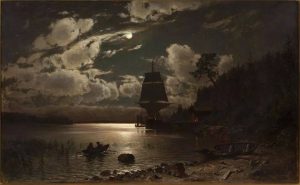
In 1809,  Major van Daan was serving in Portugal and Spain with the first battalion of the 110th under Sir Arthur Wellesley while Captain Hugh Kelly RN commanded the Iris during the expedition to the Scheldt.

Extract of a letter from Captain Hugh Kelly, RN to Major Paul van Daan, August 1809

As if this expedition wasn’t bad enough, I seem to have lost young Durrell, who has been temporarily seconded to the flagship by the particular request of Captain Sir Home Riggs Popham. I am assured by Sir Richard Strachan that this is only temporary, but I’m worried about the lad, I don’t like the company he’s keeping.

Popham, by the way, is more insufferable than ever. I’ve not the least idea what his job actually is, although I’m reliably informed he was instrumental in the planning of this expedition, which might explain why nobody is going anywhere. He behaves as though he were Captain of the Fleet, but he isn’t; we don’t seem to have one of those. Whatever he is supposed to be doing, he is all over the place as usual, you’d be hard put to know if he’s army or navy, since he’s forever on shore. From Durrell’s letters, he’s an alarmingly regular visitor to headquarters, which cannot be easy for Durrell who would rather be nowhere near the place.

I hope things are going better for you.

Yours, with esteem

Captain Hugh Kelly, RN

An Unconventional OfficerExtract of letter from Major Paul van Daan to Captain Hugh Kelly, August 1809

I’ll be honest, Captain, you might still be having a better time than I’ve been this past month. I am about to embark upon a painful retreat back from Spain, made worse by a hole in my chest which I acquired at a place called Talavera. I’m told we won, which I’d no way of knowing as I was carried off the field half dead. Thankfully, I’m on the mend now, thanks to the efforts of a rather unusual young female who is married to an officer of the quartermasters’ department and who is our new and wholly unofficial surgeon’s assistant.

I hope your campaign is over quickly, that it’s less miserable than Copenhagen, and that you get through it without shooting that arsehole Popham. Sorry I can’t be there to do it for you. I hope the lad’s all right, he doesn’t need to be spending his time with that smug bastard.

By the way, why is Durrell dodging army headquarters? I thought he liked Lord Chatham.

I hope your reply will find me safe in Lisbon. Or anywhere but here, it’s a hell hole, we’re short of supplies and Sir Arthur Wellesley is in the foulest temper I’ve ever seen, made worse by the fact that I’ve been too ill for him to take it out on me.

Yours affectionately, Major Paul van Daan

Extract of a letter from Captain Hugh Kelly, RN to Major Paul van Daan, September 1809

I hope you’re still recovering well. Take a tip from an older man, Major, and duck next time.

Poor Durrell is trying to avoid his brother who has taken up some nameless and pointless post at headquarters. I’ve no idea what he’s doing there and I suspect Lord Chatham has even less idea, the poor man seems permanently surrounded by a pack of hangers-on and holiday-makers. They say that he seldom emerges from his bedroom before noon; if I had that lot, on top of this campaign, to contend with, I’d stay there all day.

Don’t even talk to me about bombarding a city. Flushing was a horror, I’m not likely to forget it in a hurry.

I’ve no idea how long we’ll be here; I don’t think we’ve a cat in hell’s chance of getting anywhere near Antwerp now, and on top of that, there are reports of sickness among the troops. I hope your second battalion isn’t affected, I’ve met one or two of them. Have you friends there?

Extract of a letter from Major Paul van Daan to Captain Hugh Kelly, September 1809
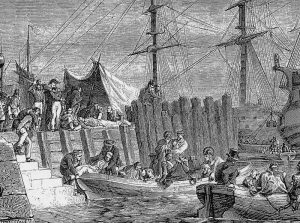
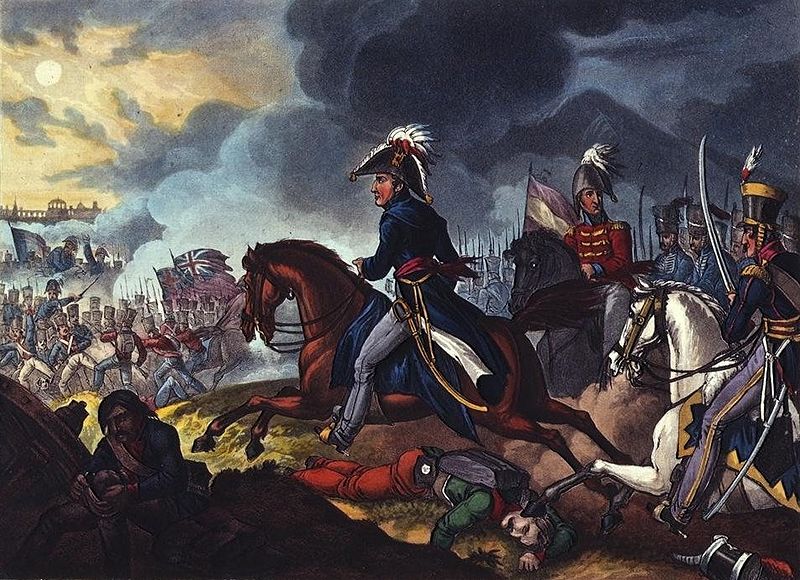
I’ve received a letter from a friend in the second battalion. Captain, what the hell is going on over there? Are you and your crew all right? Is it true the expedition is pulling out?

Is Durrell back with you? It doesn’t sound as though you’d want him on shore just now.

Headquarters has moved to Viseu and Wellington is planning how to stop another invasion, but it’s fairly quiet here. I’m hoping that the stories I’m hearing are exaggerated,  but get that boy back with you, if Popham is still strutting around the army lines and gets him killed with some bloody Dutch fever, I am going to catch up with that bastard and shoot him in the head. It’s high time somebody did it, I’d be doing the world a favour.

I really don’t like what I’m hearing about what’s happening on Walcheren. For God’s sake, write to me, sir, I want to know you’re both all right…


Evacuating the sick from South Beveland, 1809


This Blighted Expedition: a novel of the Walcheren Campaign of 1809 (Book Two in the Manxman series).  Due for publication on 31st October 2019.

Wellington’s Birthday

Arthur Wesley, later Sir Arthur Wellesley and still later the first Duke of Wellington was born on this day in 1769 and to celebrate Wellington’s birthday there will be a lot of articles and blog posts out there which tell the story of his extraordinary life far better than I can.

As my readers know, Wellington is a significant character in the Peninsular War Saga. I’ve read several different biographies of him during my research along with a huge number of contemporary diaries and letters from men who served under him and each account puts a slightly different slant on Wellington’s character. Over six books, I’ve developed my own view of Wellington. I rather suspect I owe a good deal to Rory Muir’s historical view of him but as a novelist, I have the flexibility to add my own nuances, especially with regard to his relationship with my fictional characters.

Today, as my tribute to Wellington on his 250th birthday, I’ve put together a collection of some of my own favourite Wellington moments from my novels. I hope you enjoy them.

An Unconventional Officer - love and war in Wellington’s armyWe start in India, in an Unconventional Officer, when the young and newly promoted Paul van Daan fights under Wellesley at Assaye. At this stage, the two hardly know each other, but there is already a sense of some of the conversations to come…

“Captain van Daan.  They’re quieter over on the right than they were, it seems.  Would your ruffians have something to do with that?”

“Maybe, sir.  We came in to support the 74th but the dragoons were doing a good job so we went for the guns.”

“Lose many?”

“I don’t know yet.  One man down defending the first gun, but we took some heavy shooting to our right.  We’ll not get out of it unscathed.”

“None of us will, laddie.  They’re on the run now.  Their French officers took off, no discipline left.  Eyes right, the general is approaching.”

Wellesley reined in.  He looked exhausted and the horse he was riding was not the one he had set out on that morning.

“Major McTavish, Captain van Daan.”

“Yes, sir.”

“Well done, sirs.  You’re hurt, Captain van Daan.”

“Not serious, sir.”

“Good, good.  I sent a man over to send you into battle, but he couldn’t find you.”

Paul glanced up at him warily.  “I was around, sir,” he said.

“Yes.”  Wellesley studied him with thoughtful blue grey eyes.  Finally, to Paul’s relief, his lips twitched slightly.  “You anticipated correctly, Captain.  You might not always be right, however.  I prefer my officers to await orders.”

“Yes, sir.”

“Did Colonel Maxwell…”

“No, sir,” Paul said definitely.  “We went in ahead of him, he waited for your orders, sir.”

Wellesley shook his head.  “You’re a bloody liar, Captain, as you know very well.  I’ve sent Wallace to rally the remains of the 74th and get them out of the range of those guns.  Although they’re not doing much damage on this side, but they’ve started up again on the left, firing at our rear.  Harness is taking the 78th back to recapture them, Captain, are your men able to join them?”

“Yes, sir.”  Paul nodded to his sergeant who took off at a run to summon the rest of the light company.  

“Good, let’s get those guns back.  God knows what the cavalry are doing!”

Paul turned to follow his gaze and realised that having done their work, Maxwell’s troopers seemed to have gone out of control and crossed the Juah, with their colonel following them.  “They all right over there, sir?”

“I sincerely hope so, I could rather do with them over here.  What is wrong with officers of the cavalry, Captain?  Why can they never follow a simple order?”

Despite himself, Paul grinned at the general’s exasperated tone.  “I might not be the best person to ask that today, sir.”

An Unwilling Alliance is not part of the main sequence of books, taking place during the Copenhagen campaign of 1807, but it is one of my favourites in terms of the development of Wellesley and Paul’s relationship. In this scene, Paul is in trouble for upsetting the Royal Navy and Sir Arthur Wellesley is not amused…

Sir Arthur Wellesley was furious.

Paul finally managed to find him alone in his sitting room the following day, writing a letter to London. He had been pleasant on Paul’s arrival but his face had steadily darkened as Paul told his story. He said very little apart from to bark a question when a point was not clear. Paul told the story in full.  There was no point in holding back; at some point the entire tale would come out. Paul suspected that by now the bosun from the Flight would be telling it to Admiral Gambier and he was fairly sure that the man would be telling a version that made him appear less culpable.

Wellesley had not asked him to sit down and Paul stood to attention, fixing his eyes on a spot on the wall as Wellesley allowed the silence to lengthen when the story was told. Eventually his chief spoke, in tones of pure ice.

“Am I expected to get you out of this particular mess, Major van Daan?”

Paul shifted his gaze to Wellesley’s face. “No, sir,” he said. “I don’t expect you to do anything at all. You needed to know, because the bosun from the Flight is going to tell the Admiral what happened and it is going to come back to you. I am sorry.”

“Sorry? Do you think that is enough? You effected an armed boarding of a Royal Navy ship, locked up the crew, threatened the captain of the Iris when he very properly came to take over and asked you to leave and kidnapped a group of men who had been legally pressed into naval service without making any attempt to speak to a senior officer in either service about…”

“I did make an attempt to speak to the Admiral, sir. I spoke to Captain Sir Home Popham.”

“Don’t interrupt me!” Wellesley snapped, furiously. “You deserve to be court martialled and cashiered for this, you insubordinate young imbecile! The situation here is difficult enough; we’re invading and threatening a neutral country, nobody knows who is in command or whether the army or the navy should be taking the lead, orders from London are slower than usual and nobody is telling me anything at all or listening to anything I have to say! Admiral Gambier has every right to be furious about this and every right to demand your stupid young head on a plate and if he writes to Horse Guards to that effect or even complains to Lord Cathcart, there isn’t a damned thing I can do about it. I am not in command here and I don’t have that much influence.”

Paul met his gaze. “I know. And I know you don’t want to hear it, sir, but I am genuinely sorry. I lost my temper.”

“When you were a twenty-one year old junior officer, Major, your outbreaks were mildly amusing, mostly because they caused no real damage. At your age and with your rank they are no longer funny.”

Paul could think of nothing to say. He suspected that he had genuinely gone too far this time. His friends had told him often enough that he could not continue to rely on Wellesley’s indulgence indefinitely. On this occasion he knew that his chief’s fury was exacerbated by his own frustration at being sidelined from the centre of events. Wellesley was ambitious and had pushed for this appointment, wanting to get away from his administrative and political duties in Ireland and back into combat where he believed he was meant to be.

Paul agreed with him. He had served under a variety of officers in both his early navy career and since joining the army and he had never come across any man whom he respected as he did the austere Anglo-Irish general. He had caught Wellesley’s eye in India when he was a young lieutenant and they had remained in contact since then, corresponding regularly. He knew that despite the twelve year age gap, Wellesley liked him and he returned his chief’s regard. They were friends, as far as it was possible to be friends with the distant, unemotional Wellesley and Paul tried hard not to trade on the fact.  

He had not consciously assumed that Wellesley would extract him from his current situation, but he realised that it had not occurred to him that the general might not be able to. In India and in Ireland, Wellesley had been in command. He was subordinate here to Lord Cathcart and the political situation made it difficult for him to demand immunity for a young officer’s rash disregard for the dignity of the navy.

“Nothing to say, Major?” Wellesley said finally.

Paul shook his head. “Not really, sir. I could make a very impassioned speech about the state of those men aboard that ship. I could point out that I wouldn’t have needed to get involved at all if they’d listened to me when I went to the flagship to tell them what was going on. I could work myself into a temper all over again about a system that pays bonuses for legalised kidnapping, but we all know that I’ve a personal axe to grind on that particular subject; the navy stole two and a half years of my life when I was a boy and you don’t want me to go into detail about what some of that was like, trust me. But none of that matters, because you’re completely right. I’m old enough and intelligent enough to weigh up the consequences of my actions and I didn’t. I went blundering in and I didn’t give a thought or a single damn about how I was going to get out of it. And it isn’t fair to expect you to put your neck on the block because I need to learn self-control. I am sorry. Let it take its course.”

There was heavy silence in the room. Outside it had begun to rain and Paul could hear the raindrops against the shutters, the wind whistling through gaps in the wood. He thought inconsequentially that it was typical of Wellesley to find himself in a billet that would be freezing cold at night and not bother to change it.

An Irregular RegimentIn An Irregular Regiment, Paul has married his second wife, who is something of a favourite of Wellington’s, and is preparing to join the army in chasing Massena out of Portugal, when Paul learns that his chief has a particularly interesting job for him…

“I imagine so,” Wellington said. “Really, Colonel, you never fail to surprise me.  With the Duke gone, Dundas is making his own appointments to my army and he has sent me Major-General Sir William Erskine, whom you will meet tomorrow at my reception.  He is to take over the light division during General Craufurd’s absence.”

Paul sat very still, staring at his commander-in-chief. He felt suddenly very sick.  Wellington looked back at him steadily. There was a long silence. Eventually, Wellington said:

“I know you are about to start swearing, Colonel.”

“I actually don’t know any words rude enough to cover this,” Paul said, taking a deep breath.  “Was this your idea or Horse Guards?”

“What do you think, Colonel?”  Wellington sighed.  “I have no choice but to accept him.  He is politically very well connected, of the right rank and knows the right people.”

“And according to popular gossip he is arrogant, inexperienced, blind as a bat and mad as a Bedlamite.  Are you seriously proposing to allow him to command troops at all, let alone Robert Craufurd’s light division?”

“I don’t have a choice, Colonel.”

“Why don’t you send him out in command of my light company for a couple of days, sir?  I can pretty much guarantee they will solve your problem for you.”

“Colonel, murder is not a solution I can countenance I am afraid.”

“What a shame.”

Wellington shook his head.  “I should know better than to confide in a relatively junior officer…”

“You should know better than to confide in me and expect me not to tell you what I think, sir.”

“It is my aim to cause as much damage to Massena’s army as possible, Colonel. I…”

“And the light division would be perfect for that, sir, if you had the right commander.”

“You’re too young and you don’t have the right connections.”

“Christ, I’m not suggesting you give them to me. Either Beckwith or Drummond are more than capable!”

“Colonel, my hands are tied.  He is here and I need to use him, at least until I can come up with a very good reason not to. I have given him limited command and he has not done as badly as I feared.”

“He’s not had much chance so far but if you get Black Bob’s division slaughtered under this lunatic, sir, I suggest you take leave of absence before he gets back, because he’ll shoot you,” Paul said shortly.  “What do you want me to do?”

“Excuse me?”

“Oh come on, don’t tell me I’m here for a chat and a drink. I’ve spent four months working my arse off in Lisbon to get your army supplied, I’ve come back ready to fight and you are about to give me a job that you think I am going to yell about. How long have I known you, sir?  Cut line and tell me what it is.”

Lord Wellington was silent for some time and Paul studied him. He could almost see his chief considering the best way to phrase his orders, something he seldom did. Usually Wellington barked out instructions and expected them to be obeyed and the care he was taking over this made Paul’s heart sink.

“Very well. You’ll meet Erskine tomorrow. I want you and the 110th to operate under his personal command, in addition – but not as part of – the light division. You’ll provide him with ADCs, try to give him some guidance…”

“You have got to be fucking joking, sir!”

“Watch your language with me, Colonel.”

“My apologies, sir, it just slipped out. Is there something I’ve done recently to piss you off?  Because if there is, I wish you’d just tell me what it is and I’ll apologise. I have to be the worst person in the world for this job. Johnny Wheeler once told me I have the diplomatic skills of a five year old, and honestly, I think he was being generous.”

“Listen to me for a moment. You will be in the thick of the fighting. I want you to act as liaison between General Erskine and the light division but you’ll also be in a position to report back to me.  If things are going wrong, you are a man I trust to make difficult decisions without fear.  God knows you’ve made up your own orders often enough over the years.”

“Yes, in the heat of battle or when no other orders are available. I also fight very well under the command of a good general, by the way.”

“I know you do, Colonel, I commanded you at Assaye, Rolica, Vimeiro, Talavera and Bussaco. And you did exactly what you were asked to do on each occasion and you did it well. But at Assaye you went in to help the 74th before I could get to you to give the order.  And at the Coa you defied Robert Craufurd to double back and retake that knoll, saving the rest of his troops during the retreat. That is why I want you within reach of Major-General Erskine. Because you being there could save lives.”

Paul stared at his commander. “Tell me this is a joke,” he said, too angry to be polite.  “You are giving Robert Craufurd’s light division to a half blind lunatic with no experience of either war or command and you are expecting me to do what exactly?”

“Colonel, don’t lose your temper with me.”

“Sir, I have already lost my temper with you, telling me not to is only going to piss me off more.”

“The light division needs a commander. I have to do something with him, his family are too influential for me to ignore. At best he is inexperienced; at worst he might be dangerous.  So I’m putting him in charge of men who are going to be able to work round him.  Beckwith and Drummond are good men, used to Craufurd.  They’ll know what to do if he makes a mistake.  And if they don’t…”

“Sir?”

“If they don’t, you will,” Wellington said quietly.  “I’m putting the 110th under his direct command.  You’ll march with him, provide him with ADCs, make sure he’s where he should be when he should be.  And make sure that the light division knows what the hell is going on.”

Paul stood up and went over to the window.  “And what happens if that goes wrong?” he asked.

“It won’t.”

“It bloody well could and you know it. If I can’t manage him, my lads end up dead, possibly taking half the light division with them. And if I do manage to survive it, I’m neither senior enough nor well connected enough to survive what they’ll do to me at Horse Guards.   Either way you’re in the clear.  If I manage it, you’ll get a slap on the back and political points.  If I don’t, you stand back and point and I’m going down.”

“That is unfair, Colonel. I have always supported you, no matter how appalling your behaviour at times. Another commander would have left you to your fate after Copenhagen or sent you for court martial after the Coa.”

Paul was silent, aware of the truth of it. Wellington had always supported him when he had been in trouble, but he also understood that his chief would put the needs of his command ahead of any friendship. Paul had no problem with that; it was what he expected, but the idea of Erskine in charge of the light division appalled him and the idea that he was being expected to manage it, was worse.

“How long do you think it will be before General Erskine has me up before a court martial, sir?” he asked finally. “You know what I’m like.”

“I know you’re getting better at it. You can do this, Colonel van Daan,” Wellington said steadily. “You are probably the only man I would trust with it.”

“You’ve got a very funny definition of the word trust, sir.”

“I’ve never yet given you an order you’ve failed to obey,”

It nettled Paul as he knew it was meant to. “No. And you haven’t this time. I’ll do my duty, sir. It’s what I do. But you need to do something for me in return.”

“Which is?”

“Before we set off, I want to borrow your man of business. I need to get my affairs in order. And I need you to give me your word that if he gets me killed, you’ll make sure she’s all right.”

Paul had shaken his commander and he knew it. “Colonel…”

“Your word, sir.  I can get everything set up and ready for my lawyers at home.  But the only thing my family knows about her is that I married the widow of a thief and a deserter, practically over my wife’s grave. They’re not supportive of us and they don’t need to be.  Sooner or later they’ll meet her and get to know her and they’ll think it’s the best thing I ever did.  But at the moment she’s on shaky ground.  So if I die, I need you to use every piece of influence that you have to make sure she gets what she’s due.”

“I will.”

“You promise me.”

“Colonel you have my word on it.”

“And look after her.  Nobody else can do it. I don’t think any of them understands her yet the way you do, with the exception of Leo Manson and he’s too young.”

Wellington studied him for a long moment. Then he nodded.  “I will.  But it isn’t going to be necessary. You are better at this than you think you are, Colonel, I wouldn’t be doing this if I weren’t sure of that.”

“Well I appreciate your confidence, sir.”

“As to the rest, I give you my word that I will support you if you’re put in a difficult position over this. And I can, I’m not in command of the reserves any more. You take care of my light division until Craufurd gets back and if Erskine comes baying for your head, I will throw him out.”

Paul looked at his chief with troubled eyes. He wanted badly to believe him and he knew that Wellington was completely serious in his intention. He also knew that nothing meant as much to his chief as remaining in command and winning this war and he was under no illusions that he would put that aim ahead of anything else, probably including friendship.

“Thank you, sir,” he said finally, given that there was nothing more he could say. He saw Wellington visibly relax and wondered if the general had actually expected him to refuse.

“Excellent. I’ll expect you and your officers at the reception tomorrow evening, Colonel. Have you met General Erskine at all?”

“Not really, sir, I’ve seen him around.”

“Bring your wife.”

Paul eyed his commander in chief.  “Sir, when my wife hears about this one, you might be better off if I leave her at home,” he said shortly.  “But we’ll be there.  If you’ll excuse me, I’ll need to go and brief my officers about this.  They’ll need at least a day before they get over it enough to guarantee they’ll be civil.”

An Uncommon Campaign, 110th at the Battle of Fuentes d'OnoroIn An Uncommon Campaign, Wellington is furious in the aftermath of the French garrison’s escape from Almeida while Paul is drawn into army politics in order to secure the promotion of a good officer…

“Don’t start asking difficult questions, Colonel.”

“I have to. Because if you don’t tell me the truth you know perfectly well that at some point something is going to happen that I don’t like and I’ll probably blow up about it when I ought to keep my mouth shut.”

Wellington sighed. “I would rather be dealing with your wife at this point,” he said.

“Well you can’t. I know she’s a better politician than I am, sir, but she’s not well.  What are you giving them that I’m not going to like?”

Wellington studied him for a long time. Then he rose and went to the decanter. He brought it to the table and poured two more drinks and sat down. “I am writing to London concerning this disgraceful affair of the Almeida garrison,” he said. “In it, I am listing the reasons I believe it to have gone wrong. What I will not be doing is hanging Sir William Erskine out to dry. Privately I intend to convey to Horse Guards that I could do so at any moment if I am asked to place yet another officer of dubious competence over a man of honour and ability. I am then going to tell them of my appointment of Lt-Colonel John Wheeler to full colonel of the 112th light infantry.”

“Light infantry?”

“May as well make it worth my while.”

“All right, sir.  And who, may I ask, is the chosen scapegoat?”

“Not a scapegoat, Paul.  Not in the sense you mean.  A lot of mistakes were made but the biggest was the bridge at Barba del Puerco. I sent out an order the previous day to General Erskine to send the 4th under Colonel Bevan out to the bridge. For reasons which nobody seems to be able to explain to me, Colonel Bevan did not go there. The result was that Brennier had free passage over the river.”

“I thought I’d heard that Bevan was there,” Paul said.

“He arrived in order to join in the attack on the retreating French troops. If his men had held the bridge as they should have…”

“Have you had this properly investigated?” Paul asked quietly.

“Is Colonel Bevan a friend of yours, Paul?” Wellington asked.

“Have you met Colonel Bevan, sir? He is a charmingly naïve gentleman with his head stuffed full of notions of honour and gallantry which make my hair stand on end and a tendency to sink into black despair on a regular basis. No, he’s not a friend. He disapproves of me. I frequently want to shake him. But he’s a good man and not a bad officer. And he has a reputation for being highly conscientious. If he’s actually being blamed here for something he didn’t do…”

“He isn’t. I’m not lying about anything, Paul. I’m just not stressing the obvious, which is that both Campbell and Erskine, who command divisions, ought to have been able to work out between them how to prevent the French from breaking out of Almeida and managing a night march on little known paths to cross into Spain. If you and Craufurd had been guarding Almeida for me he wouldn’t have got beyond the first line of your pickets.”

“No, he wouldn’t,” Paul admitted. “So you let the commanders off the hook and blame poor Bevan for getting lost in the dark and quietly point out to Horse Guards how embarrassing it would be for them if their appointment – namely Erskine – should later turn out to have been grossly negligent. And then you bring up Colonel Johnny Wheeler and the 112th. Got any other favours you’re asking of them at the same time?”

“A more regular pay chest might be nice, Colonel, but I’m not optimistic.”

Paul drank.  “You were right. I bloody hate it and I wish I didn’t know anything about it.  But I want Johnny Wheeler commanding my men because he’ll keep them alive. What will happen to Bevan?”

“Nothing. God in heaven, Colonel, I’m not going to court-martial the man, he won’t be the first to make a mistake in this war. I would hate to be hauled over the coals for some of my recent choices at Fuentes de Oñoro. I’m not even going to give him a dressing-down in person. There will be a report in the London Gazette which might be embarrassing for him, but he’ll survive it. At some point he will do something gallant with his regiment and I’ll issue a commendation which will also be mentioned in the London Gazette and it will all be forgotten.” Wellington studied Paul. “There is another name which is going to suffer the same fate by the way but I doubt this one will distress you as much. General Erskine is placing some of the blame for the delay in my orders being sent onto Captain Longford.”

“Is he?  What is Longford supposed to have done?”

“He was at a dinner in Villa Formoso with the general when my orders were delivered. According to Erskine he told Captain Longford to deliver them to Colonel Bevan and the captain failed to do so for several hours.”

“Bollocks,” Paul said shortly. “Longford’s not that stupid. He’s trying to build himself a career out of this posting, if he got handed your orders he’d have taken them on the spot. What happened, Erskine put them in his pocket and forget about them?”

“We will never truly know, Colonel.”

“I’ll know, sir. Well it might put a brake on Vincent’s ambitions, but he’s used to that. He’ll smile and say the right things and keep kissing arses until it’s all forgotten. Do him good after what he did at Sabugal. Although it is bloody unfair that Erskine gets off scot free.”

“Paul – you can’t tell anybody about any of this. Not even your wife.”

“If I told Nan about this she’d crucify me,” Paul said bluntly.  “We share a passion for justice which I’m setting aside for Johnny and the 112th. Do I need to do anything about Grey?”

“No. Try not to hit him again. But he insulted your wife, another officer would have called him out. What did he say, by the way?”

“It involved Captain Cartwright.”

“Ah. Yes, that has caused a bit of gossip, Colonel. People are saying you are about to become the father of two children.”

“Is that what you meant about my morals earlier? If I’d fathered a bastard on Arabella Cartwright last year, sir, we wouldn’t be sitting here having this conversation because my bloody corpse would have been found castrated in a ditch outside the nearest military hospital. And if she finds out what you and I have just done to Charles Bevan you might be right there next to me so you’d better be able to carry this off.”

In A Redoubtable Citadel, Wellington faces two bloody sieges within a few months and is particularly grouchy about his officers taking leave…

It had been a frustrating few weeks for the commander of the third brigade of the light division.  Arriving back at Wellington’s lines, Paul found his general in a foul mood, furious about delays in reinforcements arriving, problems with his supply lines and the slow progress of his siege train.  Wellington was still in Freineda, leaving it to the last possible minute to move his headquarters towards Badajoz.  He had spent weeks feeding disinformation to the French about his intentions and had been rewarded by a significant lack of troop movements towards the city, but he knew that once it became clear that he intended to invest the fortress and take Badajoz, the French would move to try to relieve it.  It was a delicately balanced strategy and Wellington found himself, not for the first time, short of men, money and equipment.  He was also short of a commander for the light division, General Charles von Alten having been delayed, and it was quickly clear that he expected Paul to step in to the breach.

Wellington’s senior officers greeted Paul’s return with evident relief, which told him all he needed to know about his commander’s mood during the past weeks.  Since the quick series of promotions which had led him to command a brigade at thirty, Paul had faced a good deal of resentment and opposition from some of the other officers.  He had heard himself described as a wealthy, middle class upstart who had bought his way to success but he was cynically aware of how much they relied on him to manage the commander-in-chief when he reached the point of addressing his generals with the biting sarcasm of a disgruntled Latin master speaking to a particularly dense first year.  The tone of his note requesting Paul’s return had been abrupt to the point of rudeness.

Paul was greeted with pleasure by his own officers.  He bathed and changed and took himself up to Wellington’s headquarters where his chief regarded him with a frosty eye.

“So you’re back?” he said with heavy sarcasm.  “I hope you’re well rested, Colonel?  I wouldn’t want to think I’ve interrupted your holiday too soon.”

“Well you did, sir,” Paul said frankly.  “My family brought my children out to see me, I could have done with another month to tell you the truth.  But the tone of this charming missive informed me I’d done as well as I was going to.  What’s going on?”

He dropped Wellington’s letter onto the table and stood waiting.  His chief picked it up and looked at it for a moment.  “Don’t you want to hold onto this, Colonel?  All my other officers are saving my briefing notes for their memoirs,” he said.

“No thank you, sir, I’ve had enough rude letters from you over the years to be able to recreate a generic bollocking without an aide memoire.  The only letters I hold on to are those from my wife.  She’s a better correspondent than you are, to be honest.  What’s the matter, siege train not arrived?”

“Nothing has arrived!” Wellington said.  “Get yourself a drink, for God’s sake and pour me one as well.  I thought you’d be in a better mood.”

“I was until I walked in here and you started yelling at me.”  Paul went to pour brandy and Wellington’s orderly grinned and effaced himself.  “Want me to tell you about our lovely parties in Lisbon?”

“You don’t need to; your wife wrote to me.  Her description of the Regent’s attempts at flirtation are the only thing that has made me laugh this month, she has a gift.  I wonder if she would accept a post as my secretary?”

“She isn’t going to accept any of the posts you’re likely to offer her, sir, since they would all lead to the same thing and I do not trust you with her.”  Paul put the glass down on the table and sat down without being asked.  “Tell me what’s been going on.”

In the most recent book, An Untrustworthy Army, Paul is put in charge of clearing the last French garrison out of the Retiro in Madrid and finds that he is expected to do so in front of an audience of cheering locals…

Dawn, and then full daylight, brought a new problem. The early sun lit up the astonishing spectacle of an audience.  The citizens of Madrid, some of whom had probably not been to sleep from the previous night’s celebrations, began to throng the streets close to the Retiro, ready to watch the attack on the interior lines. Others appeared on the roofs and balconies of nearby houses. Paul, trying to call his men into order to storm the breach in the wall, surveyed the area in complete astonishment.

“Jesus bloody Christ, we need the light division amateur theatrical group over here, it’d be the biggest audience they ever got. And probably the most appreciative. Where’s Lord Wellington, has he seen this sideshow?  Can we get them cleared out?  If the French decide to make a fight of this, people are going to get hurt. Major Swanson, we need to send a message down.”

It took thirty minutes for the reply to come, a brief and clearly exasperated message from Wellington. Paul read it and looked up at Carl.

“Apparently he’s made representations to the town council, but people aren’t willing to leave,” he said. “I feel my patience diminishing, which is never good.”

An enormous cheer greeted the manoeuvring of three companies of the seventh division into position.  The British soldiers echoed the cheers with a response of their own, drowning Sergeant-Major Carter’s shouted orders to his men about their position.  Carter took a deep breath and looked over at Paul.

“This is bloody chaos,” he said.  “They’re dopey bastards in there, mind, I’d have opened fire by now.”

“If they’ve got any sense they’ll surrender and hope we can get them out of here alive,” Paul said grimly.  “They’re not getting past our lads, but even if they did, these people will tear them to pieces.  Why the hell did Joseph leave them here?”

“Making a point, sir,” Captain Manson said. “He might have left his capital but he didn’t leave it undefended.”

“Two thousand men against the entire army isn’t a defence, it’s a present.”

Another enormous cheer swelled the crowd and Paul swore fluently.  “Carter, get them moving over to the right. Use hand signals if you need to. Any trouble with them, I’ll kick their arses personally. I don’t…ah look, we’ve company.”

Lord Wellington was approaching, making his way with some difficulty through the crowded streets, two young ADCs trying hard to make a path for him with their horses. Paul waited several minutes to be very sure that Wellington had got the point about the difficulties of conducting operations with a crowd of civilian spectators. When he suspected that his chief was on the verge of laying about him with a riding whip, he called over to Sergeant Hammond.

“Sergeant, get over there and clear a path for his Lordship, will you?”

Hammond was wearing his most deadpan expression. He saluted. “Right away, sir.”

Paul dropped his voice. “Don’t make it look too easy, Sergeant.”

“Wouldn’t dream of it, sir.”

Wellington’s horse emerged finally from the throng which were being neatly held back by the 110th and Paul saluted his chief with a pleasant smile.

“Morning, sir, come to see the show?  I think they can find you space over on that balcony, and I must say I like the look of the pretty dark haired lass on the end, see if you can squeeze in next to her.”

“I will remember to mention to your wife how observant you are when she’s not around,” Wellington said smoothly, reining in and dismounting.  “Do not think that I am unaware of how long it took you to intervene there. Have you had a good night?”

“No,” Paul said briefly. His attention had been caught by a movement up at the fort, and he shielded his eyes from the brilliant early sun. “Is that…?”

“A white flag. I think so,” Wellington said. “I wonder if we might be able to avoid bloodshed after all? Signal that we will meet with them, Colonel. Let’s see if we can put an end to this.”

Lord Wellington, as a fictional character, is an enduring delight to write. His somewhat acerbic personality jumps out of the pages of his letters and orders and his perfectionism and attention to detail make it possible to include him in a novel about his army in a way that is far more difficult when writing about other commanders. Biographers have differed about his style of leadership, his abilities as a general and his personal relationships, and I have probably taken a little from each of them.

My Lord Wellington is a highly complex man who is capable of great warmth and kindness as well as appalling tactlessness. He finds personal relationships difficult, but is very loyal to those he considers friends. His relationship with my fictional officer, Paul van Daan, is central to the books, but equally important is his relationship with Paul’s young wife, who gradually becomes his friend and confidante in a way that foreshadows his future relationship with Harriet Arbuthnot.

I love writing Wellington and miss him in those books where he does not appear. As with all fictional accounts of real historical characters, I don’t claim to have ‘got him right’. None of us can really claim to know a man who was born 250 years ago, but as a novelist I have tried to create an interpretation of him that tallies with what we know of him from contemporary accounts.

Happy 250th Birthday Arthur Wellesley, 1st Duke of Wellington from one of your constant admirers.

Happy New Year from Writing with Labradors


Happy New Year from Writing with Labradors and welcome to 2019.

It feels like more than a year since I wrote my first blog post of 2018. So much has happened during the year, both personally and professionally, that it’s hard to know where to start, but as always, I’ve thoroughly enjoyed getting to know more of my readers, both in person and online, and I love the fact that more and more people are beginning to contact me through the website and following me on Facebook, Twitter and Instagram.

2018 saw the publication of two new books. The first of these, which came out in April, was An Unwilling Alliance. This book is the first of a new series, following the career of Captain Hugh Kelly RN, a fictional Manx Royal Navy captain during the Napoleonic Wars. It is also part of the Peninsular War Saga, slotting in approximately between books one and two, telling the story of Paul van Daan and the 110th during the Copenhagen campaign of 1807. I was able to set part of the book on the Isle of Man, where I live, and I loved being able to talk about the island to a wider audience.

The second book of 2018 was An Untrustworthy Army, book six of the Peninsular War Saga. It tells the story of Wellington’s Salamanca campaign and the miserable retreat from Burgos at the end of 1812. For some reason, I found this book very difficult. Partly, it was because my fictional brigade is part of the light division which was unusually not very active during much of this campaign. Partly, I think it was because the end of the campaign was genuinely so miserable, that it was hard to tell the story without sinking into unrelieved gloom. I think I managed it eventually, but it took a while. Fortunately, Craufurd the Dog stepped in with a bit of light relief. There were also goats.

The Bridge at OrthezRichard and I went on a tour of the Pyrenees in April, to research Vitoria and the Pyrenees campaigns. We had a great time and toured a few battlefields although I suspect we ate and drank rather better than Wellington’s army in 1813. I’m really looking forward to the next few books, as the Pyrenees give a lot of scope for the 110th to really get itself into trouble. We also spent a week in Northern Ireland in the summer, which was beautiful and set off a whole new sub-plot involving the United Irishmen and Michael O’Reilly in my over-active brain. Watch this space for that one, it’s happening sometime.

I wrote three new short stories this year. An Impossible Attachment was written for Valentine’s Day and tells the story of an unlikely romance between a French prisoner of war and the widow of an English officer in Portugal in 1812. The Quartermaster was a Halloween ghost story set in Ciudad Rodrigo in 1812 and The Christmas After tells the story of eight people thrown together on a winter’s journey by mail coach in 1815 who find common ground in their memories of the battle of Waterloo; it completes the story begun in An Impossible Attachment.

In October, I was invited to join a panel of historical novelists speaking at the Malvern Festival of Military History and it was a great experience to be up there alongside some of the best in the genre. The bonus was that I got to spend the weekend listening to a fantastic line up of historians, culminating with the wonderful Paddy Ashdown talking about his latest book.

On a personal level, it has been a mixed year at Writing with Labradors. Luka, our leopard gecko died early in the year at the age of twelve. She was my son’s eighth birthday present and for many years her tank lived in his room. Later she moved into my study and would sit watching me work for hours, during the evenings after her feed.



In May, our lives were lit up by the arrival of Oscar, our new baby black labrador. Oscar is completely gorgeous and has fitted into our family as if he’d always been there. He and Joey bonded immediately and are completely inseparable. Toby was a bit more aloof to start with, but quickly fell in love, and the three of them had the most marvellous time through the early summer months. The weather was hot and sunny and we practically lived outside, reading, writing and watching the three dogs playing.


 

Back on his feet…

We had a fright in June when Joey, our twelve year old yellow labrador’s back legs suddenly gave out, and we had a couple of days of sheer misery, wondering how serious the problem was, and if we were going to lose him. It turned out to be a false alarm, it was arthritis, and stronger pain relief and joint supplements very quickly got him back on his feet.

I’ll never forget that summer, because it turned out to be Toby’s last. The amazing weather continued, the kids’ exams were over, and we spent every minute we could outside in the sun. My daughter asked for a hammock for her birthday in July and it became Oscar’s new playground, leaping through the air to join her as she lay there reading, while the older dogs watched, looking as though they were laughing. I was working on the new book, enjoying all of us having time to be together, enjoying Oscar becoming an essential part of family life.

On July 23rd I worked in my study in the morning, but all three dogs wanted to play, so we moved outside and I sat working on the porch while they ran around chasing each other. They collapsed finally for a long nap, woke for dinner and then sat with us on the porch again until after dark. We said goodnight and went to bed. The following morning Toby was lying peacefully in his usual spot and I didn’t even realise he was dead until I touched him. It was a horrible shock; he was fourteen but other than his arthritis, seemed really well and there was no warning.

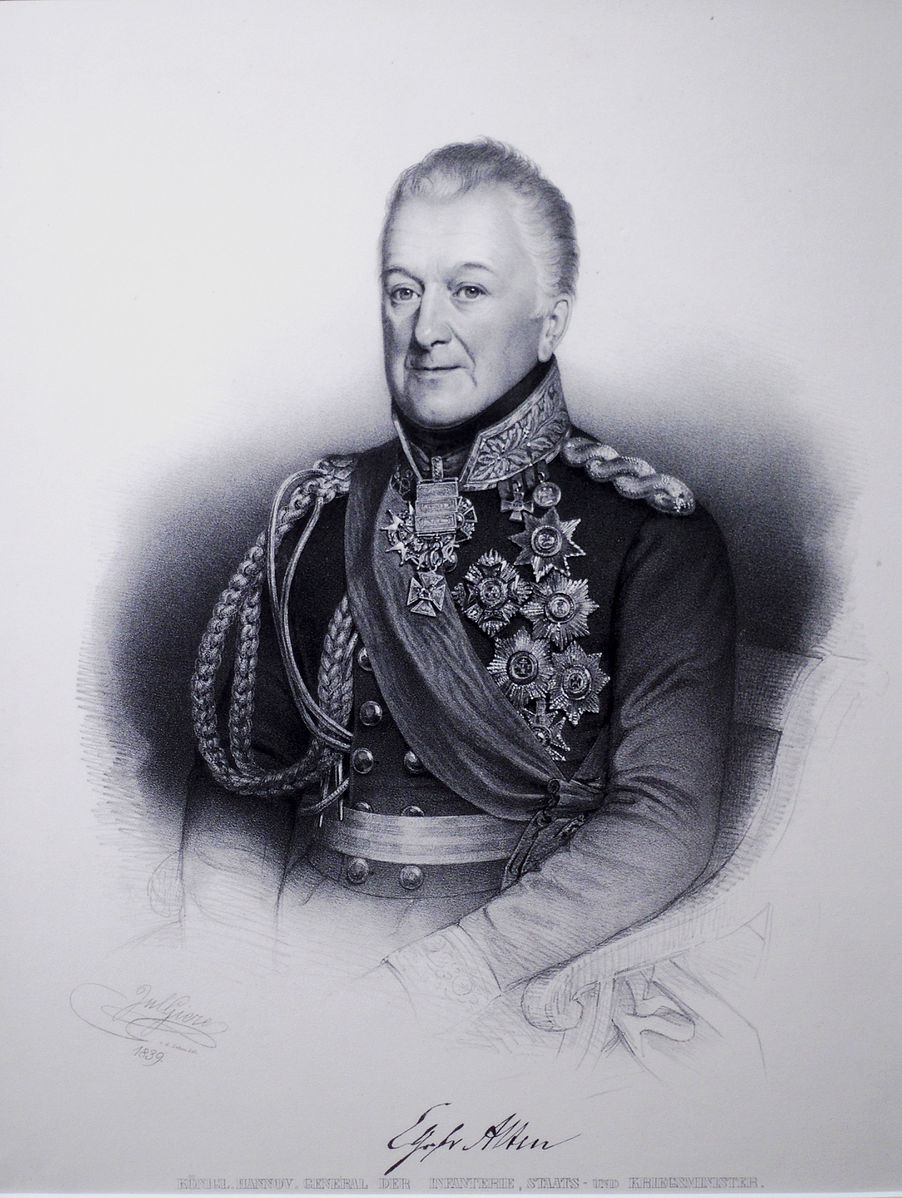
Despite the shock, it was a very peaceful end and although we miss him desperately, I’m so grateful for that. I was worried about Joey but although he missed Toby, I’m thankful that we had already got a new puppy, as it made the transition much easier for him. Once again, Writing with Labradors is down to two dogs, although Toby is close by and will always hold a very special place in my heart.

So what’s next? I’m planning a busy year in 2019, with the following projects on the go:

  • My next book is the second about Hugh Kelly and tells the story of the disastrous Walcheren campaign of 1809. As with Copenhagen, this was a joint operation with the army and navy. Paul van Daan is busy in the Peninsula with Wellesley, but the 110th has a second battalion and I’m looking forward to getting on with the research and meeting my new characters. I don’t have a publication date for this one yet, as the subject is completely new and I can’t yet tell how long the research will take. I intend to go to Walcheren for a research trip and I’m very much hoping to be there in August for the 210th anniversary re-enactment.
  • I’m attending the Wellington Congress in Southampton in April to indulge myself in learning more about my favourite general and to meet up with some good friends.
  • I’m hoping to attend the Malvern festival again.
  • I’m starting a new venture this year, teaching some adult education classes in history and creative writing at the Isle of Man College.
  • I’m aiming for four free short stories this year, to celebrate Valentine’s Day, Summer, Halloween and Christmas.
  • I’m hoping to make a good start on (possibly even to finish) Book 6 of the Peninsular War Saga, which is set during winter quarters of 1812-13.
  • The Peninsular War Saga will be available in paperback, initially from Amazon, but later in the year from some local bookshops and to purchase through my website.
  • A complete revamp of my website.
  • New editions of the two books of the Light Division romances series, to connect them more closely to the Peninsular War Saga.

With all this to look forward to, 2019 is going to be a busy year here at Writing with Labradors. Thanks so much to all of you who have read and enjoyed the books, and a special thanks to those who have left reviews. I really value them.

Have a happy and healthy new year and I look forward to hearing from many of you in 2019.

With much love

Lynn, Joey and Oscar


The Peninsular War Saga

General Robert Craufurd fought the battle of the Coa on this bridge

I began writing the Peninsular War Saga some years ago. At the time, I was attempting to find an agent or a publisher for one of my standalone historical romances, without much success. I had a lot of very positive feedback about my writing, my plots and my characterisation but everybody was saying the same thing; we’re sorry, but there is no market for traditional historical romance any more.

More than one agent urged me to try to write a contemporary romance. I made several attempts and hated all of them. Many people told me that with just a little adjustment, I could write for Mills and Boon historical. Once again, I made the attempt, and the people at Mills and Boon were lovely, gave great feedback, but were just not sure that my characterisation was quite right for them. I was getting nowhere.

To cheer myself up, I decided to scrap all my dreams of writing a marketable historical romance and just write something that I really wanted to do. There was definitely no market for a new series about the Peninsular War, since it had been done to death in the years following the runaway success of the Sharpe books and TV series. Still, it’s what I wanted to write, and since it was clear that nobody was going to read it anyway, I felt very liberated. I decided I could write it just for me, about a collection of people who didn’t always feel heroic or brave or even that patriotic. A lot of them joined because they had no option, or because they needed a job. They fought and they died and a lot of them became heroes. They also got wet, got grumpy when they were hungry, got sore feet and developed a bad head cold from time to time.

I wanted to explore areas of the war that I’d not really seen a lot about. What about the medical services? How did the commissariat work and who was responsible for ordnance and transport and prisoners of war? And what about the women and children who followed the army? What was it like in camp and on the long marches and all the boring hours between battles and skirmishes? What were relationships like between officers and men, away from the parade ground and the tidy regulations which governed army life?

Out of all these questions was born the Peninsular War Saga. Finally tired of trying to persuade an agent or a publisher to read one of the books, I decided to publish independently, without really thinking I’d sell more than a dozen copies, let alone develop an enthusiastic following. With book five doing well and book six in the early planning stages, I consider I’ve been incredibly lucky.

The Peninsular War Saga tells the story of the men and women of the fictional 110th Infantry during the wars against Napoleon; in particular, a young officer called  Paul van Daan who joins the regiment in 1802 as it is about to go to India to fight under General Arthur Wellesley.

An Unconventional Officer - love and war in Wellington’s army
Book 1 in the Peninsular War Saga

An Unconventional Officer: the Peninsular War Saga Book 1 (1802 – 1810) 

From the battle of Assaye, through Italy, Copenhagen and Portugal, we follow the early career of Lieutenant Paul van Daan, the most unusual officer ever to join the 110th as he attempts to find his place in the regiment.  Along the way he makes both friends and enemies, discovers a talent for leadership and shares his life with two very different women.

An Unconventional Officer is slightly different to the other books, as it covers a longer time period, almost eight years. I wanted it to be a full introduction to Paul’s story and to get him to the point where he was well-established in Wellington’s army. While it introduces many of the main characters, the heart of this novel is the love story between Paul and Anne and its theme is Paul’s gradual development from a young officer willing to break all the rules, to a slightly more mature officer who is beginning to learn to fit in a little better.

An Unwilling Alliance: The Manxman, Book 1 and the Peninsular War Saga Book 1.5 (1806-07)

This book is really a spin-off from the Peninsular War Saga, but it fits very securely within the series as well. It takes place halfway through the action of An Unconventional Officer, during the Copenhagen campaign, which is mentioned, but not explored in book one. I adore this book, partly because the navy theme enabled me to set part of it on the island which is my home and which I love, and partly because it is a real coming-of-age book for Major van Daan as well as a key point in his developing friendship with Sir Arthur Wellesley.

It is 1806 and Captain Hugh Kelly RN returns to the Isle of Mann after fifteen years with a few months leave and a small fortune in prize money to find himself a sensible Manx wife. He pays court to Roseen Crellin, who is determined to resist her father’s efforts to find her a husband. Still dreaming of the young English soldier who sailed away and broke her heart, she has no intention of encouraging Captain Kelly’s courtship and certainly no intention of developing feelings for the man.

Major Paul van Daan is newly promoted and just back from Ireland, sailing with his battalion to Copenhagen under the command of Sir Arthur Wellesley.  Paul’s courage and talent are unquestioned but his diplomatic skills need some work and in a joint operation with the navy there are many ways for a man of Paul’s temperament to get things wrong.

As Britain hovers on the brink of war with neutral Denmark and the diplomats and politicians negotiate to keep the Danish fleet out of Bonaparte’s hands, a more personal drama plays out on the decks of the Royal Navy and in the lines of Lord Cathcart’s army which could change the lives of Hugh, Roseen and Paul forever.

An Irregular Regiment

An Irregular Regiment: the Peninsular War Saga Book 2 (September 1810 – April 1811 )

This book covers an area of the war that I knew very little about. The building and manning of the lines of Torres Vedras are absolutely fascinating and worth a lot more time than I was able to give them. It is also the story of a young couple learning to be married, and sets the tone for Paul and Anne’s relationship throughout the series. If you don’t leave your hero and heroine at the church door, you have to work out what their marriage is going to be like, and I loved the challenge of that.

On the heights of Bussaco Ridge, Paul van Daan leads his battalion into action under Lord Wellington in his defeat of the French under Marshal Massena.  The book explores Paul’s developing career, and the happiness of his marriage to the lovely young widow of a fellow officer.  As Wellington prepares to chase Massena out of Portugal, Paul is serving under the worst general in the army and must find a way to keep his regiment safe and protect his reputation.

An Uncommon Campaign, 110th at the Battle of Fuentes d'OnoroAn Uncommon Campaign: the Peninsular War Saga Book 3 (April – June 1811)  

In addition to the battles and the personal stories of my characters, I wanted to introduce something about army politics during this book. I particularly love finding an interesting, funny or even a very sad story from history and trying to work it into the lives of my characters.

Lord Wellington has led his army to the Spanish border where the French occupy their last stronghold in Portugal at Almeida.  As the two armies face each other in the village of Fuentes de Onoro, Colonel Paul van Daan is becoming accustomed to his new responsibilities in command of a brigade and managing the resentment of other officers at his promotion over older and longer serving men.  His young wife is carrying their first child and showing no signs of allowing her delicate situation to get in the way of her normal activities.  And if that was not enough, Paul encounters a French colonel during the days of the battle who seems to have taken their rivalry personally, with potentially lethal consequences for the 110th and the rest of the third brigade of the light division.

A Redoubtable Citadel: the Peninsular War Saga Book 4 (January – June 1812) 

This was definitely the most emotional book for me to write. I wanted to highlight the plight of women in wartime, and I’m proud of this book, but it was extremely painful for me.

In the freezing January of 1812, Lord Wellington pushes his army on to the fortress town of Ciudad Rodrigo and a bloody siege with tragic consequences.  Colonel Paul van Daan and his wife Anne have a baby son and in the aftermath of the storming, take a brief trip to Lisbon to allow Paul’s family to take little William back to England.  With his career flourishing and his marriage happy, Paul has never felt so secure.  But his world is shattered when his young wife is taken prisoner by a French colonel with a personal grudge against Paul.  As Wellington’s army begins the siege of Badajoz, the other great Spanish border fortress, his scouts and agents conduct a frantic search for the colonel’s wife.  Meanwhile Anne van Daan is in the worst danger of her life and needs to call on all her considerable resources to survive, with no idea if help is on the way. 

An Untrustworthy Army: the Peninsular War Saga book 5 (June – December 1812)

This book covers both triumph and miserable retreat and was a wonderful opportunity both to introduce some new characters and to revisit one of the major storylines from the first book. It turned out to be more emotional than I expected and I loved being able to highlight one of my favourite characters whom I felt I’d neglected a little. The story of the retreat from Burgos was impossible to glamorise and highlighted both the best and the worst of Wellington’s army.

It is June 1812 and back with her husband and his brigade, Anne van Daan is beginning to recover from her ordeal at the hands of Colonel Dupres as Lord Wellington marches his army into Spain and up to Salamanca. In a spectacularly successful action, Wellington drives the French back although not without some damage to the Third Brigade of the Light Division.

Still recovering from their losses at Ciudad Rodrigo and Badajoz earlier in the year, the Light Division remains in Madrid while Wellington lays siege to Burgos but some of Paul’s brigade have troubles of their own.

Lieutenant Simon Carlyon is determined not to allow his dead brother’s shameful reputation to blight his career in the army but finds it harder than expected to serve under the man who killed him. Colonel Johnny Wheeler is finding the lie he told to protect others difficult to live with, faced with the unrelenting hostility of a young officer. And Captain Michael O’Reilly’s life becomes complicated through a casual act of kindness.

The end of the campaigning season is not going as well for the Allied army and triumph turns to an undignified and dangerous retreat.  At a time when the discipline of Wellington’s army seems to have broken down, Van Daan’s brigade need to set personal matters aside and concentrate on staying alive long enough to reach safety.

Future Books

That’s as far as I’ve got with the novels. My next book is intended to be the sequel to An Unwilling Alliance, covering the disastrous Walcheren campaign of 1809. I’ve not been able to find a novel covering this campaign before so it feels like uncharted territory. I intend to pick up Hugh Kelly’s story, but as the campaign once again involved both army and navy, I will be joining the men of the 110th second battalion, who, while Major van Daan was leading the first battalion to glory in the Peninsula, were unlucky enough to be sent to Walcheren. The working title is An Inauspicious Expedition.

The other books in the Peninsular War Saga, as planned so far are as follows:

An Unrelenting Enmity: set during winter quarters from December 1812 to April 1813

An Auspicious Action: the story of the battle of Vitoria

An Uncivilised Storming: the Pyrenees and San Sebastian

An Inexorable Invasion: the invasion of France

An Improbable Abdication: Toulouse and the return to England

An Unmerciful Engagement: Waterloo

An Amicable Occupation: the Army of Occupation

Looking at that list, I feel a combination of excitement and sheer terror. At present I seem to be able to manage two books a year, but some of these will take more research than others, so I don’t promise that. There will also be more in the Manxman series, since I hope at some point to be able to reunite Hugh Kelly and Paul van Daan.

Currently, I’m beginning the research for the book about Walcheren, which will be published some time next year; I can’t give a date yet until I have a better idea of how long the research will take. I’m also making notes about book 6 in the main saga, which may be quicker to write, given that it is set outside of the main battles and campaigns, although obviously, given that this is the 110th, there will be some action.

So far, most of the books have been published only as e-books, but I am working at changing that. Early next year I am hoping to have all the books in paperback on Amazon, and then to get them into some bookshops or for sale on my website later in the year.

I’ve come a very long way from believing that nobody wants to read another series about the Peninsular War, and I’m so grateful to all my readers, especially those who follow me on facebook and twitter and visit my website regularly. Some of you have left fabulous reviews as well, and every good review is like a gift, even if it’s only a couple of lines.

It has been a good year in many ways at Writing with Labradors, despite losing our beloved Toby. We’re so grateful we have Oscar to step into his paw prints, and we’re looking forward to an even better 2019. In the meantime, remember to look out for book giveaways on Amazon on Christmas Eve, in honour of the Jolabokaflod or Christmas Book Flood. And for future giveaways and updates, please click on the link to subscribe to the newsletter.

Merry Christmas and a Happy New Year from all of us at Writing with Labradors.


Lieutenant-General Charles Alten

One of my new favourite characters in the Peninsular War Saga, is Lieutenant-General Charles Alten, who took over command of the light division in May 1812, after General Robert Craufurd was killed at the storming of Ciudad Rodrigo.
Carl August von Alten, to give him his German name, was from an old Hanoverian family, the second son of Baron Alten, and was first commissioned in the Hanoverian guards in 1781 at the age of sixteen, having previously served the Elector of Hanover as a page when he was twelve. He rose to the rank of captain and fought in the campaigns in the Low Countries in 1793-95, proving particularly effective as a commander of light infantry.

In 1803 after the French invasion, the Hanoverian army was disbanded at the convention of Lauenburg and Alten was one of many Hanoverians to leave his country and enrol in the force collecting at Lymington, which became part of the British army as the King’s German Legion. Alten was a lieutenant-colonel by now and as such, took command of the light infantry of the KGL.

Alten took part in the Hanoverian expedition of 1805 under Lord Cathcart, and fought under him again in the brief Copenhagen campaign in 1807. This may have been his first meeting with Sir Arthur Wellesley, who commanded the reserves; certainly Alten fought under him at the only significant battle of the campaign, the battle of Koge, which is also known as the battle of the clogs, and which forms an essential part of the plot of An Unwilling Alliance.

Alten next fought under Sir John Moore in Sweden and then Spain, and commanded the second flank brigade during the retreat; the first flank brigade was commanded by Robert Craufurd. Neither fought at Corunna, having taken a different route out of Spain, although both shared in the privations and horrors of the winter retreat.

 Alten’s next campaign was the disastrous Walcheren expedition in the summer of 1809, after which he returned to the Peninsula and commanded an independent KGL brigade at the bloody battle of Albuera. His conduct and career must have impressed his commander-in-chief, who referred to him as ‘the best of the Hanoverians’ and in May 1812 he was given command of the light division. Alten led Wellington’s elite troops during the battles of Salamanca, Vitoria, the Pyrenees, the Nivelle, the Nive, Orthez and Toulouse.

Historian Charles Oman has been harsh in his judgement of Alten’s role in the light division, comparing him unfavourably with Craufurd, as ‘a general of much more pedestrian quality, who might never fail to make an attempt to obey Wellington’s orders to the best of his ability, but could never supplement them by any improvisation of his own, of which he was incapable’. It is probably true that Alten did not share Craufurd’s flashes of sheer brilliance, but neither did he share his reputation for rudeness, belligerence and inability to get on with his officers. Wellington placed his faith firmly in Alten’s ability to command, and the light division retained their reputation as Wellington’s elite troops under his steady leadership. The officers of the light division presented him with a sword of honour as a token of their esteem, something they would probably not have done for Craufurd.

In 1815 Alten led Wellington’s third division during the Hundred Days. Part of the division was heavily engaged at the Battle of Quatre Bras, and at Waterloo, Alten’s men held the front line throughout the day and suffered appalling losses. Alten was badly wounded and his courage and conduct won him the rank of Count von Alten.

The King’s German Legion was disbanded at the end of the war, and Alten took command of the Hanoverian troops in France as part of the Army of Occupation until 1818 when the occupation ended. He returned to Hanover where he became minister of war and foreign affairs and rose to the rank of field marshal. He remained on the British army list as Major-General Sir Charles Alten, GCB. He died in 1840 and is buried in the Neustadter Kirche in Hanover.

Writing Alten as a fictional character is an interesting challenge. He arrives to command the light division after the siege of Badajoz and I have a strong suspicion that Lord Wellington greeted his arrival with a massive sigh of relief. After the ups and downs of life with the irascible genius of Robert Craufurd, I think it is is no coincidence that Wellington chose a man who appears to have been noted for his steadiness, amiability and readiness to obey orders to place in charge of his most useful division. Wellington never denied Craufurd’s talent, but I think he was probably permanently on edge, wondering what Craufurd would do next.

It was tempting to write Alten as Oman portrays him, a pedestrian general and a safe pair of hands, but as I was trying to find out more about Paul van Daan’s new commander as a person, I discovered a couple of lines in the third volume of Rifle Green in the Peninsula, one of my favourite sources for the actual day to day happenings in the light division, which made me rethink.

“The 1st brigade of the light division was ordered by General Erskine, whom they knew all too well from his short time in command of the division when Craufurd was in England, to cover the withdrawal of his cavalry. General Alten was most indignant at having his brigade ordered to such a precarious position. After forming up and halting them in columns ready to form square, he then remonstrated with Erskine in no uncertain terms.”

This little passage gave me a different perspective; mild-mannered Clark Kent was having none of it from General Erskine and wasn’t afraid to say so. It occurred to me that unlike Craufurd, there are not dozens of accounts describing him, but if actions speak louder than words, Alten’s officers liked and respected him enough to present him with a gift and Wellington thought highly enough of him to entrust him with the light division and then to give him a significant command during the Waterloo campaign. The best of the Hanoverians, it seemed to me, might well have been a very good commander and a likeable man.

That is how I have chosen to portray Alten, and I’m looking forward to getting to know him better through the rest of the books. I’d love to find out more about him and I wonder if there is a fabulous German source out there that I know nothing about yet. My Alten is courageous, intelligent and well-mannered, with a willingness to listen to advice and to discuss his plans with his officers. He misses his wife, and enjoys sharing a good bottle of wine with Colonel Barnard and playing chess with Colonel van Daan. What he is not, is boring, pedestrian and weak. I hope my readers enjoy him.

An Untrustworthy Army, Book 5 in the Peninsular War Saga, is due out on 30th November and is available for pre-order on Amazon.

The Battle of the Clogs

Køge Town Hall, c. 1850


Sir Arthur Wellesley, later the Duke of WellingtonThe Battle of the Clogs, also known as the Battle of Koge, took place in Denmark in 1807 when British and German troops under Sir Arthur Wellesley defeated a Danish force trying to defend Copenhagen which was being besieged in an attempt to persuade the neutral Danes to hand over their fleet to the British in order to prevent it falling into the hands of the advancing French. The campaign was seen as an unpleasant necessity but was not popular in England. The following is an excerpt from An Unwilling Alliance, set during the campaign.
In the huge market square he found more of his men guarding increasing numbers of prisoners. Some of the Danish troops had taken refuge in the buildings around the square. There were a few desultory shots fired, with no accuracy, but these were dying out now. The hussars and many of the 92nd had moved on through the town, chasing the remaining defenders south towards the bridges. The 52nd was moving around the square, battering on doors and clearing out small pockets of resistance in public buildings. They seemed very controlled and very disciplined and Paul left them alone and led his men over to the town hall where Danish troops, clearly out of ammunition, were throwing missiles down on the heads of a few members of the 43rd who were trying to batter down the door.
A red-haired captain was leading them. Paul approached him, dodging a wooden stool which crashed onto the cobbles beside him, narrowly missing him. The captain saw him and saluted.
“Sir. I’ve orders to clear them out of here.”
“Might take a while, Captain. Mr Swanson!”
“Sir.”
“Translate, will you? One of the officers will understand Swedish.”
“Yes, sir.”
“Tell them to surrender. We’re taking prisoners, not slaughtering them. They can look around the square and see that.”
Carl moved back quickly, avoiding a bucket hurled from the upper storey. He raised his voice and shouted up to the men at the windows. Paul waited. After a moment there was an enormous crash and his lieutenant jumped back to avoid the splash from what was clearly a chamber pot. It shattered on the stones and the smell of urine and excrement filled the air. A voice shouted back down and Paul raised his eyebrows to Carl who shook his head.
“Didn’t get all of that, sir, but I’m translating it as ‘no’.”
Paul looked around. More and more prisoners were being escorted into the square. He could see scattered weapons, discarded by the fleeing Danes, and poignantly, a selection of wooden clogs. In their haste to escape, the irregular troops had thrown aside weapons, if they had them, and kicked off the awkward wooden clogs to speed their flight. Some of the men now under guard were barefooted.
“Where’s General Wellesley?” he asked.
“Not here yet, sir. The 43rd are mopping up the remains down by the bridge, he might be there.”
“All right, we won’t wait. Sergeant O’Reilly!”
The Irishman jogged forward, saluting. “Yes, sir.”
“Four men. Collect up everything they’ve thrown at us that will burn and pile it up against the door.”
“Yes, sir.”
O’Reilly turned, calling out orders, and Paul watched as the men began to gather the splintered and broken furniture. O’Reilly carried a bench towards the solid wooden door of the town hall.
“Not that door, Sergeant.”
O’Reilly turned, surprised. Paul was looking up at the windows of the town hall. A lone officer, hatless and fair-haired, his coat soaked in blood, stood looking down at him and Paul had a strong sense that the man had not needed Carl’s Swedish translation. Paul met the other man’s eyes for a long moment. The Dane was probably about his age, surrounded by his men, desperate and angry and determined and Paul hated himself for what he was about to do.
He had seen the flutter at the window of the neighbouring house earlier, gone almost before it was visible, but he was very sure it had been a woman’s face. There had been no sign of a woman or child in the chaos of the battle through the streets. He suspected that many of them had taken refuge in nearby churches, but not all. Still looking up at the officer in the upper window, he pointed to the house.
“That door,” he said loudly and clearly. “Burn it down. And stand well back, because that’s a wooden building and once you’ve lit it, it isn’t going to stop with the door.”
Paul suddenly wished that he had not chosen Michael O’Reilly for this particular task. His sergeant ought to know him better, but he realised, seeing the expression on the Irishman’s face, that he had seen too many cottages and churches burned out in his native Ireland by the English and should not have been asked to carry out a similar order here in a neutral country. But it was too late and Paul could not back down without alerting the Danish officer.
The colour had drained from Michael’s face and the dark eyes were fixed on Paul in mute horror. Paul looked back at him steadily.
“Get on with it, Sergeant,” he said.
O’Reilly turned away, carrying the bench over to the house and his men followed, piling the broken furniture against the door. Long minutes passed and Paul could feel his heart hammering in his breast, his nerves stretched to breaking point, waiting for the officer to crack.
The sound came, not from above, but from the prisoners in the square, a high pitched yell of horror, a plea in a language Paul did not understand. He did not need to, to grasp the man’s terror. He was shouting, running forward, calling up to the men at the window, gesticulating in the direction of the house and Carl Swanson moved to catch him, holding him back, speaking to him in Swedish.
Paul had no idea if the prisoner understood, but suddenly there was movement in the town hall and a weapon landed on the cobbles, a gun, useless with no ammunition, but a symbol. More followed. Paul looked up at the fair haired officer again and recognised sheer hatred in the man’s eyes. Slowly and very deliberately, the officer reached for his sword. He unbuckled it and held it out, dropping it to the street. It hit the cobbles with a ringing sound.
Paul did not take his eyes from the man. “All right, Sergeant. Move the bonfire away from that door, would you? Set a guard, make sure nobody bothers the women and children in there. They can come out when they’re ready but nobody goes in without permission. Captain Wheeler, get this door open and get them out, line them up with the other prisoners. Be very careful, I don’t trust this lad.”
“Yes, sir,” Wheeler said quietly.
“Captain Young, once they’re all out, take your company through this building and make sure it’s clear. Once you’ve checked, we can use it as a temporary hospital and mortuary.”
“Yes, sir.”
Paul stood watching as his men moved about their duties. They were unusually quiet and he understood why. He had shocked them and he knew it. He had shocked himself. If the fair-haired officer had held his nerve, Paul knew that he would not have given the order to light the fire that might have killed whoever was hiding in the half-timbered house but even making that threat was unlike him. He had been desperate to end the slaughter and had found, instinctively, the way to do it, but it was going to be hard to live with for a while.
The Danish prisoners filed out of the town hall under careful guard. Paul stood watching them. Most of them were looking at the ground, not raising their eyes. A few shot quick glances over at the other house, now with half a dozen of his third company stationed on guard. The Danes were calm and silent. These were regular troops in full uniform and they had held out to the bitter end. Paul watched them go past to join the other prisoners and was glad it had not ended in slaughter.
The fair-haired officer came last and he was injured, worse than Paul had realised from below. He was supporting his right arm with his left and was soaked in blood.
“Wait,” Paul said. He was sure the man understood English. “You’re injured. We have a doctor on the way over from Roskilde. My men will show you where…”
“I go with my men.”
The voice was heavily accented but very clear. Paul took a step towards the officer, intending to look more closely at the wound and the man spat, hard and accurate, directly into his face.
There was an audible gasp from several of Paul’s men. Paul looked into the other man’s eyes and thought, inconsequentially, that the colour was like his own. He wiped the spittle away on his sleeve without looking away.
“I’ll send the surgeon up to you then when he gets here,” he said evenly and turned away.
“You are worse than the French.”
Paul did not turn. He felt an irrational urge to argue, to tell the young officer what he had seen and heard of in Italy and from veterans back from Europe but he did not. On this day, in this town, the Danish officer was right.

An Unwilling Alliance is the first in a new series following the fortunes of Captain Hugh Kelly but linked to the Peninsular War Saga and is available for kindle and paperback on Amazon.

Sir Home Riggs Popham

Portrait of Sir Home Popham in the museum

Sir Home Riggs Popham, who features in my recent book, An Unwilling Alliance, is one of the most fascinating characters I’ve read about during my research and I am completely unable to make up my mind how I feel about him. As a novelist rather than a historian, I need to be able to present a historical figure in a way that is believable and fits in with the perspective of my fictional characters, but in the case of Popham I find my heroes as ambivalent as I am.

Popham had a wide and varied career and was the subject of much controversy during his lifetime. He was the subject of one court martial and several different investigations, none of which seemed to hold back his career to any great degree. He was a naval officer who seemed more comfortable with the army and was both admired and disliked by contemporaries. The Duke of York applauded his ability while Lord St Vincent seems to have loathed him. He was ambitious, talented and clearly very intelligent but seems to have had the kind of personality that made enemies as easily as friends.

Popham was born in Gibraltar in 1762 to Joseph Popham, consul at Tetuan. His mother died giving birth to him and his father later remarried. Between his two wives, Joseph Popham had a large number of children; sources seem to vary as to the number. Home Riggs Popham was educated at Brentford School and then at Westminster and may have been admitted to Trinity College, Cambridge, although it is not clear how much time he actually spent there. In 1778 at the age of 16 he entered the navy as a captain’s servant on board the Hyaena.

Popham’s early career in the navy was fairly typical. He was involved in a number of skirmishes and spent a few months as a prisoner of the French in 1781. He was promoted to lieutenant in 1783. Aboard the Nautilus in 1786 he was responsible for surveying the coast of south-west Africa, building a reputation as an excellent hydrographer.

Progress in the navy was often slow. There were more officers than good commands and many excellent men were unemployed and on half-pay awaiting a ship, including Popham in 1787. Obtaining leave from the Admiralty, he bought his first ship and sailed for India as a trader. He operated to and from India for several years, marrying the daughter of an East India Company officer, Elizabeth Prince, in 1788. During these years he continued with his surveying work, later publishing A Description of Prince of Wales Island with charts. He also discovered a new channel between the island and the mainland through which, in the spring of 1792, he piloted the company’s fleet to China and he was presented with a gold cup by the governor-general in council, who also strongly commended him both to the directors and the Admiralty.

Popham’s commercial activities, however, were causing some suspicion and in 1791 his ship was seized by an English frigate as a prize of war, brought into the Thames, and condemned as a droit of Admiralty for having traded in contravention of the East India Company’s charter. The case was far from clear and Popham appealed, eventually receiving £25,000 over a period of time, which left him with considerable losses. There were rumours that he had been smuggling. He had also failed to renew his leave and was consequently temporarily struck off the lieutenants’ list although he was reinstated in 1793.

In September of that year, Popham was appointed agent for transports at Ostend for the campaign in Flanders under the Duke of York. It was a job to which he was ideally suited, with his excellent organisational skills and understanding of logistics. He formed a corps of sea fencibles to defend Nieuport and distinguished himself to such a degree that on 27 July 1794 the Duke of York requested of the Admiralty that he be appointed superintendent of inland navigation and promoted to commander, an honour which earned him the nickname of ‘The Duke of York’s admiral’.

When the Allied forces retreated in 1795, Popham was in charge of the evacuation and proved himself so competent that in March of that year the Duke wrote to the First Lord requesting that Popham be promoted to the rank of post captain. It is very likely that this rapid promotion at the request of the army engendered some resentment among Popham’s naval colleagues.

During the invasion threat of 1798, Popham set up and commanded a district of sea fencibles. In May he submitted a plan for destroying the Saas lock at Ostend and was given, command of the expedition. The lock was destroyed, but because of worsening weather, the troops under Major-General Eyre Coote could not be re-embarked, and were obliged to surrender. The following year, Popham was sent to St Petersburg to attempt to persuade Tsar Paul to provide troops for a proposed landing in the Netherlands. He took the tsar and his family sailing which they apparently enjoyed so much that they presented Popham with a gold snuff-box and a diamond ring, and the tsar made him a knight of Malta. Popham secured the force needed and returned to England.

Later that year Popham was once again involved in inland navigation as an allied force under General Sir Ralph Abercromby landed on the Helder peninsula. It was poorly supported by the 10,000 Russian soldiers sent by the tsar and the campaign ended with another evacuation which Popham managed with his usual flair. He was awarded a pension of £500 a year and send back to Russia to try to mollify the tsar although Paul, furious at the failure of the campaign, refused to see him.

Back at sea, Popham began working on another project; the signalling system for which he is perhaps best known. His Telegraphic Signals, or Marine Vocabulary, provided ships with a flag system containing letters, words, and common phrases and enabled captains to communicate effectively. Popham’s code, was used by Nelson and his frigates at Trafalgar. It did not immediately supplant the official Signal Book for the Ships of War but was used to supplement it. Popham continued to improve the code over the next twelve years and it was widely used, finally being officially accepted by the Admiralty in 1812.

At the end of 1800 Popham commanded a troop ship with Abercromby’s army invading Egypt. Once there, he was commissioned by a secret committee of the East India Company to negotiate trade treaties with the sheriff of Mecca and other Arabian states as ambassador directly responsible to the governor-general of Bengal, Lord Wellesley. Popham was successful only with the Sultan of Aden. In addition he continued his surveying work, later publishing an excellent chart of the Red Sea.

On his return to England in1803 Popham found himself at the centre of another controversy, accused of having incurred ‘enormous and extraordinary’ expenses on repairs to his ship, the Romney in Calcutta. A series of investigations followed, during which Popham published A concise statement of facts relative to the treatment experienced by Sir Home Popham since his return from the Red Sea to rebut the charges. It appears that the case may have been fabricated by Lord St Vincent’s secretary, Benjamin Tucker, in the hope of currying favour and trading on the First Lord’s well-known dislike of Popham. The matter finally went to a select committee of the House of Commons which reported that the figures had been grossly exaggerated and Popham was innocent.

Popham had political ambitions and hoped to become a lord of the Admiralty. He served as a Pittite MP in several different constituencies between 1804 and 1812 and some of his naval appointments were undoubtedly the result of political favour. With his wide variety of interests, Popham became interested in the invention of ‘submarine bombs’ which proved unsuccessful in practical use. He also took an interest in the idea of attacking the Spanish colonies in South America, an idea which had been debated for some years, and in 1804 submitted a paper on the subject to William Pitt, after meeting the Venezuelan patriot, Francisco Miranda.

At the end of 1804 Popham was appointed to the Diadem and in August 1805 he sailed as commodore and commander-in-chief of an expedition to the Cape of Good Hope with a force under General Sir David Baird. The operation was a great success, with Popham leading his marine battalion during the attack, and the Dutch surrendered the colony. The squadron remained in Table Bay to guard against a possible French attack.

At this point, Popham conceived the idea of making an attack on the River Plate. Presumably he assumed that with the Tories, led by William Pitt, his patron, in power, he could expect tacit approval, particularly if he were successful. Reluctantly Baird allowed him to take 1200 men; the squadron sailed and at St Helena, Popham ‘borrowed’ a further 180 men. There he heard that Pitt was dead, but not who had replaced him.

 On 25 June 1806 the small force under the command of Brigadier-General William Carr Beresford landed near Buenos Aires. With the addition of the marine battalion it totalled 1635 men. The Spanish were surprised and there was very little immediate resistance. The city surrendered on 2 July and Beresford took possession. Popham sent an enthusiastic open letter to the merchants of England announcing this lucrative new market for their goods. He had spoken too soon, however. By 10 August a force of 2000 Spaniards entered the city, overran Beresford’s men and took them prisoner. Popham and his squadron could do nothing but blockade the river and wait for reinforcements.

On 3 December, with reinforcements arriving, Rear-Admiral Charles Stirling arrived to with orders for Popham to return to England. On his arrival on 20 February 1807 he was put under open arrest to await court martial on two charges: of having withdrawn his squadron from the Cape without orders; and of having launched his Argentine enterprise ‘without direction or authority’.

Typically for Popham, this incident received a mixed reception. In Argentina, Popham is often seen as the catalyst of the independence which followed the invasion. To the Admiralty he was an officer who had acted improperly; to the City of London he had made a bold attempt to open up new markets, and he was presented with a sword of honour. He was tried at Portsmouth in March 1807, was found guilty and severely reprimanded.

Surprisingly, Popham’s career does not seem to have suffered from this. In July he was appointed captain of the fleet with Admiral James Gambier in the expedition against Denmark, and this is where we meet him in An Unwilling Alliance. Several other captains, including Hood, Keats and Stopford apparently protested at this appointment although it was probably Popham’s experience in joint operations which caused Gambier to ask for his appointment. Popham was one of the three officers appointed to negotiate with Denmark at the end of the bombardment, along with Wellesley and Murray.

Popham’s next command was of the 74 gun Venerable during the disastrous Walcheren campaign. Popham’s role in this particular fiasco was interesting, since he seems to have been heavily involved in the planning of the expedition. The blame for the failure of the campaign, which should probably have been shared between the army, the navy, the planners in London and sheer bad luck landed squarely on the shoulders of the army commander Lord Chatham even though the enquiry officially exonerated him, but there may well have been some issues with the planning of the expedition from the start.  Dr Jacqueline Reiter, who has written a biography of Lord Chatham, points out in this post that although there was inevitable recrimination between the army and the navy after the campaign, Lord Chatham seemed to consider the Admiralty planning of the expedition responsible for the disaster, something with which Popham was undoubtedly involved.

Whatever the truth of the Walcheren fiasco, Lord Chatham’s active military career was over while Popham, still in command of the Venerable, was sent to northern Spain to assess possibilities for co-operating with the guerrillas and conducting a kind of naval guerrilla warfare against the French in support of Wellington. He was highly successful at this, keeping an entire French army ‘distracted’, and capturing Santander.

Popham seems to have received very little recognition for this achievement much to his disappointment. There is speculation that his controversial career had finally caught up with him. At the end of the war he was promoted to rear-admiral and made KCB but he was not employed on active service again. He seems to have lost whatever political influence he had once had and had made too many enemies during his colourful career.

From 1817 to 1820 he was commander-in-chief in Jamaica. They were not good years for Popham. He suffered badly from yellow fever and lost one of his daughters to the illness. His son, Home, also died of some kind of pulmonary illness. In 1818 Popham was made KCH but his health was failing. In June 1820 he suffered a series of strokes and wrote to the Admiralty asking to be relieved of his command.

Sir Home Riggs Popham and his wife sailed for England on 15 June. They arrived at the end of July and on 11 September, at Cheltenham, Popham died of a third stroke at the age of only 58. He was buried in the churchyard of St Michael and All Angels at Sunninghill in Berkshire, close to his home, Titness Park. His wife died in Bath, aged ninety-four in 1866. They were considered to be a devoted couple.

The brief sketch I have drawn of Popham in An Unwilling Alliance is not enough to give a full picture of the man and I have a feeling I have a lot more to learn about him. Popham was clearly an intelligent and inventive officer whose achievements are quite remarkable. His work on naval communications was ahead of his time, his work at the Admiralty on the chart committee helped establish the excellent reputation of Admiralty charts. He was a scientific officer with a considerable talent for organisation and often worked better with the army than with the navy. He was a good captain, a loving husband and an affectionate father.

And yet there is always something else about Sir Home Riggs Popham. Suspicion and accusation dogged his entire career. Some of his exploits are extraordinary but I have the sense that he must always have been looking over his shoulder, waiting for his past to catch up with him. He received high praise for many of his achievements, but he does not seem to have been generally liked.

It is difficult to know whether Popham’s reputation as a “damned cunning fellow” is based on his actions or simply on a difficult personality. His achievements are remarkable but in an age when the ideal of a naval officer was Horatio Nelson, a scientist and surveyor who specialised in joint operations with the army was unlikely to become a national hero and it is ironic that some of Popham’s finest moments seem to have involved the evacuation of troops from difficult situations.

Whatever the truth of it, Sir Home Riggs Popham – elusive, enigmatic and controversial – is a gift to any historical novelist and I am looking forward to revisiting him during the Walcheren campaign.

An Unwilling Alliance is a novel of the 1807 Copenhagen campaign, available on kindle and in paperback at Amazon.  My next book, This Blighted Expedition, following the Walcheren campaign, will be published later this year.


WordPress Appliance - Powered by TurnKey Linux