The Glassblower’s Daughter

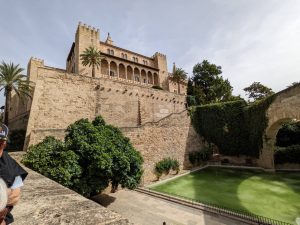
The Cathedral in Palma

Welcome to the Glassblower’s Daughter, my Christmas story for 2022. As with all my short stories, it’s free and available to share as much as you like.

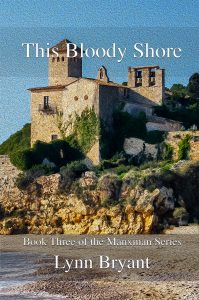
Just a minor warning with this story. Because it follows on directly from the events of my latest Manxman book, This Bloody Shore, my regular readers may want to finish the book before reading this. The story stands in its own right, but there will be one or two spoilers.

I wrote this story during a recent holiday to Mallorca. We stayed near the little town of Alcudia and my husband and our four friends spent the week cycling. I’m not a cyclist so I planned a few excursions then settled down to do some editing on This Bloody Shore while sitting outside the pool bar.

As far as I was aware, I wasn’t likely to find much Napoleonic history in Mallorca. The Royal Navy had a base on neighbouring Menorca and their presence in these waters kept the French away, so Mallorca was never invaded. However, I couldn’t resist doing a bit of digging around to see if they at least sent troops to the Spanish army.

The first thing I discovered was that Mallorca was indeed invaded in 1811, not by the French but by a small army of desperate refugees from the French storming of Tarragona. I was delighted to find such an immediate link to the end of my latest book and it gave me an opportunity to follow up on two characters from This Bloody Shore. 

I spent a lovely week in Mallorca. There was indeed a Mallorcan regiment which went on to fight at Vitoria. There’s a wonderful and historic glassmaking factory and I discovered the story of the Xueta, the descendants of a group of Jewish families persecuted by the inquisition who had still not had their rights restored at the time of this story. I’ve woven these elements into this tale. I hope you enjoy it.

Merry Christmas and Happy New Year to all my readers. It’s been a great year for me, with two books out and I feel as though I’m back on track again. I’m now researching book eight of the Peninsular War Saga. It’s called An Unattainable Stronghold and is set around the 1813 siege of San Sebastian.

The Glassblower’s Daughter

Mallorca, November 1811

It had rained all morning with typical Mallorcan ferocity. Drill and training were cancelled and the one hundred and fifty men of the 13th Mallorcan infantry currently on the island huddled within the leaky wooden farm building they were using as barracks: playing cards, smoking or watching the spectacular display of lightning over the mountains.

Captain Don Bruno Ángel Cortez was glad of the respite, although he would not have admitted it to his ill-assorted collection of non-commissioned officers and men. Since being appointed to the temporary command of two companies of new recruits, he had taken care never to allow them to see any kind of emotion in him other than anger. Ángel had been raised within the rigid structure of an aristocratic, although impoverished Spanish family and had been taught that emotion was a sign of weakness.

Ángel was sometimes envious of his junior officer who seemed to have no such qualms. Captain Don Óscar García, recently promoted after the bloody storming of Tarragona, was from the same social class as Ángel. He had even more reason to take pride in his lineage, as his father was a nobleman and a member of the Cortes of Cadiz, the council which governed Spain in the absence of the Royal family, who had fled the invading troops of Bonaparte. García might have had a comfortable and safe administrative posting in Cadiz but instead he had accepted a post as ADC to General Contreras during his command of Tarragona. Ángel, ten years his senior and a veteran of both Bonapartist and Spanish armies had initially been rather contemptuous of García’s youth and inexperience. The siege and its bloody aftermath had changed that. Óscar García was an intelligent and courageous soldier and the first real friend Ángel had ever had. He was trying hard to hide how much that meant to him.

Ángel was eating breakfast and staring out of the window at the rain when García joined him. News of his promotion had arrived with a consignment of supplies including new uniforms. Ángel liked the red facings of the Mallorcan regiment although he thought it suited García’s dark colouring better than his own fair hair. During their long convalescence recovering from wounds received at Tarragona, García had cut his curly hair short and it made him look older. He set his hat down on a side table, seated himself opposite Ángel  and reached for the coffee pot.

“It’s almost empty,” Ángel said.

García grinned. “Nothing else to do this morning, sir?”

“At least it’s not brandy. I’ll ring for some more.”

“No need, I’ll go…”

García was halfway to his feet when the door opened and a young woman entered the room with brisk steps. She bore a fresh jug of coffee in one hand and a basket of bread in the other. The jug was made from local pottery and looked heavy but the woman set it down on the table without effort. García remained on his feet, bowing to the woman. Ángel got up reluctantly to do the same. His junior tended to treat females with what Ángel considered exaggerated courtesy, regardless of their social position. He had even seen García helping the laundry maid when she was bowed down under a heavy load of wet sheets and towels.

The social status of Señorita Raquel Segura confused Ángel. She was the only daughter of his host who was a prosperous glassmaker. Señor Juan Segura was a master glassblower and the owner of a large factory on the edge of Palma which shipped luxury glassware all over the world, although trade these days was limited by the exigencies of war. He also ran a shop in the narrow streets of Palma and ten years ago had purchased a seventeenth century palace within the city walls.

The Casa Segura was the most comfortable billet Ángel had occupied in his fifteen years as a soldier. The entrance was modest, but the interior was a haven of cool rooms, sunny courtyards and terraces and polished wooden floors. Segura was a generous host and his wife, a stately woman of around fifty, treated the two officers as honoured guests. Ángel knew that his attitude to her daughter was churlish but there was something about Raquel Segura that made him deeply uncomfortable. For the first few weeks of their stay he had tried hard to convey without actually saying so how much he disapproved of her friendly manners and forthright speech. More than four months later he had given up because he did not think she had noticed.

García was holding out a chair. “Please, sit. You should not be waiting on us. Have some coffee.”

After a moment’s hesitation, Raquel sat down with a pleasant smile at Ángel. “Just for a short time, then. I have a busy day.”

García poured coffee into three pottery cups, laughing. “You always have a busy day, Señorita. You make me feel very idle, sitting here watching the rain fall. Captain Cortez is right though, we can do nothing with them in this weather. The field we use for training will be so muddy they will lose their shiny new shoes in it.”

“And you will spoil your shiny new boots, Captain.”

“That was my first consideration of course,” García said gravely. The girl laughed aloud.

“Considering the state of you both when you first arrived here, I think you deserve to be properly dressed again. I have never seen such a sight. Dressed in rags with the manners of a grandee. It was very funny.”

“Are you laughing at my vanity, Señorita?”

“Not at all. I was impressed with your dignity, Captain, given that you had lost your boots during the rescue and there were big holes in the toes of your stockings.”

“I will be honest, Señorita and tell you that I felt none of the embarrassment I should have. I was too ill.”

“You look a lot better now,” Raquel said. “Captain Cortez, have you any more news of your next posting? I know that you write five letters a week to anybody who might tell you when you can escape from us. Have you had a reply?”

Ángel flushed. “No news, only gossip, Señorita. The Mallorcan regiment is serving with the Spanish troops under Lord Wellington but I have received no orders to sail. I’m sorry that we continue to be such a charge upon you.”

“Oh do not be so silly, you are no charge at all. Two skinny officers in this big house with such a huge kitchen. You give our cook something to do.”

“Skinny?” García said indignantly and she laughed and surveyed him from well-shaped blue eyes.

“Well perhaps not as skinny as you were. I only ask because if you are likely to be with us at Christmas time we should inform our friends and neighbours as they will wish to include you in any invitations. Let us say that you will be here. Nobody will be offended if your plans must suddenly change.”

“We are not here to attend parties, Señorita,” Ángel  said harshly. He realised immediately that he had been rude and wondered why Raquel Segura had this effect on him. He then realised he had forgotten to apologise. His friend blushed slightly and gave him a look.

“What Captain Cortez was trying to say, Señorita, is that we cannot be certain of our plans yet, but are very grateful for you kindness and would love to be included in your Christmas arrangements if we are still here.”

Raquel Segura gave Ángel a long thoughtful look. Ángel looked back at her trying not to appear defiant. She was a tall graceful girl of twenty-two with delicious curves and a riot of dark honey-blonde curls which she wore in a loose knot on the top of her head. Ángel had always preferred slender delicate-looking women who did not trouble him too much with their opinions, but over the past weeks he had discovered that warmly tanned skin, a slightly aquiline nose and a laughing mouth could disturb his dreams much more effectively than any of the aristocratic beauties he had admired from a distance.

The girl rolled her eyes and returned her attention to García.

“You do understand, Captain, that was not what he was trying to say at all, don’t you?”

Ángel’s blush deepened but García began to laugh. “It was what he should have been trying to say, Señorita.”

“That at least is true. Well you shall be invited anyway, Captain Cortez, and if you choose to hold up your nose at our poor Mallorcan celebrations we will not miss you so very much. I must go. Some of the ladies of Palma have been making a collection of warm clothing and blankets for the refugees and I am helping to distribute them. Now that the weather is becoming worse, those without shelter are suffering dreadfully. I am going to talk to my father again about trying to find some abandoned buildings for them. Even half a roof is better than nothing in this weather.”

García stood up immediately. “May I escort you? Perhaps I can speak to some of the council members, I have got to know them a little. After all, if I were not in uniform I might have been on the streets myself.”

The girl smiled. She had a broad smile, with no hint of shyness. Ángel  had no idea how to make her do it and wished he did because it always made him feel happier. When she smiled at him it was generally because she was mocking his sour mood or cynical remarks. He wondered how it must feel to be on the receiving end of those smiles as often as García.

As he thought it, Raquel said:

“Captain García, you have been our guests for almost four months now. I would very much like it if you would call me by my name. I am exhausted with this formality.”

García’s face lit up. “I would…that is, would your father not mind?”

“Well I do not suggest that you start calling him Juan, but he will not care what you call me, I promise you. After all it is my name, so only I can choose who uses it.”

“It is such a pretty name. But if I am to do so, I would like you to call me Óscar.”

“Óscar. That is a very good name.”  Raquel turned her gaze to Ángel. “And you, Captain Cortez? Must we remain this formal?”

Ángel  flinched internally and bowed. “I am honoured, Señorita, but I cannot have you calling me by my first name in front of my men. It would be bad for discipline.”

Raquel gave him a long look and a weary sigh. “That is utterly ridiculous,” she said. “Very well, Captain. You may call me Raquel anyway and I shall continue to call you Captain, in the way of a young girl with a much older friend of her father. It will serve perfectly well.”

“Older?” Ángel said, forgetting his dignity. “I cannot be more than ten years your senior.”

“Really? It seems more. I cannot decide if it is your stuffy manners or your old-fashioned hairstyle. Come, Óscar, we should go.”

***

It was still strange to Raquel to see the refugees living on the streets of her city. Palma had always had its share of beggars but they were all familiar; in many cases their stories known to her. Her people, the Xuetes, made their own charitable collections separate from those of the church and Raquel had often accompanied her mother and aunt to distribute food, blankets and clothing to those without shelter during the wet winter months.

These beggars were different. More than a thousand men, women and children had fled to the island from the horrors of the French storming of Tarragona, most of them arriving in the British Royal Navy ships or in Spanish frigates. Some had planned their departure enough to bring baggage and money with them. These were the lucky ones, who filled every hotel, tavern and house to rent in Palma and the surrounding area. They were assimilated quickly into local society, bringing new life to the narrow cobbled streets of the city.

There had always been close trading links between Mallorca and Tarragona and some young men had even gone to fight at the siege, returning at its conclusion with stories of war and terror and, in one or two cases, with a Catalan bride. Raquel loved the changes wrought by the newcomers. Catalan food, Catalan manners and Catalan fashions began to appear amidst the staunchly conservative upper classes of Mallorcan society. Balls and dances were given and public dinners were held to welcome the newcomers and to celebrate their survival.

Raquel did not attend such events but the close-knit community of the Xuetes had their own way of welcoming the strangers. Many men of the middling classes had fought on the walls of Tarragona and had lost families and livelihoods when the French overran the town. They had been prosperous artisans and merchants and many had valuable skills; while others were willing to learn. Juan Segura had taken on three of them as apprentices in his glassworks and provided lodgings over one of the storage barns. Raquel knew others of her people who had done the same. The Catalans came without the historic prejudices of the Mallorcans against the Xuetes and were simply grateful for paid work and a place to sleep.

Too many refugees remained on the streets of the city and villages even five months later, surviving as best they could. They slept in the open along the sea front, begged for coins and took casual work where they could get it. These were the people who had lost everything and had no friends or connections who could help them find work or somewhere to live. Many were women with children, their men either dead in the siege or away with the army with no knowledge of what had happened to their families.

Their plight was bad enough during the hot summer months but as autumn brought cooler weather and regular heavy rain, they had nowhere to go. It distressed Raquel to see them sitting hopelessly under makeshift blanket shelters, shivering in ragged clothing. It was fever season and some died, their bodies quietly buried in unmarked graves.

The local Mallorcan authorities and churchmen held meetings to discuss relief and began to make plans for a soup kitchen to keep the refugees fed through the winter. Señora Segura rallied her own friends to donate and distribute whatever clothing they could spare.

“If we wait for those fools at the town hall, these poor people will all be dead by spring,” she told Raquel. “They need help now, not at Christmastide. And they need more than a few dry blankets which will be soaked and rotting within two weeks. They need places to stay. I am going to make some enquiries. There must be somewhere they can go.”

The boxes and bags of donations were being stored above the Segura glassware shop in the Carrer del Sol. Señora Segura had organised a small army of helpers to distribute the offerings and Raquel took her place in the storeroom making up bundles of essentials to be delivered. Óscar García remained beside her, taking instructions without comment and chatting easily to the women, girls and young boys as he handed out the bundles. Raquel shot him an occasional smile. She was enjoying having him working beside her and thought, not for the first time, what an easy companion García was.

Raquel had welcomed her family’s house guests with interest when they had arrived at the end of July. Both had been badly wounded during the siege and although they were beginning to recover, the journey had left García bedridden for two weeks before he was able to join the family at meals and take up some limited duties in barracks. Raquel enjoyed the presence of two attractive young men in the house, especially because neither was from the restricted society of the Xuetes nor from the wider society of Mallorca where she was forbidden to socialise and could not possibly marry. Raquel was not naïve enough to assume that the rest of Spain was free of either class or racial prejudice but it was obvious that neither García nor Cortez knew anything about the peculiar position of the Xuetes in Mallorca which made a pleasant change. She was sorry when, once both officers were up and about their duties again, her father felt obliged to explain to them.

The boxes of donations were almost empty and the volunteers had all left. Raquel rummaged through a basket and lifted out a knitted lacy shawl with a little sound of appreciation.

“This is very pretty, although I cannot believe it will be useful to keep anybody warm during the winter.”

García came to look. “It is for a baby, I think. The kind of thing my mother used to knit for the children of the estate workers. She spent hours on it. I can remember as a boy that I didn’t understand why she did not just buy them from the market and save herself the time, we had plenty of money. But she told me off when I suggested it. It seems that doing the work with her own hands was pleasing to God.”

Raquel laughed aloud. “I do not suppose that God – or the babies – cared at all. I loathe knitting. Or any kind of needlecraft other than embroidery. I like complicated designs with a lot of colour.”

“I know, I was admiring the tablecloth you are working on. I don’t know how you have the patience.”

Raquel shrugged. “I do not really. When I was growing up I loved to run over to the glassworks and watch the men. Sometimes they would allow me to help with the furnace when my father’s back was turned. I envied my brother so much because he was taught everything.”

“Your father told me that he was killed at Talavera.”

“At Medellin. He ran away when he was nineteen and joined the army as a common soldier. He had to do it that way because he could not apply to join the Mallorcan regiment as an officer.”

“Because he was a Xueta?”

“Yes. All form of public office is forbidden to us, including the army. Some of my people have been trying to fight back against it: they have petitioned the king. With the war, of course, nothing much has happened. Perhaps one day.”

Óscar García watched her as she repacked the few remaining items into a wooden box. Raquel was very conscious of his scrutiny. He had particularly fine eyes and an expressive face. For the first few weeks of their acquaintance, Raquel had thought Cortez the more handsome of the two, but she had decided that slate-grey-blue eyes, silver-blond hair and a chiselled profile were no substitute for laughter and warm admiration. She had developed something of a tendre for Óscar García and since his presence on the island was only temporary, she was making the most of his company.

“There. These things may remain until the Christmas collection. Then we may find somebody in need of them. By then I hope the Mayor and his friends will have managed to get their soup kitchen up and running. In any case, my mother has arranged to double the baking in our ovens each week for the Catalans and any food left over in our kitchen is to be distributed to them.”

“Your family is very good, Raquel. And your Xueta charity seems to work much better than the church here.”

“Oh some of the monks and nuns are doing a great deal. It is just that they cannot coordinate anything without two hundred meetings and personal leave from the Pope. It is infuriating.” Raquel realised that her tongue might have run away from her and shot him an anxious glance. García was a faithful churchgoer, unlike his friend and Raquel had begun to attend more often as an excuse to spend more time with him.

She was relieved when García laughed aloud. “They need you to take charge, it would work much better.”

Raquel preceded him down the stone stairs and looked into the shop. Her father’s shop manager was busy with a customer so she lifted her hand in greeting and turned to lock the wooden door to the store room. The rain had stopped though the slick cobbles were still very wet and slippery. It was an excellent excuse for García to offer his arm and Raquel took it with a sunny smile.

“I was wondering if you have time for a walk?” García asked. “There will be no training today and Captain Cortez will already have inspected the barracks six times and be on his third letter to Cadiz for orders, so I am not needed. We could walk down to the harbour.”

Raquel felt a little lift of happiness. “I should like to. There are always things to do, but I like to get some fresh air every day. My mother scolds me about my complexion and says I will never find a husband with a tanned face but I do not care. Someone will marry me. It is not as though the choice is so great.”

García did not answer and Raquel wished she had not said it. She found it difficult to hide her bitterness about the restrictions of her social position but she did not want it to spoil the little time she had with this charming young man from a different world.

They reached the harbour and García turned to look up at the impressive bulk of the cathedral and the Palace of La Almudaina on the clifftop above.

“So beautiful. I’ve seen many glorious churches during my travels but this has to be one of the most magnificent positions for a cathedral. Part way to God before they even started.”

“I wonder if they thought the same about the Royal Palace?” Raquel said. García grinned and took her arm again, beginning to stroll along the sea front.

“You’re very cynical for one so young, Raquel Segura.”

“I am sorry, is it annoying? I will try to stop.”

“I don’t want you to stop. What I would like to do is ask you a great many impertinent questions that I couldn’t ask your father when he was good enough to explain a little about your people. But I will understand if you don’t wish to answer.”

Raquel stared straight ahead at the jumble of masts of the various fishing boats and pleasure craft moored in the harbour. Further out she could see the graceful lines of a Royal Navy frigate. A boat was rowing out towards it, probably with supplies or a visitor. Raquel was used to the comings and goings of the Royal Navy. Their main base was on the neighbouring island of Menorca but they called regularly for supplies or for the officers to take brief shore leave and they were frequent customers in the shop. Raquel knew that the security of her island home, which had never been touched by the brutal French invasion was due to the presence of the Royal Navy.

“I will answer,” she said. “It feels strange to talk of it to a stranger. Everybody here just knows.”

“A stranger?” García said, and something in his tone made her look round in surprise.

“Oh. Oh no, I did not mean that. I don’t think of you as a stranger at all. That is why sometimes I forget myself and say things I should not say.”

There was a broken section of sea wall, low enough to provide a seat. García steered her towards it and to her amusement, took off his coat for her to sit on. Raquel shook her head, removed her dark shawl and spread it for both of them.

“You will get sea water on your lovely new jacket, Óscar, and then I should feel guilty. This is old and the stains will not show.”

García grinned and put his jacket back on. “I have never met a girl who teased me quite as relentlessly as you, Raquel Segura.”

“Does it annoy you?”

“No, I like it. Sit down, gather your thoughts then tell me what it means to be Xueta on this beautiful island of yours.”

Raquel settled herself. She was shorter than he was and her feet did not quite reach the ground. After a long pause, she said:

“You already know a little. My ancestors were Jewish. You are Spanish, Óscar, you must know what that means. For centuries the persecutions came and went. For a time we would be left in peace, then all would change again and we were hounded from our homes or arrested. Some fled abroad. Many were tried and chose to reconcile with the church and become Catholic. Others were burned to death by the Inquisition. This happened all through Spain.”

“I know,” García said soberly. “It’s shameful. One of the only benefits of Joseph Bonaparte’s rule over my country has been the abolition of the Inquisition.”

Raquel shot him a little smile. “Not everybody agrees with you, especially on Mallorca. The people here are very traditional. Anyway, some of the Jews of Mallorca fled. Others gave in and became true members of the church. And some complied outwardly but kept up their traditions secretly. Those were my people.”

“I’ve heard of that happening in both Spain and Portugal,” García said. Raquel thought that he sounded genuinely interested. She had gleaned enough information about their guests to know that both the Spanish officers were from aristocratic families but while Cortez’ long dead parents had lost both money and property many years ago, Óscar García’s father was a member of the government in Cadiz and connected by blood or marriage to many of the ruling families. Judaism had been publicly illegal and privately despised for centuries by his people and Raquel was surprised that he showed no shock whatsoever.

“Here in Mallorca they have their own traditions,” she said and this time did not attempt to hide her bitterness. “There is a book, published more than a hundred years ago during some of these trials. They call it Faith Triumphant and it details the trials and the verdicts and lists so many reasons why my people should not be allowed to take part in public life or even associate with decent Christians. Even now, they publish it again every few years, just in case it should be forgotten. There is also a public display in the St Domingo Monastery of the sambenets – the tunics they made our ancestors wear as punishment, declaring their crimes. The surnames of my people are listed in that book and in that display, to make sure that the people of Mallorca never forget what disgusting creatures we are.”

She could feel his shock and wished that she had not told it so forcefully although she was not sure that she could have found a way to sound light-hearted about it. Miserably, she thought she had probably ensured that this was the last time he invited her to take a walk with him. It was probably for the best, given that nothing more than casual friendship would ever be possible between them, but she had been enjoying that friendship so much.

García reached out and took her hand. Raquel looked at him in astonishment and then down at their linked hands, aware that she had blushed scarlet and felt suddenly shy which was unheard of for her. She could think of nothing to say.

“That’s appalling,” García said and there was no more laughter in his tone. “I cannot believe that is allowed to happen when we are supposed to be trying to drag our country into the nineteenth century. Can nothing be done, Raquel? And what does this mean to you and your family? I’m shocked. You live well, your father has a prosperous business and is a master craftsman. I’d no idea.”

“Oh the Xuetes have done very well in trade and business. It is the only thing we have been allowed to do, you see. Most will trade with us. Some of the more progressive families will even invite us to dinner privately. But we cannot marry their sons or daughters, only within our own kind. We cannot hold public office, nor enter the church or the army. It is as if they found a glassmaker to build a glass wall about us two hundred years ago. He must have been a master glassblower indeed, that man. The glass is so clear and so perfect. Our sons can see everything on the other side of it but when they reach out to touch they find…just glass.”

“And your daughters?” García said. He sounded angry but he was still holding Raquel’s hand so she decided that he was not angry with her at all. She looked up and met the warm brown eyes.

“Daughters are restricted everywhere, Óscar. You know this. Do you have a sister?”

“No, she died when I was very young. I’m an only child.”

“Then you may not be so aware that even were I not from the Xuetes I could not marry where I chose without the approval of my father and there is no profession I could enter because I am a girl. Although I suppose I could have become a nun. I have an older cousin who will manage the glass factory and the shop and my father hopes I will agree to marry him when I have grown up a little and stopped being so angry.”

“How old are you?”

“I am twenty-two.”

“The same age as me. I think if you were going to stop being angry, you would have done it by now.”

Raquel laughed and was surprised that she could do so, given how upset she was. “I am sorry. This is not a pleasant conversation for a walk along the harbour.”

“I wanted to know. And I’m glad you told me. But there is one thing I still don’t understand. You go to church. I have seen all of your family go to church.”

“Oh we are not really Jewish, Óscar. It’s been two hundred years, most pretence turned to reality years ago. There are some churches we feel comfortable in. St Eulalia is my favourite, it is in the middle of the Segell District…the old Xueta quarter of Palma. My family used to live there but we moved out as Father became more successful.”

“You said there have been attempts to petition the King.”

“The King gave us our rights more than thirty years ago by royal proclamation but then withdrew some of them again because of local protests. The arguments go back and forth. We are not always sure any more what our legal rights are, but what we do know is that the people of Mallorca will never allow us to enjoy them unless they are forced to do so. And while Spain fights against Bonaparte, there are other things to think about. Sometimes I used to wish that my father would pack up and move away. To Barcelona or somewhere our surname has no meaning. But seeing what happened in Tarragona, to these poor people and to you…this is not the time for a grand gesture.”

García was silent for a moment, then looked up and gave her a grin which melted her heart. “Perhaps not. But I may be in the mood for a smaller gesture. Come on, I should get you back. It is going to rain again.”

***

Drill and training resumed the following morning and as if to make up for the brief respite, Cortez pushed the men hard for the whole of the following week. Some of them were not really strong enough for the long hours of work and after a few days, Óscar decided it was time to intervene. He waited until the afternoon siesta when the men had gone to their bedrolls and Cortez returned to the Casa Segura to see if any mail had been delivered. Óscar gave him time to open his letters and set aside a letter from his own mother since he could guess the contents fairly accurately without bothering to read it.

“Captain, we need to talk about the men. Some of them are still not strong enough to train this hard.”

Ángel gave a contemptuous snort. “Well they had better get used to it, García, because they cannot be coddled on the march, or in battle.”

“Some of them only joined a few weeks ago and they came from the streets. From the refugees. They have not eaten properly for months, they need some time to grow strong again.”

“They may not have time,” Ángel said. He was still scanning a letter but now he held it out to Óscar. Óscar took it. He was torn between exasperation at his senior’s intransigence about the men and awareness of how far their relationship had shifted since he had first joined Ángel on Contreras’ staff in Cadiz a year ago. Back then, Ángel would have barked out orders but it would not have occurred to him to share the letter with his junior. Óscar took it and read it quickly then looked up.

“Ciudad Rodrigo? I’ve never been there, have you?”

“I passed through it once. Fortress town on the Portuguese border. We had three days respite after a forced march of four hundred miles and the only things I remember clearly are that it was as hot as Hades, the fish stew was rank and there was a girl at the Golden Bell who could do things with her tongue that…”

“Ángel, for God’s sake!”

Ángel was laughing and the sight warmed Óscar as it always did. It had taken eight months before he had seen the older man manage anything more than a contemptuous sneer. “I can’t believe I can still make you blush, García. Although I found it hard to believe you’d not had a woman at all until you arrived in Cadiz. I suppose you’ve got time to catch up.”

Óscar laughed and handed him back the letter. “I’ve no ambition to catch up to you, sir, I’d be too worried about what else I’d catch along the way.”

“Oh I’m very careful these days. Bored married women and starry-eyed tradesmen’s daughters are my preference. Which of the men are struggling?”

Óscar ignored his flicker of distaste at Ángel’s remark and gave him the names. Ángel shrugged.

“All right. You can move them over to your company, you’ve fewer than I have anyway. Work out what they can do and rest them more often. But talk to them as well. If they can’t improve, they’ll either die on the march or get killed during their first skirmish. We can’t sit down and wait for them halfway to Portugal. If they aren’t strong enough, we may have to let them go. Colonel Julian de Anaya currently commands the 13th Mallorcan regiment and he has written to me about you, García. On arrival, you’ll command a company of your own.”

Óscar looked up quickly, his exasperation forgotten. “Really? I’d expected to act as your lieutenant for a while at least. This is…”

Óscar stopped, a thought occurring to him. He sighed. “Not that I am going to turn it down, sir, but I presume my father arranged that for me? I’m newly promoted and very young. I don’t suppose for one moment…”

“No, he didn’t. The recommendation was mine, based on your performance at Tarragona. I’m not expecting to regret it.”

Óscar was silent for a long moment. He realised that this was the first preferment of any kind that he had won on his own merit and it felt very significant. As he thought it, a glass of wine appeared on the table before him. He looked up. Ángel was holding his own glass, waiting for the toast. Óscar picked up the glass.

“Thank you, sir. I promise you won’t.”

“Good. I’m surprised to see you here. Usually you have slipped away by now to dally with the delectable Señorita Segura who is far too robust to require an afternoon siesta like the rest of her sex. Has she deserted you for a local beau?”

Óscar bit back several acerbic replies. “No,” he said mildly. “As a matter of fact, we have been invited to tour the glass factory this afternoon, sir, if you are interested. There is a visiting merchant from London who is looking to establish regular trade with the island and who may well become a customer. They are putting on a demonstration which will be followed by a grand dinner. Señor Segura would welcome the officers of the regiment, if…”

“Señor Segura had nothing to do with that invitation, boy. Go by all means, I’ve letters to write. But be careful with that girl, she has her eye on you. Not that I blame you, she looks very enthusiastic. But she’s utterly unsuitable marriage material and you’re far too gentlemanly to…”

Óscar set down his glass with a sharp clink on the table. “Sir, please stop it.”

His senior regarded him with raised eyebrows. “Stop what? I’m not serious, boy, I know you’ve more sense than that. I just don’t want a scene with her father before we leave because you’ve unintentionally compromised his ewe lamb. Not that she’d object, mind…”

“That’s exactly what I’m asking you to stop, sir, and you might not be serious but I am. These people are our hosts and they’ve been very generous. I hate the way you speak about them as though they’re automatically inferior because they made their fortune in trade. It’s outdated, unnecessary and rude. I can’t help the way you think but I’m asking you not to share it with me. I don’t see it the same way.”

Ángel did not speak for a moment. He picked up his wine glass and drained it then went to pour another from the decanter on the polished sideboard.

“I am suitably chastised,” he said dryly. “Although I think you would find your father would be horrified at the way you’re running around with a tradesman’s daughter.”

“I’m sure you are right, sir, but I’ve already made it clear to my father that I’m a man, not a boy and I’ll live my life the way I want. Otherwise I’d be dancing attendance in the drawing rooms of Cadiz instead of fighting for my country. Like you, I’ve given blood in that cause and I think that gives me the right to choose my friends and to take exception to you insulting them for your entertainment. You don’t have to agree with me. You just have to respect my request and keep it to yourself.”

There was a brief silence then Ángel  reached out, picked up Óscar’s glass.

“That was a very long speech.”

“I know.”

“It was also pompous.”

“I don’t care. I meant it.”

To Óscar’s surprise, the older man gave a faint smile. “Whatever happened to that very respectful young officer who joined me in Cadiz and took on every unpleasant job I landed him with? You were like an enthusiastic but very well trained puppy. I rather miss that at times. But you’re a lot more use these days. I’m not going to change my opinion, García. But I’ll do my best to keep it to myself.”

“Thank you,” Óscar said in surprise. “Are you coming to the glassworks?”

“No, you can give my apologies. I need to reply to Anaya and I want to start listing what supplies we’ll need for the journey and plan our route.”

Óscar could not help laughing. “We’ve two months, sir. You could spare an afternoon.”

His commander smiled and shook his head. “You won’t enjoy it as much if I’m there,” he said. “Go and get changed or you’ll be late.”

Halfway through the afternoon, Óscar realised that Ángel had been right and that he was enjoying the day far more without his senior officer’s faintly disapproving presence. He had visited the factory once before with Segura but it was the first time he had seen a proper demonstration of glass blowing and he was fascinated.

Mr Henry Summers, the English merchant, was a stocky gentleman in a plain suit and a down-to-earth manner. Óscar had wondered what kind of man travelled abroad during wartime in search of new suppliers and new markets when most merchants remained safely at home but he quickly decided that Summers was a man who would always want to be personally involved in the running of his many enterprises. He spoke no Spanish but very good French and he and Señor Segura conversed easily in that language.

The tour took in every aspect of the glass works, from the stokers at the furnace, through the foundry, to the moment when the liquid glass first formed in the blowpipe. The glassmaker chosen to demonstrate the process was Raquel’s cousin Miguel, who had recently attained the title of master glassblower after his three year apprenticeship. He was around thirty, a tall willowy figure who managed the blowpipe with considerable grace. Óscar watched as he turned the pipe from side to side, manipulating it to create the effect he wanted. He seemed supremely confident, a man sure of his own ability and his place in the world. Óscar thought Raquel could do a lot worse for a husband. She remained beside Óscar, explaining every process as they followed the tour and Óscar wished he could hold her hand and tell her just how much he could not stand the thought of her marrying this perfectly good man when she should be with him.

Afterwards they went to watch the final stage of the process which was the engraving of the fine goblet, a task which Señor Segura chose to perform himself. He had designed an elegant motif involving the coat of arms of the city livery company to which Summers belonged, with the merchant’s initials on the other side. Óscar watched the Englishman’s face as he studied the goblet, firing questions at Segura in rapid French and thought that Raquel’s father had found himself a new customer.

It was the first time Óscar had really allowed himself admit his intentions towards Raquel and it was both painful and joyous. His brief quarrel with Ángel Cortez earlier had crystallised feelings that had existed for months. It occurred to him that Cortez, who was not generally perceptive about the feelings of others, had been ahead of him on this occasion.

Óscar did not share Ángel’s opinion of the unsuitability of Raquel Segura as a wife, although he was sure his parents would. His mother had a list of potential brides for her beloved only son and if Óscar had obeyed his father’s wishes and taken up an administrative post in Cadiz, he knew she would have attempted to force the issue by now. As it was, every letter she wrote reminded him that it was his duty as his father’s heir to marry a girl of his own class and provide heirs to the title and the considerable estates.

This was even more urgent given Óscar’s gallant if wholly unnecessary determination to remain in combat. He had almost died at Tarragona and if it had not been for the intervention of Ángel Cortez and the Royal Navy he would have spent the rest of the war as a French prisoner. Was it not possible, his mother wondered, to return to Cadiz even for a short time to do his duty by the family? She could select the bride and make the wedding arrangements for him and his family could take care of their pregnant daughter-in-law if Óscar insisted on returning to fight.

Óscar was revolted by the idea of such an arrangement and had told his parents so, in terms that they could not possibly misunderstand. His father did not mention the matter again but his mother brought it up in every letter, bemoaning his intransigence, until Óscar no longer bothered to read them. He knew perfectly well that Cortez was right. His family would be appalled if he presented them with the daughter of a tradesman as his bride, no matter how wealthy she might be. He was not sure that her Xueta heritage would matter as much because he suspected his mother would know nothing about it anyway.

It did not matter to Óscar. He disliked the idea of being estranged from his family because he loved them but the title meant nothing to him. He supposed that one day he had looked forward to settling down on his family estate in Andalusia but he had known for a long time that he had already moved beyond the traditional values of his parents and he thought that Spain would move with him. If he could not live the life he wanted with the woman he loved beside him, he would choose a different life. What he was not sure was whether Raquel Segura shared his views and would be willing to take that enormous step with him, especially if her family also disapproved.

She was seated beside him at dinner, a lengthy meal with enormous amounts of food and wine. Óscar drank moderately and spent much of the meal flirting with his companion. At the end of the day, Mr Summers needed to return to his ship in order to catch the tide the following morning and his host offered to escort him to his boat personally. Many of the guests chose to follow and it became an impromptu procession lit by torches through the darkened streets of Palma.

Óscar walked beside Raquel. One of the younger men was playing music on some kind of wooden flute and it turned the procession into a parade. Occasionally a shutter crashed open and there were furious shouts from respectable citizens trying to sleep but the Xuetes paid no heed. Summers walked beside his host looking slightly bewildered but thoroughly delighted at this send-off and at some point, Óscar reached out and took Raquel’s hand in the darkness. She did not attempt to draw away but moved closer to him. They walked in step together and in step with the procession, waving as the small boat pulled away from the quay and its lantern was no more than a flickering yellow light on the water.

The party broke up after that, saying goodnight and thanking their host before returning to their own homes. Óscar and Raquel followed the Segura party back through the narrow streets to the Casa Segura. It was a clear December night and very cold and Óscar paused to remove his coat, draping it around Raquel’s shoulders. The brief pause meant they had dropped behind the rest of the group and as Óscar went to take her hand again, she moved closer and drew his arm about her shoulders. They walked slowly and Óscar wondered what her father would say if he took it into his head to turn back to find out what delayed his daughter.

The door was still open when they reached it, the doorman sleepy and uninterested and waiting to lock up. The rest of the family seemed to have gone straight to their beds. Raquel removed Óscar’s coat and handed it to him with visible reluctance.

“I do not want this night to end,” she said.

Óscar took the coat and put it back around her. “Ten more minutes,” he said recklessly. “There will be nobody on the terrace overlooking the bay.”

The blue eyes widened and then she laughed softly and took his hand. “My mother will not be impressed.”

“Nor would mine, but she’s not here. Come along.”

It was very cold out on the wide, tiled balcony but the view of glittering lights along the shore and out on the ships and boats anchored in the bay was well worth it. Óscar stood with his arm about her with her head on his shoulder, the dark gold curls tickling his jaw. He had not thought to speak this soon but it occurred to him that perhaps he would never have such a good opportunity again and at least if they were about to be interrupted by a furious parent, he could honestly claim honourable intentions.

“Raquel – I don’t want this to end either.”

She turned towards him and into his arms. Óscar had no idea if it had been intentional or not and did not care. He bent his head to kiss her and she reached up and put her arms about his neck, drawing him closer.

They stood together for a long time and kissing her settled any lingering uncertainty. Eventually he drew back a little, still holding her hands. There was no light on the balcony and he could just make out her features in the dim light from the window above the terrace. Óscar wondered suddenly whose room that was but he decided he did not care. He took a deep breath.

“Raquel, I shouldn’t be here kissing you on the terrace when I’ve not spoken to your father and I’ve no idea what he’ll say. But given that I’m about to set off an explosion in my family that they’ll probably hear in Paris, I need to be sure of you first. You must know how I feel about you. Will you be my wife?”

He felt her hands tremble in his and for a panicked moment he thought she was going to pull away and flee, then her fingers tightened around his and she gave a little sigh.

“Oh Óscar,  I’m very glad you spoke to me first. I’ve no idea either. I don’t even know if we can do this at all. But if we can’t, it won’t be because I don’t love you.”

He drew her closer again. “If you love me, querida, we can do it. I’ll need to explain my circumstances in full to your father, but to you all I can say is that I’m either a very good marital prospect or utterly penniless apart from my officer’s pay which isn’t very much. But whatever happens, I’ll find a way to support you, I promise.”

She kissed him again and he heard her soft laugh in the darkness. “We won’t be penniless, Captain. I’ve no idea if my father will be disappointed that I don’t marry Miguel, but he’d never cut me off without a penny. I am more concerned about my status as a Xueta. I’m not even sure that I am allowed to marry outside my people.”

“They cannot stop you. Legally, that restriction ended years ago along with a number of others. It has been perpetrated by the Mallorcan authorities and upheld by their courts in direct contravention to the dictates of the Royal decree. If we can’t find a priest to marry us here, we’ll take a Royal Navy ship to Menorca and get married there, they don’t have any of these absurd restrictions.”

“How are you so sure?”

“I wrote to them. I’ve a friend in the Royal Navy, we met in Tarragona. He’s in England at present and when I began to think…anyway, I wrote asking his advice. His Captain sent a letter of recommendation to the British authorities there, they’ll give us any help we require. I’d rather marry you here with your family and friends in attendance, but…”

“Father Dominic would perform the service, I am sure of it,” Raquel said. She sounded breathless. “I know you must soon leave. I do not wish to wait, Óscar. Unless your family…”

“That may take a while. I will write to them, but I will not wait for their approval, providing I have yours. Do I?”

“Yes.”

Óscar bent to kiss her again, no longer feeling the cold. After a long, very happy moment, he drew back reluctantly.

“We should go inside. Tomorrow I will speak to your father, Raquel, and then…”

“That will be quite unnecessary,” a voice said from above and both Óscar and Raquel jumped. Óscar stepped back, still holding her hand and looked up at the illuminated window. It stood open and Raquel’s father was leaning on the window ledge in shirt sleeves.

“Sir. My apologies. I had no idea. I mean, I would not have…”

“Captain García, it is completely unnecessary to tell me that you would not be kissing my daughter on the terrace if you knew I could see you. I accept your word for it. Raquel, you are wearing the Captain’s coat. Give it back and go to bed, it is past midnight. Tomorrow we will have breakfast together and discuss how this will work. You will not go to Menorca, you will be married here from our home. Congratulations, my children, I think you will be very happy. Now let me sleep, I am tired.”

***

News of the betrothal reached Ángel through his servant. Manuel had been a refugee from Tarragona, an underfed fourteen-year-old orphan who had attached himself to Ángel aboard the Royal Navy ship and had somehow never left. Ángel had dined in a tavern in the city the previous evening and had watched the procession pass with a curious sense of regret. He wished that he had felt able to accept the invitation and envied García his easy ability to mix with whatever company he found himself in.

He stayed out late drinking and was trying to decide whether to join his hosts for breakfast or get something in town on his way to the training field, when Manuel appeared with a jug of hot water, a welcome cup of coffee and the news that the family was all at breakfast celebrating the betrothal of Captain García to Señorita Raquel. Ángel almost dropped his coffee and scathingly told Manuel not to listen to gossip, but when the boy had gone he sat sipping the scalding black liquid and quietly seethed.

He had been well aware of García’s infatuation with the Segura girl and even more aware that she was a woman who knew how to make the best of her opportunities. From time to time, Ángel had considered making an attempt on the girl’s well-guarded virtue himself. She pretended indifference but in the early weeks of their arrival she had been just as willing to flirt with him as with García. He had not responded and she had withdrawn, concentrating all her efforts on the younger man. Ángel had not expected them to succeed so spectacularly.

Unable to bear the festive atmosphere and the discussion of wedding plans, Ángel went to an inn for breakfast and then rode out to barracks. He was not surprised to receive a note from García on his arrival giving him the news and excusing himself from duty for the day. Ángel  badly wanted to scribble a scathing response and send it back with the Segura servant but he stopped himself. He had made his views clear to García and the boy had ignored him. He had no legal right to interfere in the marriage of his junior officer and if García’s letter were to be believed, he could not even complain that it would delay their return to duty. The earliest a transport could be provided to take them to Oporto ready for their march across to Ciudad Rodrigo was mid-January. García’s letter informed him that Señor Segura hoped to arrange the wedding before Christmas to give the young couple some time together.

Ángel read García’s letter again. He had apologised for not catching Ángel that morning to tell him in person and hoped to have his company that evening for a bachelor dinner at their favourite tavern to celebrate. Ángel was surprised at how furious he was. It was not really his business if García chose to ruin himself and it would make no difference to their working relationship; the boy was a professional. But there was something about the girl that bothered Ángel and he decided he needed to speak to Raquel Segura himself.

***

Raquel had just returned from the market when she met Ángel Cortez in the hallway and sensed that he had been waiting for her. She paused politely and he bowed.

“My apologies, Señorita, I can see that you are busy. I was hoping for a few moments of your time.”

Raquel felt her heart sink. She could guess his views on her betrothal and she had no particular wish to hear them but she knew that Óscar was dreading the conversation and it occurred to her that she might be able to blunt the worst of his senior’s wrath if she allowed him to take it out on her. With a sigh she handed her basket to the maid and led the way out onto the eastern terrace, a peaceful courtyard with a small fountain in the centre and several tiled tables and basketwork chairs.

“Won’t you sit down, Captain Cortez? Would you like some wine?”

“No, thank you. This will not take very long, Señorita.”

“I’m glad about that, since it is obvious you want to shout at me. Very well, let’s get it over with.”

Cortez fixed her with his cool blue-grey eyes. “I should not need to say this to you. Nothing could be more unsuitable than this marriage. You are not his equal in birth or fortune. Because of you his family will cut him off. You will ruin his life and his happiness and what can you bring him in return?”

“I bring him love, Captain Cortez. I understand that has no meaning for you, but in my family it has always been very important. And apparently Óscar agrees with me.”

“Love?” Cortez almost spat the word. “Is that what you think he feels for you? Oh, I’ve seen the way he looks at you and I’ve no doubt that he has feelings, but I promise you he will satisfy those after a week or two in bed with you and will be left with a lifetime of regret. Do you think that a woman like you will be able to hold a man like him?

Raquel had not intended to respond, but she could feel herself getting angry. “A woman like me? And just what kind of woman am I, Captain? I am curious: is it my face, my fortune or my character you object to?”

“It is everything. Your people, although good enough, are not even accepted here on Mallorca. You are outcasts. It is not your fault but that will not help García when he finds himself shunned. Your fortune is well enough for another tradesman, but it is nothing compared to his birth and lineage and everything he will inherit if he marries a woman of his own kind.”

“If, of course, there is anything left of his family fortune by the time the French have ravaged their way through Spain. But do go on, I’m charmed by what passes for your reasoning.”

“As for your character, I think you are a scheming young woman who has taken advantage of a naïve boy to catch herself a husband who might help her raise herself to a better position in life. I do not think you care for him at all. If you did, you would do the decent thing and withdraw from this.”

“Well if that is your hope, you are going to be very disappointed, because I have every intention of marrying him. What happens after that will be up to him. I will go where he goes, follow where he leads. I love him. A man like you cannot imagine what that means. I have heard enough, I am leaving.”

Cortez stepped between her and the door. “Not just yet, Señorita. There was one more item on your list. Your face – and the rest of you. Now that is the reason we are in this situation. On that score I have nothing at all to complain of, I have been admiring it myself for a while now. If I had known you would go this far, I would have taken you to bed two months ago when you were casting lures in my direction. I would have enjoyed you very much and García would have realised what you were like. I should have done it then but perhaps after all it is not too late.”

It had not occurred to Raquel that he would touch her, which made her slow to react. Before she had time to utter more than a squawk of protest she was in his arms, his mouth covering hers. There was none of Óscar’s gentle consideration in this man. His hands moved down her body with a familiarity that appalled her and his mouth bruised hers, forcing her lips apart, his tongue invading her mouth.

Frozen shock was followed by a wave of utter fury. Raquel could not easily scream with his mouth on hers but she managed to make a sound in the back of her throat which surprised even her and caused Cortez to step backwards in astonishment. He stood looking down at her, seeming almost bewildered by what he had just done.

Raquel gave him no time to speak. Stepping forward she lifted both hands and shoved him hard in the chest. He staggered backwards and Raquel began to hit him with both fists, pummelling him as hard as she could, not caring what part of him she connected with. Cortez put up both hands to protect his face and then yelled in pain as her fist struck his left hand. Raquel knew it had been badly injured at Tarragona and that for a time, he had thought he would lose the use of it. His cry made her pause for a moment and Cortez took the opportunity to dodge behind a table.

“Stop it, you’re going to cripple me, you little termagant. In fact I think you’ve already done so.”

“Come out from behind that table and I will castrate you!”

“Then I’m not coming out.” To Raquel’s fury, she could hear laughter in his voice. “Stop. Just stop and breathe, you’re going to hurt yourself.”

“I am going to hurt you!”

“Just listen to me. Listen for a moment. I’m sorry. I’m so sorry. I’ve no idea why I did that, it was the most stupid…”

“I know why you did it,” Raquel spat. “It is because you are an animal, a creature who thinks it is your right to bully women, to intimidate those weaker than you, to hurt…”

“Raquel, please stop. That’s not it. I mean I am…perhaps I am some of those things. I am not a good man. I am not like García.”

“No, that you are not!”

Cortez was nursing his hand against his chest as if it genuinely hurt. His eyes were on hers again but his expression was different. “I will go. You will not want me in this house after this. I can find lodgings in town or near the barracks until we leave and I promise that I will not trouble you again. García will think I have left because I disapprove of his marriage. Raquel, you should let him think that. Don’t tell him…”

“Of course I am going to tell him, you imbecile. How else do I explain this?” Raquel touched her lip which was bleeding a little.

“You are a very intelligent woman, you will find a way. As I will find a way to explain why I cannot use my hand for a week. If you tell him I did this, he will challenge me and I must accept. We will fight and he will not be content with first blood, he will want to kill me.”

“I hope he does.”

“He isn’t going to kill me in a duel, Raquel, but I could very easily kill him. Don’t do it.”

“Are you threatening me?”

“No, I am telling you that with a sword in my hand I am all the things you accuse me of being. I cannot always stop.”

Raquel felt a little chill and her anger seeped away into sudden fear. “You would kill him? Your friend?”

“He’s probably the only friend I’ve ever had. Possibly the only one I will have. And I have just realised that if I had the opportunity to kill him to prevent him from marrying you, I might well do it. Let me go, Raquel. Go and find him. Take care of him for me and when we leave for the war I’ll do my best to take care of him for you. It is the only thing I can do for you. Let me do it.”

Raquel stared at him. She was no longer afraid and no longer angry but she was utterly bewildered. “That makes no sense.”

Unexpectedly his expression softened into something like a smile. “None at all, but men often make fools of themselves when they…never mind. I do not want to hurt him, Raquel, but I cannot bear the thought of hurting you.”

Abruptly Raquel felt the beginning of shocked understanding. Her brain rejected it immediately.

“I do not believe you care what happens to me.”

“It is much better that you continue to believe that.”

Raquel did not respond. Memories were coming back to her, flashes of the past four months and she was horrified to realise that in fact she was having no trouble believing him at all. Wrapped up in her growing feelings for Óscar García, she had missed it entirely; but the signs had been there. She could see him watching her come to the realisation that she had been utterly blind.

“Oh. Oh no. Captain, are you telling me that you…”

“Don’t say it,” he said quickly. “I don’t ever want it to be said. You once gave me permission to use your name, Raquel and it seems I have accepted it. Can you not do the same for me? Just this once.”

Raquel realised that her throat was choked with tears. “Ángel…I had no idea…”

“My dear, I had no idea either until just now. But even if I had, you would still have chosen to marry Óscar. You are, as I said earlier, a very intelligent woman. I need to leave now. I need to be alone. Please.”

Raquel nodded, feeling the tears spill over onto her cheeks. He stepped forward, took her hand and bowed over it with an old fashioned courtesy he had never showed her before.

“Congratulations on your engagement, Raquel. Be happy. You both deserve it.”

***

They were married three days before Christmas and the twelve days of the season were to be an extended celebration before their inevitable separation. Óscar had written to his parents and received no reply; although there had been plenty of time for a letter. He chose not to dwell on it. The Segura family welcomed him as one of their own and a long session with Raquel’s father discussing finances and settlements made it clear that even if the García family chose to cast him off entirely, he could make a good life with these people. Privately, Óscar was wondering if he might make a career in the law. He had spent many hours studying the various legal documents pertaining to the status of the Xuetes of Mallorca and he found it unexpectedly fascinating.

The wedding took place in the church of St Eulalia. Nobody raised any public objection to it and one or two of Óscar’s acquaintances in the town outside of the Xueta community even went so far as to congratulate him. Others did not mention it at all but continued to treat Óscar with courtesy. As long as there were no repercussions for his wife and her family, Óscar did not really care what they thought.

His relationship with Ángel Cortez was still fragile but seemed to be improving again. Cortez had said little about the marriage other than to express concern about its effect on Óscar’s future inheritance. He had expressed his disapproval more tangibly by moving out of the Segura house and taking lodgings close to the barracks but he managed it with surprising tact, citing pressure of work as the cause and the Seguras pretended to believe him. He did not attend the wedding but sent an elegant gift of Castilian china which must have cost more than he could easily afford. Óscar recognised an olive branch and thanked him warmly.

The Segura family usually attended Mass at St Eulalia on Christmas Eve but the two Spanish officers had been invited weeks earlier to attend the traditional Mallorcan midnight service at the cathedral. Ángel, who had a profound dislike of all religion had sent a civil refusal but Óscar had been looking forward to the service. He had been told of the singing of El Cant de la Sibil-la which was a Gregorian melody introduced to the island in medieval times. It was sung virtually without instruments and the singing was led by a boy in medieval costume bearing a sword.

“A sword?” Óscar enquired, when his wife explained the tradition. “That doesn’t sound very much like the birth of the Christ child, Raquel.”

They were lying late in bed, listening to the sound of the household coming to life around them and Óscar had been wondering how he was going to be able to rise from this bed in a month’s time and leave her behind. He had never been this happy in his life.

“I believe the song is about the final judgement,” Raquel said cautiously. “Although I have not been personally of course. I am told that the service and the music is very beautiful. You should go, Óscar and then you can tell me all about it. I’ve often wished to hear it.”

She sounded wistful and Óscar felt a little pain about his heart. He leaned over and kissed her. “Just to remind you that until I have to step onto that ship, I am not going anywhere without you. Come with me.”

“Óscar, I cannot. No Xueta has attended Mass in the cathedral that I know of. We have our own churches.”

“Who say the same Mass to the same God. Come with me.”

Raquel smiled in the way that melted his heart every time she did it. “I love you but you have made your gesture, Óscar and we are married. It is enough.”

“I did not marry you as a gesture but because I love you. And it will never be enough until that book is burned to ashes and that display in St Domingo is torn down. When I come back from the war I shall attend to both personally. I won’t force you to come, Raquel, but I wish you would. I would like to show the world how proud I am of my wife.”

“What if they turn me away?”

“Then they turn us both away and I will make them regret it one day. It’s up to you, querida. I don’t want to spoil your Christmastide.”

“I have you, Óscar. Nothing can spoil this Christmastide.” Raquel sat up. “Very well, I will come. The worst that can happen is a little embarrassment and the best is that I will attend Mass in my own cathedral in my own city for the first time. If you can be brave in battle, Óscar, I can be brave in this small way.”

She was nervous all the same. Óscar could feel her hand shivering slightly in his as they walked through the well-lit streets, strung with lanterns for the season. His father-in-law had shaken his head at the idea but made no attempt to dissuade them.

“I do not think they will let you in, Raquel, but if you are determined, then go. It will be one more protest at the way we are treated and if they turn away an officer who has shed blood for his country and it becomes known, it can only help our cause.”

“I’ll make sure it is known,” Óscar said grimly.

Segura laughed and clapped him on the shoulder. “My daughter married a warrior,” he said. “But then so did my son-in-law.”

Heads turned as they approached the brilliantly lit main doors to the immense gothic cathedral. Already the organ played inside and hundreds of candles lit up the space. Through the open door, Óscar could see the huge vaulted ceiling and the glorious colours of stained glass reflecting back the candlelight. By the door he could see a gaggle of robed priests in anxious conversation and several members of the island council in their finest clothing looking grave and unsure. Óscar thought they were plucking up the courage to step forward and tell him that he could not bring his wife into the Mass. He wished he could punch them but he knew that would upset Raquel more, so he steeled himself for the embarrassment and prepared to make a dignified retreat.

Before any of the men was brave enough to step forward, there was an approaching sound which was so familiar that for a minute or two Óscar did not even realise how incongruous it was in this holy place at such an hour. He could see other people stopping, turning to look and he knew suddenly what it was and spun around, putting his arm around Raquel. He could not believe that somehow they were sending out the city watch to make an arrest but the sound of marching feet was unmistakable and Óscar decided that if any man put a hand on his wife, he would kill them.

It was not the city watch. To Óscar’s complete astonishment, one hundred and fifty men of the 13th Mallorcan Infantry were marching in, wearing dress uniform. A familiar voice rapped out an order and the men halted by the door of the cathedral.

Óscar could not believe his eyes. He had never seen Ángel Cortez so neatly turned out. He had cut his silver blond hair short which robbed him of some of his piratical looks and made him look like a professional soldier.

Ángel stepped forward and saluted and Óscar responded automatically.

“Captain Cortez. Er…have you come to Mass?”

“We have all come to Mass, Captain García. In honour of your recent marriage, the men of the 13th Mallorcan Infantry are here to celebrate the birth of Christ and to pay tribute to their brave officer and his beautiful and very courageous wife.” Ángel  turned and raised his voice. “Sergeant! Salute to the Captain’s lady!”

There was a swish and clash of steel as swords were drawn and bayonets lifted in salute. Óscar responded, his throat tight. Around them was complete silence apart from the haunting beauty of the organ music floating on the still night air through the cathedral doors.

The Sergeant called the men to order and Ángel Cortez turned to Óscar and his stunned wife. “Shall we go in? The Mass will be starting soon and I’ve no wish to miss any part of it. Sergeant, march the men in and make sure they behave.”

“Their bayonets, sir?”

“Oh.” Ángel looked momentarily nonplussed and beside him, Oscar heard his wife give an undignified snort of laughter. Surprisingly, Ángel grinned instead of glaring at her. “I had forgotten it isn’t usual to take weapons into a cathedral.”

“I think Tarragona may have confused you,” Óscar said. “They can pile them beside the door, Sergeant. Carry on.”

A robed churchman stepped forward to escort them to a pew. Ángel seemed to hesitate for a moment when ushered to sit beside Raquel and Óscar wondered if he felt awkward give his open disbelief in God and everything the church represented, but Raquel smiled at him somewhat mistily and he came forward and sat beside her, while his men shuffled into pews further back.

Óscar stopped trying to make sense of it and gave himself up to the beauty of the cathedral, the glory of the music and the deep sense of spiritual connection he felt during the Mass. During the pure notes of El Cant de la Sibil-la he felt his wife take his hand and glancing at her he saw that her cheeks were wet with tears.

When it was over, Óscar took his wife’s hand and followed Ángel outside. They watched as the men set off back to barracks. When they were out of sight, Ángel offered his arm to Raquel. Wearing a particularly implacable expression he led her towards some of the departing worshippers. Óscar watched in awe as he proceeded to introduce Raquel to the entire council of Mallorca including the High Judge. Óscar thought he looked ready to draw his sword if any man dared to refuse the introduction. None of them did.

Walking back to the Casa Segura, Raquel said:

“Captain Cortez, how are you spending Christmastide?”

“Very comfortably, Doña Raquel, at the home of Señor Moreno and his family. Though I thought I might accompany you to Mass at the cathedral again on the festival of the Three Kings.”

Raquel laughed aloud. “Come to St Eulalia with us and dine with us afterwards. It will be less dramatic, I promise you.”

“Doña, I…”

“Please, Ángel. Just one evening before you have to leave. If you could do this, you can do that. It would mean a great deal to both of us.”

Ángel gave a slightly crooked smile. “Very well, Doña Raquel. Enjoy your Christmas. García, you have put on weight but I expect the march from Oporto to the Portuguese border will soon sweat that off you.”

Óscar stepped forward and drew him into a quick embrace. “You can yell at me all the way if you like. Thank you, Ángel. You’re a very good friend.”

Ángel looked startled but did not pull back. “Not always. Not that often. But it pleases me that you think so. Goodnight, Captain García. Doña …”

“Raquel.”

The crooked smile came again. “Raquel. Please know that the sight of you marching up to that cathedral daring those old fools to do their worst, will stay with me all my life.”

“Thank you. I once spoke of living behind a glass wall, Ángel. Tonight, you broke it. Only one pane of glass, perhaps, but for me it was a very important one. I will never forget that.” Raquel’s solemn expression vanished and the mischief was back. “And I am glad you took my advice about your hair. It suits you.”

Angel raised a hand to touch his hair involuntarily then stopped himself and gave her an unconvincing scowl.

“It is as well that we’re leaving soon, Doña Raquel or I shall have no dignity left. I wish you a happy and peaceful Christmastide. Goodnight.”

Óscar watched him go, his boots echoing on the old cobbled streets.

“I cannot believe he did that,” he said. “He loathes the church, I’ve never seen him set foot inside one unless he intended to use it as a fortress or a hospital.”

“I do not think he came for the Mass, Óscar.”

Óscar looked down at her. He thought she looked a little sad and wondered if she was upset at Ángel’s stubborn refusal to spend Christmas with them.

“He did it for both of us, Raquel. He has got over his objections to our marriage, I promise you. And it was never about you, it’s just his stupid, outdated notions of social class. In fact he likes you more than I realised.”

Raquel smiled. “As long as you like me, Óscar, I really do not mind.”

Óscar grinned, kissed her and drew her inside. The thought of his impending departure saddened him, but it was Christmas and she was with him and he intended to enjoy every moment he could.

Waterloo 2022: Wellington Napoleon and Mont Saint Jean

The Wellington Museum

Waterloo 2022: Wellington Napoleon and Mont St Jean


Today’s tour started at the Wellington Museum which is housed in Wellington’s Headquarters in Waterloo itself. I’m going to digress from being a tour guide here now and mention the fact that having been round the various museums here, I am quite grateful that there is in fact a Wellington Museum at all.

I’ve seen various commentaries online about the huge local concentration here on Napoleon rather than the Allied commanders. People who complain about this are generally mocked for being Wellington groupies and undoubtedly in some cases that’s true, but it is striking, particularly in the various gift shops. I think it might have improved very slightly since I came four years ago in that it is now possible to buy one Wellington item in the main gift shop but that is completely overwhelmed by the vast amount of Napoleon memorabilia. Personally I don’t really need any more souvenirs but the difference is striking.

I have no idea whether there’s something political about this, whether it’s considered Napoleon was the most important person at Waterloo given that he was an Emperor or whether they just don’t think Wellington or Blucher memorabilia will sell.  I do think it should probably be redressed, but if it’s a marketing decision then I guess that’s a good enough reason. All the same, Napoleon as a dog was a bit much for me.


Not the best likeness, but it gets the point across…

The Wellington museum is a poignant reminder of the human cost of battle. Wellington’s staff had done surprisingly well through the long years of the Peninsular War but his luck ran out at Waterloo. This was where Kristine’s knowledge of the people came into its own and the excerpts from Wellington’s letters were very emotional. During the years I’ve been writing the Peninsular War Saga, I’ve got to know some of these young men as if they were my own fictional characters and it was surprisingly painful to think of Alexander Gordon’s death and Fitzroy Somerset’s agonising operation to amputate his arm. There’s a lot of information about Wellington through the various sites, but in this house I found it much easier to imagine Wellington the man, struggling to write the early part of his Waterloo dispatch while receiving news of the death and wounding of his friends.

Across the busy road from the Wellington Museum is the elaborate church which was there at the time of the battle and used, like many churches, as a hospital to receive wounded men. Those of you who have followed me for a while know that I have a thing about old churches and this one was particularly peaceful, with a number of memorials to the men who fought and died during the Waterloo campaign. Memorials at this time tended to be paid for either by the family of the dead man or by subscription through the various battalions and regiments, so not surprisingly more of them relate to the wealthier regiments. Very few of the memorials even mention the NCOs and enlisted men apart from this one in the church, which may well be the first of its kind.


After lunch we moved on to Napoleon’s Headquarters in the farmhouse of Le Caillou, where Napoleon and his staff spent the night of June 17, 1815. The museum collection is spread over five rooms  and tells the story of the Emperor’s actions in the hours before Waterloo. There are a number of artefacts relating to Napoleon, though Gareth queried whether some of the furniture was authentic given that the Prussians reputedly set fire to everything on their way through after Napoleon’s departure. Still, it gives a good sense of how the farm might have looked at the time.

In the garden outside the farmhouse are one or two memorials. There is also an ossuary, which is a small building intended to serve as the final resting place of human bones. Ossuaries are often used where burial space is scarce but in this case it has become a depository for bones found on the battlefield over the years. I’ve seen photos of this but found the real thing unexpectedly moving.


Mont Saint Jean today

The final stop of the day was the medical museum, located at Mont Saint Jean, which was situated at the back of Wellington’s lines and became the main field hospital. We hit a slight problem here as it turned out the museum and attached bar had just moved over to winter opening hours and were closed. Fortunately Gareth’s local knowledge saved the day and after a short wait we were allowed to go in to the museum for a brief tour.


Mont Saint Jean is not for the faint hearted. The suffering of the wounded of both armies must have been indescribable, and Gareth read a distressing description of bloody bodies and severed limbs covering the ground outside the farm. There are vivid descriptions of the various wounds and operations performed and information about individual surgeons and their experience of the campaign. 

There are also exhibits of medicine and surgical kits from the era and the uniforms worn by the medical staff. One or two models give an idea of the state of Mont Saint Jean as the wounded continued to pour in. I’ve always thought that the astonishing thing about surgery and medicine in the army at this time is how many of the operations actually succeeded and how many men survived their wounds. Survival would not have been improved by the invariable practice of bleeding a wounded man. It has sometimes occurred to me that once the initial operation was over, a shortage of surgeons might well have meant that a man would be bled less often which could improve his chances of survival…

After one of the shorter days with Waterloo 2022: Wellington Napoleon and Mont Saint Jean we went back to the hotel early for dinner and drinks, as we needed to get ready for the next day and our battlefield tour. For me this was going to be the highlight of the week and the main reason I came on this tour. This week has gone so quickly and I’ve learned so much, it’s been a joy. I should also mention that the group were fantastic and really good company.

Waterloo 2022 – the London tour

Horse Guards. “No wonder nothing ever works there” (Colonel Paul van Daan, in a Redoubtable Citadel, 1812)

Waterloo 2022 – the London tour was the first official tour day. I had a great dinner last night at the Clarence pub, meeting the rest of the tour group then this morning we set off on the London section of the tour.

We began outside Lanesborough House. The former home of the Viscounts Lanesborough, it is a beautiful neoclassical building on Hyde Park Corner opposite Apsley House. From 1733 it housed St George’s Hospital until it became a five star hotel in 1991. It was the beginning of our walking tour around the early nineteenth century heart of London.


Original gate to Tattersalls, where every young officer about town hoped to find a good campaign horse

Our guides were historians Gareth Glover who has published more than a hundred books on the Peninsular War and Waterloo campaign and Kristine Hughes Patrone who runs Number One London tours and is the author of Waterloo Witnesses and who can talk forever on the Duke of Wellington, or ‘Artie’ as he’s also known and the social world in which he moved. We visited Hamilton Place, Wellington’s temporary London home in 1814-15 from where he and some of his staff departed for Brussels in 1815. We saw the site of Tattersalls, the famous auctioneer of quality horses during the period and learned something about the best choice of horses for officers setting off on campaign.


The Grenadier Pub, supposedly haunted by a soldier murdered for cheating at cards.

We moved on to the Grenadier Pub, and heard Kristine’s personal experience of the local ghost story and we walked between mews and carriage houses, now converted into fabulously expensive residential properties and were able to get a sense of how busy the area would have been in 1815 with the army barracks, Horse Guards and the comings and goings of officers and men alongside fashionable London.


Apsley House, home of Wellington after the Waterloo campaign

No Wellington visit would be complete without a trip to Apsley House, also known as Number One London. There is an excellent Wellington Museum inside the house which includes a spectacular art collection, much of which was captured from the French after the Battle of Vitoria and which the Spanish then gave to Wellington after the war.  The house was originally bought by Richard Wellesley, 1st Marquess Wellesley, but in 1817 financial difficulties caused him to sell it to his famous brother, by then the Duke of Wellington, who needed a London base from which to pursue his new career in politics.

Elegance in Regency clubland

We went on to St James’s Square where the Waterloo Dispatch and captured French eagles were delivered to the Prince Regent, who was attending a soiree hosted by Mrs Edmund Boehm on 21 June 1815. The dispatch was brought by Major Henry Percy, one of Wellington’s ADCs. Percy first delivered Wellington’s dispatch to the Prime Minister and Secretary of State for War in Grosvenor Square before going to lay the eagles at the feet of the Prince Regent.


Our final stop for the day was the Horse Guards museum and were in time to see an inspection parade. After that it was back to the hotel in preparation for an early start on the Eurostar to Brussels the following morning.

Waterloo 2022: prelude

Waterloo 2022: prelude only really came about because I live on the Isle of Man. My much anticipated Waterloo tour officially starts in London with dinner on 1st September, but given the unpredictable nature of travel these days, I was absolutely determined not to risk a major delay. Accordingly I found myself in London with a whole day to spare yesterday.

Some people – those with sense – would have found something relaxing to do ahead of what is likely to be an energetic tour. I decided the best way to spend the day was on a marathon tour around the navy museums in Greenwich, before going for dinner with some of my fellow travellers. I was absolutely shattered but had a great deal of fun.

The National Maritime Museum part of Royal Museums Greenwich, a network of museums in the Maritime Greenwich World Heritage Site. Greenwich has always had connections with the sea and navigation. There was a Roman landing place here, the Navy has a long history with the Greenwich waterfront and in 1675, Charles II founded the Royal Observatory for “finding the longitude of places” Greenwich has been the home of Greenwich Mean Time and the Prime Meridian since 1884, and has been a centre for astronomical study. Navigators right across the world have set their clocks according to its time of day.  It’s the perfect place for a maritime museum.

The Museum has a fantastic collection on the history of Britain at sea  including both British and Dutch maritime art, cartography, manuscripts  ship models and plans, scientific and navigational instruments. There are a series of galleries looking at the history of Britain at sea, organised either geographically or by historic period.

There is, as usual, an abundance of information and artefacts about Lord Nelson, England’s most feted naval hero including the clothing he was wearing when he was shot down on the deck of the Victory during the Battle of Trafalgar. While I’m grateful that the national obsession with Nelson means that EVERY navy museum has something relating to my period of interest, I can’t help imagining the howls of indignation of a few other navy officers of the era who really did some quite impressive stuff themselves, but don’t get a mention. Nevertheless, the National Maritime Museum is fascinating, with loads to see and do for both adults and children and I highly recommend it.

Close by is the old Royal Naval College, the centrepiece of what has come to be known as Maritime Greenwich. The buildings were originally built as the Royal Hospital for Seamen at Greenwich, first chartered by King William III and Queen Mary II in 1694. The buildings were designed by Christopher Wren and built between 1696 and 1712. The hospital closed in 1869 and between 1873 and 1998 it was the Royal Naval College, Greenwich.

Model of Greenwich Palace

There had been a palace on this site from the days of Humphrey, Duke of Gloucester. It was rebuilt by Henry VII and became known as Greenwich Palace, a favourite residence of several Tudor monarchs. Henry VIII, Mary I and Elizabeth I were all born there. It remained a royal palace until it fell into disrepair during the Civil Wars of the seventeenth century and was finally demolished in 1694.

Greenwich Seaman’s Hospital was built on the orders of Mary II who was affected by the sight of wounded sailors coming home from the Battle of La Hogue. It is incredibly beautiful architecturally and both the Chapel and the Painted Hall are well worth a visit. I particularly liked the Chapel, which has naval motifs incorporated into the design.


Admiral Sir Richard Keats

Even so, I will admit that for me the most exciting part of that visit was to spot a bust of Admiral Sir Richard Keats, looking benignly at me from a corner. Keats is a recurring character in my Manxman series and it was like running into an old friend, though I probably confused the rest of the tour group with my enthusiasm. Nobody had heard of him and I promise I only gave a gratuitous chunk of information in revenge for somebody asking me if he would have known Nelson…


Henry VIII’s tiltyard at Greenwich

There’s a modern visitor centre which is really interesting on the subject of the early history of the Greenwich site, including models of the the old palace and the tilt yard established there by Henry VIII.


Nelson also features a fair bit, surprisingly enough. England’s Hero lay in state for several days in the Painted Hall and there is a small dedicated Nelson Room, but my favourite artefact is a lion which was apparently a model piece for the Nelson frieze. The lion is holding a stone which purports to claim that Nelson fought in 122 battles. I had this piece of information from the guide and I’ve not managed to check it at all, but my extensive reading on the subject of the Napoleonic navy so far has suggested that most of the time was spent either on tedious blockade duty or seething at home on half-pay. Nobody seemed able to answer my question about how Nelson managed to see quite so much action during his time in the navy but if I get to the bottom of it, I’ll let you know. Alternatively, if anybody else knows where I can find a list of these battles, I’d love to hear it. Nice lion, though.

My final visit of the day was to the Cutty Sark, a nineteenth century tea clipper located in dry dock on the river bank. The Cutty Sark has a very sentimental place in my heart as it was a favourite place to visit as a child. We used to go to Greenwich a lot, getting the bus from Mile End and then walking through the Victorian foot tunnel under the river. I loved it there, the park and the eclectic market, the little shops, the Queen’s House and the Observatory, the graceful buildings of the Naval College. That much history in one place always set off my very eccentric imagination about the men and women who had lived in these buildings and walked these streets in the past. But the absolute joy for me was the once or twice a year when we were allowed to actually go aboard the Cutty Sark.

In those days, the Cutty Sark wasn’t the only ship on the riverside. She was joined by the Gypsy Moth IV, the yacht in which Sir Francis Chichester became the first person to single-handedly circumnavigate the globe in 1966. The yacht is now on display in the museum at Buckler’s Hard but I can remember visiting her at Greenwich. It was an exciting story and my sister, her interest firmly rooted in the present, loved it but it failed to catch my enthusiasm in the way that the clipper races of the Cutty Sark did.

I wasn’t sure that I’d still feel the same about the Cutty Sark. Certainly the displays aboard ship are very different to my childhood memories, probably because of the enormous amount of conservation work done over the years, especially after the fire of 2007. It’s astonishing that despite everything, 90% of the ship in Greenwich today is original. The ship you see today is mostly the same as when she first carried tea from Shanghai to London and was reopened by Her Majesty The Queen in 2012.

The Victorian foot tunnel at Greenwich

I was amused at how small the Cutty Sark felt to me, after recent visits to the Victory, the Trincomalee and the Warrior. Below decks had nothing like the atmosphere of the Napoleonic ships but once I was on deck again, I suddenly had that same feeling I remember in childhood, gazing awestruck up into her rigging, trying to imagine what it would have been like. The displays were fascinating and I’ve finally found out where the ship’s name came from. But for me, just standing there on the riverside, stepping onto the deck and then walking down into the old foot tunnel brought back memories so vivid I got quite emotional.


After a day on my feet, it was a relief to meet up with some of my fellow travellers at the Royal Horse Guards Hotel, and dinner was great fun. Today has been very restful, with a trip on the river and lunch at the Royal Opera House with Janet, one of my readers whom I’ve chatted to over the past couple of years and who I’ve been dying to meet. I think I’ve recuperated enough to hit the streets of London with Number One London Tours tomorrow to visit Waterloo related sights before heading off to Belgium the following day.

I’ll try to keep up these posts over the trip and share as many photos as I can, though it’s a packed programme so some of it will probably have to wait until I get home again. I’m hoping to learn a lot this week which will help me with the Waterloo book when I finally get to it. It’s getting alarmingly close…

NaNoWriMo with Labradors – the first week

NaNoWriMo with Labradors – the first week has gone better than I ever expected. There’s something very motivating about sitting down each day knowing that you’re not going to give up until you’ve at least come close to your word count.

As I’ve said before, I discovered when I came back to this book that I’d written more than I realised, although it was a bit all over the place, with a series of unconnected scenes. They weren’t all bad though. In fact I was really happy with some of them. Others were interesting but just not right for this book. I quickly realised that the first two chapters were probably the reason I found it so difficult to progress when I first started to work on this book last year. They slowed the book down unbearably from the beginning and kept impinging on the action later on as I had to justify their existence by keeping those narratives going. I’ve scrapped them completely and rewritten the following chapters to fit in and I’m now very happy with the start of this book.

Including the remaining excerpts which will either be scrapped or incorporated into the book when I get to them, I’ve now got seventy-nine thousand words, which is probably more than half the book. It’s going incredibly well. I’ve sent the first four chapters to my editor, just to read through, and she loves it, so I think I’m on the right track. To complete a first draft before the end of May I need to write an average of three to four thousand words a day, and I think I can probably manage that. After that will be a major edit, but I’m hopeful this book will be out before the end of the year, which makes me very happy after the disasters of the previous two years.

I love writing about Hugh Kelly and Alfred Durrell but in order to be able to tell the full story of the siege of Tarragona I needed men on the ground. As with the storming of Castro Urdiales in An Unmerciful Incursion, the British army wasn’t involved in this campaign. In that book, I solved the problem by giving some of my regular characters a reason to be in the town at the time of the siege. At Tarragona, I found that there were several published narratives written by men on the ground. Both General Suchet and General Contreras wrote their own accounts of what happened at Tarragona giving me some excellent source material to put alongside the account of Captain Codrington of the Royal Navy. 

Accordingly, this will be the first outing for the French Captain Gabriel Bonnet of the 30th légère who later makes an appearance in An Indomitable Brigade. From the Spanish side, I’ve introduced a brand new character who is presenting me with an interesting challenge. Captain Bruno Ángel Cortez, ADC to General Contreras who commanded the Spanish garrison in Tarragona is a complex individual who is not  always likeable and not easy to write. I’ll be interested to see how this one goes.

It’s the start of a new week. I’ll keep you updated on progress on my Facebook page, so keep an eye out for posts there. I’m very excited to see where this book takes me next.

Oscar and Alfie are excited as well, as you can see…

In the meantime, I’ll leave you with an excerpt from the early part of the voyage to Tarragona. Enjoy.

Hugh turned his attention to his sextant. It was a bright clear day, making the readings easy. Beside him Manby worked out his latitude in a small notebook and there was silence over the group of observers who were suddenly intent on their work. When the master had finished, he walked aft to where Lieutenant Pryce, the officer of the watch waited. Pryce accepted his report of noon along with the degrees and minutes of the latitude observed.

Hugh watched, hiding his smile, as Pryce approached him to make the same report. Manby had needed to walk past him to reach Pryce, but it would not have occurred to the master to report directly to Hugh and Hugh would not have asked him to do so. The daily rituals of shipboard life were important, not because of routine days such as this when Hugh was present and available, but for the one day when he would not be, and a crisis might occur.

Pryce saluted, announced that it was twelve o’clock and gave the latitude which Hugh already knew. Hugh nodded.

“Make it twelve, Mr Pryce.”

“Aye, sir.” Pryce raised his voice to the mate of the watch. “Make it twelve, Sanders.”

“Aye, sir.” Petty Officer Sanders turned to the waiting quarter-master. “Sound eight bells.”

The quarter-master stepped onto the ladder and called below. “Turn the glass and strike the bell.”

As the first stroke of the bell rang out, Pryce turned to where Geordie Armstrong waited, his whistle ready. “Pipe to dinner, Bosun.”

Hugh stood watching as officers and men dispersed. The officers dined in the wardroom at one o’clock and then Hugh dined an hour later, theoretically in solitary splendour. In practice, if he had no other guests, Hugh dined with his first lieutenant. He knew that one or two of his other officers during the past few years had looked askance at his close friendship with Durrell. There had been mutterings of favouritism, particularly after Walcheren when Hugh had stood by Durrell against all attempts to put him on half-pay.

Hugh could see Durrell now, his long form leaning against a grating. He was demonstrating something in a notebook to two of the midshipmen, waving his pencil in the air as he explained. Hugh had no idea what he was teaching them, but he knew it would be accurate, very well-explained and incredibly detailed. Hugh had received many such lectures from his junior and at times they had driven him mad, but he had also learned a great deal. He stood waiting for Durrell to finish, watching the midshipmen. Mr Clarke was staring into space, looking as though he would rather be somewhere else. His companion, one of the new boys by the name of Holland, was scribbling frantically in his own notebook, looking up every now and again with something like hero-worship at Durrell’s oblivious form. Hugh made a mental note to spend some time with Mr Holland and came forward.

“Mr Durrell. As it’s our first day at sea, I’ve invited the other officers to join us for dinner.”

Durrell smiled. “We’re very grateful, sir.”

“I’m sure you’ll be willing to act as my second host. And I’d be grateful if you’d do the same tomorrow when I’m hosting the midshipmen. I may need help with that.”

Durrell laughed aloud. “I’d be delighted, sir. I’m sure the young gentlemen will be on their best behaviour.”

“They’d better be.” Hugh surveyed Durrell’s two pupils. “Mr Clarke, I hope you’re studying hard. Mr Holland, you’re new to us. How are you enjoying your lessons?”

“Very much, Captain.”

“Excellent. You were taking notes there.”

“Yes, sir. Mr Durrell was explaining the difference between various instruments when making calculations and how they…” Holland stopped suddenly and blushed scarlet. “It was very interesting,” he said lamely.

“It’s fascinating,” Hugh said, amused. “I applaud your ability to rein in your enthusiasm but don’t do it with me, you’re exactly the kind of young officer I’m looking for. I’d like to get to know you better, you’ll sit beside me tomorrow at dinner. Now go and get your own dinner before your messmates eat it all.”

He watched as the younger men raced away to their meal then turned to Durrell. “Are you sure you’re ready to help me at this dinner tomorrow?”

“Of course I am, sir. There are one or two very promising men among the new midshipmen, but Mr Holland is my favourite so far.”

“I can see why. If he’s as good as he seems, why don’t you find him some extra duties that will give you a chance to work with him?”

Hugh saw his first lieutenant’s eyes light up. “Thank you, sir. I’d like that.”

“Excellent. I’ll see you at dinner. As my clerk is struck down with sea-sickness, I intend to spend the next hour setting out my accounts book.”

Hugh heard the gloom in his own voice. Durrell laughed. “Would you like me to do it, sir?”

“Yes, but you’re not going to, you take on far too many duties that are not yours, including schooling the midshipmen. I…”

Hugh broke off at the sound of raised voices from the gangway. Before he could move, Durrell was ahead of him. Hugh watched as his first lieutenant crossed the deck and barked an order. Three boys scrambled up onto the deck and lined up before him and Durrell looked them over unsmiling.

“Mr Oakley, Mr Bristow. Can you explain to me why you’re brawling with Lewis when you should be on your way to dinner?”

“Not a brawl, sir. Just joking around.”

Durrell said nothing. He let the silence lengthen until the boys were shuffling their feet. Hugh could feel their discomfort and he did not blame them. Durrell’s withering expression was enough to discompose even the liveliest midshipman.

Eventually, Durrell moved his gaze to the third boy. Teddy Lewis was a wiry ex-pickpocket from Southwark who had been pressed as a landsman and had chosen to remain as a volunteer, acting as Durrell’s servant. He was sixteen and smaller than most of the boys but made up for it with a belligerent willingness to fight even the biggest of them. Durrell glared at Lewis for a full minute then looked back at the other two boys.

“Aboard a Royal Navy vessel, a midshipman is considered a young gentleman. I happen to know that you both qualify by birth if not behaviour. Repeatedly picking on one who is both smaller and below you in rank because you think he cannot fight back is not the act of a gentleman or a future officer, it is the act of a snivelling coward. Please do not be under the misapprehension that because you joined this ship as midshipman, you will necessarily remain so. If you persist in bullying the other boys I will have you broken to common seaman, and you’ll find that below decks the men will be unimpressed with your status. Now get to your dinner. I will see you at four o’clock after the watch is called and we will spend some time improving your mathematics.”

“But sir, study time is over then,” Bristow said in appalled tones.

“Not for you, Mr Bristow, since it appears that you struggle to find constructive ways to spend your leisure. Dismissed. Not you, Lewis.”

When the other boys had gone, Durrell regarded his servant thoughtfully. “Are you hurt?”

“No, sir.”

“Did they take anything?”

Lewis hesitated and Hugh could see him considering whether he could get away with a lie.

“I will find out, Lewis, and you will regret it.”

“My lesson book, sir.”

“Did you get it back?”

“It’s spoiled, sir. In the animal pen, it’s covered in shit…I mean dung, sir.”

Durrell did not speak for a moment. When he did, his voice was pleasant and even. Hugh could tell that he was furious.

“Go to the purser after dinner and get another one, with my authorisation. When you’re not using it, you have my permission to keep it in my cabin. The money will be deducted from their pay. In the meantime, Lewis, in addition to practicing your reading and penmanship, I would like you to practice walking away. If you spend your time defending every inch of your dignity you’ll never rise above able seaman and that would be a shame, because you are more intelligent than either of them. Now go and get your dinner.”

April Fool’s Day with Lord Wellington.

Just a very brief comic glimpse into April Fool’s Day with my fictional Lord Wellington during winter quarters 1812-13. Personally, I have decided that the weather is enough of an April Fool’s prank this year, we seem to have gone from barbecues to snow within a week… I wasn’t at all sure if April Fool’s Day was a thing back in 1813 but it appears to have been going on for a long time before that. Whether Lord Wellington would have been in the mood for jokes in the spring of 1813 I’m not sure. But he might have been.

Happy April 1st to all my readers. Summer is on the way. It’s just not going to rush things…

Army Headquarters, Freineda, April 1813

“Morning, sir.”

“Ah, General van Daan. Come in and sit down. I have a job for you.”

“That always brightens my day, sir.”

“I have received a letter from London requiring me to provide troops for an expedition to South America. It would appear that there is some local unrest and I have been asked to send a battalion of experienced troops commanded by an officer who can be trusted to support the Portuguese royal family while not inflaming local sentiment. Naturally my thoughts turned to you.”

“That’s only habit, sir. The minute you hear about an unpleasant task my name just pops into your head. You should try to curb it, though. One of these days you’ll accidentally send me halfway across the world in an absent-minded moment and then you’ll spend a week yelling for me because you’ve forgotten where I’ve gone.”

“I am not senile, General.”

“Nor am I, sir. I even know the date.”

“Ah, I see. Well, it was worth the attempt.”

“Brazil, though, sir? Whose idea was that?”

“March came up with it and the idea amused me. Fitzroy said you would never fall for it. Do you have those reports for me?”

“No, sir, I’m afraid there’s been a delay. My wife’s dog ate them.”

Pause.

“I have no idea whether that is an April Fool’s prank or not, General. It is frighteningly plausible.”

“It is, isn’t it? That’s why I yelled for fifteen minutes this morning and threatened to drown the dog before she produced them alongside my breakfast and a very sweet note wishing me a very happy April Fool’s Day.”

“You would have had no idea of the date if she hadn’t done that, would you?”

“Not an earthly clue, sir. Which is why every year, she is able to find a way to make me yell before I’ve even put my boots on.”

“Just occasionally, General, I am less envious of your marital bliss. It must be like living with an unexploded mine.”

“That’s a remarkably good analogy, sir. Jenson has the reports, I’ll just call him.”

The Recruit

The Three Bullet Gate at New Ross

Welcome to the Recruit, my St Patrick’s Day short story. As always, it’s free, so please share as much as you like. It’s the first time I’ve done a story for St Patrick’s Day, so I hope you enjoy it.

The Recruit is something of a departure from my usual haunts, on the battlefields of the Iberian Peninsula or the decks of a man o’war. I first got the idea of writing about the 1798 rebellion in Ireland when I was asked for further information about one of my characters by someone who was writing an article about my books. He asked a lot of very interesting questions, which sent me back to my research, and I ended up with a very rough idea for a future book, set during the rebellion.

The Recruit makes no attempt to tell the full story of 1798, it’s just a snapshot of one part of the campaign, and the effect it had on one idealistic young Irishman. It can be enjoyed as a standalone story, but it also provides a brief glimpse of one or two characters from the Peninsular War Saga in their younger days. The recruiting poster I have used is very closely based on a real one from the period. 

The character of Ciaran Donnelly is fictional, but his companions in arms are not. Matthew Furlong, Bagenal Harvey and Thomas Cloney all existed, and their actions as described in this story are as real as I could make them. I’ve every intention of turning this short story into a full book. Now that I’ve done so much reading about it, the story is too good not to tell, and I predict a visit to Ireland in the very near future.

There are numerous books about the rebellion, but for this short story I have relied heavily on the entertaining The Year of Liberty by Thomas Pakenham. I also found an excellent website covering Ireland’s military history which gave a lot of detail about the battle itself. The website is called Never Felt Better and has a series of posts called Ireland’s Wars. I really recommend it. Last but by no means least, I was able to read the account of the uprising written by Thomas Cloney himself, which was completely fascinating. Cloney makes an excellent partner-in-crime for my fictional character and I’m looking forward to getting to know them both better when I write the book.

The Recruit


Ten Guineas Bounty

And a Crown to drink His Majesty’s Health

Wanted, to complete the Companies of His Majesty’s

One Hundred- and Tenth-Line Infantry

Commanded by Colonel Charles Dixon

A few high-spirited, handsome Young Men who wish to enter into high pay, free quarters, good clothing and a number of other advantages to be found in serving His Majesty, should make themselves known to Lieutenant Longford or Lieutenant Wheeler at the Castle and Falcon on Watergate Row North, in Chester

Where they will meet with every attention and encouragement a soldier can require

N.B. The bringer of a good handsome recruit shall be liberally rewarded.

God Save the King


Ireland, June 1798

It was barely mid-morning, but the sun was already hot and a shimmering haze lay over the rebel camp at Carrigburn. The men took their ease, recovering from the fighting and marching of the past week. In many cases they were also nursing hangovers from wine, ale and cider either looted or freely given by enthusiastic supporters.

Ciaran Donnelly had not been drunk on the previous evening, although after a restless night under the stars he wished he had. He was finding sleep difficult, and not just because he was not accustomed to resting on the hard ground with nothing but his cloak to cover him. When it was dark and the camp settled to sleep around him, Ciaran found himself wakeful with the events of the day, and the week, and the month, running riot through his exhausted brain. During the day the need for action stilled his racing mind, but when he was quiet, the memories flooded back, robbing him of much needed rest. Around him, his fellow rebels slept peacefully. Ciaran envied them and wondered what was wrong with him.

He had no duties that morning. On the previous day, the new commander-in-chief of the rebel forces in Wexford had arrived in camp and was presumably taking time to get to know his officers and plan his next move. Ciaran did not know Bagenal Harvey personally, although he knew him by reputation. Harvey had been imprisoned in Wexford Gaol before the armed rebellion by the United Irishmen had even begun and had only been released when the rebels triumphantly took Wexford Town. Ciaran, listening to the men around him, heard that Harvey was a barrister, educated, like Ciaran, at Trinity College. He had a good reputation as an honest, compassionate man, but had no military experience. Ciaran wondered how far honesty and compassion could take a man in this bloody conflict.

“Donnelly, are you sleeping or dead over there?”

Ciaran sat up, looking around him, and located the speaker mounted on a bay mare. He was a stocky, square-featured man in his early twenties, his appearance unremarkable apart from his eyes which were long-lashed and luminous blue. He was grinning.

“Get your horse. There’s been an attack over at Old Ross, a troop of yeoman cavalry. One man dead, the other just rode into camp to bring the news. I’m away to speak to General Harvey about it. Come with me, you should meet him.”

Ciaran got up and made his way between the lounging men to where his horse was tied up along with several others. Denis was a black gelding, a gift from Ciaran’s parents when he had left home, eighteen months earlier, to study at Trinity in Dublin. Taking the horse with him had been a ridiculous thing to do, given the cost of stabling in the city and Ciaran often thought he had spent more on feeding the horse than on feeding himself, but he had never regretted it.

It had been the name of the horse which had brought him to the attention of Colonel Thomas Cloney. When Ciaran first joined the Wexford insurgents, Cloney had heard him speaking to his horse and hooted with laughter.

“Denis? Is that what you call him? Jesus, I was looking round for my old man there, it’s his name as well.” Cloney had come forward, running an experienced hand down the horse’s smooth coat. “Not that my father is as good-looking as this beauty. Is he yours? How old? Does he ride as well as he looks?”

Cloney’s shared passion for horses had proved a blessing for Ciaran, who knew nobody in camp. He had ridden from Dublin in the wake of a flurry of arrests, as the government at Dublin Castle decided it was time to deal with the rebellion in their midst. Informed of the names of the chief members of the United Irishmen in the capital, they had swept down in a series of raids, beginning with most of the leaders who were gathering for a meeting at the house of Oliver Bond. From there, they moved through the city, collecting lesser individuals who were significant enough to make it onto the lists compiled by government informers.

Ciaran knew he was going to be on one of those lists. Raised a good Catholic, the son of a respectable schoolmaster, he had set his faith to one side at the suggestion of his patron, a Protestant landowner who had offered him a scholarship to study at Trinity. Ciaran had been dazzled by the prospect and tried to ignore his parents’ sadness at his choice. He had reasoned that religion was something to be considered when he was older and that if he could obtain a degree and good connections in Dublin, he would be in a far better position to help his family and his people, than if he took some low-paid position in Sligo.

Ciaran had not realised how much the necessary compromise would rankle. It made him an ideal recruit for a political movement which sought to free Catholics from the necessity of leaving their religion behind in order to make their way in the world. It also sought to set aside the differences between the two religions, numbering both eminent Protestants and Catholics among its leaders. Ciaran was easily drawn in and quickly found himself much in demand as a courier to take messages beyond Dublin. He spent weekends in muddy fields outside the city, drilling and training with muskets and pikes under the tuition of disaffected militia officers, and found to his surprise that he was very good at it. Weapons were in short supply, and so were qualified officers. Ciaran was quickly promoted to lead a company of men and enjoyed both the responsibility and the distant dream of overthrowing the restrictions of English rule and living under an Irish republic, even if that must be achieved with the help of a French invasion.

The movement in Dublin came crashing down with the first arrests in March, and Ciaran knew his time was running out fast. Several of his fellow students, known for their sympathy with the movement, slipped away quietly and went back to their families, hoping they would be seen as too insignificant to pursue. Ciaran had no such hopes. There would be letters and documents with his name on and, at some point, the authorities would get round to him. He had no intention of waiting for the knock on the door and even less intention leading the authorities back to his family home in Sligo. His parents and his younger sister had no inkling of his involvement with the rebellion and Ciaran intended it to stay that way.

He left Dublin under cover of darkness, and rode through a land under martial law, where districts refusing to give up their arms were given over to the reprisals of the troops. Ciaran knew that the severity of these reprisals would depend very much on the temper of the officer in charge of the district. Men like Sir Charles Asgill in Queen’s County and Sir John Moore in the south, were able to restrain their troops from the worst excesses. Others would not try.

Ciaran found shelter with a rebel family in North Wexford and held his patience as best he could, hearing news of murder and torture and the burning of houses and farms on both sides. The arrests of Harvey and the other Wexford leaders and the massacre of captured rebels in the neighbouring county finally pushed the people of Wexford into open rebellion. Ciaran joined the swelling ranks of the rebel army as it swept through the north of the county, attacking military and loyalist targets to steal arms. They lost ground at Ballyminaun Hill but gained victories at Oulart Hill, Enniscorthy, and finally Wexford Town. Ciaran was slightly shocked at their success, and he had the sense that he was not the only one.

Mounting up, Ciaran walked his horse over to join Cloney. “What happened with the yeomanry?” he asked, falling in beside the older man.

“Murdering bastards. I’m not sure if they were trying to reconnoitre our camp or if they’re just on a looting spree, but they came across two unarmed locals on the road. They killed the man with the slower horse, the other rode straight here to warn us. Here, it’s up this way.”

“I didn’t see you yesterday.”

“No, I was away to see my father and my sisters. It’s not far, and I thought I should see them, in case…”

Cloney broke off and Ciaran felt rush of guilt and misery at the thought of his own family. “I wish I could do the same.”

“I’m sorry, Donnelly. Have you heard at all?”

“No, and I don’t want to. As far as I know, it’s peaceful there. They’ve a good relationship with their landlord, he’ll take care of them if he can. As long as I’m a long way off, they should be safe.”

Cloney did not answer, and they rode in silence for a few minutes. A farmhouse came into view, with two men apparently doing sentry duty outside. Cloney dismounted, motioning for Ciaran to join him. There was an iron ring set into the side of the house and they looped the reins around it then entered the house.

Bagenal Harvey was seated at the head of a long table in the farmhouse kitchen. The room was crowded with men, most of whom Ciaran recognised from his weeks with the rebel army. Several of them nodded to him. At a big fireplace on the outside wall, a woman, possibly the farmer’s wife, was stirring something savoury in a pot over the fire. The room was far too hot.

Harvey was a pleasantly spoken man in his thirties with a worried expression. Cloney had confided that he was not convinced that Harvey had really wanted this command, but he had accepted it when offered and seemed to be doing his best to bring the wilder elements under control and to extend at least some protection to local loyalist families who lived in terror of rebel reprisals. He listened to Cloney’s story without interruption, then looked around the room at his officers.

“I think we’re in agreement that we must take action, gentlemen.”

“Of course, sir. It’s shocking.”

There was a murmur of indignant assent. Ciaran, with only an observer’s part to play, thought there was also a sense of discomfort. As he thought it, Ciaran saw Cloney look over at him. To his surprise, Cloney gave an unmistakeable wink.

“Who will you send, sir?” Cloney asked.

“We will need a strong party of horse. They can intercept these scoundrels on their way back. Captain Keogh, will you take command? Or perhaps you, Mr Donoghue? You both have experience of…”

“I’d rather not, sir,” Donoghue said quickly. “We’ve no information as to the numbers of these yeomanry and our horsemen are not yet reliably trained. It’s one thing to command as part of an army, but to go out alone without proper intelligence…”

“Well, I’m not going,” Keogh said decidedly. “I’d not trust that rebel rabble not to take off and plunder the neighbourhood. Best keep them here, and busy with the drink while we finish reorganising, and decide…”

“It’s going to be difficult to reorganise any of them if they’re half-sprung all the time,” Cloney said, echoing Ciaran’s thought. “General Harvey, if you’ll trust me…”

“I was just going to suggest it,” Harvey said, apparently completely ignoring the outrageous disregard for military discipline displayed by two of his officers. “Select fifty of the best horsemen, Colonel Cloney. And perhaps another officer.”

“With your leave, General, I’d like to take my good friend Mr Donnelly. May I introduce him? He’s from Sligo but was a student in Dublin and had to make himself scarce when the arrests began. He fought beside me on the advance to Wexford and is an excellent horseman and a brave man in a fight.”

Harvey gave his sweet, slightly abstracted smile. “I am happy to meet you, Mr Donnelly, and thankful for your courage and dedication. I hope you will continue to act as Colonel Cloney’s lieutenant.”

“Have I been promoted?” Ciaran enquired of his friend, as they left the farmhouse.

“I’m thinking you might have, if you want the job. I’ve become used to a reliable man beside me, but it’s good to make it official. Come on, I want to catch these bastards before they get back to Ross.”

It proved an exhilarating, but ultimately pointless, expedition. They rode fast, intent on their prey, but the yeomanry, returning with whatever plunder they had acquired, could easily see the fifty horsemen descending from Carrigburn Hill. Cloney spotted them at the same time and stood up in his saddle with a triumphant yell, which Ciaran suspected did not feature in any army training manual. He touched his heels to Denis’ flanks and set him to a gallop, pulling up beside Cloney who was careering down the hill like a madman. Behind them, Ciaran could hear the thundering of fifty sets of hooves, the jangling of harness and the occasional whoop of excitement as the rebels began to pull closer to their quarry.

The yeomanry galloped ahead, racing over the crossroads of Old Ross towards the town of New Ross, and sanctuary. Ciaran found himself caught up in the thrill of the chase, but as the town walls came into view, common sense reasserted itself. He had never been to New Ross and did not know anything about the strength of its defences, but he could see several towers joined by an imposing wall. He glanced over towards Cloney, who had pulled a little ahead of him. Cloney’s eyes were fixed on the retreating cavalry and his expression told Ciaran that he had no intention of pulling back. Ciaran looked at the walls and found himself mentally placing musket men along the ramparts. There was room for a good few. He had no idea if they had artillery. He took a deep breath and yelled.

“Colonel Cloney, we need to pull back. We can’t get within musket range of the town.”

Cloney did not pull up or look around. Ciaran could not decide if the man had not heard him or was ignoring him. They were getting closer, and the yeomanry had almost reached one of the town gates. Ciaran glanced behind him. Not one of the horsemen appeared to have realised that they were charging into potential disaster and Ciaran felt suddenly cold with fear. He had only moments to make his decision.

Ciaran tightened his hands on the reins and Denis pulled up immediately, without rearing up. Two of the following horsemen had to veer sharply to one side to avoid crashing into him. Ciaran stood up in the saddle, snatched off his hat and waved it in huge circles in the air, yelling like a madman.

“Halt! Pull back. Cavalry halt and turn about!”

He thought for a long agonising minute that nobody was hearing him, then he realised that the men behind him were slowing and stopping, dragging back their sweating horses into a rough line. Those few who had passed him continued their headlong rush towards the town, and Ciaran said something vulgar, took a deep breath and yelled again.

“Thomas! For the love of Christ, get yourself back here!”

Cloney looked around, realising for the first time that most of his men had pulled up. He looked over his shoulder then bellowed an order, turned his horse in a wide arc, and began to gallop back towards Ciaran. The rest of his men followed, thundering out of range of the town walls. As they drew closer to Ciaran, a musket crashed from the defenders, the shot falling harmlessly short. Cloney pulled up in front of Ciaran, the blue eyes steady on his. Ciaran took a deep breath and waited.

“Mother of God, Donnelly, I’m glad I’d the wit to bring you with me. I got bit carried away there, don’t you think?”

Ciaran let out his breath. “I think so, sir,” he said.

Cloney studied him for a long moment. “We’re both fairly new at this,” he said in conversational tones. “Myself, I’m beginning to wonder if you’re going to be better at it than I am. Come on, let’s get them back. General Harvey is holding a meeting to discuss our next move and I’m hoping to be there.”

***

Ciaran had a hangover on the morning of the attack on New Ross. Given that Harvey planned a dawn start, it had probably been unwise to stay up so late eating and drinking, but the food was good, the wine plentiful and Ciaran was flattered to be included in the feasting as Cloney’s lieutenant. Eighteen months as a student in Dublin had given him a good head for drinking, but as he attempted to rouse his men in the pre-dawn darkness and get them into some kind of order, Ciaran had a thumping headache and a dry mouth. He had a useful water bottle on a strap which he had looted from the army stores at Enniscorthy, and he drank it dry and refilled it several times over before the army was ready to march.

Ciaran wondered if the garrison lined up to defend New Ross had been able to hear the laughter and the music, and to smell the roasted meat from the camp on Carrigburn Hill. If they had, would they have been intimidated by the sheer numbers they must face the following day? Or would they be contemptuous of an army so ill-disciplined that it spent the night before battle in an orgy of feasting, drinking and dancing? Ciaran had a suspicion it might be the latter.

He spent much of the evening with a young gentleman farmer by the name of Matthew Furlong, who acted as one of General Harvey’s aides. Ciaran had not met Furlong properly before and found the man very likeable. Furlong was from much the same background as Ciaran and they talked of crops and horses, alongside philosophy and the revolution in France. They also spoke, more candidly than Ciaran had managed with anybody else, about their experience so far of war.

“I’d never fought before this. I’d certainly never killed. Never really thought I would. All those meetings in Dublin, where they spoke of rising up and crushing the government troops, and I was thumping the table with the best of them. It’s different somehow when you’re at the safer end of a pike or a musket and the man you’ve just killed looks no older than you are.”

Furlong gave a little smile. “How old are you, Donnelly?”

“Nineteen. Almost twenty. You?”

“Twenty-three. It’s the same for most of us. We weren’t soldiers before this. Some had joined the militia or the yeomanry, but the rest are just farmers or farriers or over-educated students of classics…”

Ciaran aimed a mock punch at him, and Furlong ducked, laughing. “Sorry. I’m not laughing at what you feel, Donnelly. It’s good that you feel it. I do myself. It’s men like us – and like Cloney and Harvey – who can make something out of this mess if we win. The rest of them would just slaughter the Protestants – or the Catholics – and get drunk to celebrate.”

“That’s something else I’m struggling with,” Ciaran admitted. “The reprisals. Christ aid me, I know what they’ve done to our people over the years. But I watched them shoot twenty unarmed loyalist prisoners last month, with the bodies thrown into the river. It sickened me.”

“And the unarmed United Irishmen they slaughtered at Dunlavin Green and Carnew?”

“That sickened me too.”

“It sickens me as well,” Furlong said. “There are some of us that will have none of it, Donnelly.”

“Are there enough of us to stop these men going mad if they get into New Ross tomorrow morning? It’s well known what they did in Wexford.”

“I hope so, lad. Though from what I’ve been told, you’d be hard put to know if it’s Protestants or Catholics you’re more worried about.”

“I’m Catholic,” Ciaran said. He realised it was a long time since he had said the words. “And if they’re saying I’m a man who abandoned his religion for gain, and the chance of a scholarship to Trinity, they’d be right. Though it wasn’t just for that.”

There was a long silence, then Furlong said:

“What’s her name?”

Ciaran looked up sharply, but he could see only sympathy in the other man’s eyes. “Her name is Sinead, and it’s over. It should never have begun. Stupid to think I could turn myself into something I’m not. Her parents would never have agreed, no matter how well I did and what I made of myself.”

“That’s hard. Is she back in Sligo?”

“It’s where her home is, but the last I saw her she was in Dublin, staying with her uncle’s family while they look for a good Protestant gentleman for her to marry. I went to see her before I left. She hates me.”

“She probably doesn’t, Donnelly.”

“Oh, I think she does. Her father was my patron. He’d no son of his own, and he’s known me since childhood. He offered to pay for my education and help me find a position afterwards. He’s a generous man. A good man.”

“But your religion was the price?”

“He didn’t insist on it, but it made no sense to go unless I started attending Anglican services. They’ll let us study there now, but we can’t be elected Scholars or Fellows or be made a professor. More to the point, most of the positions I could apply for afterwards are open only to Anglicans. I was ambitious. And I thought if I did what he clearly wanted, if I pleased him enough, he might consider a marriage with Sinead in a few years. She wanted it too, we talked it through many times. She said she’d wait for me, refuse any other offers. She argued that one church was much the same as another and that God didn’t care. But it turned out that I cared. I hated myself for it. I disappointed my parents by turning away from the church in search of personal gain and now I’ve betrayed my patron in turning my coat again. I’m ashamed of it.”

“No wonder you were ripe for rebellion, boy. Here, have another drink. General Harvey is coming this way.”

Harvey appeared to be completely sober. “Furlong, Donnelly. I’m looking for a volunteer for the morning. I’ve written a note to General Johnson asking for an early surrender to avoid the town being sacked.”

“Do you think he’ll listen, sir?” Furlong asked, in surprise.

“I have no idea, Matthew. But I feel that I should try. I need a reliable man to ride in under a flag of truce tomorrow, before we attack.”

“I’ll do it,” Ciaran said quickly, then realised Furlong had spoken at the same time. He looked at the other man and Furlong laughed.

“It’ll only take one of us. Do you have a coin on you? I’ll toss you for it.”

***

As the first pale light of dawn showed over the waiting walls of New Ross, Ciaran heard a rustle of sound behind him, and then a hand clapped him on the shoulder. “Good morning to you, Donnelly. How’s your head?”

Ciaran grinned. “Sore. How’s yours, Furlong?”

“Hammering like the gods of thunder. No hard feelings, I hope?”

“None at all,” Ciaran said cheerfully. “Last night, with the drink in me, it felt like a good idea to be riding out under a flag of truce to ask General Johnson to surrender. This morning, I have to tell you, it feels an awful lot safer to be hiding here amongst my men.”

Matthew Furlong chuckled. “I can’t tell if you’re speaking the truth or just a gracious loser, Donnelly, but whichever it is, you’re a good lad. Keep an eye on Cloney in the battle today, will you? He told me about the charge on the town yesterday, and how well you kept your head. We need a few men of sense among us today.”

Ciaran watched him ride downhill towards the gates of New Ross. The flag was made from a white handkerchief tied to a sturdy stick, and it was reassuringly visible in the rapidly improving light. At the same time, Ciaran wished his new friend had not chosen to approach the town at a gallop. The past few weeks trying to train and lead inexperienced men had taught Ciaran the value of allowing them time to react, and he supposed it was true for regular units as well. In Furlong’s place, Ciaran would have walked his horse forward, giving the men of the garrison a chance to see him properly and plenty of time to wait for orders.

It was still only half light as Furlong approached the gate. Ciaran could see the white flag very clearly and there was no possibility that the guards on the gate could miss it. He found that he was holding his breath, waiting for the sound of a shouted challenge which would cause Furlong to slow down or stop, but none came, or if it did Ciaran did not hear it. What he heard, shockingly loud, was gunfire, not just one shot but the thundering of half a dozen muskets.

The horse reared up in terror and Furlong’s body hit the ground. Ciaran was surprised that the horse was not injured too, but if it was it was not serious, because the animal wheeled around and came galloping back up Corbet’s Hill to the rebel lines, where half a dozen men ran forward to catch it. Ciaran did not move. His eyes were on Furlong’s body, as two redcoats ran out from their post by the gate, bending over him. After a moment they straightened and walked away, back to their line. From here, Ciaran could not see the blood on Furlong’s dark coat, but he knew it must be there. It had been minutes only since Furlong had put his hand on Ciaran’s shoulder, and Ciaran could almost still feel it there, warm and steady with the promise of future friendship. He wanted very badly to be sick.

“The murdering bastards,” Cloney breathed beside him. “Under a flag of truce. Poor Matthew.”

“That could have been me,” Ciaran said. He could hear the tremor in his voice. “I volunteered. We threw a coin for it, and he won. On the toss of a coin, I could be lying there dead.”

Around him, he was suddenly aware of a rising sound, and he looked about him. The shocked silence which had followed Furlong’s brutal death was rapidly turning into a clamour of angry voices. Ciaran glanced at Cloney.

“What do we do now?” he asked.

“We fight, laddie. They’re not bloody surrendering, are they? But I’m not sure the General’s plan is going to count for much now. This lot are going in whether we like it or not. We can choose to go with them or stay behind.”

Ciaran knew he was right. Already the men were moving forward, the angry clamour rising to a roar of fury and no order was going to pull them back. Ciaran took a deep breath and tightened his grip on his looted musket, instinctively checking that the bayonet was properly fixed.

“Best lead from the front then, sir,” he said, hoping that his voice was steady. Cloney gave a small, tight smile and clapped him on the shoulder, very much as Furlong had recently done.

“Good lad. Let’s get moving.”

***

Superficially New Ross seemed well defended, with high walls, nine towers and several strong gates, but local intelligence pointed to weaknesses. Some of the fortifications had been taken apart during the previous century and the walls were old and not built to withstand modern artillery. The gates had been widened to improve the flow of traffic, and the town was overshadowed by the high ground of Corbet’s Hill. A modern, well-equipped army could probably have stormed New Ross relatively quickly, but Harvey did not command such an army.

What his army did have was reckless courage, fuelled by anger, and they swept down from the heights of Corbet’s Hill roaring like wild animals and firing muskets and ancient blunderbusses towards the line of redcoats guarding the Three Bullet Gate. Harvey’s original plan had been to attack the town from three sides at once. Eight hundred men under Captain John Kelly were ordered to concentrate on capturing Johnson’s scattered outposts rather than attack the town itself.

Either Kelly had forgotten his orders or he was unable to control his men, because Ciaran could see him at the front of the attack on the Three Bullet Gate. Harvey had attempted to send a herd of panicking cattle ahead of the main advance, a tactic which had worked brilliantly at Enniscorthy. Here, the cows swerved away long before they reached the gate and took off into the countryside leaving the rebels, headed by Kelly and his men, to make a desperate assault on the gate.

 It was terrifying. The attackers were under fire on both sides from flanking companies placed there for the purpose. Ahead, artillery fire raked the disordered ranks, cutting down men in swathes. Ciaran, who was in the second rank along with Cloney and his men, had never experienced an assault like this. Around him, those men who had accompanied Kelly in the first rush were seriously depleted, and Ciaran found himself scrambling over dead and dying men to reach the redcoats in the defensive trenches.

Ciaran wanted to run, but it was impossible, and he would probably have been cut down as he fled. Most of his men had discharged their firearms, if they had them, and it was too close for the defenders to use either muskets or artillery without risking their own men. He fought with a bayonet, while around him most of his men used pikes. There was no organisation and no plan, only the desperate cut and thrust at each man ahead of him, dodging their bayonets, stabbing down ruthlessly, killing and maiming in order to avoid being killed or maimed. It was exhausting. Ciaran’s arms and shoulders ached, there was blood on his clothing and the sickly metallic smell of it in his nostrils. He could almost taste it.

Close to the gate the smoke of musket and artillery fire still lingered in the air, choking him and making his eyes water. Ciaran stood during a brief respite in the action, blinking and trying to catch his breath. Around him his men were pushing forward, driving on despite cruel losses. Unexpectedly, Ciaran was proud of them. They had everything to lose, these men, and he knew very well that it was blind rage over a lifetime of oppression that was driving them, but they were brave, and they endured, and their courage revived him.

The rebels did not break. They pressed on, foot by agonising foot. The two flanking companies fell back, shocked at their inability to hold this disorganised rabble. Cloney’s men captured the trenches and then drove forward right up to the gate. The fighting was bloody, and nearby some of the buildings were already on fire, the air thick with eye-watering smoke.

Kelly’s men were the first into the town. Kelly himself had been shot in the thigh and had to be carried to the rear while his men stormed the barracks near the gate. The building was poorly defended and, as Cloney and Ciaran led their men into the barrack yard, the last of the guards fled before them. Cloney made no attempt to give chase.  

“We need arms. Muskets and ammunition. Spread out and start breaking down doors, there’ll be a storeroom somewhere. Donnelly, take that side.”

Ciaran obeyed. As he led his men along a row of doors, kicking or battering them down, he was aware that the yard was rapidly filling with smoke. Houses on both sides had been set alight, the thatched roofs burning fiercely. Ciaran shouted at the men to move faster. He had no wish to be caught anywhere near the barracks if the fire spread to a gunpowder store.

“Here. Over here,” Cloney yelled. The men raced to the open stores, and four men stripped the shelves, handing out muskets and ammunition. Once armed, the men were off, running back out into the streets. Ciaran turned to follow them.

“Donnelly, take this.”

Ciaran turned to see Cloney holding out a pistol. He took it and turned it over in his hands.

“Do you know what you’re doing with it?”

“Yes,” Ciaran said, taking the ammunition. He had learned to shoot as a boy on the estate, following Sir James Howarth through the coverts for long hours. They were some of the happiest times of his childhood, along with the time spent in Howarth’s excellent stables. Ciaran could remember wishing with a passion that he had been born the son of this kindly, intelligent man and then had immediately felt disloyal to his own parents.

He loaded the pistol quickly, putting the spare ammunition into his pocket, then shoved the weapon into his belt and took up his bayonet again. Outside, he and Cloney separated, searching through the smoky streets to find their men. Ciaran caught up with them on the approach to the town gaol. They were following Kelly’s leaderless men who were making an attack on the building. Ciaran ran to join them, then stopped, wondering if this might be a trap. There were several side streets where loyalist troops could be waiting. Leaving his men to continue their advance, Ciaran ran back cautiously, peering into each of the narrow streets to make sure they were not about to be hit from behind by a well-placed ambush.

There was an enormous crash from the gaol which made Ciaran jump violently. He spun around to find the building half-hidden in clouds of smoke. Somewhere a man was screaming, a high-pitched cry of agony, over and over. Those of Ciaran’s troops still visible were backing away from the gaol, then turning to run. Another crash brought several of them down and startled the rest into precipitate retreat. Ciaran made no attempt to stop their flight. He was under no illusion about how much control he had over these men today, and he was not prepared to stand firm against the enemy with nobody beside him. He reached the end of the street and turned to look back at further blasts. One of his men paused beside him.

“What happened, O’Leary?”

“Grapeshot, sir. We lost half a dozen men in the first blast, but Kelly’s men were ahead of us, they’ve been cut to pieces. What a bloody mess.”

Ciaran could see the survivors emerging from the smoke, some of them limping, being helped by their companions. They were pitifully few and as they reached the stragglers from his own men, they pushed through without stopping, desperate to reach the gate and the relative safety of Corbet’s Hill. Some of Ciaran’s men followed them, and Ciaran retraced his steps, yelling at them to halt, wondering if the attack was about to disintegrate into a full rout.

The abrupt retreat through the gate set off a panic in those still storming down from the hill. Looking back up to the remainder of the army who had waited for orders, Ciaran could see some of them beginning to flee. He felt a sense of despair. They had already lost so many men. He looked around him, wondering if it was time to cut their losses and call a general retreat, and wondering also if any one of the rebel leaders had enough control over their men to do so. He could not see Harvey, but Cloney was there, trying to direct a chaotic group of musket men into a firing line. Ciaran thought, with sudden anger, that if they had been given proper weapons and training, these men had enough courage to defeat a whole army of redcoats. Then, unexpectedly through the noise of battle, he heard horses, the clink of bridles and the clattering of hooves over the cobbled road out of town.

Ciaran spun around and stared in horror. He could not be sure of numbers but there looked to be between thirty and forty cavalrymen riding out through the Three Bullet Gate and forming up in the open space as if preparing for a charge. Around Ciaran was a confused melée as some men continued their flight back up the hill, while others tried to find their companies and their leaders amidst the chaos. He could no longer see Cloney anywhere and wondered in sudden panic if he had been hit.

Ciaran had trained on the fields outside Dublin with three former militia officers who had joined the United Irishmen. They drilled with broom handles and tree branches, and at times Ciaran had thought it a waste of time. Instead, he had talked to the men, asking questions about battles and tactics and weapons. They had spoken of cavalry, and the best way to stop them, and Ciaran knew that in this conflict so far, pikes had proved remarkably successful. If his men fled, they were going to be cut to pieces as the cavalry rode them down.

“To me!” he roared. “Pikemen, to me, they’ve cavalry. We can take them if we stand!”

To Ciaran’s immense surprise, the men around him turned. Ciaran looked around him, then dropped his bayonet and stooped, snatching up a pike from a fallen man. He whirled to face the approaching horsemen, and felt a solid wall of men around him, pikes pointing upwards ready to impale the cavalry.

“Come on, you bastards!” he yelled. “Let’s see how you do against Irish pikemen!”

The first horseman died with a high-pitched scream, and the sound echoed round and round in Ciaran’s head. The line of cavalry crashed into the pikemen and Ciaran thrust upwards and was astonished at how easy it was, with this weapon, to unseat a horseman. Some of the horses were wounded, though none fatally, and with no rider to urge them on, they turned and galloped back through the gate, or out into the countryside, causing further chaos among the rest of the charging cavalry. Ciaran’s men were yelling in triumph and several of them broke ranks, ran forward and finished off those dragoons still alive on the ground. One of them was the commanding officer, and his loss broke the nerve of the remaining troopers. They wheeled and galloped back through the gate, and with an inhuman roar, Ciaran’s men raced after them, all thought of retreat forgotten.

Ciaran paused to catch his breath. He looked around him at the fallen horsemen, and realised he was counting them in his head. There were twenty-eight. He was crying, tears pouring down his face. He tried to wipe them away with his sleeve and felt his eyes sting as black dirt from the smoke and powder mingled with salt tears.

“Donnelly. Ciaran. Jesus Christ, are you all right?”

Ciaran looked around to find Thomas Cloney staring at him in concern. He nodded, because he could not speak. Cloney put his hand on Ciaran’s filthy sleeve.

“I thought you were about to get yourself killed there, you stupid bastard,” he said. “That was unbelievable. I could never have rallied them like that.”

“I think you could, sir. They’re brave men.” The words steadied Ciaran. He took another deep breath. “They’ve gone back to the attack. We need to join them. Where’s General Harvey?”

“He’s over there, I’m not sure he’s made it into the town yet. It’s down to us, Donnelly. Can you do it?”

“Yes,” Ciaran said. Suddenly he felt very calm and very sure. “Yes, I can do this.”

Within the town walls it was chaos as, for the second time that day, the garrison were pushed back through the streets in a confused melée of cavalry, infantry and artillery. After them fled the townspeople, terrified of reprisals from the enraged rebels. They ran towards the quay and the bridge with Harvey’s musketeers and pikemen chasing them down. Ciaran pushed himself to run faster, overtaking his men, shouting to them to leave the civilians alone. He was not sure whether they heard, understood or even cared.

Many of the houses in the streets around had been set on fire, and it spread quickly, sending billows of black smoke through the narrow lanes. Ciaran prayed that the houses were empty. In most of the town, the garrison had fled leaving only a stubborn group of officers and men with artillery which protected the crossroads leading to the bridge.

Ciaran found himself abruptly with nobody to fight. He took the opportunity to rest for a moment, drinking from his water bottle. It was almost empty. Around him, the rebel soldiers seemed confused, as though they had no idea what to do next. The crash of guns suggested that General Johnson’s men were continuing to guard their retreat, but there seemed to be no fighting at all within the town. Ciaran found a water pump and drank gratefully, tipping cold water over his head, then refilling his bottle.

“Donnelly? Jesus, I’m glad to see you’re still alive.”

Ciaran turned in relief at the sound of Cloney’s voice. His friend was making his way across the small square. He was filthy and there was blood on his coat. Ciaran held out the water bottle and Cloney gulped it down.

“You too, sir. I’m not sure what’s happening though. Have they retreated?”

 “Most of them are across the river, and our lads don’t seem so keen to charge those guns. I’m going back to find Harvey, we need orders. The men are exhausted, and a lot of them are breaking into the houses and looking for food and wine.”

“If they don’t get orders soon, they’ll get drunk and fall asleep,” Ciaran said.

“If I don’t get orders soon, I’ll be doing the same thing. Look, stay here. Find some food if you can and see if you can keep an eye on our men. I’ll be back as soon as I can.”

Ciaran waited. Eventually, he made his way to the stone steps leading up to what looked like a public building and sat down. Around him, small groups of men wandered aimlessly, some of them with bottles in their hands. One of them, a man Ciaran knew from his own company, approached him and held out a piece of bread. Ciaran took it and thanked him. It seemed ridiculous to be sitting alone on the steps in the middle of a battle eating rye bread, but he was very hungry.

Somewhere nearby, he could hear men singing. Ciaran wondered if they were drunk, and if it was really the right time to celebrate their victory, with no information about whether the garrison had wholly abandoned the town or if they were regrouping for another attack. He finished the bread, drank more water and was just getting to his feet with the intention of going to find Cloney, when he heard his name called, and the tone chilled him.

“Donnelly! Get moving, we need to get the men together. They’re attacking. They’re coming back over the bridge. We need to fight, man!”

Ciaran snatched up his bayonet and began to run in the direction of the singing. Around him, men were beginning to appear from houses and cottages, many of them unsteady on their feet though whether it was from exhaustion or drink Ciaran had no idea. He was chasing them, trying desperately to pull them together into a defensive line, yelling himself hoarse, but he could already hear the approaching troops, the hooves of the cavalry and the disciplined marching of infantry, as General Johnson mobilised his tired troops and drove them back into the town.

The rebels had nothing left to give. Cloney and Ciaran held those they could, and through the streets of New Ross other leaders did the same, but it was impossible. Some attempts were made to use the captured guns against Johnson’s men, but there were no trained artillerymen among the rebels, and attempts to force prisoners to operate the guns proved a failure. Ciaran’s pikemen fought on, making repeated charges back through the streets, but there were too few of them and they were exhausted. Ciaran continued to exhort them, to urge them to stand, and then realised that he must either call a retreat or watch them die in front of him. He called it and stood watching as they poured back through the Three Bullet Gate. Some of them could barely stand, but they staggered on, back up the slope towards the camp on Corbet’s Hill. Ciaran prayed that Johnson would not order an immediate attack, but he doubted the garrison had either the men or the ammunition to do so.

Well away from any stray musket ball fired from the walls, Ciaran retrieved his horse, thankful that the makeshift stable nearby had survived the fires, and watched the last of the rebels stagger away from New Ross. Beyond the last ditch, General Harvey, Thomas Cloney and a few other officers sat mounted, watching the flames which were beginning to die down now. Ciaran walked his horse to join them.

“General Harvey. I’m glad you’re safe, sir.”

“You too, Donnelly.” Harvey’s voice was muffled, and Ciaran suspected he had been crying. “A terrible day. A terrible loss.”

They rode in silence back towards the camp, the gentle light of early evening settling over the town and the hill. Part of the way, Cloney’s horse stumbled then stopped and began to graze. Ciaran reined in, momentarily worried that his friend had a concealed injury, then realised to his surprise that Cloney had fallen asleep in the saddle. As Harvey and the others plodded on, Ciaran reached for the bridle and gently shook Cloney awake.

“Come on, Thomas. Just a bit further and you can sleep.”

“Not for long,” Cloney said. “We’ll need to get out of here early, before they have time to regroup, or get reinforced.”

“Where to?”

“Back to Carrigburn to start with. After that, I don’t know.”

Cloney sounded depressed as well as exhausted and Ciaran knew how he felt. “Is it over, Thomas?”

“The day or the struggle?”

“I think the day is over,” Ciaran said.

“Not for me, it isn’t,” Cloney said, and suddenly Ciaran realised that something was badly wrong, something more than the slaughter of the battle.

“What’s happened?”

“I have to speak to General Harvey. To tell him what’s been done. I took the message, just before the final assault, and I couldn’t tell him then. There wasn’t the time, and I hadn’t the stomach for it.”

Ciaran felt an icy chill settling around his already bruised heart. “What’s happened?” he asked again.

Cloney picked up his reins and began to walk his horse towards the camp and Ciaran drew Denis alongside.

“There’s been murder done,” Cloney said flatly. “Murder of innocents and done in our name. In Harvey’s name. You know him, Ciaran. You’ve seen what he’s like. This news, on top of what he’s been through today…it’s going to break him.”

“Tell me.” Ciaran felt sick but he needed to know. “You need to speak of it, Thomas.”

Cloney said nothing for a moment. Ahead, there were flickering lights, which suggested that some of the exhausted men had managed to get fires lit around the camp. Ciaran waited, his heart beating fast.

“You’ll know that before the battle, there were prisoners taken. Loyalists from the surrounding countryside. Protestants mostly, people who might have taken information to the garrison. A few Catholics as well, those loyal to the government. Around two hundred people, mostly men but some women. And children. They were being held in a barn at Scullabogue. Harvey…General Harvey told me yesterday he’d hold them only until the day was won, then would send a message for their release.”

“Go on.”

“At some point during the day, messengers arrived from the battle. I’ve no idea who they were, they might even have been deserters, for God knows we had enough of those today. They claimed that the garrison were butchering our wounded men and that the prisoners in the barn should be killed in retaliation. The captain in charge said no at first, but eventually they convinced him it was an order. They took out thirty-five men and shot them on a lawn. The rest of them – the families – were locked in and the barn was set alight. They’re all dead.”

Ciaran pulled up and slid from Denis’ back. He dropped the reins, not caring if the horse ran, and fell to his knees, vomiting by the side of the track. He was shivering violently, as if with cold, though the evening air was mild. There was little food in him, but he continued to retch distressingly for some time.

Eventually it stopped. Ciaran got to his feet, wiping his mouth on his sleeve. He turned and realised that Cloney had dismounted and was standing looking at him. His face was streaked with tears.

Ciaran stepped forward and Cloney hugged him hard. They remained together for a long time, finding friendship a comfort, in the midst of death and injustice and misery. Eventually, Cloney stirred and stepped back. He looked around. Both horses were grazing peacefully beside the ditch.

“They’re too knackered to run away,” Ciaran said.

“Are you joking me? The idle bastards have done nothing but eat looted hay in a cosy barn all day. Jesus, I wish I’d had the wit to stay with them.”

“So do I, Thomas.”

Cloney managed a smile. “My friends call me Tom, Ciaran, and I’d think by now you qualify.”

They mounted up and continued up the path to the camp. “I’ll come with you,” Ciaran offered. “When you tell him.”

“Thank you, I’d be glad of it. I don’t think he’ll continue in command, Ciaran, he never wanted it in the first place.”

“Good.”

Cloney shot him a surprised glance. “I thought you liked him.”

“I do like him. But he shouldn’t be doing this. He hasn’t the stomach for it.”

“Do you?”

“I think my stomach made its point very well just now, Tom. But I’m in it now. I’ll stick with it, until it’s over. Which might not be very long, unless Wolfe Tone really has managed to convince the French to lend a hand. King George has an awful lot more men than we do, and they’ve trained for this. So far, we’re fighting the militia and whatever troops they’ve got to hand, but a battalion of experienced soldiers is going to slaughter us where we stand. They’re good at this.”

“So are you.”

Ciaran gave a tired smile. “I was lucky today.”

Cloney shook his head. “That wasn’t luck, boy, I know the difference. When it comes to organising the resistance and writing political speeches, I reckon I’ve got you beat. But when you stood out there, pulling those men together today…didn’t you realise I was leaving it to you?”

Ciaran had not, and the idea shook him a little. “I’m not old enough,” he said. “And I think the responsibility would scare the shit out of me.”

“It might do thinking of it now, lad, but once you’re in a fight, it’s a different matter. I’m telling you, if you need to run and have nowhere to hide, you should join the army. You’d look all right in a red coat.”

“That’s not funny, Tom.”

“It’s the best I can manage today. Come on, let’s pick up the pace. I want to get up to headquarters and break the news, get it over with. And there might be food. My heart is broken into twenty pieces right now, but I’m still bloody hungry.”

***

Chester, September 1798

The magistrate was late to arrive in the private parlour at the back of the Castle and Falcon, but made an impressive entrance. Lieutenant Johnny Wheeler, who had rushed his breakfast, decided it was easy for a man of Sir Thomas Woodbridge’s girth to look impressive. Woodbridge was almost as wide as he was high, and Johnny managed not to laugh as he surveyed the chair which had been set out for him, which had wooden arms. Woodbridge said nothing, merely looked, and there was a further awkward delay as Sergeant Stewart sent a man out into the tap room to find a chair wide enough for the magistrate. That done, Woodbridge seated himself, looked over at Sergeant Stewart and nodded to indicate that he was ready to begin.

The swearing in of new recruits was not a lengthy process, but Johnny had seen it often enough during the past month to be heartily bored with it. The 110th infantry had been under orders to embark for India when it was discovered to be significantly under strength. Johnny had no idea why this had come as a surprise to Colonel Dixon, since most of the company officers had been grumbling about it for a year or more, but the matter was rapidly turning into a crisis as the date of departure approached.

Johnny had not wanted to join the recruiting party, and there was an enthusiastic volunteer in the person of Lieutenant Vincent Longford of the seventh company. Johnny thought that his enthusiasm had probably aroused the suspicions of his seniors. Longford was a lazy officer, notorious for finding ways to avoid hard work. Touring the local area staying in inns and public houses accompanied by a sergeant, a drummer and four enlisted men was far easier than the long hours of training and drilling in barracks which were being supervised by Major Johnstone, but Johnny was in no doubt which he would have preferred.

Captain Mason called Johnny into the mess room to inform him that he was to join Longford’s party. He grinned sympathetically at Johnny’s expression and placed a glass of wine in front of him.

“Cheer up, Mr Wheeler. It will only be for a few weeks.”

“Yes, sir. But may I ask why? It isn’t usual to send two officers. And even if they wanted to, can’t Longford take one of his ensigns? Two lieutenants seems excessive.”

“One of his ensigns can hardly be expected to keep an eye on him. Longford loves doing this, but some of his recruitment practices are a little unscrupulous and we’ve no wish to find half our new recruits released from their oaths because it can be proved that Longford tricked them into it.”

Johnny thought privately that the wording of the recruitment poster could be considered a piece of trickery in itself, given what he knew of the pay and conditions of the men under his command, but he decided not to mention it. He sipped the wine and asked gloomily:

“Why me?”

“Major Johnstone asked for you specifically,” Mason said. “I was annoyed, to be honest, I could do with you on the training ground this week. But it’s a compliment, Wheeler. He trusts you to see it’s done right. If we leave it up to Longford, he’ll find himself a comfortable inn and stay there an extra week at the army’s expense.”

Johnny thought that Mason probably had a point. “Then why send Longford at all?”

“Longford can be unscrupulous. You, on the other hand, are at risk of being over-scrupulous, you’d never recruit anybody. Between the two of you, I think we’ll reach our quota before we have to sail.”

Johnny was not sure if he had just been complimented or reprimanded. “Thank you, sir. Where are we…?”

“You’re going to Chester.”

“Chester?” Johnny said in surprise. “Isn’t that rather out of the way for us? We could try Leicester and possibly Nottingham, with the towns and villages in between. I’m sure…”

“You’re going to Chester on the Colonel’s orders, Mr Wheeler, because he wants to speed up the process, and as it happens, he has a friend in Chester who is a magistrate,” Mason said grimly. Johnny’s heart sank.

“Oh no.”

“Oh yes.”

“Do we know how many, sir?”

“About twenty, I believe.”

“Oh sir, that’s too many. Even if we split them between the companies, they’re going to cause trouble. It’s one thing to take one or two at a time from the courts, but that sounds as though they’re emptying out their gaol into our ranks.”

“I suspect they are. There is nothing we can do about it, however. I’m sorry, Wheeler, I know you’d rather be doing anything other than this. You have my sympathy, I loathe the process. Longford is rather good at it though. He enjoys the spectacle of parading through town with a drummer. Let him have his way and only intervene if he’s doing something obviously illegal, or if he’s spending the army’s money on himself. Oh, and don’t let him snaffle all the best men for the seventh company. They’re only about ten men short, we need at least fifteen or so. If you two are doing the work, you’ll get first pick. You know what we’re looking for in the light company. Fast, agile and with a modicum of intelligence. And try not to allow half the pickpockets and highwaymen of Cheshire into my company, will you?”

“I’ll do my best, sir.”

The journey was not as bad as Johnny had feared. Despite his reservations, Johnny had to admit that Captain Mason was right about Vincent Longford. The man would do almost anything to avoid drill or training with his men, but given the opportunity to strut through a market town or a country fair to the sound of a beating drum, Longford was in his element. He could be surprisingly gracious to even the humblest of the potential recruits although once they joined, Johnny knew he was more likely to order a flogging than a offer a kind word. Longford was a harsh and unpredictable disciplinarian.

They had picked up eighteen men by the time they reached Chester, and Johnny only needed to intervene once, to remind Sergeant Stewart that while some magistrates would turn a blind eye to the common practice of making a man so drunk that he would swear to anything, others would call a halt to proceedings if the recruit appeared to be inebriated and wait for him to sober up before taking the oath. Longford did not attempt to intervene or contradict him, although Johnny was sure that if he had not been present, Longford would have happily signed up two men who could barely stand and taken a chance with the magistrate.

The weather remained fair into early October, with some days as hot as midsummer. Despite his reservations, Johnny realised he was quite enjoying the break from routine. Longford was happy to take on the job of advertising their presence in the towns and villages, leaving it to Johnny to organise the paperwork, arrange the necessary medical examination that each recruit must pass and approach the local magistrate to oversee the taking of the oath. They stayed at inns and taverns along the way and although Johnny did not particularly like Longford, they got on well enough to enjoy a meal and a drink together. They were the same age and having managed to raise or borrow the funds for promotion to lieutenant, both found themselves looking at the faintly depressing prospect of not being able to progress further without money or a great deal of luck.

Johnny understood Longford’s feelings, but after a week in his company was bored with his litany of complaints. Though he could not imagine how or when he would be able to obtain his captaincy, he preferred not to dwell on it. The army had been his life since he was seventeen and, at twenty-five, he had no desire to pursue any other profession. While Longford dreamed of finding a wealthy or influential patron to smooth his path, Johnny preferred to work hard and hope that at some point, somebody would recognise that intelligence and steady competence had as much value as noble connections.

Longford and Johnny called on Sir Thomas Woodbridge and accepted an invitation to dine. Woodbridge was clearly delighted with the prospect of a solution to the overcrowded city gaol and proudly informed his guests that he had no less than twenty-five men from Chester and the surrounding area, who had declared themselves willing to don a red coat rather than face prison or transportation. Longford was at his most obsequious and Johnny cringed inwardly and hoped that at least some of the men would be pronounced unfit to serve by Dr Howland when he examined them. The custom of encouraging convicted felons to join the army was considerably less popular with serving officers than with serving magistrates.

Johnny studied the men who assembled in the parlour the following day, as Longford administered the oath which bound them to serve at his Majesty’s pleasure. They ranged between a thin-faced cutpurse in his forties to a terrified boy who did not look older than fifteen, though he gave his age as seventeen. Only one of the prison recruits had been refused by the doctor on the grounds of a marked curvature of the spine. Most of these men looked skinny and underfed, but that was probably due to poor food in gaol and in many cases, the grinding poverty that had pushed them into criminality in the first place. Johnny had quizzed Dr Howland to ensure there were no signs of gaol fever. He had no wish to march back to barracks in Melton Mowbray with his new recruits dropping by the roadside.

With the swearing in completed, Johnny joined Longford and Dr Howland in the dining room, leaving Stewart and his men to get the new men settled in their temporary barracks. Over dinner, they discussed the time of their departure on the following day and the route to be taken on the way back. Longford suggested a slightly longer route, taking in the towns of Derby and Nottingham and Johnny agreed. It was unusual for a recruiting party to fill its intended quota but if they were as successful as they had been in Leicester on the way out, Johnny thought they might do very well.

Johnny was awake early the following morning and, since they were not marching until noon and breakfast would not be for an hour or more, he dressed quietly so as not to wake Longford or Howland and went out into a world painted rosy by the first light of dawn. Strolling through quiet streets, he made his way down to the River Dee and stood watching the sun come up over the water. It was chilly this early, but with the promise of another lovely day, and Johnny lingered for a while. He knew he would miss days like this in the heat and dust of campaigning in India.

The inn had come to life by the time he returned, with a bustle of early departures in the stable yard and the clatter of pots and pans from the kitchen at the back of the building. Johnny stood for a moment watching a family party climbing into an elegant travelling carriage, piled high with luggage.

“Lieutenant Wheeler?”

Johnny turned to find the landlord calling him, framed in the open doorway of the kitchen.

“Sorry to disturb you, sir, it’s just there’s a man arrived asking about the recruiting officers. Mr Longford and the doctor aren’t down yet, so I was going to direct him to the barn where the men are, but as you’re here…”

“Another volunteer?”

“He didn’t say, sir, but what else?”

Johnny sighed. “I’ll speak to him. Where is he, Turner?”

“In the tap room, sir.”

Johnny walked into the wood-panelled tap room. The man was seated at the bar with a tankard before him. Seen in profile, it was a face of considerable distinction. He was young, probably not much above twenty, with dark curly hair tied back neatly with a black ribbon. His clothing was dusty and travel stained, as though he had spent some time on the road, but Johnny observed that it was of far better quality than any of the other recruits. As Johnny studied him, the young man seemed to sense his regard and turned his head, revealing deep-set dark eyes. After a moment, he got up and bowed politely as Johnny approached.

“Lieutenant Wheeler of the 110th light company. I understand you’re wishing to join the army.”

“Aye, sir, I am. I’m hoping I’m not too late. The landlord said you’re moving on today.”

The voice was pleasant, with a musical lilt which was wholly and unmistakeably Irish. Johnny did not reply immediately. He looked again at the stained clothing, the stubble on the man’s face and the dark, serious eyes and a warning bell clanged loudly in his head. Ireland was in turmoil, with the bloody uprising of the United Irishmen only just defeated. The army had its share of Irishmen, both officers and enlisted men, but Johnny was instinctively suspicious. This man was young, well-spoken and looked as though he had been sleeping rough on the road for days. Most of the Irish recruits in the 110th came either from the cities, where unemployment was high or from recruiting in Ireland itself, when a poor crop and a round of evictions made serving King George seem the only alternative to starvation. This man was cut from a different cloth.

“You’ve missed the swearing in, and we’re marching out later today.”

“I could go with you and be sworn in when it’s possible.”

Johnny studied him, troubled. It was his job to accept every willing recruit and he knew Longford would not hesitate. Johnny was already concerned about the collection of thieves, drunkards and vagrants they had signed up on the previous day and was trying to work out how best to divide them between the ten companies of the first battalion so that they could not easily influence each other. He had no particular desire to throw an Irish rebel fleeing for his life into such a dangerous mix.

“I’ll ask the landlord to bring you breakfast,” he said finally. “It’s the least we can do, given that you’ve travelled to find us.”

Unexpectedly the younger man smiled. “I didn’t travel to find you, sir. I was travelling to find work, and I stumbled across you on the way. It seemed a good solution.”

He reached into his pocket and drew out a crumpled sheet, which Johnny recognised as one of the posters or handbills they had distributed around taverns and ale houses in the district. It explained at least where the man had found out about the recruiting party.

“The army is a very hard life for a young man. Especially if you’re not accustomed to hardship. You should give it some thought before taking that oath.”

The Irishman laughed aloud and indicated the paper. “High pay, free quarters, good clothing and a number of other advantages. Are you telling me that’s not true?”

Despite himself, Johnny smiled. “It might be to a starving peasant, but I’m not convinced that’s you.”

The Irishman smoothed out the paper. “High-spirited, handsome young men. Don’t I qualify, Lieutenant?”

Johnny did not speak for a long moment. Eventually, he said:

“Get yourself over and speak to Sergeant Stewart, he’ll arrange breakfast for you. If you still want to, you can march with us until the next signing on. It may be a few days. You can change your mind at any time between now and then but if you’re staying, you’ll need to improve your attitude. If you speak to the other officers like this, you’re going to end up at the wrong end of a flogging before the end of the month.”

“I’m sorry, sir. I’ll learn to do better.”

“Good.” Johnny studied him for a long moment. “Have you any experience of training or drilling? Or fighting?”

For the first time, the dark eyes did not meet his. The Irishman looked down at the paper which he still held. He crumpled it up again and put it back in his pocket, and Johnny was suddenly sure.

“Not really, sir. Apart from a few weeks when I thought I might join the militia. But I’m a quick learner.”

“I’ll just bet you are,” Johnny said softly. “What’s your name?”

The younger man looked up. There was just enough hesitation to convince Johnny that the name he was about to be given was not this man’s real name and was possibly one he had thought up at a moment’s notice.

“It’s O’Reilly, sir. Michael O’Reilly.”

“Is it now?” Johnny said, making no attempt to conceal his scepticism. “Welcome to the 110th, O’Reilly. I’m sure you’ll be an asset in no time at all.”

The Irishman said nothing for a moment. He withdrew the paper from his pocket and studied it in silence. Johnny wondered if his disbelief had put the man off. Eventually O’Reilly looked up again.

“If you’ll take me on, sir, I’ll do my best to see you don’t regret it.”

There was unexpected emotion behind the words and suddenly Johnny was very aware of the travel stained clothing, the unshaven face and the haunted expression in the dark eyes.  He wondered what this boy had seen or done during this past year to make the army seem a refuge. He also wondered how long it would be before the independent spirit he was trying so hard to conceal got him into trouble. Johnny sighed.

“I’m already regretting it,” he said resignedly.

The door opened and Sergeant Stewart came in. He saluted, looking curiously at the Irishman.

“Sorry to disturb you, sir, but Captain Longford’s not down yet. The farrier is here to replace that shoe.”

“That’s all right, Sergeant. This is O’Reilly, he’ll be marching with us and if he still wants to, he’ll be sworn in at our next halt. Get him fed and take his details, will you?”

“Yes, sir. I’ll add him to Captain Longford’s company, they…”

“No.” Johnny was still studying the young Irishman who waited with wholly unconvincing meekness to learn his fate. “I don’t think Captain Longford is the right officer for O’Reilly. Put him in the light company, Stewart.”

Johnny watched them cross the yard to the barn, O’Reilly half a head taller than his companion. Briefly he wondered exactly how much trouble the young Irish rebel was likely to cause and if he had done the right thing. Then the smell of bacon wafting out of the kitchen reminded him of his growling stomach and he abandoned all thoughts of O’Reilly and went in search of breakfast.


The Grand Redoubt

Plan of Dungeness Redoubt

To begin with, I should explain that this is not a serious post about the history of the Grand Redoubt, Dungeness, although I have included a little information just to put the hilarity in context.

The following correspondence was discovered in the archives some years ago by my good friend Dr Jacqueline Reiter.  Surprisingly, she wasn’t trying to research anything about the latrines at the Grand Redoubt, but she thought this was a hilarious little window into real life in the coastal defences in 1809 and shared them with me. I laughed a lot. Despite the old-fashioned language, my first thought was that nothing changes. Exchanges like this still happen when red tape goes mad every day, all over the world.

Then, inevitably given the date, my thoughts wandered to my fictional officer of light infantry and I mused on the fact that this is just the kind of bureaucratic nonsense which would drive Paul van Daan up the wall. From there, I found myself wondering exactly where Paul might have been while this exchange took place. At that point I realised he would probably have been on the south coast waiting to embark for Portugal with Sir Arthur Wellesley.

Once I’d worked that out, I couldn’t resist composing a typical Van Daan response to this situation. It’s very silly, but  I’ve recently rediscovered it and thought I’d share it for the benefit of those of you who enjoy a good rant from the commander of the 110th. Or for anybody who still sniggers at jokes about toilets.

1867 Map of Defences around Dungeness

Romney Marsh has always been vulnerable to attack from across the Channel and with the threat of invasion from Napoleon, Britain began planning a number of defensive measures across Romney Marsh. These included the building of the Royal Military Canal, Martello Towers and a number of gun batteries and forts on the coast at Dungeness and Lydd-on-Sea. The Martello Towers covered the  coast as far as St Mary’s Bay which left the Dungeness peninsular vulnerable to attack. Four batteries were built and these were were supported by a redoubt at Dungeness Point itself.

For clarity, the original letters found in the archive are in italics. The rest, I made up.

Grand Redoubt, Dungeness, 18 April 1809

To Captain Jones, Barrack Master

Sir,

I do hereby certify that the whole of the Privys at this Redoubt wants emptying, and do therefore require you to cause the same to be done with as little delay as possible.

Capt Kynaston, Commanding the Flint Militia

Barrack Office, 9 May, 1809

The Privies to be emptied and the Glass replaced…Mr Jones (Barrack Master) is desired in future to put proper headings and certificates to his Estimates as Emptying Privies cannot be Repairs to Buildings.

By order of the Board, Fred. Mackenzie Esq.

Heretofore Emptying of Privies was always included with Repairs to Buildings


From Captain Jones, 25 May 1809

Emptying Privies is not a business that requires any uncommon hurry, it is the usual Monthly Business…

From Major Paul van Daan, Oporto, 1 June 1809

Dear Captain Jones

Thank you for copying your letter on the matter of the barracks privies. It thoroughly brightened a wet Tuesday in Braga, I must say, I wasn’t expecting it.

It isn’t clear to me exactly what you’re expecting me to do about your privies from Portugal, but since you’ve been kind enough to invite my comments, let me be very precise.

As you are aware, Sir Arthur Wellesley sent me on a tour of inspection of several of the fortifications along the south coast while waiting to embark my battalion to Portugal. I have no idea why he did so, other than to give me something to do, since as far as I’m aware he has no responsibility for these defences and no earthly right to interfere with the running of them. This has never stopped him before and will not stop him in the future.

The inspection was fairly memorable for a number of reasons, but the one that really stands out for me was the stench arising from the privies of the Grand Redoubt at Dungeness. I could smell it as I rode in and I rather imagine that the townspeople of Rye were able to smell it on a daily basis as well; it carried for miles.

What your usual arrangements for getting the privies emptied might be, I neither know nor care. It appears that applying to the Board under the wrong heading could have something to do with the delay according to Mr Frederick Mackenzie’s correspondence. If this was indeed the case, you may reassure yourself that it is unlikely to occur again since I have explained in considerable detail to Mr Mackenzie that he may enter that Estimate under any bloody heading he likes, including Shit Shovelling, for all I care, as long as it gets done in a regular and timely manner. I am fairly sure Mr Mackenzie now understands that if I come back to England to find that those poor bastards manning that redoubt are still having to live with that smell because of his petty, bureaucratic, small-minded need to get the paperwork right, he is going to end up with a wagonload of militia turds on his doorstep under the heading of Just Desserts the following morning.

While Mr Mackenzie is a problem in himself, the fact remains that Captain Kynaston told you those privies were a disgrace on 18th April and it took you until 13th May to get them emptied. That is approximately 25 days too long. You’ve a tool shed and some spades and if you can’t get the contractor out in a timely manner, it is your duty as Barrack-Master to get the job done however you can. You have a collection of perfectly able-bodied men there, and presumably if they’re capable of filling the privies, they’re capable of emptying them as well. Start with the ones who failed my kit and uniform inspection, I gave you a list of them, and there were enough of them to keep those privies fit to dine out of, they were a disgrace.

I sincerely hope you have no further problems with this matter, but in case you do, be assured that I’ve written not only to your commanding officer, but to Major-General Whetham reporting on the conditions I found there, so I rather imagine you’ll be subjected to more regular inspections in the future. I do hope so for the health and well-being of the men you command.

Finally, I refer to your comment suggesting that Emptying Privies is not a business that requires any uncommon hurry. That’s an interesting perspective, and not one I share. Every single aspect of your duty as Barrack-Master requires uncommon hurry if it affects the men who will be expected to defend their country against a French invasion. I’ve no idea when I’ll be back in England, but when I am, I intend to travel via Dungeness and if I find those privies in the condition they were when I visited last month, you are going to end up head first in the worst of them with your boots waving in the air, and we’ll see how long any of your men take to haul you out.

Don’t bother me with this nonsense again, there’s a war on.

Respectfully yours

Major Paul van Daan

110th Infantry.

An Unassuming Gentleman

Welcome to An Unassuming Gentleman, my free short story for Valentine’s Day 2022. For this story, I’ve gone back to the first weeks of 1809 when Sir John Moore died on the field of Corunna and his army returned to England suffering from sickness, exhaustion and starvation after an appalling retreat over the mountains in winter.

As it’s Valentine’s Day, this story is not about that retreat, it’s about one of the officers who took part in it. Gervase Clevedon has been part of the Peninsular War Saga from the first, one of Paul van Daan’s inner circle, moving in and out of the action regularly. Yet very little has been said about his personal life. We know he is the younger son of an Earl, with a difficult relationship with his elder brother but the books have been silent on the subject of his marital status.

An Unconventional Officer - love and war in Wellington’s armyTo set this story in context of the books, it would slot in part way through An Unconventional Officer. Paul van Daan has returned from his memorable time in Yorkshire and sailed with Wellesley to fight at the battles of Rolica and Vimeiro. After the unpopular convention of Cintra, the three commanders were summoned back to London to face an inquiry and the army marched into Spain under Sir John Moore. The exception was a few companies left behind in Lisbon under Major Paul van Daan, many of whom were suffering, like Paul’s wife, from camp fever. After Moore’s disastrous campaign, which ended with his death at Corunna, the army returned to England for a few months to recover before going back to Portugal under Wellesley. Captain Gervase Clevedon was with them.

I wanted to make a brief mention of my heroine’s name. I’m very fond of the name Heather, and I’ve been dying to use it, in honour of my editor but I wasn’t sure if it was used as a girls’ name during this era. A check of the incredibly useful Ancestry.com told me there was no problem with it.

As I know my readers love to work out links to characters in other books, I’ve managed to work in links to both my standalone early novels in this story. Readers of A Respectable Woman may like to know that Gervase Clevedon is the uncle of Kit Clevedon who is the hero of that book. Meanwhile Heather MacLeod’s brother is Lord Crawleigh, a Scottish title going back to the sixteenth century where the second Baron Crawleigh defended his lands against the invasion of the Earl of Hertford in A Marcher Lord. 

Happy Valentine’s Day to all my readers. This one is unashamedly romantic. I hope you enjoy it, and it’s free, so please share as much as you like.
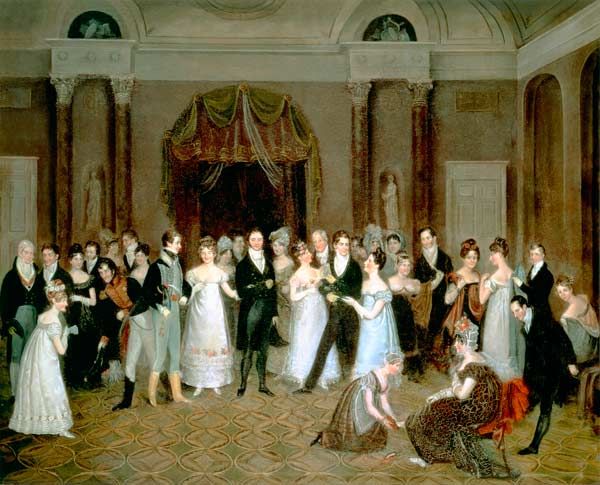
An Unassuming Gentleman.


It rained on the evening of Lady Sefton’s ball and a canopy had been set up across the street, to shelter the revellers during the short walk from the carriage steps to the house. Mrs Heather MacLeod, who had not particularly wanted to attend the ball, found herself wondering how much it had cost to effectively close off part of the square, so that her Ladyship’s guests might keep their feet dry.

Heather had been on a routine visit to London when she found herself ambushed by her sister-in-law. Lady Crawleigh had invited her down from her home in Scotland for a few weeks, with the promise of the theatre, the opera, some concerts and a new exhibition at the Royal Academy. Taking part in the balls and receptions of the London Season was not part of the plan and Heather was infuriated when Lady Crawleigh presented her with a pile of invitations on which her name was included.

“You may take those away, Fiona, for I shall not be attending any of them. I didn’t come here to go to parties, I cannot think what possessed you.”

“I have already replied on your behalf, Heather, so it will seem very rag-mannered if you don’t turn up,” Fiona said cheerfully. “You could of course write to the hostesses excusing yourself. I’ll leave them on the mantlepiece in case you wish to do so.”

“I? It was not I who accepted in the first place.”

“They don’t know that.”

“Fiona, how dare you? You know how much I dislike this kind of thing. I shall be bored witless. Besides, I don’t have anything suitable to wear since I never go to balls or receptions since Alex died and you promised me culture.”

“You shall have all the culture you desire, my love, providing you come out of your self-imposed seclusion and join the rest of the world for a few months. It won’t hurt you at all. I’ve made an appointment with my dressmaker. You are quite right, your gowns are looking dated. And…”

“I don’t want this.”

“You need this,” Fiona said with sudden quiet ferocity. “You’ve been hiding away in Comrie Castle for three years now and it is enough. Charles and I both agree on this. It isn’t good for you.”

“Charles is a traitor and I disown him as my brother.”

“Charles loves you. Alex was his friend he knows how much you miss him. But you’re only twenty-eight, Heather, you’re too young to wear widows’ weeds for the rest of your life.”

“Don’t be so dramatic, Fiona, I stopped wearing mourning two years ago.”

“I was speaking metaphorically. And how would I know what you’ve been wearing? I never see you.”

“Nonsense, I’ve stayed with you every summer.”

“And refuse to see anybody else. It’s not good for you, Heather.”

“I don’t want anybody else.”

“Well this year you will have to put up with it. I mean it, Heather. Not one single concert or play will I attend with you unless you agree to accompany me to these parties. Your word on it.”

Heather glared at her. “This is blackmail and you will regret it. You may force me to attend, but you cannot make me enjoy it.”

“You sound like a five-year-old, dearest sister-in-law. Well, we shall see.”

Heather’s new gowns had not arrived by the date of Lady Sefton’s ball. Fiona had offered to lend her something, but Heather refused. Partly it was from sheer perversity, and partly it was because Fiona was six inches taller than her, with a fuller figure, and Heather suspected that even when altered, the gown would look cobbled together. She selected the best of her ballgowns, a charming green silk which she had not worn since her husband had died of a summer fever three years earlier. Heather supposed that the eagle-eyed ladies of fashion would be able to detect that the gown was out of date but she decided she did not care. She allowed Fiona’s maid to arrange her hair in the latest style, purchased new slippers and gloves and accepted a very pretty painted fan as a gift from her brother with a grim smile. The fan would be useful since Lady Sefton’s rooms were insufferably hot.

Heather was not new to London society and recognised enough people to make her feel at ease despite her long absence. Lord Crawleigh and his wife kept a house in town which they used during the Parliamentary season and were very much at home in government and diplomatic circles. Several women who had made their debut at the same time as Heather, and were now married, stopped to speak to her. She made polite conversation, accepted their congratulations at her re-emergence into society and tried not to grit her teeth too obviously.

Heather met with nothing but kindness and within an hour, she realised she was beginning to thaw. She was not ready to admit it to her interfering relatives, but she was quite enjoying renewing old acquaintances and catching up on the gossip. The music was infectious, and Heather stood beside her brother watching a cotillion and realised her feet were tapping. She remembered a little sadly how much she had enjoyed dancing with Alex during the first heady days of their courtship. She watched this year’s debutantes, their faces bright and eager and full of hope for the future and wondered if any of them was experiencing the breathless happiness of falling in love that she remembered so well.

Heather’s drifting thoughts were interrupted by a loud laugh. She glanced around and saw that it came from a group of men who, like her, were watching the dancing. At their centre was a tall, well-built individual who was probably in his thirties. He was expensively dressed, with his hair carefully styled and he had an over-loud voice which made everything he said easily audible to those around him.

“What do you say then, Alverstone? Who is to be this Season’s Incomparable? Miss Hibbert? Lady Caroline Forster?”

“Not at all,” the big man said. “The Hibbert is too tall and the Forster has crooked teeth. The Middleton girl is pretty, but her father’s got money troubles, or so I’ve heard. No, the girl for me is the little Flood heiress. Going to speak to her father as a matter of fact. It’s time I got my house in order now that I’ve come into the title. Nice little thing, good manners, very good Ton and a lovely figure. No reason to kick her out of bed on a cold night.”

There was more laughter. “You’d better watch it, old man, she’s over there dancing with Evesham, and he looks very pleased about it.”

“I don’t need to dance with her, Sheldon. I’ve got the title and the fortune. All I need is for her father to agree, and he will, believe me.”

Heather could feel her lip curling in distaste. She began to turn away but realised that the unpleasant Lord Alverstone had noticed her scrutiny and possibly her expression. He was staring at her, running his eyes over her in a way that made Heather’s skin crawl. Deliberately she turned towards her brother, presenting the other man with a view of her back.

“Who’s that with Crawleigh, Sheldon?” Alverstone asked loudly.

“I believe it’s his sister, Mrs MacLeod. I vaguely remember her from her debut, it was years ago. I think she’s widowed now.”

“Ha! Well her late husband did himself a favour if you ask me. Fancy being leg-shackled to a nondescript dwarf wearing last season’s gown. Couldn’t she be bothered to tidy herself up to enter polite society again?”

The words were loud enough to be heard by everybody in the vicinity. Heather was furious to feel herself blushing scarlet. She felt her brother stiffen in anger beside her and heard a murmur of comment, and one or two hastily suppressed sniggers.

“Heather, do you want me to…”

“No, Charles, please don’t. It will only encourage him.”

Heather took a deep breath and turned to look fully at Lord Alverstone. He was looking back at her mockingly, daring her to make a scene. Heather very much wanted to slap him, but she knew that for her brother’s sake she must not.

She turned away, furious to realise that she was shaking a little, with a combination of anger and embarrassment. She should not have agreed to attend such a fashionable ball in her outmoded gown, but she had been enjoying herself and nobody else had shown any sign of caring until Alverstone had drawn it to everybody’s attention.

“Are you all right, Heather?”

“Yes. No. I need to get out of here, Charles, but I don’t want him to think that I’m running away…”

“Lord Crawleigh.”

Heather turned in surprise. The voice was very different to Alverstone’s. It was a quiet baritone which held unconscious authority. She had noticed him standing on the edge of Alverstone’s group of cronies, a man of medium height, in military dress with mid-brown hair and attractive hazel eyes. Heather had no idea who he was and wondered if he had come to apologise for his friend’s rudeness. She hoped not.

“Clevedon,” her brother said delightedly. “I didn’t realise you were here tonight. Or even that you were back in England. How are you, old boy? Were you at…I mean, I’m assuming you must have been…”

Captain Clevedon smiled slightly. “Corunna? Yes, I was there. I’ve not been all that well as you can imagine, this is my first proper attempt at being social.”

“Well, I should think so. Dreadful business. Very sorry to hear about Sir John Moore, he’ll be much missed.”

“He will.” Captain Clevedon transferred his attention to Heather. He bowed. “I don’t think I’ve had the pleasure, ma’am.”

“No, of course,” Charles said quickly. “This is my sister, Clevedon, Mrs MacLeod. She married Alex MacLeod, you’ll remember him. Died three years ago, some ghastly fever epidemic. Heather, this is Captain the Honourable Gervase Clevedon, a friend from my army days. He started off in the 71st with me then transferred to the 110th.”

Heather recognised the name and was furiously aware that Captain Clevedon had indeed approached her to apologise, not for his friend but for his brother. She glared at Charles, since she could hardly glare at the hapless Clevedon, and wished he would get this over with so that she could leave with dignity and have a good cry in the carriage home.

“It is very good to meet you, Mrs MacLeod. I was wondering if you would consider dancing with me? I’ve been away from London for so long. I am hopelessly out of practice, but if you’d take pity on me I would be very grateful.”

It was worse than she had expected. Heather shot her brother an indignant look, and Charles looked back with eyes which entreated her not to make a scene. He was right, she knew. There was no way to withdraw without making it look as though she was storming out. She gave a rigid smile and placed her gloved hand in Clevedon’s.

The dancers were forming up for a country dance. Heather took her place opposite Clevedon. He shot her a reassuring smile and she forced herself to respond, wishing this were over. The orchestra struck up the opening bars and Clevedon held out his hand.

“If I forget the steps, just push me,” he whispered. “I’m very good at taking orders, I promise you. Good luck.”

The remark was so unexpected that Heather let out a giggle. Her partner grinned back at her as he stepped back and then forward into the opening figure of the dance. Heather took a deep breath and let him turn her neatly before passing her hand onto the opposite gentleman in the set.

It was immediately clear that if Gervase Clevedon had not danced in London for a while, he had definitely danced somewhere. Heather had not and she had to concentrate to remember the steps. The music was lively and within a minute, Heather stopped thinking about her gown or her wounded pride and was caught up in the sheer joy of dancing again after so long.

When the music ended, Captain Clevedon bowed and raised her hand to his lips. “Thank you, I enjoyed that so much. I was worried I’d run out of energy halfway through, but we carried the day.”

Heather smiled. “I almost refused to dance with you.”

“I know you did, ma’am, and I wouldn’t have blamed you. You must have been furious.”

“I thought you were going to apologise to me.”

Clevedon led her from the dance floor and neatly removed two champagne glasses from the tray of a passing waiter. “For Alverstone? I make a point of never apologising for him, or I’d never do anything else.”

Heather laughed aloud as she took the champagne. “Then why did you ask me to dance?”

“Mostly to annoy him. But also, I’d noticed you earlier because of that green silk gown. Several years ago, when I was last in London, I solicited a lady for a dance, who was wearing just that particular shade. She was a considerable heiress and a noted beauty and she turned me down very haughtily. I was hoping I might do better this time. I’m delighted to say that I did.”

Heather could not stop laughing. “I have no idea if any of that is true,” she said.

“I promise you that it is.”

“I collect you don’t get on with your brother.”

“I dislike him excessively. I hope that doesn’t shock you? Your own brother is a very good fellow. I’m deeply envious of you.”

“Doesn’t that make it difficult living with him?”

“Oh, I’m not staying at Alverstone House, ma’am, I wouldn’t dream of it when he is in residence. I have a house of my own near Ampthill in Bedfordshire. I inherited the estate from my mother’s family. And when I’m in London, I have a standing invitation to stay with the family of my commanding officer in Curzon Street. They’re very good hosts, especially just now, because none of them are there. Are you staying with Crawleigh?”

“Yes, for a few weeks. I live in Scotland, I inherited my husband’s estate and I seldom come to London. My sister-in-law has been bullying me, saying I should make more effort to be social.”

“Well I’m very glad you did,” Clevedon said. “May I take you into supper?”

“I…yes, if you wish it.”

“Will you dance with me again?”

Heather was laughing again. “Isn’t there some kind of rule which says we may only dance together twice?”

“Oh no, surely that rule only applies to debutantes.”

“I’m not sure.”

“Well can we pretend that neither of us knows any better? They won’t be surprised. You’ve been hiding in a Scottish castle for three years and I’ve been in the army, they don’t expect any better from us.”

Heather felt as though her head was spinning slightly. “Are you always like this? How did you know it was a castle?”

“No, is it? I just made that up. I must have the second sight. Dance with me again, Mrs MacLeod. I’ve just survived the worst retreat…you honestly can’t imagine. Please?”

Heather sipped the champagne. “Was it really that bad? The retreat to Corunna?”

Unexpectedly the laughing eyes were serious. “Yes,” he said. “So bad, in fact, that I’m trying not to think about it too much at the moment. I’m supposed to be convalescing.”

“By dancing.”

“It is good for both the body and the soul. Especially dancing with you. You have the prettiest eyes.”

“Captain Clevedon, are you trying to flirt with me?” Heather said in what she hoped was a repressive voice.

Clevedon looked at her for a long moment. “Do you know, I think I am,” he said cordially. “Do you think that’s a sign of recovery? Come along, they’re about to start the quadrille and I think I can remember that one.”

***

The rain had stopped when Gervase Clevedon stepped out into the cool winter air. London was not particularly sweet smelling most of the time, but the rain had washed down the streets and given them a fresh damp scent. Gervase stood for a moment, his head swimming pleasantly, and decided he was sober enough to walk home. A queue of carriages stood waiting to collect their occupants. Gervase’s hosts had informed him that he was to make use of their town carriage without hesitation, but Gervase preferred to walk although he knew perfectly well that his brother would never dream of walking the ten minutes to his home in Berkeley Square. More than ten years in the army had given Gervase considerable hardiness and he would have been embarrassed to call for the carriage for such a short distance.

Gervase had stood up with Heather MacLeod for more than the regulation two dances. If anybody had cast disapproving glances their way, he had not noticed and did not care. When he had limped off the transport from Corunna to begin his convalescence, Gervase had been so weak from starvation, exhaustion and a minor wound to his shoulder that he could not have contemplated even a short walk, let alone an evening dancing. Physically he had recovered very quickly but the emotional effects of the long agonising retreat followed by a battle he was not fit to fight were taking longer to shake off.

The retreat to Corunna had been a disaster for the British army. Only two thirds of Gervase’s battalion had marched into Spain with Sir John Moore. The rest of them remained in Lisbon, struck down by the worst epidemic of camp fever Gervase had ever seen. At the time, Gervase had thought himself lucky to have avoided it. Colonel Johnstone rallied those men fit enough to fight and joined the main army, and Gervase felt sorry for Major Paul van Daan who was both his commanding officer and his friend. Paul’s friendship with Sir Arthur Wellesley had given him a significant part to play in the victories at Rolica and Vimeiro the previous year, but this time he was left in Lisbon in command of the sick troops while Johnstone marched to potential glory. To make it worse, Paul’s wife succumbed to the sickness and Gervase knew he had spent a miserable six weeks in Lisbon fretting over her before returning to barracks in Melton Mowbray with his much-depleted companies, to receive the news of Moore’s death.

Moore’s campaign had gone wrong from the start. He had taken over command of the army when the three previous commanders had been summoned back to London to face an inquiry over the convention of Cintra, which had caused public outrage because of the lenient terms granted to the defeated French. Gervase wondered if Sir Arthur Wellesley would have done any better than Moore, given the impossible circumstances. Moore could not be asked to account for the failure of his campaign. He had been killed during the desperate battle fought on the shore at Corunna where his sickly, starving and exhausted army managed to beat back the French long enough to board the transports waiting to take them home.

Gervase had lost both his horses during the long retreat, and too many of his men. They fell beside the road, dying of sickness and hunger and cold and he could do nothing for them. He also lost control of them, unable to prevent episodes of looting and drunkenness whenever they happened upon a village or a farm where food was available. Spanish farmers and their families were murdered and women were raped. Gervase did not know if any of his men were responsible for the worst of the depredations but even the fact that they might have been left him depressed and ashamed.

Flirting with Heather MacLeod on the dance floor and across the supper table had made him happier than he had been for months and Gervase was enormously grateful. He was also intrigued. She was an attractive woman who seemed entirely without vanity. In place of it, she had ideas, and interests and laughter. She laughed more than any woman he had ever met. She also talked a lot. Gervase thought of himself as a quiet man, but Heather MacLeod was amazingly easy to talk to. He discovered, with some surprise, that they shared a lively sense of the ridiculous and her conversation was peppered with observations about their fellow revellers that kept him in a ripple of laughter all evening. He realised, as he turned into Curzon Street, that he could not wait to see her again.

It was past two o’clock as Gervase mounted the steps to Tevington House. He did not knock, unwilling to wake up the neighbours, knowing that the butler or one of the footmen would be on the watch for his return. Sure enough, the door opened after only a few moments and Gervase stepped into the hallway, which was dimly lit by a branch of candles set on a polished table. He took off his hat.

“If you think I’m taking your damned hat as well as waiting up to let you in, you’re much mistaken, Captain Clevedon.”

Gervase turned in astonishment, his face lighting up at the sight of a tall fair man in uniform who was smiling at him.

“Paul! What on earth are you doing here, acting as butler at this hour?”

“Are you drunk, Gervase? This is my house. At least it’s my father’s house.”

Gervase set his hat down on the side table, carefully avoiding the candles, and remembered to salute. Major Paul van Daan regarded him critically. “Not much more than half-sprung, I suspect. I got here very late after the journey from hell, so I had supper and thought I’d wait up for you. They said you were at Lady Sefton’s.”

“I was. It’s the first time I’ve ventured out to anything more strenuous than a supper party at White’s, but unexpectedly I enjoyed myself. I’m surprised to see you, sir, I thought you fixed in Leicestershire.”

“I am. In fact, I’m completely invisible and I’d appreciate it if you would refrain from advertising my presence in town. Wellesley wrote to me asking me to come up for a few days. I’m dining with him tomorrow. It seems we’ll be going back to Portugal with him.”

“They’ve given him the command?”

“Yes, although I don’t know how official it is yet. Are you too tired for another drink? I’ve kept the fire going in the library.”

“As long as it isn’t champagne. I have drunk enough champagne this evening. Why are you travelling incognito?”

Paul picked up the candles and led the way into the library. He set them down and went to pour wine. “Because I don’t want to see anybody,” he said frankly. “Apart from Wellesley, and of course you. I’m enjoying the life of a country layabout for a month or two, with nothing more strenuous than the ride into barracks, and I promised Rowena I wouldn’t stay long.”

“How is she, sir?”

“She seems fully recovered, but it’s going to take me a while to get over the fright she gave me.”

“And how are the men?”

“Improving. We’ve lost some, Gervase, I can’t lie to you. I can’t decide if I feel guilty or relieved that I wasn’t there.”

“Feel relieved,” Gervase said sombrely, drinking the wine. “It was pure hell, appallingly organised with a complete breakdown of discipline. We lost control of our men, Paul, and I’ve never had to say that before. It’s a miracle we got as many of them out of there as we did. You missed nothing.”

“That’s never going to happen again.”

Gervase grinned at the ferocious certainty of the other man’s tone. “Yes, sir. Now let’s talk of other things, it depresses me. I saw Wellesley tonight. He was dancing with a number of pretty women, none of whom were his wife.”

“That is no surprise at all. He has reason to celebrate. Wholly exonerated by the inquiry, a vote of thanks from Parliament, and the promise of a new command.”

Gervase gave a faint smile. “And did he deserve all of those?”

Paul grinned. “Two out of three,” he said honestly. “He signed that bloody thing along with the other two. I doubt he agreed with it, but I’m also damned sure he didn’t realise the furore it was going to cause, or he’d never have done it. Needless to say, he didn’t ask my opinion. I’m glad he got away with it though because he deserves the command and the approbation. Now let’s see what he can do with nobody holding him back. Was your brother at Lady Sefton’s tonight?”

“To my sorrow. He’s the reason I was planning to post up to Bedfordshire at the end of the week. Just being in the same room as him makes me want to punch him, I cannot think how we came to be related. He tells me he is about to make an offer of marriage to some unfortunate girl. I wish I could put a spoke in the works because he’ll treat her appallingly, but there’s nothing I can do. He’s an Earl, her parents cannot wait to hand her over.”

“Who is it?”

“Lady Clarissa Flood. She’s nineteen.”

“Dear God.”

“I know. He can’t even be bothered to woo the girl. He’ll just sign the marriage contract and start giving her orders. Thank God I’ll be back in Portugal with you and won’t have to watch it.”

“Ambitious parents create a lot of misery. When are you going to Ampthill? It’s not that far, you should come up to Southwinds for a few days. I promise not to make you run drill or skirmish training.”

Gervase laughed. “You would break that promise in two days, sir, you can’t help yourself. I’m not sure actually. I was going to go, but I may decide to stay in town for a week or two. I ran into an old friend this evening. Do you know Crawleigh? We were in the 71st together, but he sold out when he inherited the title. His wife has invited me to dine on Tuesday, and I’m joining them at the theatre on Friday.”

Paul van Daan studied him for a long silent moment, sipping his wine. Gervase drank his, saying nothing. Eventually, Paul set his glass down and got up to bring the bottle to the low table before the fire. He refilled both glasses, sat back and studied Gervase thoughtfully.

“What’s her name?” he asked.

***

It was the first time in many years that Gervase had spent any time in London during the season and he was surprised at how much he enjoyed it. As the younger son of the Earl of Alverstone, his place in society was assured but his loathing for his elder brother meant that he tended to avoid town when the new Earl was in residence.

Gervase could tell that Alverstone was baffled by his extended stay. They spoke occasionally when meeting at social events and his brother was probing, trying to discover what was keeping Gervase in London. His curiosity amused Gervase since it was clear that Alverstone had absolutely no idea of his real motives. He questioned Gervase about possible financial problems, difficulties with his Bedfordshire estate, health problems after the brutal retreat to Corunna and even asked if Gervase was considering selling his commission and returning to civilian life. Gervase gave him little information and enjoyed watching his brother’s puzzlement.

Gervase could not believe Alverstone had not noticed the object of his real interest. Lord Crawleigh and his wife were definitely aware, and they encouraged him shamelessly. Gervase wondered if they had bullied Heather into coming to London in the hope of finding her another husband, but he did not think so. Lady Crawleigh was clearly devoted to her and he suspected that Heather’s self-imposed solitude since the death of her husband had been a source of concern for some time.

It puzzled Gervase, because it was quickly clear that Heather MacLeod was not a naturally solitary person. She was awkward at times, but he thought that was lack of practice rather than a native dislike of company. Over the following weeks he spent increasing amounts of time with her, and he found her completely charming.

Heather quickly admitted to him that Lady Crawleigh had tricked her into coming to London with the promise of cultural activities. It proved an excellent opportunity for Gervase to spend time with her in settings more conducive to conversation than a ballroom. He accompanied her to the theatre and the opera, escorted her to the Royal Academy and attended several concerts, both private and public. She laughed at his willingness to accede to any of her suggestions.

“Captain Clevedon, you are far too amenable. I am tempted to see how far I can push this. There are several public lectures coming up on the subject of anatomy and the structure of the brain. I’m sure they will be interesting. Would you be willing, should I require an escort?”

Gervase surveyed her with interest. “How fascinating, ma’am. You may not know it but I have always wanted to know more about human anatomy. Should we ask Lady Crawleigh if she wishes to attend with us?”

Heather gave him a long look. “I’m not sure if I should call your bluff. Would you really endure such a trial just to prove me wrong?”

“The difficulty you have, ma’am, is that if you call my bluff and I don’t fold, you’ll have to attend the lectures yourself. Is it really worth that just to watch me squirm?”

Heather gave a peal of laughter. “You are the most exasperating man, Captain. It’s impossible to put you out of temper.”

“It can definitely be done, ma’am. You should talk to my brother.”

“Goodness, why ever would I do that?”

“I’ve no idea. Silly notion, forget I mentioned it. Will you ride with me tomorrow? Major van Daan has offered me the pick of their stable. I’m sure I can find suitable horses.”

“I would love to, but I will provide my own horse. Fiona always brings several to town during the season, because she knows she looks good on horseback and likes to show off. I can borrow one of hers.”

“Excellent. I hope the weather holds.”

They rode together through the cold weeks of February and into early March, danced at every ball and took long walks through the London parks, trailed by Heather’s uninterested maid. She told him about her husband, about the sixteenth century castle she had inherited near the village of Comrie and about the lands and people who had become her responsibility through her marriage. Gervase talked of his parents, his career in the army and of the extensive estate in Bedfordshire that he intended one day to make his home.

“Most of the family estates are entailed, of course, and went to my brother. I didn’t mind, it’s the way things are done. It’s why I joined the army when I was younger. I wanted a career of my own, to make my way in the world. I didn’t want to depend on him. My mother always understood that. She inherited the estate from a childless uncle and made it over to me as soon as I came of age. She lives there now and keeps house for me. She doesn’t get on particularly well with Alverstone either.”

“It must be a great joy to him, to be so universally loved.”

Gervase spluttered with laughter. “I think he strives to deserve it,” he said, when he could speak again. “You were able to inherit Comrie Castle unentailed, I gather.”

“Yes. There’s no title to inherit, just the lands. If we’d had a son they’d have gone to him, with me to manage them until he was older, but we never had children. I wish we had.” Heather smiled unselfconsciously. “Alex had several male cousins who were most put out when he left everything to me, but he was perfectly entitled to do so.”

“I think you had a very happy marriage, ma’am.”

“I did. I was the most fortunate of women.”

The sadness in her voice pierced Gervase’s heart. It was unworthy he knew, to envy a dead man, but sometimes he could not help it. As the weeks passed, it was becoming more and more clear to him that his feelings for Heather MacLeod went well beyond friendship, but he was by no means sure that she felt the same way. Clearly, she enjoyed his company, and Gervase suspected that to the outside world their uncomplicated friendship looked very much like courtship, but he worried that to Heather it was nothing than a pleasant way to pass her time in London. He was beginning to understand why she had locked herself away in her grey stone tower at the edge of the Highlands for so long. Heather MacLeod had been passionately devoted to her husband and Gervase was not sure she would ever be ready for another man to take his place.

It grieved Gervase, because he wanted more, and he was becoming conscious that he had very little time. He received regular letters from his regiment, informing him of arrangements for travelling to Portugal and he was torn between the usual sense of anticipation at the beginning of a new campaign and a feeling of misery that if he sailed away from Heather without at least making a push to tell her of his feelings, he would lose any chance with her. It could be several years before he returned to England, and by then she would probably have met somebody else.

His commanding officer had returned to Leicestershire, offering several wholly unsolicited pieces of advice about Gervase’s courtship before he left. Gervase was glad to see him go. His friendship with Paul van Daan was of long-standing and he generally enjoyed his commander’s lively sense of humour, but his relationship with Heather was too new and too precious to be the subject of even the most well-meaning banter. Gervase fretted pointlessly at the problem. He knew that the only possible solution was to pluck up the courage to speak to her before he had to leave, but he was discovering that it was far easier to display courage in the face of a French cavalry charge than when faced with making an offer of marriage to a young woman who might well say no. The weeks flew past, and Gervase was beginning to dread the arrival of orders to return to duty immediately, which would rob him of any chance of speaking to Heather. He needed to gather his courage in both hands and take the risk, and he needed to do it soon.

They rode out on a bright Spring morning towards Barnet, where the horse fair sprawled out over several fields. Gervase was under no illusion that he would find a suitable opportunity to propose on this day, but he was in dire need of new horses. He had several excellent hunters in his stables in Bedfordshire but none of them were suitable for the long hours and difficult conditions of campaign life.

It was many years since he had been to Barnet Fair, and he discovered that Heather had never been. She was openly delighted with the eclectic mix of market stalls, sideshows, food and drink booths and huge pens where cattle and horses were displayed for sale. The buying and selling of livestock was the real purpose of the fair and farmers and landowners rubbed shoulders with private customers looking to buy a riding hack or a pair of carriage horses.

It was crowded and noisy. Gervase had attended such fairs in several countries and entertained Heather with stories of India as they stabled their borrowed horses in a temporary horse pen and left them under the watchful eye of one of the Van Daan’s grooms. They made their way through the throng to the horse pens, accompanied by Southworth, Gervase’s own groom. Southworth had accompanied Gervase on campaign for ten years and knew exactly what he was looking for in an officer’s mount.

Gervase had wondered if Heather would be bored by the laborious process of selecting and purchasing horses, but she seemed to enjoy herself. She was a good horsewoman and was knowledgeable enough to make intelligent comments about the various animals. They wandered through the pens, stopping every now and then to examine a promising mount and Gervase had to force himself to pay attention to the horses, since he actually needed to buy some, instead of watching Heather.

It was afternoon by the time he had made his selection and agreed the arrangements for delivering the horses. They spent the rest of the day at the fair, wandering through the market stalls, eating hot pasties in a crowded food tent and drinking cider at a rickety table overlooking the huge field where a racetrack had been laid out. In addition to its commercial purposes, Barnet Fair was famous for its sports, and both horse racing and boxing matches attracted visitors, not only from London, but also from the surrounding counties.

Heather disclaimed any interest in watching the races and the entirely masculine crowd of sportsmen surrounding the boxing ring was clearly unsuitable for a lady. The groom who had looked after their horses told them that the Prince of Wales had arrived with a party of friends for the boxing and was expected to remain for the races. It seemed like an excellent time to leave before the light began to fade and the fair grew even more rowdy.

Heather was unusually quiet on the ride back into town, but it was a comfortable silence. Gervase rode beside her, pleasantly tired after a very productive day, and decided that he was going to speak to her as soon as possible. If he had completely misread her feelings, it was better to know it. Today had clarified his own feelings and he no longer had any doubts.

Gervase was at the breakfast table two days later when the note was delivered. He did not recognise the hand, and he opened it and began to read, his teacup halfway to his mouth. After the first few lines he put the cup down and pushed his plate away, his appetite gone. It was from Heather MacLeod, a pleasant note informing him that she had made the decision to return home to Scotland almost immediately.

Gervase read the letter again. There was no mistaking the warm, friendly tone of her farewell. She thanked him for his friendship and for the many occasions when he had escorted her and expressed her hope that they would meet again at some future date. Gervase, depressed, tried to imagine how that might come about and could not. When they had parted after their day at the fair, she had given no hint of any intention to go home so soon. He found himself running over their conversations in his head, wondering if he had said or done something to upset her. He did not think he had. Foolish to think this was about him. It was looking increasingly likely that Heather MacLeod had not considered him at all when making her decision.

The thought hurt, but at the same time it was a call to action. Gervase realised that he could not allow her to leave without at least trying to tell her how he felt about her. It would be awkward for her and painfully embarrassing for him if she rejected his proposal, but it would be far worse if he just let her walk out of his life. He was in love with her and had begun to believe that she might feel the same way about him. If he was wrong, then he needed to know it and he could not put this off any longer or he might miss his opportunity.

***

Heather had been prepared for her family to object to her sudden decision to go home, but she had not been prepared for the ferocity of the storm.

She made the announcement at breakfast, dropping it casually into a conversation about Lord Crawleigh’s lame horse and the likelihood of rain that day. Neither topic served as an effective screen. Both Crawleigh and Fiona stopped their conversation and turned to stare at Heather.

“Going home? When?”

“On Friday, I think,” Heather said lightly. “I’ll make the arrangements today. I’ll travel post.”

“Heather, you cannot. We are promised to Lord and Lady Jersey on Saturday and there is the Mortimer’s ball on Monday. You have so many engagements.”

“I have made a list,” Heather said, keeping her voice steady. “I will write to all of them with my apologies, Fiona, I am not so rag-mannered as to leave that to you.”

“It seems fairly rag-mannered to walk out on your family halfway through a visit without so much as a conversation,” Crawleigh said bluntly. Heather shot him a look.

“May I remind you, dear brother, that this is not the visit I had planned? You took control of my time without so much as a by-your-leave, as though I were a silly girl of eighteen, and I think I’ve been very patient about it. I’ve had enough now and I want to go home and get on with my life.”

“What life? Mooning about the castle and discussing cattle feed and crop rotation with the farmhands? Don’t pretend you’ve not enjoyed yourself, Heather, I’m neither blind nor stupid. Three days ago you were talking about ordering new gowns for the warmer weather. What’s got into you?”

“I have enjoyed myself and I am very grateful,” Heather said between gritted teeth. “But it is enough. I don’t belong in London. I miss home. I want to go home.”

She was horrified at the little break in her voice. Fiona heard it and motioned for the servants to leave the room, then gave Crawleigh a look.

“Don’t bully her, Charles. Heather, what has happened to upset you? Do not spin me some tale, if you please, I’ve known you for too long. You had no intention of leaving early, this is a sudden decision.”

Heather got up and walked over to the long windows which overlooked the square. “That does not mean it is the wrong decision.”

“Is this about Clevedon?” her brother demanded. “Does he know you’re about to head for the Scottish hills, dear sister? Or were you just going to leave him without a word?”

Heather felt a rush of sheer fury. She spun around. “And now we have reached the truth of it, have we not, Charles? You do not give a rush about me or my feelings or how difficult this is for me. You just want me respectably married again so that the likes of Lord Alverstone do not whisper behind their hands that your sister is a little odd.”

Crawleigh got to his feet, almost upsetting the chair in his anger. “How dare you say that to me? I’ve offered you nothing but sympathy since Alex died, he was my friend. But you…”

“And now you’ve found another one of your friends to marry me off to…”

“That’s enough!” Fiona broke in angrily. “Sit down immediately, both of you. I do not care how upset you are, you will not yell at each other across the breakfast table and make a gift of our family business to the servants. Sit down.”

Heather stood irresolute. She wanted to run to her room, probably slamming several doors on the way, but the expression on Fiona’s face made her pause. Her sister-in-law was generally very placid, but she looked furious now. After a moment, Crawleigh seated himself again. Heather stalked back to her chair and did the same.

“Have you written to Captain Clevedon, Heather?” Fiona asked.

“Yes. I sent a note to him this morning.”

“I hope it was civil,” Crawleigh growled.

“It was more than civil,” Heather snapped. “I expressed my warmest friendship and appreciation for all his kindness and hoped we should meet again one day.”

“You’ll be glad you said that, sister, if you get the news he’s been blown apart by French cannon before the end of the year,” Crawleigh said unforgivably.

Heather burst into tears. She got to her feet and ran to the door of the breakfast parlour just as the butler opened it.

“Captain Clevedon, my Lord,” Campbell said, sounding surprised. “I believe he is engaged to go for a walk with Mrs MacLeod.”

Heather had completely forgotten the arrangement. She froze for a long moment, staring into Clevedon’s astonished eyes. Clevedon looked back steadily, and Heather wondered how much of the altercation he had heard. Nobody moved or spoke.

Captain Clevedon was the first to recover. He stepped to one side, his eyes not leaving hers. “It’s all right,” he said gently. “Go on. But if you can bear to come back down, I would like to speak to you.”

Heather ran past him. She was crying too much to answer, but she was grateful for his quick understanding. It made her feel rather worse. She paused at the bottom of the wide, sweeping staircase and looked back. The Captain had just entered the parlour. Before the door closed, she heard his voice, using a tone she had never heard from him before.

“I heard every word of that, Crawleigh, and you can thank God there’s a lady present or I’d punch you so hard you’d still be unconscious at dinner. Lady Crawleigh, your servant, ma’am. Sorry to arrive so early.”

***

After ten minutes of painfully stilted conversation, Lady Crawleigh excused herself to see how her sister-in-law did. When she had gone, Gervase looked at Crawleigh. The Earl groaned.

“That expression is the reason I sold out, Clevedon. I couldn’t bear you looking at me for another week like a weevil in a tack biscuit.”

“You sold out when you inherited the title, Crawleigh. It had nothing to do with me. And just at the moment, I’d say the weevil is ahead of you for brains.”

“I’m sorry. I said I’m sorry. I lost my temper.”

“It isn’t me you should be apologising to, you bloody idiot. Of all the things to say to the poor girl, given what she’s been through.”

“Clevedon, I love my sister dearly, but you have no idea how infuriating she can be. I’m assuming you had her note.”

“Yes, it’s why I came so early. I read it twice and decided she’d forgotten that she’d promised to go for a walk with me today. I wanted to get over here before she remembered and sent me another note to cry off.”

“That’s the reason you’re a captain and I’m a member of the idle classes. You always were a planner. I’m surprised you’re not angry with her yourself. She’s been leading you a fine dance for more than two months. It was unforgiveable to turn you off with a note because she has a whim to go home all of a sudden. I’ve no idea what’s got into her. I would have sworn…”

He broke off realising what he had been about to say. Gervase grinned. “I would have sworn as well. She’s not been leading me a dance. Your sister doesn’t have it in her to behave that way. Whatever has happened to upset her, she’s not being deliberately difficult.”

“Really? I do hope you manage to marry her, Clevedon, you’re far nicer to her than I am.”

“After today’s effort, I will not argue with you.”

“Look, I’ll ring for more tea for you and then I’ll go up and tell her…”

“If you go anywhere near her, Crawleigh, I will beat you senseless, I swear it. I’ll have the tea and you can pass me the Times. I’m going to wait.”

Thirty minutes passed. Gervase read the newspaper, which contained nothing of interest at all. Crawleigh worked his way through a pile of letters. Eventually he looked up.

“How long are you going to wait?”

“Until she comes downstairs.”

“What if she stays upstairs?”

“Then I’m staying for dinner.”

Crawleigh rolled his eyes. “Is it too early for brandy, do you think?”

“Yes.” Gervase took out his watch. “Give it another hour.”

“Do I have to sit here with you?”

“You can go to the devil for all I care.”

There was a sound in the hallway and then the door opened and Heather appeared. She was dressed in a stylish full-length blue pelisse, complete with military-style epaulettes and frogging. Only the hem and lace collar of her white gown were visible, and she wore neat black half boots and a cream-coloured bonnet trimmed with feathers. Gervase had not seen the pelisse before and, as he rose and bowed, he thought how well the colour suited her fair hair and skin. He moved forward and took her hand, raising it to his lips.

“Mrs MacLeod, I’m so glad you came down. As you are dressed for walking, I’m hoping you haven’t come to tell me you’re crying off. I’m sorry I arrived so early. I wanted to speak to Crawleigh, but it was thoughtless of me.”

“Not at all, Captain. You weren’t responsible for my dramatic exit, my brother has the tact of a bear.”

Crawleigh got up. “Exit, pursued by a bear,” he said morosely. “Good day, Clevedon. Feel free to drown her in the Serpentine if the mood takes you.”

When he had gone, Gervase looked at his love. She had been crying, but had done a good job of disguising it with a little powder and seemed perfectly calm. He took her arm and they made their way through the grey early afternoon towards the gates of Hyde Park, with Heather’s maid following at a respectable distance. Gervase realised he was dry mouthed with nerves. His strategy to speak to her alone had succeeded very well, but he was not sure that he could carry the next line of her defences.

“Are you really going back to Scotland?” Gervase asked, once they were in the park and walking along a tree lined avenue. He realised that the usual easy flow of their conversation had dried up and he was struggling to know how to raise the subject.

“Yes, I think so. I’ve done as I promised and spent a season in London. I’ve ridden in the Row and attended the balls and the receptions and the routs. I’ve been entertained by the Prince of Wales and eaten the worst supper I’ve ever been offered in my life, and I’ve seen the very latest exhibition at the Royal Academy. I’ve even been to Horse Guards and seen some very pretty soldiers on parade. I’m exhausted with all the frivolity.”

“You haven’t danced at Almack’s yet,” Gervase pointed out.

Heather laughed aloud. “The underworld will freeze over before they allow me through those hallowed doors, Captain, and you know it. Besides, I’ve no wish to go.”

“The suppers are even worse than Prinny’s, and they make the gentlemen wear knee breeches.”

“Then it’s no place for a – what did the Earl call me? A nondescript dwarf in last Season’s gowns, wasn’t it?”

“My brother’s manners are as appalling as his arrogance. I am ashamed to be related to him.”

“I would be too. I like Lady Clarissa Flood, though, it will be a pity if her parents shuffle her into it. He’ll lead her a dog’s life.”

“I cannot allow myself to think about it, ma’am, since I can do nothing to prevent it.”

Heather gave him one of her grave looks, as though she was assessing his sincerity, then she gave a rather sad smile.

“I feel the same way. But it’s another good reason to be home in Scotland, so that I don’t have to watch it. I’ll miss our talks though. When do you leave for Portugal?”

“I had a letter this morning. I’ll need to leave for Southampton in about three weeks. Major van Daan has given me leave to go straight there with no need to travel up to Melton first.”

“That’s good, as you’ll have time to say goodbye to your friends in London.”

“I thought I might go back to Ampthill, to spend a week or two there and to see my mother. I think I’ve been social enough for a while.”

“Won’t you find that hard back with your regiment?”

“The regiment…oh, you mean my fellow officers? That’s different, they’re my friends.”

Heather’s smile broadened. “The way you say that makes me wish I’d had the opportunity to meet them.”

“Oh, I wish you had too. Meeting me in London like this, during the Season, will have given you very little idea of me really. This is not…these are not really my friends.”

Another awkward silence fell. Behind them, Gervase could hear the maid sniffing noisily as though she intended it to be heard. He turned to look at her and his companion giggled.

“She doesn’t like walking,” she said softly. “I wish they’d stop this nonsense about having me chaperoned every time I walk outside the house, it’s ridiculous. I’ve been married and widowed and I’ve no reputation to worry about.”

“That’s not true and you know it, ma’am. London is very censorious.”

“It can be as censorious as it likes, I’m unlikely to hear it from my crumbling pile of stone in Scotland.”

Gervase laughed. “Is that another one of my brother’s remarks?”

“No, that one was Lady Commyngton. Though to be fair, I think she only said it when it became clear to her I’d no intention of encouraging the attentions of her youngest son. He’d have been very happy to take on my crumbling pile of stone and the income my husband left me.”

“Is it really crumbling?”

“Well it’s old, and the plumbing could do with updating,” Heather admitted cheerfully. “Alexander never really cared for such things, but since he left me in better case than I expected, I had thought of doing a little work on it. But it’s a castle, Captain, not a mansion. I doubt Mr Commyngton would have wanted to live there much, and I’d never marry a man who wanted to sell my home to fund a London lifestyle.”

“I suspect your Scottish castle suits you far better than these well-tended gardens, Mrs MacLeod.”

“I suspect you’re right. Though this is pretty with the spring flowers coming up, even on such a dark day. I wonder if we should turn back before my maid develops inflammation of the lung?”

Gervase felt a sudden lurch of misery, realising that this might be the last time he saw her. He sought frantically for the right words, wishing for a more fluent tongue.

“Do you ever get leave once they get you out of England, Captain?”

The question surprised him. “It’s very unpredictable, ma’am. When the entire army has fallen apart and the campaign has collapsed into disaster, leave is very likely, as you can see from Corunna. But we try not to hope for that too often. It will depend on how successful Wellesley is. He’s the man of the hour just now, the government would far rather focus on his triumphs than on poor Moore’s failure.”

“Is he truly that good?”

“A general is only as good as his last campaign, ma’am. But my commanding officer says he’s the best general in the army.”

“Now that is high praise indeed. Do you trust Major van Daan’s opinion?”

“I trust him with my life, ma’am, so I suppose I’d have to say yes.”

“Captain Burrows described Major van Daan as a monied upstart who has bought his way to promotion over longer serving men.”

Gervase considered it for a moment. “I think he’d agree with that.”

She gave a peal of laughter. “Oh no, you’re such a disappointment, Captain. I was sure that would make you angry.”

“Captain Burrows has never set foot on a battlefield, ma’am, and I suspect if they ever try to send him abroad, his Mama will quickly pay for a transfer to a safer regiment. Preferably not the 110th because Major van Daan would end up punching him.”

She was smiling up at him as they approached the park gates. “I wish I had met your Major when he was in town.”

“If there is ever the opportunity, Mrs MacLeod, I will gladly introduce you.”

“I hope we meet again, Captain. I realise you may be away from England for a long time, but should you find yourself with a period of leave…”

Heather stopped and Gervase glanced at her and realised, to his complete astonishment, that she was blushing. He had never before seen her do so and had thought her incapable of it.

“If I ever find myself in Scotland, ma’am, I will definitely call.”

“Scotland is a long way away, Captain. I might possibly find myself in London again.”

Gervase stopped in his tracks, so abruptly that the maid, who was not looking where she was going, almost walked into him. Heather was a few steps ahead of him before she realised. She turned with a surprised expression.

“Are you all right, Captain?”

Gervase looked at the maid. He realised guiltily that she actually did not look well. Her nose was red and her eyes were sore.

“What’s your name?”

“Brown, sir.”

“Brown, you look terrible. I’ve been listening to you sneeze for the past twenty minutes. Go home immediately. Tell Lady Crawleigh that you had no choice, I ordered you home because I was worried about contagion. Mrs MacLeod and I will take another turn about the park, and then I will return her home, I swear it.”

The woman stared at him in blank surprise, then unexpectedly she seemed to understand and gave a broad smile and dropped a curtsey.

“Yes, Captain. Thank you, sir.”

Gervase dug in his pocket and produced a coin. She took it, looked at it then looked up with wide, surprised eyes.

“Thank you, sir.”

When she had gone, Gervase took a deep breath and risked a look at his companion. She was wearing exactly the expression he was expecting.

“That was extremely high-handed of you, Captain Clevedon. How did you know I wasn’t tired and ready to go home?”

“A lucky guess, ma’am. Besides, I suspect you’re used to walking a lot further than this, and over far rougher ground.”

She gave a smile. “Yes, I am. This is very tame. Very well, let’s walk over to the lake. I have taken a liking to the lake.”

“I like it myself. I’ve a small ornamental lake on my estate in Bedfordshire. It is home to the most aggressively hostile flock of geese I have ever encountered in my life. They barely tolerate my presence.”

Heather gave a gurgle of laughter. “Really? Birds can be like that. When I married Alexander, one of his cousins presented us with a pair of peacocks. I think she thought they would lend an air of gentility to the place. All they did, of course, was leave droppings all over the carriage drive and kept us awake with their shrieking. Fortunately, my sister married the following year, so we presented them to her.”

“I wonder who she passed them on to when she got tired of them?” Gervase said, much entertained. “I envision them being passed on through the family until they have toured the whole of Scotland and finally settled into honourable retirement somewhere in Berwick.”

Heather was giggling. “Don’t. Now I am going to have to ask her. I wonder if she did pass them on again. I don’t remember seeing them the last time I visited her.”

They were still laughing as they arrived at the Serpentine. The water was silver-grey on this cloudy afternoon, and the path around the lake was deserted. It was growing colder, and a breeze blew across the water, rippling the smooth surface and setting the feathers on Heather’s bonnet dancing. Gervase eyed her blue pelisse.

“Are you going to be warm enough? I hadn’t realised it was this cold. In fact, I’m looking at the sky and wondering if this was a good idea. It might rain.”

“Well if it does, we shall not die of it. Though my hat may not survive. A good thing too, I dislike it very much.”

Gervase studied the bonnet. “I don’t see why. It’s a perfectly good hat.”

“With half an aviary pinned to the top. My sister-in-law chose the trimming, she assured me that it was all the crack, but every time I wear it, I expect to be the target of some amorous pigeon. Look at it, it’s ridiculous.”

Gervase began to laugh again. “I’m never going to be able to look at a feather trimmed bonnet in quite the same way.”

“You certainly won’t have to look at this one for much longer. Once I get home it will go into a hat box and remain there until one of my periodic cleaning frenzies, when I will find it in some dark corner, remember why I never wear it and give it to the housekeeper.”

“It’s too pretty for a housekeeper.”

“Don’t be so appallingly top-lofty, Captain, you sound like your brother. Why should a housekeeper not have a stylish bonnet? You have quite decided me, Mrs Mackinnon shall have this hat. She will wear it to church with the greatest pride and be the envy of every other female in the servants’ pews.”

“I wish I could see it,” Gervase said wistfully.

“So do I.”

They stopped to watch two swans gliding gracefully over the surface of the lake, occasionally bending their necks in search of food in the water. After a moment, Gervase transferred his gaze to the woman’s face. Heather was smiling a little, either because the elegant birds pleased her or because she was still amused at their previous conversation. She was a small woman, and very slight, which gave Gervase the pleasant sensation of being taller than he was. He thought how much he liked her upright carriage and the confidence with which she held herself.

She seemed to sense his gaze and turned her head to look at him. “You look very serious, Captain. Tell me you are not regretting the impending loss of this hat.”

“I am not regretting the loss of the hat, ma’am. I’m afraid I’m finding it difficult to contemplate losing the wearer, though.”

As soon as he said it, Gervase wished he had not. He had no idea how to say what he wanted to say, but the glib compliment made him cringe. He waited for the set-down he so richly deserved. Instead, she tilted her head to one side and regarded him thoughtfully.

“I am not about to succumb to some fatal illness, Captain, I am simply returning to Scotland.”

“I know, but it’s too far. I only have three weeks, I can’t possibly travel all that way. If you lived in Hertfordshire or Kent I could wait a few days then invent a perfectly plausible and entirely spurious reason to visit the county and follow you. And possibly, away from the balls and the routs and the worst supper in history, I might be able to pluck up the courage to say…to tell you…”

He broke off, trying to read her expression. To his surprise, she still wore the little half-smile. “To tell me?”

“To ask you.”

“What is it that you wish to ask me, Captain?”

“If you would consider postponing your journey in favour of marrying me instead.”

Heather did not move or speak for such a long time, that Gervase felt an urge to babble, simply to fill the silence. He managed to restrain himself with a huge effort. He had not really intended to blurt out his proposal so clumsily, but now that he had done so, he needed to close his mouth and give her time. He wished she was not taking so long.

Finally, she stirred. “I want to say yes,” she said.

“Then say it.”

“I’m afraid to. I did not think I would ever marry again. Not because I have anything against marriage. Quite the opposite. I was very happy for a few years. I simply did not think I would ever meet a man I could care about, the way I cared about Alex.”

“And have you?”

“Oh yes, I think I have. The problem is that I didn’t expect Alex to die so young. It was a terrible shock, and for a time I think I was quite beside myself with grief. It passed eventually and I recovered. But you…with you…I would need to come to terms with the fact that it could very well happen to me again. And I would not even be there.”

Gervase understood, with a sharp pain around his heart. “Because I am a soldier.”

“Yes, of course.”

“I could stop being a soldier.”

She gave a little laugh. “No, you could not, Gervase. You know you couldn’t. The army is part of you, it’s woven into the very fibre of your being. If you failed to report for duty in three weeks’ time, you would be dreadfully unhappy. And I should never stop feeling guilty.”

Her use of his name brought a flood of happiness and with it, a rush of misery as he understood that she was right. He studied her features, admiring the well-marked brows, the slightly arched nose and the mouth which always seemed to hover on the edge of a smile.

“I don’t know what to say to persuade you,” Gervase said finally. “Heather, I love you. I know this is too sudden, I know I’ve not given you time. I’m sorry, I don’t have the time. I want to make some dramatic declaration about giving everything up for you, but…”

“Oh, please do not, it would be so embarrassing,” Heather said fervently. “And then I should be in such a quandary because I haven’t the least intention of giving everything up for you. I don’t want to give up my home and move to London. I’m not even sure it is good for people to give up the things they love to be with another person. Surely there is a better way.”

Gervase reached out and took her hand, raising it to his lips. “I hope there is,” he said. “I hope we can find it. Please don’t give me an answer now. This may be rushed, but at least think about it. Please.”

Heather reached out and caressed his cheek. “Of course, I’m going to think about it,” she said, and Gervase was surprised to hear the catch of tears in her voice. “If I didn’t love you, Gervase, I would just say no.”

Something splashed onto Gervase’s hand. He looked down in surprise and then felt another splash and another. He looked up and realised that the clouds had darkened while they had been talking, and huge raindrops had begun to fall.

“Oh no. No wonder we’re the only people in the park. We need to get back. I think we’re in for a downpour.”

“I think we may be in for a storm, Captain.”

Gervase realised she was right. As they made their way back along the path, it grew steadily darker. Long before they reached the gates the sky lit up with the sudden brilliance of a flash of lightning, followed by the crash of thunder. The rain increased to a downpour and Gervase was soaked within minutes. He looked at Heather. Her pelisse clung to her as though she had fallen into the lake and the despised feathers were a sodden mess over her bonnet. He had thought the pelisse warm enough for a spring walk in the park, but she was shivering now. He hesitated and she flashed him her familiar grin.

“Don’t bother, Captain, your coat is just as wet as I am. I’d suggest we run but soaked skirts are a hazard.”

Another flash of lightning split the dark sky and the crash of thunder was so immediate that Gervase jumped. He looked around him but there was no shelter to be had. The avenue which led to the gate was lined with trees, which bothered him, but it was by far the most direct route and he decided that speed was of the essence. He reached for her hand, and her soaked kid glove squelched.

“I think I may need new gloves as well as a hat,” Heather said. She was trying to sound matter of fact, but the effect was rather spoiled by her chattering teeth.

“I know you can’t run but let’s walk as quickly as possible. It will keep you warmer.”

She kept up with him very well, despite the heavy sodden skirts. The rain was torrential, showing no sign of easing off and there were repeated flashes of lightning. The thunder reminded Gervase of the roar of cannon. He had been through a number of bad storms but this one felt as though it was happening directly over his head.

To his relief, he could make out the shapes of the elaborate iron gates through the rain. Heather sounded breathless and he glanced at her, wondering if it was because she was shivering so much or if he was walking too fast for her.

“Are you all right?”

“Yes, of course. Just cold and wet. My sister-in-law will be having a fit, she hates thunderstorms.”

“At least she’s not out in it. Take my arm, it’s not far now, and only ten minutes once we’re outside the gates. I’d call a cab but we’d never find one, they’ll all be hiding out waiting for this to finish.”

“They have my sympathy, I’d welcome a nice dry stable right…”

The crash was enormous, shockingly loud amidst the steady beating of the rain, and very close. Gervase jumped violently, and his companion cried out. The dark sky was illuminated above them, then the thunder boomed. Something fell onto the path beside them and it took Gervase a moment to assimilate that it was a piece of burning wood. The brilliance of the lightning was gone, but there was still a fiery glow and an ominous cracking sound. Gervase spun around. The tree was ablaze, orange flames leaping up into the sky. It was also listing dangerously towards the path.

Gervase gave a yell of warning, grasped Heather’s arm and began to run. She kept pace for a few seconds before her legs became entangled in the heavy dragging skirts and she stumbled and fell heavily. Gervase bent to help her up, hearing the crackling of the flames and the creaking, rumbling sound of the tree. The strike had gone deep into its core and it was falling, the branches on fire and the entire trunk looking as though it was alight from within.

Heather made it to her feet, but as they began to run, the tree came down behind them, with a thunderous crash. They were out of reach of the trunk, but not of the blazing branches. Gervase felt one strike his arm, the flames terrifyingly close to his head, and he threw out his arm to bat it away. He thought they were clear, then Heather screamed and went down again, dragging on the hand he was holding. He turned and saw, in horror, that a blazing branch had hit the back of her legs, knocking her off her feet again.

Gervase released her hand and hooked his boot under the branch, kicking it away. Heather’s skirts were blackened to the knee at the back, but they were not alight, probably because they were too wet to catch. Gervase bent and scooped her up into his arms, thanking God that she was not heavy. He ran towards the gates, intent only on getting far enough away from the burning tree to be out of further danger.

When he was sure it was safe, he stopped. Carefully he lowered Heather to the ground. He thought she was unconscious, but as he bent over her, rain pouring off the brim of his hat, she opened her eyes.

“Are you all right, Gervase?”

“I was going to ask you the same thing. Your legs…”

“It hurts.”

“I need to get help.”

“No. Help me up, would you? I don’t want to lie here in the rain, I’ll freeze. It’s painful, but I think I can walk.”

Gervase complied reluctantly. As he stood, holding her arm, waiting for her to compose herself enough to begin the walk, he heard voices raised in a babble of consternation. Turning, he realised that the lightning strike had attracted attention out in the street and a dozen or more people were running towards them. Gervase felt a rush of relief.

“It’s the cavalry, ma’am. Late as usual and no clue what they’re doing, but when they see something bright and shiny, they can’t resist. Which on this occasion, is a good thing, because they can find me a carriage of some kind, and I can get you home. Just hold on, it won’t be long now.”

He realised that she was swaying on her feet, and he put his arm about her and lowered her once again to the soaked grass. She closed her eyes.

“I’m sorry, I feel very dizzy. What an unexpectedly dramatic end to a walk.”

“It didn’t really end the way I’d hoped, ma’am.”

Heather opened her distinctive blue-grey eyes and fixed him with a look. “If you call me ‘ma’am’ once more, I will not be answerable for my actions,” she said, and closed her eyes again with an air of finality.

***

By the time the doctor had left, Heather was exhausted and wanted only to sleep. Dr Medway had dressed the burns on her calves, examined and commented on her very badly skinned and bruised knees from her fall, and bled her. Heather submitted although she privately thought that she might have been better without his treatment. The burns were superficial although sore, her knees hurt but would recover and the bleeding made her feel light-headed. She was not hungry but ate supper to please her brother and his wife who hovered anxiously around her until she feigned sleep to make them go away. Gervase Clevedon had left as soon as he had seen her safe. Heather was both sorry and glad. Their conversation had resolved nothing, and she knew she needed to give him a definite answer, but she had to have some time to herself.

She had expected to lie awake turning the matter over in her mind, but to her surprise she fell asleep quickly and did not wake until her sister-in-law appeared along with a maid carrying a breakfast tray. Fiona watched critically until she was sure that Heather was eating, then sat down.

“You seem surprisingly well for a woman who was almost burned to death in Hyde Park yesterday.”

“Yes, I take these things in my stride,” Heather said, sipping her tea. She put down her cup and met Fiona’s interested gaze. “It was utterly terrifying,” she admitted.

“I’m not surprised. What on earth possessed you to stay out so long? We could see that storm coming in. When Susan returned to the house alone, I was about to send the carriage out to find you.”

“We lost track of time, we were talking. I didn’t notice anything until it began to rain.”

“I see.”

Heather finished her tea and contemplated a baked egg. “Fiona, if you continue to beat around the bush, it will be dinner time before you have discovered what you wish to know, and you know how quickly I become bored.”

“Did he ask you to marry him?”

“Yes.”

“Did you give him an answer?”

“No. I asked for time to think about it. After that, events rather took over.”

“I can see that they would. Heather, I don’t wish to pry…”

“Yes you do.”

“All right. I have every intention of prying as much as I am able. My dear, I’ve known you since we were both children. I’ve been watching you for two months trying not to fall in love with Captain Clevedon, and you have made a very poor job of it. Why did you not say yes?”

“It isn’t that simple, Fiona. I do…like him. And he seems to like me as well. But…”

“From the moment you walk into a room, Heather, he cannot see anybody else.”

Heather felt her pulse quicken a little. She looked up from her plate. “Really?”

“Really. It is generally assumed, you know, that you will be engaged before he goes back to Portugal.”

“By whom?”

“By everybody who has seen you together. Nothing could be more suitable. He is charming, personable, not at all bad to look at…”

“Not bad?” Heather said indignantly. “I consider him very handsome.”

“He could be taller, but he has very fine eyes.”

“Well, he is quite tall enough for me, given that I am a midget. Besides, looks do not matter. Alex had a face rather like a friendly goat, and I was devoted to him.”

Fiona studied her sympathetically. “Is Alex the problem? It’s been three years, Heather.”

“It isn’t Alex. He would tell me to do whatever I wanted and be happy. I think he would approve of Gervase.”

“So do I.”

“But I never thought I would marry again, Fiona. I don’t need to. I have Comrie Castle and a comfortable income.”

“Don’t you want children?”

“I’ve no idea if I can have children. Fortunately, you and Charles seem willing to provide me with plenty of nephews and nieces. That’s not a reason for me to marry, Fiona.”

“But you love him.”

Heather lowered her eyes to the tray. She had lost interest in the food. “I don’t know. I thought I did. I think I do. But surely if I did, I wouldn’t have these doubts?”

“Were you going home early because you were running away from him, Heather?”

Heather looked up with a rueful smile. “Yes. And if it had not been for this wretched accident, I would be packing now.”

“Well you can’t leave yet, the doctor is adamant you should at least rest for a few days. And those burns look nasty.”

“They’re not that bad. But you’re right, I am not feeling equal to days of travelling. Besides, now that he has asked me, I cannot run away without giving him my answer.”

“I don’t think he’s going to let you, my love. He’s already called this morning and asked if he might come back this afternoon if you’ll be ready to receive callers.”

“Oh no,” Heather said, startled. “I cannot see him like this, I look like a scarecrow.”

Fiona stood up, laughing. “I’ll call Sally to take that tray and I’ll send up Susan to help you dress.”

“Fiona, are you by any chance trying to coerce me into this marriage?”

“I’m not, Heather, truly. But I don’t understand what is stopping you. Perhaps you can explain it to him.”

“I’ve already explained it to him,” Heather said in a rush. Suddenly she was close to tears. “He’s a soldier. Three weeks, that’s all I have. After that, I wave him off and sit waiting for the post to see if he is alive or dead. It could be years before he comes home, and we can be married. I don’t know if I can bear it, Fiona.”

Her sister-in-law stood looking at her for a long moment. Then she said quietly:

“Heather, do you think you will feel any better if you refuse him and read about his death in the Gazette? Or if he comes home and finds a pretty little debutante and it’s his marriage announcement you’re reading?”

“Don’t. You’re as bad as Charles.”

“Charles is a tactless oaf, but he is right. You’ve already fallen in love with Gervase Clevedon. What he does and where he goes is always going to matter to you, whether he’s betrothed to you or to somebody else. And he’s the son of an Earl, you can’t avoid hearing about him unless you never read another newspaper.”

“That would not be a hardship.”

“Utter rubbish, you’ll be scanning the army lists and the gossip columns for the rest of your life. I know how much losing Alex hurt you, Heather, I was there, remember? But you can’t shield yourself from pain without losing the chance of happiness. And I think this man might make you very happy.”

Heather realised she was crying. She scrubbed at her face fiercely and the china on the tray rattled dangerously. Fiona caught it before it slid onto the floor, lifted it onto Heather’s dressing table, then went to the bell pull.

“You have to see him,” she said.

***

Captain Clevedon arrived punctually at the afternoon calling hour and was shown into the ladies’ parlour. Heather was sure Fiona had instructed the butler to refuse all other callers. Fiona greeted him pleasantly, thanked him again for taking care of Heather on the previous day, then departed with no excuse at all. Heather glared after her retreating back, then turned to her visitor, quaking.

He was as immaculately turned out as ever, with no sign of their adventure apart from a long scratch on one cheek. As soon as the door had closed behind Fiona, he came forward and took Heather’s hand.

“How are you? Lady Crawleigh said that the burns weren’t serious, but I didn’t sleep last night worrying about you.”

Heather felt irrationally guilty. “I slept very well, I must have been exhausted.”

“I’m not surprised. I’ve never known a stroll in Hyde Park to be so exciting, I’m almost looking forward to a battlefield in Portugal for a rest. Seriously though…”

“Seriously, Gervase, I’m very well. What of you? I didn’t notice that scratch yesterday.”

“Nor did I, it must have been a branch. I’ve a burn on my upper arm and my jacket is beyond hope, but I’ve a spare and time to order a new one, thank goodness.”

“I’m afraid my hat did not survive,” Heather said apologetically. “I’m sorry, I know you were very attached to it.”

He started to laugh. “We’re about to start talking utter nonsense again. And I do enjoy it, Heather, really I do. But I’m too nervous to make the best of it today. Do you mind if we’re serious, just for a short time?”

Heather smiled back at him. “Of course. Shall we sit down, then? It’s far better to have serious conversations when seated, it checks the urge to pace about the room dramatically.”

“I’d never thought of that. I might suggest it to Major van Daan. From a safe distance, mind, just in case he punches me.”

When they were seated, Gervase cleared his throat. Heather recognised his nervousness and decided to speak first. They spoke at the same time and both stopped immediately.

“Gervase…”

“Look, Heather…”

There was a short awkward silence. Then Gervase said quickly:

“I know that the gentlemanly thing to do would be to allow you to go first, but may I?”

“Yes.”

“I’m sorry about yesterday. Sorry that it descended into such a disaster, but sorry as well that I made such a mull of proposing to you. I’ve been trying to work myself up to it, but I was rather thrown when you told me you were going out of town so soon. I rushed it.”

Heather smiled. “Gervase, it didn’t matter how you said it, I was always going to panic.”

“Didn’t you realise I was going to ask you?”

“Oh…I don’t know. I knew how I felt of course, and I suspected that you…I don’t know, Gervase. I think I did know. I think that’s why I decided to leave. I was running away, which was very silly and a little unkind. I’ve been concentrating so hard on how I feel that I’ve not considered you at all. I’m not usually this selfish.”

“Are you still leaving town?”

Heather shook her head. “No. I can’t travel that far until I feel a little better. But I wouldn’t anyway, now. I’m so glad you spoke when you did, it has made me realise that I cannot flee back to Scotland and pretend this has not happened.”

“I’m glad too. I asked you to think about it, but I don’t suppose you’ve had the chance…”

“Oh for goodness sake, Gervase, do not speak like an idiot when you are clearly very intelligent. I’ve thought of nothing else all day.”

“Then tell me.”

“I am very confused,” Heather said, twisting her hands together in her lap. “When I try to imagine agreeing to a betrothal, it terrifies me. I will have three lovely weeks as your fiancée, and I know perfectly  well that by the end of them I will love you more than ever. And then I will wave you off and go home to wait for you, and dread every letter that is delivered in case it is bad news. I know how it feels to lose the man I love. I don’t know if I can bear it again. Do you understand?”

“Yes. Oh love, yes, of course I understand. No wonder you’re terrified. But I am too.”

“Are you?”

“Yes. I had no intention at all of falling in love this season, it is a ridiculous thing to have done. I meant to attend a few parties, meet some old friends and then go home to Ampthill and spend a week or two recovering before going back to barracks in Melton Mowbray. You turned everything upside down.”

Heather was astonished. “Are you telling me you have remained in London because of me?”

“Of course I have. My brother is here, Heather, which is always my cue to be somewhere else. It’s been torture seeing so much of him.”

“I must say, that is an impressive sign of your devotion.”

“Don’t start, or we shall get nowhere, and we’re running out of time. I want so much to tell you that I will leave the army and devote my life to making you happy. But…”

“I wouldn’t allow you to do that, Gervase. It would be like you asking me to sell Comrie.”

“One day I’ll be home, love, but I can’t tell you when that will be and I won’t lie to you. I love you. I want to marry you. I know I’m asking a lot. I know it might be too much. It’s all I have.”

Heather could feel tears beginning to fall. “Gervase, I’m so confused. I don’t know what to do.”

“Nor do I, but I’ve found that panic is a great motivator, so here’s what I’ve done. Yesterday, after I left you here, I made a number of calls, while still soaking wet, covered in mud and looking like a lunatic. I’m surprised nobody sent a message to either Bow Street or Bedlam, but I managed to obtain this.”

Heather regarded the folded paper he was holding out to her. After a moment, she reached out and took it. She unfolded it and stared at it for a long time. He waited in silence. Eventually she looked up.

“It’s a special licence.”

“It is. I also made a visit to the rector of St George’s, who is an old family friend. He clearly thought I was mad, but he examined his church calendar and, subject to your approval, he is able to marry us on Wednesday at eleven o’clock. You may invite whomever you choose, but I would be happy with just your brother and his wife.”

“Oh.” Heather knew she sounded utterly witless, but she felt the need to say something and could think of nothing better. “That is very organised of you, Captain Clevedon.”

“Thank you. If you agree to this piece of insanity, I propose to take you home to Bedfordshire to meet my mother and I will spend three weeks trying to convince you you’ve made the right choice. After that, I have to leave, and you’re free to remain for a while to get to know your new home, or to return to your old one and wait for me there. Or you can come back to London and cut a dash as the new Mrs Clevedon. As long as you’re happy and safe and well and will wait for me…Heather, I know this isn’t good enough for you. Nothing I can offer is good enough for you. But…”

“Yes, it is.” Suddenly, Heather found that she could both move and speak, and she followed her instinct and moved towards him. He put his arms about her without any hesitation and kissed her. For a while, she lost all sense of time and when they were finally interrupted by a polite cough from the doorway, Heather realised that she was lying across his lap in the most ridiculous position. It felt very comfortable and she sat up somewhat resentfully, noticing that her hair had come down.

“I am so sorry to interrupt,” Fiona said. “It’s just that Dr Medway has called. He wants to look at the dressing on your burns. And I was wondering if Captain Clevedon will be staying to dinner. We don’t have any other guests today.”

Heather turned her head to look at him. He was smiling at her, waiting, and she knew with complete certainty that even now, if she sent him away, he would go without recrimination. She decided that life back at Comrie would be far better waiting for his letters and knowing that he would be coming home to her one day.

“Captain Clevedon will be staying to dinner,” she said firmly. “And Fiona, I need your help. I’m getting married in two days’ time, and I don’t think I have anything suitable to wear.”

***

 It was the usual chaos at Southampton and it took Gervase half a day to find the correct transport for his company. He felt slightly guilty knowing that his subalterns had done all the work preparing the company for embarkation, but there was little for him to do, so he inspected his men, complimented his juniors and then went in search of his commanding officer.

Gervase found him in a comfortable inn not far from the quayside. Major Paul van Daan was writing a letter at a table in the tap room, but he rose as Gervase entered and came forward. Gervase saluted and Paul returned the salute and then pulled out a chair.

“Sit down and have a drink. It’s good to see you, Gervase. Are you fully recovered? You look so much better, I was delighted when you wrote that you were well enough. Not everybody has done as well, we’ve only six companies setting sail, but I’m hoping they can bring the others up to strength soon.”

“I’m very well, sir. Looking forward to getting back to work. Is Sir Arthur Wellesley sailing with us?”

“Yes, he’s aboard my transport. Along with my wife, she’s coming with me this time, at least as far as Lisbon. I’ve kept on the villa I rented last year.”

“I look forward to seeing her, sir.”

They talked for a while of army news and Gervase enjoyed the sense of being part of the regiment again. He had no particular desire to share his own news. It was too new and too precious and he would have liked to keep it to himself for a while longer, but he knew he could not. In the general conversation of regimental life, and the banter in the officers’ mess, he would either have to speak up or lie, and he would not lie. He waited until the first exchange of news was over. Eventually, Paul summoned the waiter with more drinks.

“Did you see your brother?”

“Briefly. I also saw your brother, sir, which was much more pleasant.”

“Did you? Joshua didn’t mention it, but he’s been busy. What about…”

“Sir, I imagine some of the others are going to be joining us for dinner, and there’s something I need to speak to you about first.”

Paul stopped and regarded him in surprise. “Of course. Go on. Unless it’s going to annoy me, in which case stop now.”

Gervase laughed. “I don’t think it will annoy you, sir, but I do have a confession. I’ve rather broken army rules, I’m afraid. A minor matter. I didn’t even think about it until afterwards.”

“Captain, in the five years I’ve known you, I swear to God you’ve not put a toe out of place. I’d be amazed if you could upset me. What have you done?”

Gervase took a very deep breath. “I got married, sir, without asking your permission.”

There was a very long silence. The waiter appeared with the wine and poured. Paul waited until he had gone.

“You did what?”

“I got married, sir.”

“And you didn’t think to write to me?”

“I’m sorry, sir. It was all rather sudden. It honestly didn’t occur to me.”

“Gervase, I do not give a damn about permission. You have it, retrospectively. But this great hurry…is everything all right?”

Gervase tried to suppress a grin and failed. “We married in a hurry because we wanted some time together before I left,” he said.

Paul’s expressive face cleared. “An excellent reason. I’m assuming this is the attractive Mrs MacLeod.”

“Yes,” Gervase said suspiciously. “How do you know she’s attractive?”

“I asked Wellesley if he knew her and he managed to point her out her when we were riding in the Row on the day before I left. You’ve excellent taste, Captain.”

“Sir…”

“I will behave, I swear it. Gervase, congratulations. I wish I’d known, I’d have posted down to meet her. Was there even a notice in the Times?”

“Yes, sir.”

“I missed it. I never read the thing anyway. This has been done very quietly. Is that how you want it?”

“Yes, sir. I’ll tell my friends of course, but I don’t want a big announcement or a celebration. It was a very quiet affair, which is what we both wanted.”

“That’s your choice, Captain. Johnny and Carl and a few of the others are dining here today. Do you want to tell them, or shall I?”

“You can do it,” Gervase said gratefully.

“I’ll propose a toast to the bride and groom and after that, we’ll leave it alone. If I were you, I’d tell the men though. They’ll find out anyway and they’ll appreciate it coming from you especially with an extra grog ration to drink your health.”

“I’ll see to it, sir. Thank you.”

Paul sipped his wine and regarded him with amusement. “Of all the men I’d have expected to make a hasty marriage on furlough, Captain, you’d have been close to the bottom of the list. She must have made a big impression on you.”

Gervase suppressed a grin. He felt suddenly as though Heather was in the room with him and he managed not to snigger.

“Like a bolt of lightning, sir,” he said seriously.


Here comes 2022

Here comes 2022 at Writing with Labradors, though it’s arriving a little late. Many apologies, and Happy New Year to you all. In many ways, though, the fact that I’m late with my usual New Year’s greeting is in keeping with the whole of the past year. I had such big plans for 2021 and very few of them came to fruition. Mired down in the misery of restrictions, and beset by family difficulties, it’s been a slow year here at Writing with Labradors and at times, I’ve felt like a complete disaster. Still, things are steadily improving and it’s good to look back because it reminds me there have been some highs as well as lows during this year.

#Low. Restrictions didn’t go away. Instead, we had more lockdowns and vaccine passports

#High. Vaccines mostly work.

#Low. My sister became very ill after her vaccine, and I couldn’t go to see her.

#High. She’s slowly improving, and I’ve seen her now.

#Low. Three of the five members of my family had covid at different times despite being vaccinated.

#High. None of them were really ill.

#Low. All my planned research trips were cancelled due to restrictions.

#High. Once I could travel to the UK, I organised my very own writer’s retreat which was absolutely brilliant and improved everything.

#Low. I didn’t manage to publish a book last year, for the first time since I began publishing.


#High. I finished book 7 of the Peninsular War Saga and it’s currently with my editor, so will be out very soon.

#Low. Writing this year has been difficult.

#High. I published my usual three free short stories this year, plus a bonus one in the spring. For Valentine’s Day, we had A Winter in Cadiz, a romance set during Lord Wellington’s brief trip to Cadiz in the winter of 1812-13. My spring story was The Pressed Man, a story of the fourteen-year-old Paul van Daan’s impressment into the Royal Navy. For Halloween, there was an Inescapable Justice, a ghostly tale of bloody mutiny set aboard a Royal Navy frigate. And for Christmas, a favourite Peninsular War Saga character discovers a new responsibility and the merest hint of a future romance, in The Gift.

#Low. I’ve been struggling with chronic pain due to arthritis, and in the current situation, there isn’t a chance of any treatment.

#High. For the first time I have published a short story in an anthology. Hauntings is a collection of ghost stories by writers from the Historical Writers Forum and came out for Halloween last year. (Yes, I did have to come up with two ghost stories in one year. Don’t judge me.) My offering, An Unquiet Dream, is a spooky tale set in an army hospital in Elvas in 1812 and features a regular minor character from the Peninsular War Saga.


#High. I was also asked to be part of an anthology of short stories edited by Tom Williams (author of the Burke novels and the Williamson books) which will be published this year. The story is called The Recruit and is set in Ireland during the 1798 rebellion. (I see my regulars with their ears pricking up there. “Really? Who could that be about?”)

#High. My immediate family are great and doing very well. My son and his girlfriend are settled in their jobs and looking to move out soon. My daughter is in her final year studying history at the University of York and is getting firsts so far.

#High. Alfie. After a long period of Oscar holding the fort alone at Writing with Labradors and doing a splendid job, we welcomed our new baby into the family in May, and despite his well-deserved nickname of the Chaos Demon, he has proved to be a valued and much adored member of staff.

#High. I had a great time with the Historical Writers Forum last year, including taking part in a panel to talk about writing battles in historical fiction.


#High. Oscar. Still my baby, and possibly the most well-behaved Labrador in the country.

#High. You see, this is why it’s really good to actually write out a list of highs and lows of the past year. Because I ran out of lows, which pretty much proved that despite everything, my life is good.

There’s one very big low that I’ve not included as part of the list because it would be crass to do so. In August, after several years of watching them struggle and a year of frantic anxiety during Covid restrictions, we finally managed to persuade my in-laws to move to the Isle of Man on a trial basis.

Sadly, it didn’t go as we’d hoped. They’d left it too late, and it was very quickly clear that my mother-in-law’s dementia had got significantly worse, while my father-in-law was very unwell. Malcolm died suddenly on 30th October, of a massive heart attack, and after a difficult period, Irene returned to London to go into a care home near her daughter. The funeral was held just two weeks before Christmas.

I miss Malcolm. He was only here for a few months, but I got very used to him being around. From the earliest days of my relationship with Richard, almost thirty years ago now, Malcolm and I had a special bond. He shared my enthusiasm for history, and years ago, before I’d ever published, he bought me my first biography of Wellington, the Longford one, from a second-hand book shop. He got on well with my parents, although they didn’t meet that often, and he adored his grandchildren. He loved books and music and was interested in current affairs. He also loved technology, especially cars, and when he was younger, he could fix anything. Before I was even married, he took me for a day out to Silverstone, to watch a Formula One Grand Prix, and we had a fabulous time.

Malcolm was kind and funny and was unbelievably proud to have a daughter-in-law who was an author. One of his last acts was to blag a free copy of An Unconventional Officer for a doctor at Nobles Hospital who had been good to him during a recent stay. His favourite spot, when visiting, was my reading corner in my study. He loved the armchair and would sneak in when he got the chance and take an afternoon nap or browse through one of my books while I was working.

Richard and I went to London with a van to collect some of their possessions when we still thought they might make a go of living over here. I rather fell in love with a beautiful collection of wooden boats that Malcolm had in his study and mentioned how much I liked them as we were unpacking. To my surprise and delight, he insisted on giving them to me, to go with my wooden model of the Victory in my study. They look beautiful, and I feel as though there’s a little part of him sharing my workspace still. I’m working on a proper obituary for Malcolm. He had an interesting life, and I’d love to share it with people.

The end of the year was sad, and it wasn’t helped with two family members having covid over Christmas, though neither had anything more than cold symptoms. By New Year’s Eve, both were clear, which meant we could host what is rapidly becoming our traditional young people’s New Year Party. The kids all had a great time and we drank a toast to Malcolm at midnight.

And now it’s 2022 and we’re still struggling to sort out care homes and financial matters for Richard’s mum, which is even harder long distance. I’m trying to look ahead into 2022 and be hopeful, but I think I’m a lot more cautious than I was at the beginning of 2021. I think back then, with the vaccine in the offing, I was naively hopeful that the world would begin to calm down. This year, I’m less sanguine. The wounds left by the past few years are going to take a while to heal but heal they will. History suggests they always do eventually.

I’m hopeful for myself, though. I feel as though I’ve got my enthusiasm back for my writing, and my brain is teeming with ideas. I’m looking forward to Tom’s anthology coming out, and I’m excited for the publication of An Indomitable Brigade. Currently I’m finishing the edits for the rest of the paperbacks, and then I’m returning to This Bloody Shore, which is book three in the Manxman series.

At the beginning of last year, I had a long list of things I wanted to achieve during the year. This year, I’m reluctant to come up with a list, and yet looking at this blog post, although I didn’t manage to get the book out, I was very close, and I did manage quite a lot in very difficult circumstances.

So here goes. This year, I’d like to finish the paperback edits once and for all. I’ve got An Indomitable Brigade coming out very soon, and Tom’s anthology, and I’m determined to finish This Bloody Shore by the end of the year. I’ll be writing my usual three free short stories, and I’ve been asked to write another episode from Paul van Daan’s boyhood, which I’d love to do. I also have an invitation to write a story for another anthology which is completely out of my period and out of my comfort zone. It will be a challenge, but I’d quite like to give it a go, so we’ll see if it comes off.

I’d like to travel again. I dream of going to Castro Urdiales or Tarragona or Santander or Gibraltar, but I’m not prepared to book until I’m very confident I won’t be caught up in some last-minute lockdown. This year I suspect I’ll confine my travels to the UK, and possibly Ireland. After the restrictions of the last two years, even that will seem like a blessing.

In the meantime, Happy New Year from all of us at Writing with Labradors. I know all of you will have had your highs and lows this year, and many will be a lot worse than mine. Thank you all so much for your support and enthusiasm and your sheer love of the books, the characters and the history. Let’s hope things improve steadily through 2022.

WordPress Appliance - Powered by TurnKey Linux